Exploring InvertebratesBiology Notes: Unit 7
I. General Characteristics of AnimalsA.  Heterotrophic- Must take in foodB.  Mobility- Most animals can perform rapid, complex movementsC.  Multicellularity- Made of more than one cellD.  Eukaryotic- Made of true cells with nucleus and organelles
II. InvertebratesAnimals without a backbone
III.  Invertebrate CharacteristicsA. Internal Body Cavities1. coelom- body cavityA. acoelomates- animals with no body cavityB. pseudocoelomates- animals with a false body cavityC. coelomates- animals with a true body cavity
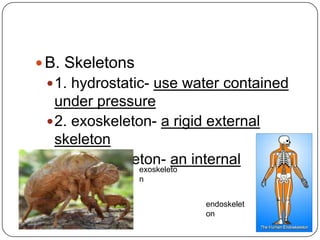
B. Skeletons1. hydrostatic- use water contained under pressure2. exoskeleton- a rigid external skeleton3. endoskeleton- an internal skeletonexoskeletonendoskeleton
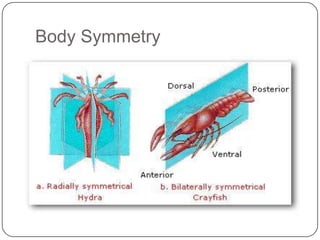
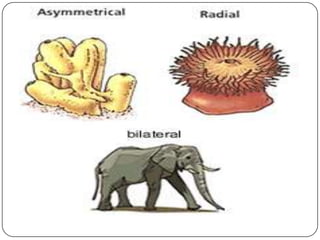
C. Body Symmetry1. asymmetrical- irregular in shape2. radial- body parts arranged around a central axisBilateral- right and left sides that are mirror images
Body Symmetry
D. Feeding and Digestion1. intracellular digestion- digestion within special body cells2. gastrovascular cavity- a digestive sac with only a single opening3. extracellular digestion- food is digested by special organs
E. Circulatory System1. open system- blood is not contained in vessels2. closed system- heart circulates blood  inside blood vessels
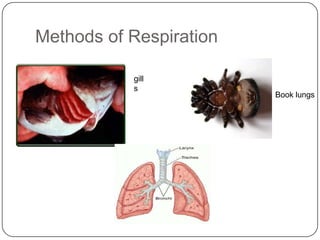
F. Methods of Respiration1. respire through the skin (earthworm)2. use gills (crayfish, fish)3. book lungs (spider)4. trachea (insects)
Methods of RespirationgillsBook lungs
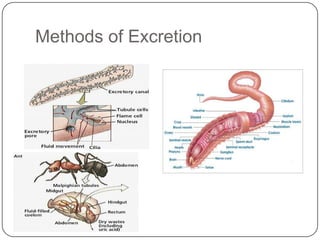
F. Methods of Excretion1. flame cells2. nephridia3. malpighian tubules
Methods of Excretion
H. Response1. centralization- concentration of nerve cells at anterior end2. cephalization- anterior developed into a definite head
I. Types of Reproduction1. asexual-clone of the parentregeneration: can regrow lost body partsBudding :seperation of a parent into 2 or more individuals2. hermaphrodites- contains male and female parts3. sexual- fusion of egg and sperm
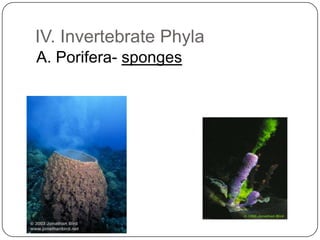
IV. Invertebrate PhylaA. Porifera- sponges
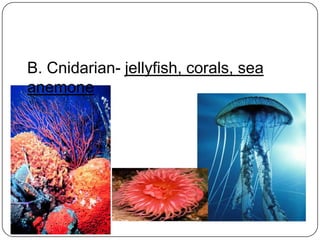
B. Cnidarian- jellyfish, corals, sea anemone
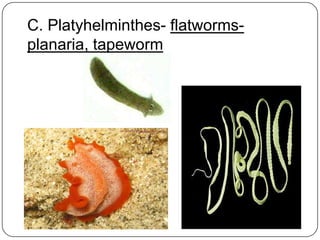
C. Platyhelminthes- flatworms-planaria, tapeworm
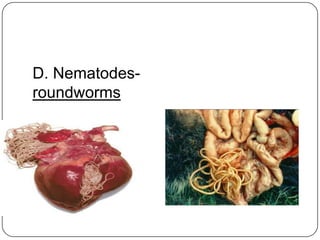
D. Nematodes- roundworms
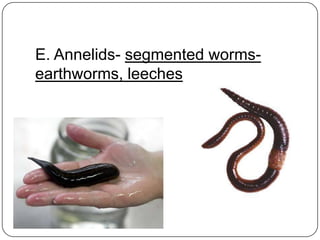
E. Annelids- segmented worms-earthworms, leeches
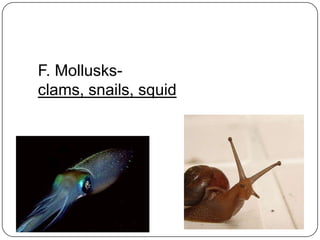
F. Mollusks- clams, snails, squid
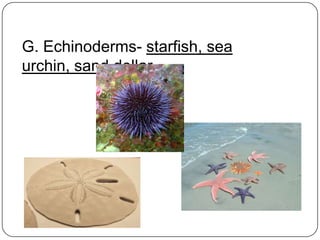
G. Echinoderms- starfish, sea urchin, sand dollar
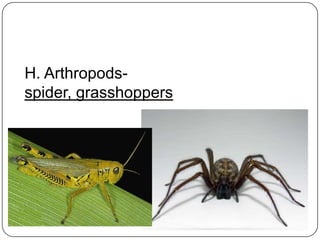
H. Arthropods- spider, grasshoppers

Invertebrate notes