Kingdom Animalia
~ Characteristics ~   Multicellular
  Eukaryotic with no cell walls
 Heterotrophs (consumers) ~ Characteristics ~Have a nervous system to respond to their environment Locomotion relates to ability to obtain foodMost animals develop from a zygote becoming aA single layer of cells surrounding a fluid-filled space forming a hollow ball of cells called a gastrula.
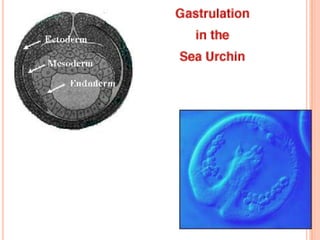
~ Developmental Characteristics ~The gastrula ismade up of three parts:Ectoderm, a layer of cells on the outer surface of the gastrula,grows and divides developing into skin and nervous tissue.Endoderm, a layer of cells lining the inner surface of the gastrula,develops into the lining of the animal’s digestive tract. Mesoderm, made up of two layers of cells lying between the ectoderm and endoderm, forms muscles, reproductive organs and circulatory vessels.
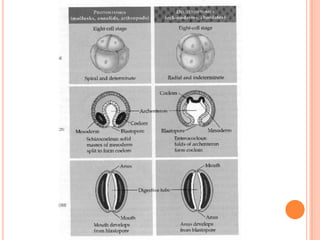
~ Developmental Characteristics ~Animals that develop a mouth from the indented space in the gastrula are protostomes.Animals that develop an anus from the opening in the gastrula are deuterostomes.
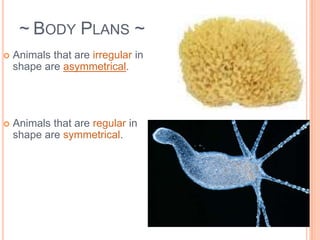
~Body Plans ~Animals that are irregular in shape are asymmetrical.Animals that are regular in shape are symmetrical.
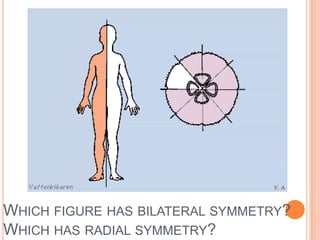
~ Body Plans ~An animal has radial symmetry if it can be divided along any plane, through a central axis, into equal halves.An animal has bilateral symmetry if it can be divided down its length into similar right and left halves forming mirror images of each other.
Which figure has bilateral symmetry? Which has radial symmetry?
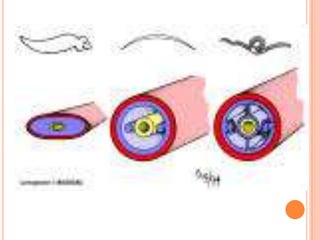
~ Body Plans ~Acoelomates– animals have three cell layers with a digestive tract but no body cavities.Pseudocoelomates – animals with a fluid-filled body cavity partly lined with mesoderm. Coelomates – animals with a body cavity completely surrounded by mesoderm.
~ Protection and Support ~Though not all animals have a skeleton, those that do can be divided into two groups:Those with an exoskeleton – a hard, waxy coating on the outside of the body that protects internal organs, provides a framework for support, and a place for muscle attachment.Those with an endoskeleton – support framework within the body that protects some organs and a brace for muscles to pull against.
~Invertebrates~8 main phylaNo backbones95% of all animals are in this group
~Invertebrate 			Phylum Porifera~Spongessimplest form of animal lifelive in waterDo not move aroundno symmetryPores (holes) all over body5000 species
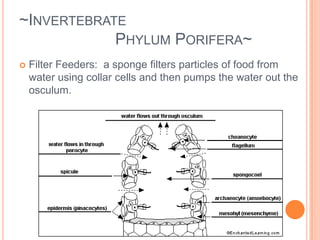
~Invertebrate 			Phylum Porifera~Filter Feeders:  a sponge filters particles of food from water using collar cells and then pumps the water out the osculum.
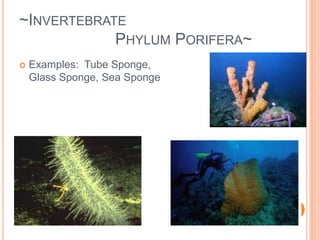
~Invertebrate 			Phylum Porifera~Examples:  Tube Sponge, Glass Sponge, Sea Sponge
~Invertebrate         	Phylum Cnidaria~Live in waterMost have tentaclescatch food with stinging cellsgut for digesting
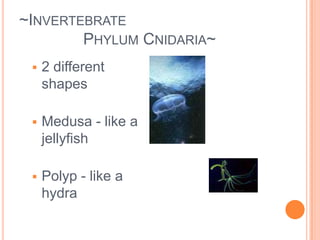
~Invertebrate         	Phylum Cnidaria~2 different shapes
Medusa - like a jellyfish
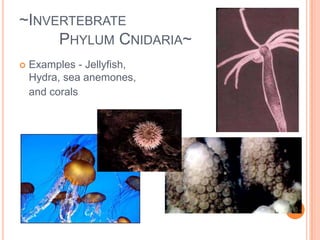
Polyp - like a hydra~Invertebrate         Phylum Cnidaria~Examples - Jellyfish, Hydra, sea anemones, and corals
~Invertebrate 	Phylum Platyhelminthes ~Flatworms
	Flat, ribbon-like body
	Live in water or are parasites
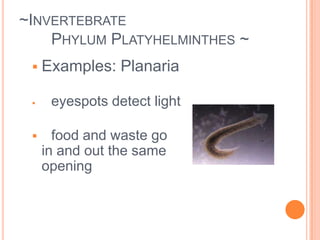
	bilateral symmetry~Invertebrate 	Phylum Platyhelminthes ~Examples: Planaria
eyespots detect light
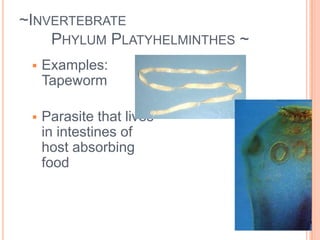
	food and waste go in and out the same opening~Invertebrate 	Phylum Platyhelminthes ~Examples: Tapeworm
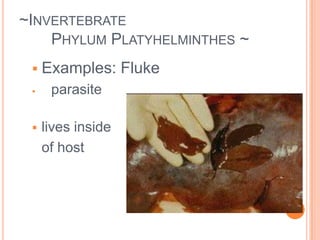
Parasite that lives in intestines of host absorbing food~Invertebrate 	Phylum Platyhelminthes ~Examples: Fluke
parasite
lives inside 	of host
~Invertebrate Phylum Nematoda ~ RoundwormsRound, tubular bodysmall or microscopic bilateral symmetryhave both a mouth and anusLive in water or are parasites
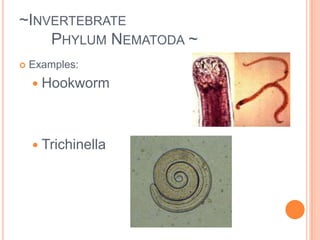
~Invertebrate 	Phylum Nematoda ~ Examples:Hookworm		Trichinella
~Invertebrate 		Phylum Mollusca ~ Soft bodiesHard ShellsLive on land or in waterhave a circulatory system and a complex nervous system.Important food source for humans
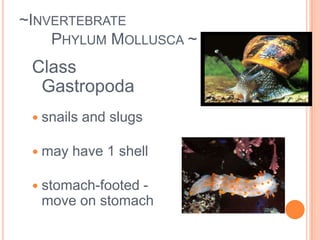
~Invertebrate 	Phylum Mollusca ~ Class Gastropodasnails and slugsmay have 1 shellstomach-footed - move on stomach
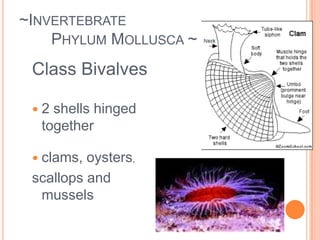
~Invertebrate 	Phylum Mollusca ~ Class Bivalves2 shells hinged togetherclams, oysters,                      scallops and mussels
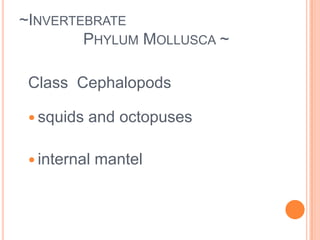
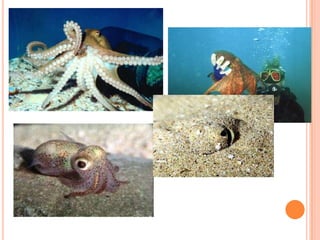
~Invertebrate Phylum Mollusca ~ Class  Cephalopodssquids and octopusesinternal mantel
~Invertebrate		Phylum Annelida ~ Segemented wormsBody divided into 				segments(sections)Live in water or 				undergroundhave a nervous and circulatory system
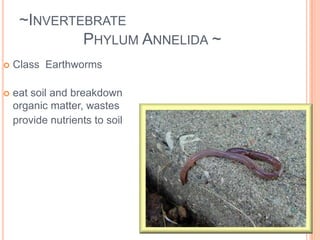
~Invertebrate		Phylum Annelida ~ Class  Earthwormseat soil and breakdown                     organic matter, wastes provide nutrients to soil
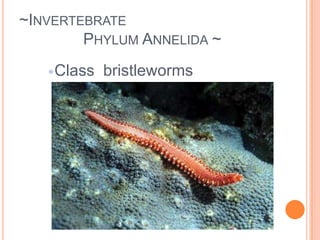
~Invertebrate		Phylum Annelida ~Class  bristleworms
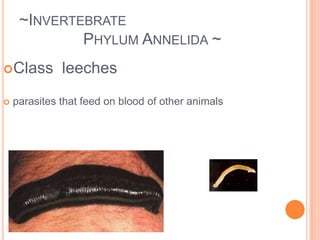
~Invertebrate		Phylum Annelida ~Class  leechesparasites that feed on blood of other animals
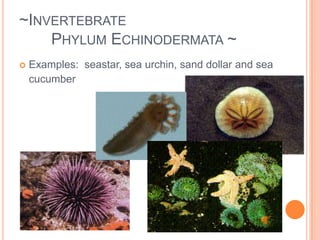
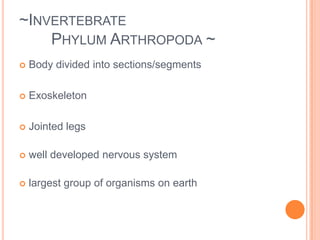
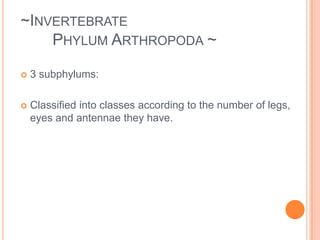
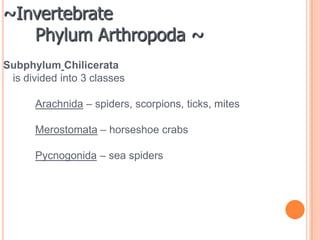
~Invertebrate		Phylum Echinodermata ~Hard, spiny skinLive in salt waterRadial symmetryname means ‘spiney skinned’endoskeleton
~Invertebrate		Phylum Echinodermata ~Examples:  seastar, sea urchin, sand dollar and sea cucumber
~Invertebrate 	Phylum Arthropoda ~Body divided into sections/segmentsExoskeleton Jointed legswell developed nervous systemlargest group of organisms on earth
~Invertebrate 	Phylum Arthropoda ~ 3 subphylums:Classified into classes according to the number of legs, eyes and antennae they have.
~Invertebrate 	Phylum Arthropoda ~SubphylumChilicerata	is divided into 3 classes Arachnida – spiders, scorpions, ticks, mitesMerostomata – horseshoe crabsPycnogonida – sea spiders
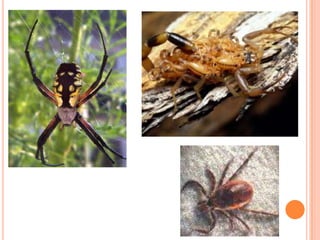
~Invertebrate Phylum Arthropoda ~ Subphylum ChilicerataClass – Arachnidano antennae4 pairs of legs2 body regions - cephalothorax & abdomenspiders, scorpions, mites & ticks
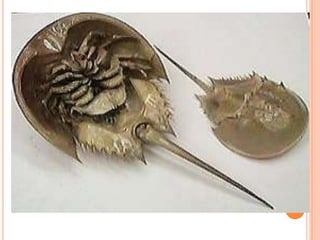
~Invertebrate Phylum Arthropoda ~ Subphylum ChilicerataClass MerostomataHorseshoe crabsAncient group of species Changed little over 350 million years Aquatic, mostly found on Atlantic & gulf coasts of United States.
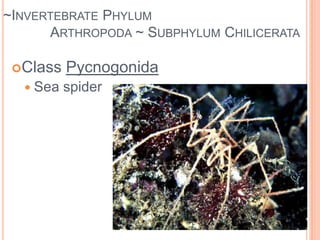
~Invertebrate Phylum Arthropoda ~ Subphylum ChilicerataClass PycnogonidaSea spider
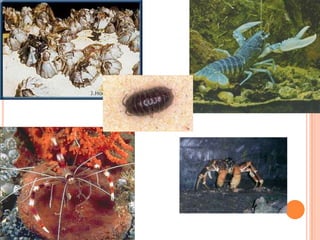
~Invertebrate Phylum Arthropoda ~ Subphylum - Crustacea5 ClassesAquatic ones have gills2 antennae2 body regions or segmentedShrimp, lobsters, crabs, barnacles, isopodsMany species taste delicious in butter
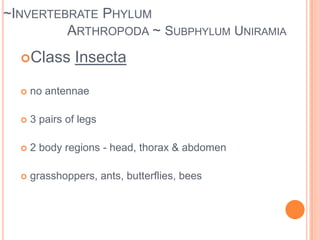
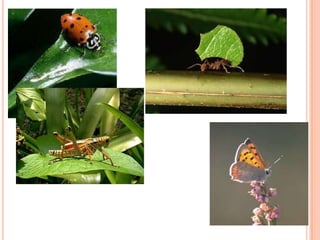
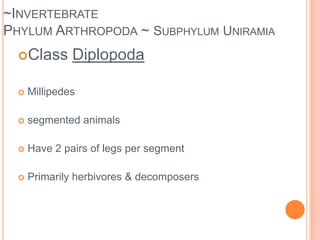
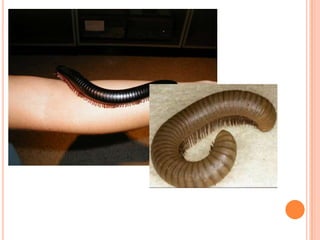
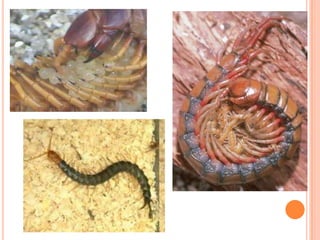
Subphylum Uniramia: 3 classesClass Insecta (insects) Class Chilopoda (Centipedes) Class Diplopoda (Millipedes)

Animalia