Biology Notes: Unit 8“Exploring The Vertebrates”
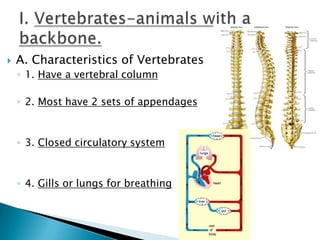
A. Characteristics of Vertebrates1. Have a vertebral column2. Most have 2 sets of appendages3. Closed circulatory system4. Gills or lungs for breathingI. Vertebrates-animals with a backbone.
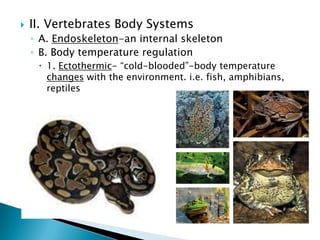
II. Vertebrates Body SystemsA. Endoskeleton-an internal skeletonB. Body temperature regulation1. Ectothermic- “cold-blooded”-body temperature changes with the environment. i.e. fish, amphibians, reptiles
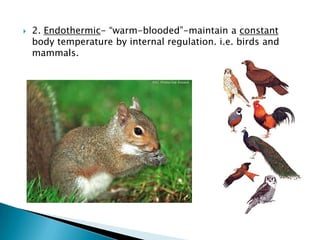
2. Endothermic- “warm-blooded”-maintain a constant body temperature by internal regulation. i.e. birds and mammals.C. Reproduction-sexual1. External fertilization-must reproduce in water. Egg and sperm are released and fertilization takes place outside of the female’s body. Eggs develop and hatch in water. Examples: fish, amphibians2. Internal fertilization-male and female must mate. Sperm are deposited directly inside the female’s body. Examples: reptiles, birds, mammalsA. Amniotic egg-has a shell and membranes to protect the embryo and keep it from drying out. Does not need to be laid in water. Have a yolk sac to supply food for the embryo.
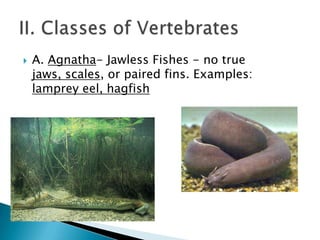
A. Agnatha- Jawless Fishes - no true jaws, scales, or paired fins. Examples: lamprey eel, hagfishII. Classes of Vertebrates
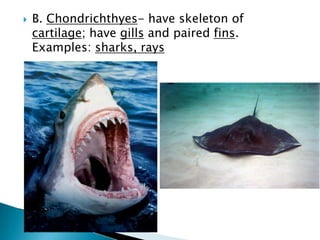
B. Chondrichthyes- have skeleton of cartilage; have gills and paired fins. Examples: sharks, rays
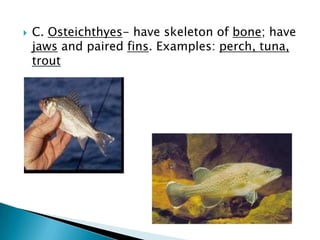
C. Osteichthyes- have skeleton of bone; have jaws and paired fins. Examples: perch, tuna, trout
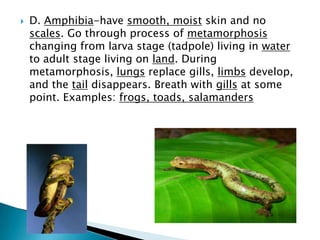
D. Amphibia-have smooth, moist skin and no scales. Go through process of metamorphosis changing from larva stage (tadpole) living in water to adult stage living on land. During metamorphosis, lungs replace gills, limbs develop, and the tail disappears. Breath with gills at some point. Examples: frogs, toads, salamanders
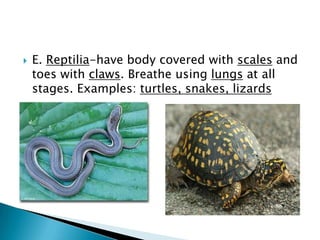
E. Reptilia-have body covered with scales and toes with claws. Breathe using lungs at all stages. Examples: turtles, snakes, lizards
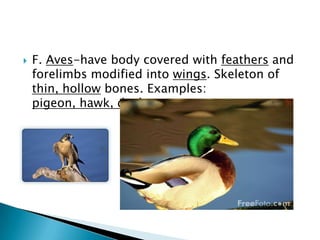
F. Aves-have body covered with feathers and forelimbs modified into wings. Skeleton of thin, hollow bones. Examples: pigeon, hawk, duck
E. Mammals-have body with hair on at least some part. Feed young milk secreted by mammary glands. Breathe with lungs.
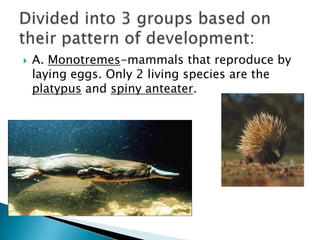
A. Monotremes-mammals that reproduce by laying eggs. Only 2 living species are the platypus and spiny anteater.Divided into 3 groups based on their pattern of development:
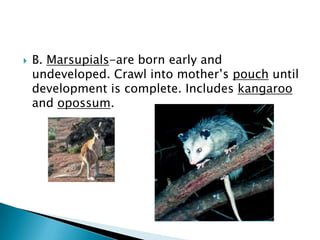
B. Marsupials-are born early and undeveloped. Crawl into mother’s pouch until development is complete. Includes kangaroo and opossum.
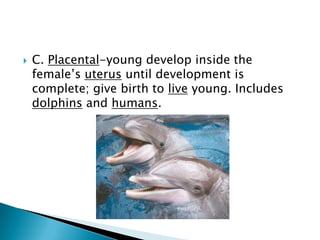
C. Placental-young develop inside the female’s uterus until development is complete; give birth to live young. Includes dolphins and humans.
Vertebrate notes

Vertebrate notes

  • 1.
    Biology Notes: Unit8“Exploring The Vertebrates”
  • 2.
    A. Characteristics ofVertebrates1. Have a vertebral column2. Most have 2 sets of appendages3. Closed circulatory system4. Gills or lungs for breathingI. Vertebrates-animals with a backbone.
  • 3.
    II. Vertebrates BodySystemsA. Endoskeleton-an internal skeletonB. Body temperature regulation1. Ectothermic- “cold-blooded”-body temperature changes with the environment. i.e. fish, amphibians, reptiles
  • 4.
    2. Endothermic- “warm-blooded”-maintaina constant body temperature by internal regulation. i.e. birds and mammals.C. Reproduction-sexual1. External fertilization-must reproduce in water. Egg and sperm are released and fertilization takes place outside of the female’s body. Eggs develop and hatch in water. Examples: fish, amphibians2. Internal fertilization-male and female must mate. Sperm are deposited directly inside the female’s body. Examples: reptiles, birds, mammalsA. Amniotic egg-has a shell and membranes to protect the embryo and keep it from drying out. Does not need to be laid in water. Have a yolk sac to supply food for the embryo.
  • 5.
    A. Agnatha- JawlessFishes - no true jaws, scales, or paired fins. Examples: lamprey eel, hagfishII. Classes of Vertebrates
  • 6.
    B. Chondrichthyes- haveskeleton of cartilage; have gills and paired fins. Examples: sharks, rays
  • 7.
    C. Osteichthyes- haveskeleton of bone; have jaws and paired fins. Examples: perch, tuna, trout
  • 8.
    D. Amphibia-have smooth,moist skin and no scales. Go through process of metamorphosis changing from larva stage (tadpole) living in water to adult stage living on land. During metamorphosis, lungs replace gills, limbs develop, and the tail disappears. Breath with gills at some point. Examples: frogs, toads, salamanders
  • 9.
    E. Reptilia-have bodycovered with scales and toes with claws. Breathe using lungs at all stages. Examples: turtles, snakes, lizards
  • 10.
    F. Aves-have bodycovered with feathers and forelimbs modified into wings. Skeleton of thin, hollow bones. Examples: pigeon, hawk, duck
  • 11.
    E. Mammals-have bodywith hair on at least some part. Feed young milk secreted by mammary glands. Breathe with lungs.
  • 12.
    A. Monotremes-mammals thatreproduce by laying eggs. Only 2 living species are the platypus and spiny anteater.Divided into 3 groups based on their pattern of development:
  • 13.
    B. Marsupials-are bornearly and undeveloped. Crawl into mother’s pouch until development is complete. Includes kangaroo and opossum.
  • 14.
    C. Placental-young developinside the female’s uterus until development is complete; give birth to live young. Includes dolphins and humans.