“Mendel and Heredity”
I. The Origins of Genetics
 A. Heredity – the passing of traits from parents to
 offspring.

 B. Genetics – the study of heredity.


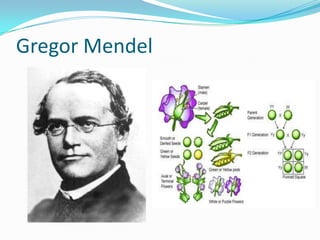
 C. Gregor Mendel – a monk whose experiments with
 pea plants gave us our basic understanding of heredity.
Gregor Mendel
II. Mendel’s Theory
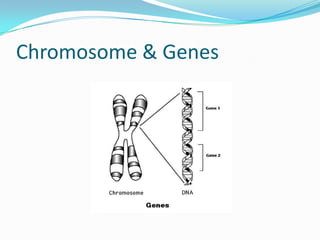
 A. Gene – is a segment of DNA that controls a
 hereditary trait. These are carried on the
 chromosomes.

   1. Alleles – the different versions of a gene.
       a. dominant – allele that is the expressed form of the trait.
        Always shown by a capital letter. Ex: T

       b. recessive – allele that is not expressed when the dominant
        allele is present. Always shown by a lower case letter. Ex: t
Chromosome & Genes
 B. homozygous – when the paired alleles for a trait are the same, either both
  dominant or both recessive.
  Ex: RR (homozygous dominant) or rr (homozygous recessive)

 C. heterozygous – when the paired alleles for a trait are different, one dominant and
   one recessive. Ex: Rr

 D. genotype – the gene combination present in an organism.
       Ex: RR, Rr, rr

 E. phenotype - the physical appearance resulting from the genes.      Ex: round
   seeds, wrinkled seeds

 F. law of segregation – when the paired alleles for a trait are separated during
   meiosis and the formation of the gametes.

 G. Law of Independent Assortment - alleles for a trait separate when gametes are
   formed.
     EX: There are 4 ways the genes from DdRr can sort:      DR, Dr, dR, dr
III. Studying Heredity
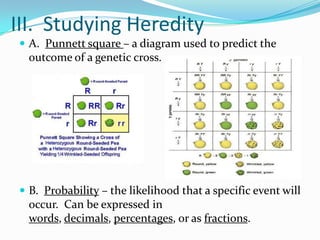
 A. Punnett square – a diagram used to predict the
  outcome of a genetic cross.


 B. Probability – the likelihood that a specific event will
  occur. Can be expressed in
  words, decimals, percentages, or as fractions.
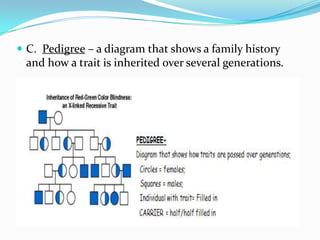
 C. Pedigree – a diagram that shows a family history
 and how a trait is inherited over several generations.
IV. Complex Patterns of Heredity
 A. Sex-linked – any trait whose allele is carried on the X
  chromosome.
   1. Because males have just one X chromosome, any allele on
    the X chromosome is expressed.
      Ex: hemophilia, color blindness


 B. Polygenic trait – when several genes influence a trait.
      Ex: haircolor, eye color
 C. Incomplete dominance – when an individual
  displays a trait that is intermediate (a blending)
  between the two parents.
  Ex: straight haired X curly haired = wavy haired
       red flower X white flower = pink flower

 D. Multiple alleles – genes with 3 or more alleles.
      Ex: blood types in humans (A, B, O)

 E. Codominance – two dominant alleles are expressed
  at the same time.
       Ex: blood type AB
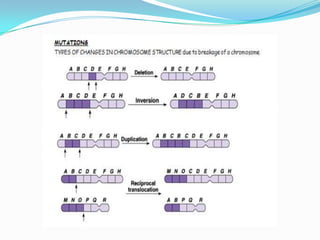
 F. Mutations – changes in the chromosome structure.
 The harmful effects produced by inherited mutations
 are called genetic disorders.
   1. sickle-cell anemia – produces a defective form of the
    protein hemoglobin. Most common among African-
    Americans.
   2. cystic fibrosis – most common fatal genetic disease
    among Caucasians.
   3. hemophilia – sex-linked recessive disorder. Condition
    that prevents the blood from clotting properly.
   4. Huntington’s disease – does not appear until age 30-
    40. Loss of muscle control, physical spasms, severe
    mental illness, and finally death.
Notes chapter 8

Notes chapter 8

  • 1.
  • 2.
    I. The Originsof Genetics  A. Heredity – the passing of traits from parents to offspring.  B. Genetics – the study of heredity.  C. Gregor Mendel – a monk whose experiments with pea plants gave us our basic understanding of heredity.
  • 3.
  • 4.
    II. Mendel’s Theory A. Gene – is a segment of DNA that controls a hereditary trait. These are carried on the chromosomes.  1. Alleles – the different versions of a gene.  a. dominant – allele that is the expressed form of the trait. Always shown by a capital letter. Ex: T  b. recessive – allele that is not expressed when the dominant allele is present. Always shown by a lower case letter. Ex: t
  • 5.
  • 6.
     B. homozygous– when the paired alleles for a trait are the same, either both dominant or both recessive. Ex: RR (homozygous dominant) or rr (homozygous recessive)  C. heterozygous – when the paired alleles for a trait are different, one dominant and one recessive. Ex: Rr  D. genotype – the gene combination present in an organism. Ex: RR, Rr, rr  E. phenotype - the physical appearance resulting from the genes. Ex: round seeds, wrinkled seeds  F. law of segregation – when the paired alleles for a trait are separated during meiosis and the formation of the gametes.  G. Law of Independent Assortment - alleles for a trait separate when gametes are formed.  EX: There are 4 ways the genes from DdRr can sort: DR, Dr, dR, dr
  • 7.
    III. Studying Heredity A. Punnett square – a diagram used to predict the outcome of a genetic cross.  B. Probability – the likelihood that a specific event will occur. Can be expressed in words, decimals, percentages, or as fractions.
  • 8.
     C. Pedigree– a diagram that shows a family history and how a trait is inherited over several generations.
  • 9.
    IV. Complex Patternsof Heredity  A. Sex-linked – any trait whose allele is carried on the X chromosome.  1. Because males have just one X chromosome, any allele on the X chromosome is expressed. Ex: hemophilia, color blindness  B. Polygenic trait – when several genes influence a trait. Ex: haircolor, eye color
  • 10.
     C. Incompletedominance – when an individual displays a trait that is intermediate (a blending) between the two parents. Ex: straight haired X curly haired = wavy haired red flower X white flower = pink flower  D. Multiple alleles – genes with 3 or more alleles. Ex: blood types in humans (A, B, O)  E. Codominance – two dominant alleles are expressed at the same time. Ex: blood type AB
  • 11.
     F. Mutations– changes in the chromosome structure. The harmful effects produced by inherited mutations are called genetic disorders.  1. sickle-cell anemia – produces a defective form of the protein hemoglobin. Most common among African- Americans.  2. cystic fibrosis – most common fatal genetic disease among Caucasians.  3. hemophilia – sex-linked recessive disorder. Condition that prevents the blood from clotting properly.  4. Huntington’s disease – does not appear until age 30- 40. Loss of muscle control, physical spasms, severe mental illness, and finally death.