Dr. Mostafa Elgamala
RHCE-MCSA-CCNA-CCAI-CSCU-PMP-ITIL-IBDL
Security importance
 Algerian ministry of defense subjected to 3500 attempt daily.
 Hacking on UAV in south Korea.
 Hacking on Boshahr Nuclear reactor in Iran.
 Electric failure in USA due to cyber attack.
 Thieving of subscriber data of ashley madison, AT&T, T
mobile US.
 Thieving of 55000 username/password from Twitter.
 Nasa hacking.
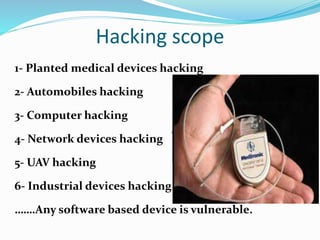
Hacking scope
1- Planted medical devices hacking
2- Automobiles hacking
3- Computer hacking
4- Network devices hacking
5- UAV hacking
6- Industrial devices hacking
…….Any software based device is vulnerable.
Cyber attack (online attack)- Why
 On line criminals for money ( i.e bank accounts)
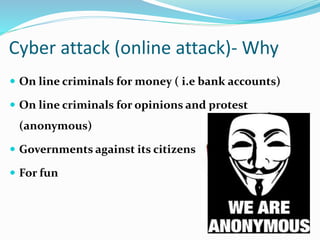
 On line criminals for opinions and protest
(anonymous)
 Governments against its citizens
 For fun
Results
 Financial loss (AT&T)
 Identity theft
 Loss of trust
 Data loss/theft (ashley madiso , T mobile)
 Misuse of computer resources.
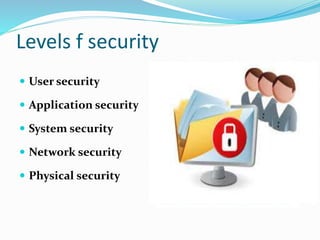
Levels f security
 User security
 Application security
 System security
 Network security
 Physical security
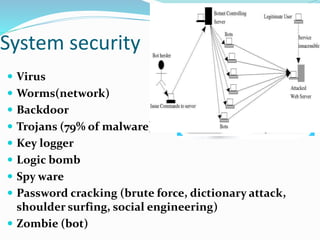
System security
 Virus
 Worms(network)
 Backdoor
 Trojans (79% of malware)
 Key logger
 Logic bomb
 Spy ware
 Password cracking (brute force, dictionary attack,
shoulder surfing, social engineering)
 Zombie (bot)
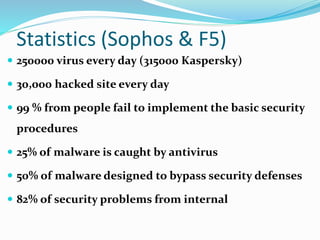
Statistics (Sophos & F5)
 250000 virus every day (315000 Kaspersky)
 30,000 hacked site every day
 99 % from people fail to implement the basic security
procedures
 25% of malware is caught by antivirus
 50% of malware designed to bypass security defenses
 82% of security problems from internal
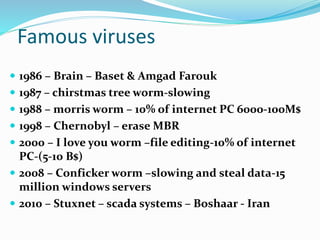
Famous viruses
 1986 – Brain – Baset & Amgad Farouk
 1987 – chirstmas tree worm-slowing
 1988 – morris worm – 10% of internet PC 6000-100M$
 1998 – Chernobyl – erase MBR
 2000 – I love you worm –file editing-10% of internet
PC-(5-10 B$)
 2008 – Conficker worm –slowing and steal data-15
million windows servers
 2010 – Stuxnet – scada systems – Boshaar - Iran
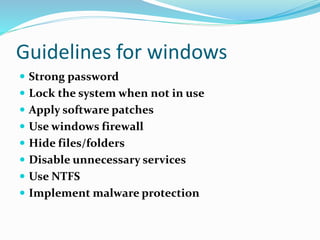
Guidelines for windows
 Strong password
 Lock the system when not in use
 Apply software patches
 Use windows firewall
 Hide files/folders
 Disable unnecessary services
 Use NTFS
 Implement malware protection
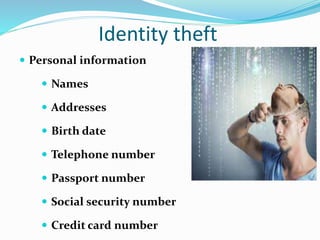
Identity theft
 Personal information
 Names
 Addresses
 Birth date
 Telephone number
 Passport number
 Social security number
 Credit card number
How attacker steal identity?
 Physical methods:
 Stealing (computer, mobile, wallets)
 Social engineering (people trust)
 Skimming: steal credit no. by special storage.
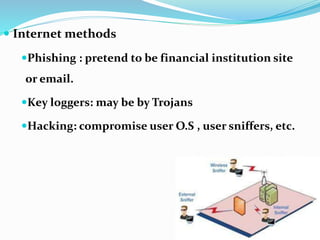
 Internet methods
Phishing : pretend to be financial institution site
or email.
Key loggers: may be by Trojans
Hacking: compromise user O.S , user sniffers, etc.
Social Engineering
 Art of convincing people to reveal confidential
information from people
 Human based method:
 Laying
 Eavesdropping
 Shoulder surfing
 Dumpster diving
 Computer based method
 Chain letter: free money or gift
 Hoax letter: warning from viruses
 Pop-up window: ask for information
 Fake website: to know your info.
Measures
 Complex password
 Disable auto login
 Not post sensitive/personal information
 Be careful clicking links in messages (fake sites)
Social networking security
 Cyber bullying: spreading rumors, threating,
harassments.
 Be careful about what is posted on internet
 Ignore the bully
 Document all conversations
 Contact local authorities
Mobile devices security
 Mobile malware: conversations listener, wipe-out
info. ,monitor your actions.
 Application vulnerabilities
 Lost or stolen devices
Measure procedures
 Patching mobile platforms and applications
 Use power-on authentication
 Backup
 Use mobile phone anti-virus
 Encrypt your data
 Secure Bluetooth
Avoid mobile device theft
 Avoid lending mobile phone
 Do not talk while walking/driving
 Do not leave mobile in a car
 Turn off ringer
 Record IMEI (*#06#)
 Use anti-theft s/w to remotely wipe the data &
make the device unusable
 Cancel SIM
Network security types
 Network sniffers
 Denial of service (DOS)
 DNS poisoning (DNS spoofing)
 Wireless security
 Man-in-the-middle attack
 Sql injection
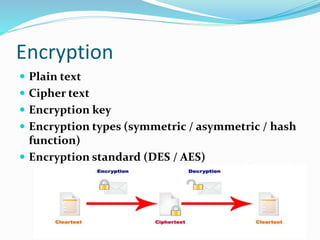
Encryption
 Plain text
 Cipher text
 Encryption key
 Encryption types (symmetric / asymmetric / hash
function)
 Encryption standard (DES / AES)
Security awareness is the first
step for your security
Thanks

Introduction to security

  • 1.
  • 2.
    Security importance  Algerianministry of defense subjected to 3500 attempt daily.  Hacking on UAV in south Korea.  Hacking on Boshahr Nuclear reactor in Iran.  Electric failure in USA due to cyber attack.  Thieving of subscriber data of ashley madison, AT&T, T mobile US.  Thieving of 55000 username/password from Twitter.  Nasa hacking.
  • 3.
    Hacking scope 1- Plantedmedical devices hacking 2- Automobiles hacking 3- Computer hacking 4- Network devices hacking 5- UAV hacking 6- Industrial devices hacking …….Any software based device is vulnerable.
  • 4.
    Cyber attack (onlineattack)- Why  On line criminals for money ( i.e bank accounts)  On line criminals for opinions and protest (anonymous)  Governments against its citizens  For fun
  • 5.
    Results  Financial loss(AT&T)  Identity theft  Loss of trust  Data loss/theft (ashley madiso , T mobile)  Misuse of computer resources.
  • 6.
    Levels f security User security  Application security  System security  Network security  Physical security
  • 7.
    System security  Virus Worms(network)  Backdoor  Trojans (79% of malware)  Key logger  Logic bomb  Spy ware  Password cracking (brute force, dictionary attack, shoulder surfing, social engineering)  Zombie (bot)
  • 8.
    Statistics (Sophos &F5)  250000 virus every day (315000 Kaspersky)  30,000 hacked site every day  99 % from people fail to implement the basic security procedures  25% of malware is caught by antivirus  50% of malware designed to bypass security defenses  82% of security problems from internal
  • 9.
    Famous viruses  1986– Brain – Baset & Amgad Farouk  1987 – chirstmas tree worm-slowing  1988 – morris worm – 10% of internet PC 6000-100M$  1998 – Chernobyl – erase MBR  2000 – I love you worm –file editing-10% of internet PC-(5-10 B$)  2008 – Conficker worm –slowing and steal data-15 million windows servers  2010 – Stuxnet – scada systems – Boshaar - Iran
  • 10.
    Guidelines for windows Strong password  Lock the system when not in use  Apply software patches  Use windows firewall  Hide files/folders  Disable unnecessary services  Use NTFS  Implement malware protection
  • 11.
    Identity theft  Personalinformation  Names  Addresses  Birth date  Telephone number  Passport number  Social security number  Credit card number
  • 12.
    How attacker stealidentity?  Physical methods:  Stealing (computer, mobile, wallets)  Social engineering (people trust)  Skimming: steal credit no. by special storage.
  • 13.
     Internet methods Phishing: pretend to be financial institution site or email. Key loggers: may be by Trojans Hacking: compromise user O.S , user sniffers, etc.
  • 14.
    Social Engineering  Artof convincing people to reveal confidential information from people  Human based method:  Laying  Eavesdropping  Shoulder surfing  Dumpster diving
  • 15.
     Computer basedmethod  Chain letter: free money or gift  Hoax letter: warning from viruses  Pop-up window: ask for information  Fake website: to know your info.
  • 16.
    Measures  Complex password Disable auto login  Not post sensitive/personal information  Be careful clicking links in messages (fake sites)
  • 17.
    Social networking security Cyber bullying: spreading rumors, threating, harassments.  Be careful about what is posted on internet  Ignore the bully  Document all conversations  Contact local authorities
  • 18.
    Mobile devices security Mobile malware: conversations listener, wipe-out info. ,monitor your actions.  Application vulnerabilities  Lost or stolen devices
  • 19.
    Measure procedures  Patchingmobile platforms and applications  Use power-on authentication  Backup  Use mobile phone anti-virus  Encrypt your data  Secure Bluetooth
  • 20.
    Avoid mobile devicetheft  Avoid lending mobile phone  Do not talk while walking/driving  Do not leave mobile in a car  Turn off ringer  Record IMEI (*#06#)  Use anti-theft s/w to remotely wipe the data & make the device unusable  Cancel SIM
  • 21.
    Network security types Network sniffers  Denial of service (DOS)  DNS poisoning (DNS spoofing)  Wireless security  Man-in-the-middle attack  Sql injection
  • 22.
    Encryption  Plain text Cipher text  Encryption key  Encryption types (symmetric / asymmetric / hash function)  Encryption standard (DES / AES)
  • 23.
    Security awareness isthe first step for your security
  • 24.