Department of Civil Engineering
Academic Session = 2023-24
Year/ Semester- 1st / IInd
Subject- Basic Civil Engineering (BCE)
Subject code- 1FY3-09
Chapter-6, Topic- Ecosystem & Biodiversity
By
Denis Jangeed
Ecosystem:-
▪ The ecosystem is the structural and functional unit of
ecology where the living organisms interact with each other
and the surrounding environment.
▪ In other words, an ecosystem is a chain of interaction
between organisms and their environment.
▪ “Ecosystem” term was first introduced by sir Arthur
Tansley, an English botanist, in 1935.
Types of Ecosystem:-
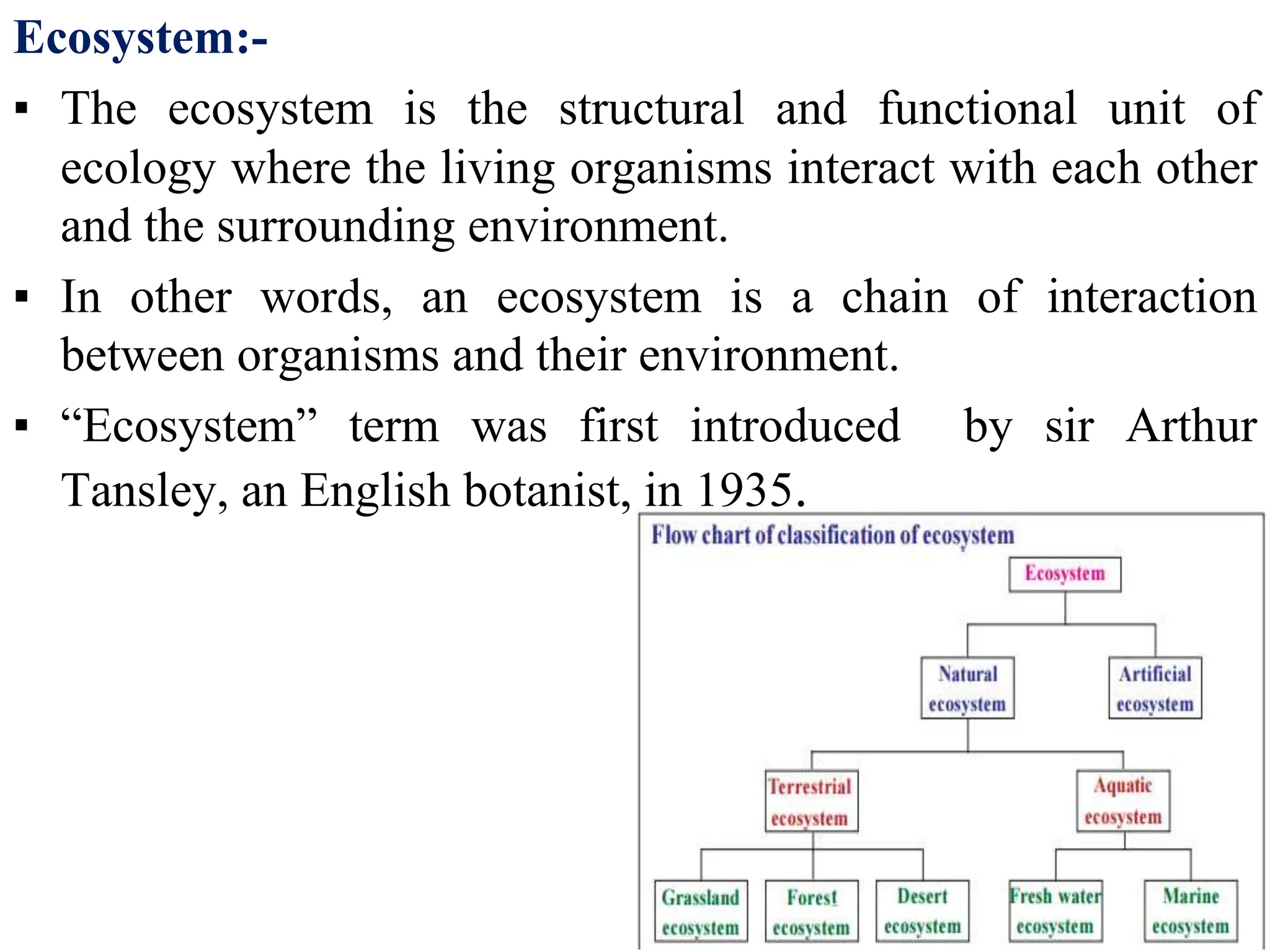
Ecosystems are classified into two main categories
(1) Natural Ecosystem (2) Artificial Ecosystem
Natural ecosystem
▪ A natural ecosystem is the result of interactions between organisms and the
environment.
▪ For example, an ocean is classified as a marine ecosystem, which consists of
algae, consumers and decomposers.
▪ This process occurs naturally over a period of time, whereas in an artificial
ecosystem, human interference is required.
Artificial ecosystem
▪ An artificial ecosystem is not self-sustaining, and the ecosystem would
perish without human assistance.
▪ For example, a farm is an artificial ecosystem that consists of plants and
species outside their natural habitat. Without humans, this ecosystem could
not sustain itself.
▪ The plants and animals need the help of humans to eat and survive.
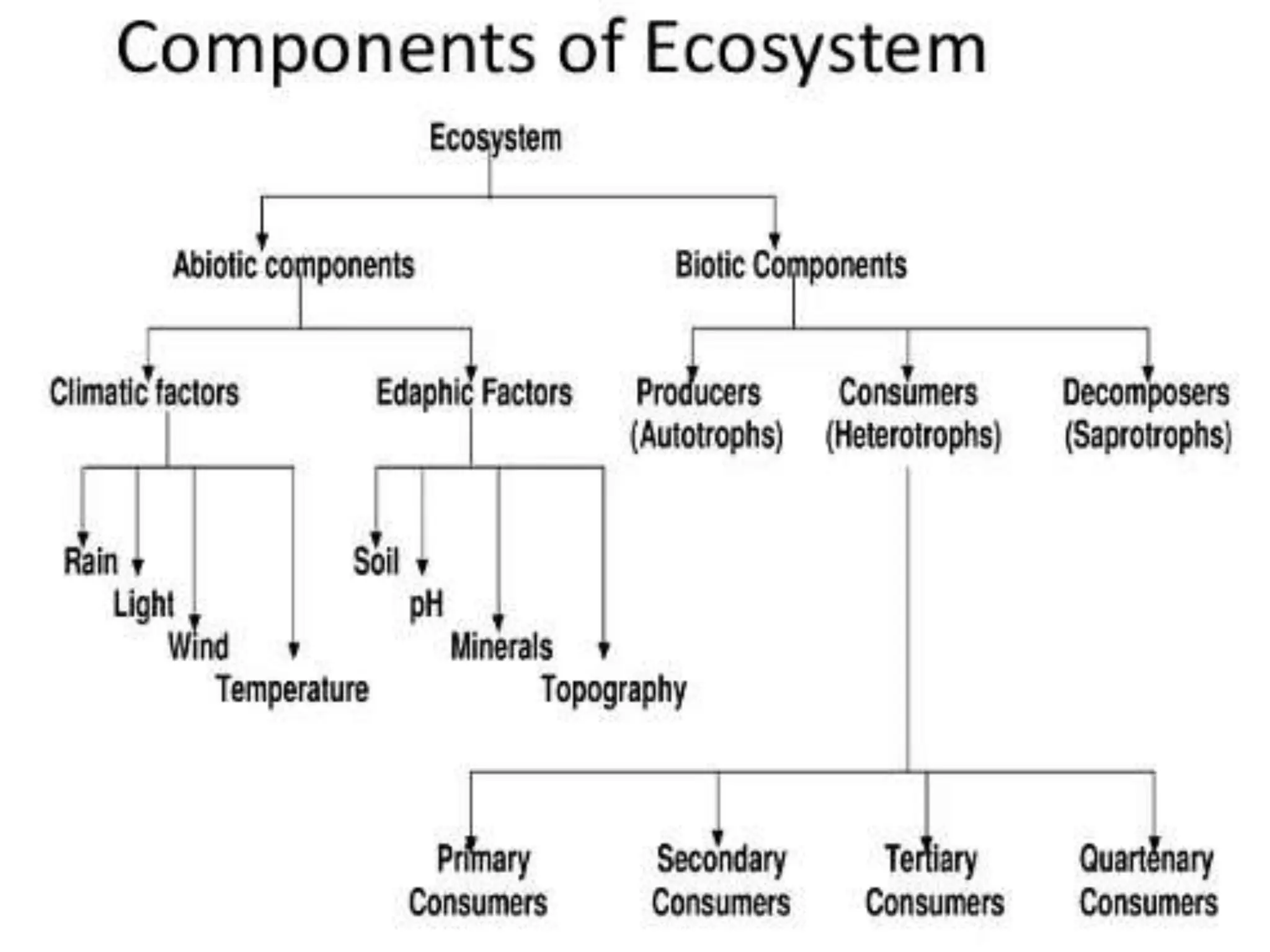
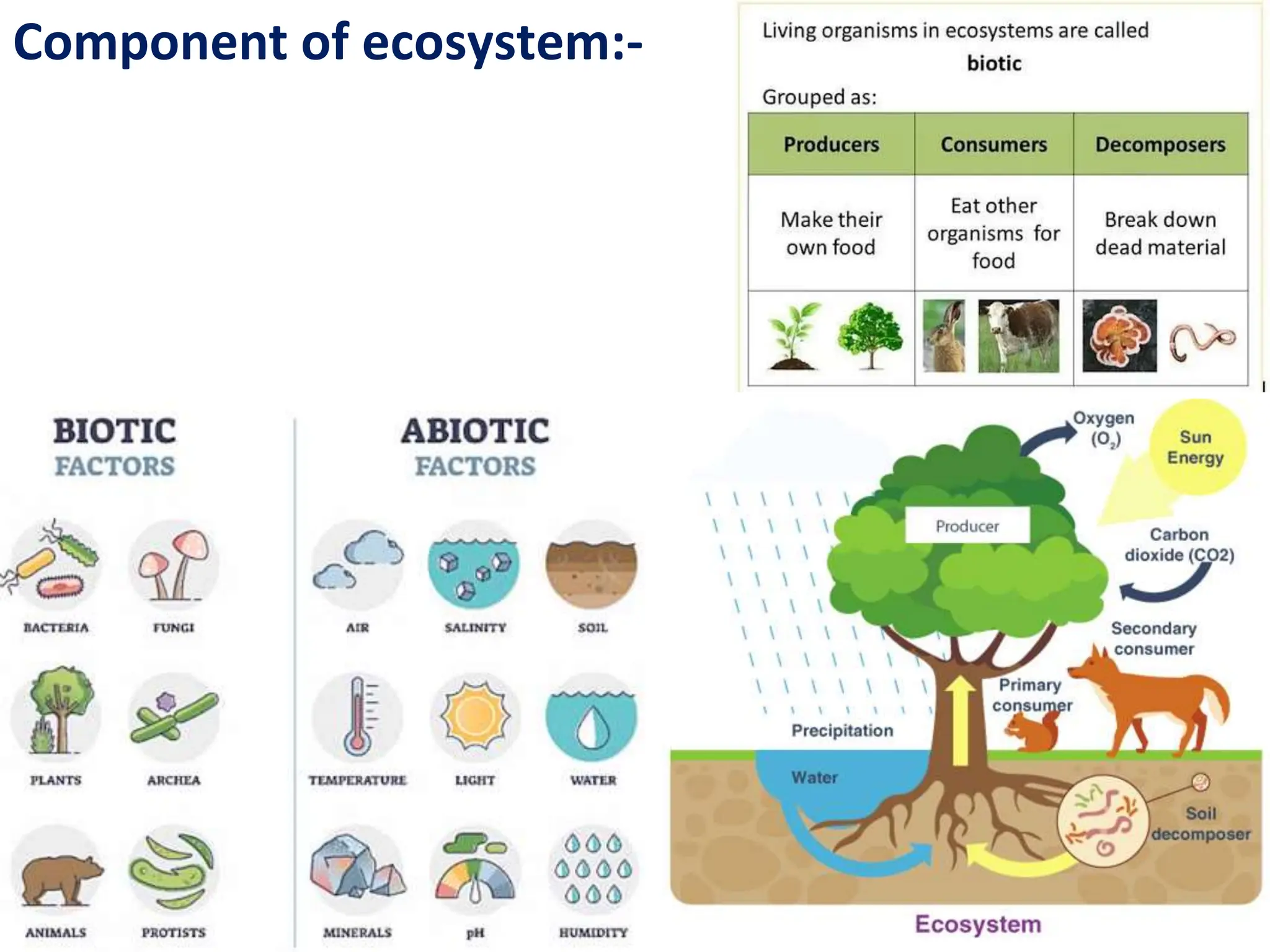
Component of ecosystem:-
Biotic Components:-
▪ Biotic components are the living things that have a
direct or indirect influence on other organisms in
an environment.
Example:-
Plants, animals, and microorganisms and their
waste materials.
Abiotic Components:-
▪ Abiotic components of an ecosystem include all
chemical and physical elements i.e. non-living
components.
▪ Abiotic components can vary from region to
region, from one ecosystem to another.
▪ They mainly take up the role of life supporter.
Biotic components can be classified into three categories:
1. Producers:
▪ These include all the autotrophs. They use light
energy and synthesize food on their own.
▪ Ex:-Plants, green algae, etc.
2. Consumers:
▪ These include all the heterotrophs that directly or
indirectly depend on producers for their food.
▪ Consumers are further categorized as herbivores,
carnivores, omnivores and parasites.
3. Decomposers:
▪ These include saprophytes which act on dead matter
and decay them for their nutrition.
Functions of Ecosystem:
The functions of the ecosystem are as follows:
▪ It regulates the essential ecological processes,
supports life systems and renders stability.
▪ It is also responsible for the cycling
of nutrients between Biotic and Abiotic
components.
▪ It maintains a balance among the various tropic
levels in the ecosystem.
▪ It cycles the minerals through the biosphere.
▪ The Abiotic components help in the synthesis of
organic components that involves the exchange of
energy.
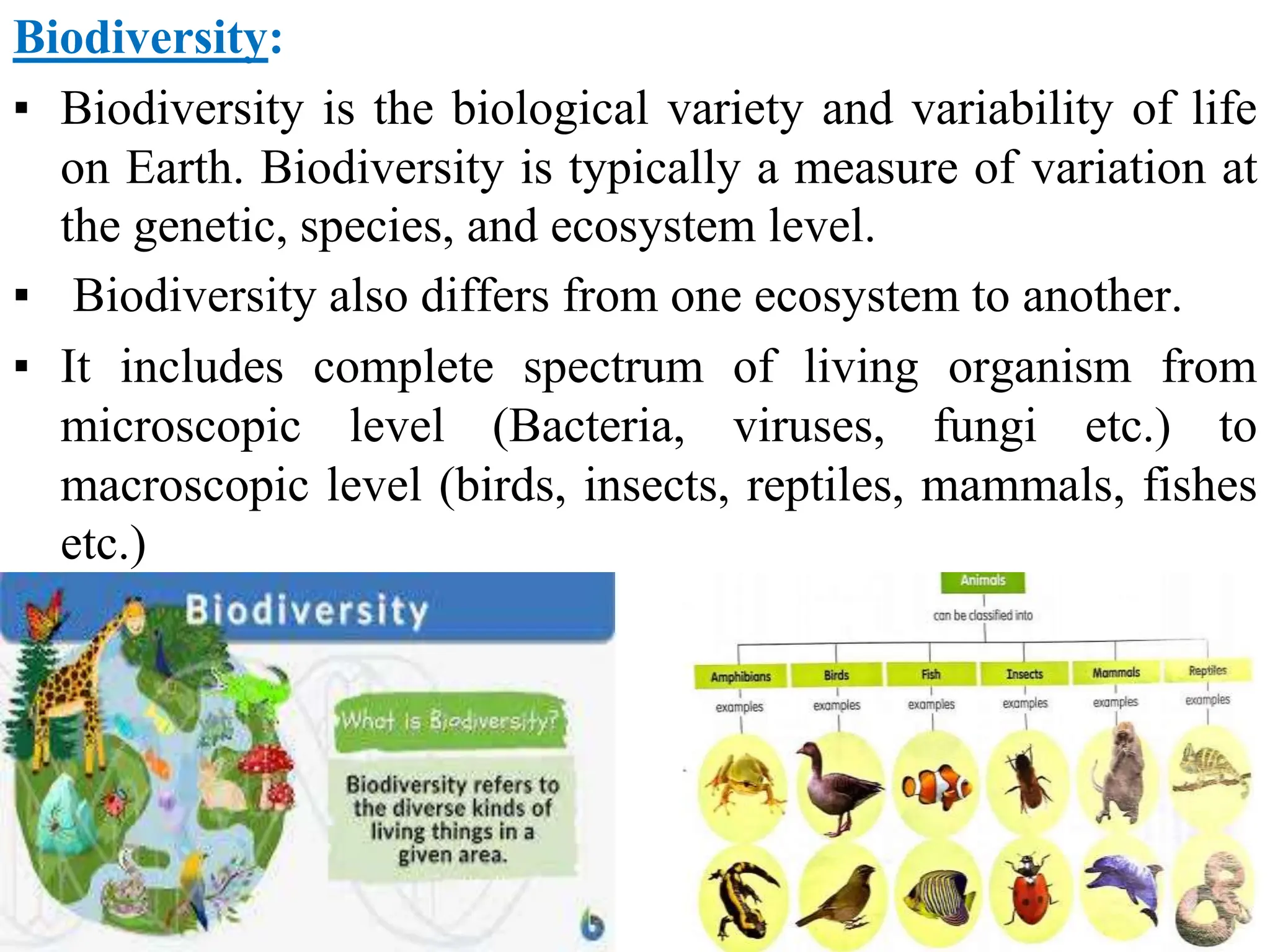
Biodiversity:
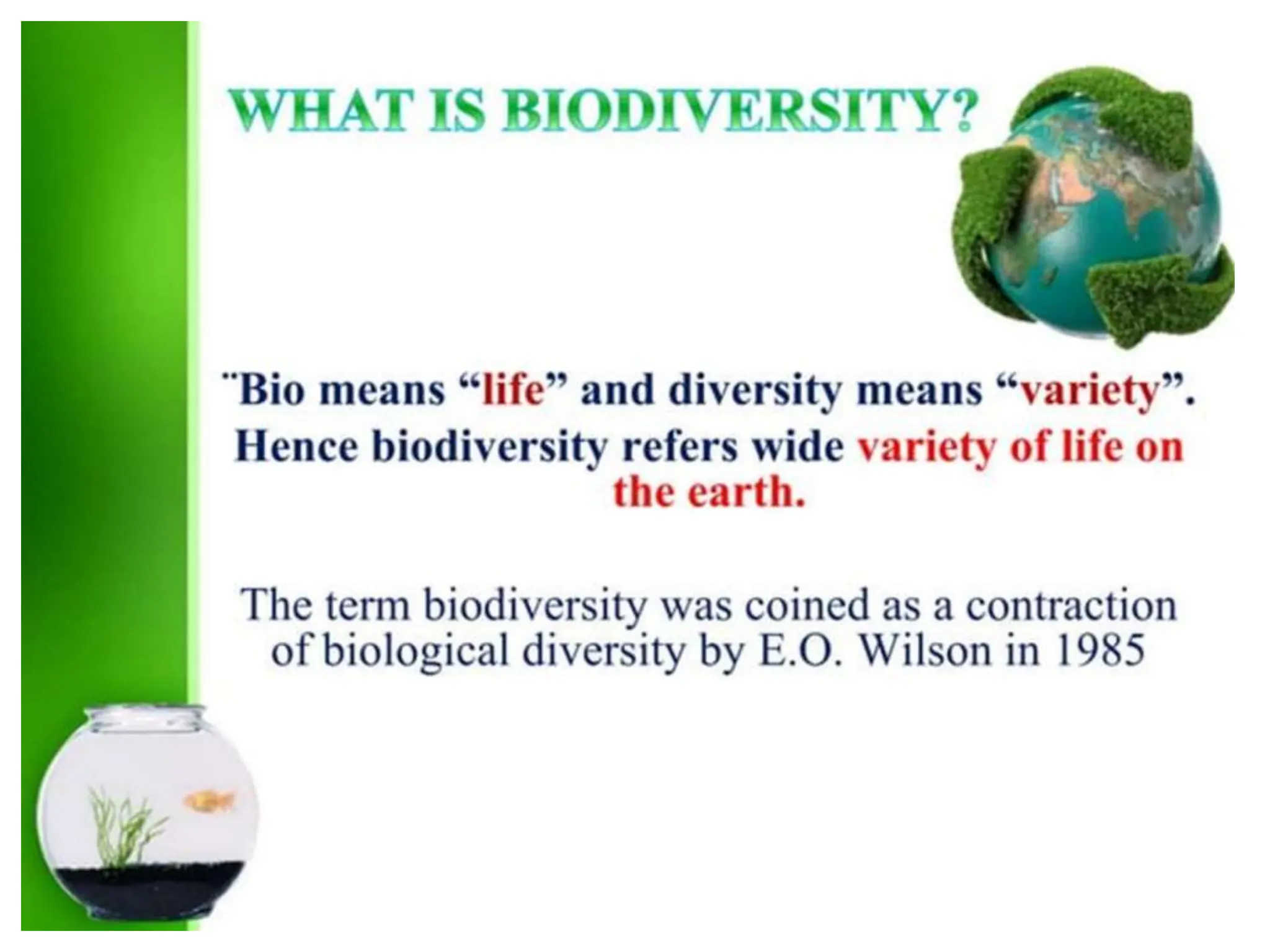
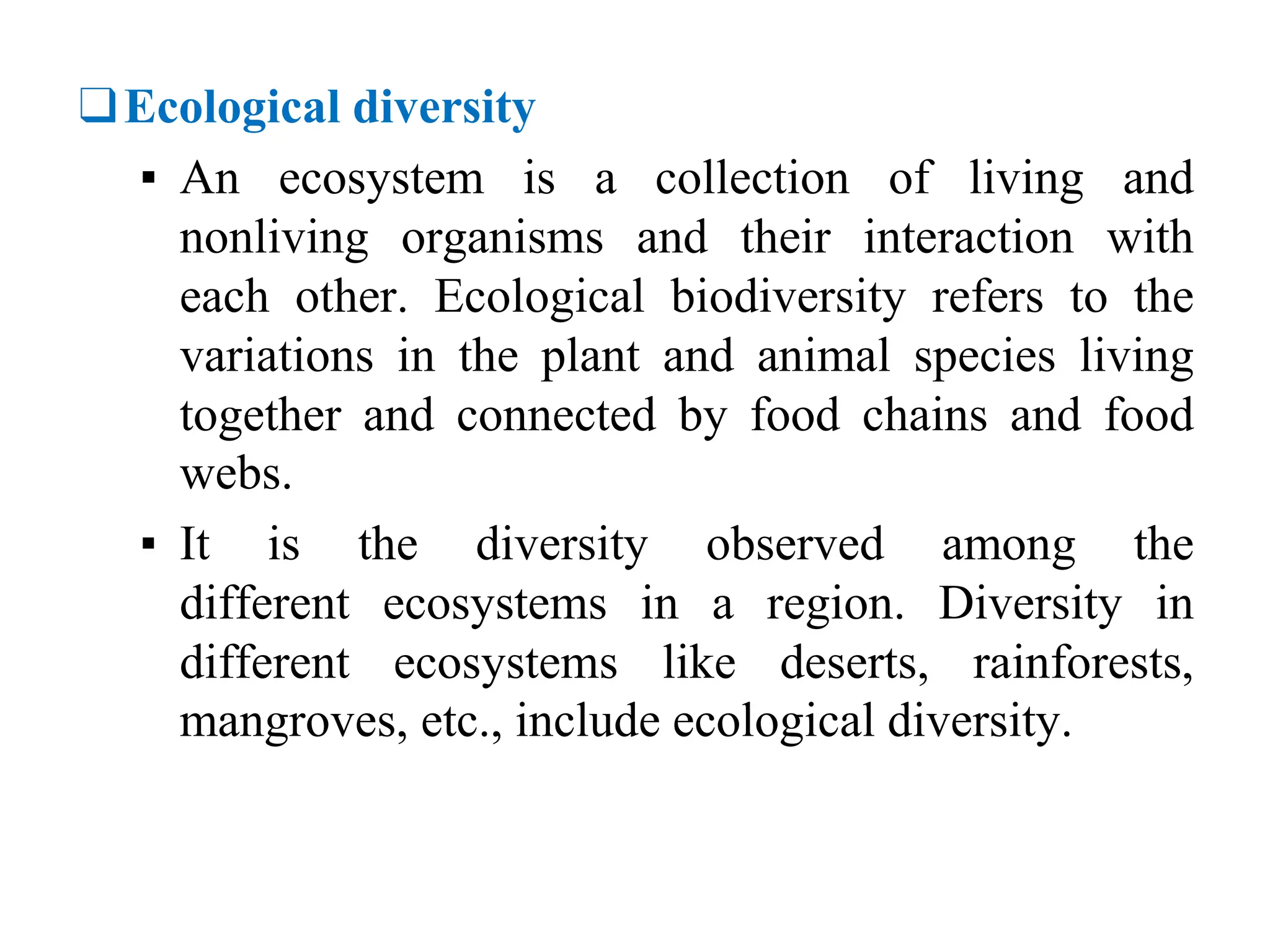
▪ Biodiversity is the biological variety and variability of life
on Earth. Biodiversity is typically a measure of variation at
the genetic, species, and ecosystem level.
▪ Biodiversity also differs from one ecosystem to another.
▪ It includes complete spectrum of living organism from
microscopic level (Bacteria, viruses, fungi etc.) to
macroscopic level (birds, insects, reptiles, mammals, fishes
etc.)
Types of Biodiversity:
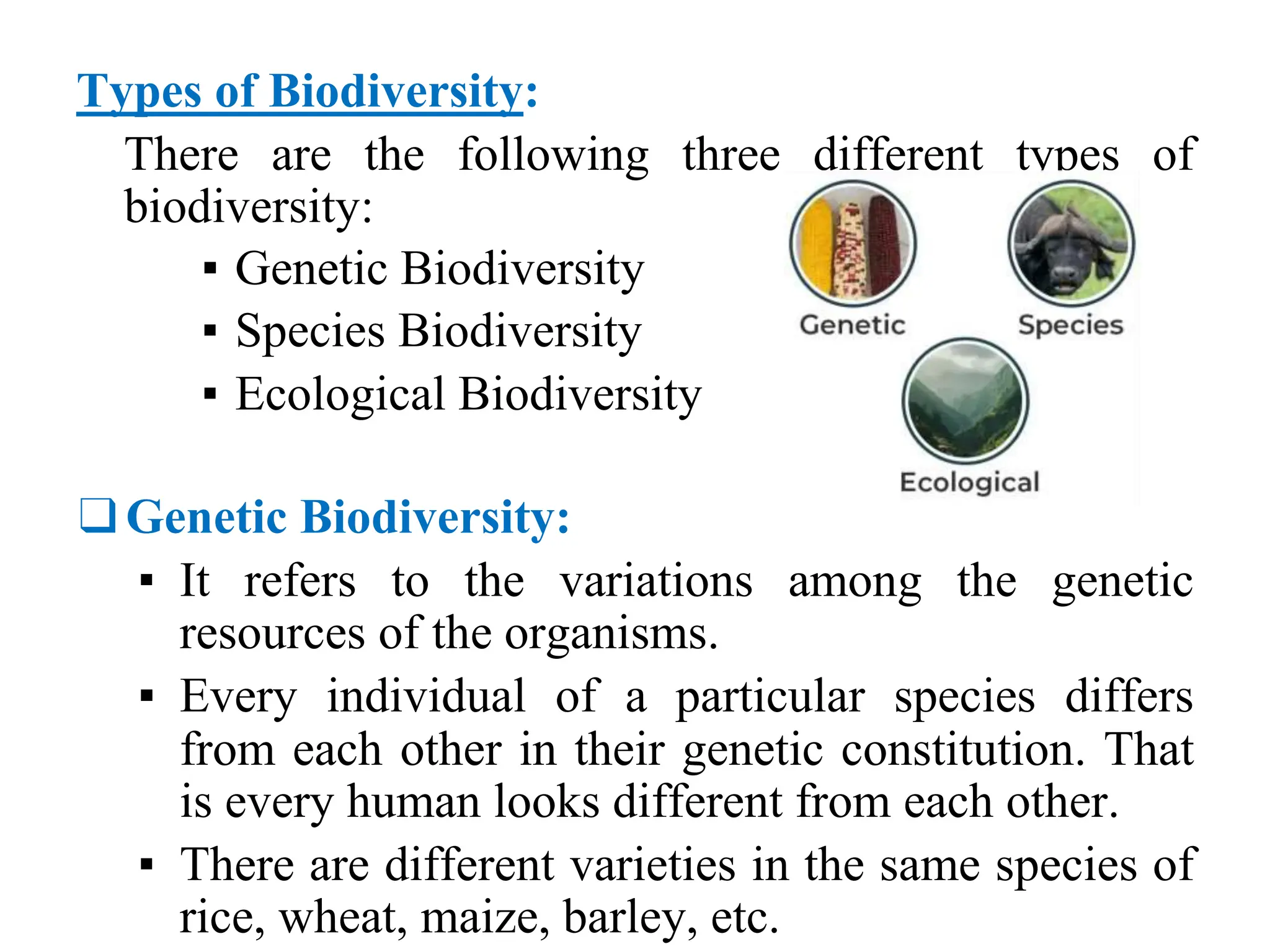
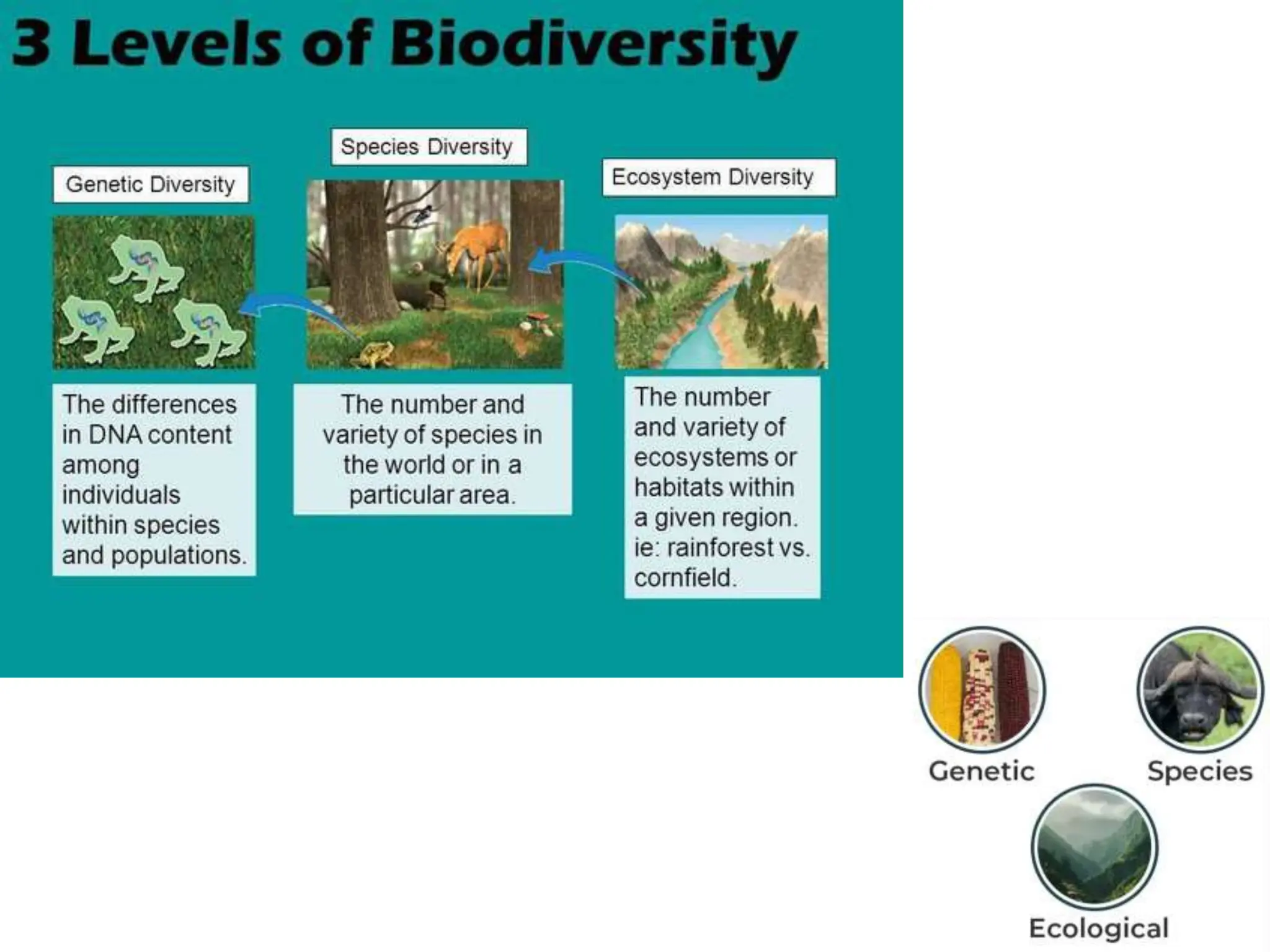
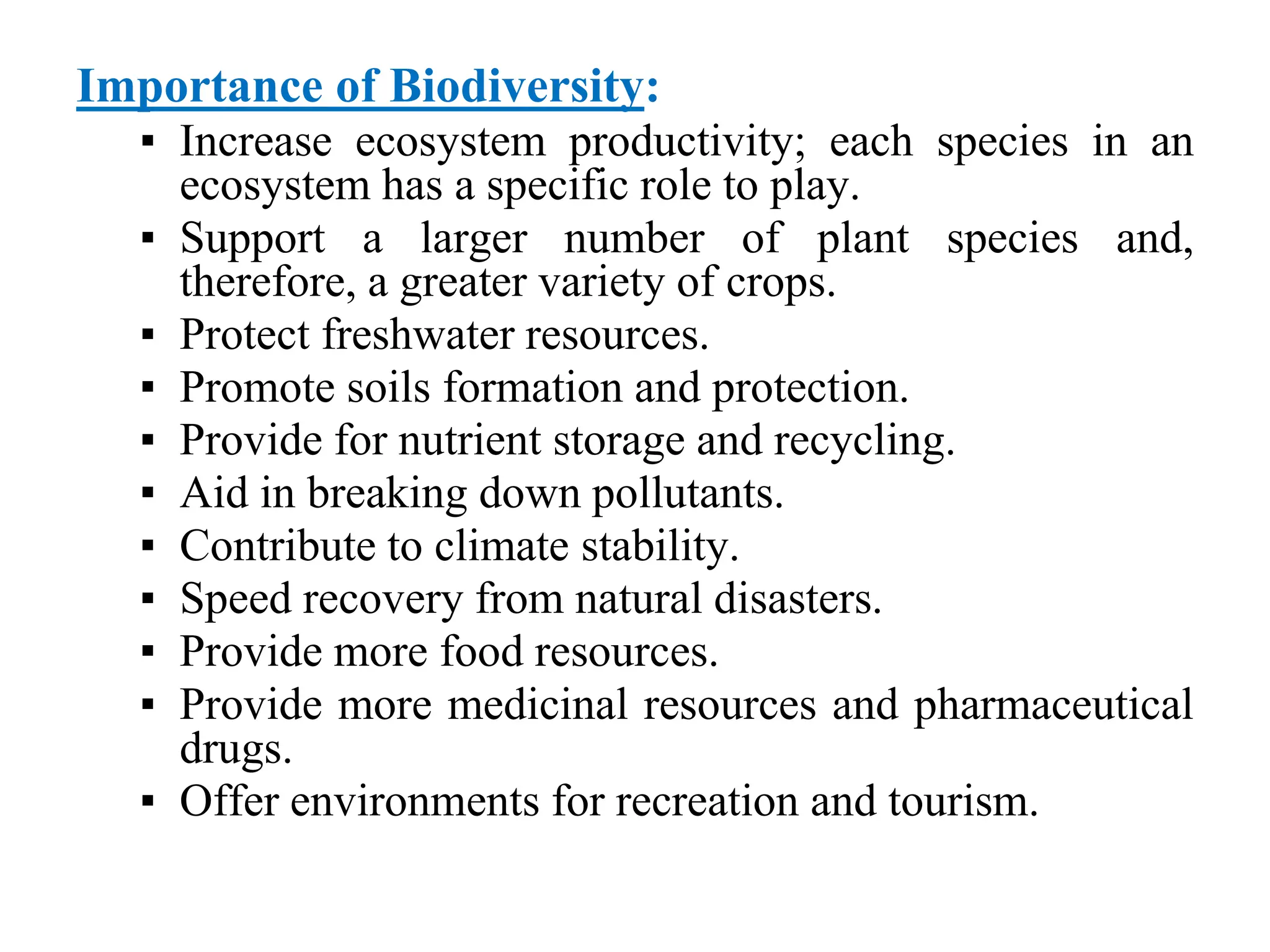
There are the following three different types of
biodiversity:
▪ Genetic Biodiversity
▪ Species Biodiversity
▪ Ecological Biodiversity
❑Genetic Biodiversity:
▪ It refers to the variations among the genetic
resources of the organisms.
▪ Every individual of a particular species differs
from each other in their genetic constitution. That
is every human looks different from each other.
▪ There are different varieties in the same species of
rice, wheat, maize, barley, etc.
❑Species diversity
▪ Species diversity refers to the variety of different
types of species found in a particular area.
▪ It is the biodiversity at the most basic level. It
includes all the species ranging from plants to
different microorganisms.
▪ No two individuals of the same species are exactly
similar. For example, humans show a lot of
diversity among themselves.
❑Ecological diversity
▪ An ecosystem is a collection of living and
nonliving organisms and their interaction with
each other. Ecological biodiversity refers to the
variations in the plant and animal species living
together and connected by food chains and food
webs.
▪ It is the diversity observed among the
different ecosystems in a region. Diversity in
different ecosystems like deserts, rainforests,
mangroves, etc., include ecological diversity.
Importance of Biodiversity:
▪ Increase ecosystem productivity; each species in an
ecosystem has a specific role to play.
▪ Support a larger number of plant species and,
therefore, a greater variety of crops.
▪ Protect freshwater resources.
▪ Promote soils formation and protection.
▪ Provide for nutrient storage and recycling.
▪ Aid in breaking down pollutants.
▪ Contribute to climate stability.
▪ Speed recovery from natural disasters.
▪ Provide more food resources.
▪ Provide more medicinal resources and pharmaceutical
drugs.
▪ Offer environments for recreation and tourism.
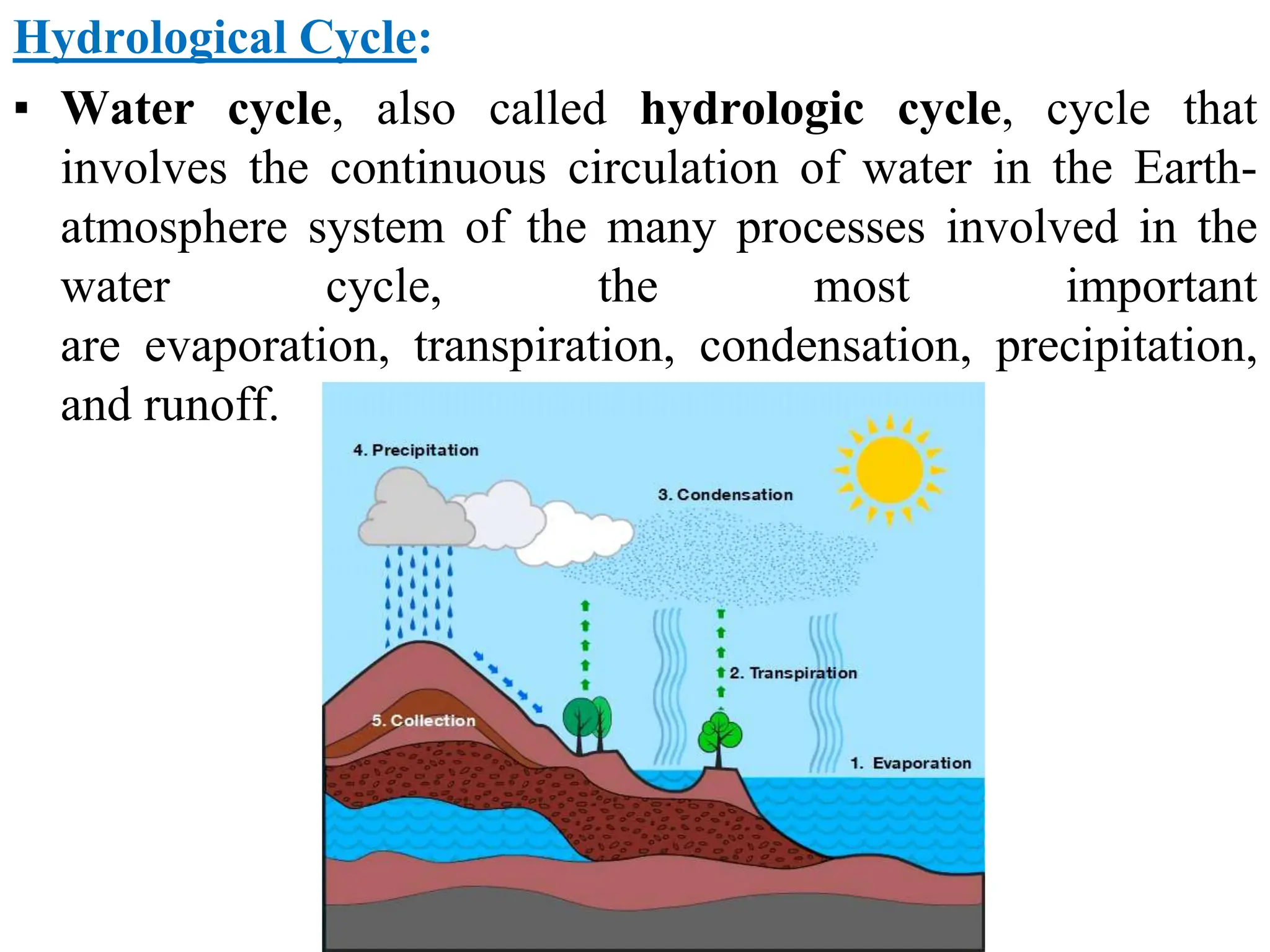
Hydrological Cycle:
▪ Water cycle, also called hydrologic cycle, cycle that
involves the continuous circulation of water in the Earth-
atmosphere system of the many processes involved in the
water cycle, the most important
are evaporation, transpiration, condensation, precipitation,
and runoff.
What causes Earth’s
climate to change?
▪ Changes in the atmosphere
▪ Natural processes
▪ Volcanoes
▪ Tectonic plate movement
▪ Changes in the sun
▪ Shifts in Earth’s orbit
▪ Human activities – any activity that releases
“greenhouse gases” into the atmosphere
What does this graph mean?
•Effects on Ecosystems
– Coral systems and other unique ecosystems cannot handle higher temperatures
well
– Wildfires will increase
– Up to 30% of species will be at increased risk for extinction due to the rapid
changes in their ecosystems
Source: Climate Analysis Indicators Tool, World Resources Institute

Basic Civil Engineering Notes of Chapter-6, Topic- Ecosystem, Biodiversity Green house effect & Hydrological cycle

  • 1.
    Department of CivilEngineering Academic Session = 2023-24 Year/ Semester- 1st / IInd Subject- Basic Civil Engineering (BCE) Subject code- 1FY3-09 Chapter-6, Topic- Ecosystem & Biodiversity By Denis Jangeed
  • 2.
    Ecosystem:- ▪ The ecosystemis the structural and functional unit of ecology where the living organisms interact with each other and the surrounding environment. ▪ In other words, an ecosystem is a chain of interaction between organisms and their environment. ▪ “Ecosystem” term was first introduced by sir Arthur Tansley, an English botanist, in 1935.
  • 3.
    Types of Ecosystem:- Ecosystemsare classified into two main categories (1) Natural Ecosystem (2) Artificial Ecosystem Natural ecosystem ▪ A natural ecosystem is the result of interactions between organisms and the environment. ▪ For example, an ocean is classified as a marine ecosystem, which consists of algae, consumers and decomposers. ▪ This process occurs naturally over a period of time, whereas in an artificial ecosystem, human interference is required. Artificial ecosystem ▪ An artificial ecosystem is not self-sustaining, and the ecosystem would perish without human assistance. ▪ For example, a farm is an artificial ecosystem that consists of plants and species outside their natural habitat. Without humans, this ecosystem could not sustain itself. ▪ The plants and animals need the help of humans to eat and survive.
  • 5.
  • 6.
    Biotic Components:- ▪ Bioticcomponents are the living things that have a direct or indirect influence on other organisms in an environment. Example:- Plants, animals, and microorganisms and their waste materials. Abiotic Components:- ▪ Abiotic components of an ecosystem include all chemical and physical elements i.e. non-living components. ▪ Abiotic components can vary from region to region, from one ecosystem to another. ▪ They mainly take up the role of life supporter.
  • 7.
    Biotic components canbe classified into three categories: 1. Producers: ▪ These include all the autotrophs. They use light energy and synthesize food on their own. ▪ Ex:-Plants, green algae, etc. 2. Consumers: ▪ These include all the heterotrophs that directly or indirectly depend on producers for their food. ▪ Consumers are further categorized as herbivores, carnivores, omnivores and parasites. 3. Decomposers: ▪ These include saprophytes which act on dead matter and decay them for their nutrition.
  • 8.
    Functions of Ecosystem: Thefunctions of the ecosystem are as follows: ▪ It regulates the essential ecological processes, supports life systems and renders stability. ▪ It is also responsible for the cycling of nutrients between Biotic and Abiotic components. ▪ It maintains a balance among the various tropic levels in the ecosystem. ▪ It cycles the minerals through the biosphere. ▪ The Abiotic components help in the synthesis of organic components that involves the exchange of energy.
  • 10.
    Biodiversity: ▪ Biodiversity isthe biological variety and variability of life on Earth. Biodiversity is typically a measure of variation at the genetic, species, and ecosystem level. ▪ Biodiversity also differs from one ecosystem to another. ▪ It includes complete spectrum of living organism from microscopic level (Bacteria, viruses, fungi etc.) to macroscopic level (birds, insects, reptiles, mammals, fishes etc.)
  • 12.
    Types of Biodiversity: Thereare the following three different types of biodiversity: ▪ Genetic Biodiversity ▪ Species Biodiversity ▪ Ecological Biodiversity ❑Genetic Biodiversity: ▪ It refers to the variations among the genetic resources of the organisms. ▪ Every individual of a particular species differs from each other in their genetic constitution. That is every human looks different from each other. ▪ There are different varieties in the same species of rice, wheat, maize, barley, etc.
  • 14.
    ❑Species diversity ▪ Speciesdiversity refers to the variety of different types of species found in a particular area. ▪ It is the biodiversity at the most basic level. It includes all the species ranging from plants to different microorganisms. ▪ No two individuals of the same species are exactly similar. For example, humans show a lot of diversity among themselves.
  • 15.
    ❑Ecological diversity ▪ Anecosystem is a collection of living and nonliving organisms and their interaction with each other. Ecological biodiversity refers to the variations in the plant and animal species living together and connected by food chains and food webs. ▪ It is the diversity observed among the different ecosystems in a region. Diversity in different ecosystems like deserts, rainforests, mangroves, etc., include ecological diversity.
  • 17.
    Importance of Biodiversity: ▪Increase ecosystem productivity; each species in an ecosystem has a specific role to play. ▪ Support a larger number of plant species and, therefore, a greater variety of crops. ▪ Protect freshwater resources. ▪ Promote soils formation and protection. ▪ Provide for nutrient storage and recycling. ▪ Aid in breaking down pollutants. ▪ Contribute to climate stability. ▪ Speed recovery from natural disasters. ▪ Provide more food resources. ▪ Provide more medicinal resources and pharmaceutical drugs. ▪ Offer environments for recreation and tourism.
  • 18.
    Hydrological Cycle: ▪ Watercycle, also called hydrologic cycle, cycle that involves the continuous circulation of water in the Earth- atmosphere system of the many processes involved in the water cycle, the most important are evaporation, transpiration, condensation, precipitation, and runoff.
  • 20.
    What causes Earth’s climateto change? ▪ Changes in the atmosphere ▪ Natural processes ▪ Volcanoes ▪ Tectonic plate movement ▪ Changes in the sun ▪ Shifts in Earth’s orbit ▪ Human activities – any activity that releases “greenhouse gases” into the atmosphere
  • 21.
    What does thisgraph mean?
  • 22.
    •Effects on Ecosystems –Coral systems and other unique ecosystems cannot handle higher temperatures well – Wildfires will increase – Up to 30% of species will be at increased risk for extinction due to the rapid changes in their ecosystems
  • 23.
    Source: Climate AnalysisIndicators Tool, World Resources Institute