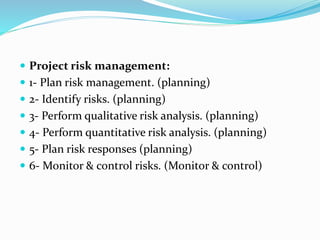
 Project risk management:
 1- Plan risk management. (planning)
 2- Identify risks. (planning)
 3- Perform qualitative risk analysis. (planning)
 4- Perform quantitative risk analysis. (planning)
 5- Plan risk responses (planning)
 6- Monitor & control risks. (Monitor & control)
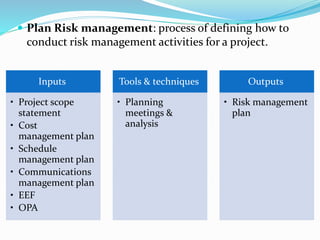
 Plan Risk management: process of defining how to
conduct risk management activities for a project.
Inputs
• Project scope
statement
• Cost
management plan
• Schedule
management plan
• Communications
management plan
• EEF
• OPA
Tools & techniques
• Planning
meetings &
analysis
Outputs
• Risk management
plan
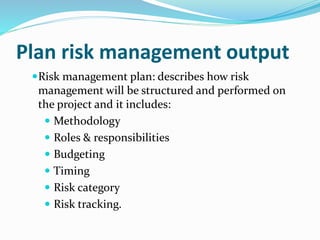
Plan risk management output
Risk management plan: describes how risk
management will be structured and performed on
the project and it includes:
 Methodology
 Roles & responsibilities
 Budgeting
 Timing
 Risk category
 Risk tracking.
 Risk impact scale definition
2- Identify risks:
 Process of determining which risks may affect the
project and documenting the characteristics:
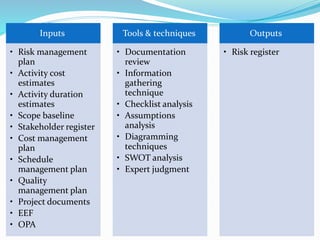
Inputs
• Risk management
plan
• Activity cost
estimates
• Activity duration
estimates
• Scope baseline
• Stakeholder register
• Cost management
plan
• Schedule
management plan
• Quality
management plan
• Project documents
• EEF
• OPA
Tools & techniques
• Documentation
review
• Information
gathering
technique
• Checklist analysis
• Assumptions
analysis
• Diagramming
techniques
• SWOT analysis
• Expert judgment
Outputs
• Risk register
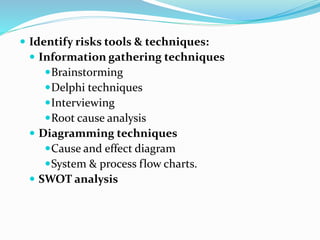
 Identify risks tools & techniques:
 Information gathering techniques
Brainstorming
Delphi techniques
Interviewing
Root cause analysis
 Diagramming techniques
Cause and effect diagram
System & process flow charts.
 SWOT analysis
3- Perform qualitative risk analysis
 process of prioritizing risks for further analysis or
action by assessing and combining their probability of
occurrence and impact.
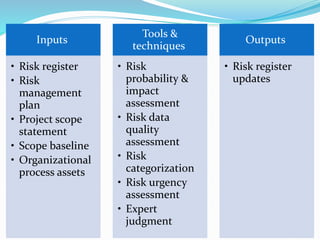
Inputs
• Risk register
• Risk
management
plan
• Project scope
statement
• Scope baseline
• Organizational
process assets
Tools &
techniques
• Risk
probability &
impact
assessment
• Risk data
quality
assessment
• Risk
categorization
• Risk urgency
assessment
• Expert
judgment
Outputs
• Risk register
updates
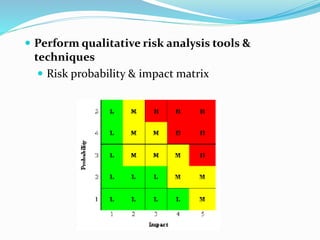
 Perform qualitative risk analysis tools &
techniques
 Risk probability & impact matrix
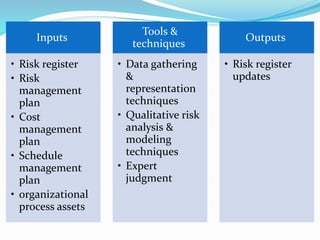
4- Perform quantitative risk
analysis
 process of numerically analyzing the effect of
identified risks on overall objectives
Inputs
• Risk register
• Risk
management
plan
• Cost
management
plan
• Schedule
management
plan
• organizational
process assets
Tools &
techniques
• Data gathering
&
representation
techniques
• Qualitative risk
analysis &
modeling
techniques
• Expert
judgment
Outputs
• Risk register
updates
5- Plan risk responses:
 process of developing options and actions to enhance
opportunities and to reduce threats to project
objectives
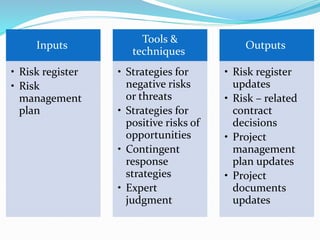
Inputs
• Risk register
• Risk
management
plan
Tools &
techniques
• Strategies for
negative risks
or threats
• Strategies for
positive risks of
opportunities
• Contingent
response
strategies
• Expert
judgment
Outputs
• Risk register
updates
• Risk – related
contract
decisions
• Project
management
plan updates
• Project
documents
updates
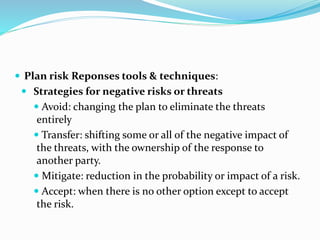
 Plan risk Reponses tools & techniques:
 Strategies for negative risks or threats
 Avoid: changing the plan to eliminate the threats
entirely
 Transfer: shifting some or all of the negative impact of
the threats, with the ownership of the response to
another party.
 Mitigate: reduction in the probability or impact of a risk.
 Accept: when there is no other option except to accept
the risk.
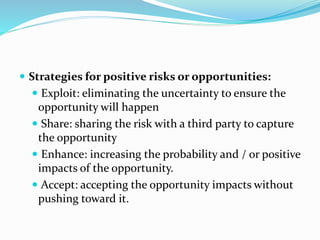
 Strategies for positive risks or opportunities:
 Exploit: eliminating the uncertainty to ensure the
opportunity will happen
 Share: sharing the risk with a third party to capture
the opportunity
 Enhance: increasing the probability and / or positive
impacts of the opportunity.
 Accept: accepting the opportunity impacts without
pushing toward it.
6- Monitor & control risks:
 process of implementing risk response plans, tracking
identified risks, identified new risks, and evaluating
risk process effectiveness throughout the project.
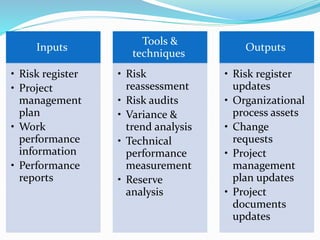
Inputs
• Risk register
• Project
management
plan
• Work
performance
information
• Performance
reports
Tools &
techniques
• Risk
reassessment
• Risk audits
• Variance &
trend analysis
• Technical
performance
measurement
• Reserve
analysis
Outputs
• Risk register
updates
• Organizational
process assets
• Change
requests
• Project
management
plan updates
• Project
documents
updates

Risk management mod

  • 2.
     Project riskmanagement:  1- Plan risk management. (planning)  2- Identify risks. (planning)  3- Perform qualitative risk analysis. (planning)  4- Perform quantitative risk analysis. (planning)  5- Plan risk responses (planning)  6- Monitor & control risks. (Monitor & control)
  • 3.
     Plan Riskmanagement: process of defining how to conduct risk management activities for a project. Inputs • Project scope statement • Cost management plan • Schedule management plan • Communications management plan • EEF • OPA Tools & techniques • Planning meetings & analysis Outputs • Risk management plan
  • 4.
    Plan risk managementoutput Risk management plan: describes how risk management will be structured and performed on the project and it includes:  Methodology  Roles & responsibilities  Budgeting  Timing  Risk category  Risk tracking.
  • 5.
     Risk impactscale definition
  • 6.
    2- Identify risks: Process of determining which risks may affect the project and documenting the characteristics:
  • 7.
    Inputs • Risk management plan •Activity cost estimates • Activity duration estimates • Scope baseline • Stakeholder register • Cost management plan • Schedule management plan • Quality management plan • Project documents • EEF • OPA Tools & techniques • Documentation review • Information gathering technique • Checklist analysis • Assumptions analysis • Diagramming techniques • SWOT analysis • Expert judgment Outputs • Risk register
  • 8.
     Identify riskstools & techniques:  Information gathering techniques Brainstorming Delphi techniques Interviewing Root cause analysis  Diagramming techniques Cause and effect diagram System & process flow charts.  SWOT analysis
  • 9.
    3- Perform qualitativerisk analysis  process of prioritizing risks for further analysis or action by assessing and combining their probability of occurrence and impact.
  • 10.
    Inputs • Risk register •Risk management plan • Project scope statement • Scope baseline • Organizational process assets Tools & techniques • Risk probability & impact assessment • Risk data quality assessment • Risk categorization • Risk urgency assessment • Expert judgment Outputs • Risk register updates
  • 11.
     Perform qualitativerisk analysis tools & techniques  Risk probability & impact matrix
  • 12.
    4- Perform quantitativerisk analysis  process of numerically analyzing the effect of identified risks on overall objectives
  • 13.
    Inputs • Risk register •Risk management plan • Cost management plan • Schedule management plan • organizational process assets Tools & techniques • Data gathering & representation techniques • Qualitative risk analysis & modeling techniques • Expert judgment Outputs • Risk register updates
  • 14.
    5- Plan riskresponses:  process of developing options and actions to enhance opportunities and to reduce threats to project objectives
  • 15.
    Inputs • Risk register •Risk management plan Tools & techniques • Strategies for negative risks or threats • Strategies for positive risks of opportunities • Contingent response strategies • Expert judgment Outputs • Risk register updates • Risk – related contract decisions • Project management plan updates • Project documents updates
  • 16.
     Plan riskReponses tools & techniques:  Strategies for negative risks or threats  Avoid: changing the plan to eliminate the threats entirely  Transfer: shifting some or all of the negative impact of the threats, with the ownership of the response to another party.  Mitigate: reduction in the probability or impact of a risk.  Accept: when there is no other option except to accept the risk.
  • 17.
     Strategies forpositive risks or opportunities:  Exploit: eliminating the uncertainty to ensure the opportunity will happen  Share: sharing the risk with a third party to capture the opportunity  Enhance: increasing the probability and / or positive impacts of the opportunity.  Accept: accepting the opportunity impacts without pushing toward it.
  • 18.
    6- Monitor &control risks:  process of implementing risk response plans, tracking identified risks, identified new risks, and evaluating risk process effectiveness throughout the project.
  • 19.
    Inputs • Risk register •Project management plan • Work performance information • Performance reports Tools & techniques • Risk reassessment • Risk audits • Variance & trend analysis • Technical performance measurement • Reserve analysis Outputs • Risk register updates • Organizational process assets • Change requests • Project management plan updates • Project documents updates