Learning theory and SLA


●
  Interlanguage, input, interaction
●
  Learner errors, learner varieties
Interlanguage
                            Selinker, 1972

Learner language is not just
●
  Incorrect, L1-influenced language
●
  Random errors in language output

Learner language is systematic
●
  Learner errors have an internal logic
●
  Different learners go through the same
stages
1. Input hypothesis

●
    Krashen's Monitor Model
       –   Acquisition versus learning
       –   Natural order hypothesis
       –   Comprehensible input at i + 1 is
            the necessary and sufficient
            condition for learning
       –   Monitoring is limited
       –   Affective filter prevents
            learning under stress
2. Interaction

●
    Interaction hypothesis
         –   Susan Gass
●
    Output hypothesis
    –   Merrill Swain
SLA research
  SLA research
Developmental sequences
DEVELOPMENTAL SEQUENCES

The acquisition of morphemes or
  syntactic constructions appears
  in stages
●
  which are not taught
●
  which occur in all learners.
Cross-linguistic study:
                 acquisition of the past

 ●
     Bardovi-Harlig compared

  • untutored and tutored learners

 ●
     and found that all the learners
     passed through the same stages.
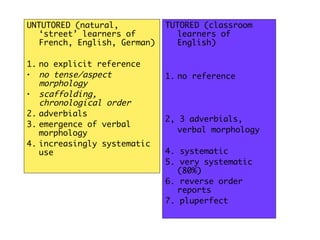
UNTUTORED (natural,           TUTORED (classroom
   ‘street’ learners of          learners of
   French, English, German)      English)

1. no explicit reference
• no tense/aspect             1. no reference
   morphology
• scaffolding,
   chronological order
2. adverbials
                              2, 3 adverbials,
3. emergence of verbal
   morphology                    verbal morphology
4. increasingly systematic
   use                        4. systematic
                              5. very systematic
                                 (80%)
                              6. reverse order
                                 reports
                              7. pluperfect
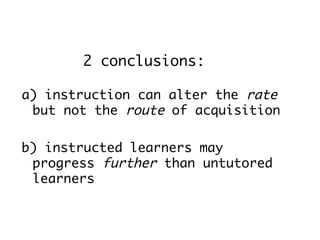
2 conclusions:

a) instruction can alter the rate
 but not the route of acquisition

b) instructed learners may
 progress further than untutored
 learners
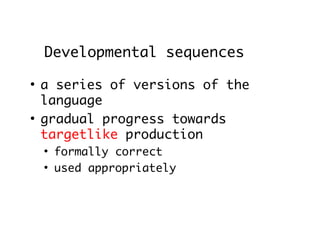
Developmental sequences
●
    a series of versions of the
    language
●
    gradual progress towards
    targetlike production
    ●
        formally correct
    ●
        used appropriately
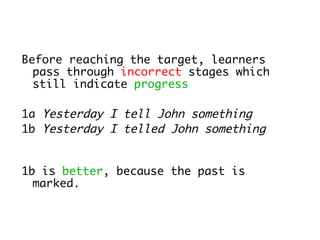
Before reaching the target, learners
  pass through incorrect stages which
  still indicate progress

1a Yesterday I tell John something
1b Yesterday I telled John something


1b is better, because the past is
  marked.
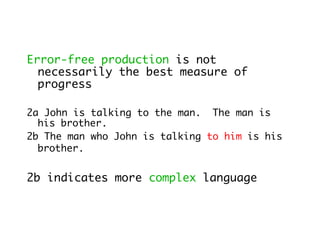
Error-free production is not
  necessarily the best measure of
  progress

2a John is talking to the man. The man is
  his brother.
2b The man who John is talking to him is his
  brother.


2b indicates more complex language

Interaction and Developmental sequences

  • 1.
    Learning theory andSLA ● Interlanguage, input, interaction ● Learner errors, learner varieties
  • 2.
    Interlanguage Selinker, 1972 Learner language is not just ● Incorrect, L1-influenced language ● Random errors in language output Learner language is systematic ● Learner errors have an internal logic ● Different learners go through the same stages
  • 3.
    1. Input hypothesis ● Krashen's Monitor Model – Acquisition versus learning – Natural order hypothesis – Comprehensible input at i + 1 is the necessary and sufficient condition for learning – Monitoring is limited – Affective filter prevents learning under stress
  • 4.
    2. Interaction ● Interaction hypothesis – Susan Gass ● Output hypothesis – Merrill Swain
  • 5.
    SLA research SLA research Developmental sequences
  • 6.
    DEVELOPMENTAL SEQUENCES The acquisitionof morphemes or syntactic constructions appears in stages ● which are not taught ● which occur in all learners.
  • 7.
    Cross-linguistic study: acquisition of the past ● Bardovi-Harlig compared • untutored and tutored learners ● and found that all the learners passed through the same stages.
  • 8.
    UNTUTORED (natural, TUTORED (classroom ‘street’ learners of learners of French, English, German) English) 1. no explicit reference • no tense/aspect 1. no reference morphology • scaffolding, chronological order 2. adverbials 2, 3 adverbials, 3. emergence of verbal morphology verbal morphology 4. increasingly systematic use 4. systematic 5. very systematic (80%) 6. reverse order reports 7. pluperfect
  • 9.
    2 conclusions: a) instructioncan alter the rate but not the route of acquisition b) instructed learners may progress further than untutored learners
  • 10.
    Developmental sequences ● a series of versions of the language ● gradual progress towards targetlike production ● formally correct ● used appropriately
  • 11.
    Before reaching thetarget, learners pass through incorrect stages which still indicate progress 1a Yesterday I tell John something 1b Yesterday I telled John something 1b is better, because the past is marked.
  • 12.
    Error-free production isnot necessarily the best measure of progress 2a John is talking to the man. The man is his brother. 2b The man who John is talking to him is his brother. 2b indicates more complex language