Error Analysis

What is EA?
  EA is a technique which aims to
  describe and explain the systematic
  nature of deviations or errors
  generated in the learner’s language.
Error Analysis


  The importance of EA?
 2. EA helps to understand the
    process of SLA.
 3. EA shows statistically the
    troublesome linguistic areas or
    errors that L2 learners encounter
    in learning.
Error Analysis


 1. The errors give valuable feedback
    to both teachers and learners
    regarding learner strategies and
    progress.
 2. The errors also provide
    researchers with insights into the
    nature of SLA process.
EA Assumptions

1. EA is not restricted to errors
   caused by negative transfer
   from the L1, it covers all types
   of errors.
EA Assumptions

1. EA, unlike CA, provides data
   on real problems and this may
   lead to right solutions in the L2
   teaching.
EA Assumptions

1. EA is not confronted with
   problems such as accurate and
   explicit descriptions of
   languages, compatibility,
   knowing the two languages,
   etc.
EA Methodology

1. Collection of errors


2. Identification of errors


3. Classification of error types
EA Methodology

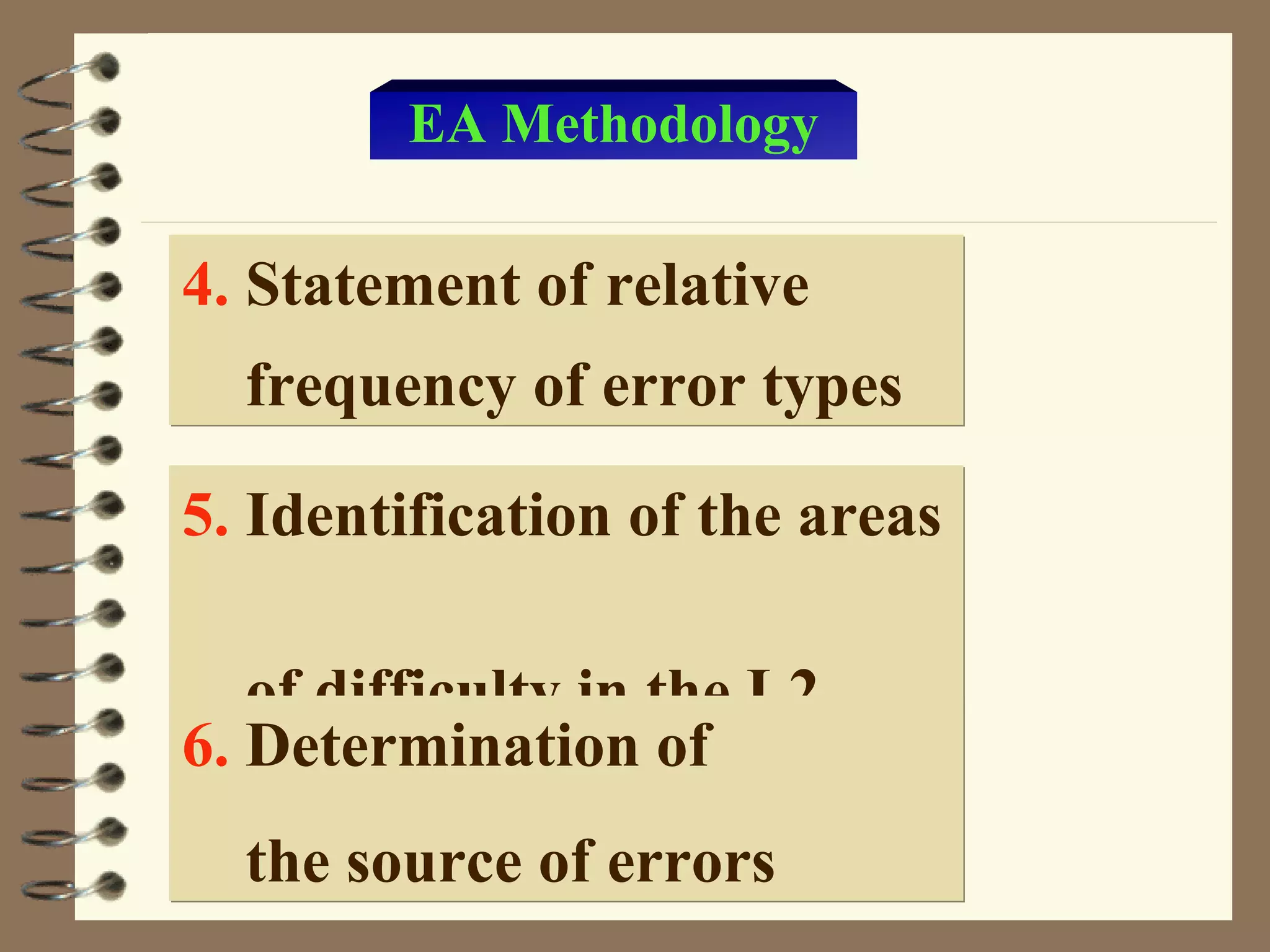
4. Statement of relative
  frequency of error types

5. Identification of the areas

   of difficulty in the L2
6. Determination of
  the source of errors
EA Methodology


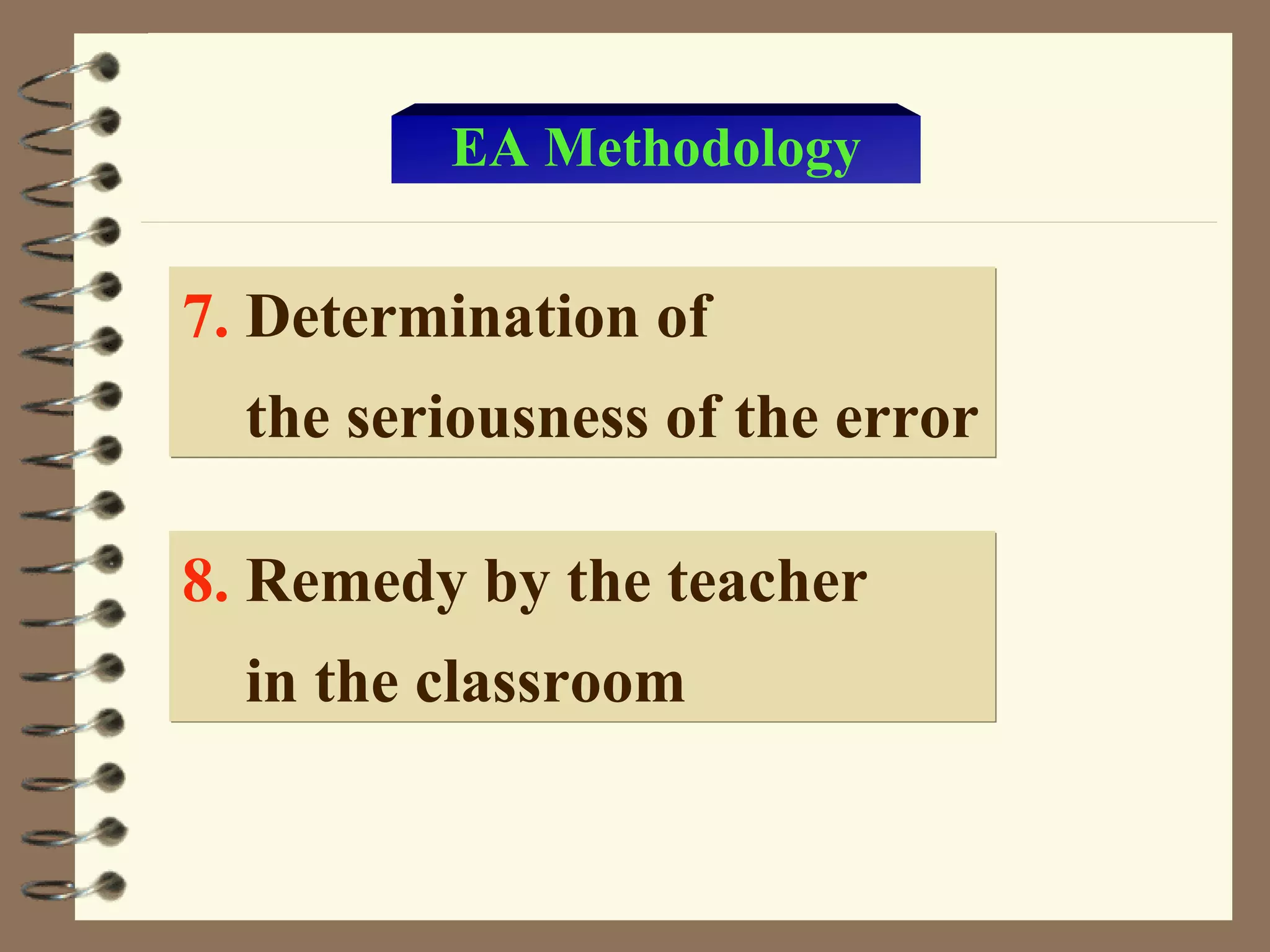
7. Determination of
  the seriousness of the error

8. Remedy by the teacher
  in the classroom
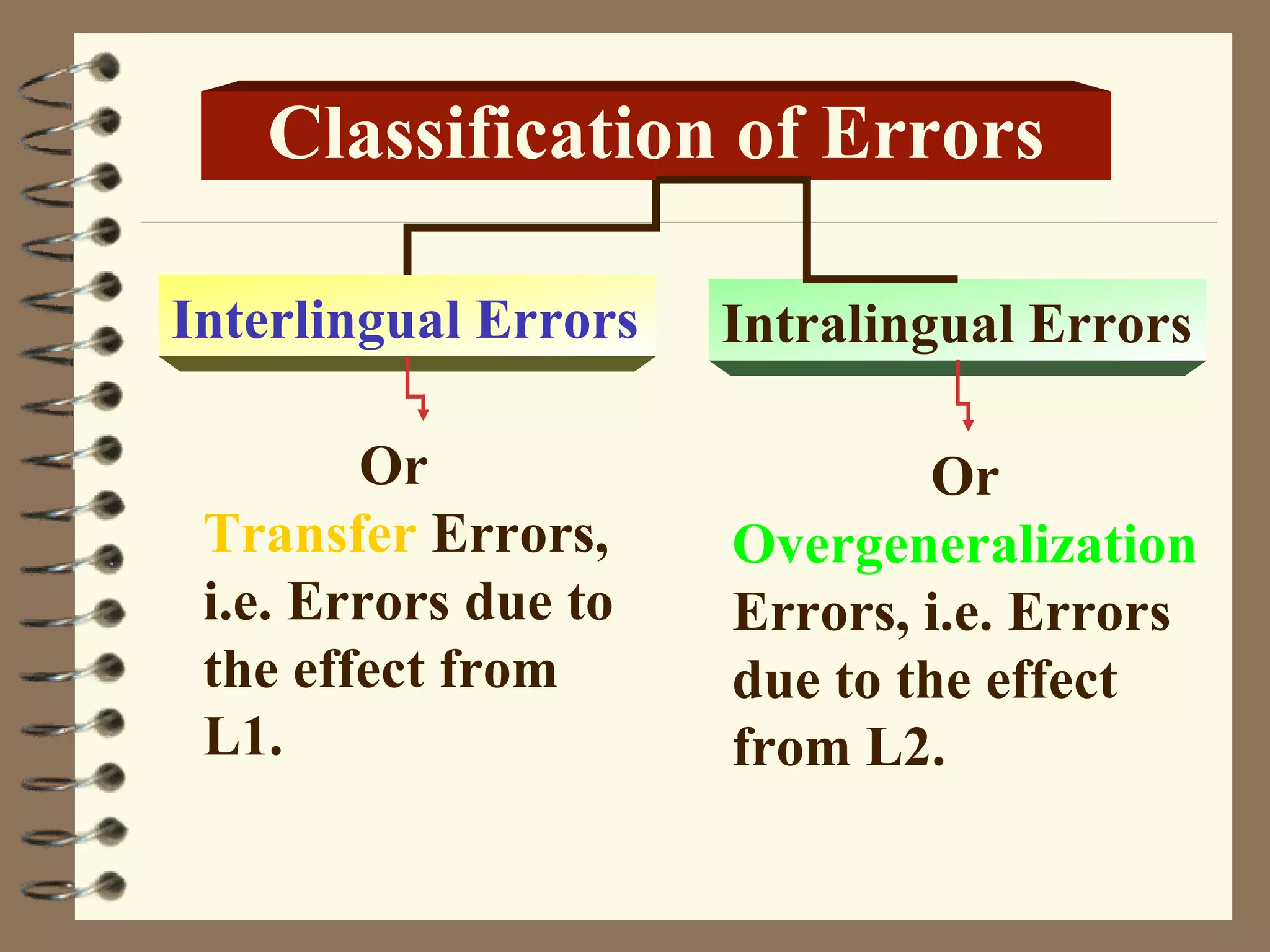
Classification of Errors

Interlingual Errors   Intralingual Errors

        Or                     Or
 Transfer Errors,     Overgeneralization
 i.e. Errors due to   Errors, i.e. Errors
 the effect from      due to the effect
 L1.                  from L2.
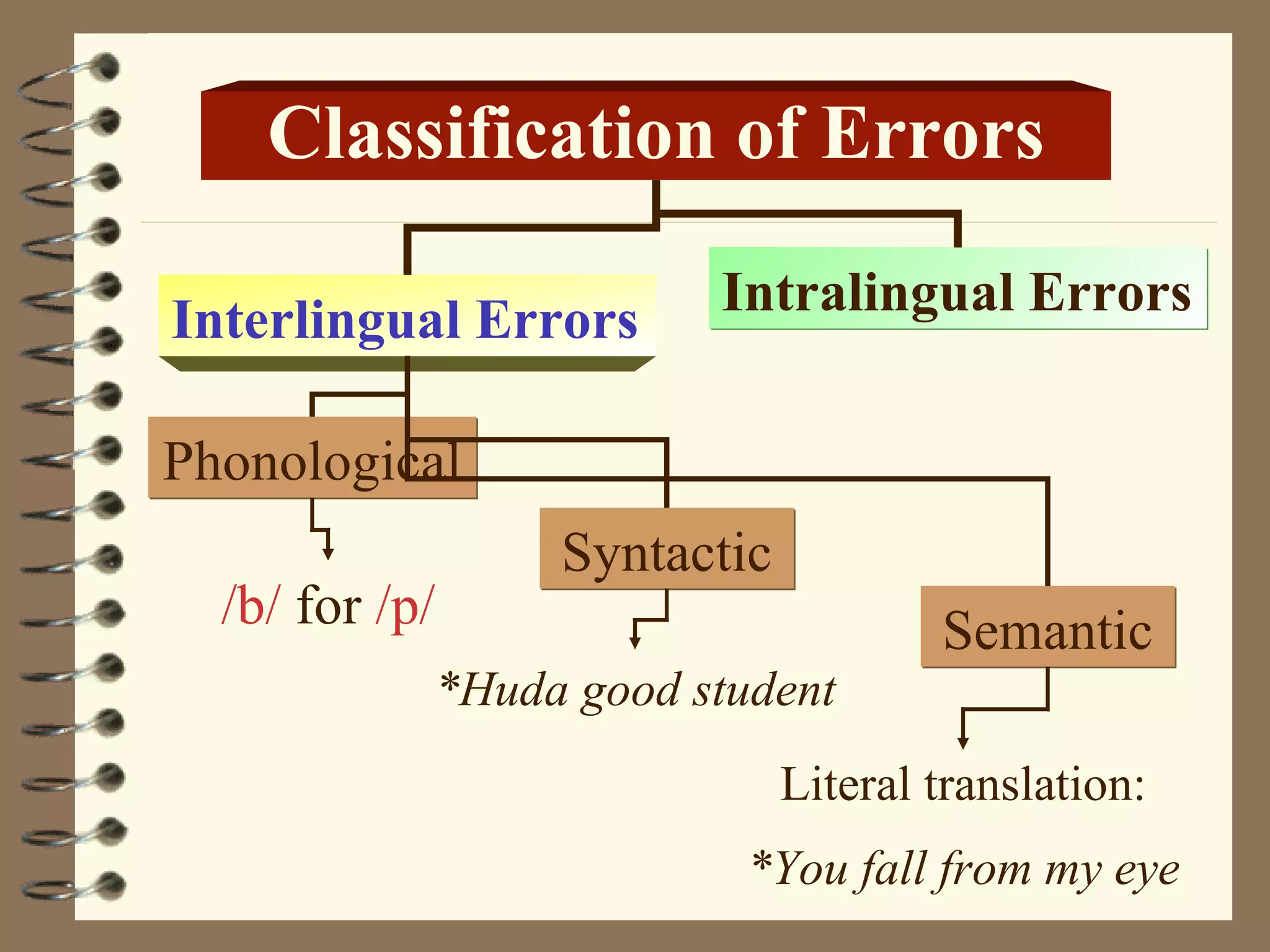
Classification of Errors

Interlingual Errors     Intralingual Errors


Phonological
                 Syntactic
  /b/ for /p/                        Semantic
            *Huda good student
                             Literal translation:
                          *You fall from my eye
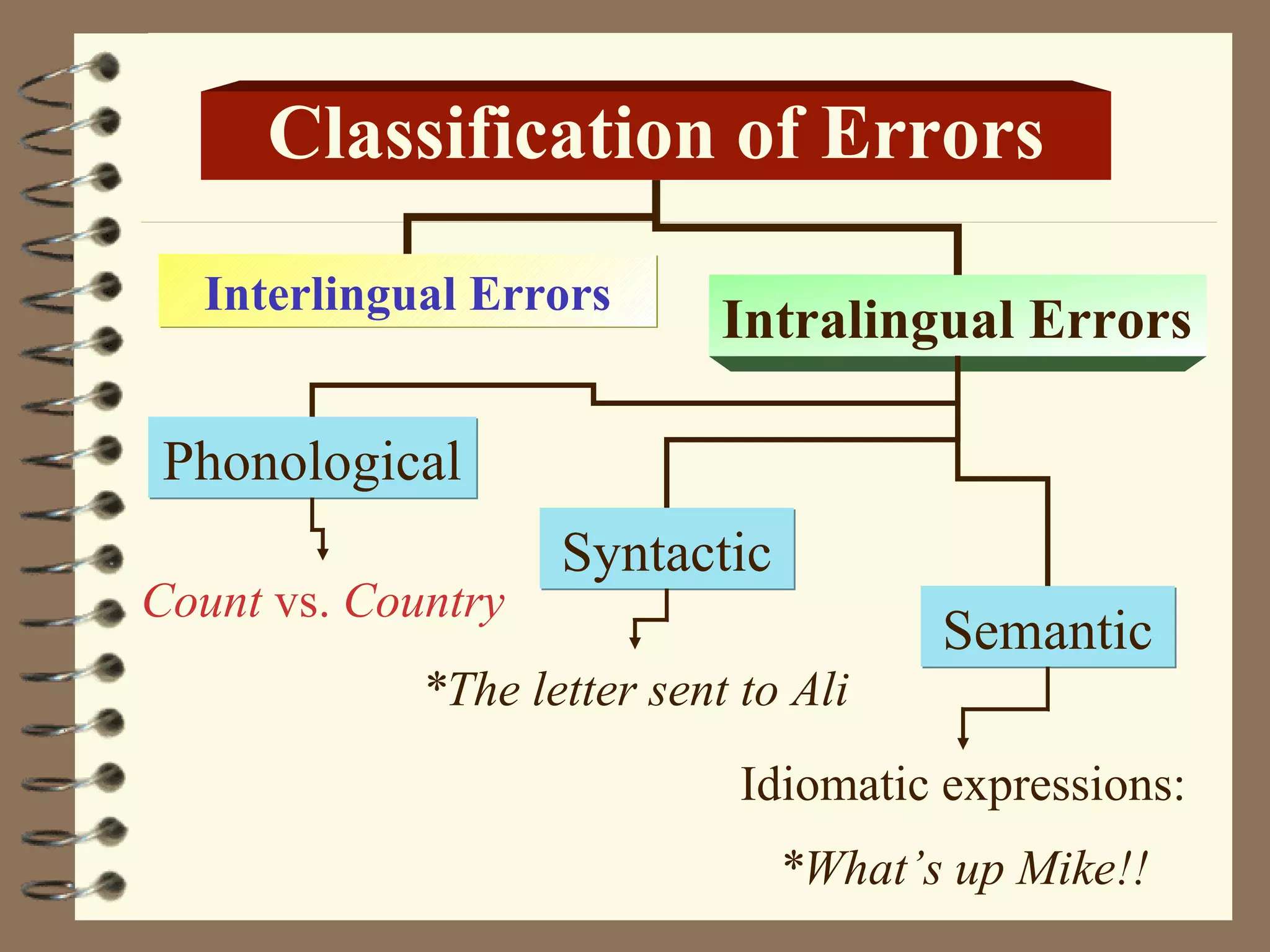
Classification of Errors
  Interlingual Errors
                             Intralingual Errors

 Phonological
                    Syntactic
Count vs. Country
                                       Semantic
             *The letter sent to Ali
                              Idiomatic expressions:
                                *What’s up Mike!!
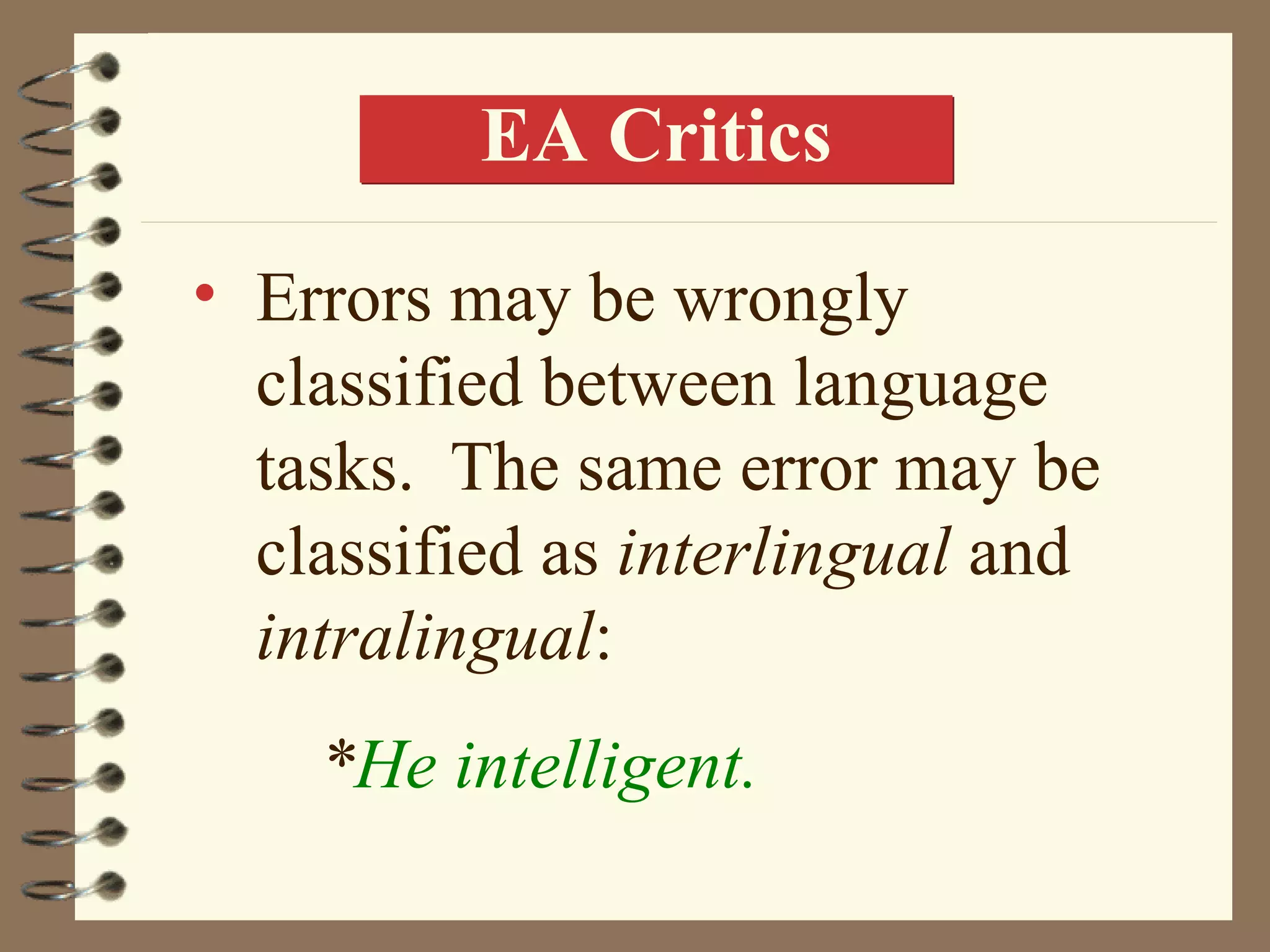
EA Critics

• Errors may be wrongly
  classified between language
  tasks. The same error may be
  classified as interlingual and
  intralingual:
    *He intelligent.
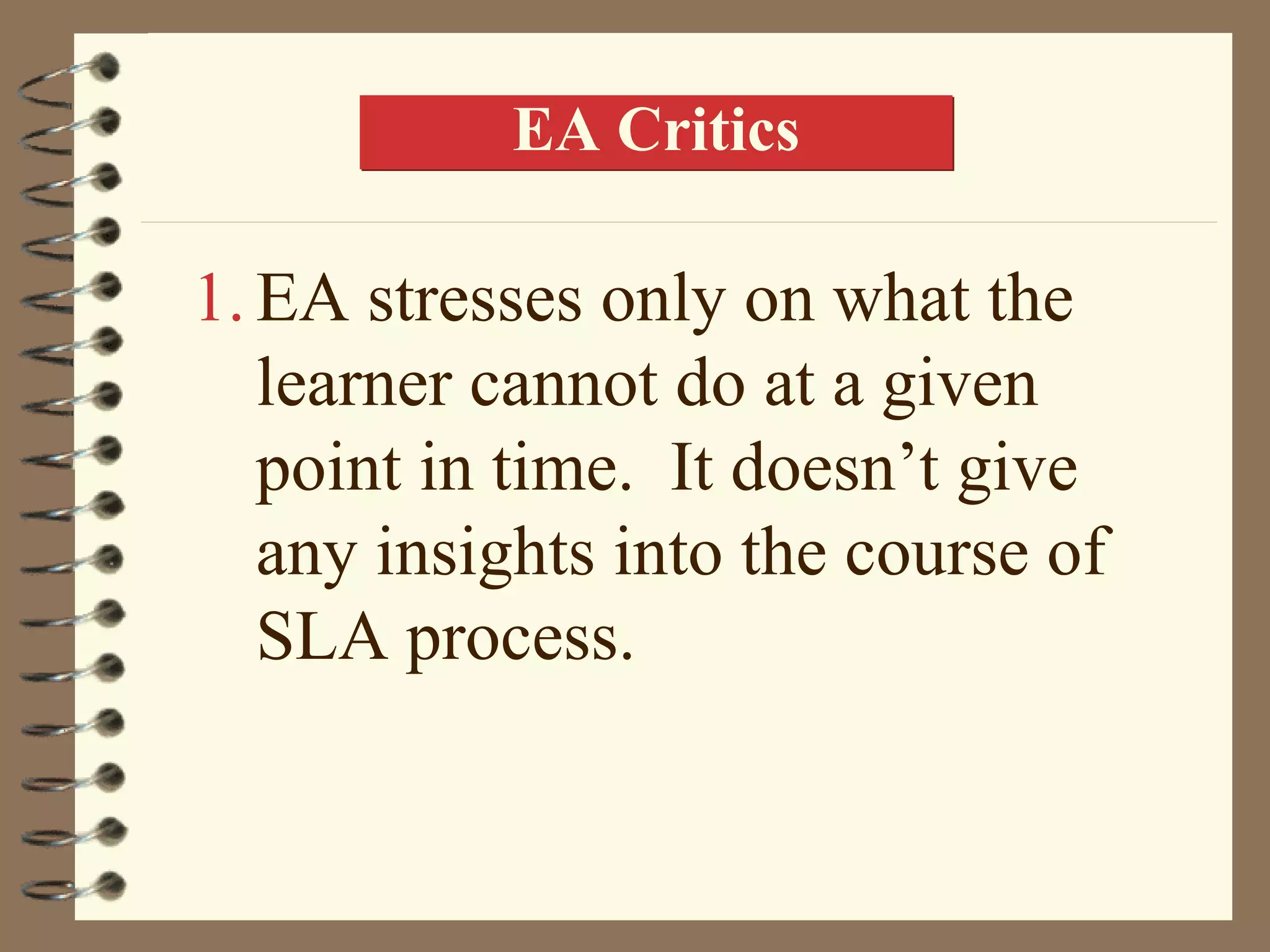
EA Critics

1. EA stresses only on what the
   learner cannot do at a given
   point in time. It doesn’t give
   any insights into the course of
   SLA process.
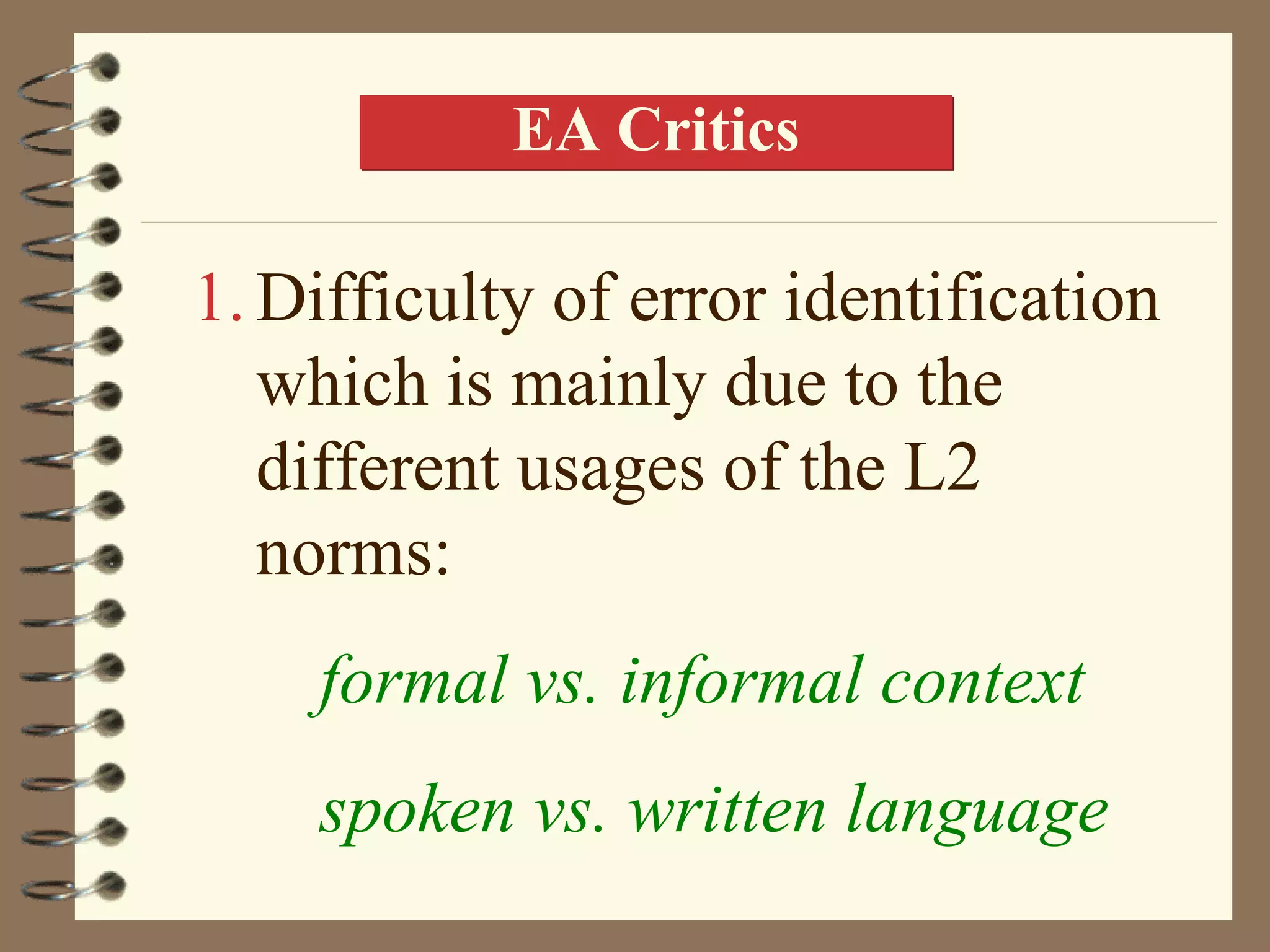
EA Critics

1. Difficulty of error identification
   which is mainly due to the
   different usages of the L2
   norms:
    formal vs. informal context
    spoken vs. written language
EA Critics

• Learners some times adopt the
  avoidance strategy not commit
  errors. In this case certain types
  of errors don’t appear in the L2
  learner’s performance.
Error analysis presentation

Error analysis presentation

  • 2.
    Error Analysis What isEA? EA is a technique which aims to describe and explain the systematic nature of deviations or errors generated in the learner’s language.
  • 3.
    Error Analysis The importance of EA? 2. EA helps to understand the process of SLA. 3. EA shows statistically the troublesome linguistic areas or errors that L2 learners encounter in learning.
  • 4.
    Error Analysis 1.The errors give valuable feedback to both teachers and learners regarding learner strategies and progress. 2. The errors also provide researchers with insights into the nature of SLA process.
  • 5.
    EA Assumptions 1. EAis not restricted to errors caused by negative transfer from the L1, it covers all types of errors.
  • 6.
    EA Assumptions 1. EA,unlike CA, provides data on real problems and this may lead to right solutions in the L2 teaching.
  • 7.
    EA Assumptions 1. EAis not confronted with problems such as accurate and explicit descriptions of languages, compatibility, knowing the two languages, etc.
  • 8.
    EA Methodology 1. Collectionof errors 2. Identification of errors 3. Classification of error types
  • 9.
    EA Methodology 4. Statementof relative frequency of error types 5. Identification of the areas of difficulty in the L2 6. Determination of the source of errors
  • 10.
    EA Methodology 7. Determinationof the seriousness of the error 8. Remedy by the teacher in the classroom
  • 11.
    Classification of Errors InterlingualErrors Intralingual Errors Or Or Transfer Errors, Overgeneralization i.e. Errors due to Errors, i.e. Errors the effect from due to the effect L1. from L2.
  • 12.
    Classification of Errors InterlingualErrors Intralingual Errors Phonological Syntactic /b/ for /p/ Semantic *Huda good student Literal translation: *You fall from my eye
  • 13.
    Classification of Errors Interlingual Errors Intralingual Errors Phonological Syntactic Count vs. Country Semantic *The letter sent to Ali Idiomatic expressions: *What’s up Mike!!
  • 14.
    EA Critics • Errorsmay be wrongly classified between language tasks. The same error may be classified as interlingual and intralingual: *He intelligent.
  • 15.
    EA Critics 1. EAstresses only on what the learner cannot do at a given point in time. It doesn’t give any insights into the course of SLA process.
  • 16.
    EA Critics 1. Difficultyof error identification which is mainly due to the different usages of the L2 norms: formal vs. informal context spoken vs. written language
  • 17.
    EA Critics • Learnerssome times adopt the avoidance strategy not commit errors. In this case certain types of errors don’t appear in the L2 learner’s performance.