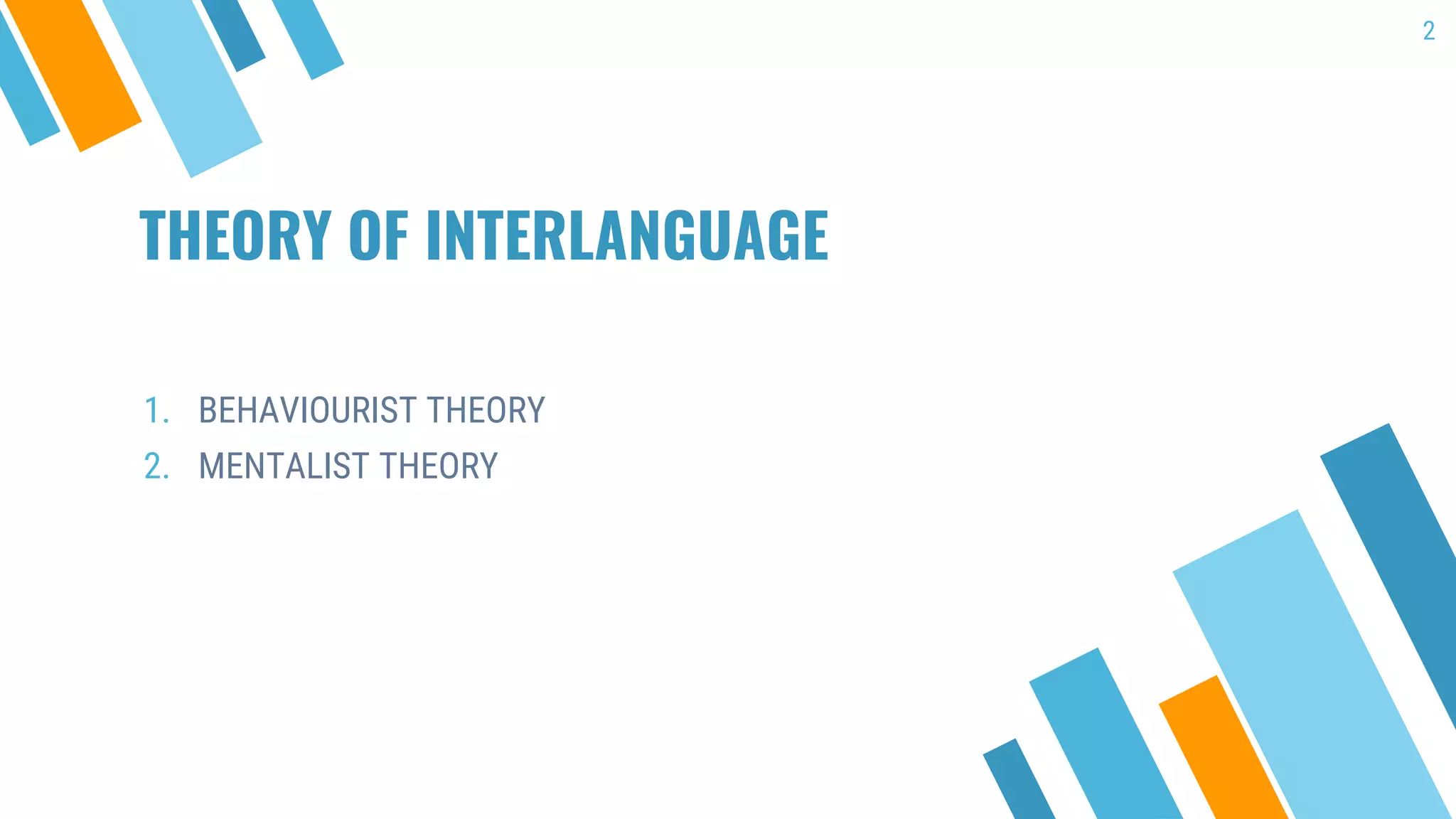
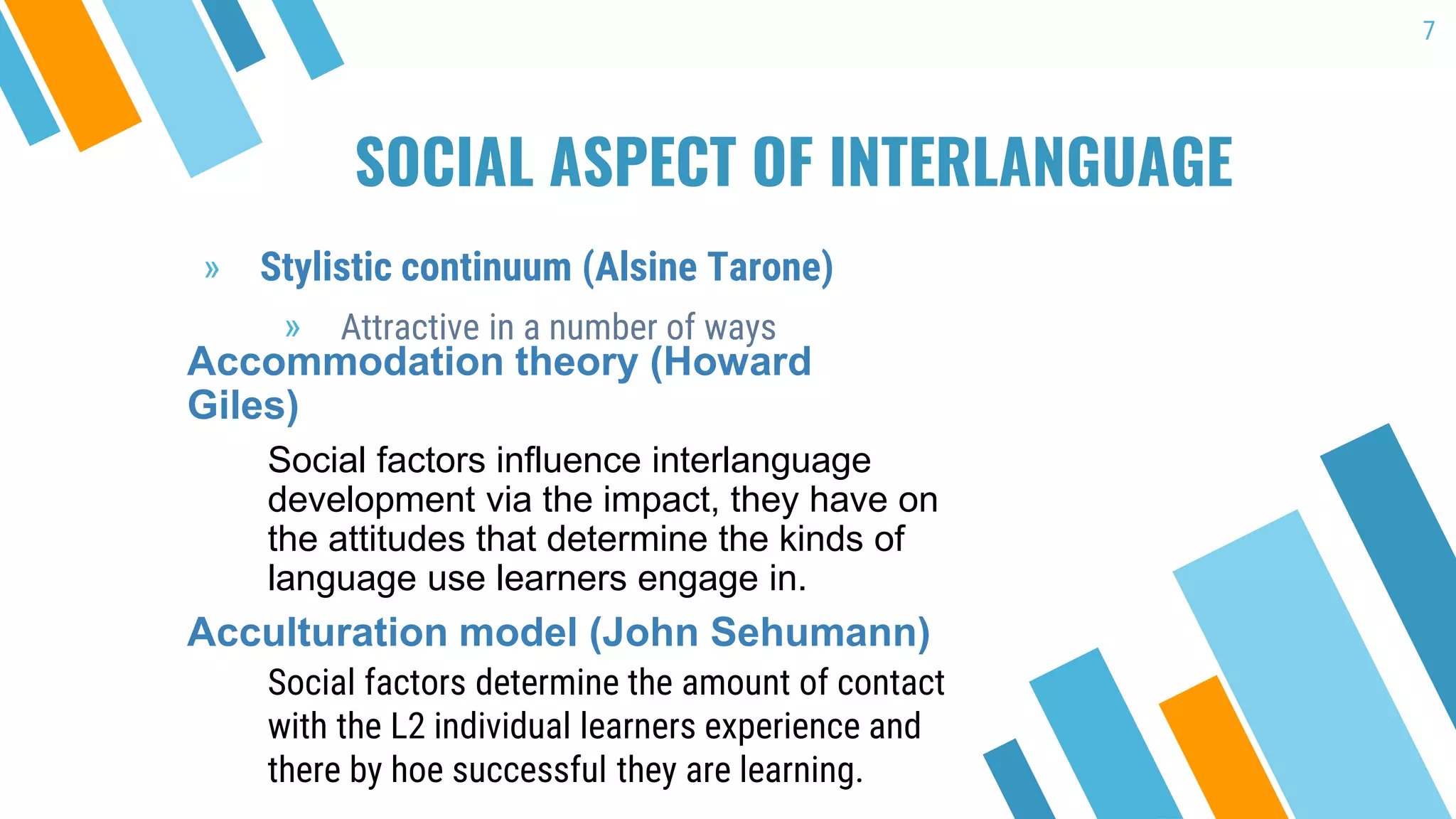
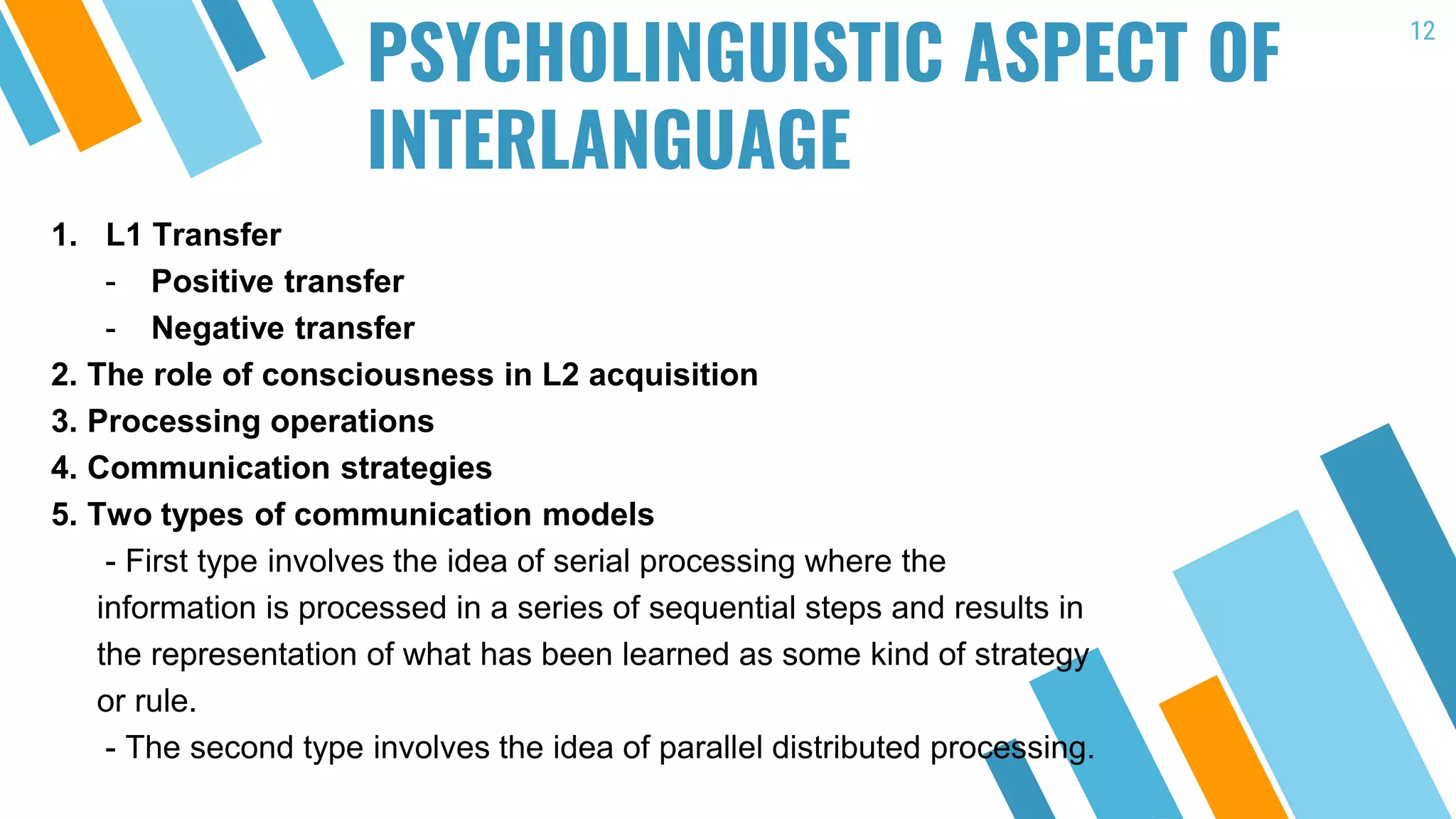
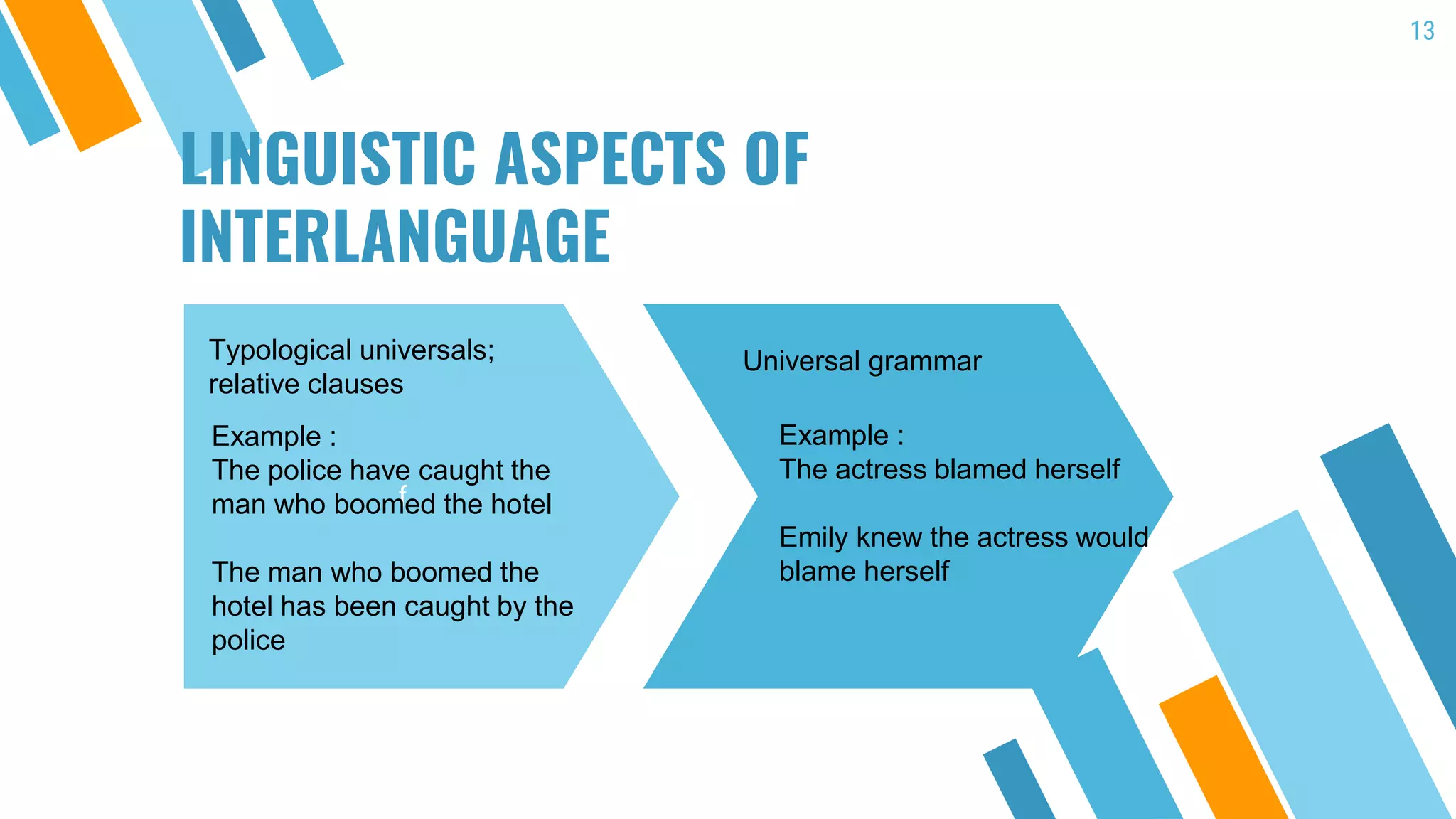
Interlanguage is influenced by four main aspects: social, discourse, psycholinguistic, and linguistic. The social aspect examines how social factors like acculturation and identity influence language development. The discourse aspect analyzes how learners acquire discourse rules and the role of input, interaction, and output. Psycholinguistically, interlanguage is shaped by first language transfer, consciousness, processing, and communication strategies. Linguistically, aspects like universals, grammar, learnability, and markedness contribute to a learner's developing system. Interlanguage represents a learner's evolving language system that retains first language features but progresses toward the target language over time through exposure and practice.













![[SLA] Psycholinguistics and linguistics aspects of interlanguage.pptx](https://cdn.slidesharecdn.com/ss_thumbnails/slapsycholinguisticsandlinguisticsaspectsofinterlanguage-240729221801-71a7a85b-thumbnail.jpg?width=640&height=640&fit=bounds)


