



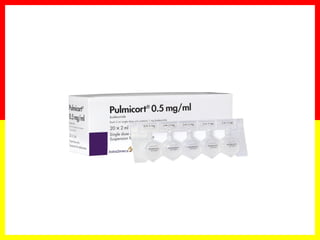

Inhaled corticosteroids in acute asthma
Dr. Ashraf El Adawy 
Consultant Chest Physician 
TB TEAM EXPERT – WHO 
Mansoura- Egypt
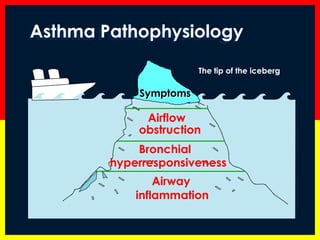
Airway 
inflammation 
Airflow 
obstruction 
Bronchial 
hyperresponsiveness 
Symptoms 
Asthma Pathophysiology 
The tip of the iceberg
Asthma patients may experience exacerbations or crises, the intensity of which range from mild episodeswhich may even go unnoticed by the patientto extremely serious episodes that place a patient's life at risk and may even result in death (fatal or near-fatal asthma). 
7
Severe asthma exacerbations are potentially life- threatening medical emergencies and treatment requires close supervision 
The most relevant factor when deciding treatment, consequently, is the severity of an asthma crisis 
8
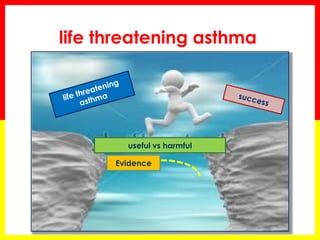
life threatening asthma 
Evidence 
useful vs harmful
Basic treatment of acute asthma
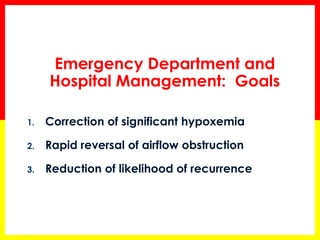
Emergency Department and Hospital Management: Goals 
1.Correction of significant hypoxemia 
2.Rapid reversal of airflow obstruction 
3.Reduction of likelihood of recurrence
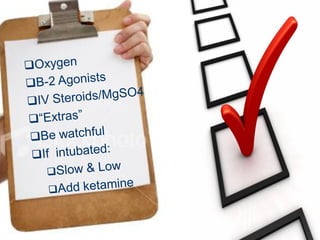
Established Management of Acute Asthma 
1.Oxygen therapy 
2.Bronchodilators 
3.Systemic corticosteroids 
ICS potential benefit ???
MECHANISMS OF STEROID ACTION
The evidence indicates that the use of oral or parenteral corticosteroids reduces hospitalizations and improves lung function,can lead to control of airway inflammation and prevention of relapses 
Systemic steroids are slow to take effect (6 to 12 hours) because they depend on complex cellular mechanisms (Genomic effect)
The evidence indicates that the use of oral or parenteral corticosteroids reduces hospitalizations and improves lung function,can lead to control of airway inflammation and prevention of relapses 
Systemic steroids are slow to take effect (6 to 12 hours) because they depend on complex cellular mechanisms (Genomic effect)
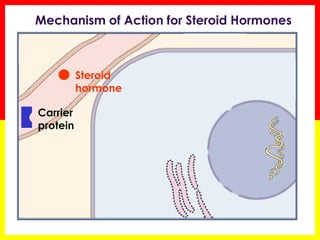
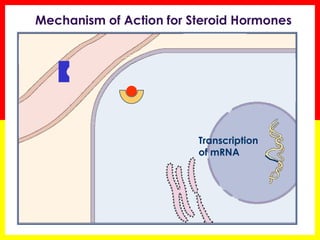
Mechanism of Action for Steroid Hormones 
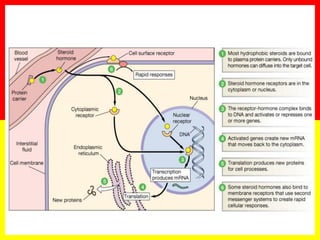
Blood vessel Cell membrane Nucleus DNA Endoplasmic reticulum
Carrier protein 
Steroid hormone 
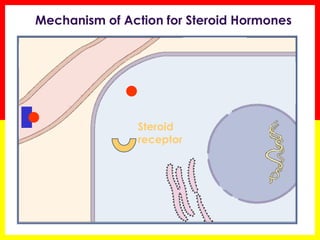
Mechanism of Action for Steroid Hormones
Steroid receptor 
Mechanism of Action for Steroid Hormones
Transcription of mRNA 
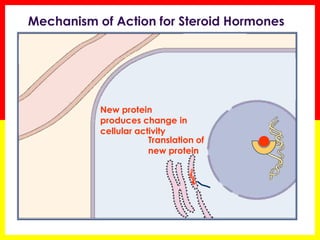
Mechanism of Action for Steroid Hormones
Mechanism of Action for Steroid Hormones 
Translation of new protein 
New protein produces change in cellular activity
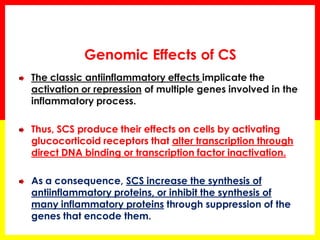
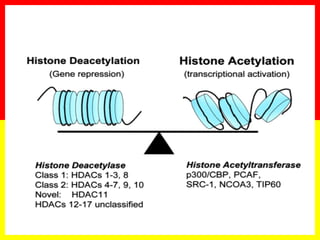
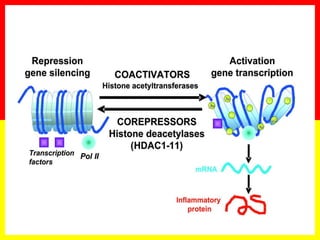
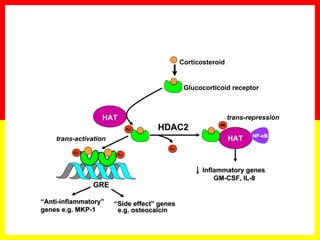
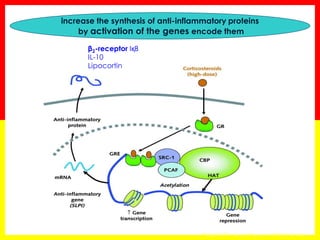
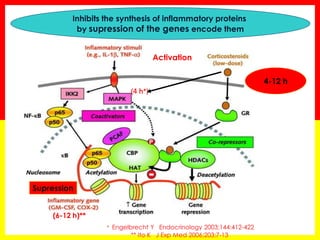
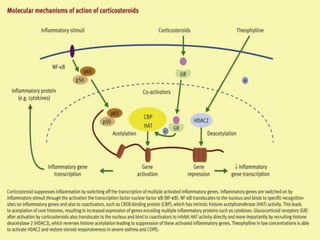
Genomic Effects of CS The classic antiinflammatory effects implicate the activation or repression of multiple genes involved in the inflammatory process. Thus, SCS produce their effects on cells by activating glucocorticoid receptors that alter transcription through direct DNA binding or transcription factor inactivation. As a consequence, SCS increase the synthesis of antiinflammatory proteins, or inhibit the synthesis of many inflammatory proteins through suppression of the genes that encode them.
24
β2-receptor IқB IL-10 Lipocortin 
*Mak JCW Am J Physiol 1995;12:41-46 
increase the synthesis of anti-inflammatory proteins by activation of the genes encode them
(4 h*) 
(6-12 h)** 
* Engelbrecht Y Endocrinology 2003;144:412-422 
** Ito K J Exp Med 2006;203:7-13 
Supression 
Activation 
4-12 h 
Inhibits the synthesis of inflammatory proteins 
by supression of the genes encode them
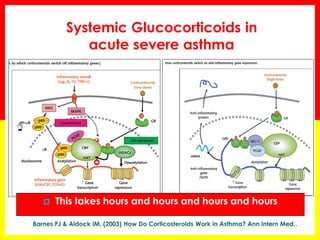
Systemic Glucocorticoids in acute severe asthma 
Barnes PJ & Aldock IM. (2003) How Do Corticosteroids Work in Asthma? Ann Intern Med,. 
This takes hours and hours and hours and hours
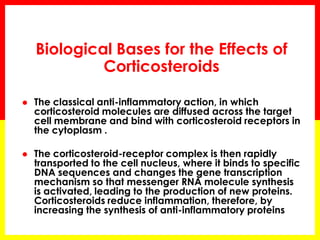
Biological Bases for the Effects of Corticosteroids 
The classical anti-inflammatory action, in which corticosteroid molecules are diffused across the target cell membrane and bind with corticosteroid receptors in the cytoplasm . 
The corticosteroid-receptor complex is then rapidly transported to the cell nucleus, where it binds to specific DNA sequences and changes the gene transcription mechanism so that messenger RNA molecule synthesis is activated, leading to the production of new proteins. Corticosteroids reduce inflammation, therefore, by increasing the synthesis of anti-inflammatory proteins
As the cell genome is involved in this mechanism, this anti-inflammatory effect is referred to as a genomic effect. 
In terms of response, after the corticosteroid molecule enters the cell, hours or even days may elapse before significant quantities of new proteins are produced. 
This explains the 6 to 12 hours' delay (demonstrated by clinical trials) in detecting the beneficial action of systemic corticosteroids.
Genomic Effects 
●Genomic (implies the participation of cellular genome) 
●The length of time between CS entry into the cell and the production of new proteins takes hours or days in concordance with the delay in clinical improvement (4 -12 h)
Non-genomic effect 
●Function by generating cAMP or protein kinases as a second set of messengers, produce a much faster response–within secs or mins– mediated by receptors located in the cell membrane 
●Membrane-binding sites for CS have been shown in ASM cells 
●cAMP, increase the cell permeability of a number of ions 
Losel R,.Nat Rev Cell Biol 2003 
Horvath G, Am J Physiol Lung Cell Mol Physiol 2003; 10:1152–1158
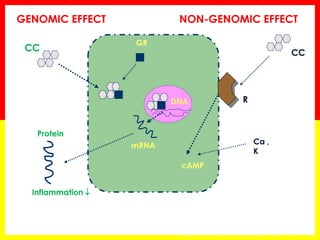
Protein 
CC 
GENOMIC EFFECT 
NON-GENOMIC EFFECT 
CC 
R 
Ca , 
K 
cAMP 
mRNA 
DNA 
GR 
Inflammation  
Rodrigo GJ Arch Bronconeumol 2006;42 (10):533-40
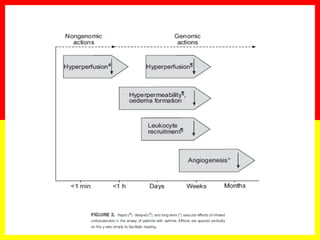
More recently, however, it has been demonstrated that the corticosteroids have biological effects that are independent of the gene transcription process. 
Most of the research on this nongenomic effect has been performed in the last 10 years 
The nongenomic effects of corticosteroids, which function by generating cyclic adenosinmonophosphate or protein kinases as a second set of messengers, produce a much faster responsewithin seconds or minutesthat is mediated by receptors located in the cell membrane.
More recent research has centered on the nongenomic effects of inhaled corticosteroids on the airways, most particularly on mucosal blood flow in both asthmatic and healthy subjects. 
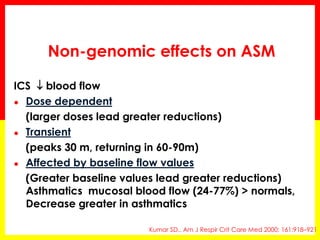
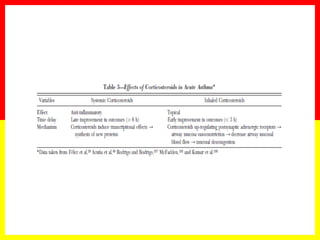
These studies show that there is a significant increase in mucosal blood flow in asthmatic patients compared to healthy subjects, and that inhaled steroids has the effect of reducing flow by causing vasoconstriction. 
The reduction is transient, however, reaching a peak 30 minutes after administration of the corticosteroid and returning to baseline values after 90 minutes
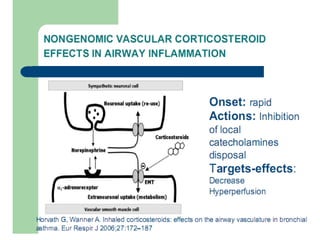
inhaled corticosteroids can present early therapeutic effects (after minutes of its administration) suggesting a different mechanism of action of topical character (Rapid nongenomic effect) This rapid response suggests a topical effect (airway mucosa vasoconstriction).
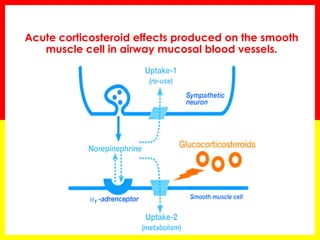
Blood flow reduction in the airway mucosa is a consequence of the acute vasoconstrictive effect of ICS on the smooth muscle of mucosal blood vessels (Rapid nongenomic effect).
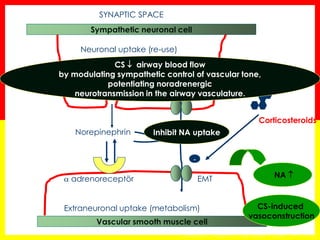
Acute corticosteroid effects produced on the smooth muscle cell in airway mucosal blood vessels.
Vascular smooth muscle cell 
Sympathetic neuronal cell 
- 
Corticosteroids 
Norepinephrin 
Neuronal uptake (re-use) 
Extraneuronal uptake (metabolism) 
EMT 
 adrenoreceptör 
Inhibit NA uptake 
NA  
CS-induced vasoconstruction 
Horvath G, Wanner A. Eur Respir J 2006; 27:172–187 
SYNAPTIC SPACE 
CS  airway blood flow 
by modulating sympathetic control of vascular tone, 
potentiating noradrenergic 
neurotransmission in the airway vasculature.
The sympathetic nerve endings that form synapses with smooth muscle cells release norepinephrine to the synaptic space, where it binds to the α - receptors of the muscle cells, causing the muscles to contract. 
There are a number of mechanisms that control the quantity of norepinephrine released to the synaptic space and, consequently, the extent of receptor stimulation.
In one mechanism, some of the neurotransmitter molecules are taken back up into the presynaptic nerve terminal so that they can be reused at a later stage. 
In a second mechanism, norepinephrine is taken up in the muscular postsynaptic endings, where it is metabolized by intracellular enzymes such as monoaminoxidase and catechol-O- methyltransferase. 
44
Corticosteroids inhibit the second of these norepinephrine uptake mechanisms, by allowing neurotransmitters to accumulate in the synaptic space and stimulate the α -receptors. 
This in turn, leads to vasoconstriction of the smooth muscles of mucosal blood vessels (Rapid nongenomic effect)..
Non-genomic effects on ASM 
ICS  blood flow 
●Dose dependent 
(larger doses lead greater reductions) 
●Transient 
(peaks 30 m, returning in 60-90m) 
●Affected by baseline flow values 
(Greater baseline values lead greater reductions) Asthmatics mucosal blood flow (24-77%) > normals, Decrease greater in asthmatics 
Kumar SD,. Am J Respir Crit Care Med 2000; 161:918–921
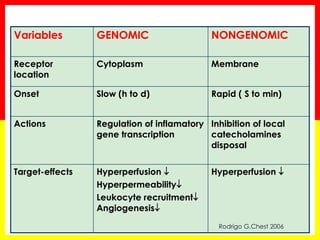
Variables 
GENOMIC 
NONGENOMIC 
Receptor location 
Cytoplasm 
Membrane 
Onset 
Slow (h to d) 
Rapid ( S to min) 
Actions 
Regulation of inflamatory gene transcription 
Inhibition of local catecholamines disposal 
Target-effects 
Hyperperfusion  
Hyperpermeability 
Leukocyte recruitment Angiogenesis 
Hyperperfusion  
Rodrigo G,Chest 2006
Inhaled Corticosteroids in the Treatment of Asthma Exacerbations: Essential Concepts 
Dr. G.J. Rodrigo 
Arch Bronconeumol. 2006
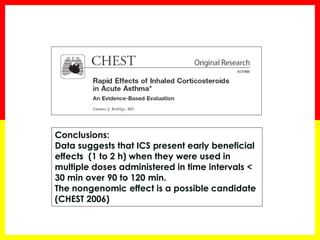
Conclusions: 
Data suggests that ICS present early beneficial effects (1 to 2 h) when they were used in multiple doses administered in time intervals < 30 min over 90 to 120 min. 
The nongenomic effect is a possible candidate (CHEST 2006)
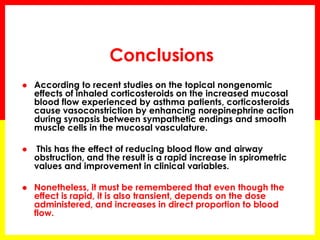
Conclusions 
According to recent studies on the topical nongenomic effects of inhaled corticosteroids on the increased mucosal blood flow experienced by asthma patients, corticosteroids cause vasoconstriction by enhancing norepinephrine action during synapsis between sympathetic endings and smooth muscle cells in the mucosal vasculature. 
 This has the effect of reducing blood flow and airway obstruction, and the result is a rapid increase in spirometric values and improvement in clinical variables. 
Nonetheless, it must be remembered that even though the effect is rapid, it is also transient, depends on the dose administered, and increases in direct proportion to blood flow.
The nongenomic effect occurs within minutes, is transient, is dose-dependent, and is proportional to the initial hyperperfusion level. 
Inhaled corticosteroids should, essentially, be administered frequently and in high doses in order to maintain the effect, most particularly in patients with severe obstruction. 
55
The vasoconstrictive effect is not specific, it is more potent with budesonide and fluticasone than with beclomethasone. These factors should be taken into consideration in regard to rational use of inhaled corticosteroids to treat asthma exacerbations. 
Inhaled corticosteroids should be used concurrently with bronchodilators and should be administered frequently, at short intervals and at high doses in order to maintain the effect over time 
Multiple doses of inhaled corticosteroids administered at short intervals (10 to 30 minutes) result in early benefits (1 to 2 hours) in spirometric and clinical variables, irrespective of the initial severity of the asthma.
In Acute Asthma, 
Addition of Pulmicort nebulising suspension to 
Nebulised bronchodilator results in 
Improved PEFR 
More discharged patients 
PEF(L/min) 
PEFR after 60 mins. 
Discharged after 60 mins. 
% of discharged patients 
*** 
*** 
Pulmicort neb. susp. 
Plus neb. Bronchod. 
Neb. bronchodilator 
*** 
P < 0.005 
Ref. Bautista MS et al Eur Respire J 1994
Inhaled budesonide in the management of acute worsenings and exacerbations of asthma: a review of the evidence. 
The efficacy seems to benefit from high doses given repeatedly during the initial phase of an acute exacerbation.. 
The current evidence base revealed encouraging results regarding the efficacy of the ICS budesonide in patients with wheeze and acute worsening of asthma 
Respir Med. 2007 Apr
Budesonide inhalation suspension in acute asthma 
Five-day course of budesonide inhalation suspension is as effective as oral prednisolone in the treatment of mild to severe acute asthma exacerbations in adults 
CONCLUSION: 
Budesonide inhalation suspension may be an alternative treatment of acute asthma exacerbation in adults who are at risk for systemic corticosteroids. 
Pulm Pharmacol Ther. 2011 Apr
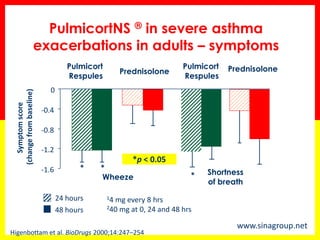
-1.6 
-1.2 
-0.8 
-0.4 
0 
Symptom score 
(change from baseline) 
B 
P 
Pulmicort Respules 
Wheeze 
Shortness 
of breath 
Prednisolone 
Pulmicort Respules 
Prednisolone 
Higenbottam et al. BioDrugs 2000;14:247–254 
24 hours 
48 hours 
* 
*p < 0.05 
* 
PulmicortNS ® in severe asthma exacerbations in adults – symptoms 
14 mg every 8 hrs 
240 mg at 0, 24 and 48 hrs 
www.sinagroup.net 
*
0 
0.4 
0.8 
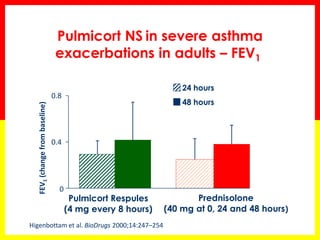
24 hours 
48 hours 
FEV1 (change from baseline) 
Higenbottam et al. BioDrugs 2000;14:247–254 
Pulmicort Respules 
(4 mg every 8 hours) 
Prednisolone 
(40 mg at 0, 24 and 48 hours) 
Pulmicort NS in severe asthma exacerbations in adults – FEV1
0 
100 
90 
80 
70 
60 
50 
40 
30 
20 
10 
Pulmicort 
Prednisolon 
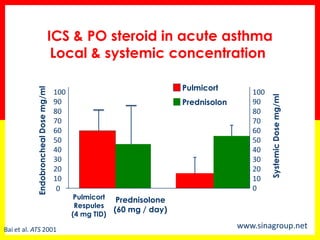
Endobroncheal Dose mg/ml 
Bai et al. ATS 2001 
Pulmicort 
Respules 
(4 mg TID) 
Prednisolone 
(60 mg / day) 
ICS & PO steroid in acute asthma Local & systemic concentration 
www.sinagroup.net 
Systemic Dose mg/ml 
100 
90 
80 
70 
60 
50 
40 
30 
20 
10 
0
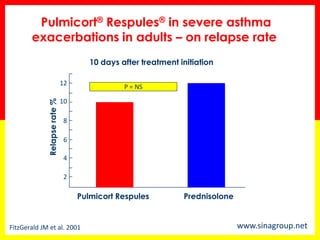
Pulmicort Respules 
Prednisolone 
12 
10 
8 
6 
4 
2 
Relapse rate % 
P = NS 
FitzGerald JM et al. 2001 
10 days after treatment initiation 
www.sinagroup.net 
Pulmicort® Respules® in severe asthma exacerbations in adults – on relapse rate
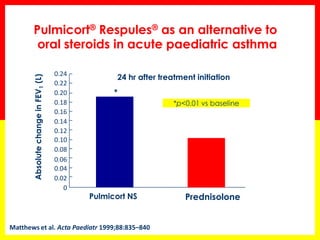
Pulmicort NS 
Prednisolone 
0.24 
0.22 
0.20 
0.18 
0.16 
0.14 
0.12 
0.10 
0.08 
0.06 
0.04 
0.02 
0 
Absolute change in FEV1 (L) 
Pulmicort® Respules® as an alternative to oral steroids in acute paediatric asthma 
* 
*p<0.01 vs baseline 
Matthews et al. Acta Paediatr 1999;88:835–840 
24 hr after treatment initiation
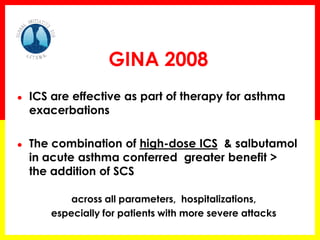
GINA 2008 
●ICS are effective as part of therapy for asthma exacerbations 
●The combination of high-dose ICS & salbutamol in acute asthma conferred greater benefit > the addition of SCS 
across all parameters, hospitalizations, 
especially for patients with more severe attacks
Additional Issues (Preventing Relapses) 
●ICSs can be as effective as oral glucocorticosteroids at preventing relapses 
Lee-Wong M et al.. Chest 2002;122(4) 
Nana A et al Asthma 1998 
●A high-dose of ICS (2.4 mg budesonide daily in four divided doses) achieves a relapse rate similar to 40 mg oral prednisone daily 
FitzGerald JM eta l. Am J Respir Crit Care Med 2000. 
●Patients discharged from the emergency department on prednisone and inhaled budesonide have a lower rate of relapse than those on prednisone alone 
Rowe B et al. JAMA 1999
The importance of High Doses 
●SCS have a dose -response curve. High doses, no change in efficacy but side effects  
●Beneficial effect of ICS at doses at least 5 times more than maintenance dose 
●Atypical dose-response effect in ICS than SCS 
Volovitz B Respiratory Medicine 2007;101, 685–695
Why Higher Doses 
●High dose effects may involve non-genomic effect of ICS 
●These genomic effects 
dose-dependant 
need intervals not longer than 30 min 
(ICS-induced vasoconstriction peaks 30-60min) 
Rodrigo G AMJRRC 1998
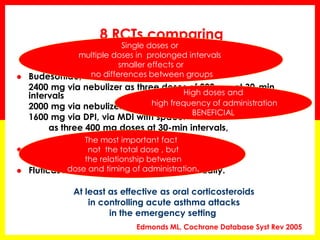
8 RCTs comparing oral corticosteroids / ICS 
Budesonide; 
2400 mg via nebulizer as three doses of 800 mg at 30-min intervals 
2000 mg via nebulizer every 8 h, 
1600 mg via DPI, via MDI with spacer 
as three 400 mg doses at 30-min intervals, 
Dexamethasone 1.5 mg/kg via nebulizer, 
Fluticasone 1000 mg via nebulizer twice daily. 
At least as effective as oral corticosteroids 
in controlling acute asthma attacks 
in the emergency setting 
Edmonds ML, Cochrane Database Syst Rev 2005 
High doses and 
high frequency of administration 
BENEFICIAL 
Single doses or multiple doses in prolonged intervals smaller effects or no differences between groups 
The most important fact not the total dose , but the relationship between dose and timing of administration.
Conclusion 
ICS 
high doses and multiple administrations 
●Control exacerbations 
●Decrease the admission rates 
equally or better than SCS
Inhaled Corticosteroids in the Treatment of Asthma Exacerbations: Essential Concepts 
ICS may have an immediate and nongenomic beneficial effect in acute asthma 
ICS should not, however, be viewed as replacing SCS , which are considered to be a first-line treatment for asthma. 
The goal, rather, should be to use ICS to achieve an additional and early nongenomic effect, which may be particularly beneficial to patients with severe asthma or showing a poor initial response. 
Rodrigo G. Arch Bronconeumol. 2006
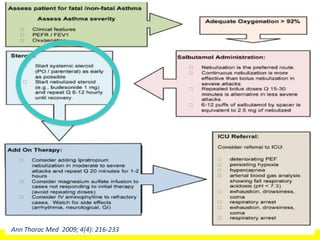
Ann Thorac Med 2009; 4(4): 216-233
•Cost ?? , significant factor in the use of such high-doses of ICS 
●This higher cost should be compared with the potential benefit of this option (lower rate of recurrence of exacerbations ) 
●This could result in an advantage of the inhalation treatment 
Franco AD.Pulm Pharm & Ther ;2006 
Cost/Benefit Ratio
Corticosteroids are not bronchodilators 
Effective as a part of therapy for asthma exacerbations. 
Targeted delivery 
Evidence for greater bronchodilation when beta agonists used along with ICS. 
Can be as effective as OCS in preventing relapses. 
Less dosages required to produce therapeutic effect compared to OCS. 
75 
Nebulised corticosteroids 
GINA 2008
77

Inhaled corticosteroids in acute asthma

  • 3.
  • 4.
    Dr. Ashraf ElAdawy Consultant Chest Physician TB TEAM EXPERT – WHO Mansoura- Egypt
  • 5.
    Airway inflammation Airflow obstruction Bronchial hyperresponsiveness Symptoms Asthma Pathophysiology The tip of the iceberg
  • 7.
    Asthma patients mayexperience exacerbations or crises, the intensity of which range from mild episodeswhich may even go unnoticed by the patientto extremely serious episodes that place a patient's life at risk and may even result in death (fatal or near-fatal asthma). 7
  • 8.
    Severe asthma exacerbationsare potentially life- threatening medical emergencies and treatment requires close supervision The most relevant factor when deciding treatment, consequently, is the severity of an asthma crisis 8
  • 9.
    life threatening asthma Evidence useful vs harmful
  • 10.
    Basic treatment ofacute asthma
  • 11.
    Emergency Department andHospital Management: Goals 1.Correction of significant hypoxemia 2.Rapid reversal of airflow obstruction 3.Reduction of likelihood of recurrence
  • 13.
    Established Management ofAcute Asthma 1.Oxygen therapy 2.Bronchodilators 3.Systemic corticosteroids ICS potential benefit ???
  • 14.
  • 15.
    The evidence indicatesthat the use of oral or parenteral corticosteroids reduces hospitalizations and improves lung function,can lead to control of airway inflammation and prevention of relapses Systemic steroids are slow to take effect (6 to 12 hours) because they depend on complex cellular mechanisms (Genomic effect)
  • 16.
    The evidence indicatesthat the use of oral or parenteral corticosteroids reduces hospitalizations and improves lung function,can lead to control of airway inflammation and prevention of relapses Systemic steroids are slow to take effect (6 to 12 hours) because they depend on complex cellular mechanisms (Genomic effect)
  • 17.
    Mechanism of Actionfor Steroid Hormones Blood vessel Cell membrane Nucleus DNA Endoplasmic reticulum
  • 18.
    Carrier protein Steroidhormone Mechanism of Action for Steroid Hormones
  • 19.
    Steroid receptor Mechanismof Action for Steroid Hormones
  • 20.
    Transcription of mRNA Mechanism of Action for Steroid Hormones
  • 21.
    Mechanism of Actionfor Steroid Hormones Translation of new protein New protein produces change in cellular activity
  • 23.
    Genomic Effects ofCS The classic antiinflammatory effects implicate the activation or repression of multiple genes involved in the inflammatory process. Thus, SCS produce their effects on cells by activating glucocorticoid receptors that alter transcription through direct DNA binding or transcription factor inactivation. As a consequence, SCS increase the synthesis of antiinflammatory proteins, or inhibit the synthesis of many inflammatory proteins through suppression of the genes that encode them.
  • 24.
  • 28.
    β2-receptor IқB IL-10Lipocortin *Mak JCW Am J Physiol 1995;12:41-46 increase the synthesis of anti-inflammatory proteins by activation of the genes encode them
  • 29.
    (4 h*) (6-12h)** * Engelbrecht Y Endocrinology 2003;144:412-422 ** Ito K J Exp Med 2006;203:7-13 Supression Activation 4-12 h Inhibits the synthesis of inflammatory proteins by supression of the genes encode them
  • 31.
    Systemic Glucocorticoids inacute severe asthma Barnes PJ & Aldock IM. (2003) How Do Corticosteroids Work in Asthma? Ann Intern Med,. This takes hours and hours and hours and hours
  • 32.
    Biological Bases forthe Effects of Corticosteroids The classical anti-inflammatory action, in which corticosteroid molecules are diffused across the target cell membrane and bind with corticosteroid receptors in the cytoplasm . The corticosteroid-receptor complex is then rapidly transported to the cell nucleus, where it binds to specific DNA sequences and changes the gene transcription mechanism so that messenger RNA molecule synthesis is activated, leading to the production of new proteins. Corticosteroids reduce inflammation, therefore, by increasing the synthesis of anti-inflammatory proteins
  • 33.
    As the cellgenome is involved in this mechanism, this anti-inflammatory effect is referred to as a genomic effect. In terms of response, after the corticosteroid molecule enters the cell, hours or even days may elapse before significant quantities of new proteins are produced. This explains the 6 to 12 hours' delay (demonstrated by clinical trials) in detecting the beneficial action of systemic corticosteroids.
  • 34.
    Genomic Effects ●Genomic(implies the participation of cellular genome) ●The length of time between CS entry into the cell and the production of new proteins takes hours or days in concordance with the delay in clinical improvement (4 -12 h)
  • 35.
    Non-genomic effect ●Functionby generating cAMP or protein kinases as a second set of messengers, produce a much faster response–within secs or mins– mediated by receptors located in the cell membrane ●Membrane-binding sites for CS have been shown in ASM cells ●cAMP, increase the cell permeability of a number of ions Losel R,.Nat Rev Cell Biol 2003 Horvath G, Am J Physiol Lung Cell Mol Physiol 2003; 10:1152–1158
  • 36.
    Protein CC GENOMICEFFECT NON-GENOMIC EFFECT CC R Ca , K cAMP mRNA DNA GR Inflammation  Rodrigo GJ Arch Bronconeumol 2006;42 (10):533-40
  • 37.
    More recently, however,it has been demonstrated that the corticosteroids have biological effects that are independent of the gene transcription process. Most of the research on this nongenomic effect has been performed in the last 10 years The nongenomic effects of corticosteroids, which function by generating cyclic adenosinmonophosphate or protein kinases as a second set of messengers, produce a much faster responsewithin seconds or minutesthat is mediated by receptors located in the cell membrane.
  • 38.
    More recent researchhas centered on the nongenomic effects of inhaled corticosteroids on the airways, most particularly on mucosal blood flow in both asthmatic and healthy subjects. These studies show that there is a significant increase in mucosal blood flow in asthmatic patients compared to healthy subjects, and that inhaled steroids has the effect of reducing flow by causing vasoconstriction. The reduction is transient, however, reaching a peak 30 minutes after administration of the corticosteroid and returning to baseline values after 90 minutes
  • 39.
    inhaled corticosteroids canpresent early therapeutic effects (after minutes of its administration) suggesting a different mechanism of action of topical character (Rapid nongenomic effect) This rapid response suggests a topical effect (airway mucosa vasoconstriction).
  • 40.
    Blood flow reductionin the airway mucosa is a consequence of the acute vasoconstrictive effect of ICS on the smooth muscle of mucosal blood vessels (Rapid nongenomic effect).
  • 41.
    Acute corticosteroid effectsproduced on the smooth muscle cell in airway mucosal blood vessels.
  • 42.
    Vascular smooth musclecell Sympathetic neuronal cell - Corticosteroids Norepinephrin Neuronal uptake (re-use) Extraneuronal uptake (metabolism) EMT  adrenoreceptör Inhibit NA uptake NA  CS-induced vasoconstruction Horvath G, Wanner A. Eur Respir J 2006; 27:172–187 SYNAPTIC SPACE CS  airway blood flow by modulating sympathetic control of vascular tone, potentiating noradrenergic neurotransmission in the airway vasculature.
  • 43.
    The sympathetic nerveendings that form synapses with smooth muscle cells release norepinephrine to the synaptic space, where it binds to the α - receptors of the muscle cells, causing the muscles to contract. There are a number of mechanisms that control the quantity of norepinephrine released to the synaptic space and, consequently, the extent of receptor stimulation.
  • 44.
    In one mechanism,some of the neurotransmitter molecules are taken back up into the presynaptic nerve terminal so that they can be reused at a later stage. In a second mechanism, norepinephrine is taken up in the muscular postsynaptic endings, where it is metabolized by intracellular enzymes such as monoaminoxidase and catechol-O- methyltransferase. 44
  • 45.
    Corticosteroids inhibit thesecond of these norepinephrine uptake mechanisms, by allowing neurotransmitters to accumulate in the synaptic space and stimulate the α -receptors. This in turn, leads to vasoconstriction of the smooth muscles of mucosal blood vessels (Rapid nongenomic effect)..
  • 47.
    Non-genomic effects onASM ICS  blood flow ●Dose dependent (larger doses lead greater reductions) ●Transient (peaks 30 m, returning in 60-90m) ●Affected by baseline flow values (Greater baseline values lead greater reductions) Asthmatics mucosal blood flow (24-77%) > normals, Decrease greater in asthmatics Kumar SD,. Am J Respir Crit Care Med 2000; 161:918–921
  • 49.
    Variables GENOMIC NONGENOMIC Receptor location Cytoplasm Membrane Onset Slow (h to d) Rapid ( S to min) Actions Regulation of inflamatory gene transcription Inhibition of local catecholamines disposal Target-effects Hyperperfusion  Hyperpermeability Leukocyte recruitment Angiogenesis Hyperperfusion  Rodrigo G,Chest 2006
  • 52.
    Inhaled Corticosteroids inthe Treatment of Asthma Exacerbations: Essential Concepts Dr. G.J. Rodrigo Arch Bronconeumol. 2006
  • 53.
    Conclusions: Data suggeststhat ICS present early beneficial effects (1 to 2 h) when they were used in multiple doses administered in time intervals < 30 min over 90 to 120 min. The nongenomic effect is a possible candidate (CHEST 2006)
  • 54.
    Conclusions According torecent studies on the topical nongenomic effects of inhaled corticosteroids on the increased mucosal blood flow experienced by asthma patients, corticosteroids cause vasoconstriction by enhancing norepinephrine action during synapsis between sympathetic endings and smooth muscle cells in the mucosal vasculature.  This has the effect of reducing blood flow and airway obstruction, and the result is a rapid increase in spirometric values and improvement in clinical variables. Nonetheless, it must be remembered that even though the effect is rapid, it is also transient, depends on the dose administered, and increases in direct proportion to blood flow.
  • 55.
    The nongenomic effectoccurs within minutes, is transient, is dose-dependent, and is proportional to the initial hyperperfusion level. Inhaled corticosteroids should, essentially, be administered frequently and in high doses in order to maintain the effect, most particularly in patients with severe obstruction. 55
  • 56.
    The vasoconstrictive effectis not specific, it is more potent with budesonide and fluticasone than with beclomethasone. These factors should be taken into consideration in regard to rational use of inhaled corticosteroids to treat asthma exacerbations. Inhaled corticosteroids should be used concurrently with bronchodilators and should be administered frequently, at short intervals and at high doses in order to maintain the effect over time Multiple doses of inhaled corticosteroids administered at short intervals (10 to 30 minutes) result in early benefits (1 to 2 hours) in spirometric and clinical variables, irrespective of the initial severity of the asthma.
  • 57.
    In Acute Asthma, Addition of Pulmicort nebulising suspension to Nebulised bronchodilator results in Improved PEFR More discharged patients PEF(L/min) PEFR after 60 mins. Discharged after 60 mins. % of discharged patients *** *** Pulmicort neb. susp. Plus neb. Bronchod. Neb. bronchodilator *** P < 0.005 Ref. Bautista MS et al Eur Respire J 1994
  • 58.
    Inhaled budesonide inthe management of acute worsenings and exacerbations of asthma: a review of the evidence. The efficacy seems to benefit from high doses given repeatedly during the initial phase of an acute exacerbation.. The current evidence base revealed encouraging results regarding the efficacy of the ICS budesonide in patients with wheeze and acute worsening of asthma Respir Med. 2007 Apr
  • 59.
    Budesonide inhalation suspensionin acute asthma Five-day course of budesonide inhalation suspension is as effective as oral prednisolone in the treatment of mild to severe acute asthma exacerbations in adults CONCLUSION: Budesonide inhalation suspension may be an alternative treatment of acute asthma exacerbation in adults who are at risk for systemic corticosteroids. Pulm Pharmacol Ther. 2011 Apr
  • 60.
    -1.6 -1.2 -0.8 -0.4 0 Symptom score (change from baseline) B P Pulmicort Respules Wheeze Shortness of breath Prednisolone Pulmicort Respules Prednisolone Higenbottam et al. BioDrugs 2000;14:247–254 24 hours 48 hours * *p < 0.05 * PulmicortNS ® in severe asthma exacerbations in adults – symptoms 14 mg every 8 hrs 240 mg at 0, 24 and 48 hrs www.sinagroup.net *
  • 61.
    0 0.4 0.8 24 hours 48 hours FEV1 (change from baseline) Higenbottam et al. BioDrugs 2000;14:247–254 Pulmicort Respules (4 mg every 8 hours) Prednisolone (40 mg at 0, 24 and 48 hours) Pulmicort NS in severe asthma exacerbations in adults – FEV1
  • 62.
    0 100 90 80 70 60 50 40 30 20 10 Pulmicort Prednisolon Endobroncheal Dose mg/ml Bai et al. ATS 2001 Pulmicort Respules (4 mg TID) Prednisolone (60 mg / day) ICS & PO steroid in acute asthma Local & systemic concentration www.sinagroup.net Systemic Dose mg/ml 100 90 80 70 60 50 40 30 20 10 0
  • 63.
    Pulmicort Respules Prednisolone 12 10 8 6 4 2 Relapse rate % P = NS FitzGerald JM et al. 2001 10 days after treatment initiation www.sinagroup.net Pulmicort® Respules® in severe asthma exacerbations in adults – on relapse rate
  • 64.
    Pulmicort NS Prednisolone 0.24 0.22 0.20 0.18 0.16 0.14 0.12 0.10 0.08 0.06 0.04 0.02 0 Absolute change in FEV1 (L) Pulmicort® Respules® as an alternative to oral steroids in acute paediatric asthma * *p<0.01 vs baseline Matthews et al. Acta Paediatr 1999;88:835–840 24 hr after treatment initiation
  • 66.
    GINA 2008 ●ICSare effective as part of therapy for asthma exacerbations ●The combination of high-dose ICS & salbutamol in acute asthma conferred greater benefit > the addition of SCS across all parameters, hospitalizations, especially for patients with more severe attacks
  • 67.
    Additional Issues (PreventingRelapses) ●ICSs can be as effective as oral glucocorticosteroids at preventing relapses Lee-Wong M et al.. Chest 2002;122(4) Nana A et al Asthma 1998 ●A high-dose of ICS (2.4 mg budesonide daily in four divided doses) achieves a relapse rate similar to 40 mg oral prednisone daily FitzGerald JM eta l. Am J Respir Crit Care Med 2000. ●Patients discharged from the emergency department on prednisone and inhaled budesonide have a lower rate of relapse than those on prednisone alone Rowe B et al. JAMA 1999
  • 68.
    The importance ofHigh Doses ●SCS have a dose -response curve. High doses, no change in efficacy but side effects  ●Beneficial effect of ICS at doses at least 5 times more than maintenance dose ●Atypical dose-response effect in ICS than SCS Volovitz B Respiratory Medicine 2007;101, 685–695
  • 69.
    Why Higher Doses ●High dose effects may involve non-genomic effect of ICS ●These genomic effects dose-dependant need intervals not longer than 30 min (ICS-induced vasoconstriction peaks 30-60min) Rodrigo G AMJRRC 1998
  • 70.
    8 RCTs comparingoral corticosteroids / ICS Budesonide; 2400 mg via nebulizer as three doses of 800 mg at 30-min intervals 2000 mg via nebulizer every 8 h, 1600 mg via DPI, via MDI with spacer as three 400 mg doses at 30-min intervals, Dexamethasone 1.5 mg/kg via nebulizer, Fluticasone 1000 mg via nebulizer twice daily. At least as effective as oral corticosteroids in controlling acute asthma attacks in the emergency setting Edmonds ML, Cochrane Database Syst Rev 2005 High doses and high frequency of administration BENEFICIAL Single doses or multiple doses in prolonged intervals smaller effects or no differences between groups The most important fact not the total dose , but the relationship between dose and timing of administration.
  • 71.
    Conclusion ICS highdoses and multiple administrations ●Control exacerbations ●Decrease the admission rates equally or better than SCS
  • 72.
    Inhaled Corticosteroids inthe Treatment of Asthma Exacerbations: Essential Concepts ICS may have an immediate and nongenomic beneficial effect in acute asthma ICS should not, however, be viewed as replacing SCS , which are considered to be a first-line treatment for asthma. The goal, rather, should be to use ICS to achieve an additional and early nongenomic effect, which may be particularly beneficial to patients with severe asthma or showing a poor initial response. Rodrigo G. Arch Bronconeumol. 2006
  • 73.
    Ann Thorac Med2009; 4(4): 216-233
  • 74.
    •Cost ?? ,significant factor in the use of such high-doses of ICS ●This higher cost should be compared with the potential benefit of this option (lower rate of recurrence of exacerbations ) ●This could result in an advantage of the inhalation treatment Franco AD.Pulm Pharm & Ther ;2006 Cost/Benefit Ratio
  • 75.
    Corticosteroids are notbronchodilators Effective as a part of therapy for asthma exacerbations. Targeted delivery Evidence for greater bronchodilation when beta agonists used along with ICS. Can be as effective as OCS in preventing relapses. Less dosages required to produce therapeutic effect compared to OCS. 75 Nebulised corticosteroids GINA 2008
  • 77.