





1
2
Empiric Antimicrobial Therapy
for community acquired pneumonia
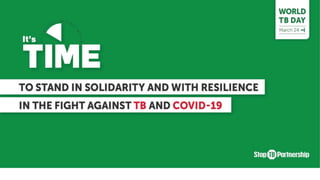
COVID-19 &Tuberculosis
What is The Link?
By
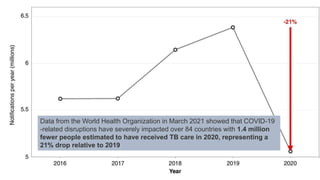
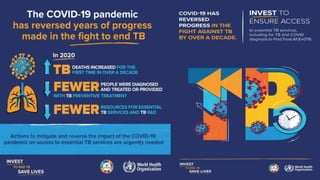
Data from the World Health Organization in March 2021 showed that COVID-19
-related disruptions have severely impacted over 84 countries with 1.4 million
fewer people estimated to have received TB care in 2020, representing a
21% drop relative to 2019
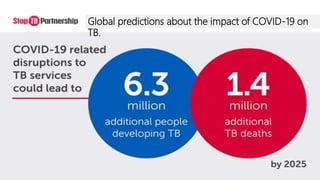
Global predictions about the impact of COVID-19 on
TB.
Does TB increase the risk of getting COVID-19?
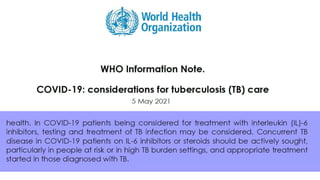
 TB disease is not known to put people at higher risk of COVID-19
infection, but it may put you at risk of having more severe symptoms..
 If you have fully recovered from TB and do not have any other medical
conditions that could put you at risk for severe outcomes of COVID-19,
then your risk may be the same as the general population of similar
age.
 TB patients who have lung damage from past tuberculosis sequelae as
bronchiectasis or obliterative bronchiolitis may suffer from more severe
illness if they are infected with COVID-19.
 The fact is, any damage to the lungs from a pre-existing condition like
pulmonary tuberculosis may put a person at a higher risk for infections
such as COVID-19.
People with latent TB infection
 Currently, there is no evidence to suggest that latent TB infection (LTBI)
alone puts you at higher risk of getting COVID-19.
 If you have latent TB and you are otherwise in good health, you are
unlikely to be at more at risk from COVID-19 than the general
population.
 While experience on COVID-19 infection in TB patients remains
limited, it is anticipated that people ill with both TB and COVID-19
may have a worse prognosis , poorer treatment outcomes and higher
mortality especially if TB treatment is interrupted.
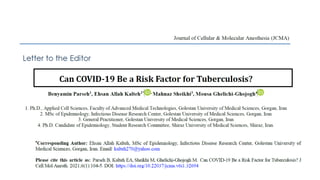
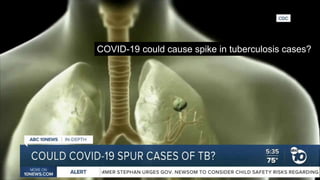
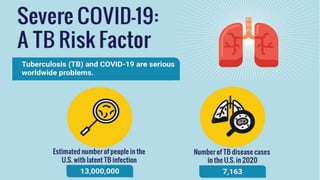
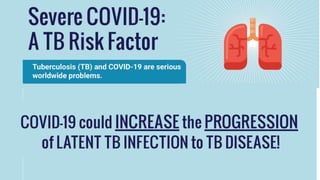
COVID-19 could cause spike in tuberculosis cases?
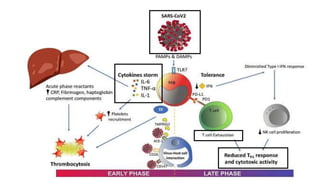
 The SAR CoV-2 virus is known to affect the immune system by depleting the
CD4+, CD8+ T cell lymphocytes and also causes functional exhaustion of the
surviving T cells.
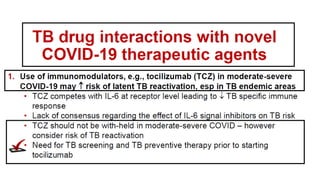
 T cell depletion and dysfunction have been thought to promote the activation
of latent TB infection.
 Apart from T cell depletion and dysfunction, the use of corticosteroids
for more than 2 weeks in the treatment of moderate and
severe/critically ill COVID-19 patients requiring hospitalization and
oxygen support, has a potentially increased risk of reactivating the
latent TB infection.
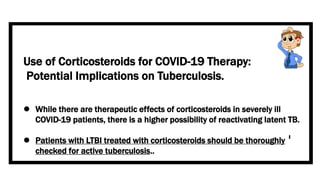
Use of Corticosteroids for COVID-19 Therapy:
Potential Implications on Tuberculosis.
 While there are therapeutic effects of corticosteroids in severely ill
COVID-19 patients, there is a higher possibility of reactivating latent TB.
 Patients with LTBI treated with corticosteroids should be thoroughly
checked for active tuberculosis..
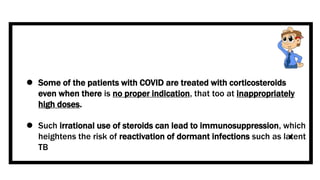
 Some of the patients with COVID are treated with corticosteroids
even when there is no proper indication, that too at inappropriately
high doses.
 Such irrational use of steroids can lead to immunosuppression, which
heightens the risk of reactivation of dormant infections such as latent
TB
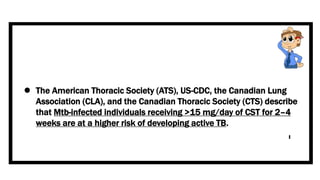
 The American Thoracic Society (ATS), US-CDC, the Canadian Lung
Association (CLA), and the Canadian Thoracic Society (CTS) describe
that Mtb-infected individuals receiving >15 mg/day of CST for 2–4
weeks are at a higher risk of developing active TB.
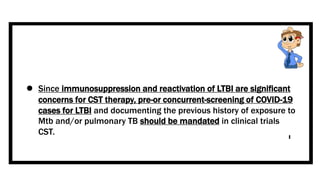
 Since immunosuppression and reactivation of LTBI are significant
concerns for CST therapy, pre-or concurrent-screening of COVID-19
cases for LTBI and documenting the previous history of exposure to
Mtb and/or pulmonary TB should be mandated in clinical trials
CST.
 The impaired immune function/immunosuppression due to COVID-19
alone or along with the use of corticosteroid has led to the reactivation
of LTBI.
 TB screening should be a routine practice in all post-COVID clinics and
health workers have also been asked to check for TB symptoms in
patients they meet in the field and who are recovering from COVID.
Should people being evaluated for TB also be tested
for COVID19 and vice-versa?
Clinically, in addition to COVID-19 always suspect
TB coinfection and vice versa.
 A positive result for COVID19 infection does not exclude the
possibility of concomitant TB, particularly in high TB burden settings .
 Healthcare workers need to consider the possibility of TB in a patient
with COVID-19. Testing for both diseases simultaneously will depend
on the local epidemiology of both diseases.
 We would recommend testing patients synergistically for Latent TB
infection and COVID-19 in endemic regions.
 In the case that an individual has latent TB infection, an appropriate
TB preventive treatment regimen should be initiated and maintained.
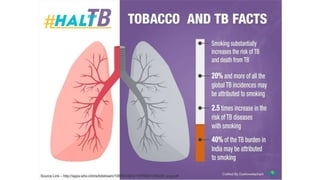
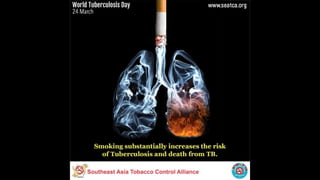
Both TB and COVID-19 have co-morbidities or behaviors
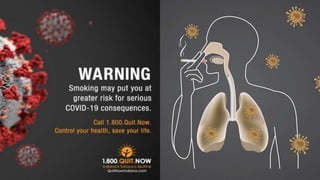
(malnutrition, diabetes, smoking,, HIV, etc.) that increase
their risk for both diseases.
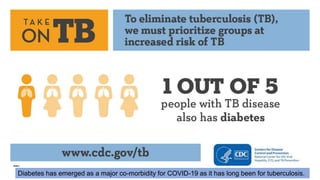
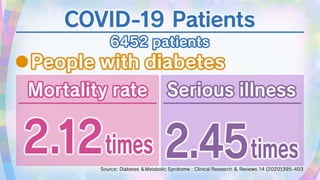
Diabetes has emerged as a major co-morbidity for COVID-19 as it has long been for tuberculosis.
If you develop COVID-19 whilst on treatment for TB,
how should I manage this?
Is TB treatment different in people who have both
TB and COVID-19?
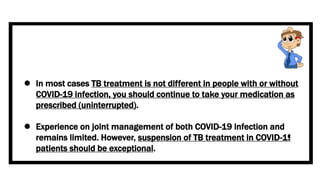
 In most cases TB treatment is not different in people with or without
COVID-19 infection, you should continue to take your medication as
prescribed (uninterrupted).
 Experience on joint management of both COVID-19 infection and
remains limited. However, suspension of TB treatment in COVID-19
patients should be exceptional.
Is it safe for TB patients to get COVID-19 vaccine?
 ‘TB patients should get COVID-19 vaccine as early as possible’, TB
disease is not a contraindication for COVID-19 vaccination.
 If you are taking treatment for TB disease or latent TB infection, it is
safe to receive the COVID-19 vaccine when it is offered to you.
 The presence of a moderate or severe acute illness is a precaution to
administration of all vaccines.
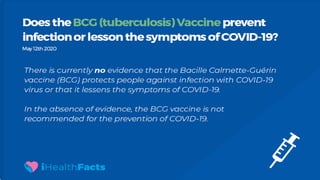
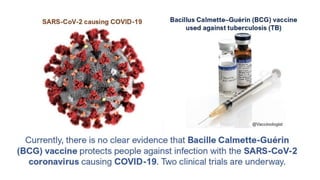
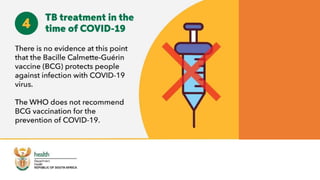
Can a tuberculosis vaccine help combat
COVID-19?
Can I get TB test after covid-19 vaccine?
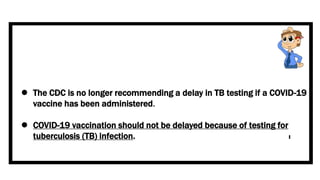
 The CDC is no longer recommending a delay in TB testing if a COVID-19
vaccine has been administered.
 COVID-19 vaccination should not be delayed because of testing for
tuberculosis (TB) infection.
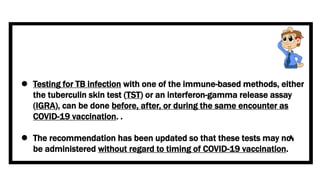
 Testing for TB infection with one of the immune-based methods, either
the tuberculin skin test (TST) or an interferon-gamma release assay
(IGRA), can be done before, after, or during the same encounter as
COVID-19 vaccination. .
 The recommendation has been updated so that these tests may now
be administered without regard to timing of COVID-19 vaccination.
 The TST and IGRAs were previously recommended to be administered
> 4 weeks after completion of of 2-dose COVID-19 mRNA vaccines.. to
minimize potential theoretical interference between vaccination and
TB testing.
 This was out of an abundance of caution during a period when these
were new.
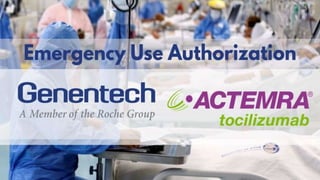
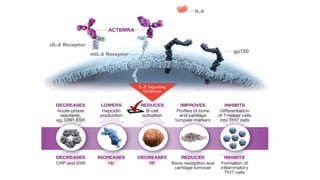
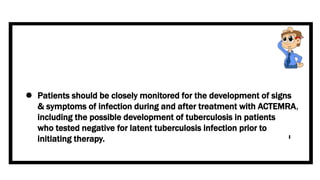
 Patients should be closely monitored for the development of signs
& symptoms of infection during and after treatment with ACTEMRA,
including the possible development of tuberculosis in patients
who tested negative for latent tuberculosis infection prior to
initiating therapy.
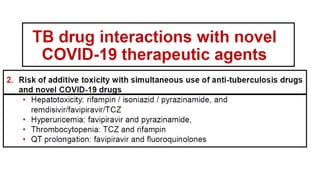
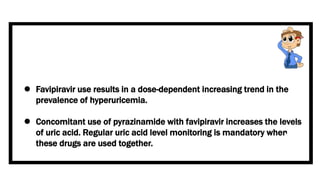
 Favipiravir use results in a dose-dependent increasing trend in the
prevalence of hyperuricemia.
 Concomitant use of pyrazinamide with favipiravir increases the levels
of uric acid. Regular uric acid level monitoring is mandatory when
these drugs are used together.
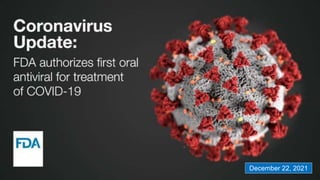
December 22, 2021
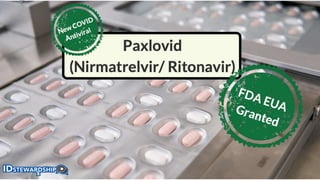
 PAXLOVID is contraindicated with drugs that are potent CYP3A inducers
e.g Rifampicin, where significantly reduced nirmatrelvir or ritonavir plasma
plasma concentrations may be associated with the potential for loss of
virologic response and possible resistance.
 Concomitant use of Rifampicin with PAXLOVID is contraindicated.
 Co-administration of Rifampicin with remdesivir can lead to rapid
clearance and a significant decrease in remdesivir levels.
 A strong inducer rifampicin causes the induction of CYP3A and up to
30% decrease of remdesivir exposure is anticipated.
86
Thank you

COVID-19 &Tuberculosis What is The Link?

  • 1.
  • 2.
    2 Empiric Antimicrobial Therapy forcommunity acquired pneumonia COVID-19 &Tuberculosis What is The Link?
  • 3.
  • 9.
    Data from theWorld Health Organization in March 2021 showed that COVID-19 -related disruptions have severely impacted over 84 countries with 1.4 million fewer people estimated to have received TB care in 2020, representing a 21% drop relative to 2019
  • 13.
    Global predictions aboutthe impact of COVID-19 on TB.
  • 15.
    Does TB increasethe risk of getting COVID-19?
  • 16.
     TB diseaseis not known to put people at higher risk of COVID-19 infection, but it may put you at risk of having more severe symptoms..  If you have fully recovered from TB and do not have any other medical conditions that could put you at risk for severe outcomes of COVID-19, then your risk may be the same as the general population of similar age.
  • 17.
     TB patientswho have lung damage from past tuberculosis sequelae as bronchiectasis or obliterative bronchiolitis may suffer from more severe illness if they are infected with COVID-19.  The fact is, any damage to the lungs from a pre-existing condition like pulmonary tuberculosis may put a person at a higher risk for infections such as COVID-19.
  • 18.
    People with latentTB infection  Currently, there is no evidence to suggest that latent TB infection (LTBI) alone puts you at higher risk of getting COVID-19.  If you have latent TB and you are otherwise in good health, you are unlikely to be at more at risk from COVID-19 than the general population.
  • 19.
     While experienceon COVID-19 infection in TB patients remains limited, it is anticipated that people ill with both TB and COVID-19 may have a worse prognosis , poorer treatment outcomes and higher mortality especially if TB treatment is interrupted.
  • 22.
    COVID-19 could causespike in tuberculosis cases?
  • 27.
     The SARCoV-2 virus is known to affect the immune system by depleting the CD4+, CD8+ T cell lymphocytes and also causes functional exhaustion of the surviving T cells.  T cell depletion and dysfunction have been thought to promote the activation of latent TB infection.
  • 28.
     Apart fromT cell depletion and dysfunction, the use of corticosteroids for more than 2 weeks in the treatment of moderate and severe/critically ill COVID-19 patients requiring hospitalization and oxygen support, has a potentially increased risk of reactivating the latent TB infection.
  • 29.
    Use of Corticosteroidsfor COVID-19 Therapy: Potential Implications on Tuberculosis.  While there are therapeutic effects of corticosteroids in severely ill COVID-19 patients, there is a higher possibility of reactivating latent TB.  Patients with LTBI treated with corticosteroids should be thoroughly checked for active tuberculosis..
  • 30.
     Some ofthe patients with COVID are treated with corticosteroids even when there is no proper indication, that too at inappropriately high doses.  Such irrational use of steroids can lead to immunosuppression, which heightens the risk of reactivation of dormant infections such as latent TB
  • 31.
     The AmericanThoracic Society (ATS), US-CDC, the Canadian Lung Association (CLA), and the Canadian Thoracic Society (CTS) describe that Mtb-infected individuals receiving >15 mg/day of CST for 2–4 weeks are at a higher risk of developing active TB.
  • 32.
     Since immunosuppressionand reactivation of LTBI are significant concerns for CST therapy, pre-or concurrent-screening of COVID-19 cases for LTBI and documenting the previous history of exposure to Mtb and/or pulmonary TB should be mandated in clinical trials CST.
  • 33.
     The impairedimmune function/immunosuppression due to COVID-19 alone or along with the use of corticosteroid has led to the reactivation of LTBI.  TB screening should be a routine practice in all post-COVID clinics and health workers have also been asked to check for TB symptoms in patients they meet in the field and who are recovering from COVID.
  • 34.
    Should people beingevaluated for TB also be tested for COVID19 and vice-versa?
  • 41.
    Clinically, in additionto COVID-19 always suspect TB coinfection and vice versa.
  • 42.
     A positiveresult for COVID19 infection does not exclude the possibility of concomitant TB, particularly in high TB burden settings .  Healthcare workers need to consider the possibility of TB in a patient with COVID-19. Testing for both diseases simultaneously will depend on the local epidemiology of both diseases.
  • 43.
     We wouldrecommend testing patients synergistically for Latent TB infection and COVID-19 in endemic regions.  In the case that an individual has latent TB infection, an appropriate TB preventive treatment regimen should be initiated and maintained.
  • 44.
    Both TB andCOVID-19 have co-morbidities or behaviors (malnutrition, diabetes, smoking,, HIV, etc.) that increase their risk for both diseases.
  • 45.
    Diabetes has emergedas a major co-morbidity for COVID-19 as it has long been for tuberculosis.
  • 53.
    If you developCOVID-19 whilst on treatment for TB, how should I manage this?
  • 54.
    Is TB treatmentdifferent in people who have both TB and COVID-19?
  • 55.
     In mostcases TB treatment is not different in people with or without COVID-19 infection, you should continue to take your medication as prescribed (uninterrupted).  Experience on joint management of both COVID-19 infection and remains limited. However, suspension of TB treatment in COVID-19 patients should be exceptional.
  • 56.
    Is it safefor TB patients to get COVID-19 vaccine?
  • 57.
     ‘TB patientsshould get COVID-19 vaccine as early as possible’, TB disease is not a contraindication for COVID-19 vaccination.  If you are taking treatment for TB disease or latent TB infection, it is safe to receive the COVID-19 vaccine when it is offered to you.  The presence of a moderate or severe acute illness is a precaution to administration of all vaccines.
  • 58.
    Can a tuberculosisvaccine help combat COVID-19?
  • 62.
    Can I getTB test after covid-19 vaccine?
  • 63.
     The CDCis no longer recommending a delay in TB testing if a COVID-19 vaccine has been administered.  COVID-19 vaccination should not be delayed because of testing for tuberculosis (TB) infection.
  • 64.
     Testing forTB infection with one of the immune-based methods, either the tuberculin skin test (TST) or an interferon-gamma release assay (IGRA), can be done before, after, or during the same encounter as COVID-19 vaccination. .  The recommendation has been updated so that these tests may now be administered without regard to timing of COVID-19 vaccination.
  • 65.
     The TSTand IGRAs were previously recommended to be administered > 4 weeks after completion of of 2-dose COVID-19 mRNA vaccines.. to minimize potential theoretical interference between vaccination and TB testing.  This was out of an abundance of caution during a period when these were new.
  • 72.
     Patients shouldbe closely monitored for the development of signs & symptoms of infection during and after treatment with ACTEMRA, including the possible development of tuberculosis in patients who tested negative for latent tuberculosis infection prior to initiating therapy.
  • 74.
     Favipiravir useresults in a dose-dependent increasing trend in the prevalence of hyperuricemia.  Concomitant use of pyrazinamide with favipiravir increases the levels of uric acid. Regular uric acid level monitoring is mandatory when these drugs are used together.
  • 76.
  • 77.
     PAXLOVID iscontraindicated with drugs that are potent CYP3A inducers e.g Rifampicin, where significantly reduced nirmatrelvir or ritonavir plasma plasma concentrations may be associated with the potential for loss of virologic response and possible resistance.  Concomitant use of Rifampicin with PAXLOVID is contraindicated.
  • 78.
     Co-administration ofRifampicin with remdesivir can lead to rapid clearance and a significant decrease in remdesivir levels.  A strong inducer rifampicin causes the induction of CYP3A and up to 30% decrease of remdesivir exposure is anticipated.
  • 82.