





1
By
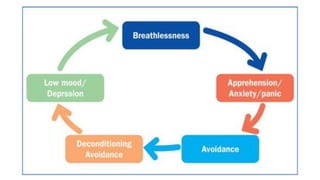
 It is very common for people recovering from COVID-19
to feel breathless.
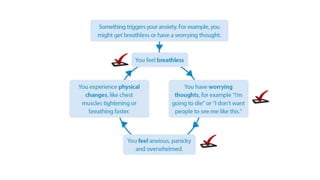
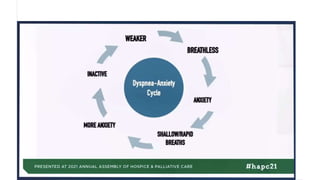
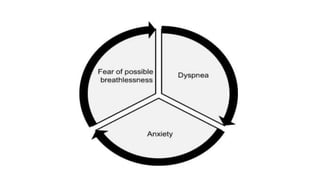
 It can make people feel scared, anxious or panicky and
it may limit their activities.
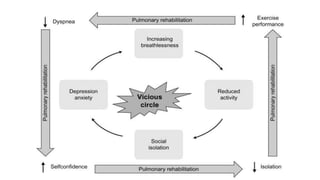
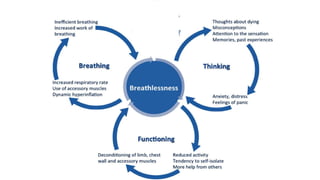
Why Breathlessness matters to patients?
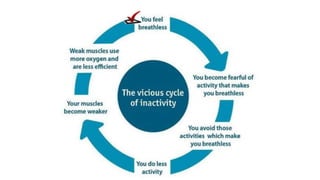
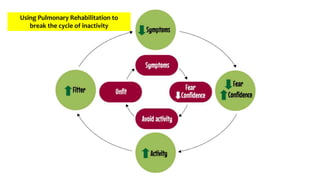
Using Pulmonary Rehabilitation to
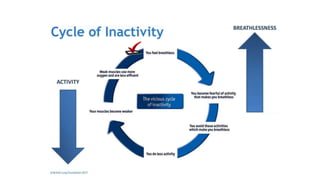
break the cycle of inactivity
A- Positions to ease breathlessness
B- Breathing Techniques
C. Exercise and why it is important?
D. Pacing activity
Breathlessness -A patient’s guide
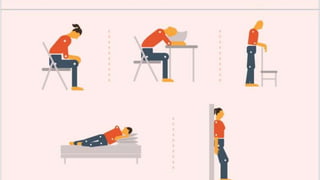
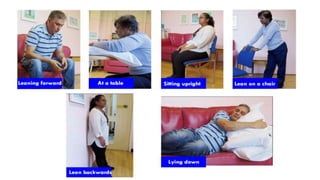
A- Positions to ease breathlessness
1
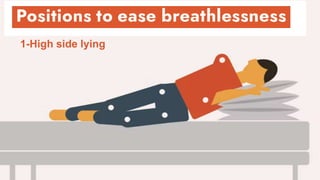
1-High side lying
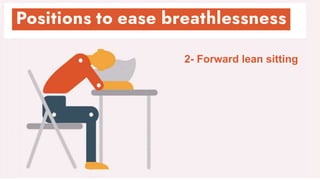
2- Forward lean sitting
4
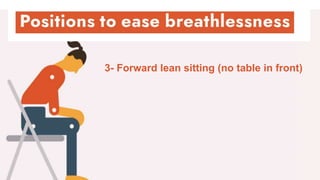
3- Forward lean sitting (no table in front)
4
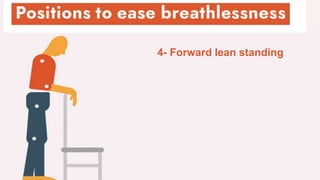
4- Forward lean standing
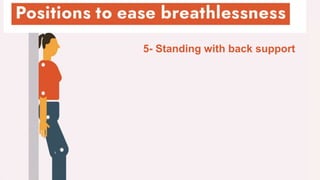
5- Standing with back support
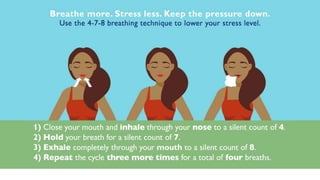
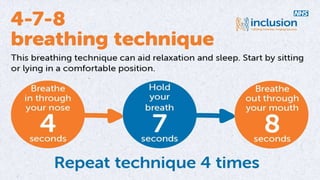
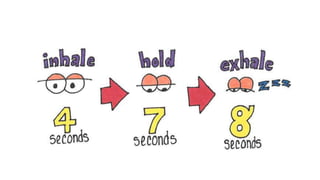
B- Breathing Techniques
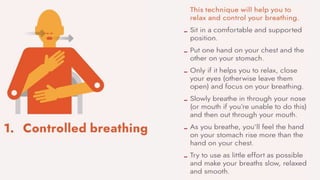
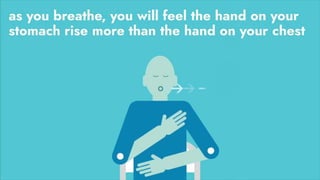
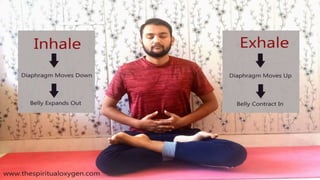
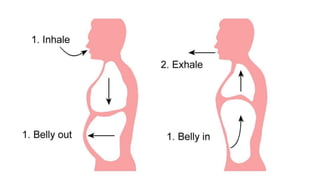
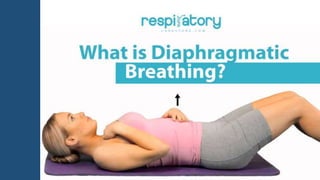
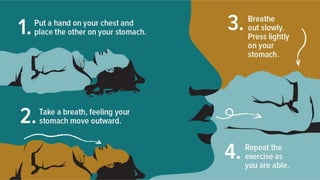
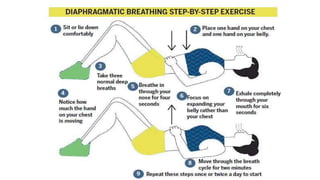
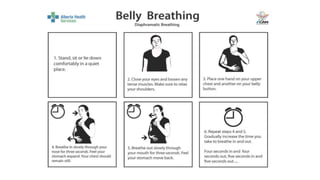
Relaxed Tummy Breathing
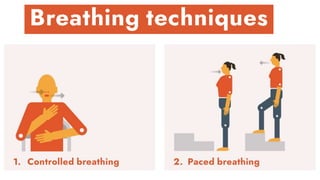
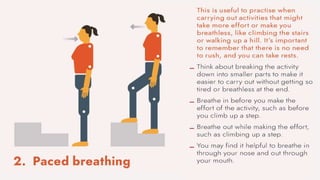
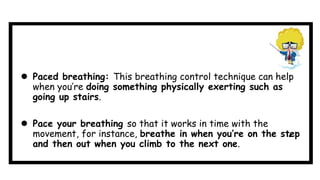
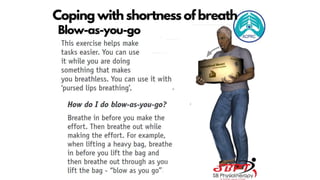
 Paced breathing: This breathing control technique can help
when you’re doing something physically exerting such as
going up stairs.
 Pace your breathing so that it works in time with the
movement, for instance, breathe in when you’re on the step
and then out when you climb to the next one.
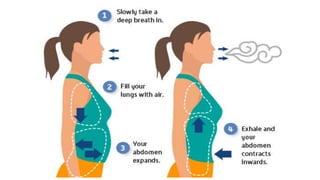
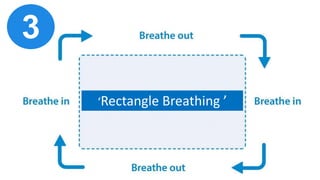
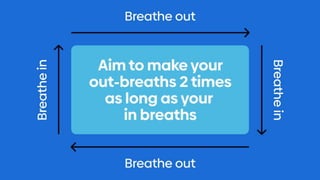
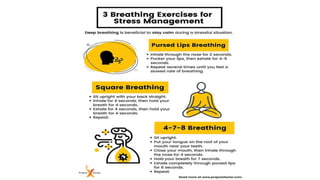
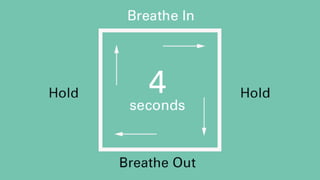
‘Rectangle Breathing ’
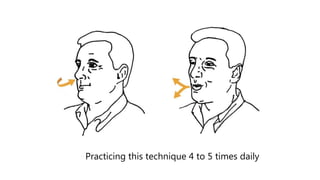
Practicing this technique 4 to 5 times daily
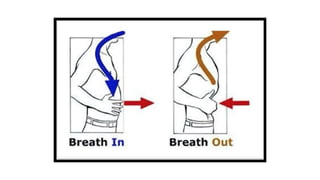
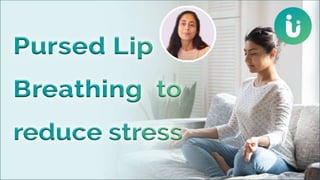
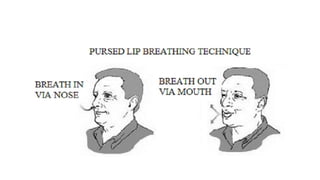
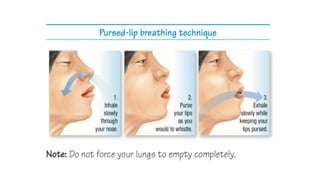
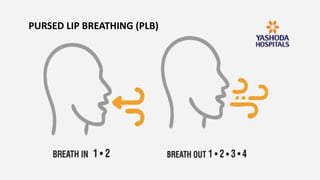
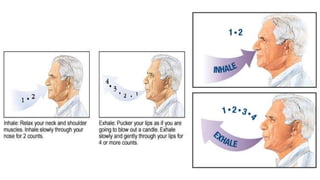
PURSED LIP BREATHING (PLB)
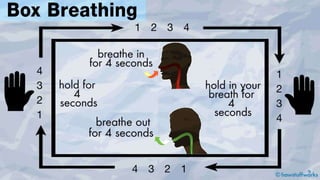
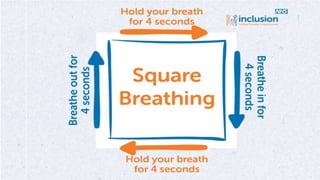
Box breathing It is also known as four-square breathing.
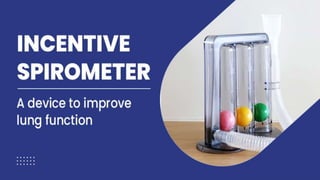
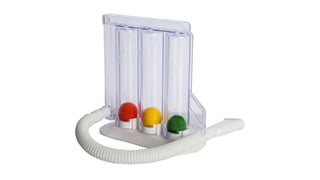
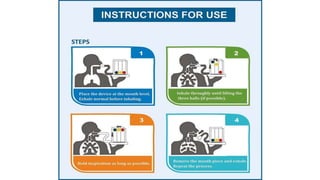
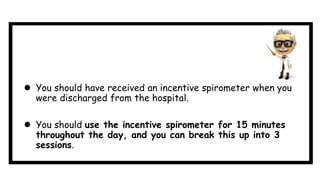
 You should have received an incentive spirometer when you
were discharged from the hospital.
 You should use the incentive spirometer for 15 minutes
throughout the day, and you can break this up into 3
sessions.
C. Exercise and why it is important?
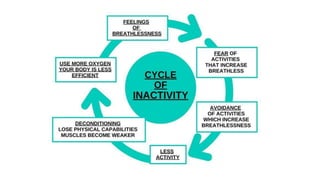
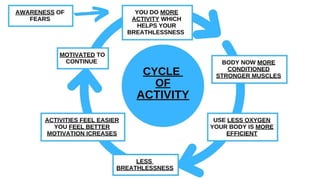
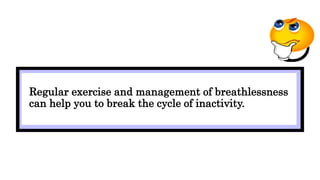
Regular exercise and management of breathlessness
can help you to break the cycle of inactivity.
 Spending time in hospital or being ill at home with COVID-19
can cause your muscles to become weaker.
 Exercise is important for regaining your muscle strength and
endurance.
It's important to remember that returning
to physical activity and exercise must be
done gradually.
 Regular exercise is good for you but keep in mind that it
will take you time to get back to your normal activities.
1. Start slowly and introduce new activities gradually
2. Set yourself realistic targets each week
3. Rest when you feel tired
4. Do not compare yourself to others
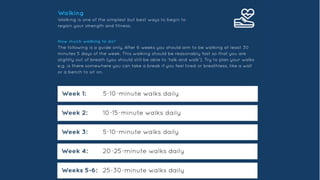
 It is important to monitor your breathlessness when you
exercise. You should exercise at a level whereby you are
slightly out of breath but still able to talk.
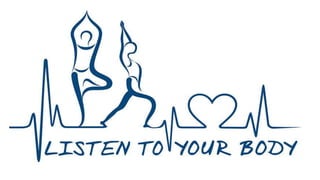
 Don’t worry if you feel more tired and that you have less
energy than usual. This is normal and may last for up to
6-8 weeks. The key is to ‘listen to your body’ and slow
down.
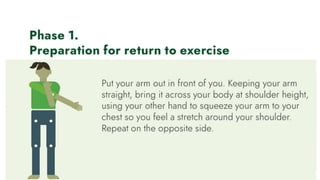
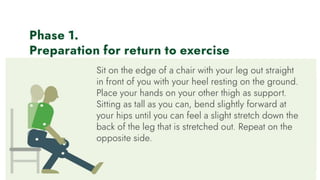
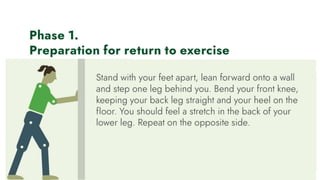
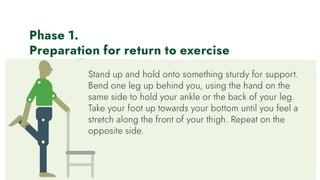
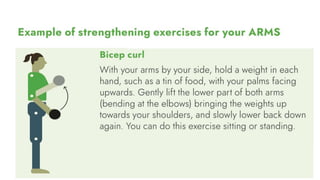
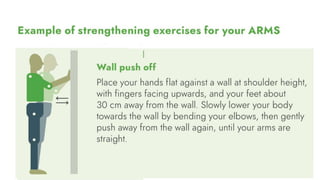
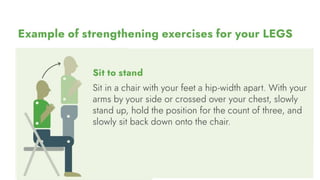
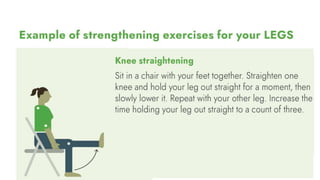
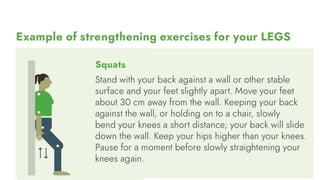
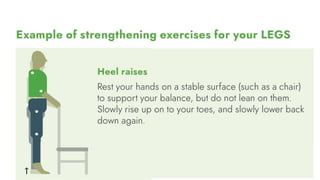
Exercises that can be completed at home?
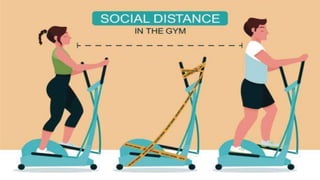
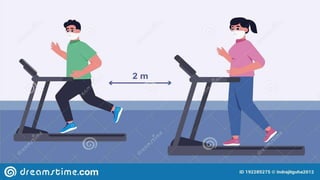
Gym After Covid19 Illustration
 No exercise should be painful. If you experience pain, chest
pain, or feel faint or dizzy during exercise, you should stop
immediately.
 Don not restart your exercise programme until you have been
seen by a health care professional.
D. Pacing activity
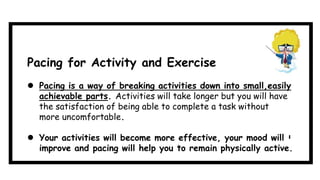
 Pacing is a way of breaking activities down into small,easily
achievable parts. Activities will take longer but you will have
the satisfaction of being able to complete a task without
more uncomfortable.
 Your activities will become more effective, your mood will
improve and pacing will help you to remain physically active....
Pacing for Activity and Exercise
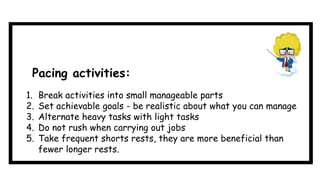
1. Break activities into small manageable parts
2. Set achievable goals - be realistic about what you can manage
3. Alternate heavy tasks with light tasks
4. Do not rush when carrying out jobs
5. Take frequent shorts rests, they are more beneficial than
fewer longer rests.
Pacing activities:
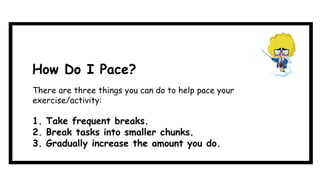
How Do I Pace?
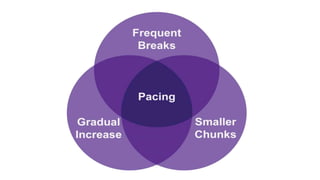
There are three things you can do to help pace your
exercise/activity:
1. Take frequent breaks.
2. Break tasks into smaller chunks.
3. Gradually increase the amount you do.
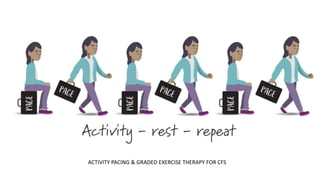
ACTIVITY PACING & GRADED EXERCISE THERAPY FOR CFS
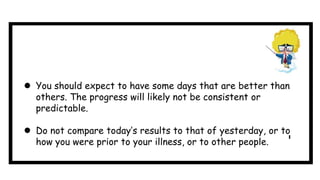
 You should expect to have some days that are better than
others. The progress will likely not be consistent or
predictable.
 Do not compare today’s results to that of yesterday, or to
how you were prior to your illness, or to other people.
 Remember that practicing pacing strategies and
staying within your energy envelope is an effective
way of managing breathlessness.
Managing breathlessness with long covid

Managing breathlessness with long covid

  • 1.
  • 3.
  • 11.
     It isvery common for people recovering from COVID-19 to feel breathless.  It can make people feel scared, anxious or panicky and it may limit their activities.
  • 17.
  • 26.
    Using Pulmonary Rehabilitationto break the cycle of inactivity
  • 29.
    A- Positions toease breathlessness B- Breathing Techniques C. Exercise and why it is important? D. Pacing activity Breathlessness -A patient’s guide
  • 30.
    A- Positions toease breathlessness
  • 31.
  • 32.
  • 33.
    4 3- Forward leansitting (no table in front)
  • 34.
  • 35.
    5- Standing withback support
  • 38.
  • 47.
  • 53.
     Paced breathing:This breathing control technique can help when you’re doing something physically exerting such as going up stairs.  Pace your breathing so that it works in time with the movement, for instance, breathe in when you’re on the step and then out when you climb to the next one.
  • 54.
  • 61.
    Practicing this technique4 to 5 times daily
  • 63.
  • 72.
    Box breathing Itis also known as four-square breathing.
  • 81.
     You shouldhave received an incentive spirometer when you were discharged from the hospital.  You should use the incentive spirometer for 15 minutes throughout the day, and you can break this up into 3 sessions.
  • 82.
    C. Exercise andwhy it is important?
  • 85.
    Regular exercise andmanagement of breathlessness can help you to break the cycle of inactivity.
  • 88.
     Spending timein hospital or being ill at home with COVID-19 can cause your muscles to become weaker.  Exercise is important for regaining your muscle strength and endurance.
  • 89.
    It's important toremember that returning to physical activity and exercise must be done gradually.
  • 90.
     Regular exerciseis good for you but keep in mind that it will take you time to get back to your normal activities. 1. Start slowly and introduce new activities gradually 2. Set yourself realistic targets each week 3. Rest when you feel tired 4. Do not compare yourself to others
  • 91.
     It isimportant to monitor your breathlessness when you exercise. You should exercise at a level whereby you are slightly out of breath but still able to talk.
  • 92.
     Don’t worryif you feel more tired and that you have less energy than usual. This is normal and may last for up to 6-8 weeks. The key is to ‘listen to your body’ and slow down.
  • 98.
    Exercises that canbe completed at home?
  • 113.
    Gym After Covid19Illustration
  • 116.
     No exerciseshould be painful. If you experience pain, chest pain, or feel faint or dizzy during exercise, you should stop immediately.  Don not restart your exercise programme until you have been seen by a health care professional.
  • 117.
  • 118.
     Pacing isa way of breaking activities down into small,easily achievable parts. Activities will take longer but you will have the satisfaction of being able to complete a task without more uncomfortable.  Your activities will become more effective, your mood will improve and pacing will help you to remain physically active.... Pacing for Activity and Exercise
  • 119.
    1. Break activitiesinto small manageable parts 2. Set achievable goals - be realistic about what you can manage 3. Alternate heavy tasks with light tasks 4. Do not rush when carrying out jobs 5. Take frequent shorts rests, they are more beneficial than fewer longer rests. Pacing activities:
  • 122.
    How Do IPace? There are three things you can do to help pace your exercise/activity: 1. Take frequent breaks. 2. Break tasks into smaller chunks. 3. Gradually increase the amount you do.
  • 123.
    ACTIVITY PACING &GRADED EXERCISE THERAPY FOR CFS
  • 126.
     You shouldexpect to have some days that are better than others. The progress will likely not be consistent or predictable.  Do not compare today’s results to that of yesterday, or to how you were prior to your illness, or to other people.
  • 127.
     Remember thatpracticing pacing strategies and staying within your energy envelope is an effective way of managing breathlessness.