CORTICOSTEROIDS 
Presented by : 
Joe Dsilva
CONTENTS 
• Introduction 
• History 
• Functional anatomy and histology of adrenal glands 
• Biosynthesis of steroids 
• Fate of steroids 
• Mineralocorticoids 
• Glucocorticoids
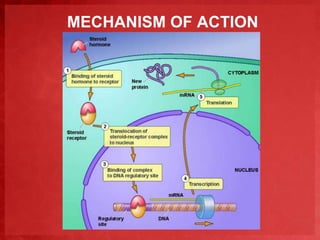
• Mechanism of action 
• Classification of steroids 
• Uses in medicine 
• Steroids in dentistry 
• Adverse effects 
• Drug interaction 
• Precautions
Introduction 
 The adrenal gland is the source of a diverse group of 
hormones essential for metabolic control, regulation of 
water and electrolyte balance, and regulation of body’s 
response to stress. 
 Using cholesterol as a substrate, the adrenal cortex 
produces a large number of substances collectively 
known as corticosteroids.
History 
 By the middle of 19th century it was demonstrated that 
adrenal glands were essential for life 
 Later, it was appreciated that the cortex was more 
important than the medulla 
 A number of steroidal active principles were isolated and 
their structures were elucidated by kendall and his 
coworkers in the 1930s.
 However, the gate to their great therapeutic potential 
was opened by Hench (1949) who obtained striking 
improvement in rheumatoid arthritis by using cortisone. 
 The nobel prize was awarded the very next year to 
kendall and Hench. 
 Currently, corticosteroids are drugs with one of the 
broadest spectrum of clinical utility.
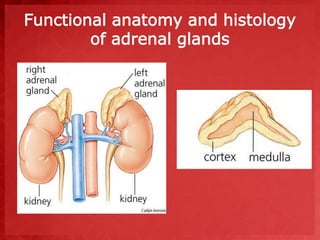
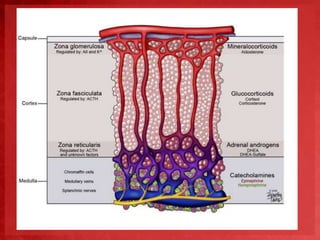
Functional anatomy and histology 
of adrenal glands
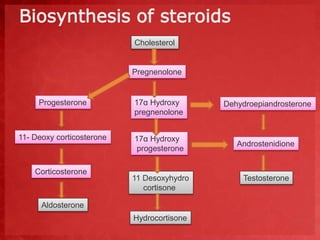
Biosynthesis of steroids 
Cholesterol 
Pregnenolone 
Progesterone 
11- Deoxy corticosterone 
Corticosterone 
Aldosterone 
17α Hydroxy 
pregnenolone 
17α Hydroxy 
progesterone 
11 Desoxyhydro 
cortisone 
Hydrocortisone 
Dehydroepiandrosterone 
Androstenidione 
Testosterone
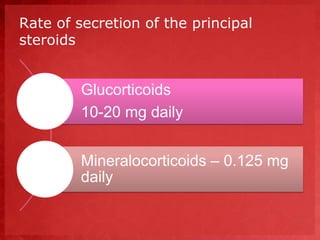
Rate of secretion of the principal 
steroids 
Glucorticoids 
10-20 mg daily 
Mineralocorticoids – 0.125 mg 
daily
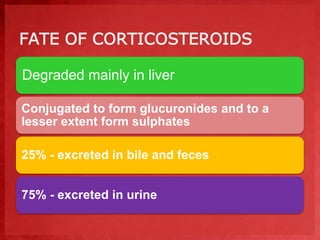
FATE OF CORTICOSTEROIDS 
Degraded mainly in liver 
Conjugated to form glucuronides and to a 
lesser extent form sulphates 
25% - excreted in bile and feces 
75% - excreted in urine
MECHANISM OF ACTION
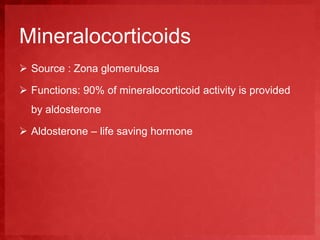
Mineralocorticoids 
 Source : Zona glomerulosa 
 Functions: 90% of mineralocorticoid activity is provided 
by aldosterone 
 Aldosterone – life saving hormone
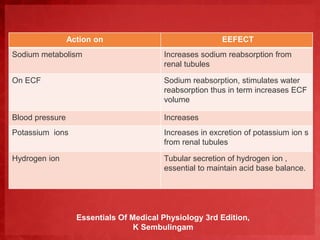
Action on EEFECT 
Sodium metabolism Increases sodium reabsorption from 
renal tubules 
On ECF Sodium reabsorption, stimulates water 
reabsorption thus in term increases ECF 
volume 
Blood pressure Increases 
Potassium ions Increases in excretion of potassium ion s 
from renal tubules 
Hydrogen ion Tubular secretion of hydrogen ion , 
essential to maintain acid base balance. 
Essentials Of Medical Physiology 3rd Edition, 
K Sembulingam
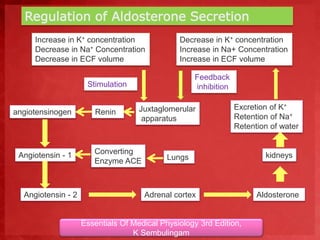
Regulation of Aldosterone Secretion 
Increase in K+ concentration 
Decrease in Na+ Concentration 
Decrease in ECF volume 
Decrease in K+ concentration 
Increase in Na+ Concentration 
Increase in ECF volume 
Juxtaglomerular 
apparatus 
Excretion of K+ 
Retention of Na+ 
Retention of water 
Lungs kidneys 
Adrenal cortex Aldosterone 
angiotensinogen 
Angiotensin - 1 
Angiotensin - 2 
Stimulation 
Renin 
Converting 
Enzyme ACE 
Feedback 
inhibition 
Essentials Of Medical Physiology 3rd Edition, 
K Sembulingam
Glucocorticoids 
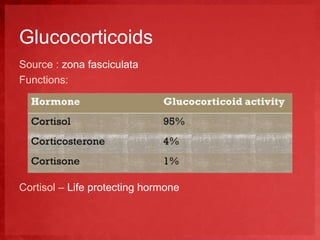
Source : zona fasciculata 
Functions: 
Cortisol – Life protecting hormone
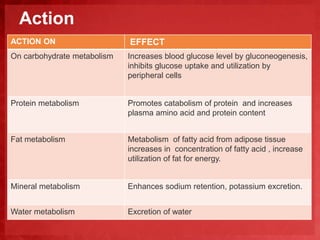
Action 
ACTION ON EFFECT 
On carbohydrate metabolism Increases blood glucose level by gluconeogenesis, 
inhibits glucose uptake and utilization by 
peripheral cells 
Protein metabolism Promotes catabolism of protein and increases 
plasma amino acid and protein content 
Fat metabolism Metabolism of fatty acid from adipose tissue 
increases in concentration of fatty acid , increase 
utilization of fat for energy. 
Mineral metabolism Enhances sodium retention, potassium excretion. 
Water metabolism Excretion of water
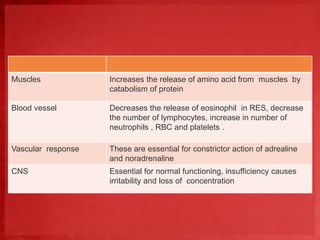
Muscles Increases the release of amino acid from muscles by 
catabolism of protein 
Blood vessel Decreases the release of eosinophil in RES, decrease 
the number of lymphocytes, increase in number of 
neutrophils , RBC and platelets . 
Vascular response These are essential for constrictor action of adrealine 
and noradrenaline 
CNS Essential for normal functioning, insufficiency causes 
irritability and loss of concentration
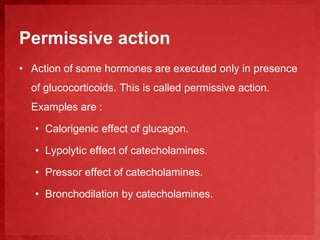
Permissive action 
• Action of some hormones are executed only in presence 
of glucocorticoids. This is called permissive action. 
Examples are : 
• Calorigenic effect of glucagon. 
• Lypolytic effect of catecholamines. 
• Pressor effect of catecholamines. 
• Bronchodilation by catecholamines.
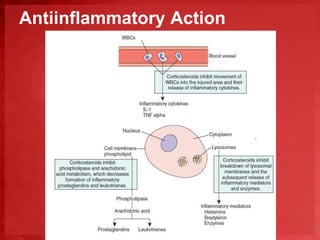
Antiinflammatory Action
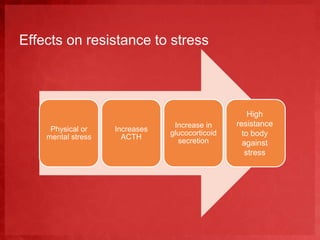
Effects on resistance to stress 
Physical or 
mental stress 
Increases 
ACTH 
Increase in 
glucocorticoid 
secretion 
High 
resistance 
to body 
against 
stress
Anti allergic action 
• Suppresses all type of hypersensitivity reaction and 
allergic reaction. 
• Suppresion of recruitment of leucocytes at the site of 
contact with antigen and inflammatory response to 
immunological injury
Immunosuppresive action 
• Suppresses immune system of body by decreasing 
number of circulating T lymphocytes. 
• Prevent release of interleukin 2 by T cells
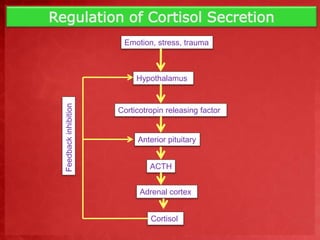
Regulation of Cortisol Secretion 
Emotion, stress, trauma 
Hypothalamus 
Corticotropin releasing factor 
Anterior pituitary 
ACTH 
Adrenal cortex 
Cortisol 
Feedback inhibition
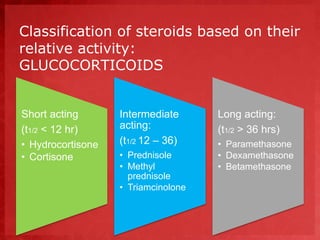
Classification of steroids based on their 
relative activity: 
GLUCOCORTICOIDS 
Short acting 
(t1/2 < 12 hr) 
• Hydrocortisone 
• Cortisone 
Intermediate 
acting: 
(t1/2 12 – 36) 
• Prednisole 
• Methyl 
prednisole 
• Triamcinolone 
Long acting: 
(t1/2 > 36 hrs) 
• Paramethasone 
• Dexamethasone 
• Betamethasone
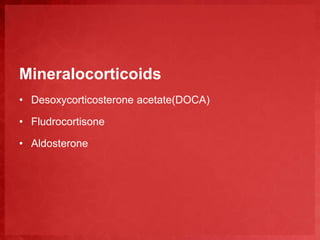
Mineralocorticoids 
• Desoxycorticosterone acetate(DOCA) 
• Fludrocortisone 
• Aldosterone
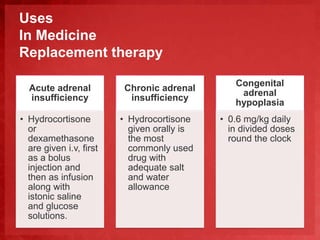
Uses 
In Medicine 
Replacement therapy 
Acute adrenal 
insufficiency 
• Hydrocortisone 
or 
dexamethasone 
are given i.v, first 
as a bolus 
injection and 
then as infusion 
along with 
istonic saline 
and glucose 
solutions. 
Chronic adrenal 
insufficiency 
• Hydrocortisone 
given orally is 
the most 
commonly used 
drug with 
adequate salt 
and water 
allowance 
Congenital 
adrenal 
hypoplasia 
• 0.6 mg/kg daily 
in divided doses 
round the clock
Pharmacotherapy: 
• Single dose (even excessive) is not harmful can be used 
to tide over mortal crisis even when benefit is not certain. 
• Short courses (even high doses) are not likely to be 
harmful in the absence of contraindications. Starting 
doses can be high in severe illness
• Long term use is potentially hazardous: keep the dose to 
minimum which is found by trial and error, even partial 
relief may have to be tolerated. 
• No abrupt withdrawal after a corticoid has been given for 
> 2 to 3 weeks: may precipitate adrenal insufficiency
• Arthritis 
• Collagen diseases 
• Severe allergic reactions 
• Autoimmune disorders 
• Bronchial asthma 
• Infective diseases 
• Eye diseases 
• Skin diseases 
• Intestinal diseases
STEROIDS IN 
DENTISTRY
Steroids in oral surgery 
• Prevention of post operative pain, edema and trismus 
after 3rd molar surgery 
• Prevention of post operative edema after orthognathic 
surgery 
• Prevention of alveolar osteitis
Steroids in endodontics 
• steroid-antibiotic combinations like Ledermix 
• Steroids like hydrocortisone are also mixed with zinc 
• oxide eugenol to be used as root canal sealers. It 
appears 
• that the action of steroids on root resorption is chemistry 
• dependent. 
International Journal of Pharmaceutical Sciences Review and Research
Steroid in oral medicine
Ulcerative Vesiculoerosive diseases 
 Immunologically mediated diseases that affect the oral 
mucosa present with inflammation and loss of epithelial 
integrity, through cellular and/or humoral immunity-mediated 
attack on epithelial connective tissue targets. 
 The main clinical features are ulceration and reddening, 
with pain that can be severe and debilitating.
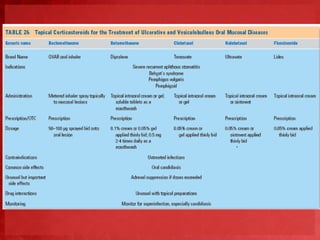
• Corticosteroids play a central role in the treatment 
of vesiculoerosive lesions. 
• However, the frequency and severity of the 
adverse effects associated with the use of 
systemic corticosteroids have led to the increased 
use of topical corticosteroids (TCs)
Topical corticosteroids for ulcerative 
vesiculoerosive lesions
Indications for use 
• Short course of TC – accelerates remission without 
producing adverse effects 
• Ulcerative disease that have tendency to remit 
spontaneously 
• Eg RAS, some cases of EM, drug induced ulceration 
Scully et al., 1999; Chan et al., 2002
TC for longer and less predictable periods 
• When disease is chronic 
• Marked tendency for recurrence 
• Eg. RAS, erosive OLP, apecific form of EM, MMP
In severe cases of ulceration 
• After a short course of systemic corticosteroids, a 
maintenance regimen of TC can be used once the 
disease is controlled. 
• This can prevent recurrence, and also avoids adverse 
effects assosiated with long course of systemic 
corticosteroids
Protocols for use 
When a TC is prescribed, especially for prolonged 
course is predicted 
 The basic rule is that a TC of a potency appropriate to the 
severity of the clinical symptoms should be used, at the 
lowest possible concentration and frequency, with 
maintaining the effectiveness of the treatment. 
 It should always be taken into account that these drugs 
do not cure the disease but rather control or relieve the 
symptoms. 
JDR April 2005 vol. 84 no. 4 294-301
The key factors 
• Specific diagnosis 
• Severity of oral disease 
• Presence or absence of extraoral lesion 
• Medical history of patient 
JDR April 2005 vol. 84 no. 4 294-301
Factors that influence the effectiveness of 
TCs: 
Intrinsic potency of drug: This can be increased by 
halogenation and esterification of steroid 
This makes drug more lipophilic and gives it greater 
penetrability 
Contact time between the drug and lesion and the 
Vehicle used to apply it 
JDR April 2005 vol. 84 no. 4 294-301
Concentration: which can increase its clinical effectiveness, 
although no additional advantage is obtained beyond certain 
limits. 
JDR April 2005 vol. 84 no. 4 294-301
Success of a topical medicine 
Depend on two main factors 
• Number of application per day 
• High potency – 2 to 3 times 
• Low potency – 5 to 10 times 
• Vehicle used 
JDR April 2005 vol. 84 no. 4 294-301
Various vehicles 
• Orabase 
• Cyanoacrylate 
• Bioadhesive patch made of cellulose derivatives 
• Gels 
JDR April 2005 vol. 84 no. 4 294-301
Patients prescribed TC in an adherent vehicle 
should be instructed to 
 Apply a small amount to the target area after 
meals, and 
 Not to eat or drink for at least 30 min. 
 It is best not to rub the TC in, because this can 
produce irritation. 
JDR April 2005 vol. 84 no. 4 294-301
 Preparations such as orabase will not adhere to wet 
surface so mucosa and lesion must be dried with guaze 
before application.
For small and accessible erosive lesions, or those 
located on the gingiva and palate, the lesions can be 
treated by the 
• Use of an adherent paste in a tray, 
• Which allows for accurate control over the contact time 
and 
• Ensures that the entire lesional surface is exposed to the 
drug. 
JDR April 2005 vol. 84 no. 4 294-301
Adhesive denture paste as vehicle for TC can avoid some 
of above disadvantages 
this provides stability and bioadhesive properties forperiod 
of 12 hrs after application, esp. in localized lesions,
• TC mouthrinses: 
• Contact time can be predicted 
• Drug is in contact with all lesions 
• Are released more readily to oral mucosa when aqueous 
solution is applied
• Disadvantage 
• Will be in contact with all mucosa wheather effected or 
not 
• This also increase the surface area of absorption thus 
risk of adverse effects 
• This can be exacerbated by presence of ulcerated 
surfaces and by increased pressure excerted by liquid 
on mucosa as a result of normal rinsing 
• Can be involumentary ingested
Thami and bhalla proposed using saliva as vehicle for 
TCs which they designated as chew and spit method. 
• Patient is directed to chew or suck betamethasone tab. 
Mixing it with mouth saliva keeping it without swallowing 
for as long as possible 10 to 15 min 
Disadvantage; 
• Cannot guaranteed that tablet is completely dissolved 
• Cannot be used in dry mouth
Systemic steroids for ulcerative 
vesiculobullous diseases
Major aphthae or severe multiple minor 
aphthae 
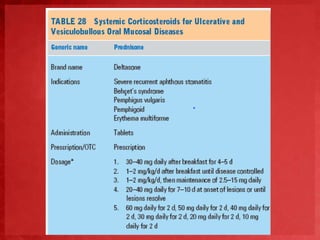
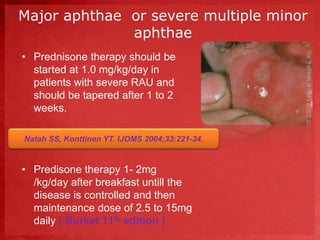
• Prednisone therapy should be 
started at 1.0 mg/kg/day in 
patients with severe RAU and 
should be tapered after 1 to 2 
weeks. 
Natah SS, Konttinen YT. IJOMS 2004;33:221-34. 
• Predisone therapy 1- 2mg 
/kg/day after breakfast untill the 
disease is controlled and then 
maintenance dose of 2.5 to 15mg 
daily ( Burket 11th edition )
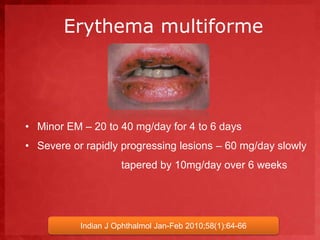
Erythema multiforme 
• Minor EM – 20 to 40 mg/day for 4 to 6 days 
• Severe or rapidly progressing lesions – 60 mg/day slowly 
tapered by 10mg/day over 6 weeks 
Indian J Ophthalmol Jan-Feb 2010;58(1):64-66
Pemphigus Vulgaris 
• Mainstay 1-2mg/kg/d. 
• Initial dose of treatment – 0.5 mg/kg/day to 3 mg/kg/d 
• Dose that achieves clinical control is maintained for 2- 
3 weeks and then gradually tapered. 
Burket’s Oral Medicine, 11th edition
Pulse therapy 
• Also called short term therapy 
• High dose therapy involves a 48-72 hrs course of 
intensive steroid administration 
• Single i.v injection of a supra-physiological dose of 
steroid 
• Dose of 0.5-2g of prednisolone or equivalent
Benefits 
• Avoids complications & side effects of long term steroid 
therapy 
• To achieve immunosuppressive effects similar to those 
with higher doses of steroids
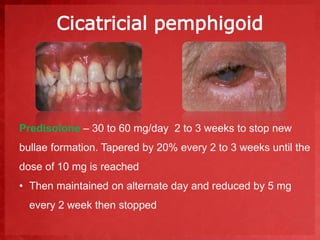
Cicatricial pemphigoid 
Predisolone – 30 to 60 mg/day 2 to 3 weeks to stop new 
bullae formation. Tapered by 20% every 2 to 3 weeks until the 
dose of 10 mg is reached 
• Then maintained on alternate day and reduced by 5 mg 
every 2 week then stopped
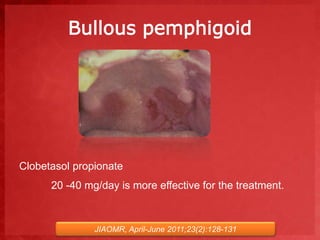
Bullous pemphigoid 
Clobetasol propionate 
20 -40 mg/day is more effective for the treatment. 
JIAOMR, April-June 2011;23(2):128-131
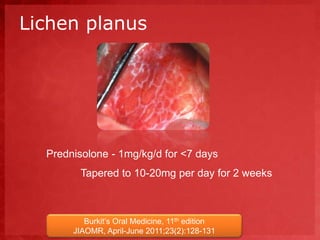
Lichen planus 
Prednisolone - 1mg/kg/d for <7 days 
Tapered to 10-20mg per day for 2 weeks 
Burkit’s Oral Medicine, 11th edition 
JIAOMR, April-June 2011;23(2):128-131
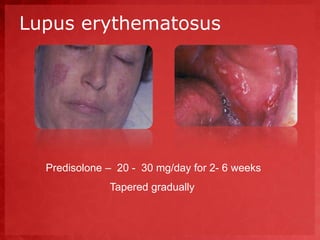
Lupus erythematosus 
Predisolone – 20 - 30 mg/day for 2- 6 weeks 
Tapered gradually
Steroids in the treatment of benign 
lesions
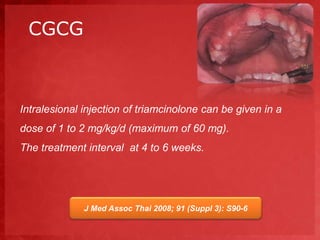
CGCG 
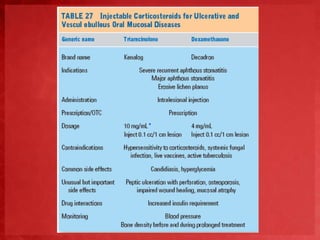
Intralesional injection of triamcinolone can be given in a 
dose of 1 to 2 mg/kg/d (maximum of 60 mg). 
The treatment interval at 4 to 6 weeks. 
J Med Assoc Thai 2008; 91 (Suppl 3): S90-6
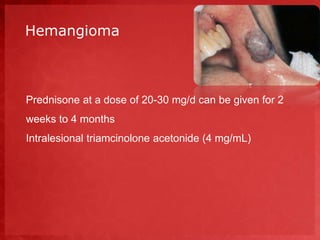
Hemangioma 
Prednisone at a dose of 20-30 mg/d can be given for 2 
weeks to 4 months 
Intralesional triamcinolone acetonide (4 mg/mL)
Steroids in salivary gland disorders
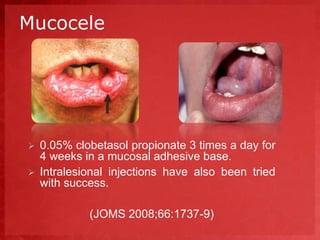
Mucocele 
 0.05% clobetasol propionate 3 times a day for 
4 weeks in a mucosal adhesive base. 
 Intralesional injections have also been tried 
with success. 
(JOMS 2008;66:1737-9)
Steriods in neuralgia
Post herpetic neuralgia 
To reduce incidence of post herpetic neuralgia: 
 Prednisolone 20 to 30 mg/day for 7 – 10 days 
tapered to 10 mg/day for 1 week
Steroids for TMJ disorders
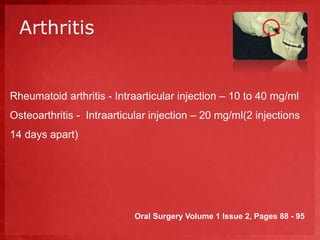
Arthritis 
Rheumatoid arthritis - Intraarticular injection – 10 to 40 mg/ml 
Osteoarthritis - Intraarticular injection – 20 mg/ml(2 injections 
14 days apart) 
Oral Surgery Volume 1 Issue 2, Pages 88 - 95
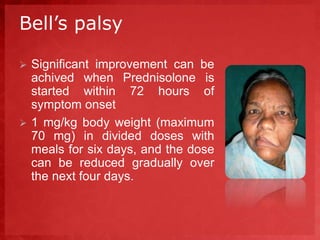
Bell’s palsy 
 Significant improvement can be 
achived when Prednisolone is 
started within 72 hours of 
symptom onset 
 1 mg/kg body weight (maximum 
70 mg) in divided doses with 
meals for six days, and the dose 
can be reduced gradually over 
the next four days.
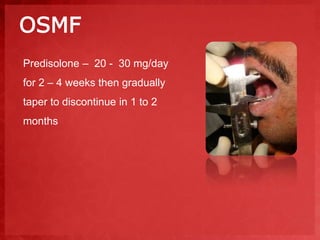
OSMF 
Predisolone – 20 - 30 mg/day 
for 2 – 4 weeks then gradually 
taper to discontinue in 1 to 2 
months
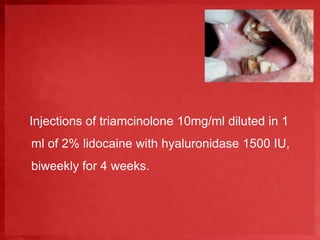
Injections of triamcinolone 10mg/ml diluted in 1 
ml of 2% lidocaine with hyaluronidase 1500 IU, 
biweekly for 4 weeks.
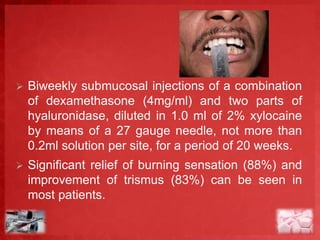
 Biweekly submucosal injections of a combination 
of dexamethasone (4mg/ml) and two parts of 
hyaluronidase, diluted in 1.0 ml of 2% xylocaine 
by means of a 27 gauge needle, not more than 
0.2ml solution per site, for a period of 20 weeks. 
 Significant relief of burning sensation (88%) and 
improvement of trismus (83%) can be seen in 
most patients.
Adverse effects 
Due to extention of pharmacological action occuring with prolonged 
therapy 
Mineralocorticoids: 
 Sodium and water retention 
 Edema 
 Hypokalemic alkalosis 
 Progressive rise in B.P 
 Weight gain 
 Fluid and electrolyte disturbance
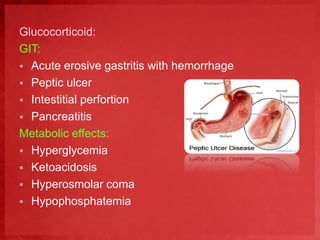
Glucocorticoid: 
GIT: 
 Acute erosive gastritis with hemorrhage 
 Peptic ulcer 
 Intestitial perfortion 
 Pancreatitis 
Metabolic effects: 
 Hyperglycemia 
 Ketoacidosis 
 Hyperosmolar coma 
 Hypophosphatemia
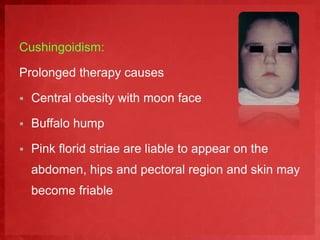
Cushingoidism: 
Prolonged therapy causes 
 Central obesity with moon face 
 Buffalo hump 
 Pink florid striae are liable to appear on the 
abdomen, hips and pectoral region and skin may 
become friable
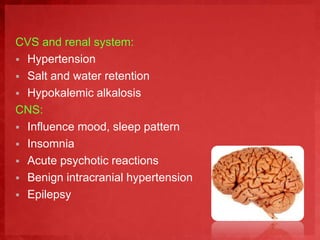
CVS and renal system: 
 Hypertension 
 Salt and water retention 
 Hypokalemic alkalosis 
CNS: 
 Influence mood, sleep pattern 
 Insomnia 
 Acute psychotic reactions 
 Benign intracranial hypertension 
 Epilepsy
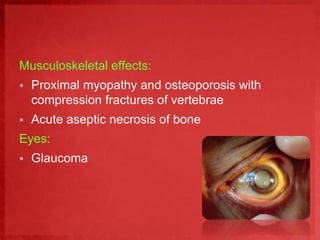
Musculoskeletal effects: 
 Proximal myopathy and osteoporosis with 
compression fractures of vertebrae 
 Acute aseptic necrosis of bone 
Eyes: 
 Glaucoma
Suppression of inflammation and immune response: 
 Latent infection may flare 
 Oppurtunistic infection with low grade pathogens 
Retardation of linear growth: 
 Occurs in children who receive more than 50 mg 
of cortisone per m2 of body surface per day.
SUPPRESSION OF HPA axis 
• Depend on both dose and duration of therapy 
• With administration of glucocorticoid, adrenal cortex 
atrophies 
• With stoppage of exogenous steroid precipitates withdrawal 
syndromes- Malaise 
• Fever 
• weakness 
• Pain in muscles 
• Joints 
• Reactivation of disease
• When subjected to stress these patients may undergo 
acute adrenal insufficiency 
• Any patient who has received >20 to 25 mg /day 
hydrocortisone or equivalent for more than 2 to 3 weeks 
should be put on a scheme of gradual withdrawal: 20 mg 
hydrocortisone/day reduction every week and then still 
smaller fraction once level is achieved
• In stressful situation these patients requires protection 
with exogenous steroids upto 1 year after withdrawal. 
• If patient on steroid therapy develops infection steriod 
should not be discontinued. Rather dose has to be 
increased to meet stress of infection.
Measures to minimize HPA axis suppression 
• Use of short acting steroids at lowest possible dose 
• Use of steroid at shorest period of time 
• Giving entire daily dose one time in morning 
• Switch to alternate day therapy
Alternate day therapy 
• Double dose is taken every other morning 
• Usually preferred for other chronic conditions. 
• Schedule allows rest periods so that adverse effects are 
decreased while anti-inflammatory effects continue. 
• ADT is used only for maintenance therapy 
• ADT can be started after symptoms have subsided and 
stabilized.
Contraindications: 
 Peptic ulcer 
 Diabetes mellitus 
 Hypertension 
 Pregnancy 
 Herpes simplex keratitis 
 Tuberculosis 
 Osteoporosis 
 Psycosis 
 Epilepsy 
 Renal failure
Drug interactions 
Glucocorticoid dosage decreased: 
 Antibiotics (Erythromycin) 
 Cyclosporine 
 Isoniazid 
 Ketoconazole 
 Estrogen 
Reduce metabolic 
clearance
Glucocorticoid dosage increased: 
 Cholestyramine 
 Antiepileptic Drugs (Barbiturates, Phenytoin, 
Carbamazepine) 
 Rifampicin 
Glucocorticoid dosage needs adjustment: 
 Antianxiety and antipsychotic drugs 
 Antihypertensives 
 Hypoglycemics 
 sympathomimetics
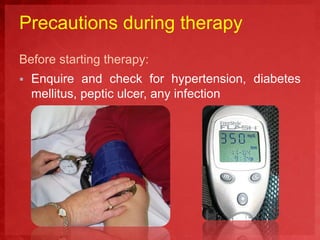
Precautions during therapy 
Before starting therapy: 
 Enquire and check for hypertension, diabetes 
mellitus, peptic ulcer, any infection
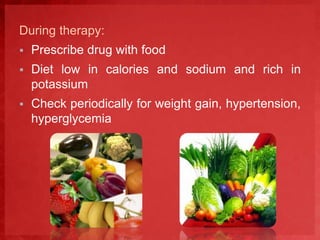
During therapy: 
 Prescribe drug with food 
 Diet low in calories and sodium and rich in 
potassium 
 Check periodically for weight gain, hypertension, 
hyperglycemia
 Increase dose in case of stress 
 Instruct patient not to stop abruptly 
While stopping therapy: 
 Taper therapy
Rule of 2 
Adrenocortical suppression should be suspected if a 
patient has received Glucocoticoid therapy through two of 
the following methods 
 In a dose of 20 mg or more of cortisone or its equivalent 
 Via oral or parenteral route or a continuous period of 2 
weeks or longer 
 Within 6 months -2 years of therapy 
Medical emergencies in dental office, Stanley F.Malamed 
Complications in Anesthesia - John L. Atlee; Page-132
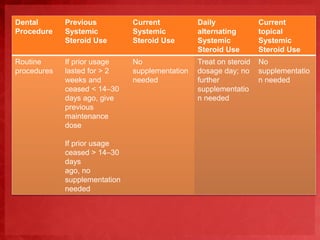
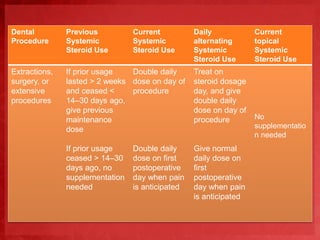
Protocol for Supplementation of 
Patients on Glucocorticoid Therapy 
Who Are Undergoing Dental Care 
(Burket’s 10th ed)
Dental 
Procedure 
Previous 
Systemic 
Steroid Use 
Current 
Systemic 
Steroid Use 
Daily 
alternating 
Systemic 
Steroid Use 
Current 
topical 
Systemic 
Steroid Use 
Routine 
procedures 
If prior usage 
lasted for > 2 
weeks and 
ceased < 14–30 
days ago, give 
previous 
maintenance 
dose 
If prior usage 
ceased > 14–30 
days 
ago, no 
supplementation 
needed 
No 
supplementation 
needed 
Treat on steroid 
dosage day; no 
further 
supplementatio 
n needed 
No 
supplementatio 
n needed
Dental 
Procedure 
Previous 
Systemic 
Steroid Use 
Current 
Systemic 
Steroid Use 
Daily 
alternating 
Systemic 
Steroid Use 
Current 
topical 
Systemic 
Steroid Use 
Extractions, 
surgery, or 
extensive 
procedures 
If prior usage 
lasted > 2 weeks 
and ceased < 
14–30 days ago, 
give previous 
maintenance 
dose 
If prior usage 
ceased > 14–30 
days ago, no 
supplementation 
needed 
Double daily 
dose on day of 
procedure 
Double daily 
dose on first 
postoperative 
day when pain 
is anticipated 
Treat on 
steroid dosage 
day, and give 
double daily 
dose on day of 
procedure 
Give normal 
daily dose on 
first 
postoperative 
day when pain 
is anticipated 
No 
supplementatio 
n needed
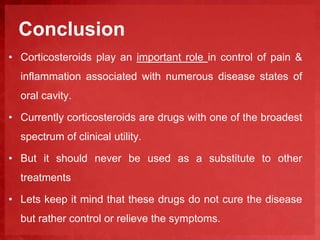
Conclusion 
• Corticosteroids play an important role in control of pain & 
inflammation associated with numerous disease states of 
oral cavity. 
• Currently corticosteroids are drugs with one of the broadest 
spectrum of clinical utility. 
• But it should never be used as a substitute to other 
treatments 
• Lets keep it mind that these drugs do not cure the disease 
but rather control or relieve the symptoms.
References 
• Burket’ s Oral Medicine 9th and 11th edition 
• Corticosteroids in Dentistry, Basavaraj Kallali et al 
JIAOMRApril-June 2011;23(2):128-131 
• Steroids in Dentistry - A Review Sambandam V, Int. 
J. Pharm. Sci. Rev. Res., 22(2), Sep – Oct 2013; nᵒ 44, 
240-245 
• Steroids Application In Oral Diseases, Int J Pharm 
Bio Sci 2013 Apr; 4(2): (P) 829 - 834
Thank You

Corticosteroid

  • 1.
  • 2.
    CONTENTS • Introduction • History • Functional anatomy and histology of adrenal glands • Biosynthesis of steroids • Fate of steroids • Mineralocorticoids • Glucocorticoids
  • 3.
    • Mechanism ofaction • Classification of steroids • Uses in medicine • Steroids in dentistry • Adverse effects • Drug interaction • Precautions
  • 4.
    Introduction  Theadrenal gland is the source of a diverse group of hormones essential for metabolic control, regulation of water and electrolyte balance, and regulation of body’s response to stress.  Using cholesterol as a substrate, the adrenal cortex produces a large number of substances collectively known as corticosteroids.
  • 5.
    History  Bythe middle of 19th century it was demonstrated that adrenal glands were essential for life  Later, it was appreciated that the cortex was more important than the medulla  A number of steroidal active principles were isolated and their structures were elucidated by kendall and his coworkers in the 1930s.
  • 6.
     However, thegate to their great therapeutic potential was opened by Hench (1949) who obtained striking improvement in rheumatoid arthritis by using cortisone.  The nobel prize was awarded the very next year to kendall and Hench.  Currently, corticosteroids are drugs with one of the broadest spectrum of clinical utility.
  • 7.
    Functional anatomy andhistology of adrenal glands
  • 9.
    Biosynthesis of steroids Cholesterol Pregnenolone Progesterone 11- Deoxy corticosterone Corticosterone Aldosterone 17α Hydroxy pregnenolone 17α Hydroxy progesterone 11 Desoxyhydro cortisone Hydrocortisone Dehydroepiandrosterone Androstenidione Testosterone
  • 10.
    Rate of secretionof the principal steroids Glucorticoids 10-20 mg daily Mineralocorticoids – 0.125 mg daily
  • 11.
    FATE OF CORTICOSTEROIDS Degraded mainly in liver Conjugated to form glucuronides and to a lesser extent form sulphates 25% - excreted in bile and feces 75% - excreted in urine
  • 12.
  • 13.
    Mineralocorticoids  Source: Zona glomerulosa  Functions: 90% of mineralocorticoid activity is provided by aldosterone  Aldosterone – life saving hormone
  • 14.
    Action on EEFECT Sodium metabolism Increases sodium reabsorption from renal tubules On ECF Sodium reabsorption, stimulates water reabsorption thus in term increases ECF volume Blood pressure Increases Potassium ions Increases in excretion of potassium ion s from renal tubules Hydrogen ion Tubular secretion of hydrogen ion , essential to maintain acid base balance. Essentials Of Medical Physiology 3rd Edition, K Sembulingam
  • 15.
    Regulation of AldosteroneSecretion Increase in K+ concentration Decrease in Na+ Concentration Decrease in ECF volume Decrease in K+ concentration Increase in Na+ Concentration Increase in ECF volume Juxtaglomerular apparatus Excretion of K+ Retention of Na+ Retention of water Lungs kidneys Adrenal cortex Aldosterone angiotensinogen Angiotensin - 1 Angiotensin - 2 Stimulation Renin Converting Enzyme ACE Feedback inhibition Essentials Of Medical Physiology 3rd Edition, K Sembulingam
  • 16.
    Glucocorticoids Source :zona fasciculata Functions: Cortisol – Life protecting hormone
  • 17.
    Action ACTION ONEFFECT On carbohydrate metabolism Increases blood glucose level by gluconeogenesis, inhibits glucose uptake and utilization by peripheral cells Protein metabolism Promotes catabolism of protein and increases plasma amino acid and protein content Fat metabolism Metabolism of fatty acid from adipose tissue increases in concentration of fatty acid , increase utilization of fat for energy. Mineral metabolism Enhances sodium retention, potassium excretion. Water metabolism Excretion of water
  • 18.
    Muscles Increases therelease of amino acid from muscles by catabolism of protein Blood vessel Decreases the release of eosinophil in RES, decrease the number of lymphocytes, increase in number of neutrophils , RBC and platelets . Vascular response These are essential for constrictor action of adrealine and noradrenaline CNS Essential for normal functioning, insufficiency causes irritability and loss of concentration
  • 19.
    Permissive action •Action of some hormones are executed only in presence of glucocorticoids. This is called permissive action. Examples are : • Calorigenic effect of glucagon. • Lypolytic effect of catecholamines. • Pressor effect of catecholamines. • Bronchodilation by catecholamines.
  • 20.
  • 21.
    Effects on resistanceto stress Physical or mental stress Increases ACTH Increase in glucocorticoid secretion High resistance to body against stress
  • 22.
    Anti allergic action • Suppresses all type of hypersensitivity reaction and allergic reaction. • Suppresion of recruitment of leucocytes at the site of contact with antigen and inflammatory response to immunological injury
  • 23.
    Immunosuppresive action •Suppresses immune system of body by decreasing number of circulating T lymphocytes. • Prevent release of interleukin 2 by T cells
  • 24.
    Regulation of CortisolSecretion Emotion, stress, trauma Hypothalamus Corticotropin releasing factor Anterior pituitary ACTH Adrenal cortex Cortisol Feedback inhibition
  • 25.
    Classification of steroidsbased on their relative activity: GLUCOCORTICOIDS Short acting (t1/2 < 12 hr) • Hydrocortisone • Cortisone Intermediate acting: (t1/2 12 – 36) • Prednisole • Methyl prednisole • Triamcinolone Long acting: (t1/2 > 36 hrs) • Paramethasone • Dexamethasone • Betamethasone
  • 26.
    Mineralocorticoids • Desoxycorticosteroneacetate(DOCA) • Fludrocortisone • Aldosterone
  • 28.
    Uses In Medicine Replacement therapy Acute adrenal insufficiency • Hydrocortisone or dexamethasone are given i.v, first as a bolus injection and then as infusion along with istonic saline and glucose solutions. Chronic adrenal insufficiency • Hydrocortisone given orally is the most commonly used drug with adequate salt and water allowance Congenital adrenal hypoplasia • 0.6 mg/kg daily in divided doses round the clock
  • 29.
    Pharmacotherapy: • Singledose (even excessive) is not harmful can be used to tide over mortal crisis even when benefit is not certain. • Short courses (even high doses) are not likely to be harmful in the absence of contraindications. Starting doses can be high in severe illness
  • 30.
    • Long termuse is potentially hazardous: keep the dose to minimum which is found by trial and error, even partial relief may have to be tolerated. • No abrupt withdrawal after a corticoid has been given for > 2 to 3 weeks: may precipitate adrenal insufficiency
  • 31.
    • Arthritis •Collagen diseases • Severe allergic reactions • Autoimmune disorders • Bronchial asthma • Infective diseases • Eye diseases • Skin diseases • Intestinal diseases
  • 32.
  • 33.
    Steroids in oralsurgery • Prevention of post operative pain, edema and trismus after 3rd molar surgery • Prevention of post operative edema after orthognathic surgery • Prevention of alveolar osteitis
  • 34.
    Steroids in endodontics • steroid-antibiotic combinations like Ledermix • Steroids like hydrocortisone are also mixed with zinc • oxide eugenol to be used as root canal sealers. It appears • that the action of steroids on root resorption is chemistry • dependent. International Journal of Pharmaceutical Sciences Review and Research
  • 35.
  • 36.
    Ulcerative Vesiculoerosive diseases  Immunologically mediated diseases that affect the oral mucosa present with inflammation and loss of epithelial integrity, through cellular and/or humoral immunity-mediated attack on epithelial connective tissue targets.  The main clinical features are ulceration and reddening, with pain that can be severe and debilitating.
  • 37.
    • Corticosteroids playa central role in the treatment of vesiculoerosive lesions. • However, the frequency and severity of the adverse effects associated with the use of systemic corticosteroids have led to the increased use of topical corticosteroids (TCs)
  • 38.
    Topical corticosteroids forulcerative vesiculoerosive lesions
  • 39.
    Indications for use • Short course of TC – accelerates remission without producing adverse effects • Ulcerative disease that have tendency to remit spontaneously • Eg RAS, some cases of EM, drug induced ulceration Scully et al., 1999; Chan et al., 2002
  • 40.
    TC for longerand less predictable periods • When disease is chronic • Marked tendency for recurrence • Eg. RAS, erosive OLP, apecific form of EM, MMP
  • 41.
    In severe casesof ulceration • After a short course of systemic corticosteroids, a maintenance regimen of TC can be used once the disease is controlled. • This can prevent recurrence, and also avoids adverse effects assosiated with long course of systemic corticosteroids
  • 42.
    Protocols for use When a TC is prescribed, especially for prolonged course is predicted  The basic rule is that a TC of a potency appropriate to the severity of the clinical symptoms should be used, at the lowest possible concentration and frequency, with maintaining the effectiveness of the treatment.  It should always be taken into account that these drugs do not cure the disease but rather control or relieve the symptoms. JDR April 2005 vol. 84 no. 4 294-301
  • 43.
    The key factors • Specific diagnosis • Severity of oral disease • Presence or absence of extraoral lesion • Medical history of patient JDR April 2005 vol. 84 no. 4 294-301
  • 44.
    Factors that influencethe effectiveness of TCs: Intrinsic potency of drug: This can be increased by halogenation and esterification of steroid This makes drug more lipophilic and gives it greater penetrability Contact time between the drug and lesion and the Vehicle used to apply it JDR April 2005 vol. 84 no. 4 294-301
  • 45.
    Concentration: which canincrease its clinical effectiveness, although no additional advantage is obtained beyond certain limits. JDR April 2005 vol. 84 no. 4 294-301
  • 46.
    Success of atopical medicine Depend on two main factors • Number of application per day • High potency – 2 to 3 times • Low potency – 5 to 10 times • Vehicle used JDR April 2005 vol. 84 no. 4 294-301
  • 47.
    Various vehicles •Orabase • Cyanoacrylate • Bioadhesive patch made of cellulose derivatives • Gels JDR April 2005 vol. 84 no. 4 294-301
  • 48.
    Patients prescribed TCin an adherent vehicle should be instructed to  Apply a small amount to the target area after meals, and  Not to eat or drink for at least 30 min.  It is best not to rub the TC in, because this can produce irritation. JDR April 2005 vol. 84 no. 4 294-301
  • 49.
     Preparations suchas orabase will not adhere to wet surface so mucosa and lesion must be dried with guaze before application.
  • 50.
    For small andaccessible erosive lesions, or those located on the gingiva and palate, the lesions can be treated by the • Use of an adherent paste in a tray, • Which allows for accurate control over the contact time and • Ensures that the entire lesional surface is exposed to the drug. JDR April 2005 vol. 84 no. 4 294-301
  • 51.
    Adhesive denture pasteas vehicle for TC can avoid some of above disadvantages this provides stability and bioadhesive properties forperiod of 12 hrs after application, esp. in localized lesions,
  • 52.
    • TC mouthrinses: • Contact time can be predicted • Drug is in contact with all lesions • Are released more readily to oral mucosa when aqueous solution is applied
  • 53.
    • Disadvantage •Will be in contact with all mucosa wheather effected or not • This also increase the surface area of absorption thus risk of adverse effects • This can be exacerbated by presence of ulcerated surfaces and by increased pressure excerted by liquid on mucosa as a result of normal rinsing • Can be involumentary ingested
  • 54.
    Thami and bhallaproposed using saliva as vehicle for TCs which they designated as chew and spit method. • Patient is directed to chew or suck betamethasone tab. Mixing it with mouth saliva keeping it without swallowing for as long as possible 10 to 15 min Disadvantage; • Cannot guaranteed that tablet is completely dissolved • Cannot be used in dry mouth
  • 57.
    Systemic steroids forulcerative vesiculobullous diseases
  • 59.
    Major aphthae orsevere multiple minor aphthae • Prednisone therapy should be started at 1.0 mg/kg/day in patients with severe RAU and should be tapered after 1 to 2 weeks. Natah SS, Konttinen YT. IJOMS 2004;33:221-34. • Predisone therapy 1- 2mg /kg/day after breakfast untill the disease is controlled and then maintenance dose of 2.5 to 15mg daily ( Burket 11th edition )
  • 60.
    Erythema multiforme •Minor EM – 20 to 40 mg/day for 4 to 6 days • Severe or rapidly progressing lesions – 60 mg/day slowly tapered by 10mg/day over 6 weeks Indian J Ophthalmol Jan-Feb 2010;58(1):64-66
  • 61.
    Pemphigus Vulgaris •Mainstay 1-2mg/kg/d. • Initial dose of treatment – 0.5 mg/kg/day to 3 mg/kg/d • Dose that achieves clinical control is maintained for 2- 3 weeks and then gradually tapered. Burket’s Oral Medicine, 11th edition
  • 62.
    Pulse therapy •Also called short term therapy • High dose therapy involves a 48-72 hrs course of intensive steroid administration • Single i.v injection of a supra-physiological dose of steroid • Dose of 0.5-2g of prednisolone or equivalent
  • 63.
    Benefits • Avoidscomplications & side effects of long term steroid therapy • To achieve immunosuppressive effects similar to those with higher doses of steroids
  • 64.
    Cicatricial pemphigoid Predisolone– 30 to 60 mg/day 2 to 3 weeks to stop new bullae formation. Tapered by 20% every 2 to 3 weeks until the dose of 10 mg is reached • Then maintained on alternate day and reduced by 5 mg every 2 week then stopped
  • 65.
    Bullous pemphigoid Clobetasolpropionate 20 -40 mg/day is more effective for the treatment. JIAOMR, April-June 2011;23(2):128-131
  • 66.
    Lichen planus Prednisolone- 1mg/kg/d for <7 days Tapered to 10-20mg per day for 2 weeks Burkit’s Oral Medicine, 11th edition JIAOMR, April-June 2011;23(2):128-131
  • 67.
    Lupus erythematosus Predisolone– 20 - 30 mg/day for 2- 6 weeks Tapered gradually
  • 68.
    Steroids in thetreatment of benign lesions
  • 69.
    CGCG Intralesional injectionof triamcinolone can be given in a dose of 1 to 2 mg/kg/d (maximum of 60 mg). The treatment interval at 4 to 6 weeks. J Med Assoc Thai 2008; 91 (Suppl 3): S90-6
  • 70.
    Hemangioma Prednisone ata dose of 20-30 mg/d can be given for 2 weeks to 4 months Intralesional triamcinolone acetonide (4 mg/mL)
  • 71.
    Steroids in salivarygland disorders
  • 72.
    Mucocele  0.05%clobetasol propionate 3 times a day for 4 weeks in a mucosal adhesive base.  Intralesional injections have also been tried with success. (JOMS 2008;66:1737-9)
  • 73.
  • 74.
    Post herpetic neuralgia To reduce incidence of post herpetic neuralgia:  Prednisolone 20 to 30 mg/day for 7 – 10 days tapered to 10 mg/day for 1 week
  • 75.
  • 76.
    Arthritis Rheumatoid arthritis- Intraarticular injection – 10 to 40 mg/ml Osteoarthritis - Intraarticular injection – 20 mg/ml(2 injections 14 days apart) Oral Surgery Volume 1 Issue 2, Pages 88 - 95
  • 77.
    Bell’s palsy Significant improvement can be achived when Prednisolone is started within 72 hours of symptom onset  1 mg/kg body weight (maximum 70 mg) in divided doses with meals for six days, and the dose can be reduced gradually over the next four days.
  • 78.
    OSMF Predisolone –20 - 30 mg/day for 2 – 4 weeks then gradually taper to discontinue in 1 to 2 months
  • 79.
    Injections of triamcinolone10mg/ml diluted in 1 ml of 2% lidocaine with hyaluronidase 1500 IU, biweekly for 4 weeks.
  • 80.
     Biweekly submucosalinjections of a combination of dexamethasone (4mg/ml) and two parts of hyaluronidase, diluted in 1.0 ml of 2% xylocaine by means of a 27 gauge needle, not more than 0.2ml solution per site, for a period of 20 weeks.  Significant relief of burning sensation (88%) and improvement of trismus (83%) can be seen in most patients.
  • 81.
    Adverse effects Dueto extention of pharmacological action occuring with prolonged therapy Mineralocorticoids:  Sodium and water retention  Edema  Hypokalemic alkalosis  Progressive rise in B.P  Weight gain  Fluid and electrolyte disturbance
  • 82.
    Glucocorticoid: GIT: Acute erosive gastritis with hemorrhage  Peptic ulcer  Intestitial perfortion  Pancreatitis Metabolic effects:  Hyperglycemia  Ketoacidosis  Hyperosmolar coma  Hypophosphatemia
  • 83.
    Cushingoidism: Prolonged therapycauses  Central obesity with moon face  Buffalo hump  Pink florid striae are liable to appear on the abdomen, hips and pectoral region and skin may become friable
  • 84.
    CVS and renalsystem:  Hypertension  Salt and water retention  Hypokalemic alkalosis CNS:  Influence mood, sleep pattern  Insomnia  Acute psychotic reactions  Benign intracranial hypertension  Epilepsy
  • 85.
    Musculoskeletal effects: Proximal myopathy and osteoporosis with compression fractures of vertebrae  Acute aseptic necrosis of bone Eyes:  Glaucoma
  • 86.
    Suppression of inflammationand immune response:  Latent infection may flare  Oppurtunistic infection with low grade pathogens Retardation of linear growth:  Occurs in children who receive more than 50 mg of cortisone per m2 of body surface per day.
  • 87.
    SUPPRESSION OF HPAaxis • Depend on both dose and duration of therapy • With administration of glucocorticoid, adrenal cortex atrophies • With stoppage of exogenous steroid precipitates withdrawal syndromes- Malaise • Fever • weakness • Pain in muscles • Joints • Reactivation of disease
  • 88.
    • When subjectedto stress these patients may undergo acute adrenal insufficiency • Any patient who has received >20 to 25 mg /day hydrocortisone or equivalent for more than 2 to 3 weeks should be put on a scheme of gradual withdrawal: 20 mg hydrocortisone/day reduction every week and then still smaller fraction once level is achieved
  • 89.
    • In stressfulsituation these patients requires protection with exogenous steroids upto 1 year after withdrawal. • If patient on steroid therapy develops infection steriod should not be discontinued. Rather dose has to be increased to meet stress of infection.
  • 90.
    Measures to minimizeHPA axis suppression • Use of short acting steroids at lowest possible dose • Use of steroid at shorest period of time • Giving entire daily dose one time in morning • Switch to alternate day therapy
  • 91.
    Alternate day therapy • Double dose is taken every other morning • Usually preferred for other chronic conditions. • Schedule allows rest periods so that adverse effects are decreased while anti-inflammatory effects continue. • ADT is used only for maintenance therapy • ADT can be started after symptoms have subsided and stabilized.
  • 92.
    Contraindications:  Pepticulcer  Diabetes mellitus  Hypertension  Pregnancy  Herpes simplex keratitis  Tuberculosis  Osteoporosis  Psycosis  Epilepsy  Renal failure
  • 93.
    Drug interactions Glucocorticoiddosage decreased:  Antibiotics (Erythromycin)  Cyclosporine  Isoniazid  Ketoconazole  Estrogen Reduce metabolic clearance
  • 94.
    Glucocorticoid dosage increased:  Cholestyramine  Antiepileptic Drugs (Barbiturates, Phenytoin, Carbamazepine)  Rifampicin Glucocorticoid dosage needs adjustment:  Antianxiety and antipsychotic drugs  Antihypertensives  Hypoglycemics  sympathomimetics
  • 95.
    Precautions during therapy Before starting therapy:  Enquire and check for hypertension, diabetes mellitus, peptic ulcer, any infection
  • 96.
    During therapy: Prescribe drug with food  Diet low in calories and sodium and rich in potassium  Check periodically for weight gain, hypertension, hyperglycemia
  • 97.
     Increase dosein case of stress  Instruct patient not to stop abruptly While stopping therapy:  Taper therapy
  • 98.
    Rule of 2 Adrenocortical suppression should be suspected if a patient has received Glucocoticoid therapy through two of the following methods  In a dose of 20 mg or more of cortisone or its equivalent  Via oral or parenteral route or a continuous period of 2 weeks or longer  Within 6 months -2 years of therapy Medical emergencies in dental office, Stanley F.Malamed Complications in Anesthesia - John L. Atlee; Page-132
  • 99.
    Protocol for Supplementationof Patients on Glucocorticoid Therapy Who Are Undergoing Dental Care (Burket’s 10th ed)
  • 100.
    Dental Procedure Previous Systemic Steroid Use Current Systemic Steroid Use Daily alternating Systemic Steroid Use Current topical Systemic Steroid Use Routine procedures If prior usage lasted for > 2 weeks and ceased < 14–30 days ago, give previous maintenance dose If prior usage ceased > 14–30 days ago, no supplementation needed No supplementation needed Treat on steroid dosage day; no further supplementatio n needed No supplementatio n needed
  • 101.
    Dental Procedure Previous Systemic Steroid Use Current Systemic Steroid Use Daily alternating Systemic Steroid Use Current topical Systemic Steroid Use Extractions, surgery, or extensive procedures If prior usage lasted > 2 weeks and ceased < 14–30 days ago, give previous maintenance dose If prior usage ceased > 14–30 days ago, no supplementation needed Double daily dose on day of procedure Double daily dose on first postoperative day when pain is anticipated Treat on steroid dosage day, and give double daily dose on day of procedure Give normal daily dose on first postoperative day when pain is anticipated No supplementatio n needed
  • 102.
    Conclusion • Corticosteroidsplay an important role in control of pain & inflammation associated with numerous disease states of oral cavity. • Currently corticosteroids are drugs with one of the broadest spectrum of clinical utility. • But it should never be used as a substitute to other treatments • Lets keep it mind that these drugs do not cure the disease but rather control or relieve the symptoms.
  • 103.
    References • Burket’s Oral Medicine 9th and 11th edition • Corticosteroids in Dentistry, Basavaraj Kallali et al JIAOMRApril-June 2011;23(2):128-131 • Steroids in Dentistry - A Review Sambandam V, Int. J. Pharm. Sci. Rev. Res., 22(2), Sep – Oct 2013; nᵒ 44, 240-245 • Steroids Application In Oral Diseases, Int J Pharm Bio Sci 2013 Apr; 4(2): (P) 829 - 834
  • 104.

Editor's Notes

  • #8 Paired pyramid shaped organs located on the upper surface of each kidney Gland :- 2 parts -- outer cortex -- inner medulla Medulla secretes – Epinephrine -- Norepinephrine -- Dopamine Cortex – steroid Hormones
  • #9 Mc- are responsible for regulating salt and water metabolism.and its production is regulated by renin angiotensin pathway. Gc- are responsible for normal metabolism and resistance to stress. and its production is regulated by ACTH Androgens are secreated in small quantities
  • #13 Regulation by Hypothalamus (CRH) & Pituitary (ACTH) Negative feedback effect from plasma cortisol levels Pulsatile secretion of ACTH based on Circadian rhythm Neural effects on HPA axis due to emotional / physical stress
  • #15 Process takes 30 to 60 min Effects are not immediate and once propionate protiens are formed effects persists for much longer than steroid itself
  • #16 Total loss of corticosteroid usually causes Death in 3 days to 2 weeks. This is mainly beacause of loss of mineralocorticoids .without mineralocorticoid potassium ion of extracellular fluid rises and conc of Na and pot. Ion dec. thus toal extracellular fliud vol and blood vol also dec. all this lead to cardiac dysfunction, shock like state and finally death. This can be prevented by administration of aldosterone.
  • #17 Sodium metablsm: acts on DCT and CD BP: ECF inc and BV inc. thus BP inc. Aldosterone escape - ald inc causes Na. reabsorptn thus inc extracellular fluid inc. thus high BP this causes pressure diuresis i.e inc BP causes both salt and water xcreation . This is secondary effect of pressure diureis and called aldosterone escape.l eading to normalcy in body water and salt. If ald . Secreatn becomec 0 large amt of salt is lost. Dec NaCL and etracellular fluid vol. severe dehydration and low blood volume. Leading to circulatory shock
  • #18 Stimaulatory agent for ald. Secreations are : dec. Na conc. In ECF, inc. K conc. In ECF, dec. ECF, Adrenocorticotrophic harmone
  • #19 Life protecting as can withstand stress and trauma.
  • #24 Increase in gluco. Causes release of AA lead to syntheis of new proyiens essential for cells and other subs necessary for cellular function Facid relased are important supply fro more energy during stress Enhances vascular reactivity to catecholamines and fatty acid mobilizing action of catecholamines.
  • #46 If patients suffers from monthly outbreak of apthae that last for 3 to 10 days early application can prevent the attack.
  • #48 Medical history of patient- TC are used to relieve oral symptoms in pt. with clear contraindications for systemic cortico eg untreated cases od TB, severe psycosis and pt. suffering from adv effects from systemic steroid eg. Osteoporosis hypertension
  • #50 the key factors that determine the selection of a topical or systemic treatment
  • #53 It also depends upon the concentration
  • #54  Logically, the success of a topical medicine depends mainly on the contact time of the drug with the lesion. TCs have been applied in various vehicles. 2.1 Lotion 2.2 Shake lotion 2.3 Cream 2.4 Ointment 2.5 Gel 2.6 Foam 2.7 Transdermal patch 2.8 Powder 2.9 Solid 2.10 Sponge 2.11 Tape 2.12 Vapor 2.13 Paste 2.14 Tincture
  • #55 Shortcoming for adherent vehicle vehicle used is that clinician cannot predict the time that drug has been in contact with the lesion bc it is displaced from its location due to oral movement and moisture in oral cavity.85 to 90% loss is predicted
  • #69 Doses of each pulse are not standardized but are usually 500 to 1000 mg methylprednisolone or 100 to 200 mg dexamethasone.
  • #70 Doses of each pulse are not standardized but are usually 500 to 1000 mg methylprednisolone or 100 to 200 mg dexamethasone.
  • #73 1 mg /kg/day for 7 days Followed by reduction of 10mg each subsequent day Burkits 11th edition
  • #98 ADT seems to be as effective as more frequent administration in most clients with bronchial asthma, ulcerative colitis, and other conditions for which long-term corticosteroid therapy is prescribed ADT has other advantages. It probably decreases susceptibility to infection and does not retard growth in children, as do other schedules ADT is not usually indicated in clients who have previously received corticosteroids on a long-term basis. First, these clients already have maximal HPA suppression, so a major advantage of ADT is lost. Second, if these clients begin ADT, recurrence of symptoms and considerable discomfort may occur on days when drugs are omitted.
  • #105 Normal HPA suppression recovery may take time to 30 days to 12 month But according to the guideline given by John L. Atlee it is considered normal to return in 6 months