Lateral sinus
thrombophlebitis
Presentor
Kamal Ghimire
Lateral sinus thrombophlebitis
Inflammation of inner wall of lateral venous
sinus (sigmoid sinus and transverse sinus)
with the formation of intrasinus thrombus
Etiology
Occurs as a complication of
 acute coalescent mastoiditis
masked mastoiditis or
 chronic suppuration of middle ear
and cholesteatoma
Bacteria:
In acute: hemolytic streptococcus, pneumococcus or
staphylococcus
In chronic: bacillus proteus,pseudomonas
pyocyaneus,E.coli and staphylococci
Pathogenesis
Formation of perisinus abscess (either by bony
erosion of bony dural plate overlying sinus or by
thrombosis of emissary vein)
Endophlebitis mural thrombus formation
Occlusion of sinus lumen intrasinus abscess
Extension of infected thrombus
Extension of thrombus
• Proximal: confluence of sinus, superior sagittal
sinus, cavernous sinus
• Distal : mastoid emissary vein to jugular bulb
and jugular vein
Clinical features
• Hectic picket fence fever with rigors:
 high fever, irregular, one or more spikes per day
 Each spike is due to release of fresh septic embolus
 Fever accompained by chills and rigors
 Temperature subsides with sweating
• Headache
• Anemia and emaciation
Clinical features…….
• Griesinger’s sign: edema over posterior part of
mastoid due to thrombosis of mastoid
emissary vein
• Papilloedema: blurring of disc margins, retinal
hemorrhages or dilated veins in fundoscopy
• Tenderness along jugular vein
Some tests
 Tobey-Ayer test: compression of I.J.V.  rapid
rise of C.S.F. pressure (50 – 100 mm water 
rapid fall on release of compression. In
thrombosed side no rise.
 Crowe - Beck test: pressure on I.J.V. on
normal side  engorgement of retinal veins +
papilloedema seen in fundoscopy due to
lateral sinus thrombosis on opposite side.
Investigations
• Blood smear: to rule out malaria
• Blood culture
• CSF analysis: normal except for rise in pressure
• Imaging
Contrast enhanced CT scan
Contrast enhanced MRI
MR venography
• Culture and sensitivity of ear swab
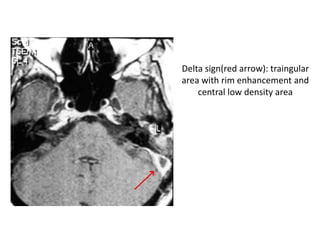
Delta sign
Delta sign(red arrow): traingular
area with rim enhancement and
central low density area
Complications
• Septicemia and abscess in lung,bone,joints, or
subcutaneous tissue
• Meningitis and subdural abscess
• Cerebellar abscess
• Thrombosis of jugular bulb and jugular vein with
associated cranial nerves involvement
• Cavernous sinus thrombosis: proptosis,fixation of
eyeball, and papilloedema
• Otitic hydrocephalous
Treatment
• Urgent complete cortical or modified radical
mastoidectomy: Sinus wall incised. Infected
clots removed & abscess drained
• Antibiotics: broad spectrum antibiotics. Can
be changed once culture and sensitivity report
is available. Should be continued at least for a
week after operation
• Anticoagulants: in cavernous sinus thrombosis
4. Internal jugular vein ligation: for embolism not
responding to antibiotics & surgery
5. Blood transfusion: for anaemia
Otitic hydrocephalous
Increase in CSF pressure in the presence of
acute or chronic otitis media not secondary to
brain abscess or meningitis, almost exclusively
associated with sigmoid sinus thrombosis.
Etiology
:1. Associated lateral sinus thrombosis 
obstruction of cerebral venous return.
2. Superior sagittal sinus thrombosis  ed
C.S.F. absorption
Both of these factors result in raised ICP
Clinical features
• Symptoms
1. Severe headache,nausea and vomiting
2. Diplopia involving VI cranial nerve
3. Blurring of vision
• Signs
1. Papilloedema with hemorrhages
2. Nystagmus
3. CSF pressure rises(>300 mm H2O)
TREATMENT
1. Treating L.S.T
2. reducing CSF pressure:
• I.V. Dexamethasone 4mg Q6H
• I.V. 20% Mannitol 0.5 gm/kg
• Repeated lumbar puncture / lumbar drain
• Ventriculo-peritoneal shunt
References:
• Dhingra ENT and head and neck surgery
• Ballenger’s otorhinolaryngology17 head and
neck surgery
Lateral sinus thrombophlebitis

Lateral sinus thrombophlebitis

  • 1.
  • 2.
    Lateral sinus thrombophlebitis Inflammationof inner wall of lateral venous sinus (sigmoid sinus and transverse sinus) with the formation of intrasinus thrombus
  • 3.
    Etiology Occurs as acomplication of  acute coalescent mastoiditis masked mastoiditis or  chronic suppuration of middle ear and cholesteatoma Bacteria: In acute: hemolytic streptococcus, pneumococcus or staphylococcus In chronic: bacillus proteus,pseudomonas pyocyaneus,E.coli and staphylococci
  • 4.
    Pathogenesis Formation of perisinusabscess (either by bony erosion of bony dural plate overlying sinus or by thrombosis of emissary vein) Endophlebitis mural thrombus formation Occlusion of sinus lumen intrasinus abscess Extension of infected thrombus
  • 6.
    Extension of thrombus •Proximal: confluence of sinus, superior sagittal sinus, cavernous sinus • Distal : mastoid emissary vein to jugular bulb and jugular vein
  • 7.
    Clinical features • Hecticpicket fence fever with rigors:  high fever, irregular, one or more spikes per day  Each spike is due to release of fresh septic embolus  Fever accompained by chills and rigors  Temperature subsides with sweating • Headache • Anemia and emaciation
  • 8.
    Clinical features……. • Griesinger’ssign: edema over posterior part of mastoid due to thrombosis of mastoid emissary vein • Papilloedema: blurring of disc margins, retinal hemorrhages or dilated veins in fundoscopy • Tenderness along jugular vein
  • 9.
    Some tests  Tobey-Ayertest: compression of I.J.V.  rapid rise of C.S.F. pressure (50 – 100 mm water  rapid fall on release of compression. In thrombosed side no rise.  Crowe - Beck test: pressure on I.J.V. on normal side  engorgement of retinal veins + papilloedema seen in fundoscopy due to lateral sinus thrombosis on opposite side.
  • 11.
    Investigations • Blood smear:to rule out malaria • Blood culture • CSF analysis: normal except for rise in pressure • Imaging Contrast enhanced CT scan Contrast enhanced MRI MR venography • Culture and sensitivity of ear swab Delta sign
  • 12.
    Delta sign(red arrow):traingular area with rim enhancement and central low density area
  • 13.
    Complications • Septicemia andabscess in lung,bone,joints, or subcutaneous tissue • Meningitis and subdural abscess • Cerebellar abscess • Thrombosis of jugular bulb and jugular vein with associated cranial nerves involvement • Cavernous sinus thrombosis: proptosis,fixation of eyeball, and papilloedema • Otitic hydrocephalous
  • 14.
    Treatment • Urgent completecortical or modified radical mastoidectomy: Sinus wall incised. Infected clots removed & abscess drained • Antibiotics: broad spectrum antibiotics. Can be changed once culture and sensitivity report is available. Should be continued at least for a week after operation • Anticoagulants: in cavernous sinus thrombosis
  • 15.
    4. Internal jugularvein ligation: for embolism not responding to antibiotics & surgery 5. Blood transfusion: for anaemia
  • 16.
    Otitic hydrocephalous Increase inCSF pressure in the presence of acute or chronic otitis media not secondary to brain abscess or meningitis, almost exclusively associated with sigmoid sinus thrombosis.
  • 17.
    Etiology :1. Associated lateralsinus thrombosis  obstruction of cerebral venous return. 2. Superior sagittal sinus thrombosis  ed C.S.F. absorption Both of these factors result in raised ICP
  • 18.
    Clinical features • Symptoms 1.Severe headache,nausea and vomiting 2. Diplopia involving VI cranial nerve 3. Blurring of vision • Signs 1. Papilloedema with hemorrhages 2. Nystagmus 3. CSF pressure rises(>300 mm H2O)
  • 19.
    TREATMENT 1. Treating L.S.T 2.reducing CSF pressure: • I.V. Dexamethasone 4mg Q6H • I.V. 20% Mannitol 0.5 gm/kg • Repeated lumbar puncture / lumbar drain • Ventriculo-peritoneal shunt
  • 20.
    References: • Dhingra ENTand head and neck surgery • Ballenger’s otorhinolaryngology17 head and neck surgery