INFECTION
 CONTROL
MEASURES
DEFENITION
• MEASURES PRACTICED BY HEALTH
 CARE PERSONNEL TO PREVENT
 SPREAD ,TRANSMISSION AND
  ACQUISITION OF INFECTION BETWEEN
 CLIENTS,FROM HEALTH CARE
 PROVIDERS TO CLIENTS AND FROM
  CLIENTS TO HEALTH CARE
  PROVIDERS
• INFECTION COTROL MEASURES ARE
   BASED ON HOW AN INFECTIOUS
   AGENT IS TRANSMITTED .
    INCLUDES …
         STANDARD PRECAUTIONS
          ADDITIONAL PRECAUTIONS
STANDARD PRECAUTIONS


 Specific precautions designed to
prevent harmful bacteria and viruses
   from infecting people who are
  providing first aid or health care.
STANDARD PRECAUTIONS

• As defined by CDC:
• Standard Precautions are a set of
  practices designed to prevent the
  transmission of HIV, Hepatitis B and
  other blood borne pathogens (bacteria
  and viruses).
• Under SP, blood and other body fluids
  of all patients are considered
  potentially infectious.
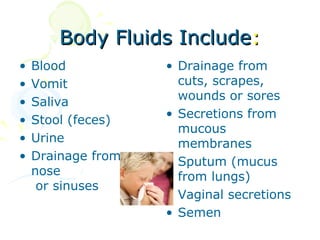
Body Fluids Include:
•   Blood           • Drainage from
•   Vomit             cuts, scrapes,
•   Saliva            wounds or sores
                    • Secretions from
•   Stool (feces)
                      mucous
•   Urine             membranes
•   Drainage from   • Sputum (mucus
    nose              from lungs)
     or sinuses
                    • Vaginal secretions
                    • Semen
Standard Precaution Steps


• Personal Protective Equipment
• Decontamination
• Hand Washing
• Waste Disposal
Personal Protective
          Equipment


• “specialized clothing or equipment
  worn by an employee for protection
  against infectious materials”
Personal Protective
    Equipment

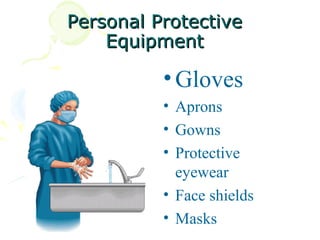
          • Gloves
          • Aprons
          • Gowns
          • Protective
            eyewear
          • Face shields
          • Masks
Gloves...
Always wear gloves when …

• Direct contact with body fluids is
  anticipated (nosebleeds, bleeding
  abrasions, etc.)

• Handling clothes soiled by urine, feces,
  vomit or blood

• Diapering children
Gloves…
• One time use.
• If gloves not immediately available, use
  barrier such as paper towels.
• When removing, peel off hands and roll
  glove outside in.
• Discard gloves in lined trash container.

• Wash hands after removing gloves.
Key Points About PPE
       • Done before contact with the patient,
         generally before entering the room
       • Use carefully – don’t spread
         contamination
       • Remove and discard carefully, either at
         the doorway or immediately outside
         patient room; remove respirator outside
         room
       • Immediately perform hand hygiene

PPE Use in Healthcare Settings
Factors Influencing PPE
          Selection
• Type of exposure anticipated

  – Splash/spray versus touch


  – Category of isolation precautions
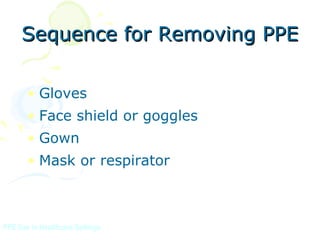
Sequence for Removing PPE

       • Gloves
       • Face shield or goggles
       • Gown
       • Mask or respirator


PPE Use in Healthcare Settings
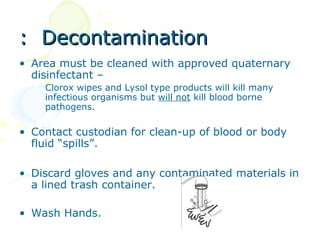
: Decontamination
• Area must be cleaned with approved quaternary
  disinfectant –
    Clorox wipes and Lysol type products will kill many
    infectious organisms but will not kill blood borne
    pathogens.

• Contact custodian for clean-up of blood or body
  fluid “spills”.

• Discard gloves and any contaminated materials in
  a lined trash container.

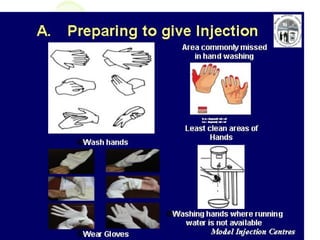
• Wash Hands.
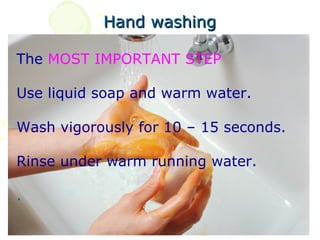
Hand washing

The MOST IMPORTANT STEP

Use liquid soap and warm water.

Wash vigorously for 10 – 15 seconds.

Rinse under warm running water.

.
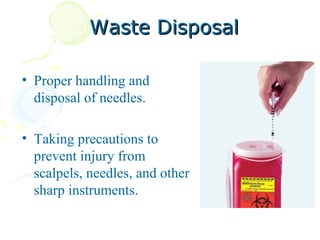
Waste Disposal

• Proper handling and
  disposal of needles.

• Taking precautions to
  prevent injury from
  scalpels, needles, and other
  sharp instruments.
Waste Disposal

• Bag and tie
• Place in second bag and tie again
  (double bag technique)

• Place all sharps (used needles) in
  sharps container.

• Wash hands after removing
   gloves.
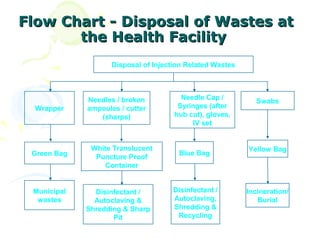
Flow Chart - Disposal of Wastes at
       the Health Facility
                    Disposal of Injection Related Wastes


             Needles / broken           Needle Cap /
                                                              Swabs
  Wrapper    ampoules / cutter         Syringes (after
                (sharps)              hub cut), gloves,
                                           IV set


              White Translucent                            Yellow Bag
 Green Bag                             Blue Bag
               Puncture Proof
                  Container


 Municipal     Disinfectant /        Disinfectant /        Incineration/
  wastes       Autoclaving &         Autoclaving,             Burial
             Shredding & Sharp       Shredding &
                    Pit               Recycling
ADDITIONAL PRECAUTIONS
• Respiratory hygiene/cough hygiene

• Environmental cleaning

• Handling of patient care equipment

• Injection safety
THANK YOU

Infection control measures

  • 1.
  • 2.
    DEFENITION • MEASURES PRACTICEDBY HEALTH CARE PERSONNEL TO PREVENT SPREAD ,TRANSMISSION AND ACQUISITION OF INFECTION BETWEEN CLIENTS,FROM HEALTH CARE PROVIDERS TO CLIENTS AND FROM CLIENTS TO HEALTH CARE PROVIDERS
  • 3.
    • INFECTION COTROLMEASURES ARE BASED ON HOW AN INFECTIOUS AGENT IS TRANSMITTED . INCLUDES … STANDARD PRECAUTIONS ADDITIONAL PRECAUTIONS
  • 4.
    STANDARD PRECAUTIONS Specificprecautions designed to prevent harmful bacteria and viruses from infecting people who are providing first aid or health care.
  • 5.
    STANDARD PRECAUTIONS • Asdefined by CDC: • Standard Precautions are a set of practices designed to prevent the transmission of HIV, Hepatitis B and other blood borne pathogens (bacteria and viruses). • Under SP, blood and other body fluids of all patients are considered potentially infectious.
  • 6.
    Body Fluids Include: • Blood • Drainage from • Vomit cuts, scrapes, • Saliva wounds or sores • Secretions from • Stool (feces) mucous • Urine membranes • Drainage from • Sputum (mucus nose from lungs) or sinuses • Vaginal secretions • Semen
  • 7.
    Standard Precaution Steps •Personal Protective Equipment • Decontamination • Hand Washing • Waste Disposal
  • 8.
    Personal Protective Equipment • “specialized clothing or equipment worn by an employee for protection against infectious materials”
  • 9.
    Personal Protective Equipment • Gloves • Aprons • Gowns • Protective eyewear • Face shields • Masks
  • 10.
    Gloves... Always wear gloveswhen … • Direct contact with body fluids is anticipated (nosebleeds, bleeding abrasions, etc.) • Handling clothes soiled by urine, feces, vomit or blood • Diapering children
  • 11.
    Gloves… • One timeuse. • If gloves not immediately available, use barrier such as paper towels. • When removing, peel off hands and roll glove outside in. • Discard gloves in lined trash container. • Wash hands after removing gloves.
  • 12.
    Key Points AboutPPE • Done before contact with the patient, generally before entering the room • Use carefully – don’t spread contamination • Remove and discard carefully, either at the doorway or immediately outside patient room; remove respirator outside room • Immediately perform hand hygiene PPE Use in Healthcare Settings
  • 13.
    Factors Influencing PPE Selection • Type of exposure anticipated – Splash/spray versus touch – Category of isolation precautions
  • 14.
    Sequence for RemovingPPE • Gloves • Face shield or goggles • Gown • Mask or respirator PPE Use in Healthcare Settings
  • 15.
    : Decontamination • Areamust be cleaned with approved quaternary disinfectant – Clorox wipes and Lysol type products will kill many infectious organisms but will not kill blood borne pathogens. • Contact custodian for clean-up of blood or body fluid “spills”. • Discard gloves and any contaminated materials in a lined trash container. • Wash Hands.
  • 16.
    Hand washing The MOSTIMPORTANT STEP Use liquid soap and warm water. Wash vigorously for 10 – 15 seconds. Rinse under warm running water. .
  • 18.
    Waste Disposal • Properhandling and disposal of needles. • Taking precautions to prevent injury from scalpels, needles, and other sharp instruments.
  • 19.
    Waste Disposal • Bagand tie • Place in second bag and tie again (double bag technique) • Place all sharps (used needles) in sharps container. • Wash hands after removing gloves.
  • 20.
    Flow Chart -Disposal of Wastes at the Health Facility Disposal of Injection Related Wastes Needles / broken Needle Cap / Swabs Wrapper ampoules / cutter Syringes (after (sharps) hub cut), gloves, IV set White Translucent Yellow Bag Green Bag Blue Bag Puncture Proof Container Municipal Disinfectant / Disinfectant / Incineration/ wastes Autoclaving & Autoclaving, Burial Shredding & Sharp Shredding & Pit Recycling
  • 21.
    ADDITIONAL PRECAUTIONS • Respiratoryhygiene/cough hygiene • Environmental cleaning • Handling of patient care equipment • Injection safety
  • 22.

Editor's Notes

  • #13 There are four key points to remember about PPE use. First, don it before you have any contact with the patient, generally before entering the room. Once you have PPE on, use it carefully to prevent spreading contamination. When you have completed your tasks, remove the PPE carefully and discard it in the receptacles provided. Then immediately perform hand hygiene before going on to the next patient.
  • #15 The sequence for removing PPE is intended to limit opportunities for self-contamination. The gloves are considered the most contaminated pieces of PPE and are therefore removed first. The face shield or goggles are next because they are more cumbersome and would interfere with removal of other PPE. The gown is third in the sequence, followed by the mask or respirator.