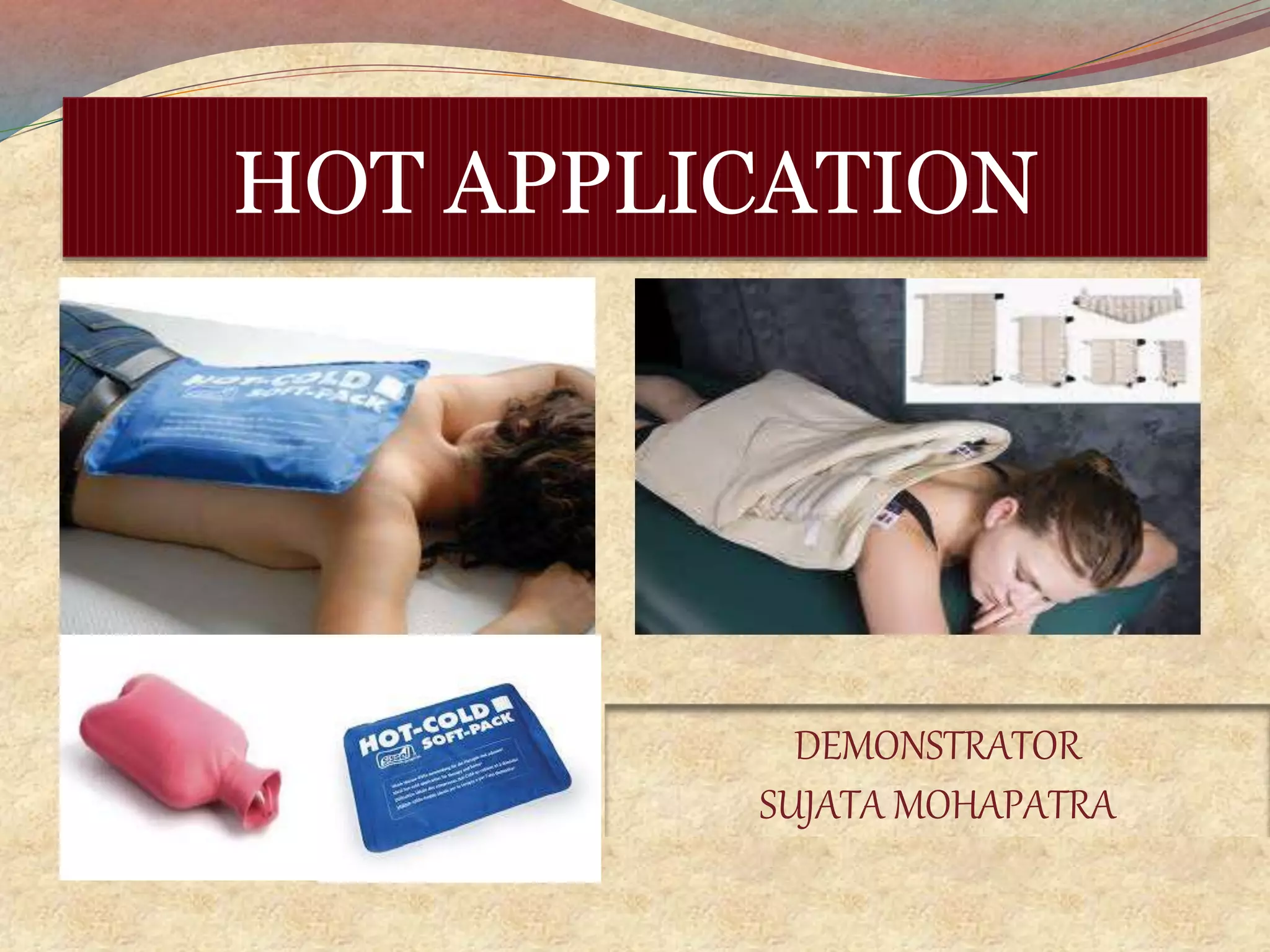
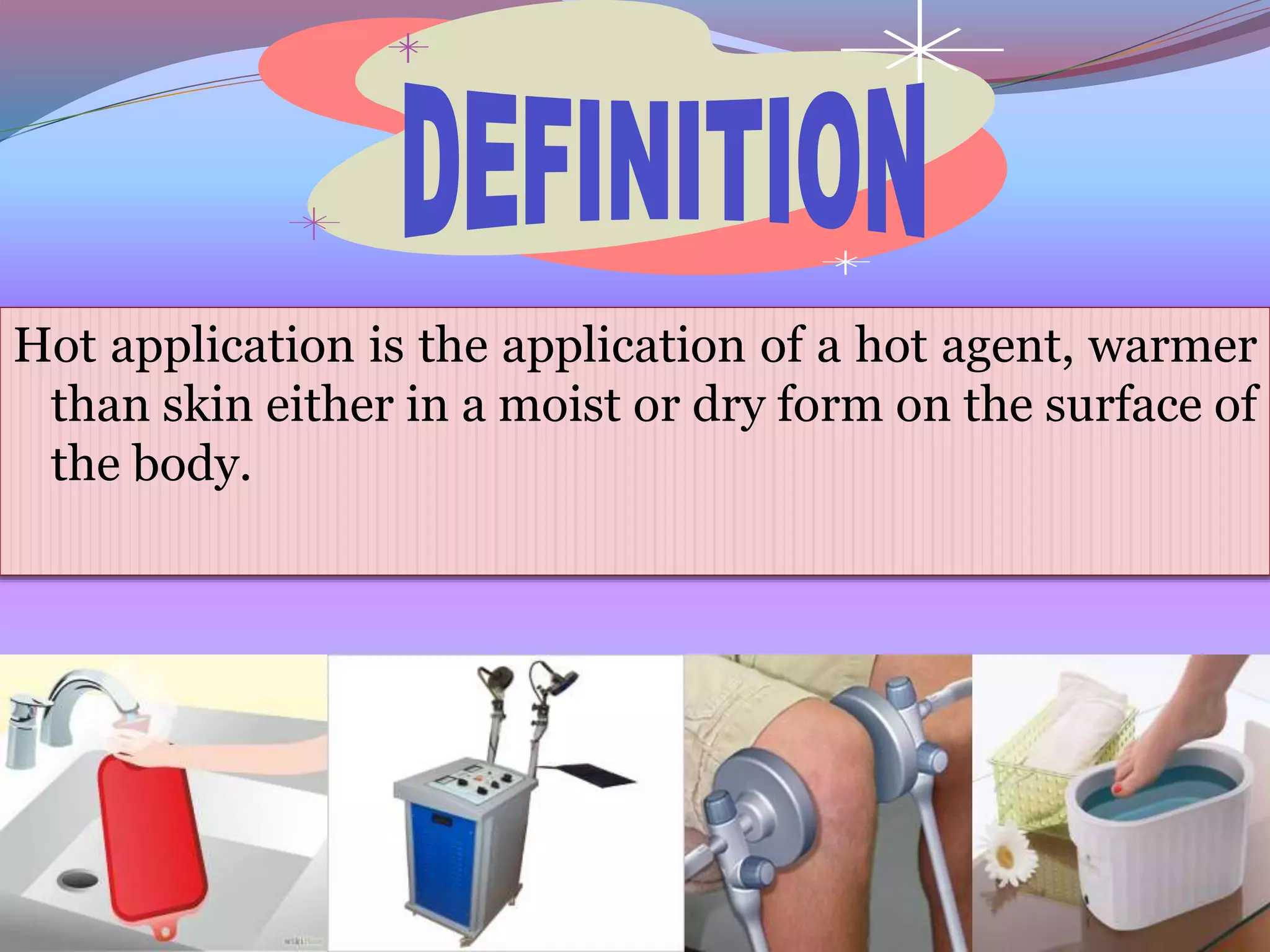
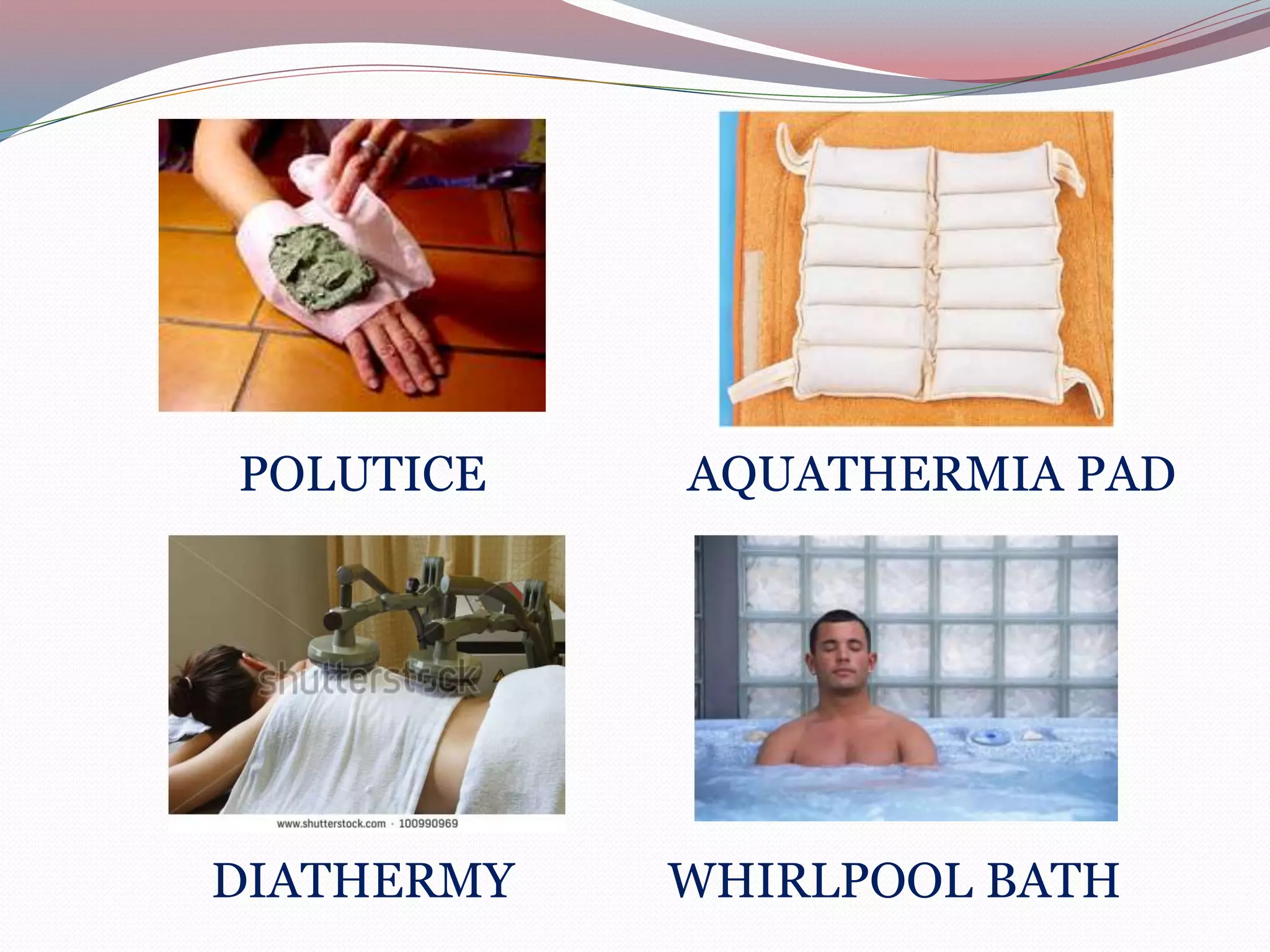

Hot application involves applying heat to the body in either a dry or moist form at a temperature warmer than skin. Dry heat methods include poultices, diathermy, and aquathermia pads while moist heat includes whirlpool baths. Hot applications are used to decrease pain, promote circulation and healing, relax muscles, and relieve conditions like muscle spasms, arthritis, gout, and fatigue. Precautions include risks of burns, drying skin, impaired vascular supply, hypotension, and hyperthermia.
Presentation by Sujata Mohapatra on hot application techniques.
Hot application involves using a hot agent, either moist or dry, applied to the body.
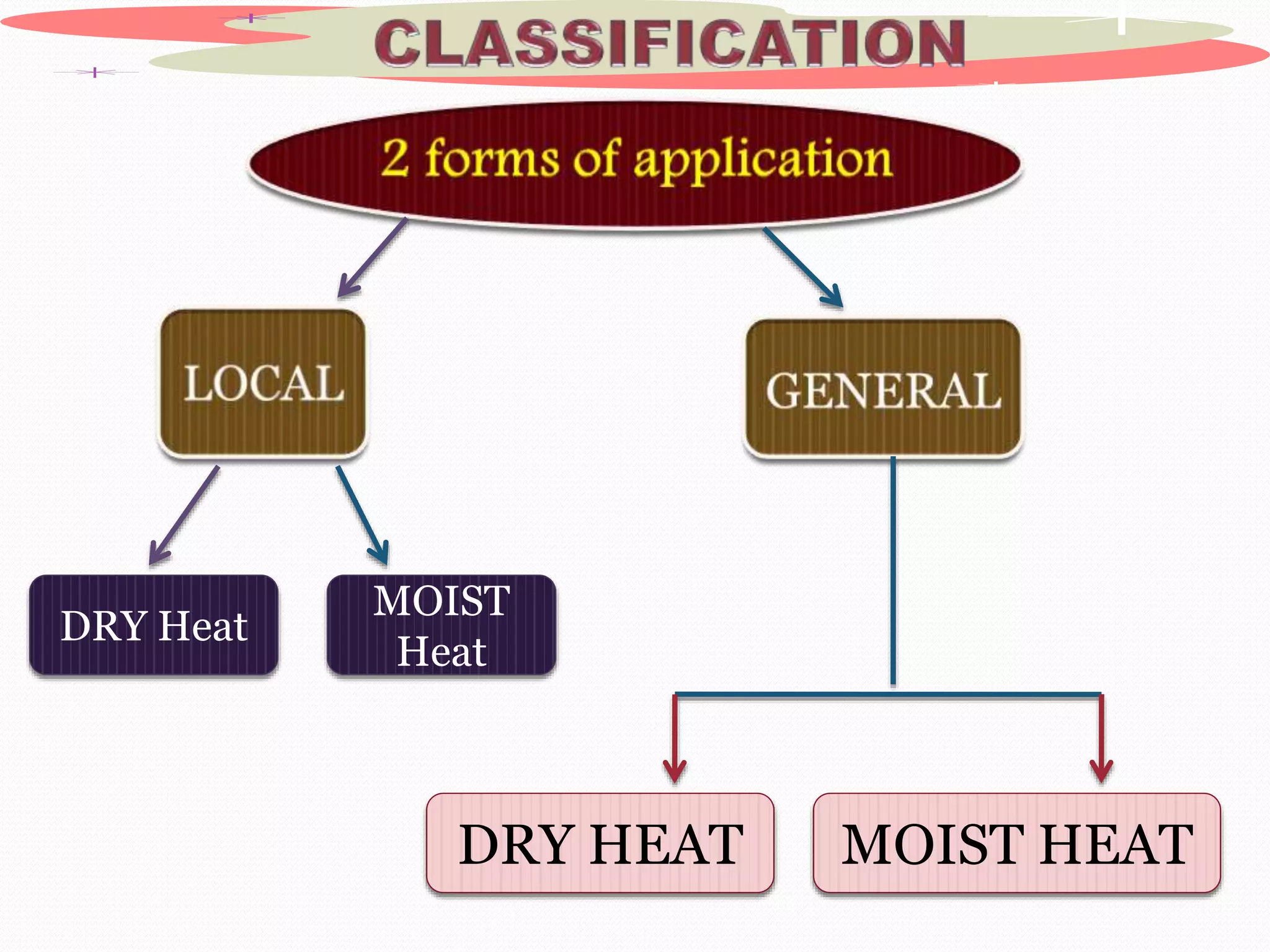
Differentiates between Dry Heat and Moist Heat methods in treatments.
Methods including poultice, diathermy, aquathermia pad, and whirlpool bath.
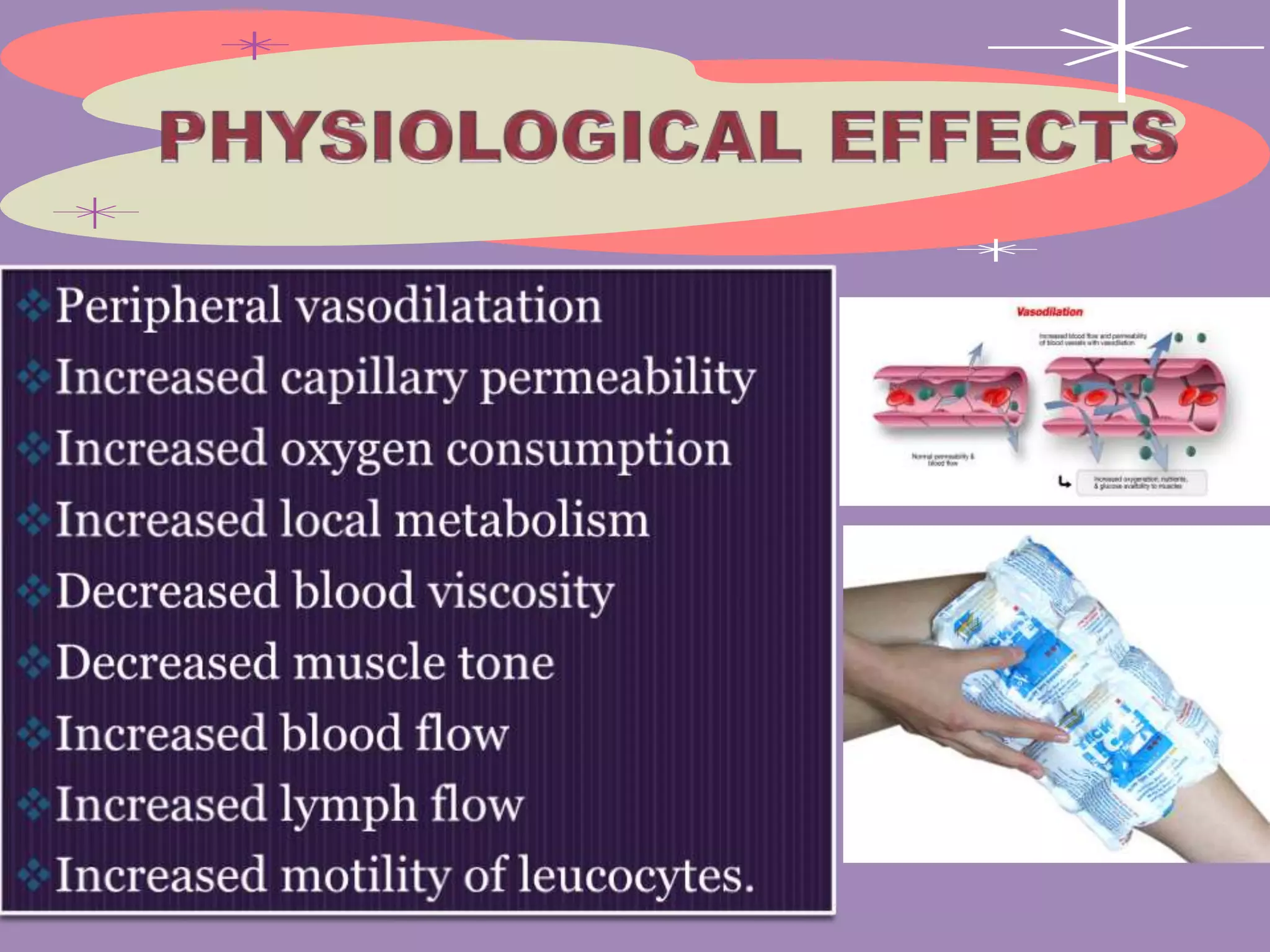
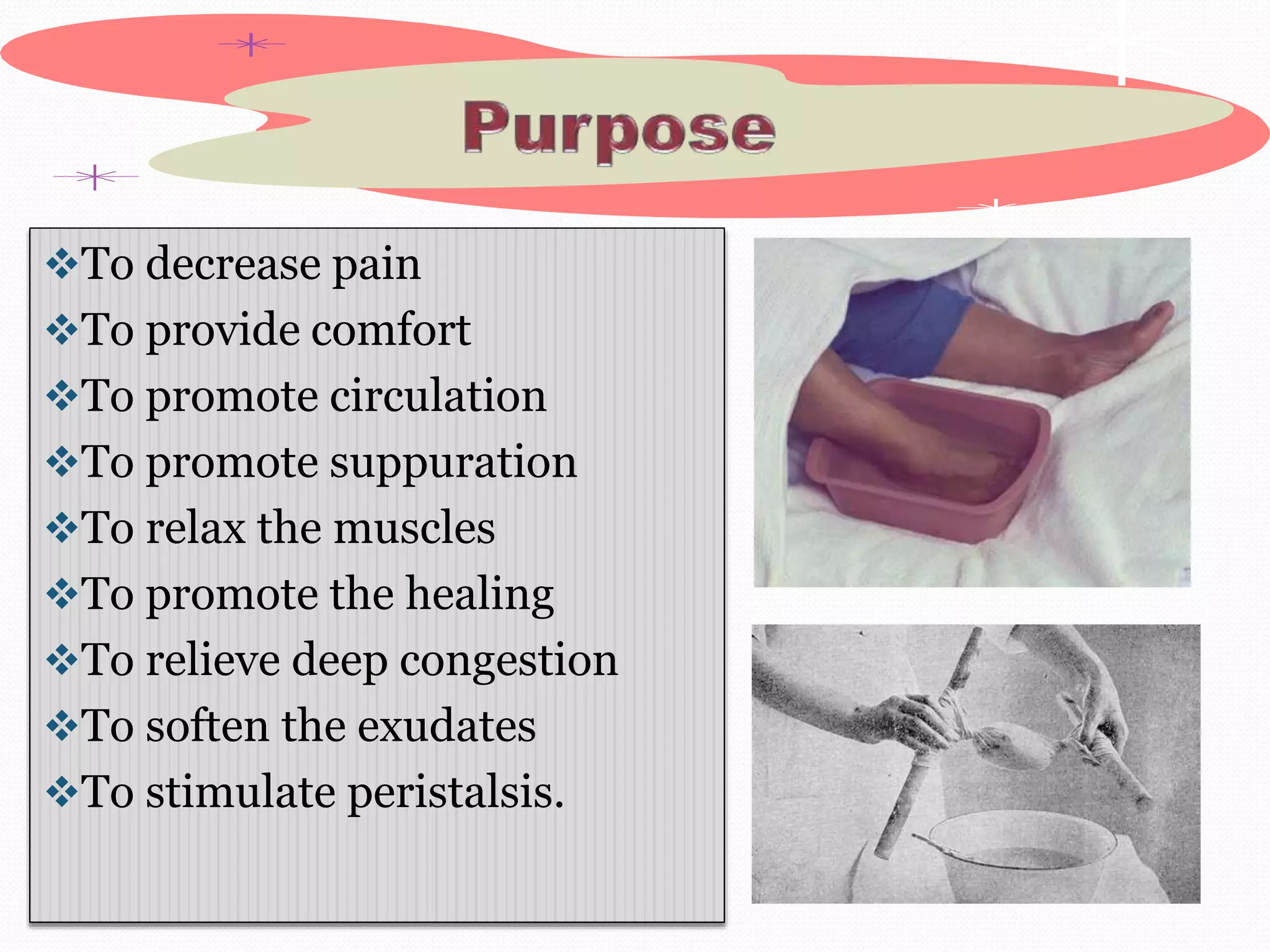
Hot applications aid in pain relief, muscle relaxation, increased circulation, and healing.
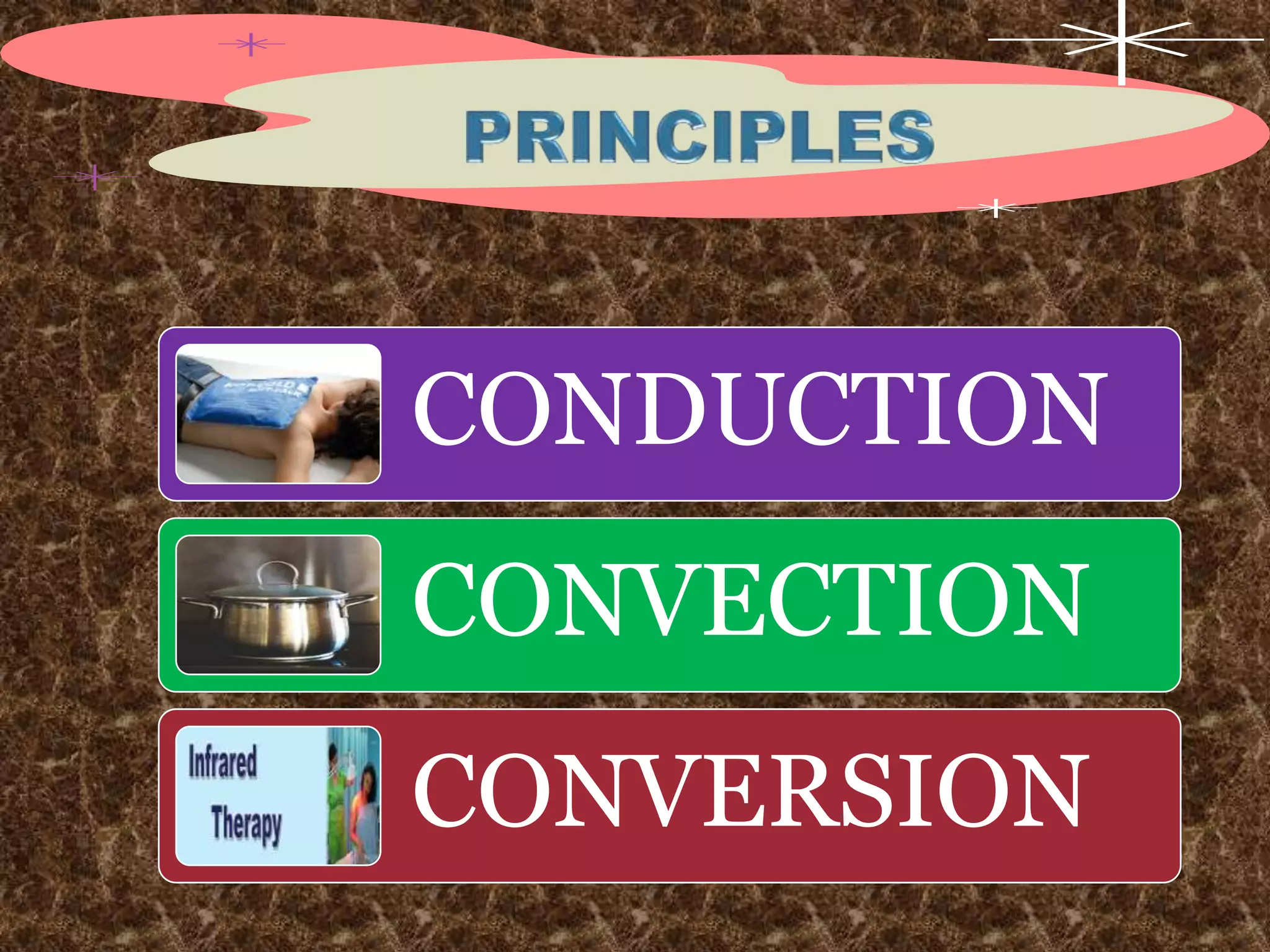
Three main heat transfer methods: Conduction, Convection, and Conversion.
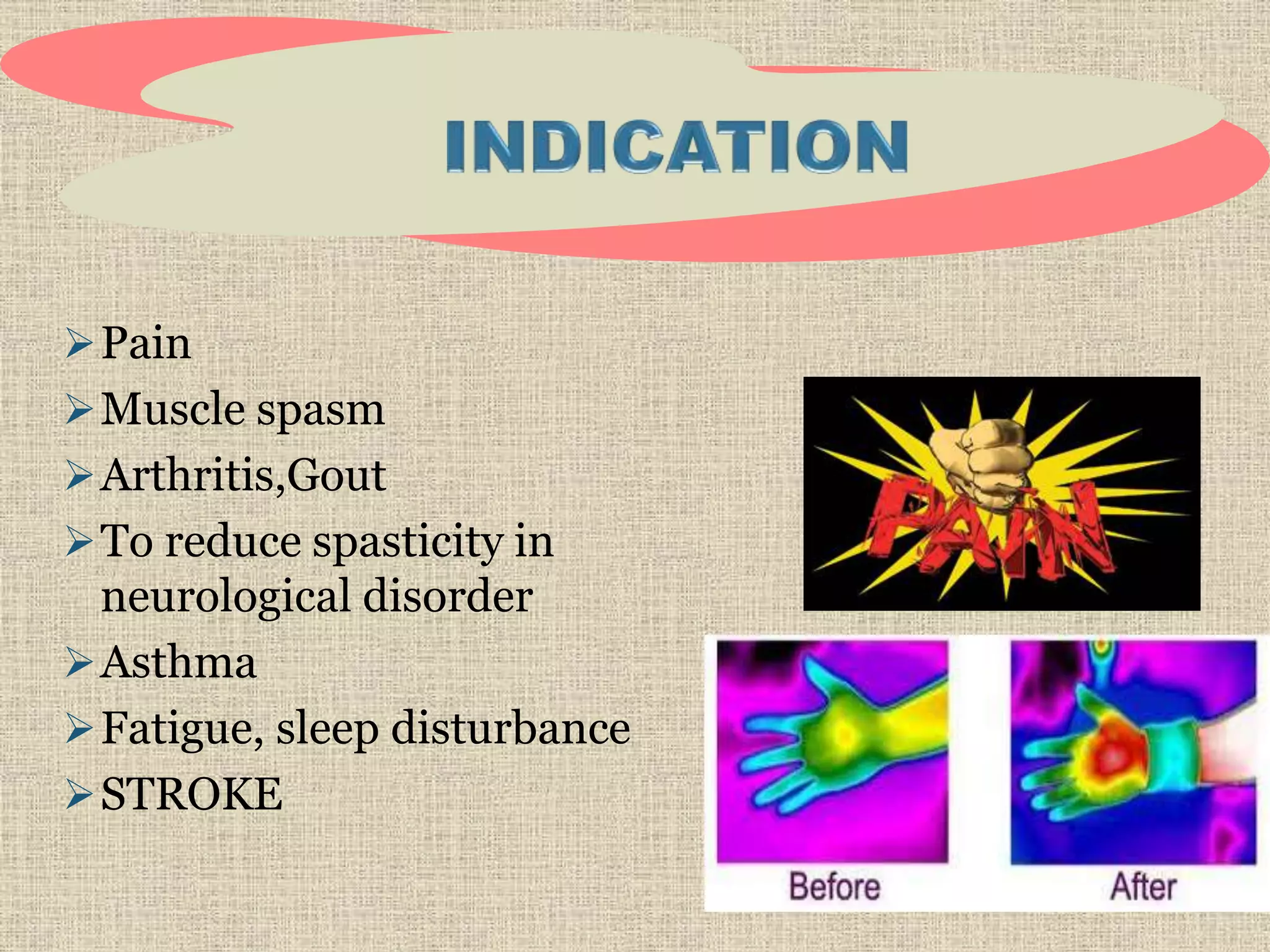
Used for conditions like pain, muscle spasm, arthritis, and to alleviate fatigue.
Conditions such as impaired organ functions, acute inflammation, and metabolic disorders.
Potential risks include burns, skin drying, impaired vascular supply, and hyperthermia.


