Ms. Amandeep Kaur
Nursing Tutor
MMCON
INTRODUCTION
 Infection is the one of the leading causes of the
preventable death in hospitals Every year. The center
of disease control and prevention estimated that there
are approximately 2 million preventable infections in
the hospital every year, leading to 90000 unnecessary
deaths.
DEFINITION OF INFECTION
 An infection the entry and multiplication of an
infectious agent in tissues of host.
TYPES OF INFECTION
 1. Generalized or systemic infection
 2. Localized infection
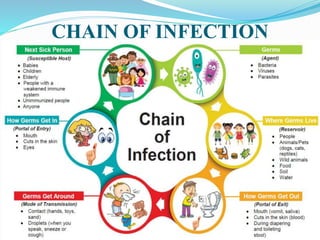
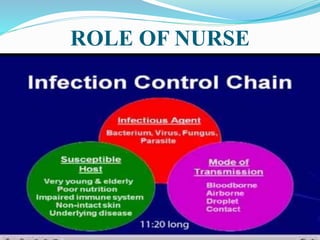
CHAIN OF INFECTION
THE INFECTIOUS PROCESS
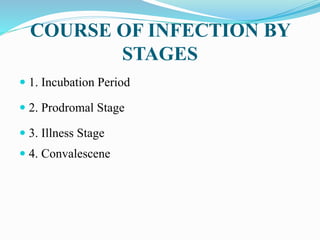
COURSE OF INFECTION BY
STAGES
 1. Incubation Period
 2. Prodromal Stage
 3. Illness Stage
 4. Convalescene
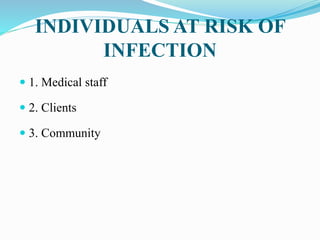
INDIVIDUALS AT RISK OF
INFECTION
 1. Medical staff
 2. Clients
 3. Community
INFECTION RISK OR
PROBALITY
 1. Immunity
 2. Quantity of agent
 3. Agent virulence
 4. Duration of exposure
TYPES OF INFECTION BASED
ON SOURCE
 1. Community acquired infection.
 2. Hospital acquired infection.
DEFINITION OF HOSPITAL
ACQUIRED INFECTION
 A hospital acquired infection is usually one that first
appear 3 days after a patient is admitted to a hospital
or other health facility.
HEALTH CARE ASSOCIATED
COMMON INFECTIONS
 1. Urinary tract infections.
 2. Surgical wound infection.
 3. Respiratory tract infections.
 4. Catheter related blood stream infections, etc.
SOURCES OF HOSPITAL
ACQUIRED INFECTION
 1. Endogenous.
 2. Exogenous.
RISK AREAS
 1. Nurseries.
 2. ICU.
 3. Dialysis units.
 4. Transplant units.
 5. Emergency units.
 6. Oncology ward.
 7. Operation theatre.
 8. Delivery room.
 9. Post operative room.
COMMON MICROORGANISMS
IN HOSPITAL/ICU
 1. Staphylococcus aureus
 2. Enterococcus
 3. Pseudomonas
 4. Klebsiella
 5. E.coli
 6. HIV
 7. Hepatitis B
 8. Hepatitis C
 9. Cytomegalovirus
 10. Candida
 11. Protozoa
 12. Mycobacterium
GOALS OF
INFECTION CONTROL
 1. Immunization
 2. Defining pre-causations
 3. Restricting exposure
 4. Protecting the patient and medical staff
 5. Reducing number of pathogens
 6. Implementing high standard
IMPORTANCE OF
INFECTION CONTROL
 1. Prevent post procedure infection
 2. Provide High quality and safe services
 3. Prevent infections in service providers
 4. Protect the community
 5. Prevent antibiotic resistance
 6. Lower the cost of health care services
INFECTION CONTROL
PROGRAME
 Need for infection control programs
FUNCTIONS OF INFECTION
CONTROL PROGRAME
 Set relevant national objectives
 Develop and periodically update guidelines
 Develop a national system for monitoring
 Harmonize initial and continue training programs
 Facilitates access to materials of hygiene and safety
 Encourage health care establishments to monitor
nosocomial infections.
COMPONETS OF INFECTION
CONTROL PROGRAME
 Standard and additional precautions
 Education and training of health care workers
 Protection of health care workers (immunization)
 Identification of hazards and minimizing risks.
 Routine practices (asepsis)
Cont…
 Effective work practices and procedures
 Surveillance
 Incident monitoring
 Outbreak investigation
 Infection control and specific situations and research
ORGANIZATION OF AN INFECTION
CONTROL PROGRAM
 The hospital administrator/ head of institute should-
 Establish an infection control committee which will in
turn appoint an infection control team
 Provide adequate resources
INFECTION CONTROL
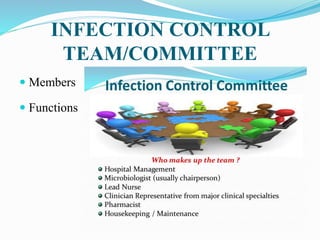
TEAM/COMMITTEE
 Members
 Functions
INFECTION CONTROL
MANUAL
 Containing rules, regulations regarding patient care,
waste disposal and management, instructions and
practices.
EDUCATION AND TRAING OF
HEALTH CARE STAFF
 Assess needs of the staff and provide required training
 Organize regular training program
 Provide periodic re-training
 Review the effectiveness of training
INFECTION CONTROL
MEASURES
 BREAKING THE CHAIN OF INFECTION
1. CONTROL OR ELIMINATION
OF INFECTIOUS AGENT
 •Cleaning
 •Asepsis
 •Disinfection
 •Sterilization
2. CONTROL OR ELIMINATION
OF RESSERVOIRS
 • Employee health (immunization)
 • Hospital environment
 • Handling of linen
 • Pest control
 • Visitors control
3. CONTROL OF PORTAL OF
EXIT
 Practice Aseptic precautions
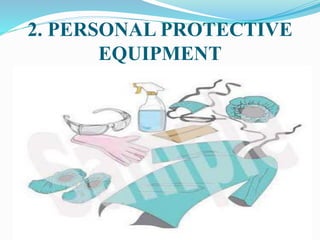
 Using Personal protective equipment's
 Careful handing of waste
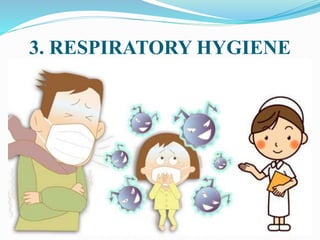
 Coughing etiquette
4. CONTROL OF
TRANSMISSION
 Contact precautions
 Droplet precautions
 Airborne precautions
 Vector control/pest control
 Isolation
 Hygienic cooking and handling of food
5. CONTROL OF PORTAL OF
ENTRY
 Maintain skin integrity
 Preventing injuries/Bed sores
 Maintain frequent oral hygiene
 Closed dressing to wound
 Ensure patient hygiene
 Periodic changing of catheters
6. PROTECTING
SUSCEPTIBLE HOST
 Encourage proper immunization
 Adequate nutrition
 Patient education
 Isolation / separate room
 Prophylactic antibiotics
DEFINITION OF STANDARD
SAFETY MEASURES
 Set of practices designed to prevent the transmission
of HIV, hepatitis B, and other blood borne pathogens
(bacteria and viruses)
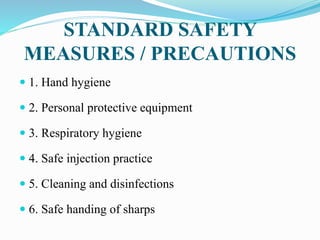
STANDARD SAFETY
MEASURES / PRECAUTIONS
 1. Hand hygiene
 2. Personal protective equipment
 3. Respiratory hygiene
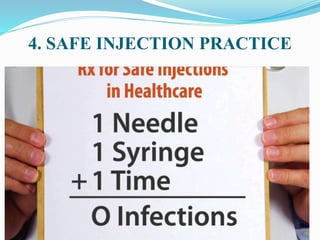
 4. Safe injection practice
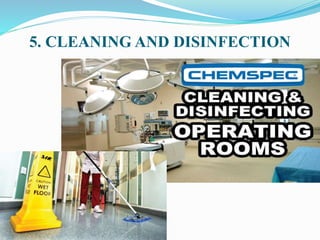
 5. Cleaning and disinfections
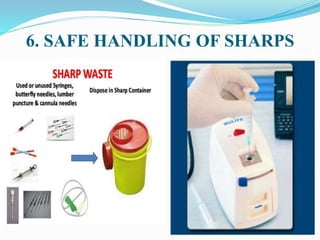
 6. Safe handing of sharps
Cont…
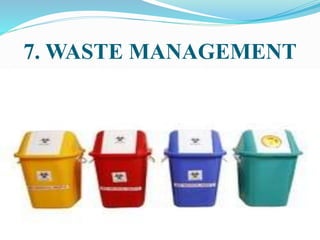
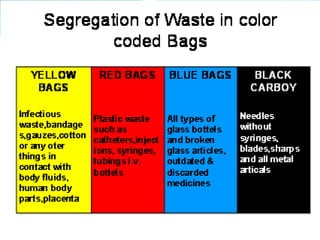
 7. Waste management
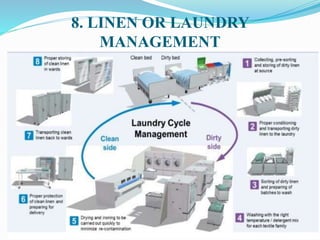
 8. Linen or laundry management
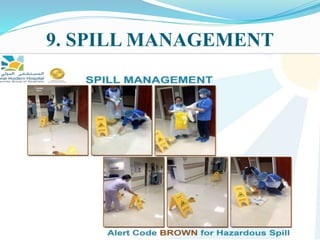
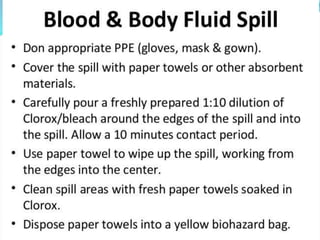
 9. Spill management
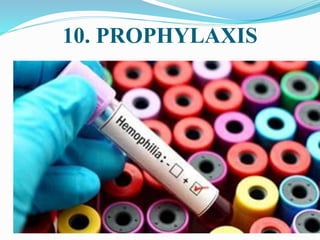
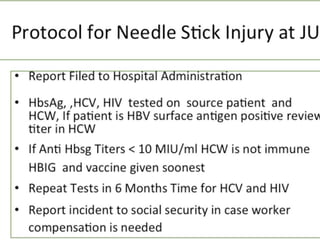
 10. Pre and post prophylaxis
 11. Immunization
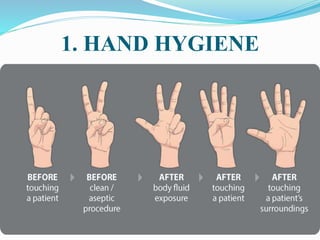
1. HAND HYGIENE
2. PERSONAL PROTECTIVE
EQUIPMENT
3. RESPIRATORY HYGIENE
4. SAFE INJECTION PRACTICE
5. CLEANING AND DISINFECTION
6. SAFE HANDLING OF SHARPS
7. WASTE MANAGEMENT
8. LINEN OR LAUNDRY
MANAGEMENT
9. SPILL MANAGEMENT
10. PROPHYLAXIS
11. IMMUNIZATION
ROLE OF NURSE
Infection control and safety measures

Infection control and safety measures

  • 1.
  • 2.
    INTRODUCTION  Infection isthe one of the leading causes of the preventable death in hospitals Every year. The center of disease control and prevention estimated that there are approximately 2 million preventable infections in the hospital every year, leading to 90000 unnecessary deaths.
  • 3.
    DEFINITION OF INFECTION An infection the entry and multiplication of an infectious agent in tissues of host.
  • 4.
    TYPES OF INFECTION 1. Generalized or systemic infection  2. Localized infection
  • 5.
  • 6.
  • 7.
    COURSE OF INFECTIONBY STAGES  1. Incubation Period  2. Prodromal Stage  3. Illness Stage  4. Convalescene
  • 8.
    INDIVIDUALS AT RISKOF INFECTION  1. Medical staff  2. Clients  3. Community
  • 9.
    INFECTION RISK OR PROBALITY 1. Immunity  2. Quantity of agent  3. Agent virulence  4. Duration of exposure
  • 10.
    TYPES OF INFECTIONBASED ON SOURCE  1. Community acquired infection.  2. Hospital acquired infection.
  • 11.
    DEFINITION OF HOSPITAL ACQUIREDINFECTION  A hospital acquired infection is usually one that first appear 3 days after a patient is admitted to a hospital or other health facility.
  • 12.
    HEALTH CARE ASSOCIATED COMMONINFECTIONS  1. Urinary tract infections.  2. Surgical wound infection.  3. Respiratory tract infections.  4. Catheter related blood stream infections, etc.
  • 13.
    SOURCES OF HOSPITAL ACQUIREDINFECTION  1. Endogenous.  2. Exogenous.
  • 14.
    RISK AREAS  1.Nurseries.  2. ICU.  3. Dialysis units.  4. Transplant units.  5. Emergency units.  6. Oncology ward.  7. Operation theatre.  8. Delivery room.  9. Post operative room.
  • 15.
    COMMON MICROORGANISMS IN HOSPITAL/ICU 1. Staphylococcus aureus  2. Enterococcus  3. Pseudomonas  4. Klebsiella  5. E.coli  6. HIV  7. Hepatitis B  8. Hepatitis C  9. Cytomegalovirus  10. Candida  11. Protozoa  12. Mycobacterium
  • 16.
    GOALS OF INFECTION CONTROL 1. Immunization  2. Defining pre-causations  3. Restricting exposure  4. Protecting the patient and medical staff  5. Reducing number of pathogens  6. Implementing high standard
  • 17.
    IMPORTANCE OF INFECTION CONTROL 1. Prevent post procedure infection  2. Provide High quality and safe services  3. Prevent infections in service providers  4. Protect the community  5. Prevent antibiotic resistance  6. Lower the cost of health care services
  • 20.
    INFECTION CONTROL PROGRAME  Needfor infection control programs
  • 21.
    FUNCTIONS OF INFECTION CONTROLPROGRAME  Set relevant national objectives  Develop and periodically update guidelines  Develop a national system for monitoring  Harmonize initial and continue training programs  Facilitates access to materials of hygiene and safety  Encourage health care establishments to monitor nosocomial infections.
  • 22.
    COMPONETS OF INFECTION CONTROLPROGRAME  Standard and additional precautions  Education and training of health care workers  Protection of health care workers (immunization)  Identification of hazards and minimizing risks.  Routine practices (asepsis)
  • 23.
    Cont…  Effective workpractices and procedures  Surveillance  Incident monitoring  Outbreak investigation  Infection control and specific situations and research
  • 24.
    ORGANIZATION OF ANINFECTION CONTROL PROGRAM  The hospital administrator/ head of institute should-  Establish an infection control committee which will in turn appoint an infection control team  Provide adequate resources
  • 25.
  • 26.
    INFECTION CONTROL MANUAL  Containingrules, regulations regarding patient care, waste disposal and management, instructions and practices.
  • 27.
    EDUCATION AND TRAINGOF HEALTH CARE STAFF  Assess needs of the staff and provide required training  Organize regular training program  Provide periodic re-training  Review the effectiveness of training
  • 28.
  • 29.
    1. CONTROL ORELIMINATION OF INFECTIOUS AGENT  •Cleaning  •Asepsis  •Disinfection  •Sterilization
  • 30.
    2. CONTROL ORELIMINATION OF RESSERVOIRS  • Employee health (immunization)  • Hospital environment  • Handling of linen  • Pest control  • Visitors control
  • 31.
    3. CONTROL OFPORTAL OF EXIT  Practice Aseptic precautions  Using Personal protective equipment's  Careful handing of waste  Coughing etiquette
  • 32.
    4. CONTROL OF TRANSMISSION Contact precautions  Droplet precautions  Airborne precautions  Vector control/pest control  Isolation  Hygienic cooking and handling of food
  • 33.
    5. CONTROL OFPORTAL OF ENTRY  Maintain skin integrity  Preventing injuries/Bed sores  Maintain frequent oral hygiene  Closed dressing to wound  Ensure patient hygiene  Periodic changing of catheters
  • 34.
    6. PROTECTING SUSCEPTIBLE HOST Encourage proper immunization  Adequate nutrition  Patient education  Isolation / separate room  Prophylactic antibiotics
  • 36.
    DEFINITION OF STANDARD SAFETYMEASURES  Set of practices designed to prevent the transmission of HIV, hepatitis B, and other blood borne pathogens (bacteria and viruses)
  • 37.
    STANDARD SAFETY MEASURES /PRECAUTIONS  1. Hand hygiene  2. Personal protective equipment  3. Respiratory hygiene  4. Safe injection practice  5. Cleaning and disinfections  6. Safe handing of sharps
  • 38.
    Cont…  7. Wastemanagement  8. Linen or laundry management  9. Spill management  10. Pre and post prophylaxis  11. Immunization
  • 39.
  • 40.
  • 41.
  • 42.
  • 43.
    5. CLEANING ANDDISINFECTION
  • 44.
  • 45.
  • 47.
    8. LINEN ORLAUNDRY MANAGEMENT
  • 48.
  • 50.
  • 52.
  • 53.