Nursing Care for
NasogastricTube Patients
‫إعداد‬
‫الرضا‬ ‫عبد‬ ‫فليح‬ ‫مصطفى‬
‫البالغين‬ ‫تمريض‬ ‫في‬ ‫علوم‬ ‫ماجستير‬
‫بغداد‬ ‫جامعة‬
Lecture Outline
• Definition
• Indications
• Contraindications
• Complications
• Placement of NG tube
• Inappropriate placement of NG tube
• Nursing Care and Maintenance
• Removing theTube
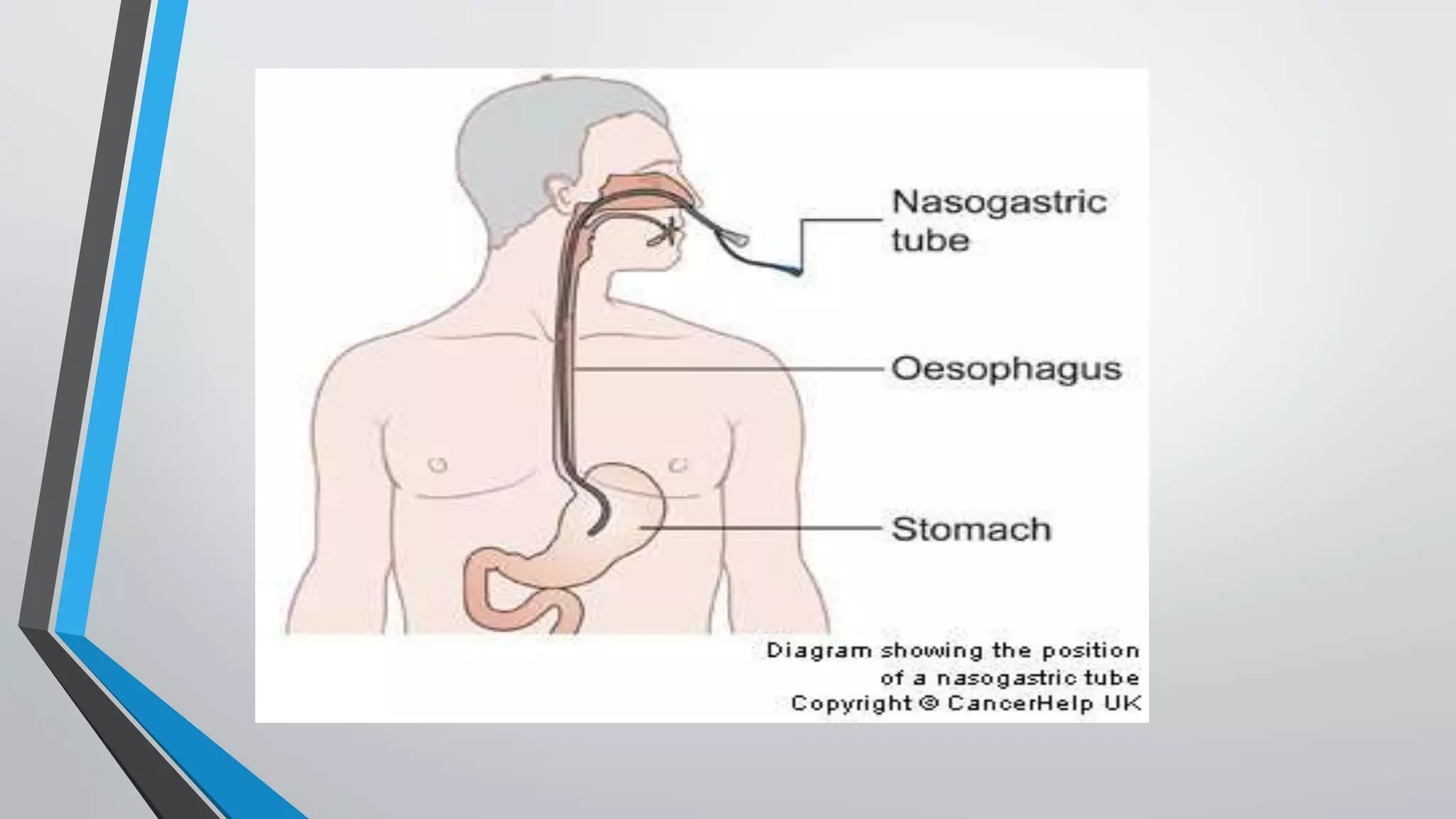
Nasogastric intubation
•Nasogastric intubation is a medical process
involving insertion of a flexible tube through the
nose into the stomach.
Indications
1. Diagnostic indications for NG intubation include the following:
• Evaluation of upper gastrointestinal (GI) bleeding (ie, presence,
volume)
• Aspiration of gastric fluid content
• Identification of the esophagus and stomach on a chest radiograph
• Administration of radiographic contrast to the GI tract
2.Therapeutic indications for NG intubation include the following:
• Gastric decompression, including maintenance of a decompressed state
after endotracheal intubation, often via the oropharynx
• Relief of symptoms and bowel rest in the setting of small-bowel obstruction
• Aspiration of gastric content from recent ingestion of toxic material
• Administration of medication
• Feeding
• Bowel irrigation
Contraindications
• Maxillo – facial disorders, surgery orTrauma
• Oesophageal tumours, fistula or surgery
• Laryngectomy
• Skull fractures
• Head and neck surgery
• Tracheostomy (unless in ICU)
• Patient with a known coagulopathy is receiving anticoagulant medication,
or known to have oesophageal varices
• Alkaline ingestion
Complications
•Patient discomfort
•Epistaxis may be prevented by generously lubricating
the tube tip and using a gentle technique.
•Respiratory tree intubation
•Esophageal perforation
Placement of NG tube
• X-ray visualization of tube tip
• Measure exposed tube length
• Visual assessment of the color of the aspirate
• pH measurement of aspirate
• Air auscultation
Inappropriate placement of NG tube
• Decreased levels of consciousness
• Unable to speak
• Confused mental states, poor or absent cough and gag
reflexes, or agitation during insertion.
• The presence of an endotracheal tube or its recent removal
also increases the risk of inadvertent placement of the tube in
the lung
Nursing Care and Maintenance
• Nursing task basics: perform hand hygiene. Introduce self,
role, and purpose. Use at least two identifiers to confirm the
patient’s identity (wrist band and another). Perform the 6
rights of drug administration (Right patient, Right time, Right
order, Right dose, Right drug, Right Route and
documentation)
• Monitor drainage output, confirm that a x-ray was used for NG
placement, all ordered procedures, irrigation, how often to
preform suctioning. Care is typically performed every 4 hours or
less as needed
• Check tube placement for signs of migration: take note to where
it is marked on the patient and measure external tube length and
compare to what is documented in the chart
• Check tape and change as needed
• Use a penlight to assess skin and observe for signs of irritation
and redness
• Clean area around the tube every 4 hours
• Apply a lubricate around nose in order to maintain skin integrity
and reduce the risk of infection
• Frequent mouth care to keep the mucous membranes moist:
brush teeth every 8 hours (or use an oral care sponge) and offer lip
balm in order to maintain skin integrity and reduce the risk of
infection
• Report complaints and signs of nose or throat irritation (excessive
mucus, sore throat, or hoarseness).
• Document all nursing actions taken and the patient’s response to
intervention
Removing theTube
• Before removing a decompression tube, the nurse may intermittently clamp
it for a trial period of several hours to ensure that the patient does not
experience nausea, vomiting, or distention.
• Before any tube is removed, it is flushed with 10 mL of water or normal
saline to ensure that it is free of debris and away from the gastric lining.
• Gloves are worn when removing the tube.The tube is withdrawn gently and
slowly for 15 to 20 cm (6 to 8 in) until the tip reaches the esophagus; the
remainder is withdrawn rapidly from the nostril.
• If the tube does not come out easily, force should not be used, and the
problem should be reported to the physician.
• provides oral hygiene after the tube is removed.
Thank you for listening

Nursing care for nasogastric tube patients

  • 1.
    Nursing Care for NasogastricTubePatients ‫إعداد‬ ‫الرضا‬ ‫عبد‬ ‫فليح‬ ‫مصطفى‬ ‫البالغين‬ ‫تمريض‬ ‫في‬ ‫علوم‬ ‫ماجستير‬ ‫بغداد‬ ‫جامعة‬
  • 2.
    Lecture Outline • Definition •Indications • Contraindications • Complications • Placement of NG tube • Inappropriate placement of NG tube • Nursing Care and Maintenance • Removing theTube
  • 3.
    Nasogastric intubation •Nasogastric intubationis a medical process involving insertion of a flexible tube through the nose into the stomach.
  • 5.
    Indications 1. Diagnostic indicationsfor NG intubation include the following: • Evaluation of upper gastrointestinal (GI) bleeding (ie, presence, volume) • Aspiration of gastric fluid content • Identification of the esophagus and stomach on a chest radiograph • Administration of radiographic contrast to the GI tract
  • 6.
    2.Therapeutic indications forNG intubation include the following: • Gastric decompression, including maintenance of a decompressed state after endotracheal intubation, often via the oropharynx • Relief of symptoms and bowel rest in the setting of small-bowel obstruction • Aspiration of gastric content from recent ingestion of toxic material • Administration of medication • Feeding • Bowel irrigation
  • 7.
    Contraindications • Maxillo –facial disorders, surgery orTrauma • Oesophageal tumours, fistula or surgery • Laryngectomy • Skull fractures • Head and neck surgery • Tracheostomy (unless in ICU) • Patient with a known coagulopathy is receiving anticoagulant medication, or known to have oesophageal varices • Alkaline ingestion
  • 8.
    Complications •Patient discomfort •Epistaxis maybe prevented by generously lubricating the tube tip and using a gentle technique. •Respiratory tree intubation •Esophageal perforation
  • 9.
    Placement of NGtube • X-ray visualization of tube tip • Measure exposed tube length • Visual assessment of the color of the aspirate • pH measurement of aspirate • Air auscultation
  • 10.
    Inappropriate placement ofNG tube • Decreased levels of consciousness • Unable to speak • Confused mental states, poor or absent cough and gag reflexes, or agitation during insertion. • The presence of an endotracheal tube or its recent removal also increases the risk of inadvertent placement of the tube in the lung
  • 11.
    Nursing Care andMaintenance • Nursing task basics: perform hand hygiene. Introduce self, role, and purpose. Use at least two identifiers to confirm the patient’s identity (wrist band and another). Perform the 6 rights of drug administration (Right patient, Right time, Right order, Right dose, Right drug, Right Route and documentation)
  • 12.
    • Monitor drainageoutput, confirm that a x-ray was used for NG placement, all ordered procedures, irrigation, how often to preform suctioning. Care is typically performed every 4 hours or less as needed • Check tube placement for signs of migration: take note to where it is marked on the patient and measure external tube length and compare to what is documented in the chart • Check tape and change as needed • Use a penlight to assess skin and observe for signs of irritation and redness • Clean area around the tube every 4 hours
  • 13.
    • Apply alubricate around nose in order to maintain skin integrity and reduce the risk of infection • Frequent mouth care to keep the mucous membranes moist: brush teeth every 8 hours (or use an oral care sponge) and offer lip balm in order to maintain skin integrity and reduce the risk of infection • Report complaints and signs of nose or throat irritation (excessive mucus, sore throat, or hoarseness). • Document all nursing actions taken and the patient’s response to intervention
  • 14.
    Removing theTube • Beforeremoving a decompression tube, the nurse may intermittently clamp it for a trial period of several hours to ensure that the patient does not experience nausea, vomiting, or distention. • Before any tube is removed, it is flushed with 10 mL of water or normal saline to ensure that it is free of debris and away from the gastric lining. • Gloves are worn when removing the tube.The tube is withdrawn gently and slowly for 15 to 20 cm (6 to 8 in) until the tip reaches the esophagus; the remainder is withdrawn rapidly from the nostril. • If the tube does not come out easily, force should not be used, and the problem should be reported to the physician. • provides oral hygiene after the tube is removed.
  • 15.
    Thank you forlistening