Igneous, Sedimentary, and Metamorphic Rocks Chapter 5 & 6 P Squires 2005-2006
 
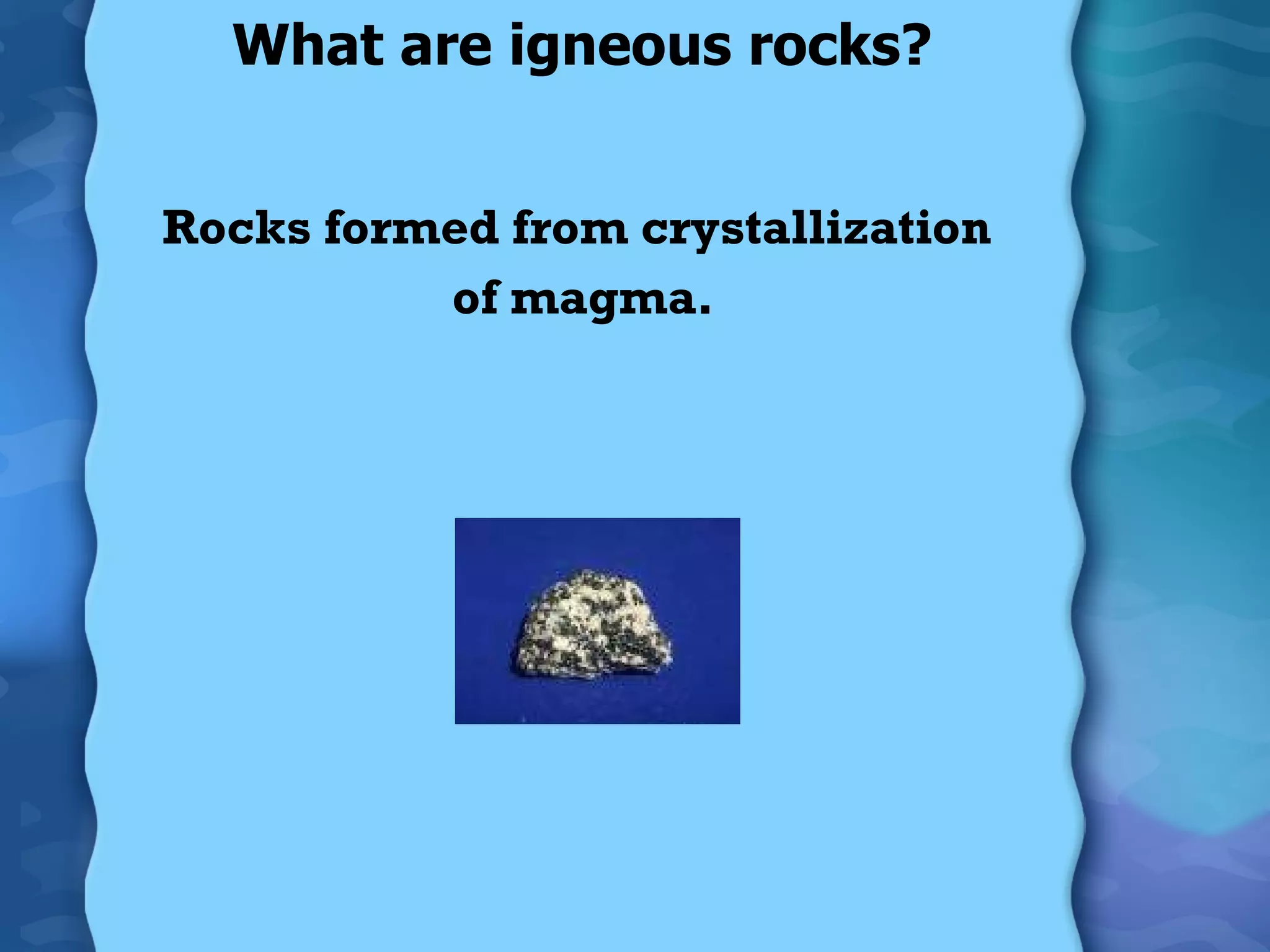
What are igneous rocks? Rocks formed from crystallization of magma.
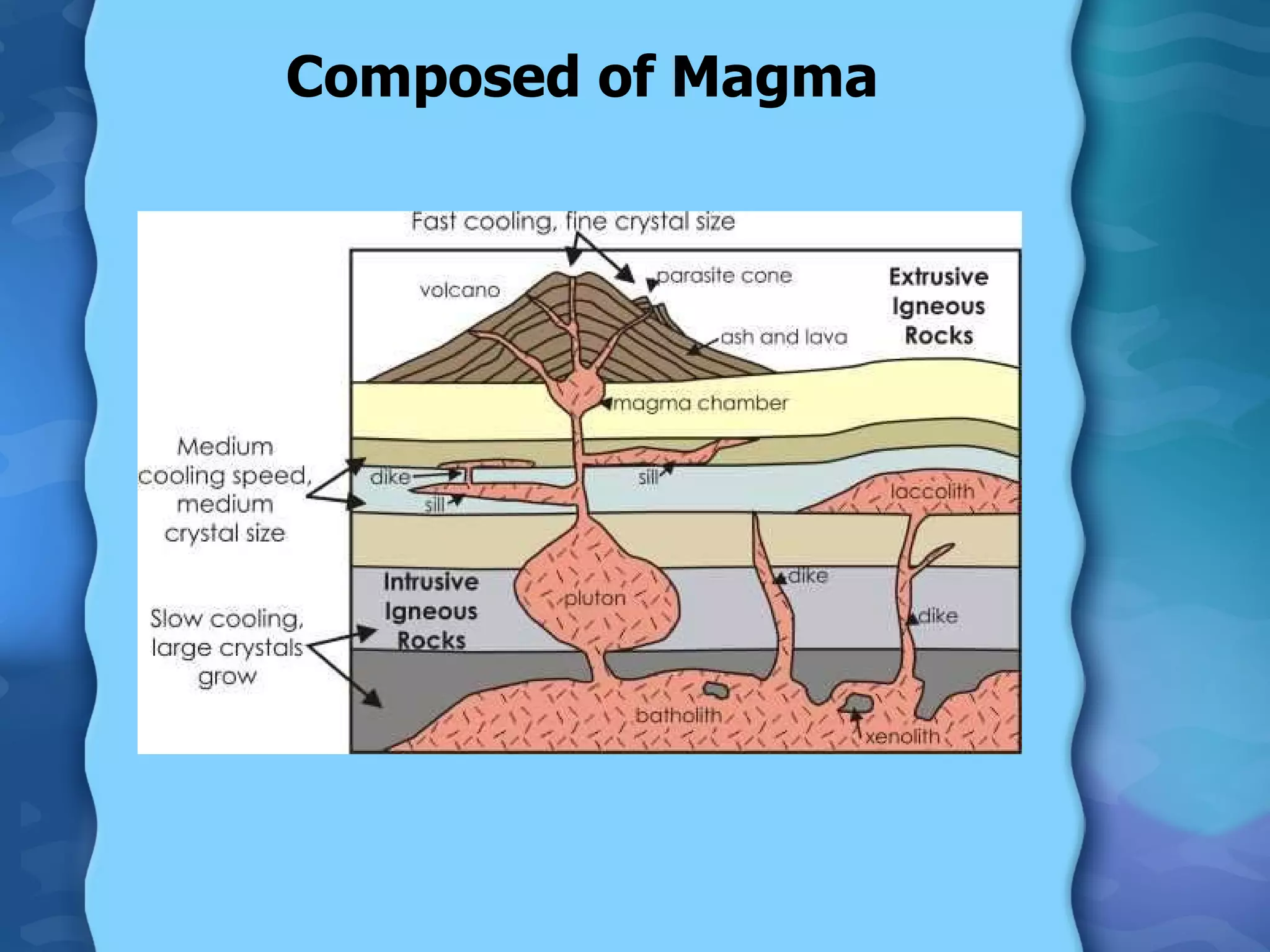
Types of Igneous Rocks Extrusive – fine grained and quickly cooled. Intrusive – coarse grained and slowly cooled.
Composed of Magma
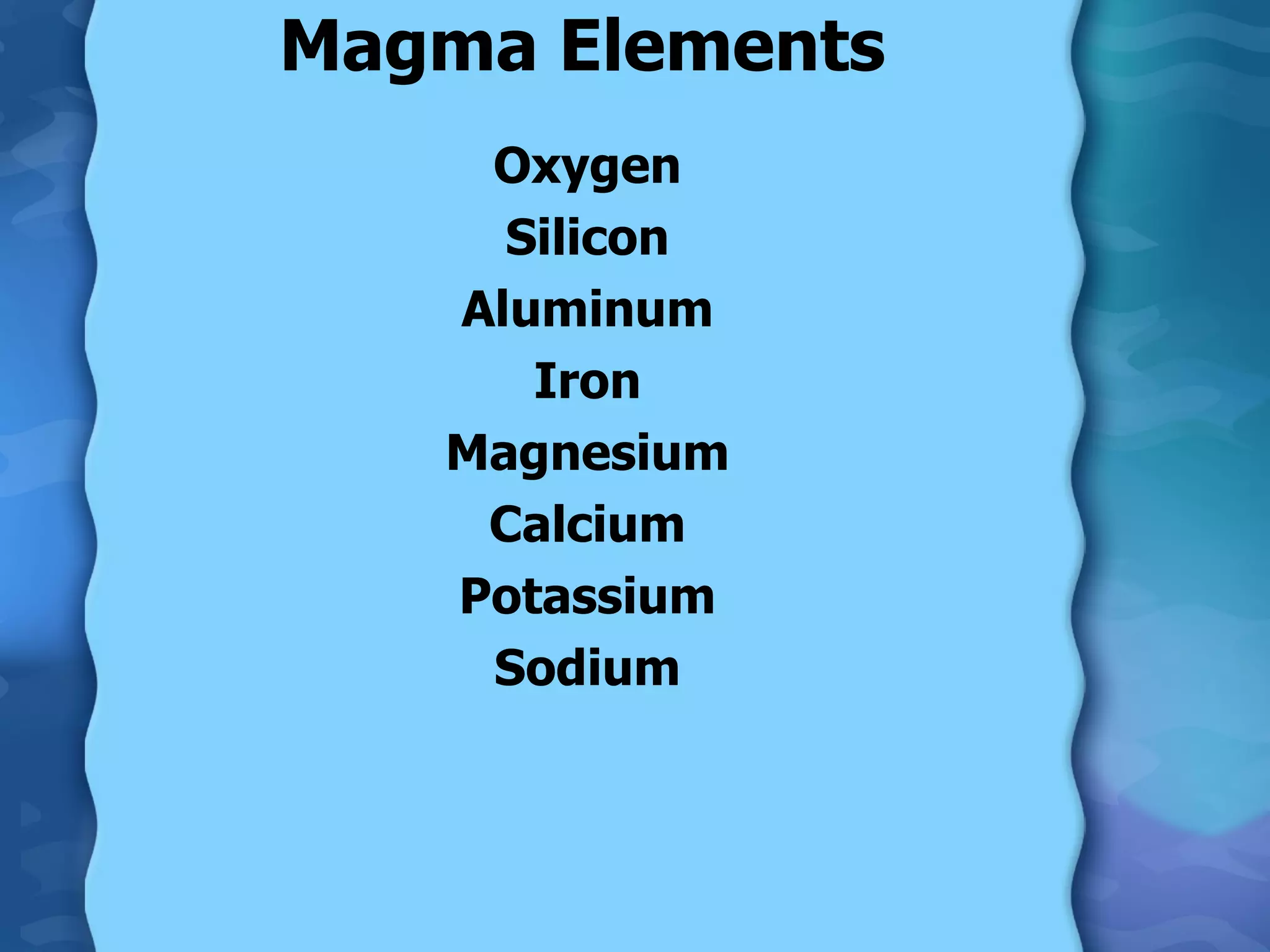
Magma Elements Oxygen Silicon Aluminum Iron Magnesium Calcium Potassium Sodium
 
 
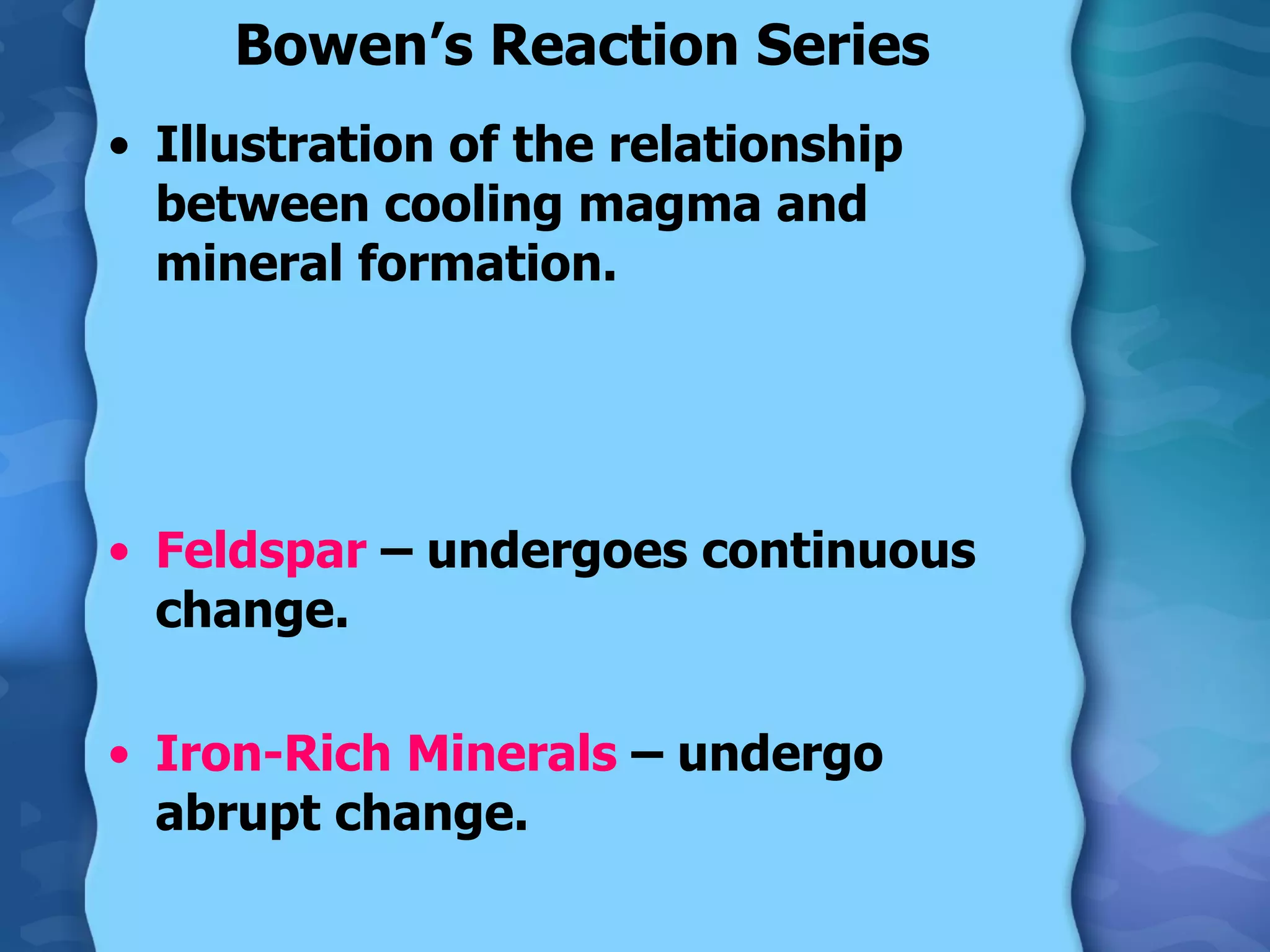
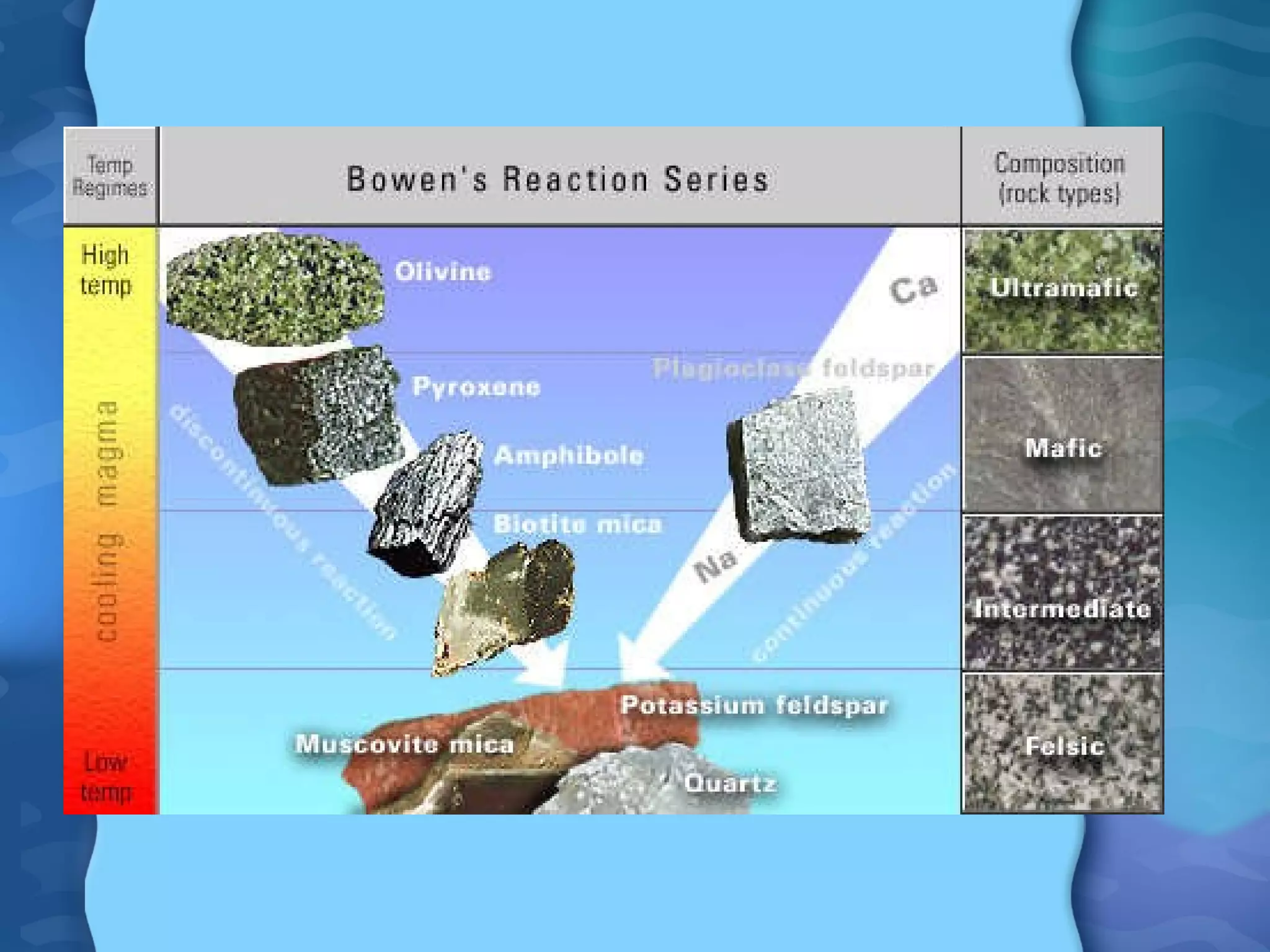
Bowen’s Reaction Series Illustration of the relationship between cooling magma and mineral formation. Feldspar  – undergoes continuous change. Iron-Rich Minerals  – undergo abrupt change.
 
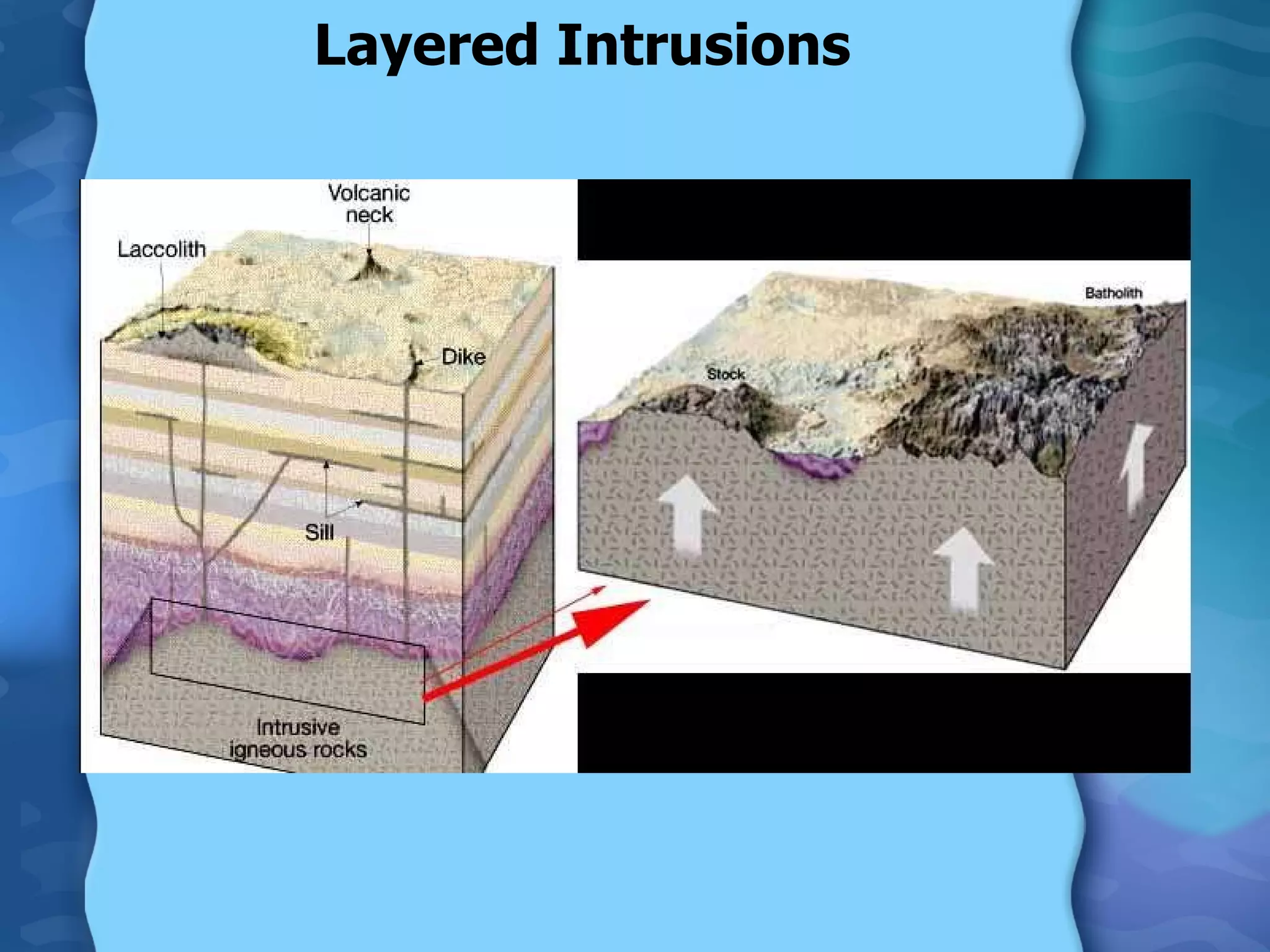
Layered Intrusions
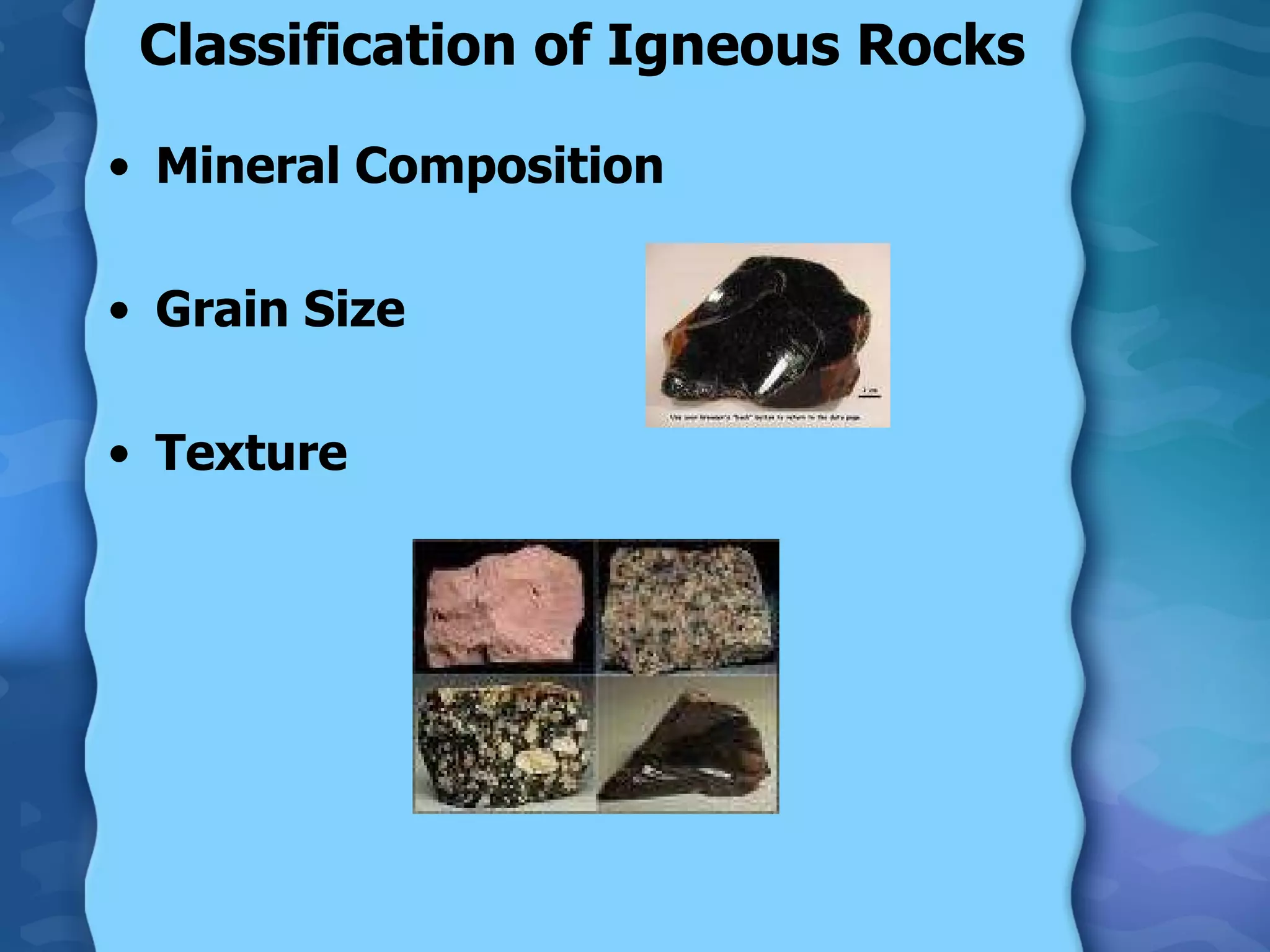
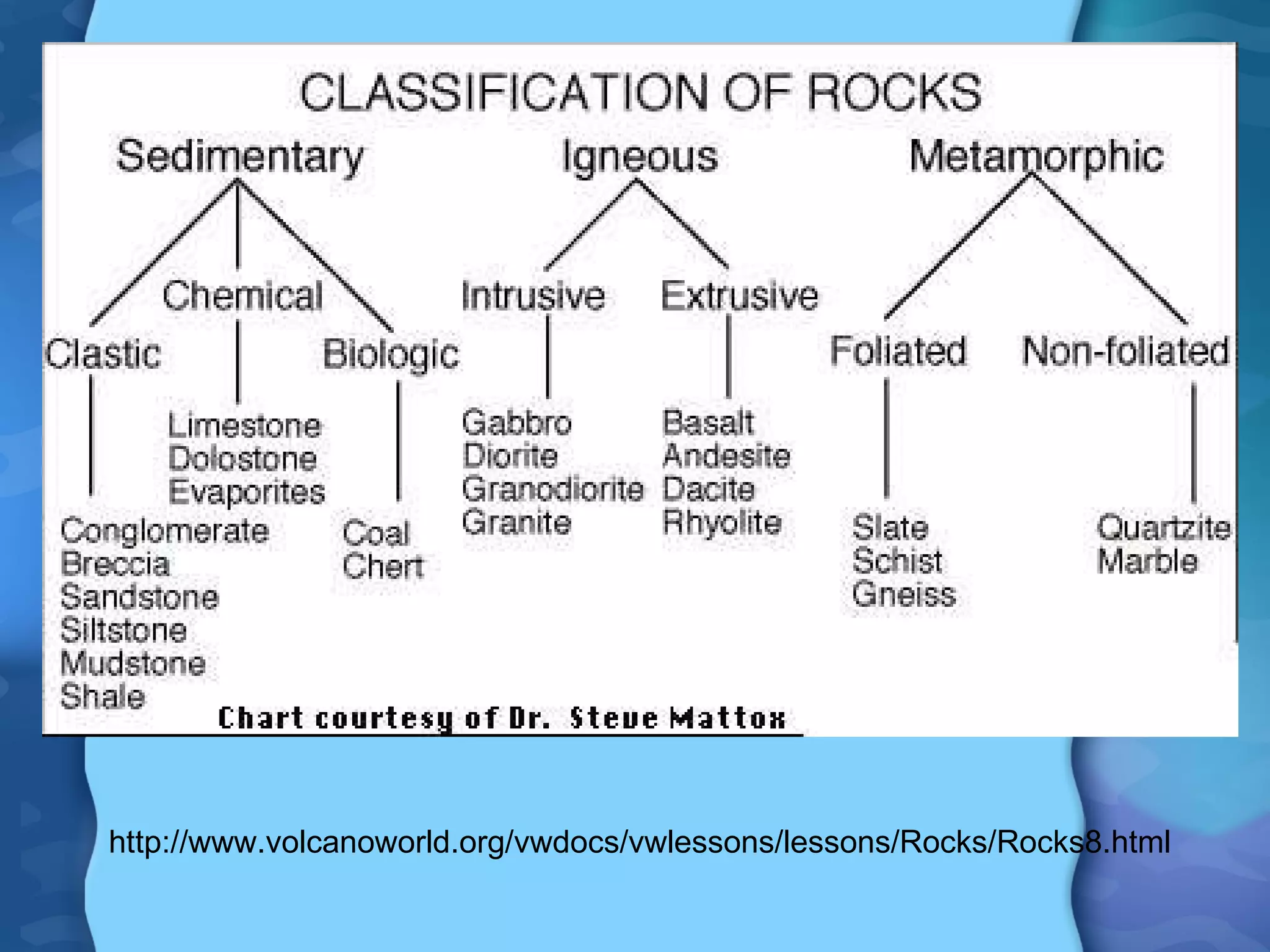
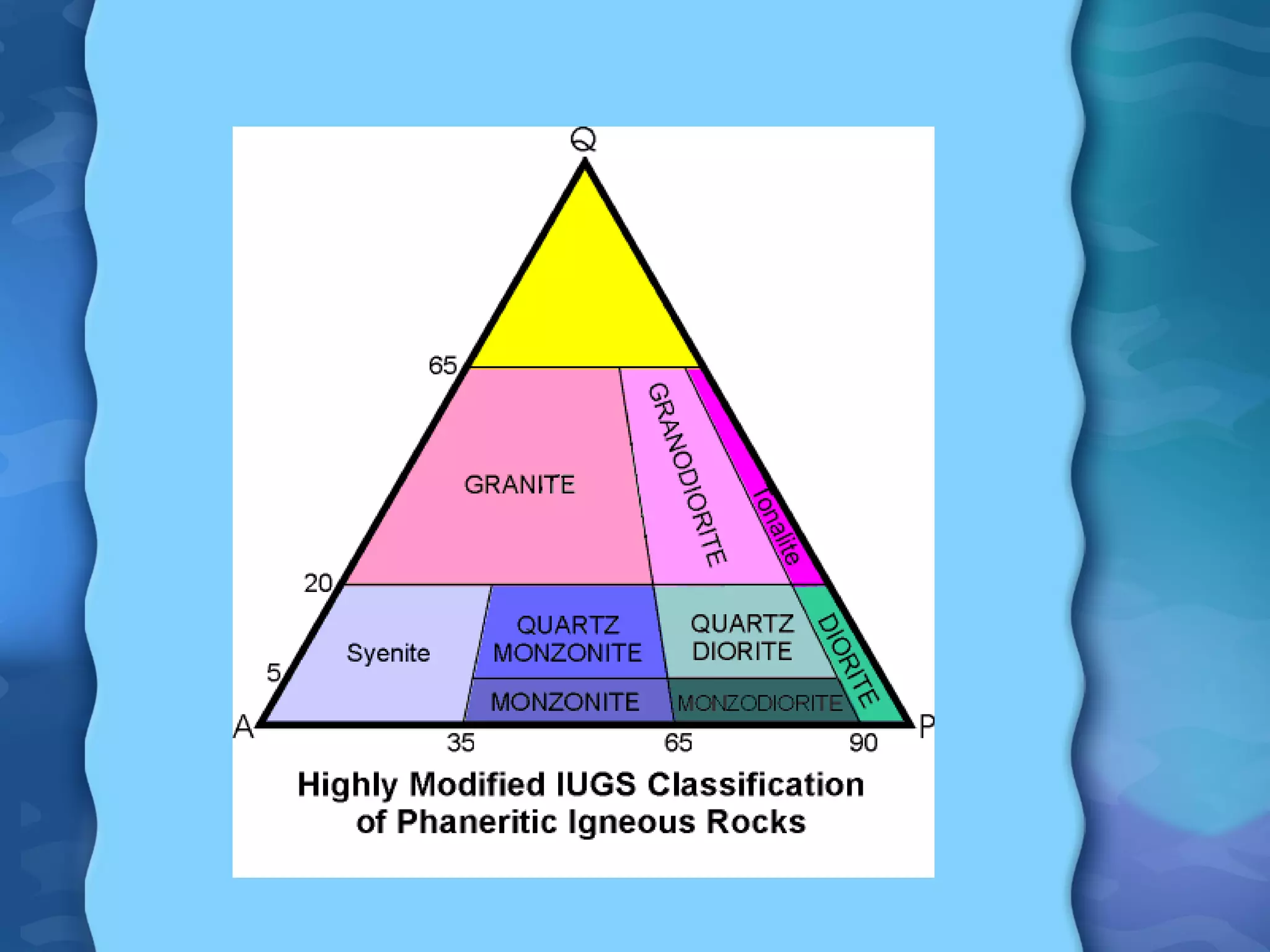
Classification of Igneous Rocks Mineral Composition Grain Size Texture
http://www.volcanoworld.org/vwdocs/vwlessons/lessons/Rocks/Rocks8.html
 
Discovery Lab Model Sediment Layering Lab  Page 121
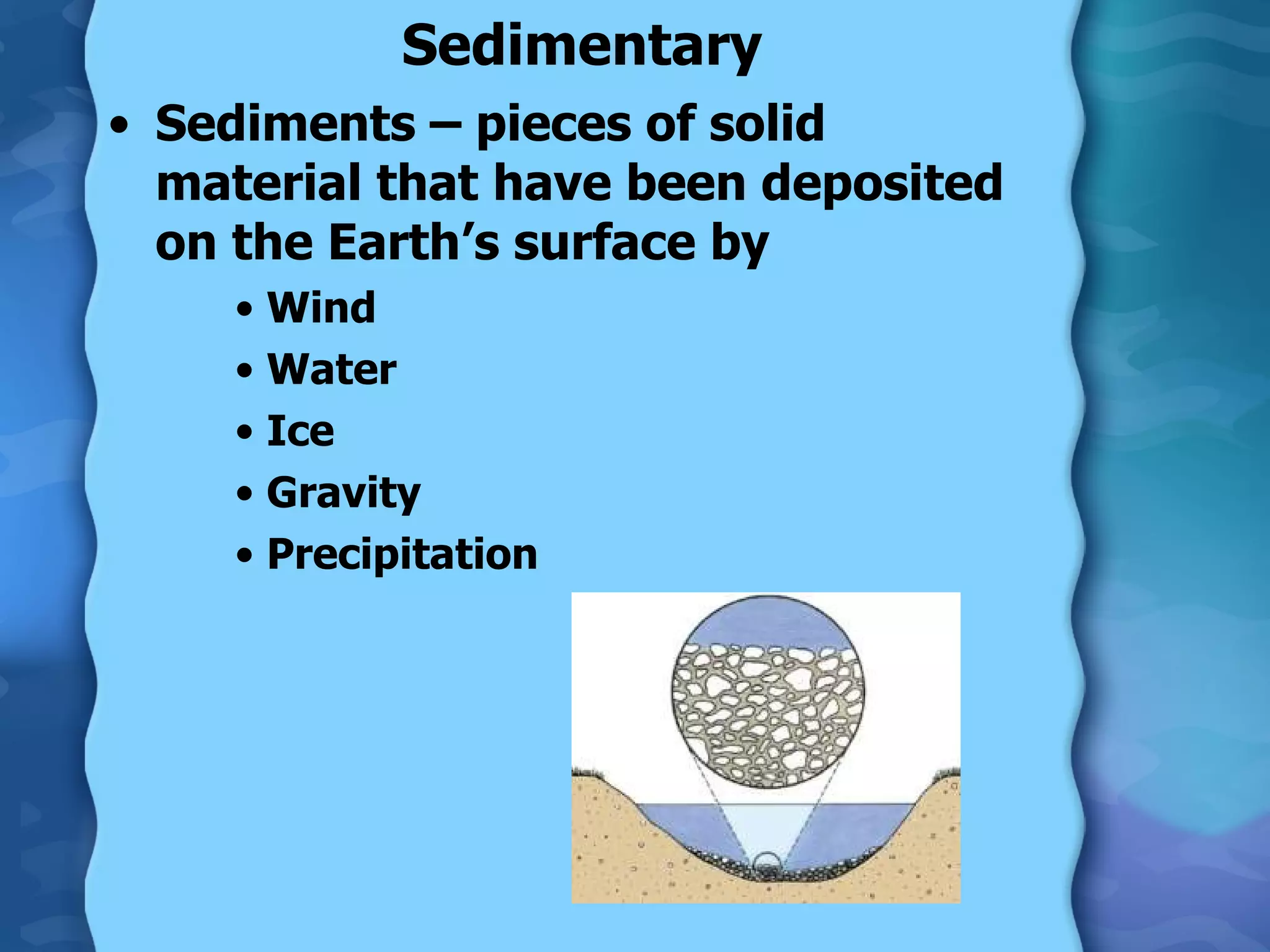
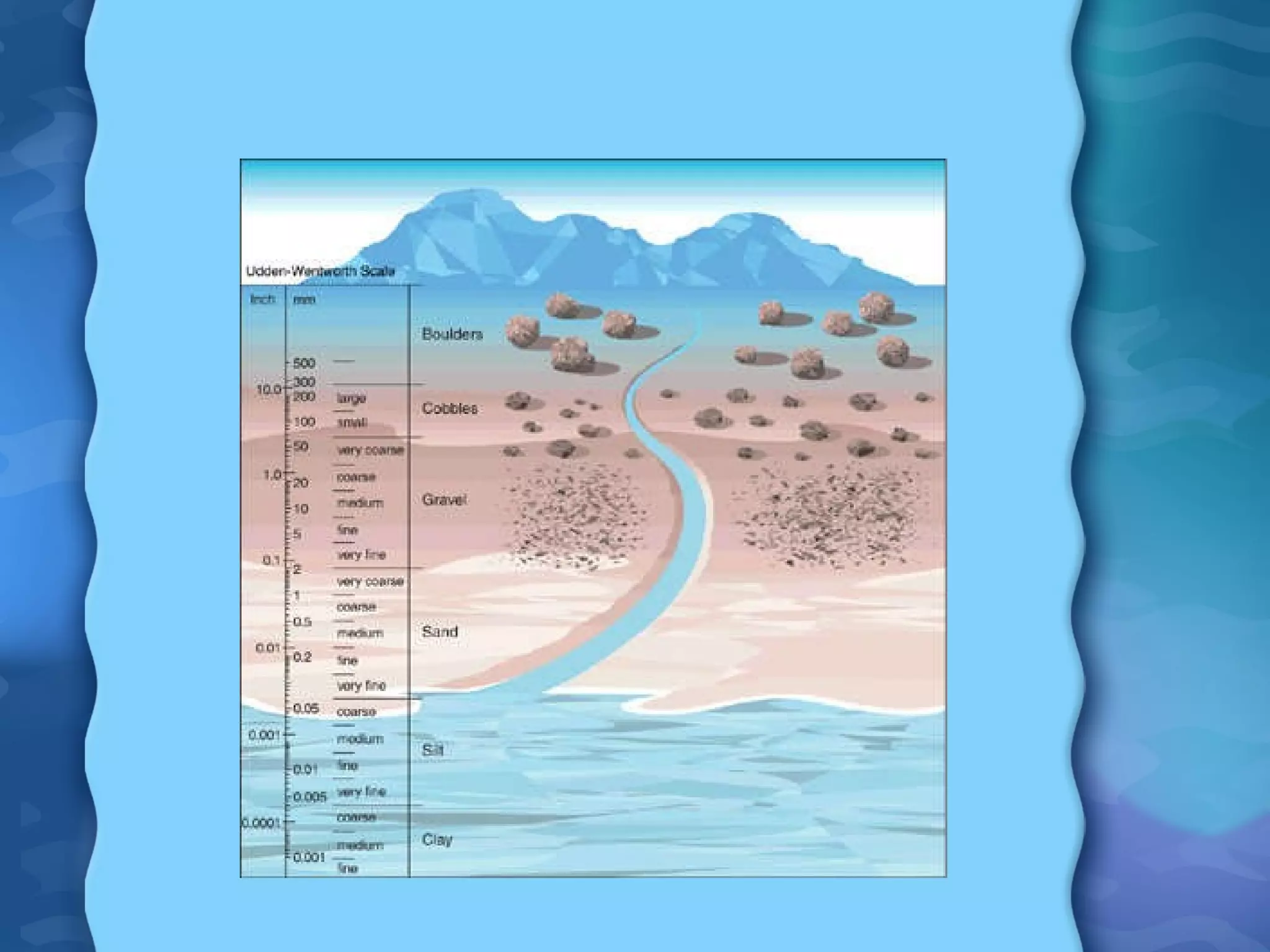
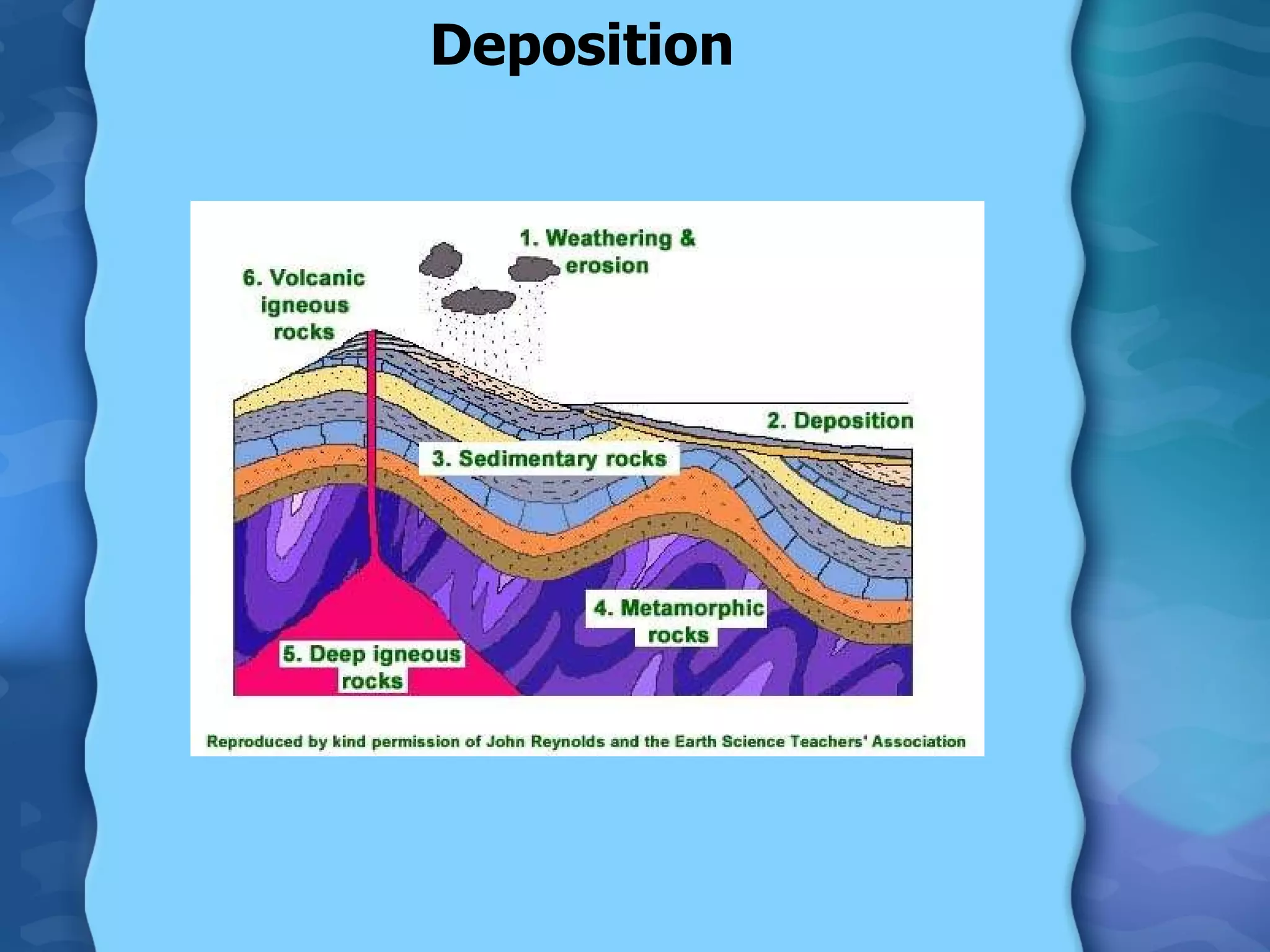
Sedimentary Sediments – pieces of solid material that have been deposited on the Earth’s surface by Wind Water Ice Gravity Precipitation
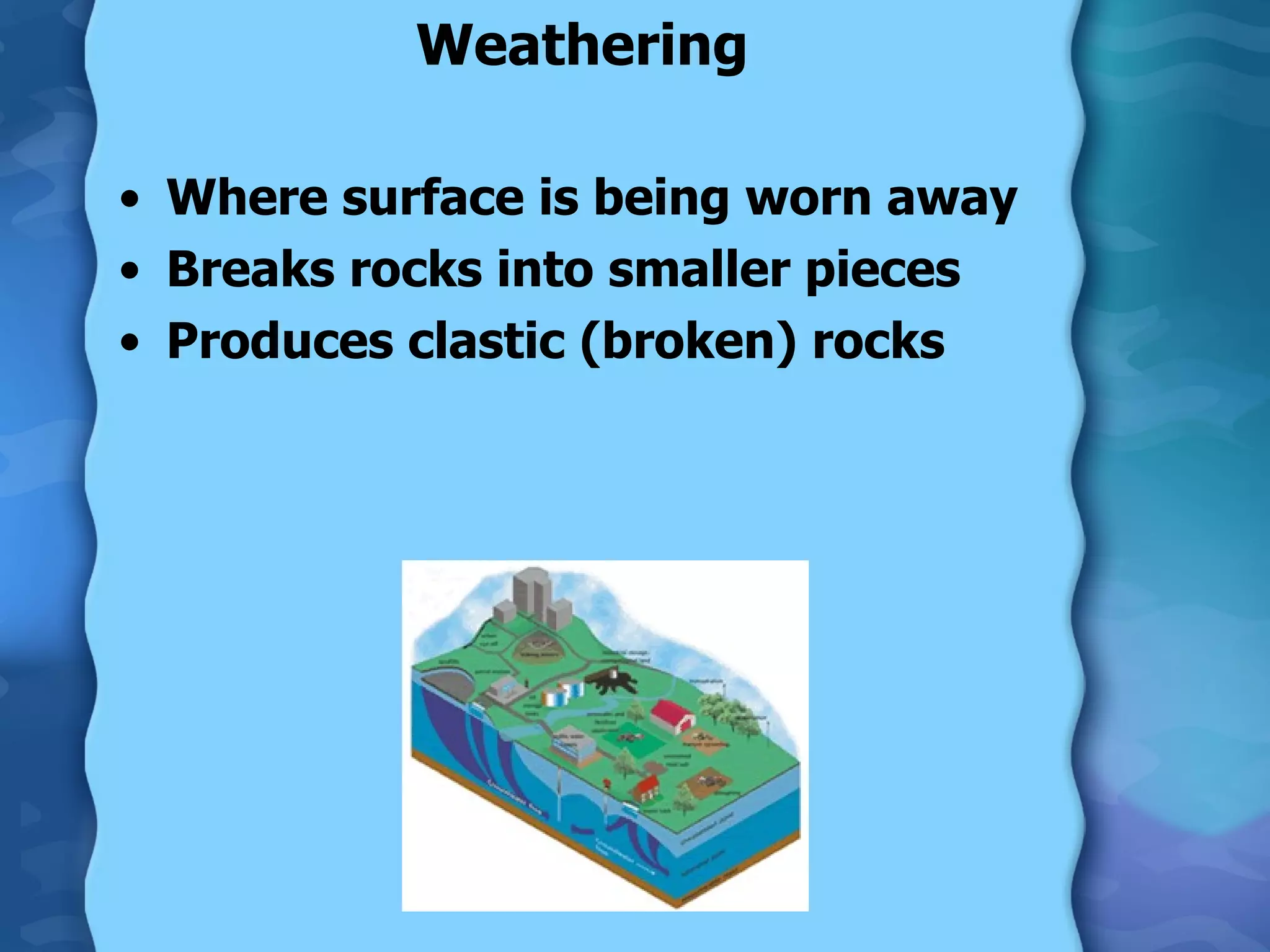
Weathering Where surface is being worn away Breaks rocks into smaller pieces Produces clastic (broken) rocks
 
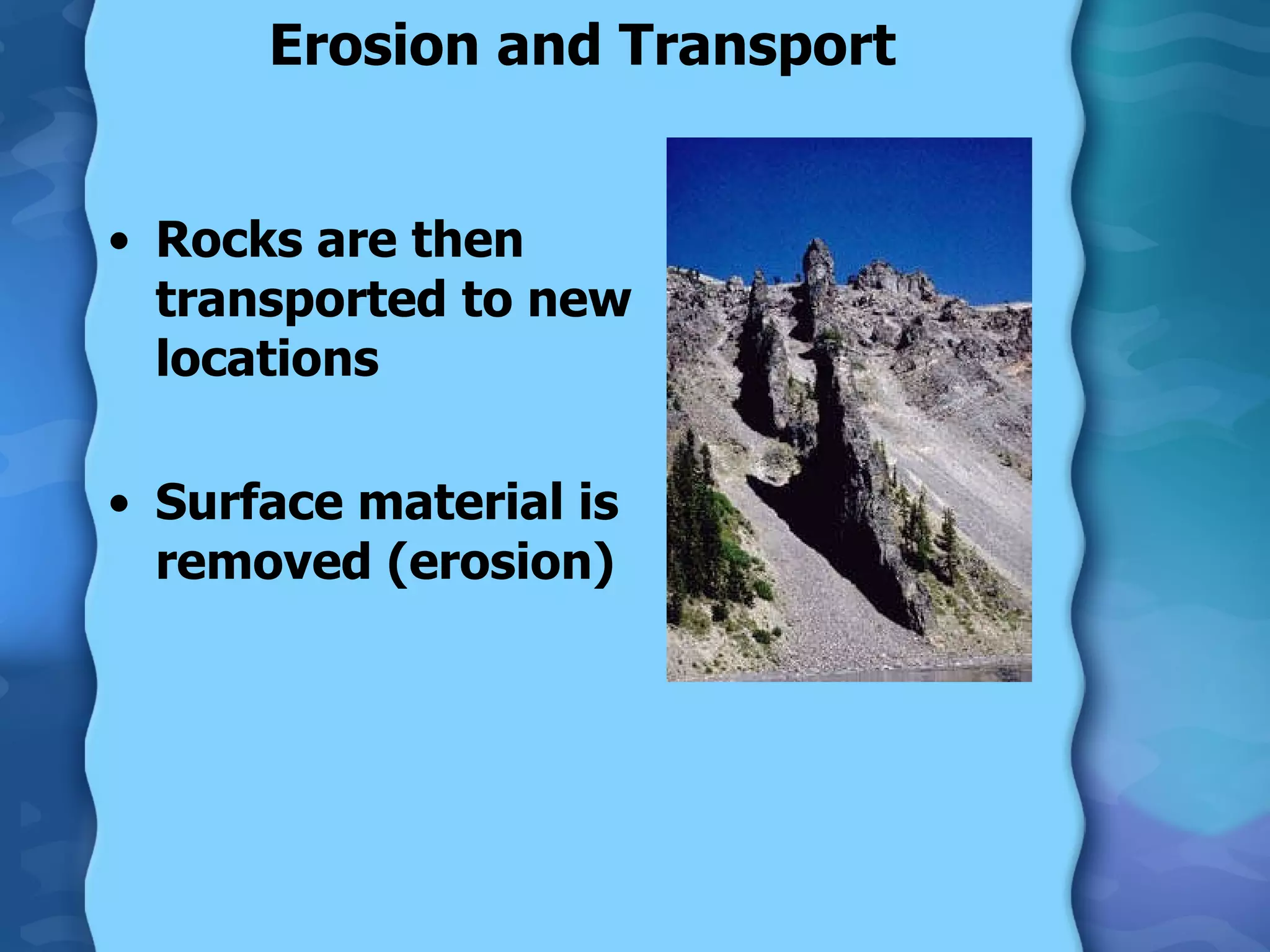
Erosion and Transport Rocks are then transported to new locations Surface material is removed (erosion)
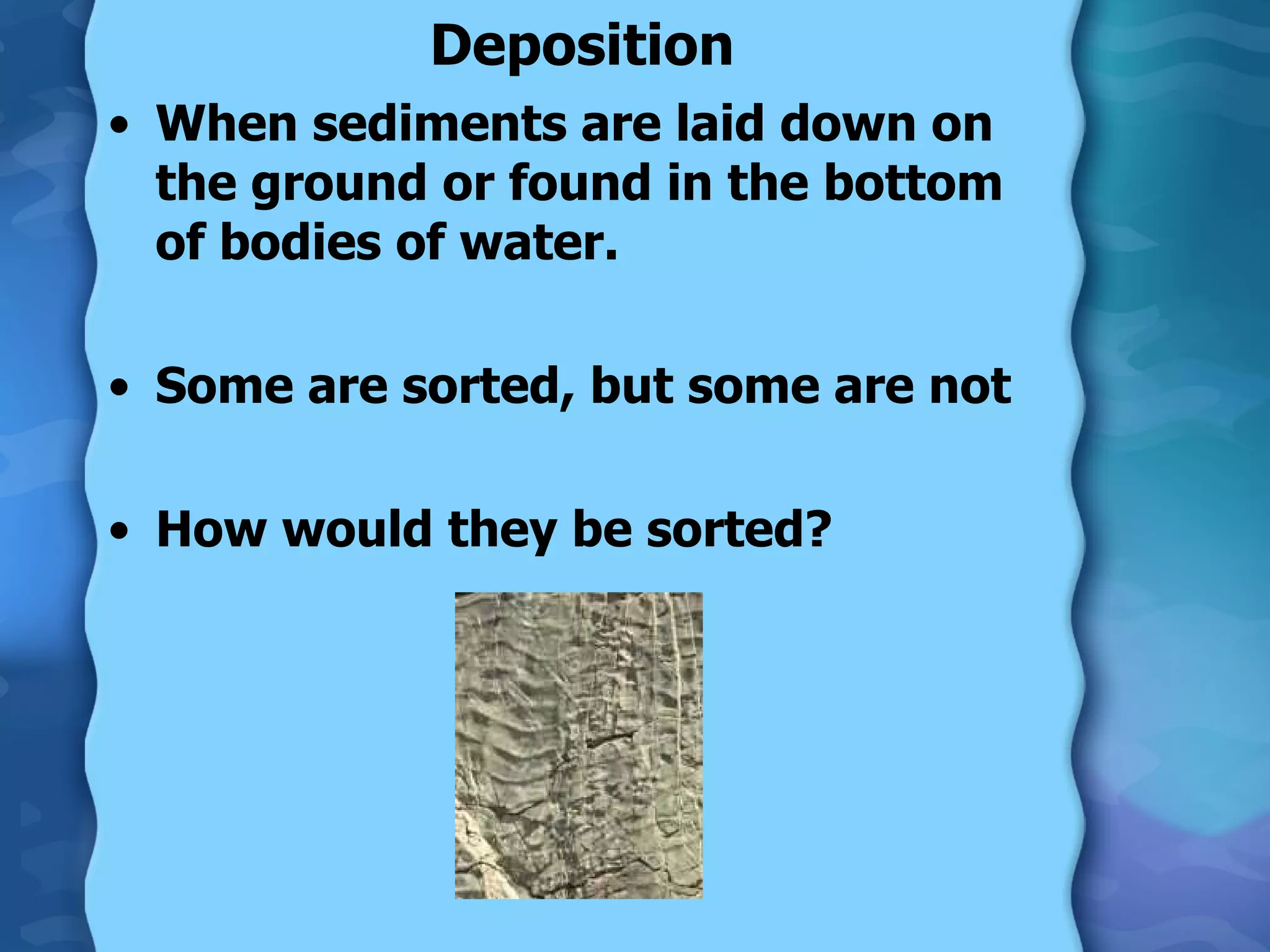
Deposition When sediments are laid down on the ground or found in the bottom of bodies of water. Some are sorted, but some are not How would they be sorted?
Deposition
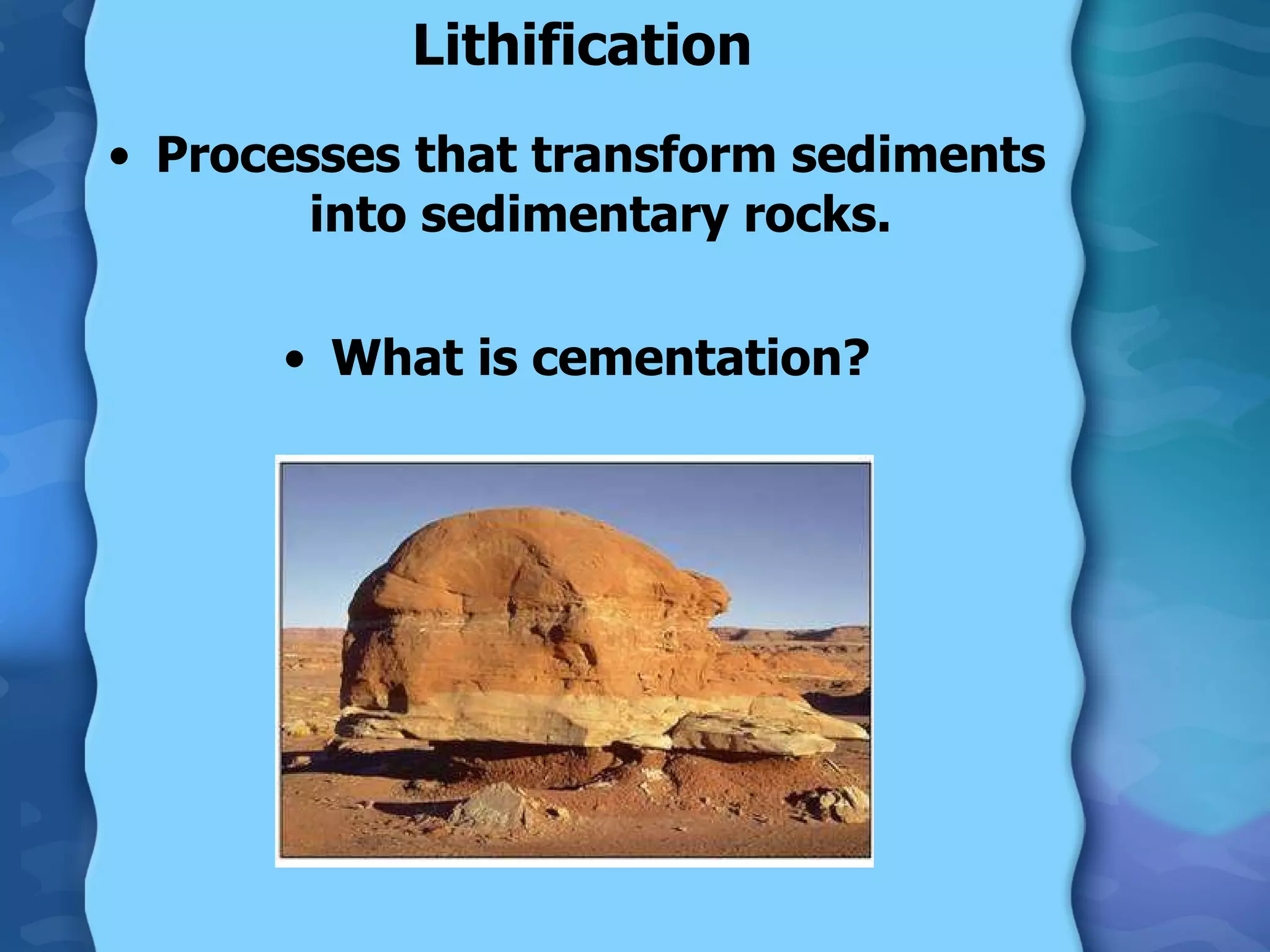
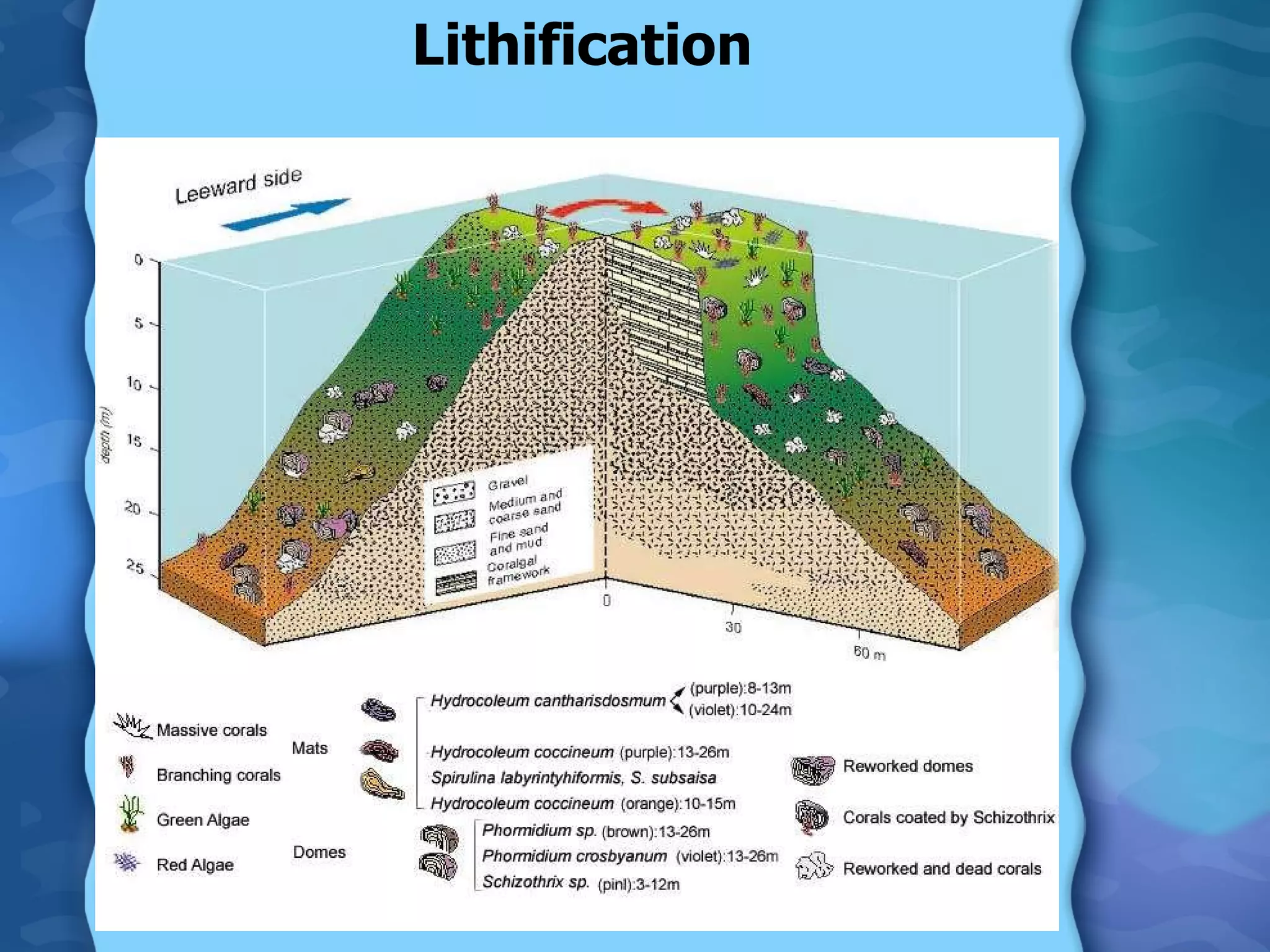
Lithification Processes that transform sediments into sedimentary rocks. What is cementation?
Lithification
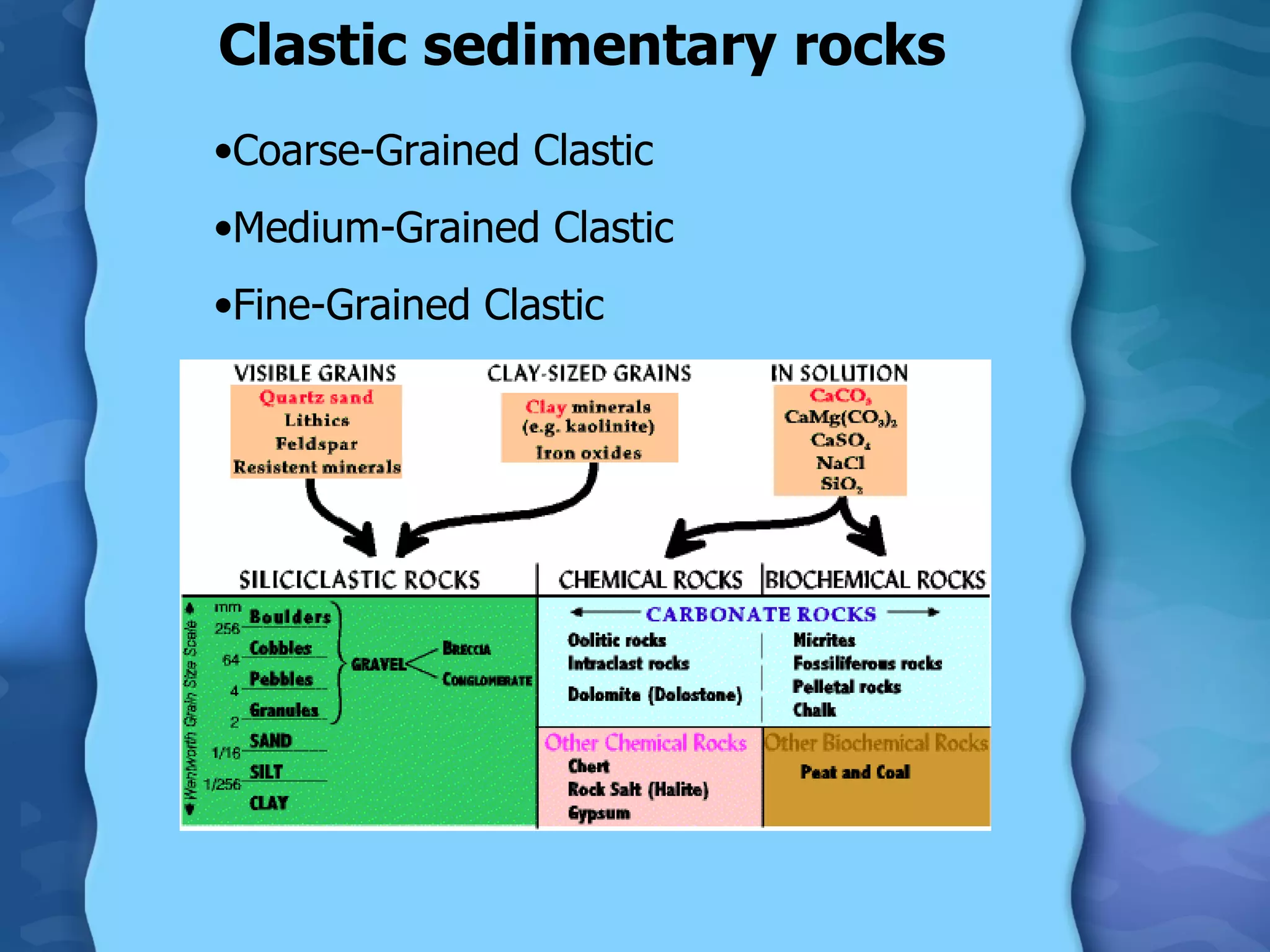
Clastic sedimentary rocks Coarse-Grained Clastic Medium-Grained Clastic Fine-Grained Clastic
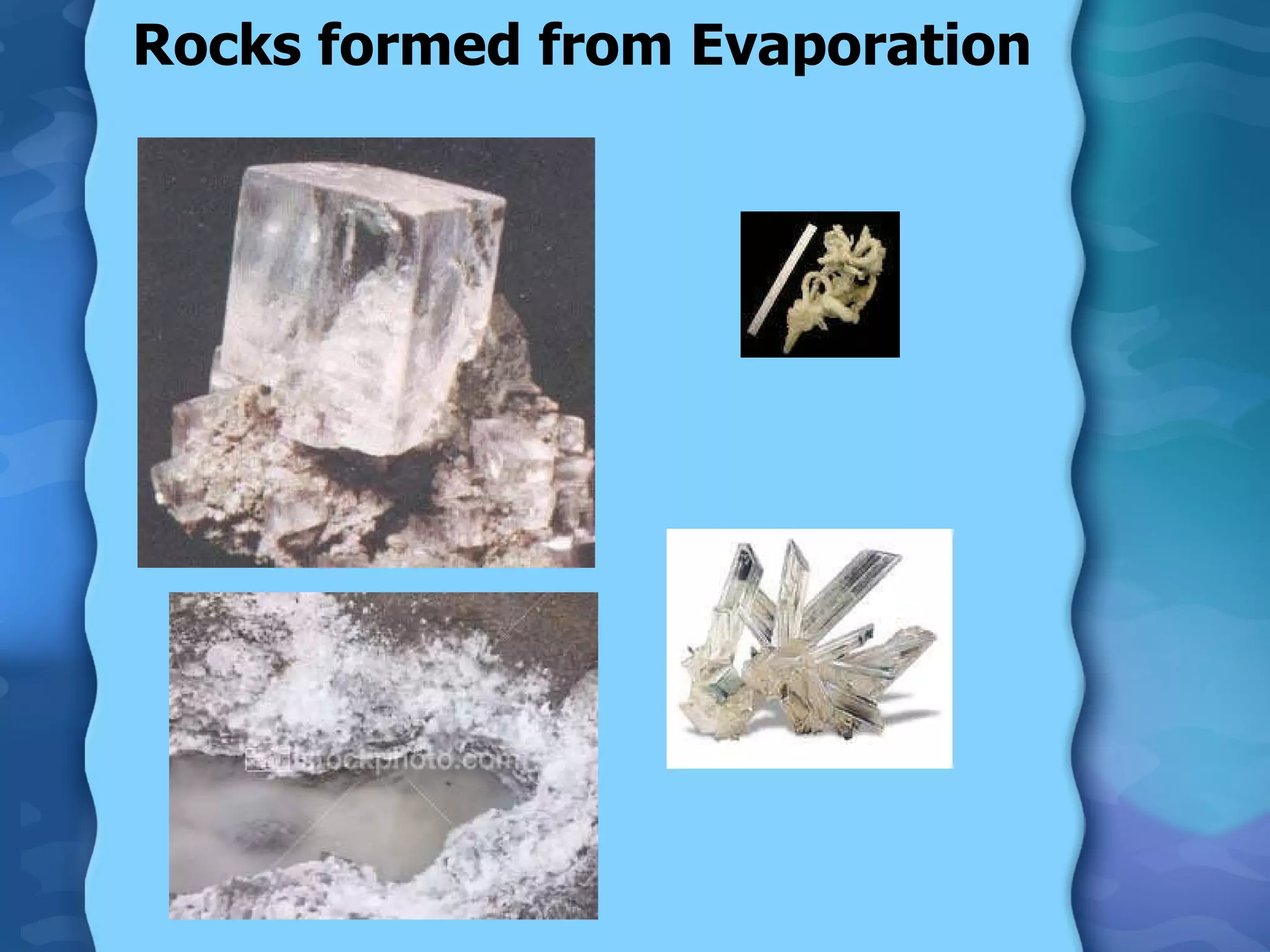
Rocks formed from Evaporation
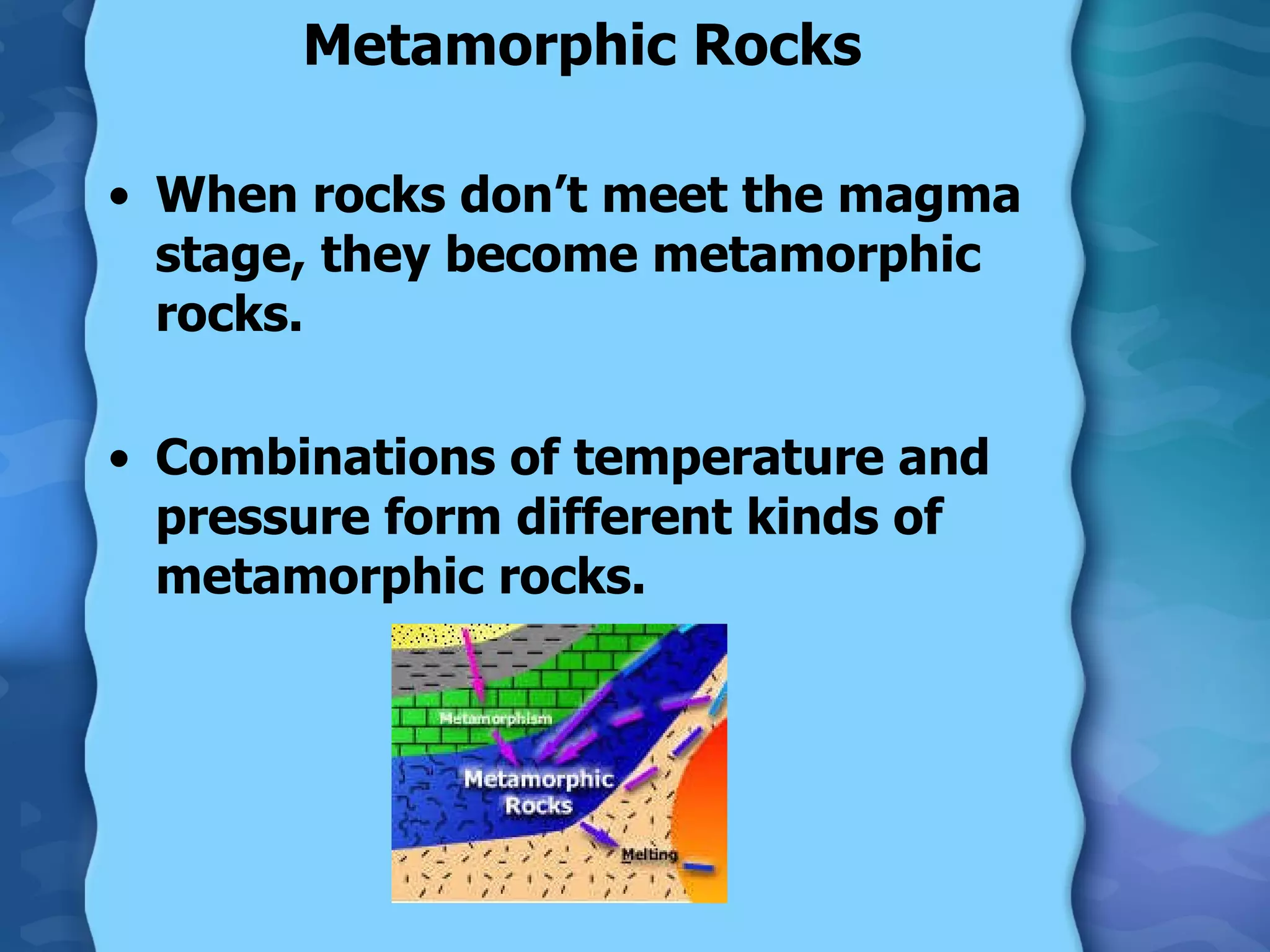
Metamorphic Rocks When rocks don’t meet the magma stage, they become metamorphic rocks. Combinations of temperature and pressure form different kinds of metamorphic rocks.
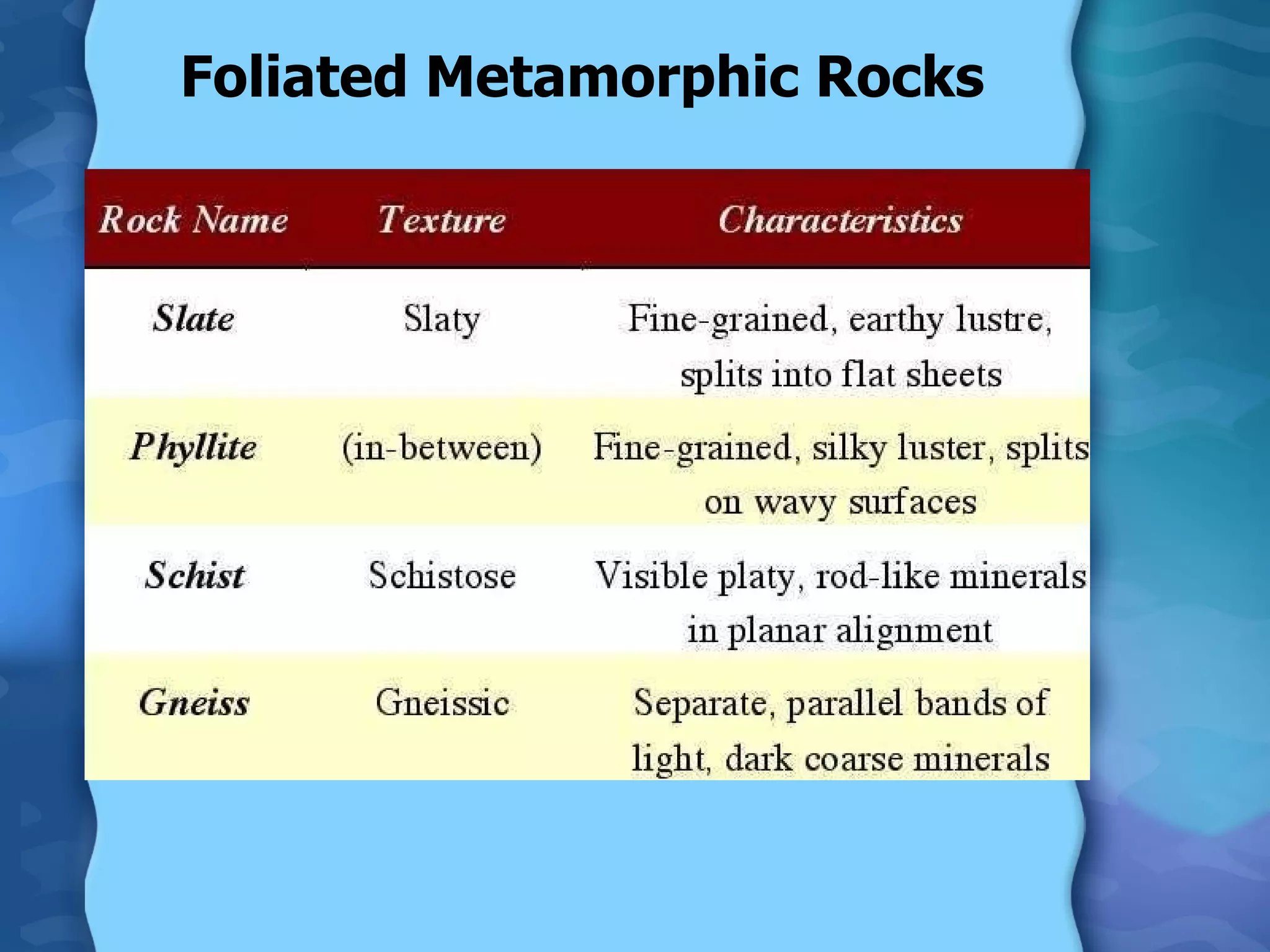
Foliated Metamorphic Rocks
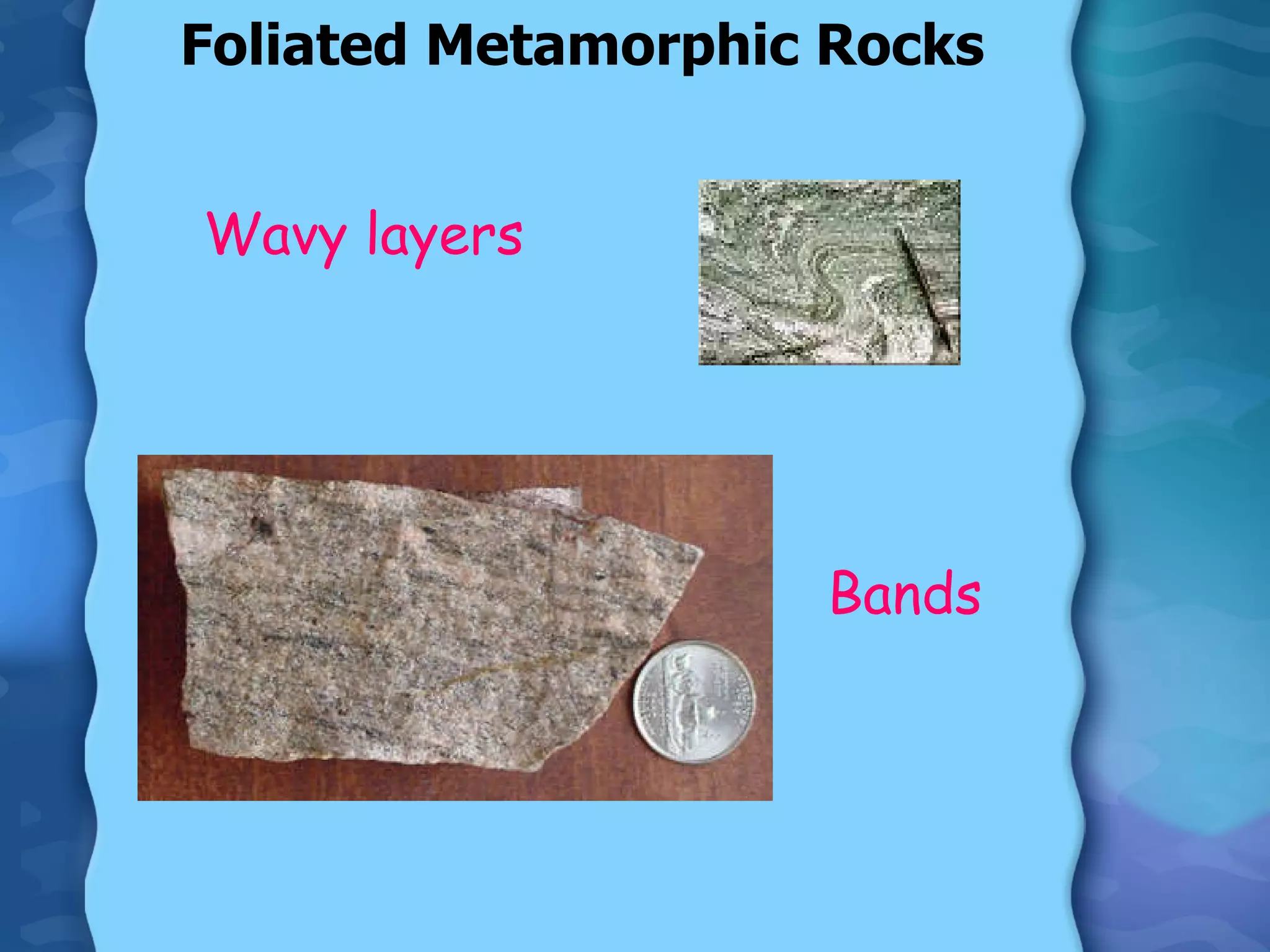
Foliated Metamorphic Rocks Wavy layers Bands
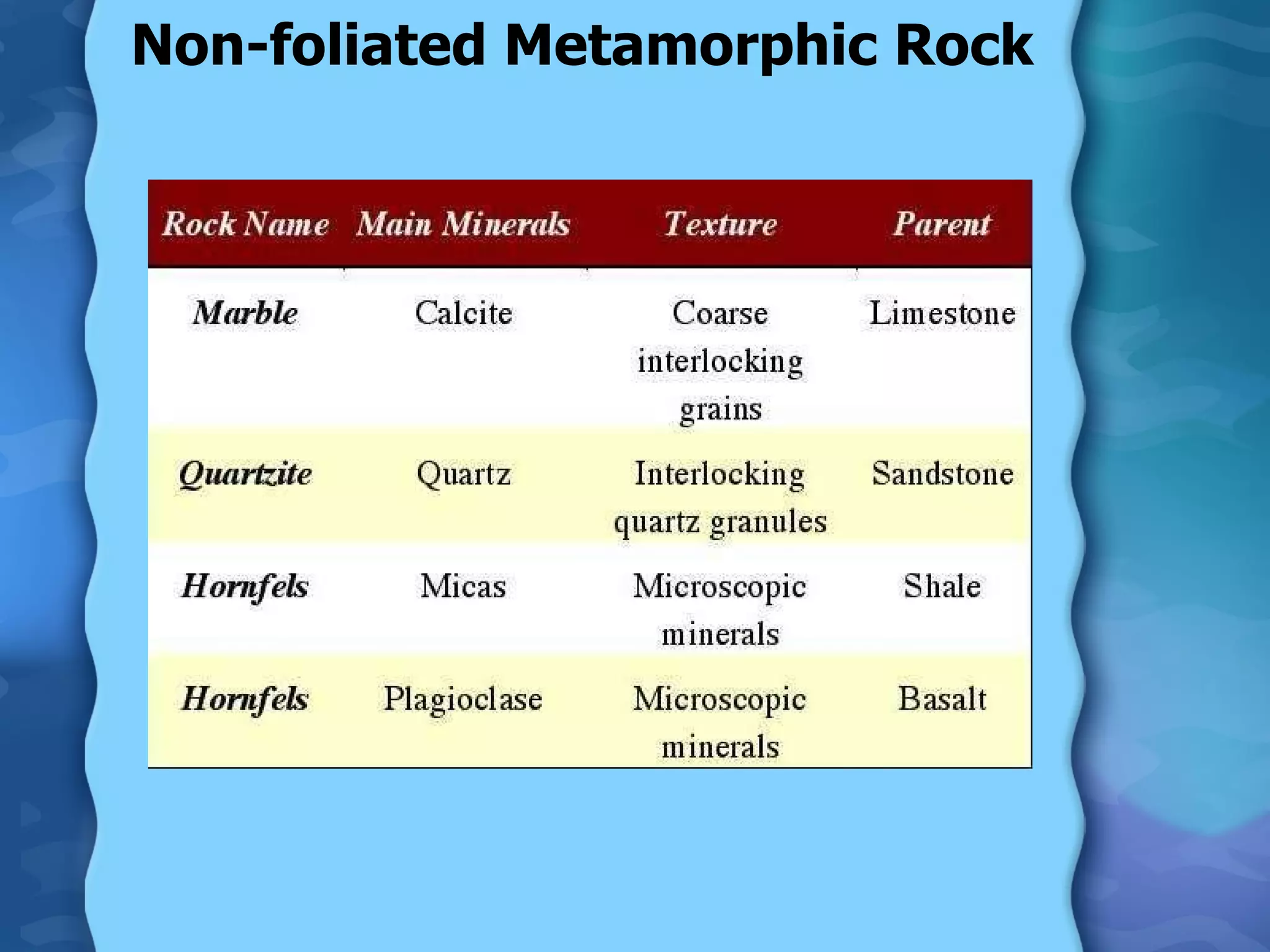
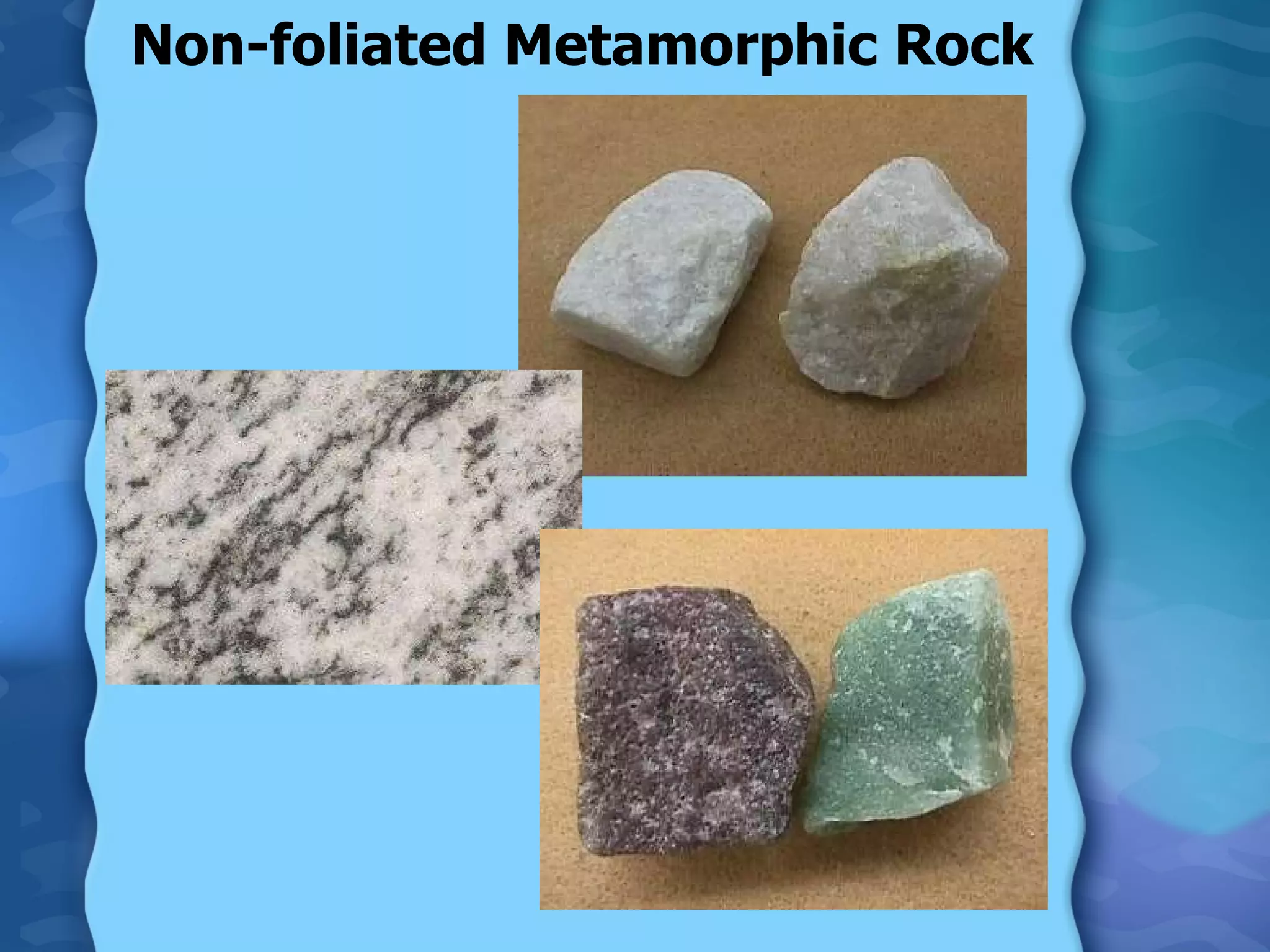
Non-foliated Metamorphic Rock
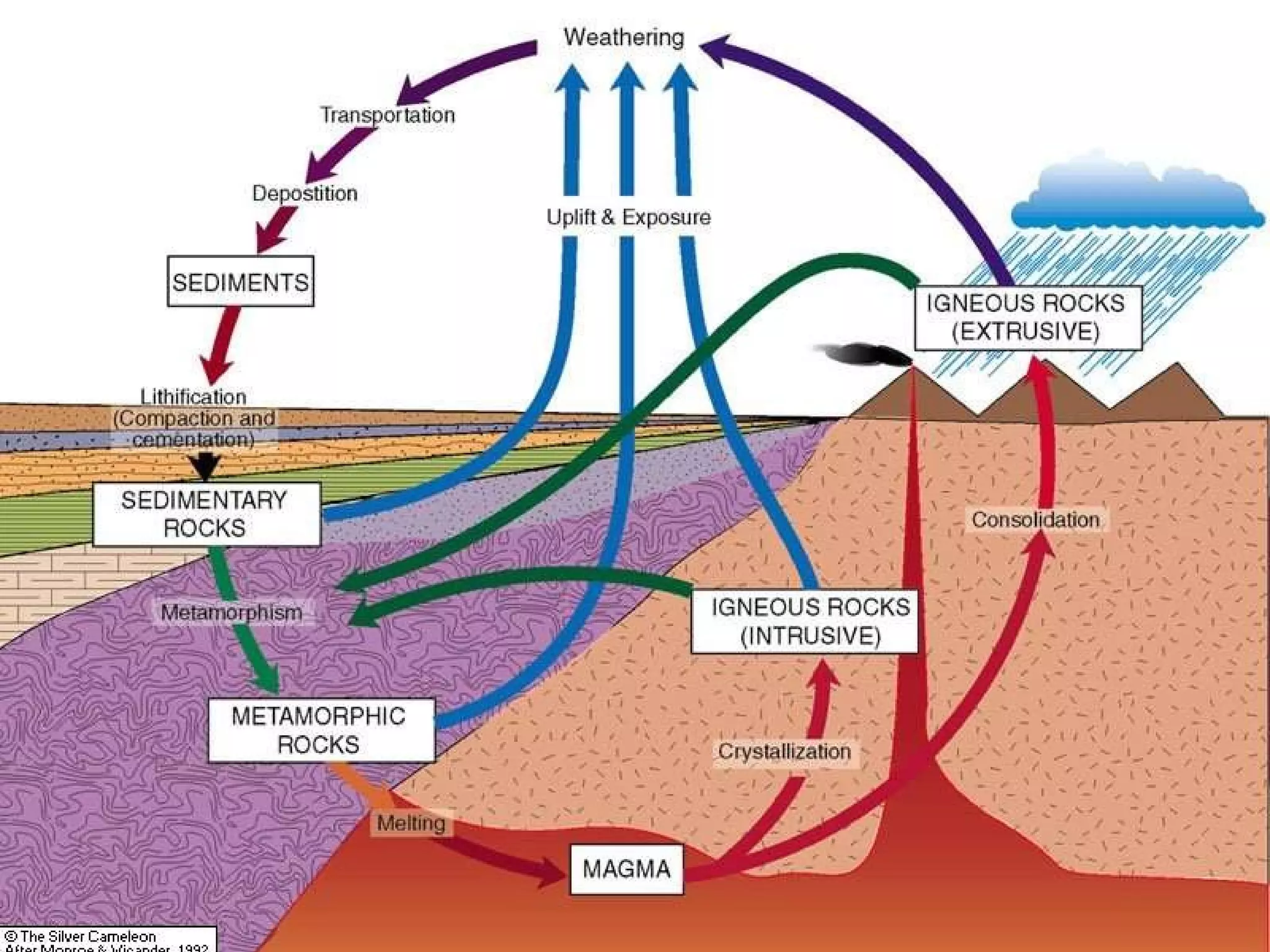
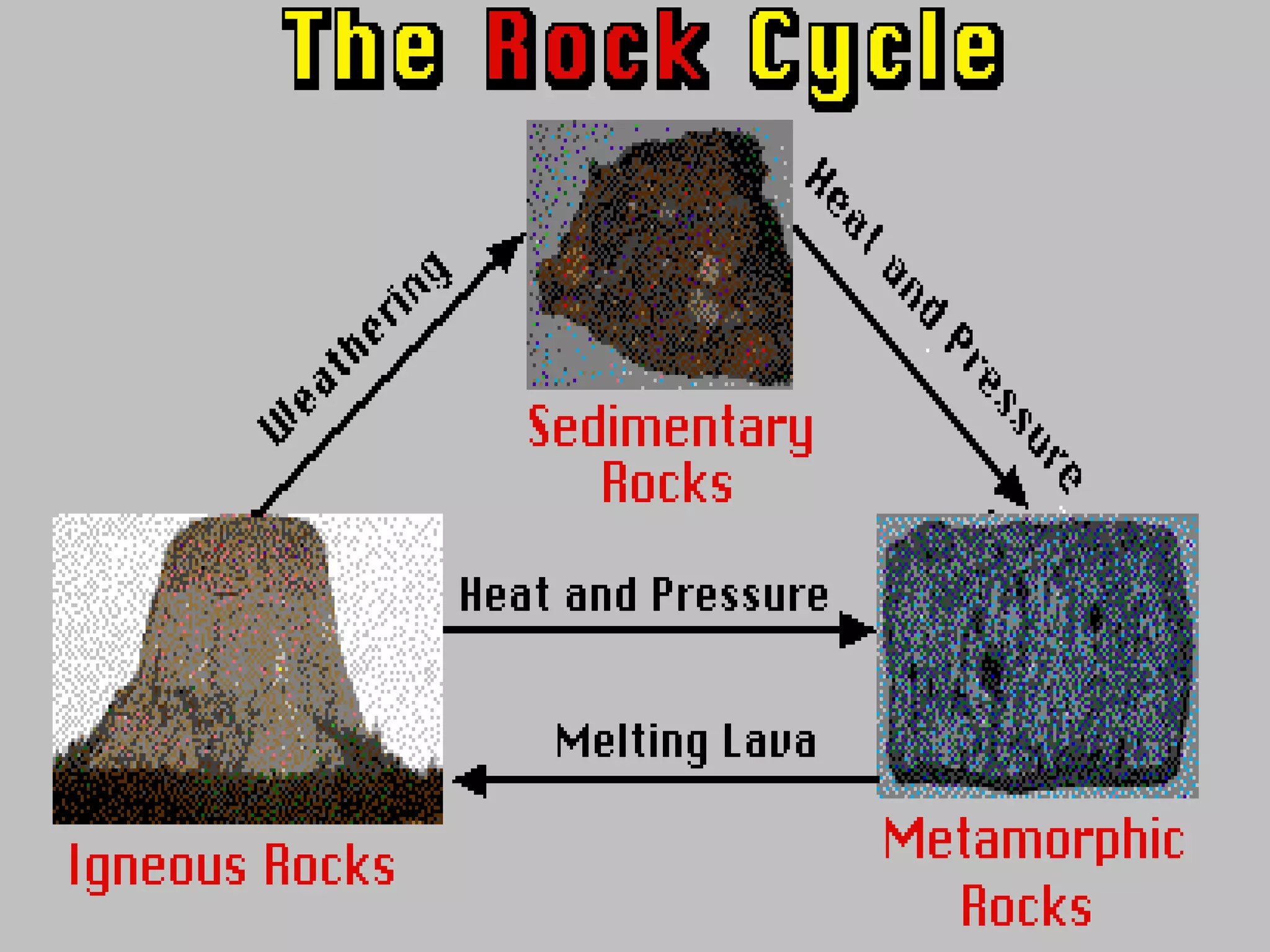
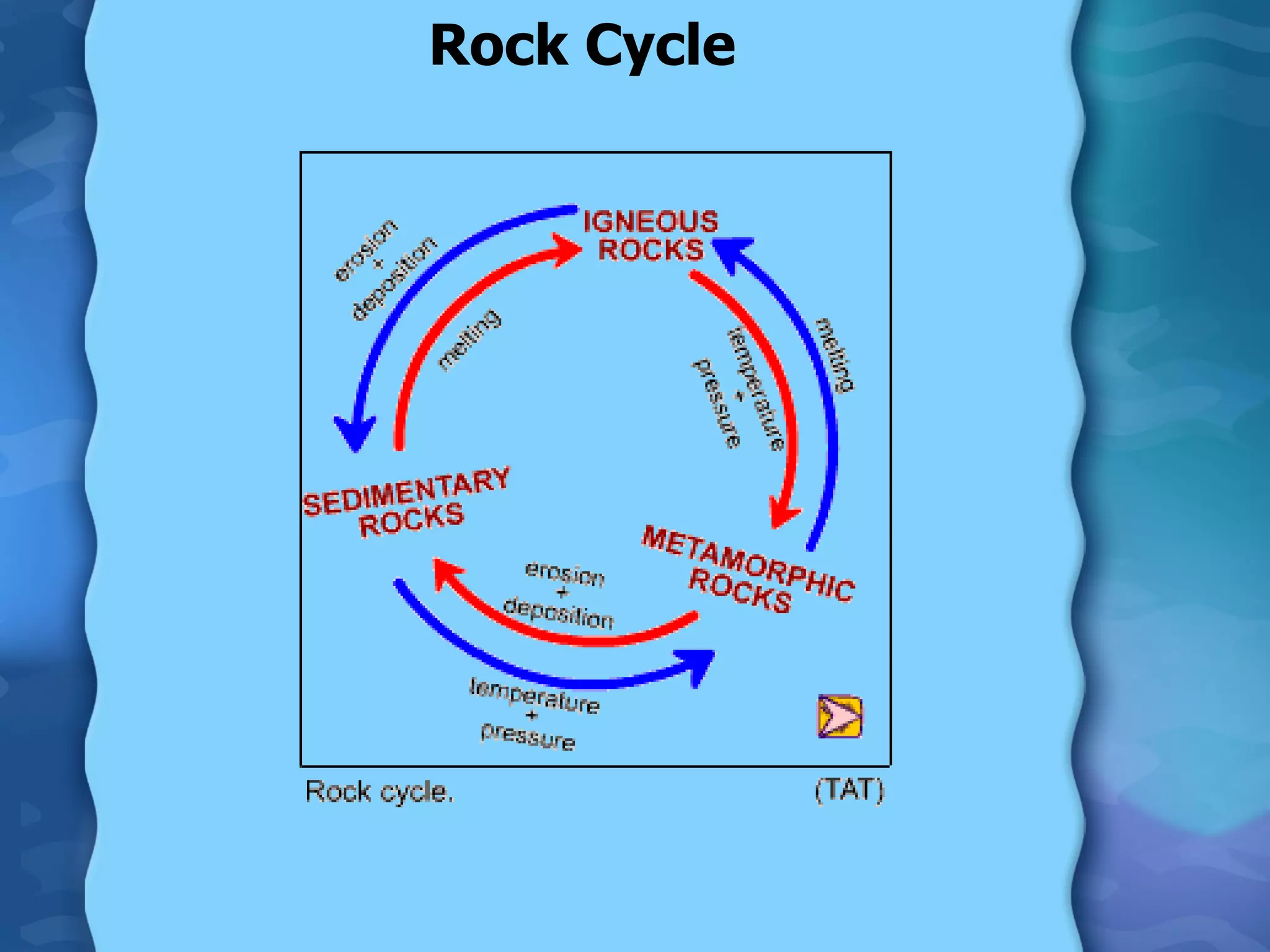
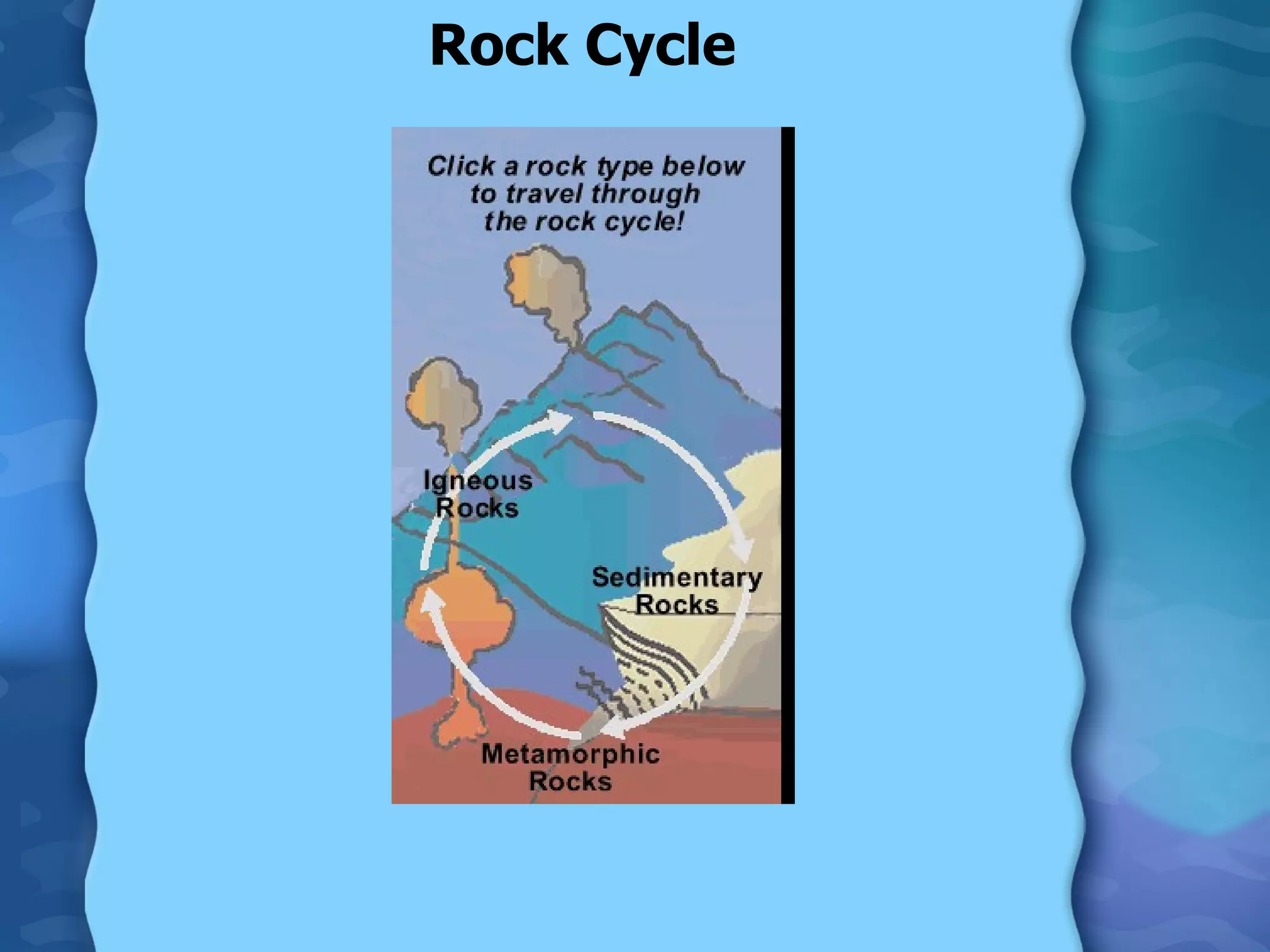
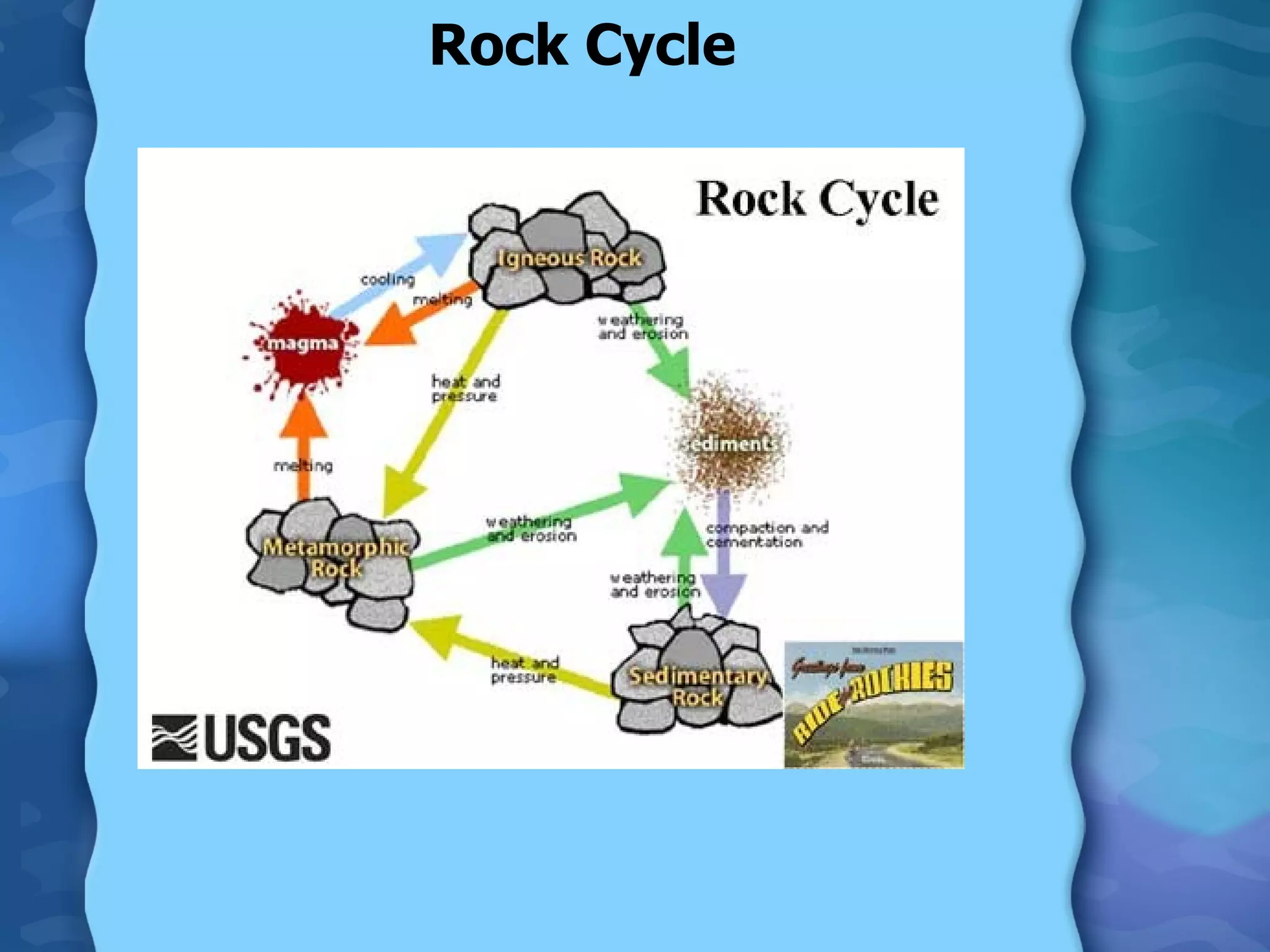
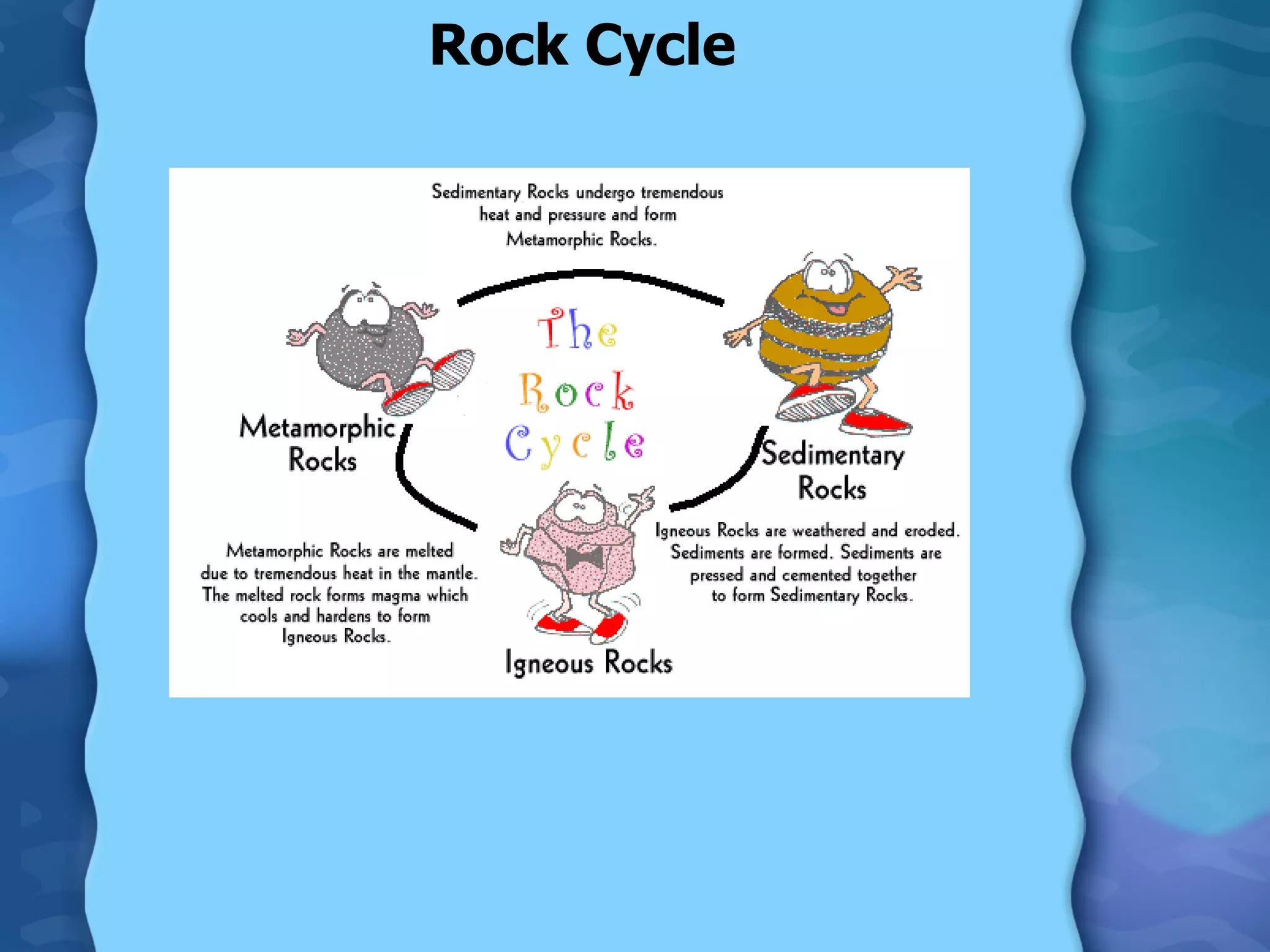
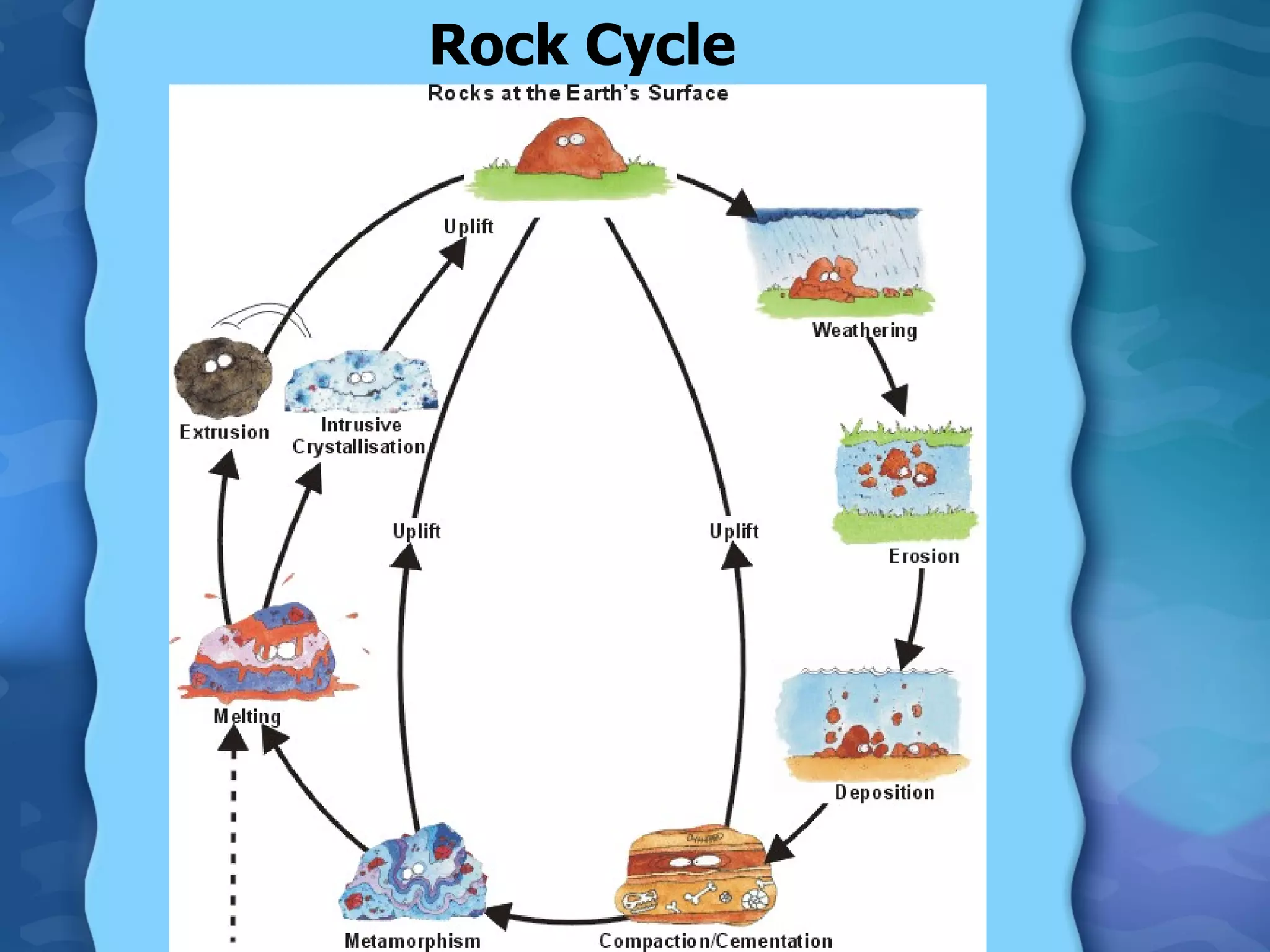
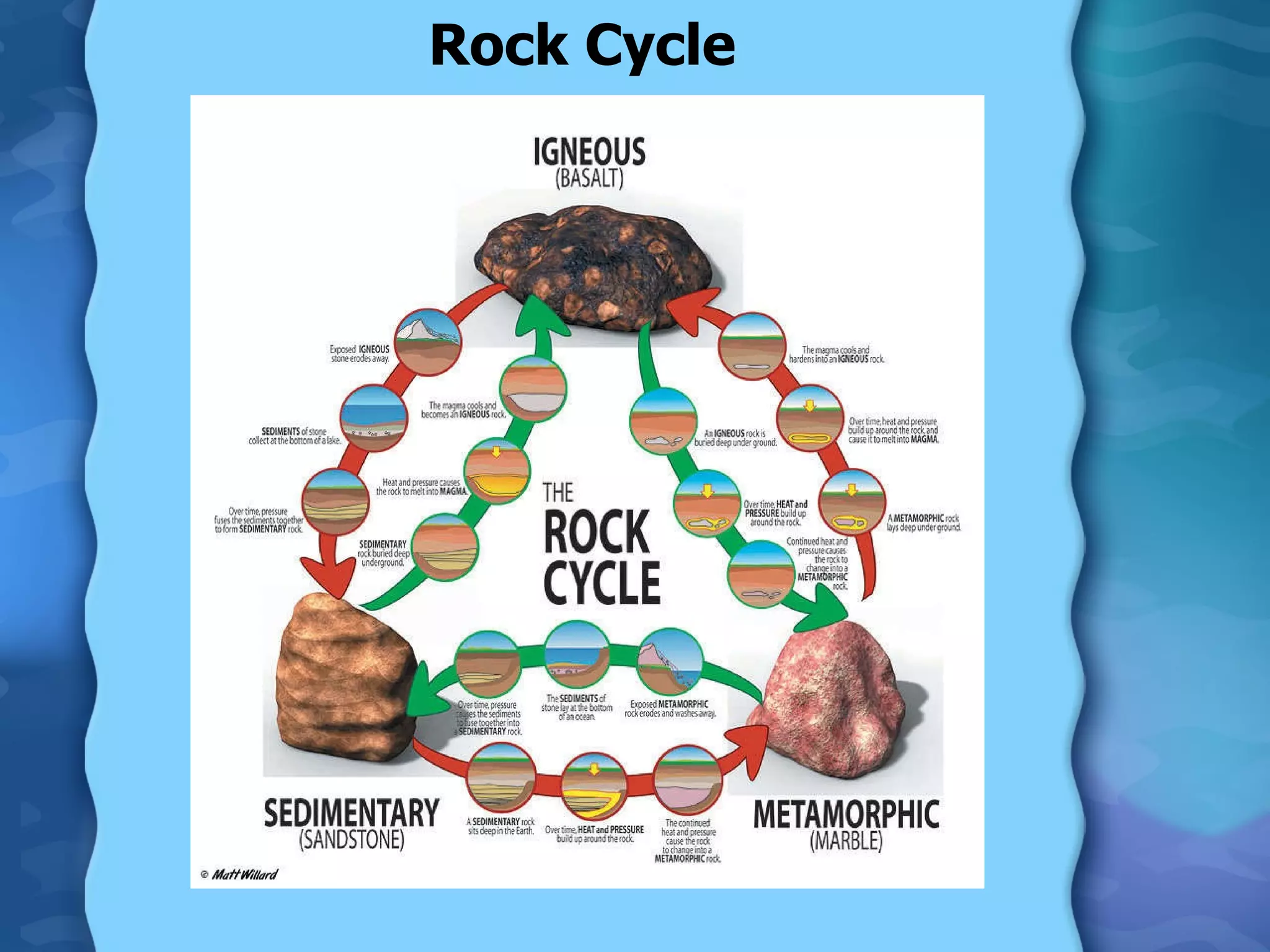
Rock Cycle
Rock Cycle
Rock Cycle
Rock Cycle
Rock Cycle
Rock Cycle

Igneous, Sedimentary, and Metamorphic Rocks