1RAFFAELE JELANI B. GENEROSA 7-ASTRO https://www.nationalgeographic.org/encyclopedia/rock-cycle/
ROCK CYCLE
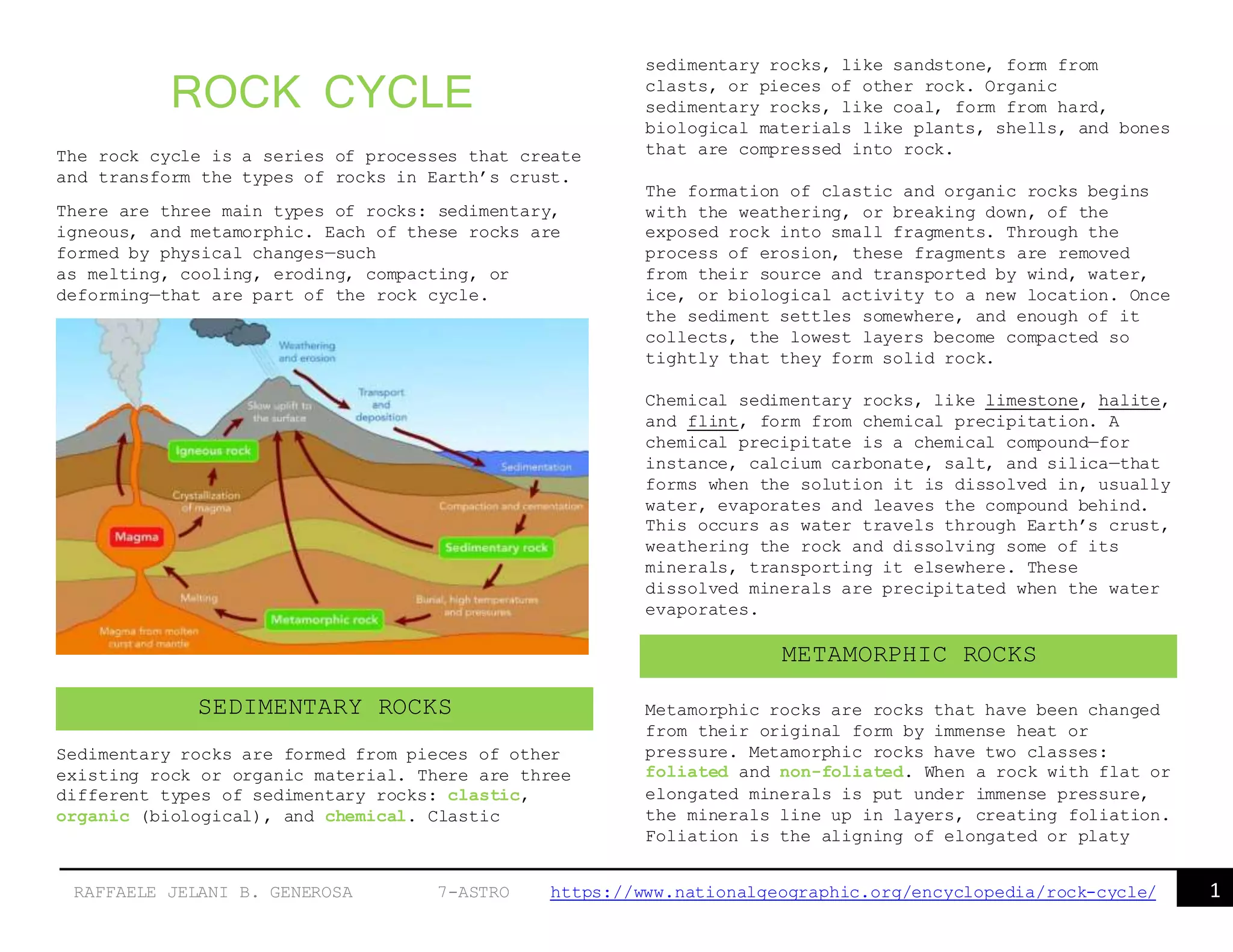
The rock cycle is a series of processes that create
and transform the types of rocks in Earth’s crust.
There are three main types of rocks: sedimentary,
igneous, and metamorphic. Each of these rocks are
formed by physical changes—such
as melting, cooling, eroding, compacting, or
deforming—that are part of the rock cycle.
Sedimentary rocks are formed from pieces of other
existing rock or organic material. There are three
different types of sedimentary rocks: clastic,
organic (biological), and chemical. Clastic
sedimentary rocks, like sandstone, form from
clasts, or pieces of other rock. Organic
sedimentary rocks, like coal, form from hard,
biological materials like plants, shells, and bones
that are compressed into rock.
The formation of clastic and organic rocks begins
with the weathering, or breaking down, of the
exposed rock into small fragments. Through the
process of erosion, these fragments are removed
from their source and transported by wind, water,
ice, or biological activity to a new location. Once
the sediment settles somewhere, and enough of it
collects, the lowest layers become compacted so
tightly that they form solid rock.
Chemical sedimentary rocks, like limestone, halite,
and flint, form from chemical precipitation. A
chemical precipitate is a chemical compound—for
instance, calcium carbonate, salt, and silica—that
forms when the solution it is dissolved in, usually
water, evaporates and leaves the compound behind.
This occurs as water travels through Earth’s crust,
weathering the rock and dissolving some of its
minerals, transporting it elsewhere. These
dissolved minerals are precipitated when the water
evaporates.
Metamorphic rocks are rocks that have been changed
from their original form by immense heat or
pressure. Metamorphic rocks have two classes:
foliated and non-foliated. When a rock with flat or
elongated minerals is put under immense pressure,
the minerals line up in layers, creating foliation.
Foliation is the aligning of elongated or platy
SEDIMENTARY ROCKS
METAMORPHIC ROCKS
2RAFFAELE JELANI B. GENEROSA 7-ASTRO https://www.nationalgeographic.org/encyclopedia/rock-cycle/
minerals, like hornblende or mica, perpendicular to
the direction of pressure that is applied. An
example of this transformation can be seen with
granite, an igneous rock. Granite contains long and
platy minerals that are not initially aligned, but
when enough pressure is added, those minerals shift
to all point in the same direction while getting
squeezed into flat sheets. When granite undergoes
this process, like at a tectonic plate boundary, it
turns into gneiss (pronounced “nice”).
Non-foliated rocks are formed the same way, but
they do not contain the minerals that tend to line
up under pressure and thus do not have the layered
appearance of foliated rocks. Sedimentary rocks
like bituminous coal, limestone, and sandstone,
given enough heat and pressure, can turn into non-
foliated metamorphic rocks like anthracite coal,
marble, and quartzite. Non-foliated rocks can also
form by metamorphism, which happens when magma
comes in contact with the surrounding rock.
Igneous rocks (derived from the Greek word for
fire) are formed when molten hot material cools and
solidifies. Igneous rocks can also be made a couple
of different ways. When they are formed inside of
the earth, they are called intrusive, or plutonic,
igneous rocks. If they are formed outside or on top
of Earth’s crust, they are called extrusive, or
volcanic, igneous rocks.
Granite and diorite are examples of common
intrusive rocks. They have a coarse texture with
large mineral grains, indicating that they spent
thousands or millions of years cooling down inside
the earth, a time course that allowed large mineral
crystals to grow.
Alternatively, rocks like basalt and obsidian have
very small grains and a relatively fine texture.
This happens because when magma erupts into lava,
it cools more quickly than it would if it stayed
inside the earth, giving crystals less time to
form. Obsidian cools into volcanic glass so quickly
when ejected that the grains are impossible to see
with the naked eye.
Extrusive igneous rocks can also have a vesicular,
or “holey” texture. This happens when the ejected
magma still has gases inside of it so when it
cools, the gas bubbles are trapped and end up
giving the rock a bubbly texture. An example of
this would be pumice.
IGNEOUS ROCKS

Rock cycle

  • 1.
    1RAFFAELE JELANI B.GENEROSA 7-ASTRO https://www.nationalgeographic.org/encyclopedia/rock-cycle/ ROCK CYCLE The rock cycle is a series of processes that create and transform the types of rocks in Earth’s crust. There are three main types of rocks: sedimentary, igneous, and metamorphic. Each of these rocks are formed by physical changes—such as melting, cooling, eroding, compacting, or deforming—that are part of the rock cycle. Sedimentary rocks are formed from pieces of other existing rock or organic material. There are three different types of sedimentary rocks: clastic, organic (biological), and chemical. Clastic sedimentary rocks, like sandstone, form from clasts, or pieces of other rock. Organic sedimentary rocks, like coal, form from hard, biological materials like plants, shells, and bones that are compressed into rock. The formation of clastic and organic rocks begins with the weathering, or breaking down, of the exposed rock into small fragments. Through the process of erosion, these fragments are removed from their source and transported by wind, water, ice, or biological activity to a new location. Once the sediment settles somewhere, and enough of it collects, the lowest layers become compacted so tightly that they form solid rock. Chemical sedimentary rocks, like limestone, halite, and flint, form from chemical precipitation. A chemical precipitate is a chemical compound—for instance, calcium carbonate, salt, and silica—that forms when the solution it is dissolved in, usually water, evaporates and leaves the compound behind. This occurs as water travels through Earth’s crust, weathering the rock and dissolving some of its minerals, transporting it elsewhere. These dissolved minerals are precipitated when the water evaporates. Metamorphic rocks are rocks that have been changed from their original form by immense heat or pressure. Metamorphic rocks have two classes: foliated and non-foliated. When a rock with flat or elongated minerals is put under immense pressure, the minerals line up in layers, creating foliation. Foliation is the aligning of elongated or platy SEDIMENTARY ROCKS METAMORPHIC ROCKS
  • 2.
    2RAFFAELE JELANI B.GENEROSA 7-ASTRO https://www.nationalgeographic.org/encyclopedia/rock-cycle/ minerals, like hornblende or mica, perpendicular to the direction of pressure that is applied. An example of this transformation can be seen with granite, an igneous rock. Granite contains long and platy minerals that are not initially aligned, but when enough pressure is added, those minerals shift to all point in the same direction while getting squeezed into flat sheets. When granite undergoes this process, like at a tectonic plate boundary, it turns into gneiss (pronounced “nice”). Non-foliated rocks are formed the same way, but they do not contain the minerals that tend to line up under pressure and thus do not have the layered appearance of foliated rocks. Sedimentary rocks like bituminous coal, limestone, and sandstone, given enough heat and pressure, can turn into non- foliated metamorphic rocks like anthracite coal, marble, and quartzite. Non-foliated rocks can also form by metamorphism, which happens when magma comes in contact with the surrounding rock. Igneous rocks (derived from the Greek word for fire) are formed when molten hot material cools and solidifies. Igneous rocks can also be made a couple of different ways. When they are formed inside of the earth, they are called intrusive, or plutonic, igneous rocks. If they are formed outside or on top of Earth’s crust, they are called extrusive, or volcanic, igneous rocks. Granite and diorite are examples of common intrusive rocks. They have a coarse texture with large mineral grains, indicating that they spent thousands or millions of years cooling down inside the earth, a time course that allowed large mineral crystals to grow. Alternatively, rocks like basalt and obsidian have very small grains and a relatively fine texture. This happens because when magma erupts into lava, it cools more quickly than it would if it stayed inside the earth, giving crystals less time to form. Obsidian cools into volcanic glass so quickly when ejected that the grains are impossible to see with the naked eye. Extrusive igneous rocks can also have a vesicular, or “holey” texture. This happens when the ejected magma still has gases inside of it so when it cools, the gas bubbles are trapped and end up giving the rock a bubbly texture. An example of this would be pumice. IGNEOUS ROCKS