Types and Characteristics of
Magma
By Adithya Shashidhara Shettar
What is Magma?
Magma
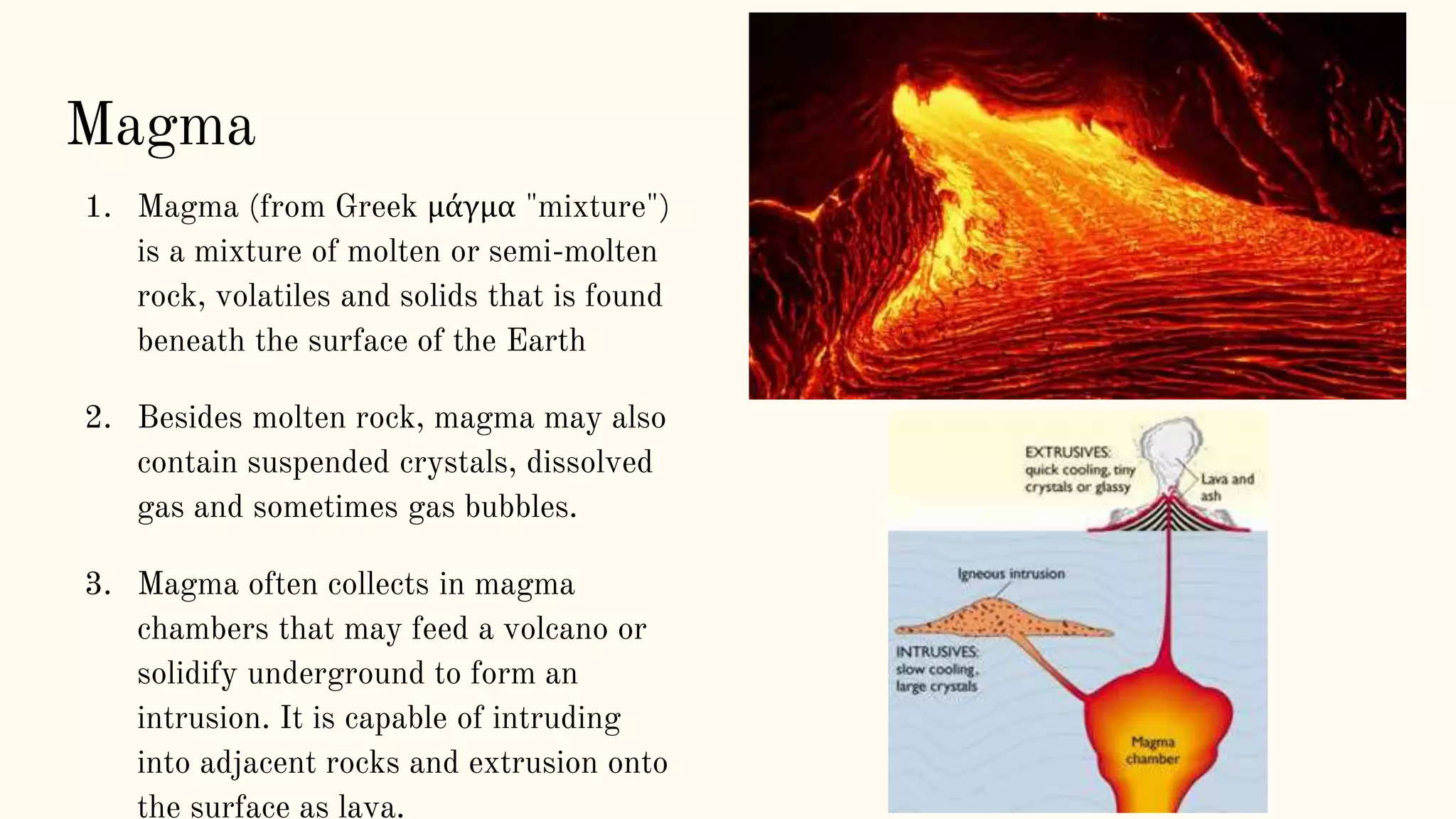
1. Magma (from Greek μάγμα "mixture")
is a mixture of molten or semi-molten
rock, volatiles and solids that is found
beneath the surface of the Earth
2. Besides molten rock, magma may also
contain suspended crystals, dissolved
gas and sometimes gas bubbles.
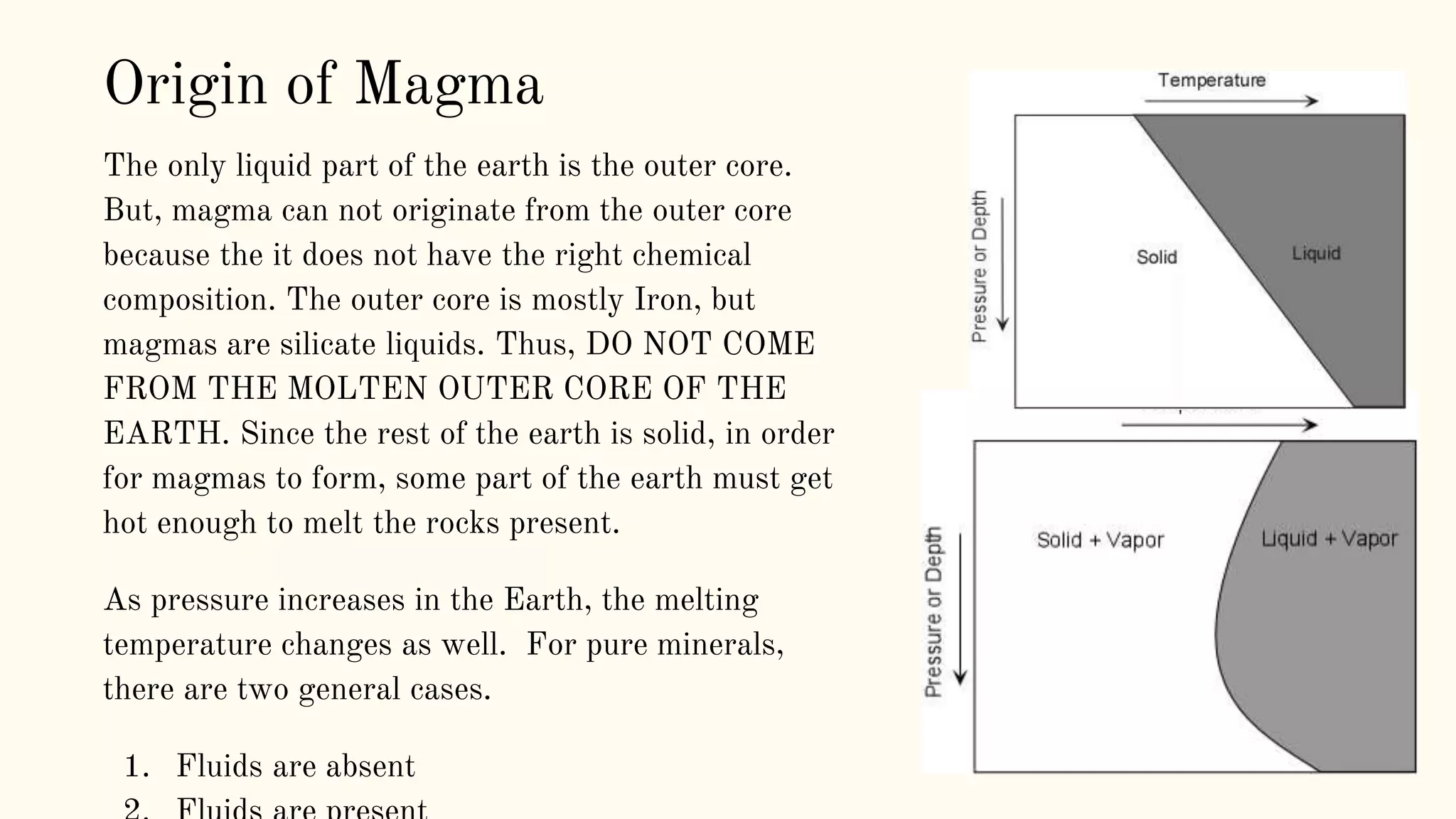
3. Magma often collects in magma
chambers that may feed a volcano or
solidify underground to form an
intrusion. It is capable of intruding
into adjacent rocks and extrusion onto
the surface as lava.
How is Magma
created?
The only liquid part of the earth is the outer core.
But, magma can not originate from the outer core
because the it does not have the right chemical
composition. The outer core is mostly Iron, but
magmas are silicate liquids. Thus, DO NOT COME
FROM THE MOLTEN OUTER CORE OF THE
EARTH. Since the rest of the earth is solid, in order
for magmas to form, some part of the earth must get
hot enough to melt the rocks present.
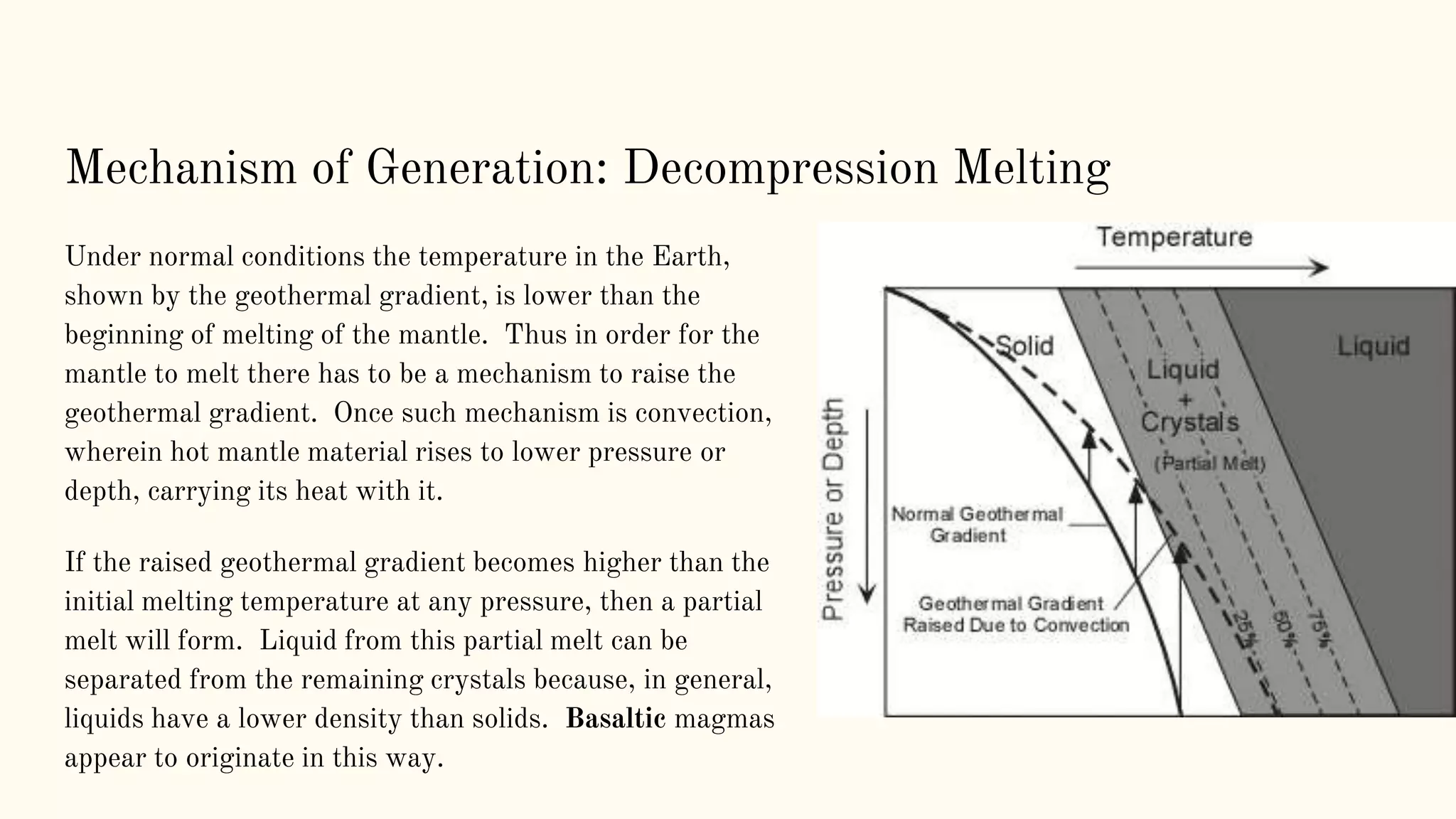
As pressure increases in the Earth, the melting
temperature changes as well. For pure minerals,
there are two general cases.
1. Fluids are absent
Origin of Magma
Mechanism of Generation: Decompression Melting
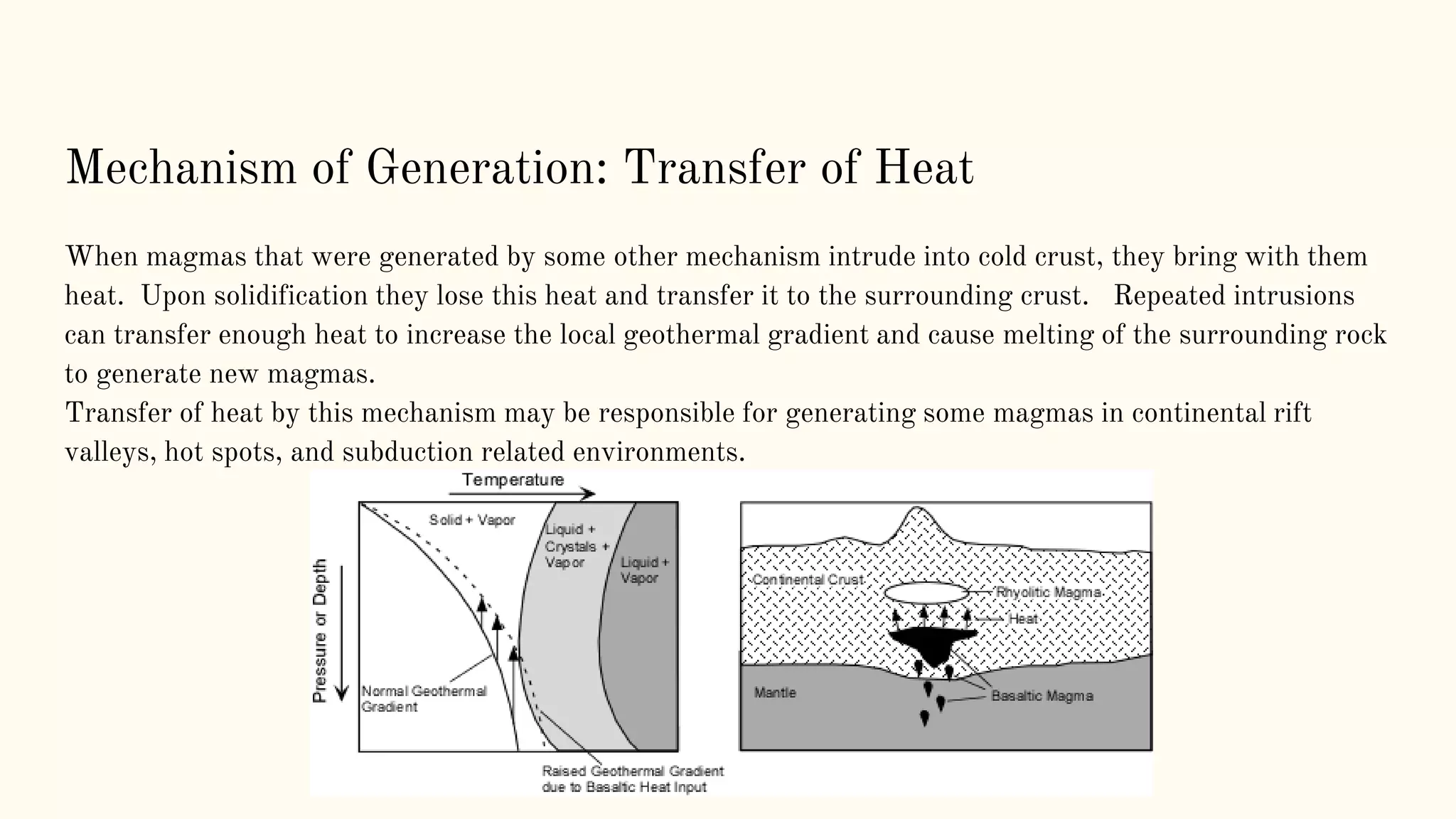
Under normal conditions the temperature in the Earth,
shown by the geothermal gradient, is lower than the
beginning of melting of the mantle. Thus in order for the
mantle to melt there has to be a mechanism to raise the
geothermal gradient. Once such mechanism is convection,
wherein hot mantle material rises to lower pressure or
depth, carrying its heat with it.
If the raised geothermal gradient becomes higher than the
initial melting temperature at any pressure, then a partial
melt will form. Liquid from this partial melt can be
separated from the remaining crystals because, in general,
liquids have a lower density than solids. Basaltic magmas
appear to originate in this way.
Mechanism of Generation: Transfer of Heat
When magmas that were generated by some other mechanism intrude into cold crust, they bring with them
heat. Upon solidification they lose this heat and transfer it to the surrounding crust. Repeated intrusions
can transfer enough heat to increase the local geothermal gradient and cause melting of the surrounding rock
to generate new magmas.
Transfer of heat by this mechanism may be responsible for generating some magmas in continental rift
valleys, hot spots, and subduction related environments.
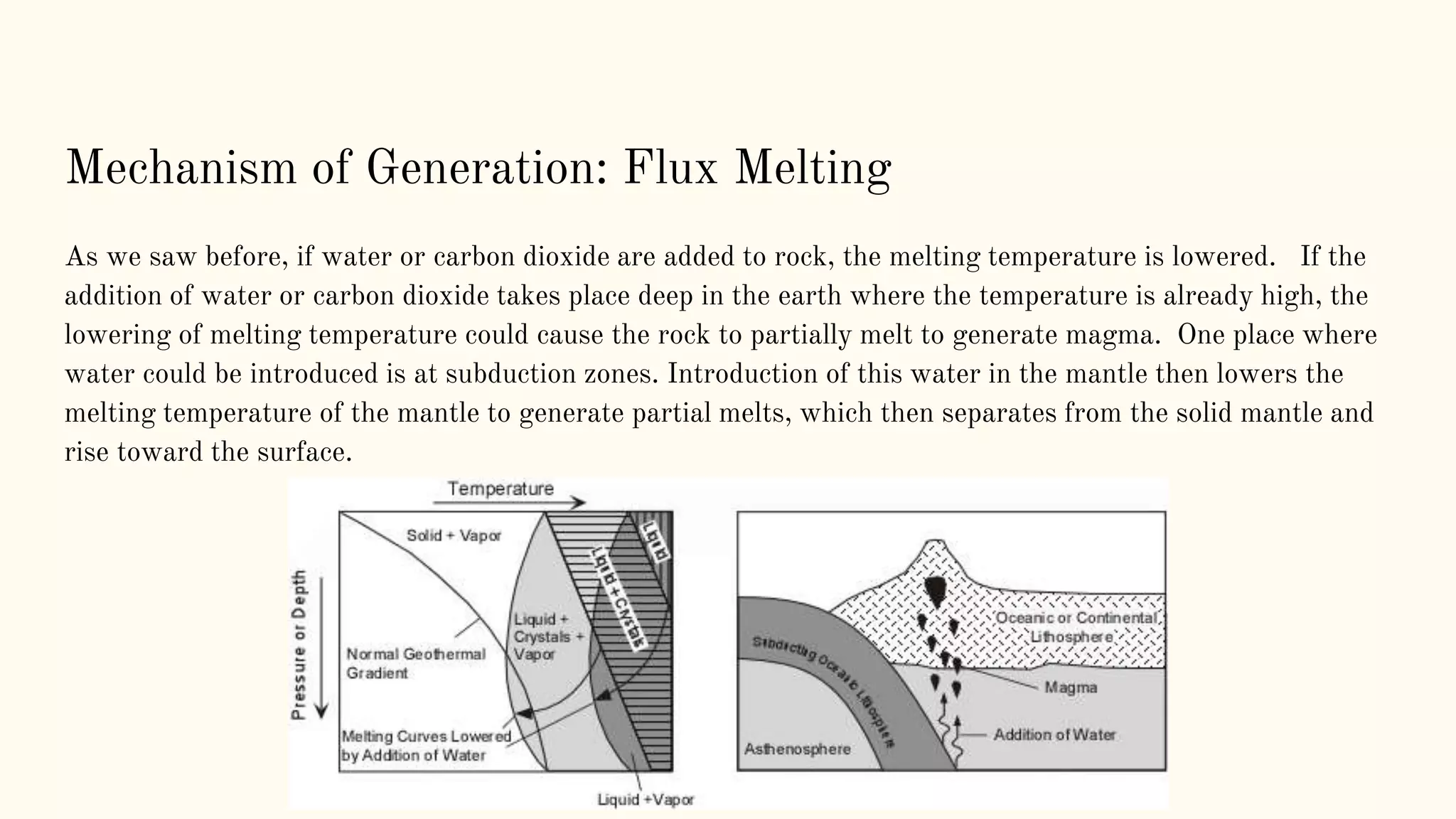
Mechanism of Generation: Flux Melting
As we saw before, if water or carbon dioxide are added to rock, the melting temperature is lowered. If the
addition of water or carbon dioxide takes place deep in the earth where the temperature is already high, the
lowering of melting temperature could cause the rock to partially melt to generate magma. One place where
water could be introduced is at subduction zones. Introduction of this water in the mantle then lowers the
melting temperature of the mantle to generate partial melts, which then separates from the solid mantle and
rise toward the surface.
How can we
classify Magma?
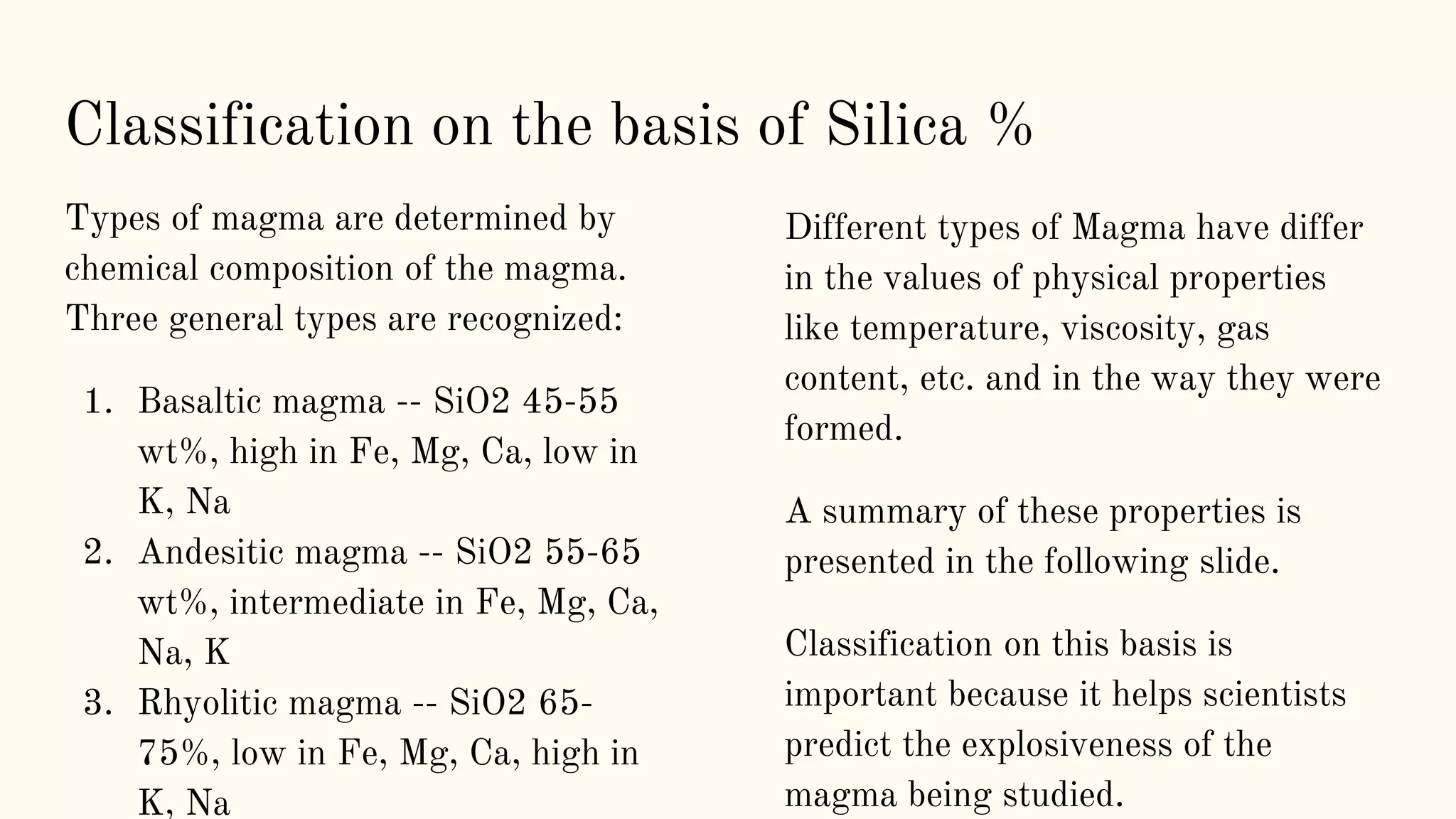
Types of magma are determined by
chemical composition of the magma.
Three general types are recognized:
1. Basaltic magma -- SiO2 45-55
wt%, high in Fe, Mg, Ca, low in
K, Na
2. Andesitic magma -- SiO2 55-65
wt%, intermediate in Fe, Mg, Ca,
Na, K
3. Rhyolitic magma -- SiO2 65-
75%, low in Fe, Mg, Ca, high in
K, Na
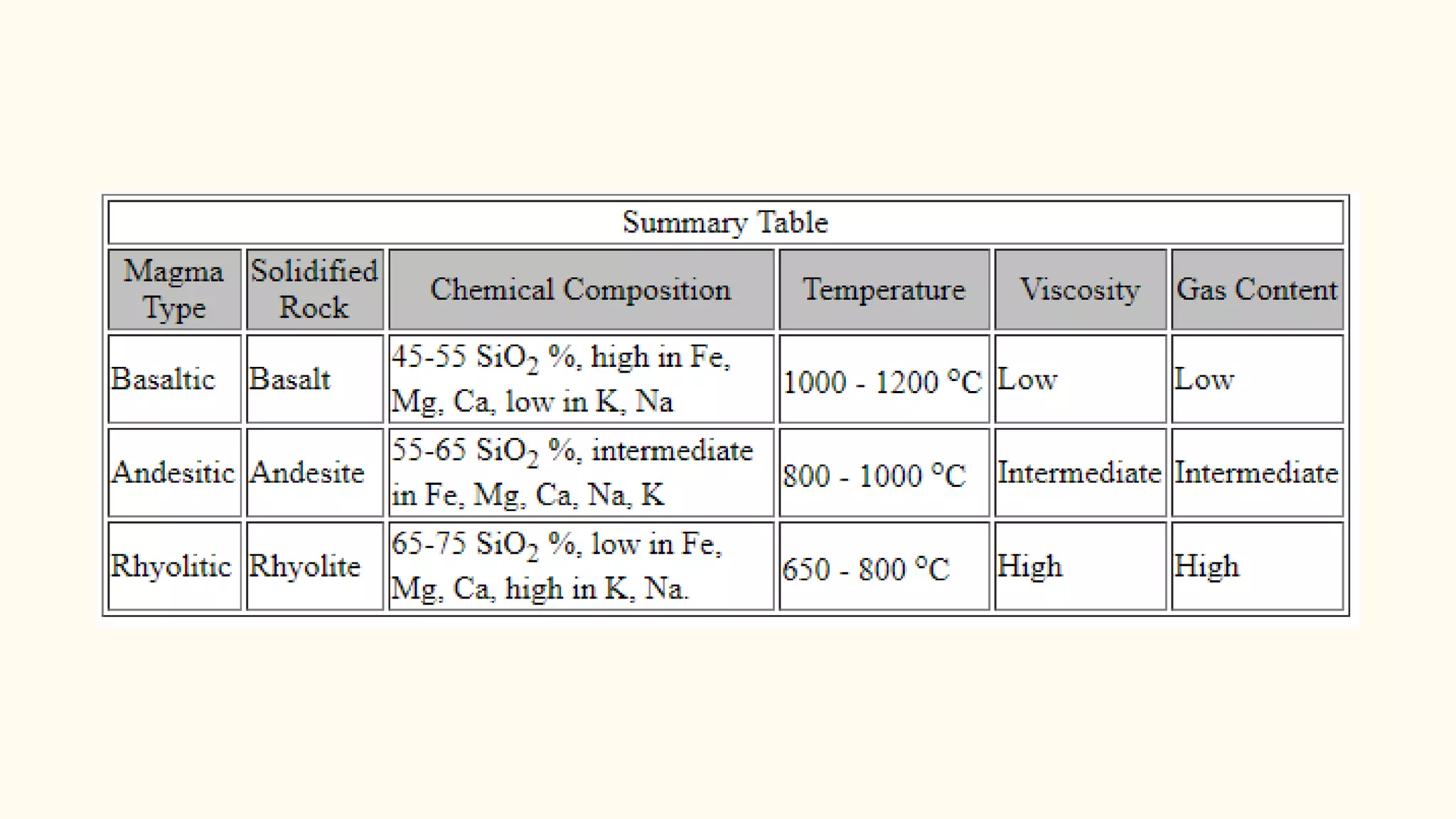
Different types of Magma have differ
in the values of physical properties
like temperature, viscosity, gas
content, etc. and in the way they were
formed.
A summary of these properties is
presented in the following slide.
Classification on this basis is
important because it helps scientists
predict the explosiveness of the
magma being studied.
Classification on the basis of Silica %
Description of Important Physical Properties
Gas Content
At depth in the Earth nearly all
magmas contain gas dissolved in
the liquid, but the gas forms a
separate vapor phase when
pressure is decreased as magma
rises toward the surface of the
Earth.
Gas gives magmas their explosive
character, because volume of gas
expands as pressure is reduced.
The composition of the gases in
magma are: Mostly H2O & some
CO2, Minor amounts of Sulfur,
Chlorine, and Fluorine gases
Temperature
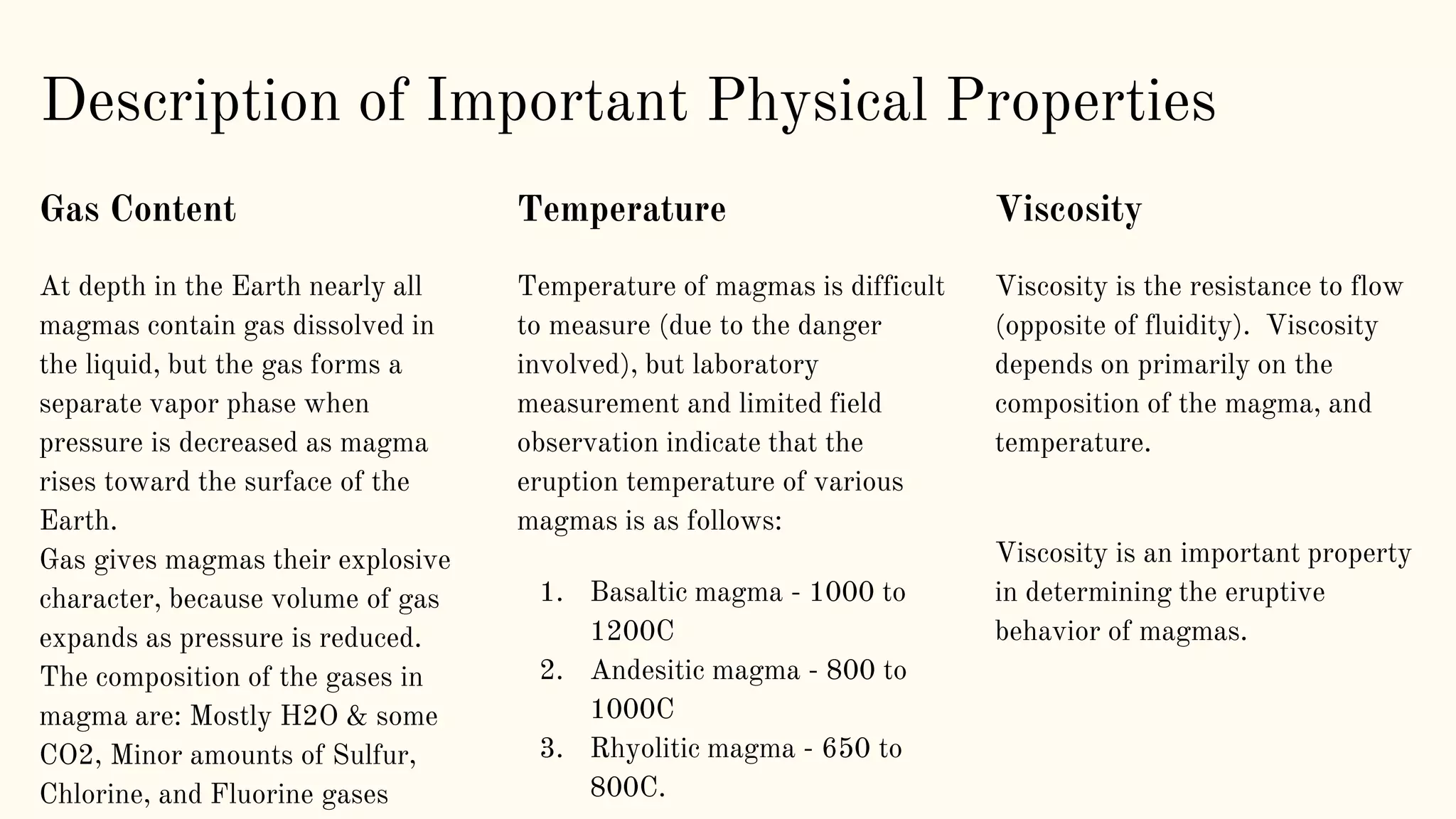
Temperature of magmas is difficult
to measure (due to the danger
involved), but laboratory
measurement and limited field
observation indicate that the
eruption temperature of various
magmas is as follows:
1. Basaltic magma - 1000 to
1200C
2. Andesitic magma - 800 to
1000C
3. Rhyolitic magma - 650 to
800C.
Viscosity
Viscosity is the resistance to flow
(opposite of fluidity). Viscosity
depends on primarily on the
composition of the magma, and
temperature.
Viscosity is an important property
in determining the eruptive
behavior of magmas.
Magma can also be differentiated on
the basis of how it was formed :
• Primitive magma: They are
unmodified magmas that form through
anatexis (melting of mantle rocks that
have not been changed in composition
since they formed.
• Primary magma: This magma are
any chemically unchanged melt
derived from any kind of preexisting
rocks. All primitive magma is primary
but most primary magma that yields
modern rocks is not primitive.
• Parental magma: The magma that
have given rise to another magma.
• Derivative magma: Derivative
magmas are the magma which derived
directly from a preexisting magma.
By finding the primitive magma
composition of a magma series it is
possible to model the composition of
the mantle from which a melt was
formed, which is important in
understanding evolution of the mantle.
Classification on the basis of Formation
Thank you.

Types and characteristics of magma

  • 1.
    Types and Characteristicsof Magma By Adithya Shashidhara Shettar
  • 2.
  • 3.
    Magma 1. Magma (fromGreek μάγμα "mixture") is a mixture of molten or semi-molten rock, volatiles and solids that is found beneath the surface of the Earth 2. Besides molten rock, magma may also contain suspended crystals, dissolved gas and sometimes gas bubbles. 3. Magma often collects in magma chambers that may feed a volcano or solidify underground to form an intrusion. It is capable of intruding into adjacent rocks and extrusion onto the surface as lava.
  • 4.
  • 5.
    The only liquidpart of the earth is the outer core. But, magma can not originate from the outer core because the it does not have the right chemical composition. The outer core is mostly Iron, but magmas are silicate liquids. Thus, DO NOT COME FROM THE MOLTEN OUTER CORE OF THE EARTH. Since the rest of the earth is solid, in order for magmas to form, some part of the earth must get hot enough to melt the rocks present. As pressure increases in the Earth, the melting temperature changes as well. For pure minerals, there are two general cases. 1. Fluids are absent Origin of Magma
  • 6.
    Mechanism of Generation:Decompression Melting Under normal conditions the temperature in the Earth, shown by the geothermal gradient, is lower than the beginning of melting of the mantle. Thus in order for the mantle to melt there has to be a mechanism to raise the geothermal gradient. Once such mechanism is convection, wherein hot mantle material rises to lower pressure or depth, carrying its heat with it. If the raised geothermal gradient becomes higher than the initial melting temperature at any pressure, then a partial melt will form. Liquid from this partial melt can be separated from the remaining crystals because, in general, liquids have a lower density than solids. Basaltic magmas appear to originate in this way.
  • 7.
    Mechanism of Generation:Transfer of Heat When magmas that were generated by some other mechanism intrude into cold crust, they bring with them heat. Upon solidification they lose this heat and transfer it to the surrounding crust. Repeated intrusions can transfer enough heat to increase the local geothermal gradient and cause melting of the surrounding rock to generate new magmas. Transfer of heat by this mechanism may be responsible for generating some magmas in continental rift valleys, hot spots, and subduction related environments.
  • 8.
    Mechanism of Generation:Flux Melting As we saw before, if water or carbon dioxide are added to rock, the melting temperature is lowered. If the addition of water or carbon dioxide takes place deep in the earth where the temperature is already high, the lowering of melting temperature could cause the rock to partially melt to generate magma. One place where water could be introduced is at subduction zones. Introduction of this water in the mantle then lowers the melting temperature of the mantle to generate partial melts, which then separates from the solid mantle and rise toward the surface.
  • 9.
  • 10.
    Types of magmaare determined by chemical composition of the magma. Three general types are recognized: 1. Basaltic magma -- SiO2 45-55 wt%, high in Fe, Mg, Ca, low in K, Na 2. Andesitic magma -- SiO2 55-65 wt%, intermediate in Fe, Mg, Ca, Na, K 3. Rhyolitic magma -- SiO2 65- 75%, low in Fe, Mg, Ca, high in K, Na Different types of Magma have differ in the values of physical properties like temperature, viscosity, gas content, etc. and in the way they were formed. A summary of these properties is presented in the following slide. Classification on this basis is important because it helps scientists predict the explosiveness of the magma being studied. Classification on the basis of Silica %
  • 11.
    Description of ImportantPhysical Properties Gas Content At depth in the Earth nearly all magmas contain gas dissolved in the liquid, but the gas forms a separate vapor phase when pressure is decreased as magma rises toward the surface of the Earth. Gas gives magmas their explosive character, because volume of gas expands as pressure is reduced. The composition of the gases in magma are: Mostly H2O & some CO2, Minor amounts of Sulfur, Chlorine, and Fluorine gases Temperature Temperature of magmas is difficult to measure (due to the danger involved), but laboratory measurement and limited field observation indicate that the eruption temperature of various magmas is as follows: 1. Basaltic magma - 1000 to 1200C 2. Andesitic magma - 800 to 1000C 3. Rhyolitic magma - 650 to 800C. Viscosity Viscosity is the resistance to flow (opposite of fluidity). Viscosity depends on primarily on the composition of the magma, and temperature. Viscosity is an important property in determining the eruptive behavior of magmas.
  • 13.
    Magma can alsobe differentiated on the basis of how it was formed : • Primitive magma: They are unmodified magmas that form through anatexis (melting of mantle rocks that have not been changed in composition since they formed. • Primary magma: This magma are any chemically unchanged melt derived from any kind of preexisting rocks. All primitive magma is primary but most primary magma that yields modern rocks is not primitive. • Parental magma: The magma that have given rise to another magma. • Derivative magma: Derivative magmas are the magma which derived directly from a preexisting magma. By finding the primitive magma composition of a magma series it is possible to model the composition of the mantle from which a melt was formed, which is important in understanding evolution of the mantle. Classification on the basis of Formation
  • 14.