Downloaded 1,250 times



![Figure shows the density of liquid with the composition of common igneous
rock over a broad range of temperature note that the decrease of density due
to thermal expansion so much less then that of changing composition
Type Density [kg/m³]
Basalt magma 2650 - 2800
Andesite magma 2450 - 2500
Rhyolite magma 2180 – 2250
Density](https://image.slidesharecdn.com/evolutionofmagma-171208164224/75/Evolution-of-magma-13-2048.jpg)
![Polymerization of magma
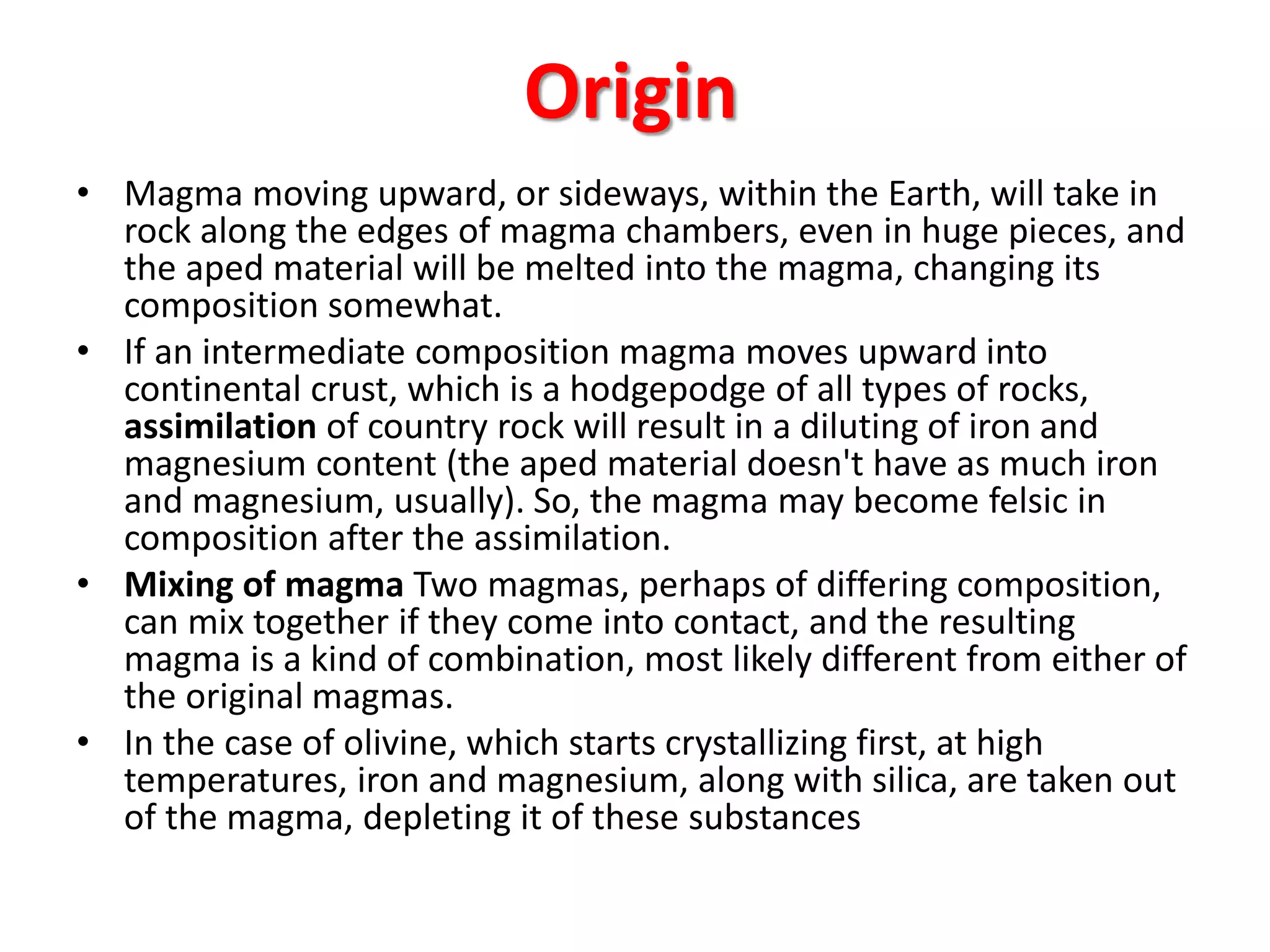
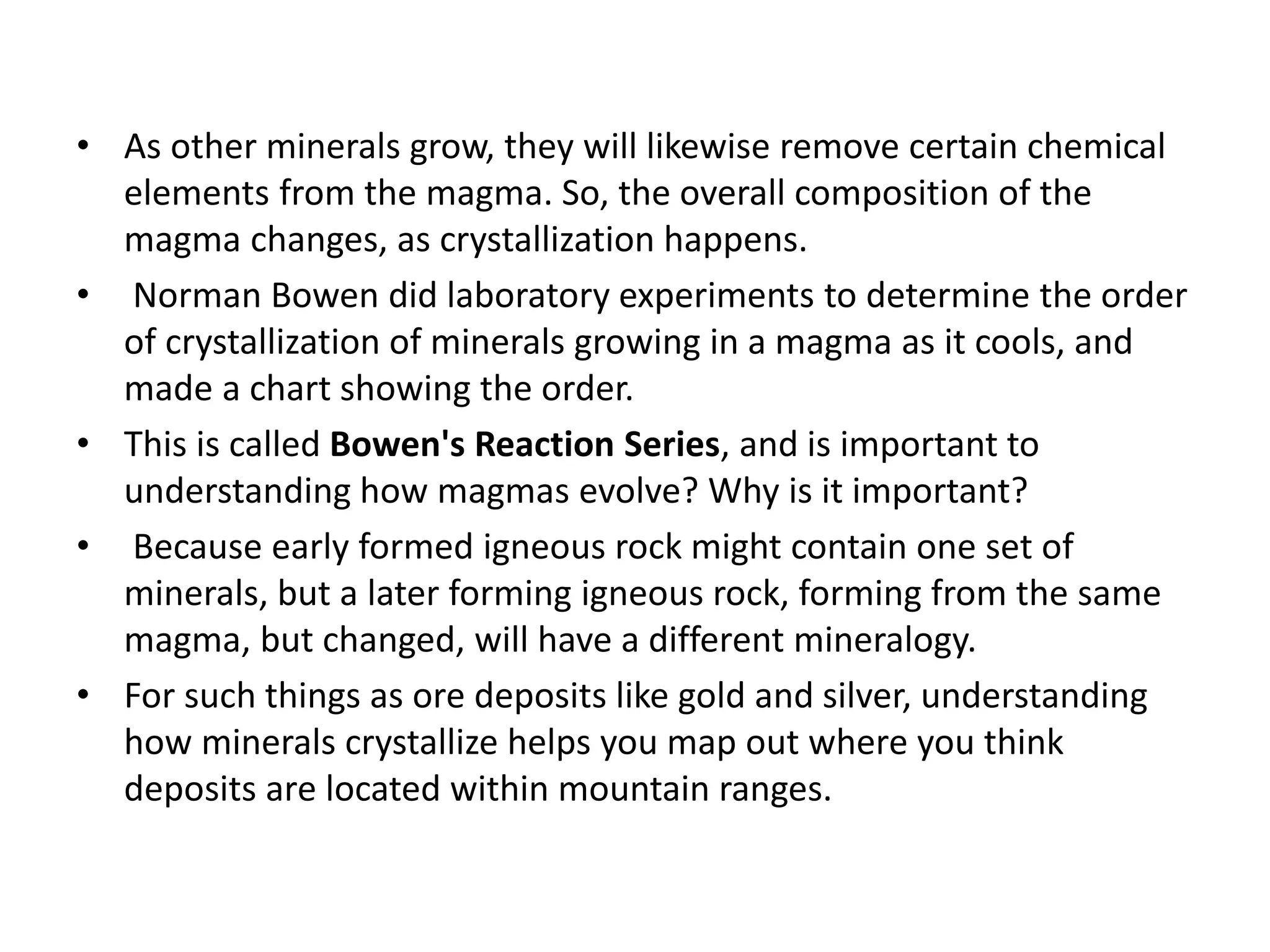
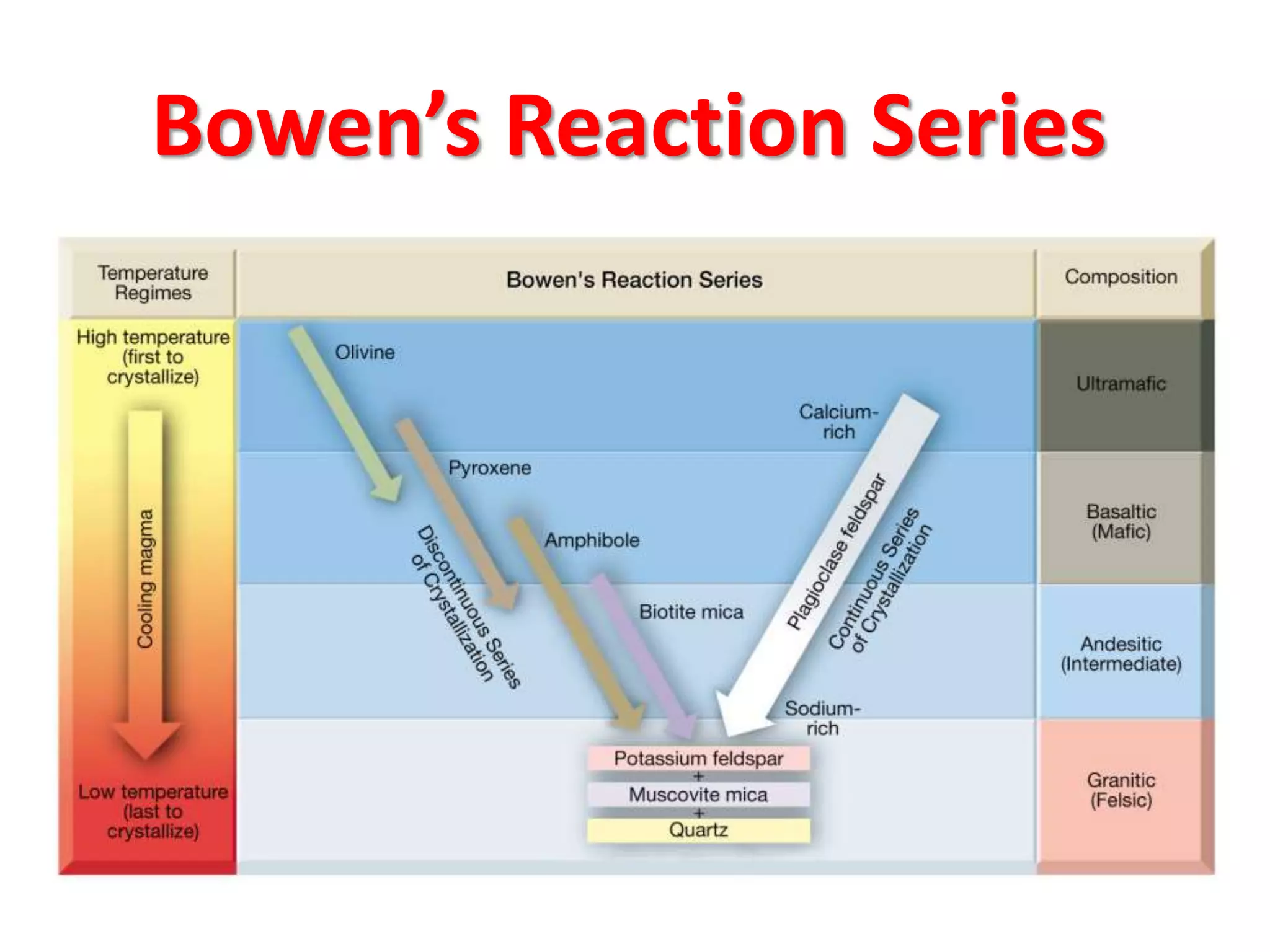
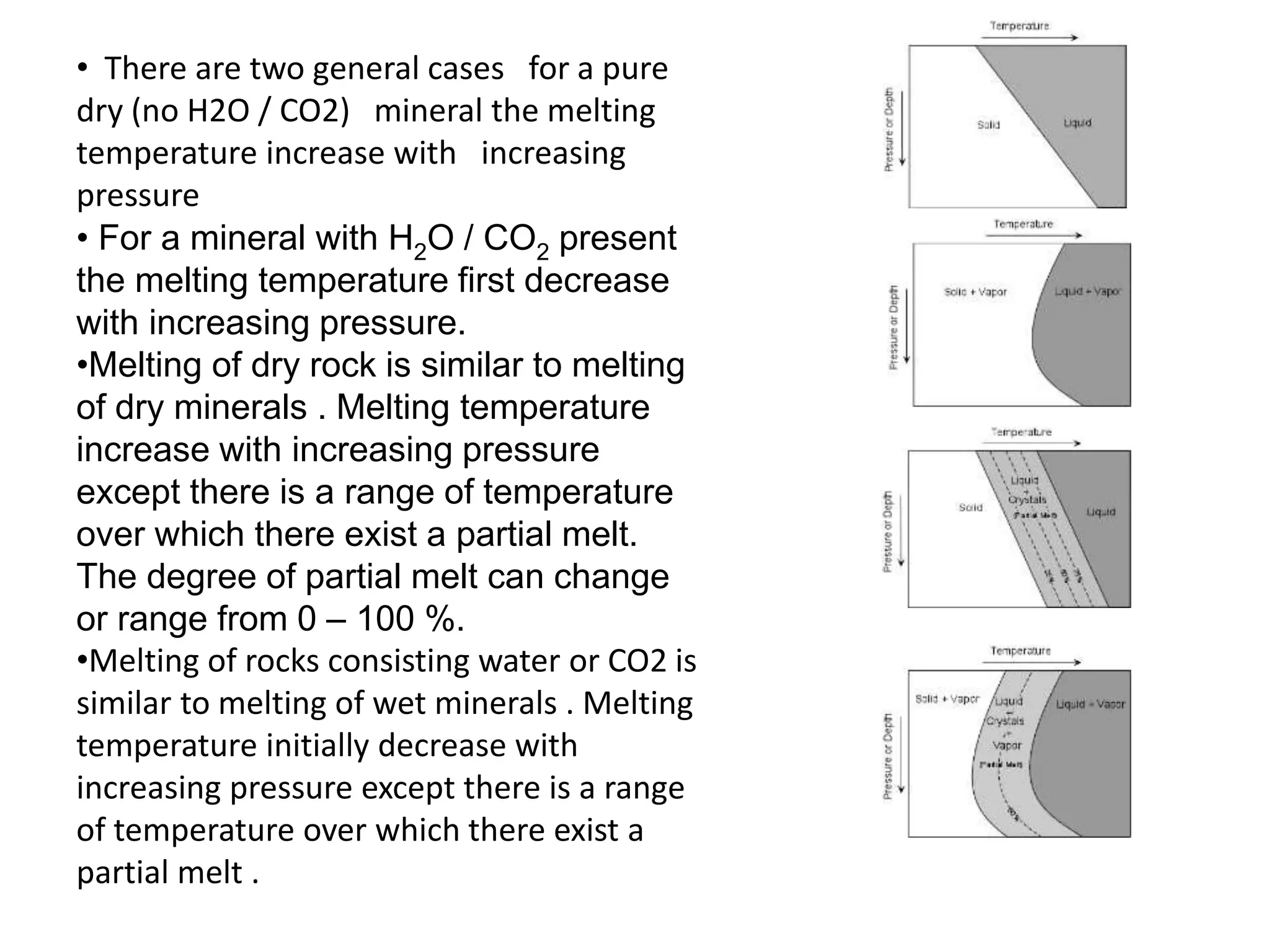
• Excepting the carbonatites all magmas are silicates. Their
physical properties like viscosity and density are related to the
internal arrangement of atoms and molecules in the magma
• The fundamental structural unit of all silicate minerals and any
magma is the [SiO4]4- tetrahedron . A small Si+ion at its centre is
covalently bonded to four O2- ions at its apices.
• In most silicate minerals [SiO4]- tetrahedral units share some of
the apical O2- ions which are called “bridging “ oxygen .The no
shared O2- ions , called “nonbridging “ oxygen are bonded to
other cations ( e.g. Mg Fe , Na , Ca ) present in the mineral
structure .
• Si and other fourfold coordinated cations ( mainly Al ) that form
the backbone of the tetrahedral framework are called “network
formers”.](https://image.slidesharecdn.com/evolutionofmagma-171208164224/75/Evolution-of-magma-17-2048.jpg)
![• During melting of a silicate mineral or rock , the covalent bonds
betweens Si4+ and apical oxygen’s are generally too strong to break
• But the bonds between non bridging oxygen’s and network
modifiers dip break , enabling these other cations to move around
within the framework of polymerized [SiO4 ] chains in a molten
silicate.
• So polymerization means the networked nature of a silicate
magma. Degree of polymerization depends on the SiO2 content of
the magma more siliceous magmas are more polymerized , and
thereby more viscous , than mafic magmas.
fully polymerized melt fully polymerized crystal](https://image.slidesharecdn.com/evolutionofmagma-171208164224/75/Evolution-of-magma-18-2048.jpg)




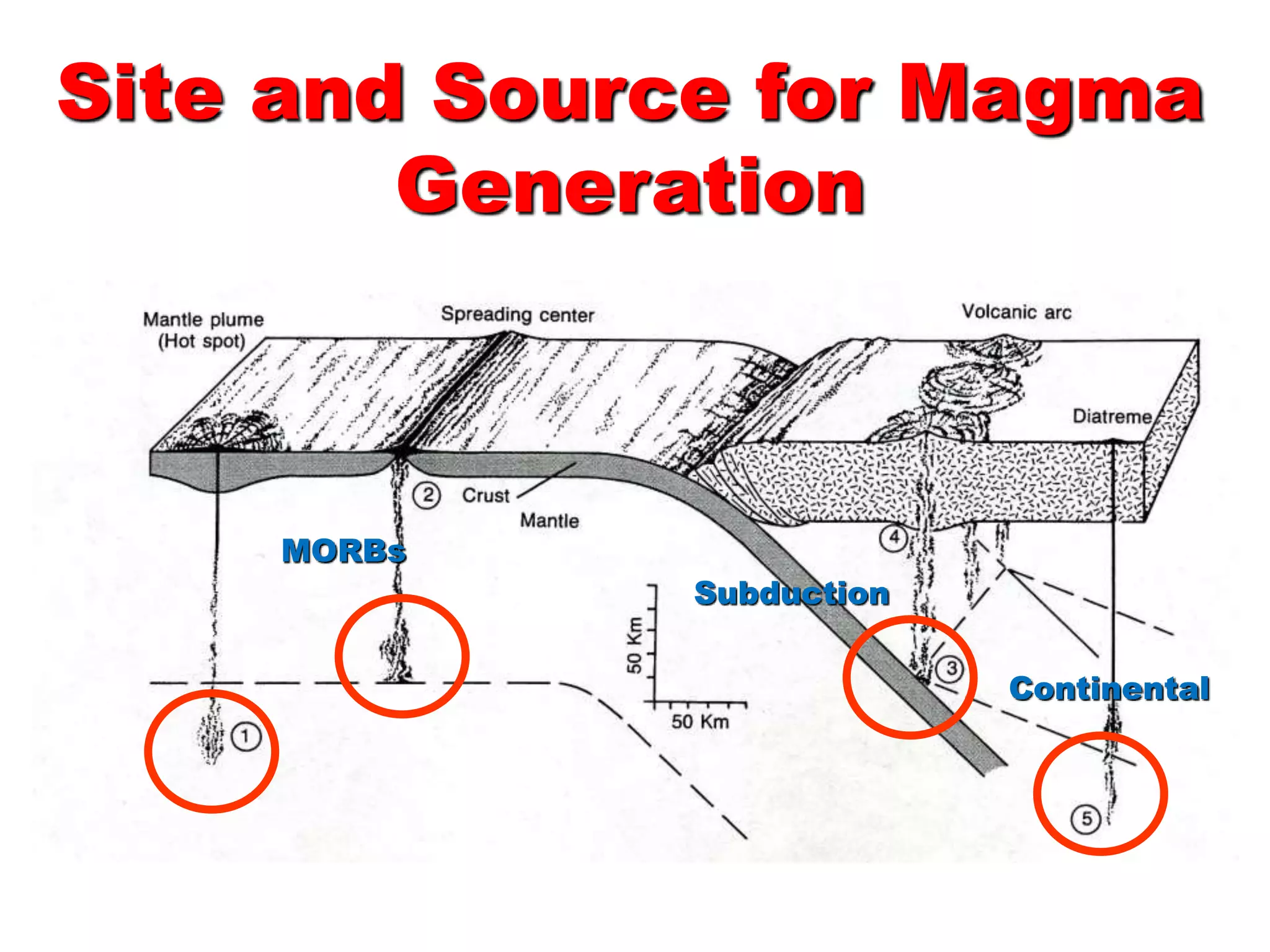
- Magma forms by partial melting of the mantle or crust and consists of molten or semi-molten rock. It varies in temperature, pressure, density and composition depending on its origin and evolution. - Magma evolves as it differentiates through fractional crystallization, assimilation, and mixing. Early crystallizing minerals remove elements from the magma, changing its composition over time according to Bowen's reaction series. - Magma rises towards the Earth's surface where it cools and crystallizes to form either plutonic or volcanic rocks, depending on the cooling rate. Slow cooling results in large mineral crystals in plutonic rocks, while rapid cooling of lava forms volcanic rocks like obsidian with little


