Downloaded 541 times
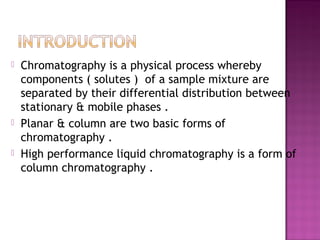
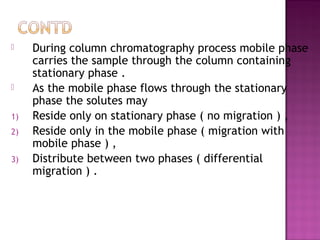
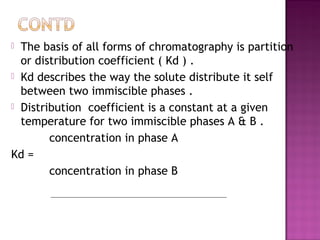
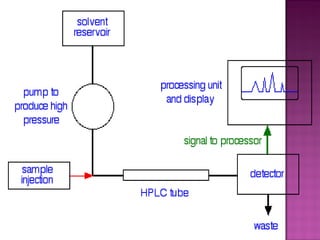
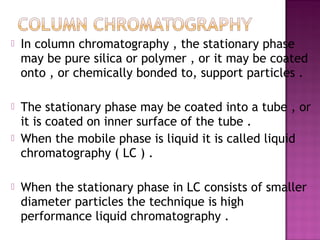
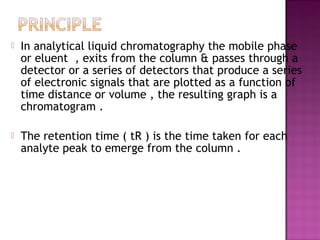
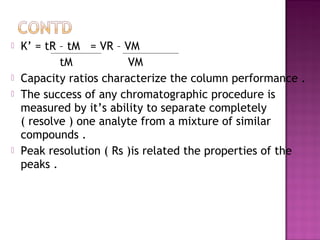
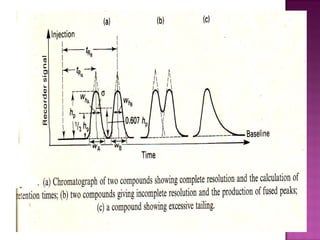
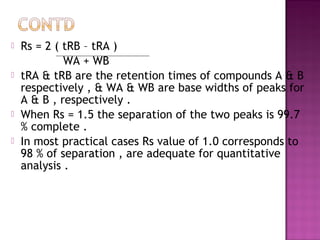
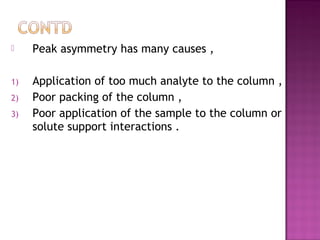
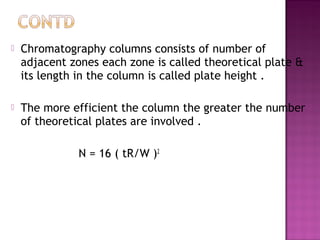
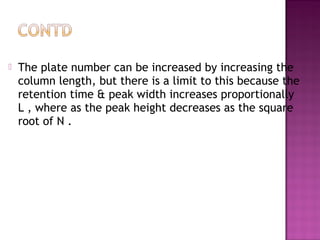
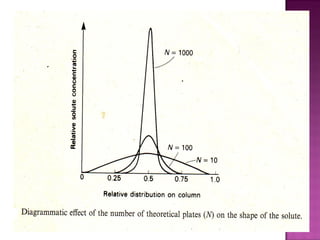
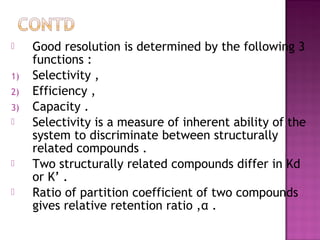
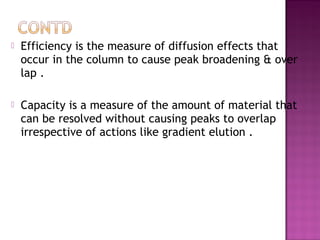
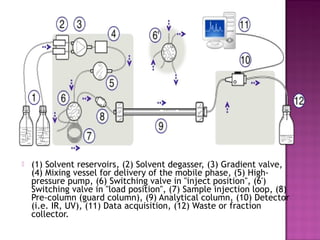
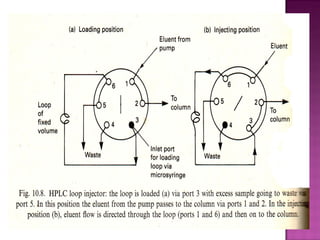
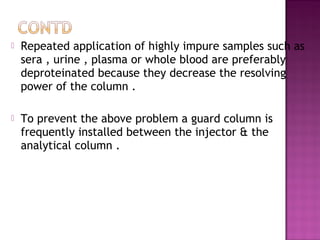
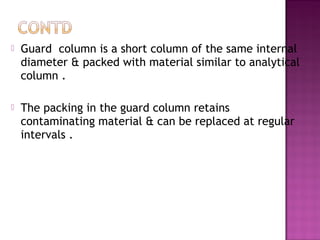
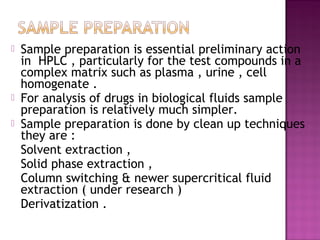
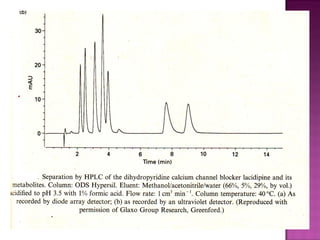
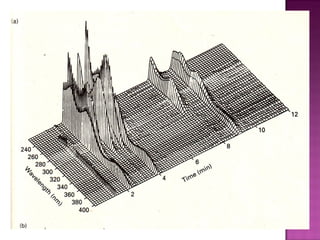
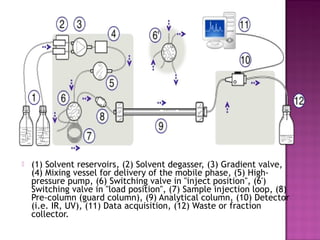


Chromatography is a technique used to separate components of a mixture through differential partitioning between a stationary and mobile phase. There are two main forms: planar and column chromatography. High performance liquid chromatography (HPLC) uses column chromatography with a mobile liquid phase. The basis is the distribution coefficient which describes how a solute distributes between two immiscible phases. HPLC is used for analytical separations and employs a pump to deliver the mobile phase through a column containing particles or bonded stationary phase, followed by detection of eluting analytes. Detectors commonly use UV-visible absorption to quantify separated components. Sample preparation and column parameters impact resolution of analyte peaks from complex mixtures.


![Gagandutt sharma(HPLC) [Pharmaceutics].pdf](https://cdn.slidesharecdn.com/ss_thumbnails/gaganduttsharmahplcpharmaceutics-231228113552-2e6d34b5-thumbnail.jpg?width=640&height=640&fit=bounds)


