Gene Expression in
Eukaryotes
M.Prasad Naidu
MSc Medical Biochemistry, Ph.D,.
Outline
 Central dogma in Eukaryotes
 Nature of Genes in Eukaryotes
 Initiation and Elongation of Transcription
 RNA Processing
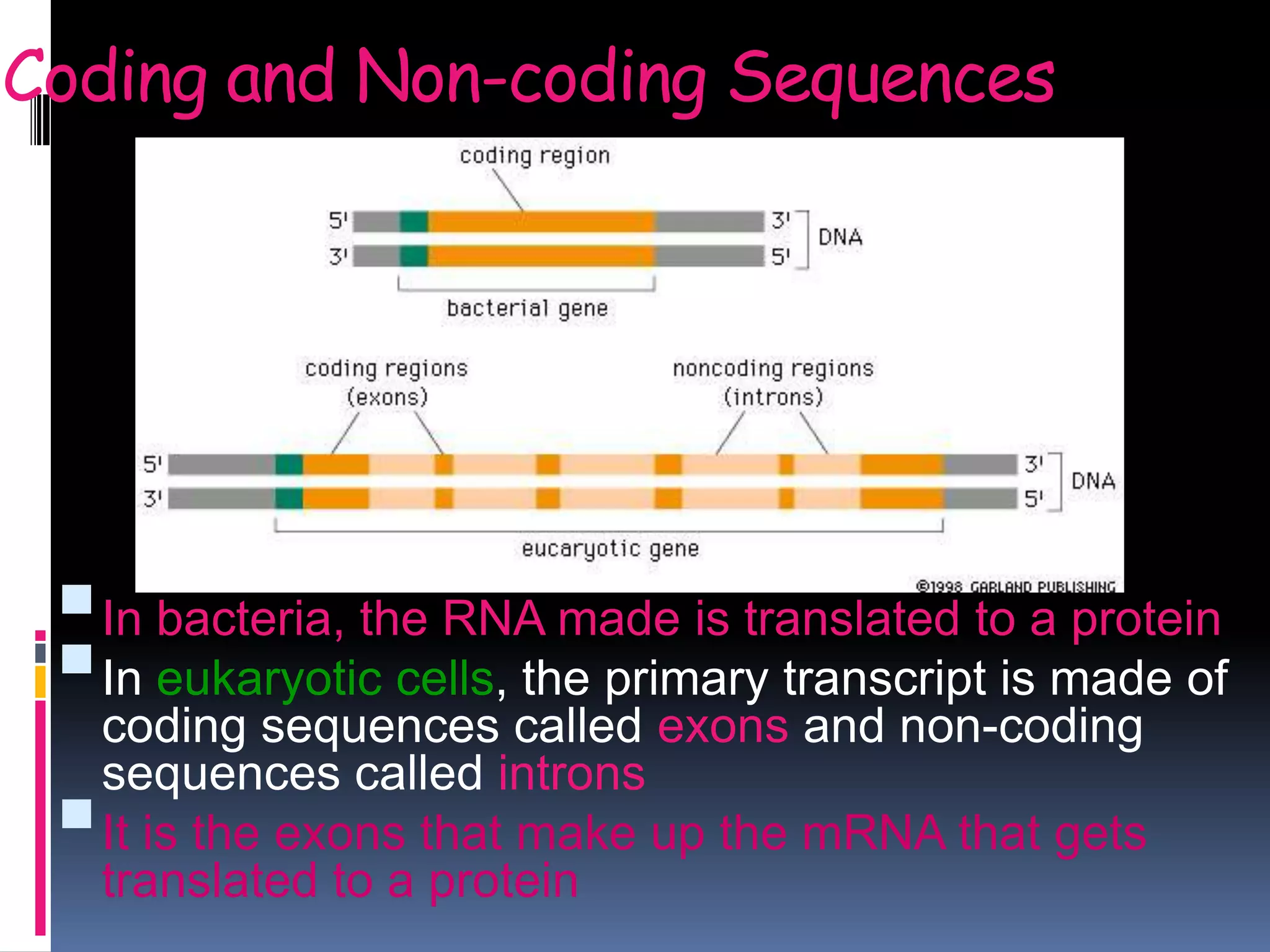
Coding and Non-coding Sequences
In bacteria, the RNA made is translated to a protein
In eukaryotic cells, the primary transcript is made of
coding sequences called exons and non-coding
sequences called introns
It is the exons that make up the mRNA that gets
translated to a protein
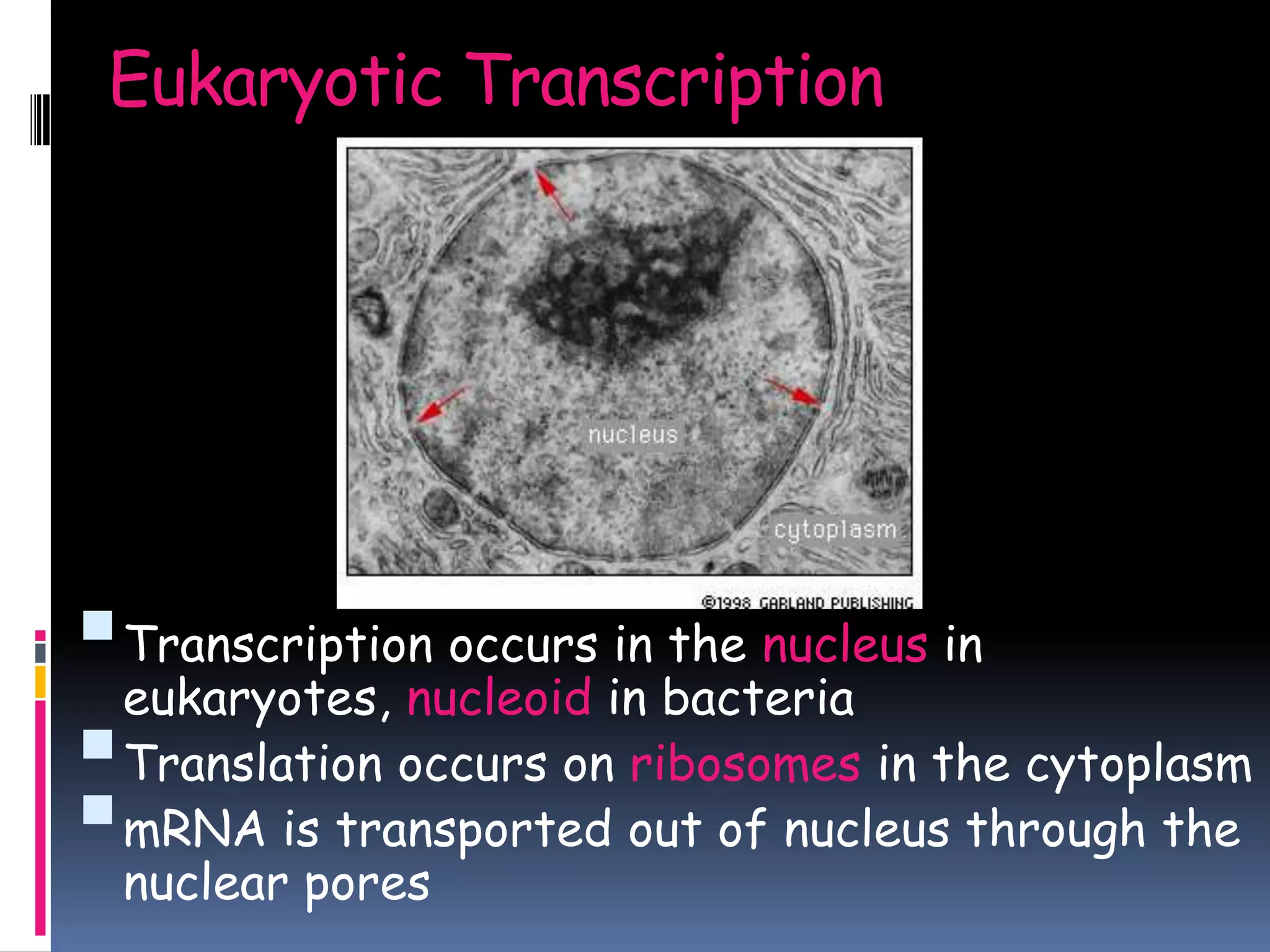
Eukaryotic Transcription
Transcription occurs in the nucleus in
eukaryotes, nucleoid in bacteria
Translation occurs on ribosomes in the cytoplasm
mRNA is transported out of nucleus through the
nuclear pores
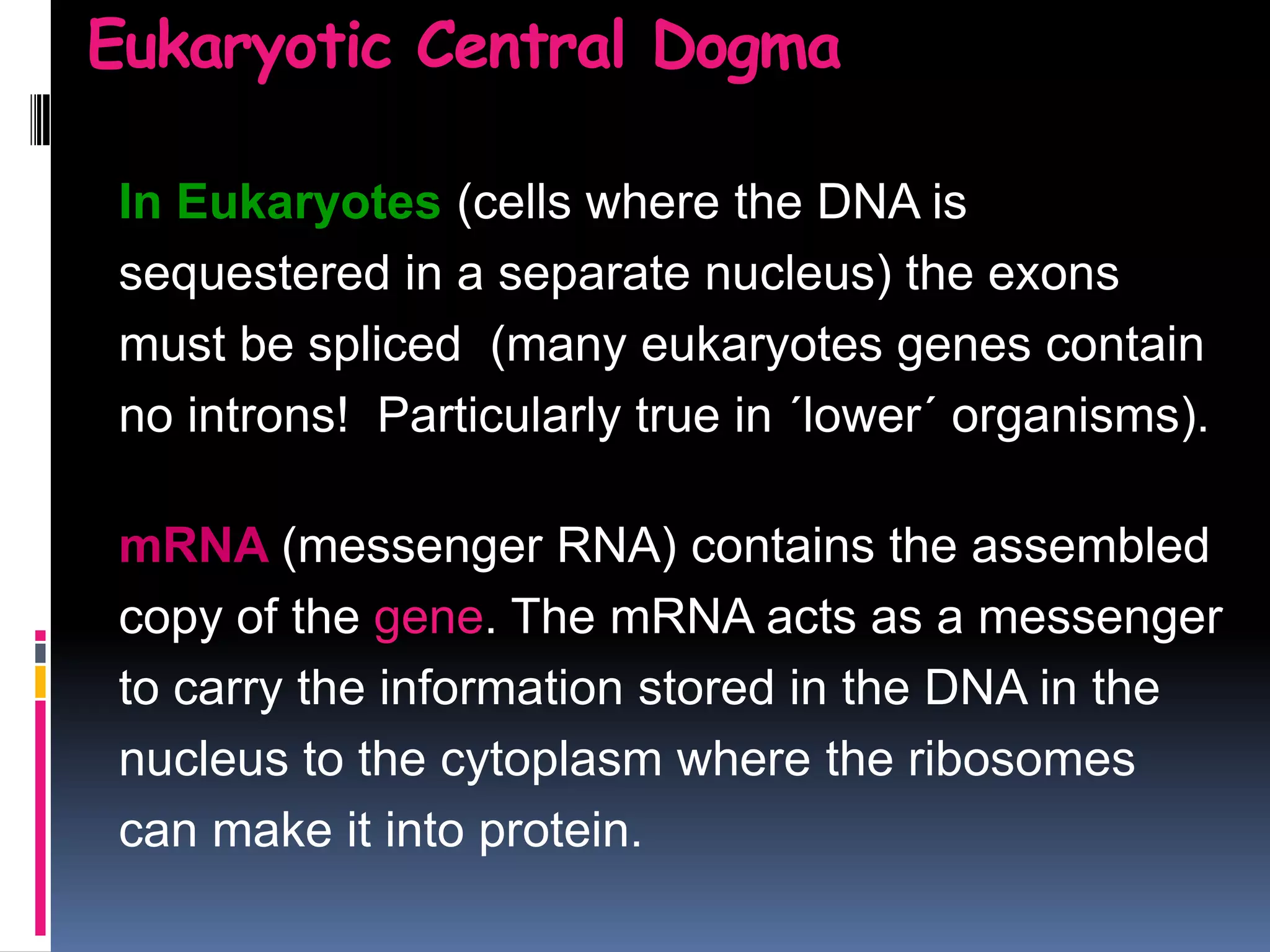
In Eukaryotes (cells where the DNA is
sequestered in a separate nucleus) the exons
must be spliced (many eukaryotes genes contain
no introns! Particularly true in ´lower´ organisms).
mRNA (messenger RNA) contains the assembled
copy of the gene. The mRNA acts as a messenger
to carry the information stored in the DNA in the
nucleus to the cytoplasm where the ribosomes
can make it into protein.
Eukaryotic Central Dogma
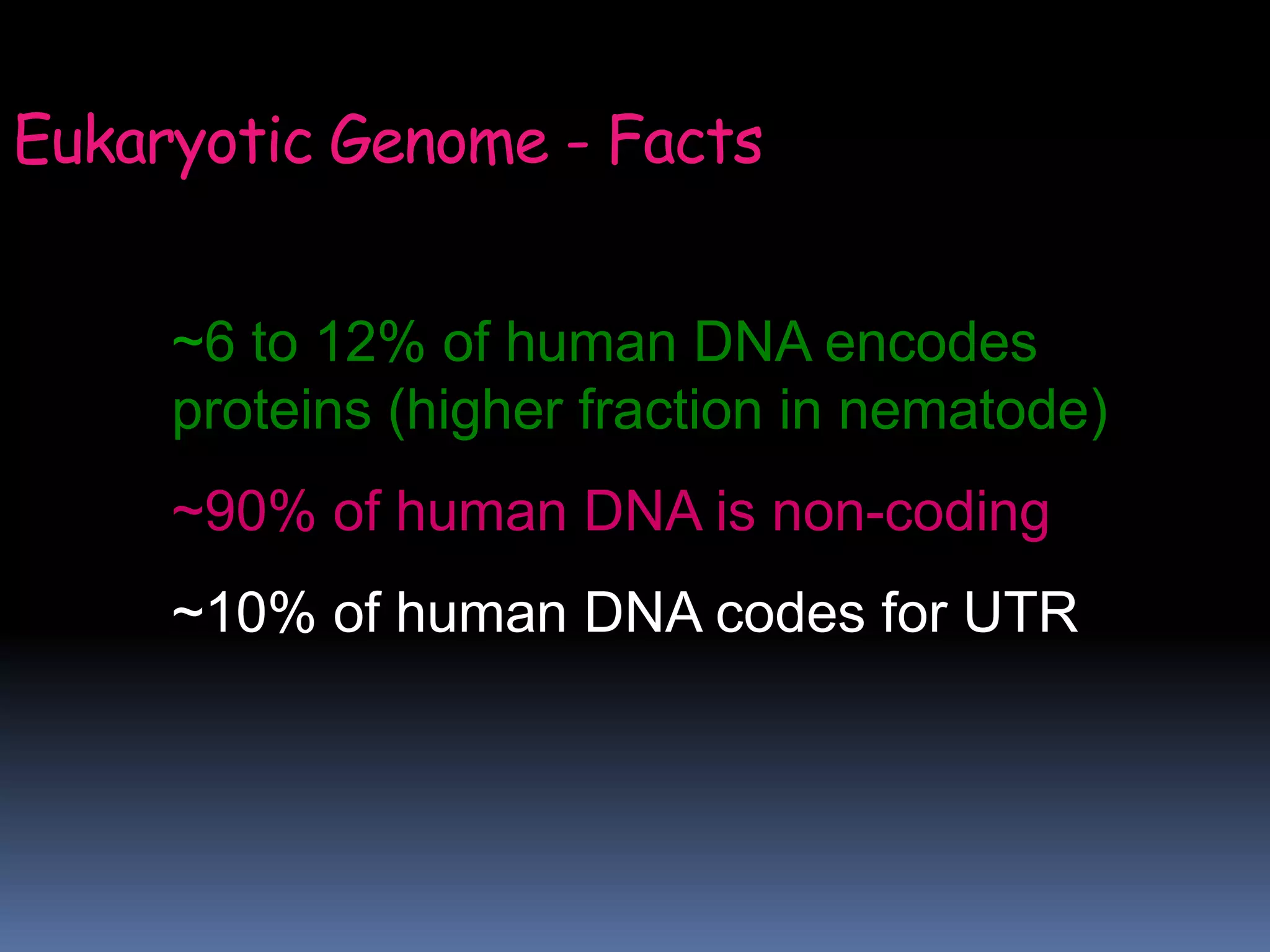
~6 to 12% of human DNA encodes
proteins (higher fraction in nematode)
~90% of human DNA is non-coding
~10% of human DNA codes for UTR
Eukaryotic Genome - Facts
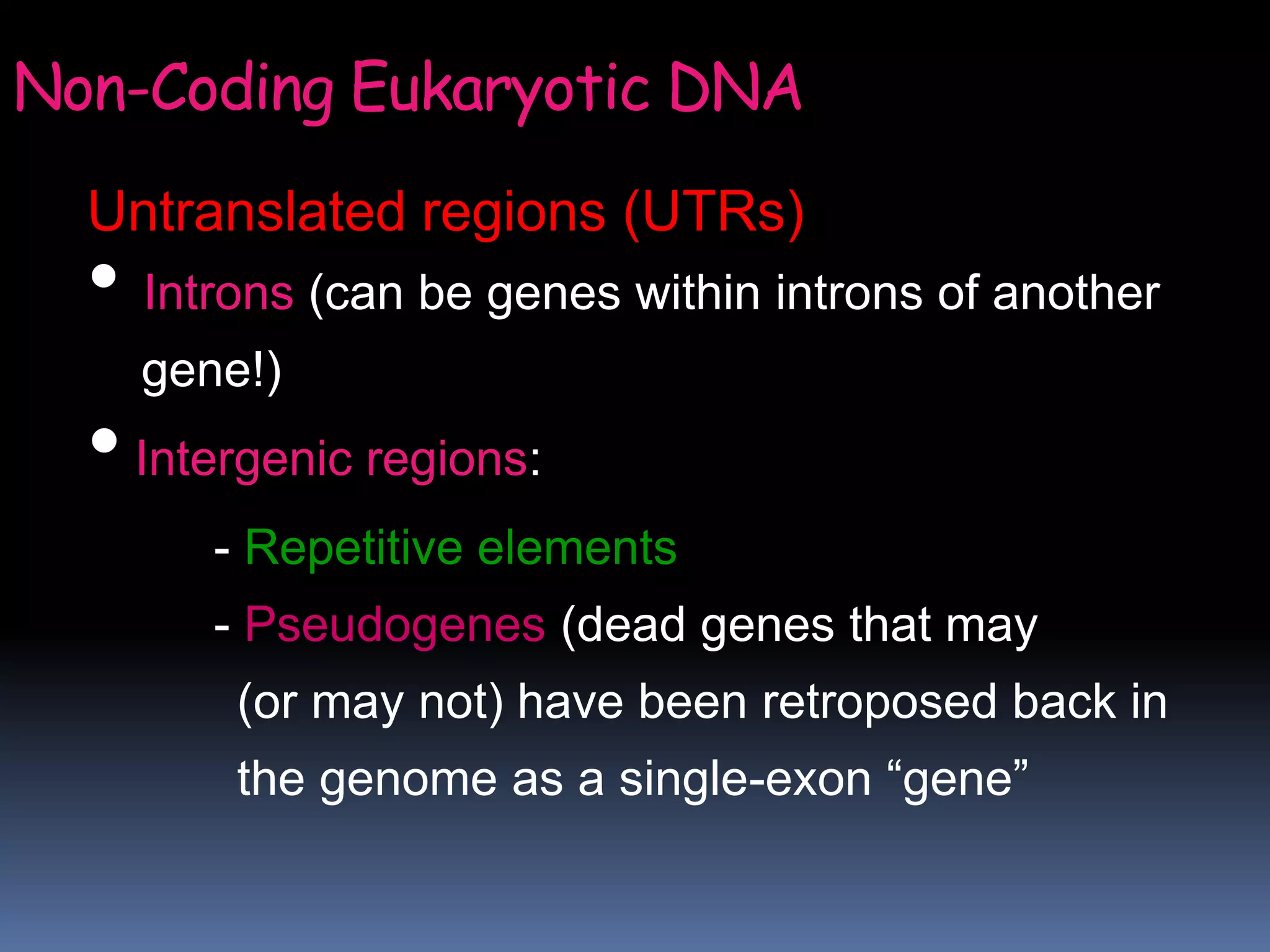
Untranslated regions (UTRs)
• Introns (can be genes within introns of another
gene!)
•Intergenic regions:
- Repetitive elements
- Pseudogenes (dead genes that may
(or may not) have been retroposed back in
the genome as a single-exon “gene”
Non-Coding Eukaryotic DNA
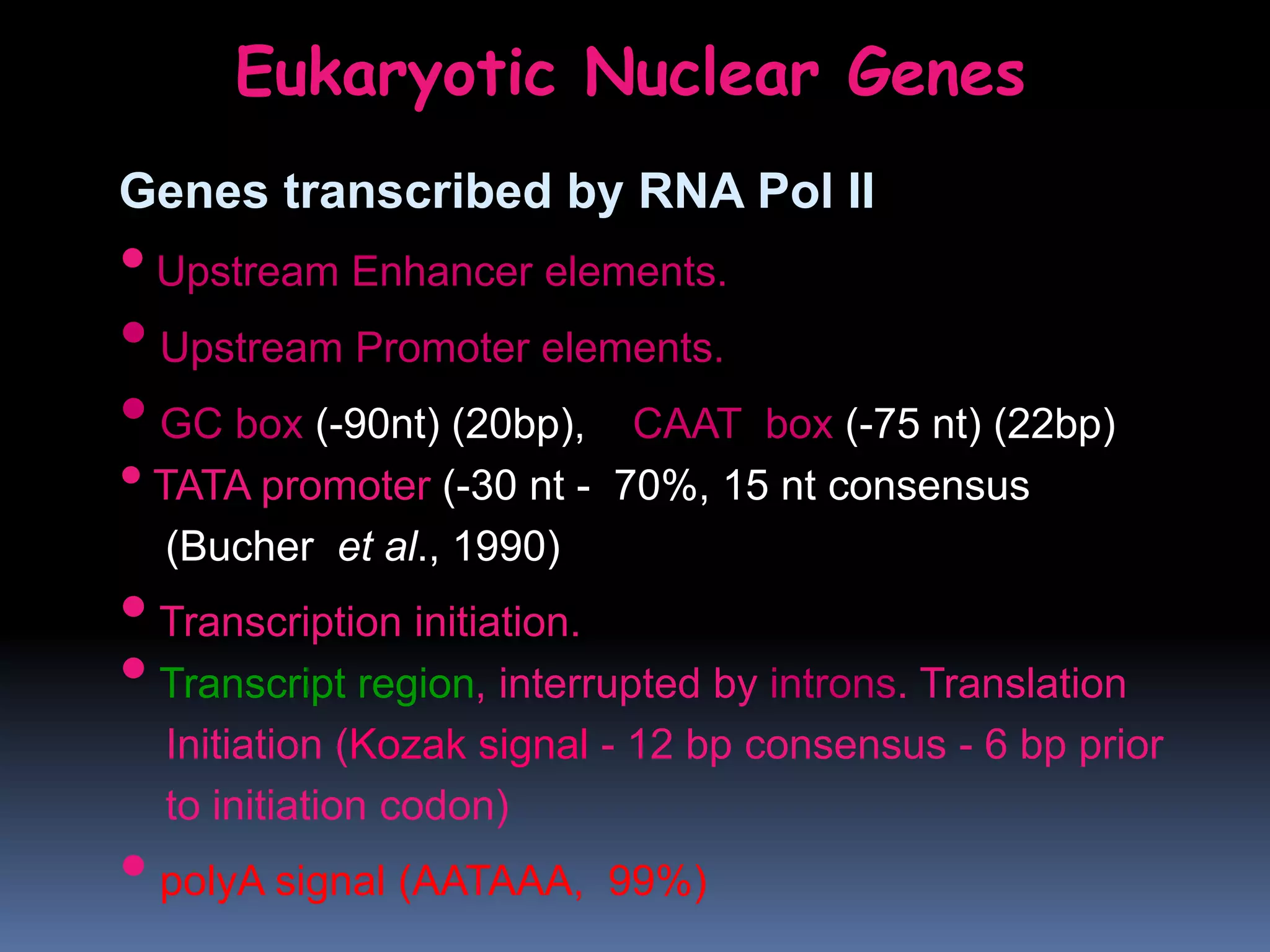
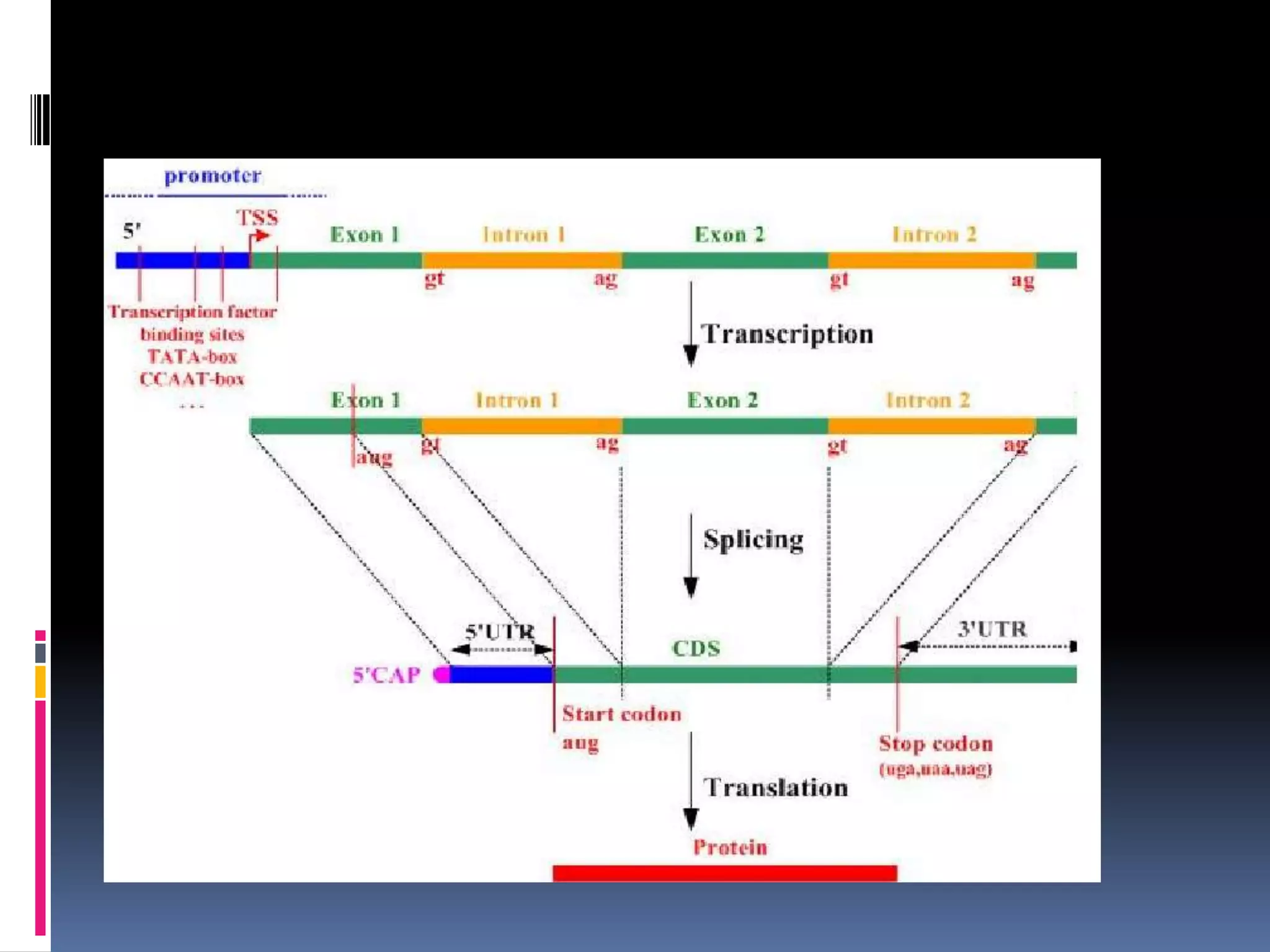
Eukaryotic Nuclear Genes
Genes transcribed by RNA Pol II
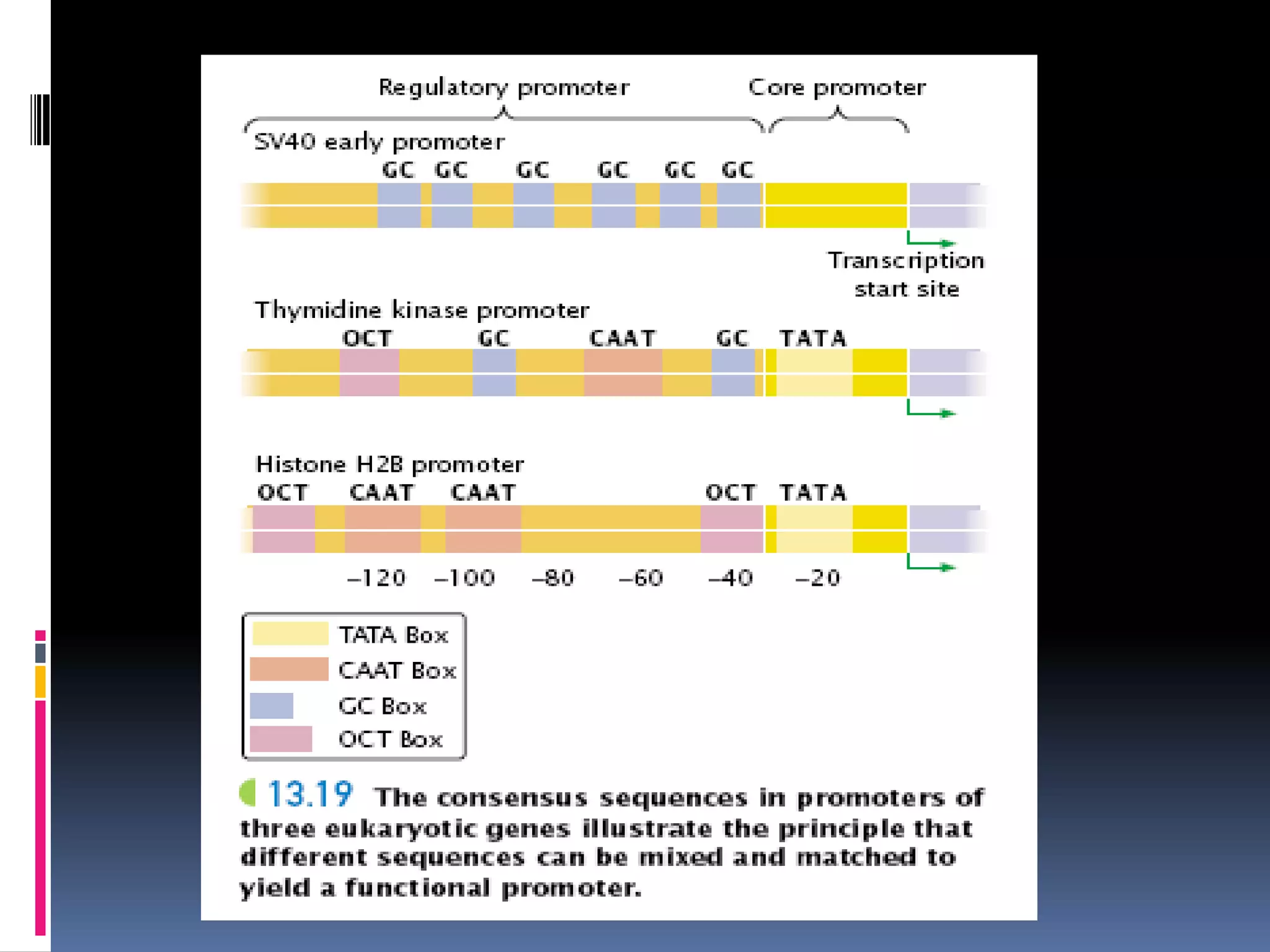
•Upstream Enhancer elements.
•Upstream Promoter elements.
•GC box (-90nt) (20bp), CAAT box (-75 nt) (22bp)
•TATA promoter (-30 nt - 70%, 15 nt consensus
(Bucher et al., 1990)
•Transcription initiation.
•Transcript region, interrupted by introns. Translation
Initiation (Kozak signal - 12 bp consensus - 6 bp prior
to initiation codon)
•polyA signal (AATAAA, 99%)
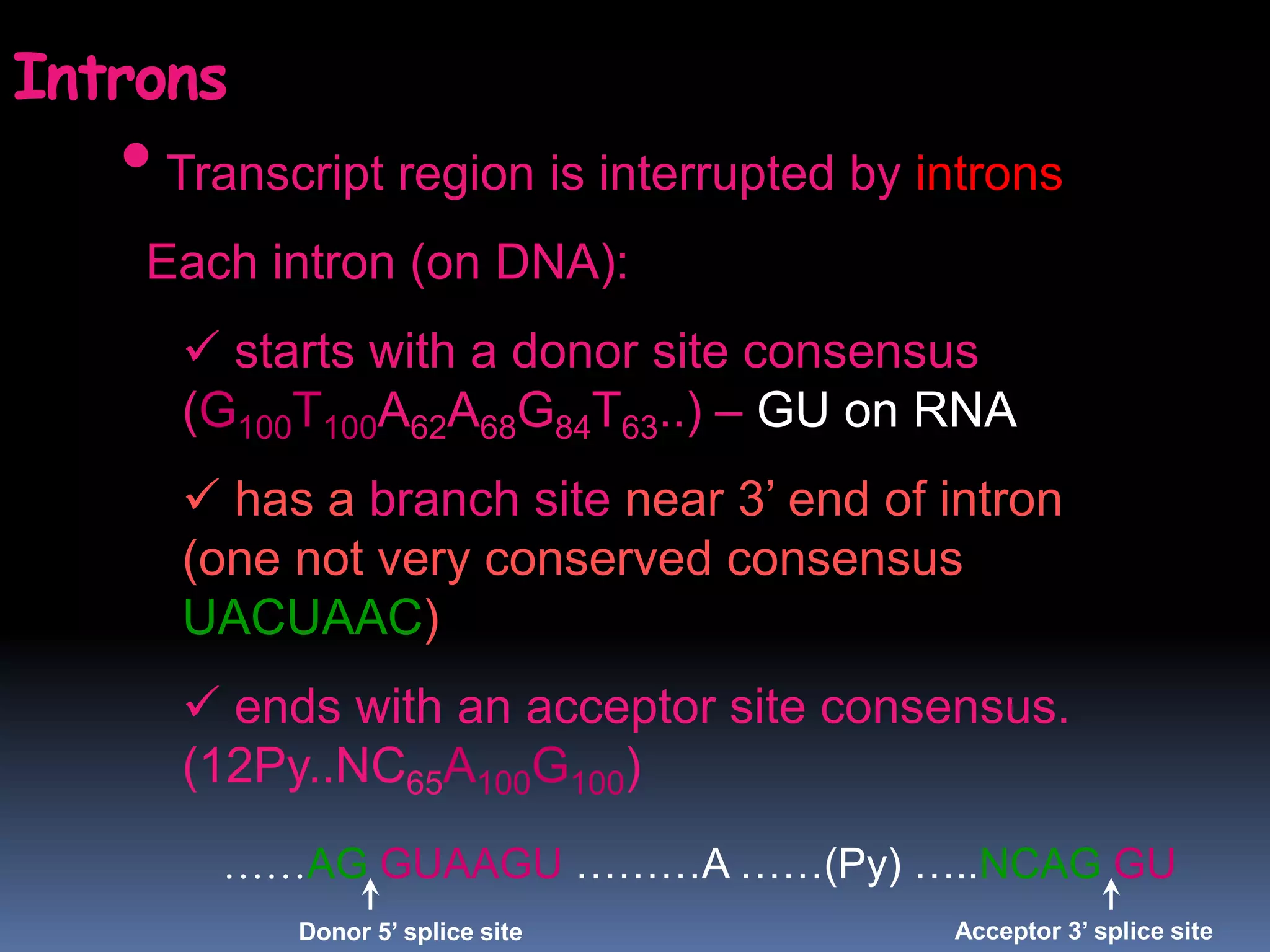
•Transcript region is interrupted by introns
Each intron (on DNA):
 starts with a donor site consensus
(G100T100A62A68G84T63..) – GU on RNA
 has a branch site near 3’ end of intron
(one not very conserved consensus
UACUAAC)
 ends with an acceptor site consensus.
(12Py..NC65A100G100)
Introns
……AG GUAAGU ………A ……(Py) …..NCAG GU
Donor 5’ splice site Acceptor 3’ splice site
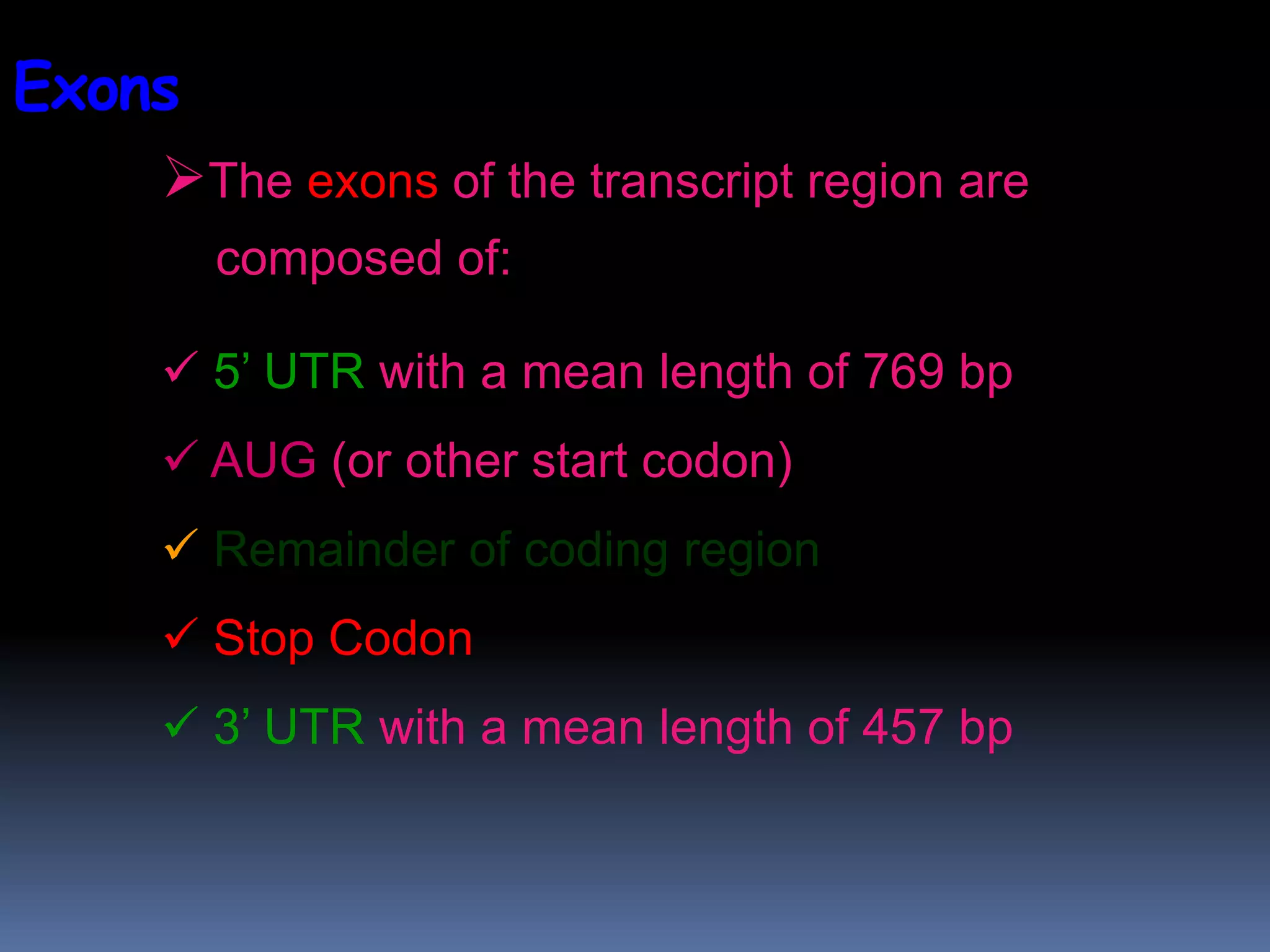
The exons of the transcript region are
composed of:
 5’ UTR with a mean length of 769 bp
 AUG (or other start codon)
 Remainder of coding region
 Stop Codon
 3’ UTR with a mean length of 457 bp
Exons
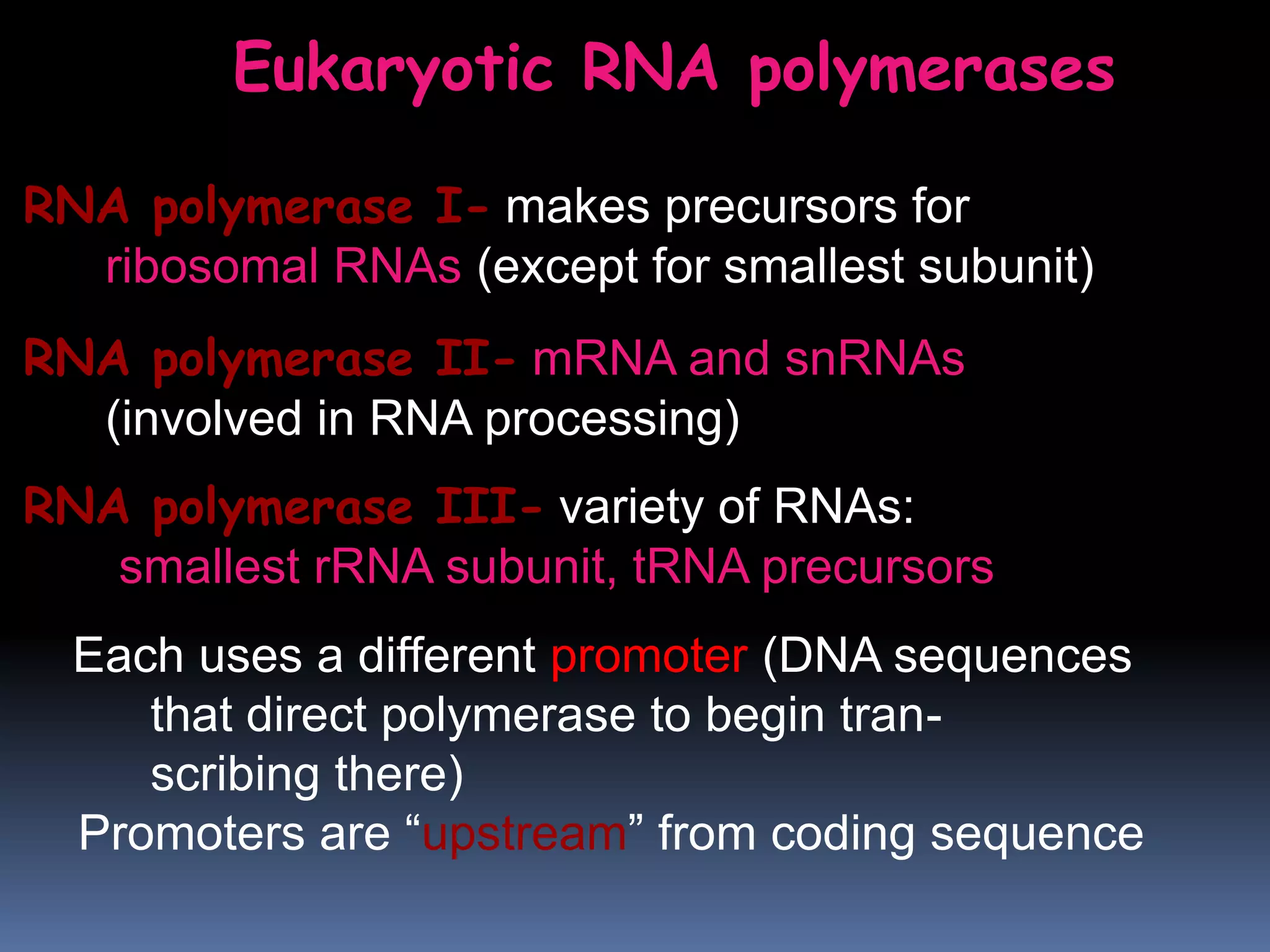
RNA polymerase I- makes precursors for
ribosomal RNAs (except for smallest subunit)
RNA polymerase II- mRNA and snRNAs
(involved in RNA processing)
RNA polymerase III- variety of RNAs:
smallest rRNA subunit, tRNA precursors
Each uses a different promoter (DNA sequences
that direct polymerase to begin tran-
scribing there)
Promoters are “upstream” from coding sequence
Eukaryotic RNA polymerases
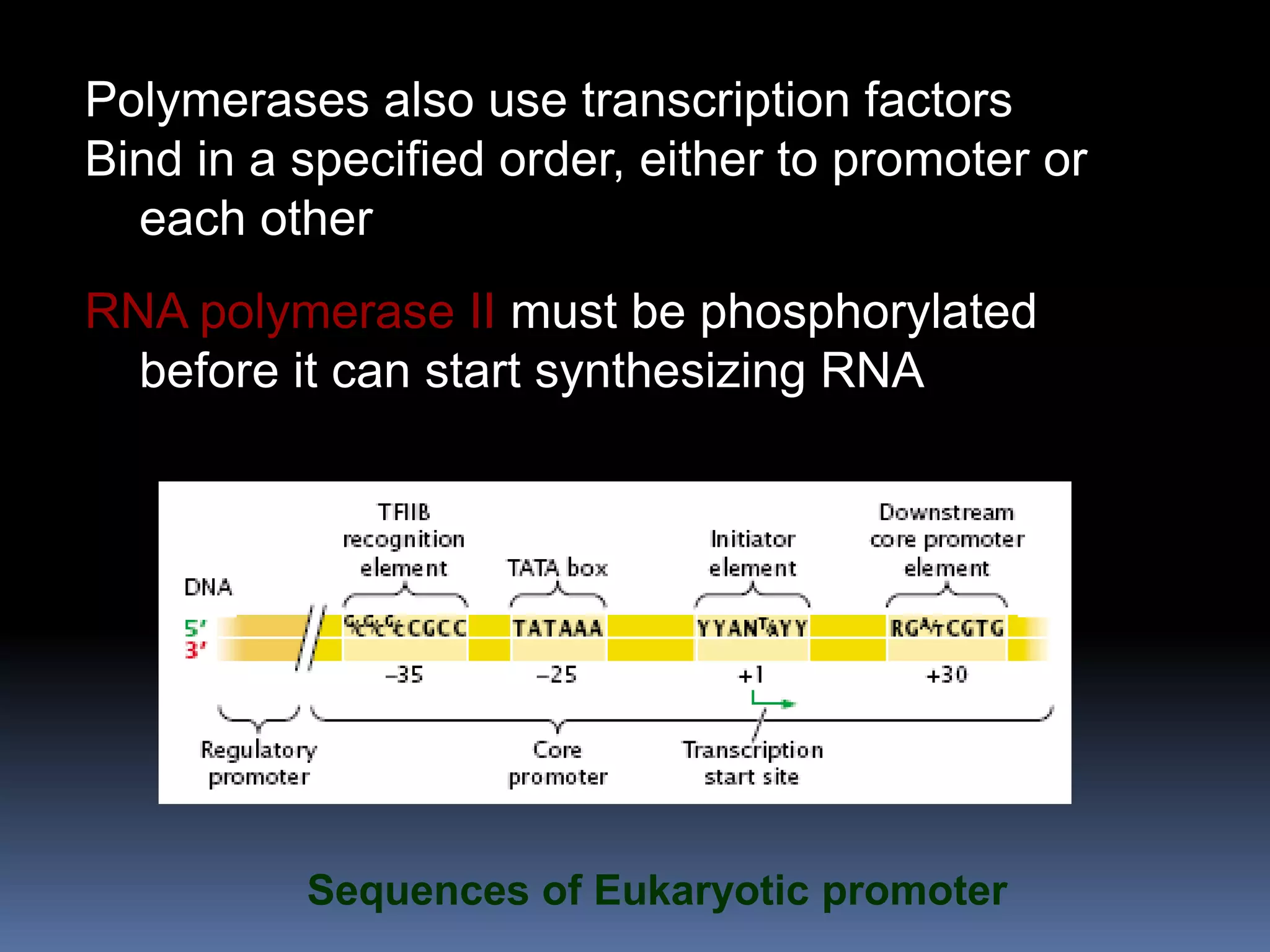
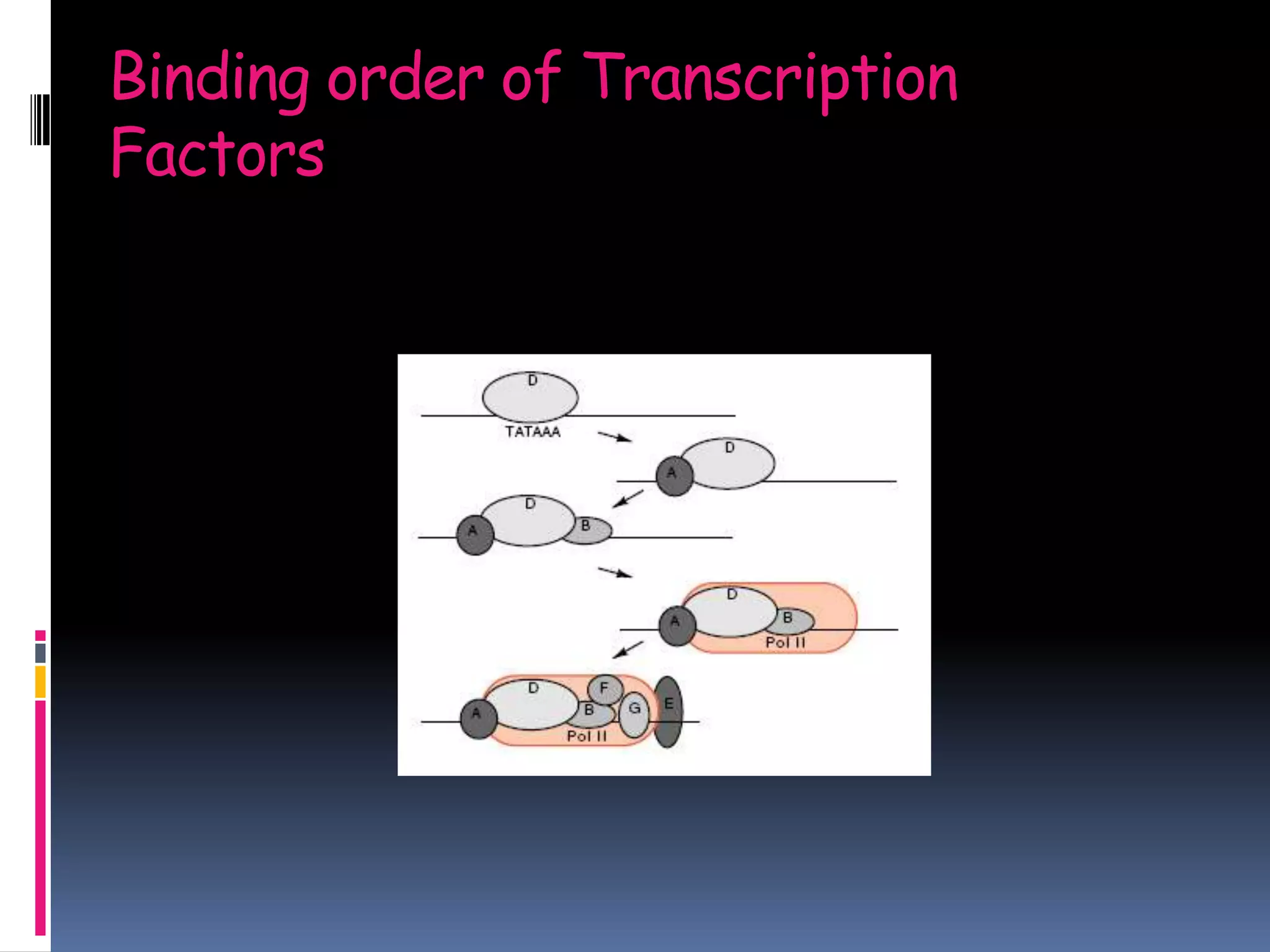
Polymerases also use transcription factors
Bind in a specified order, either to promoter or
each other
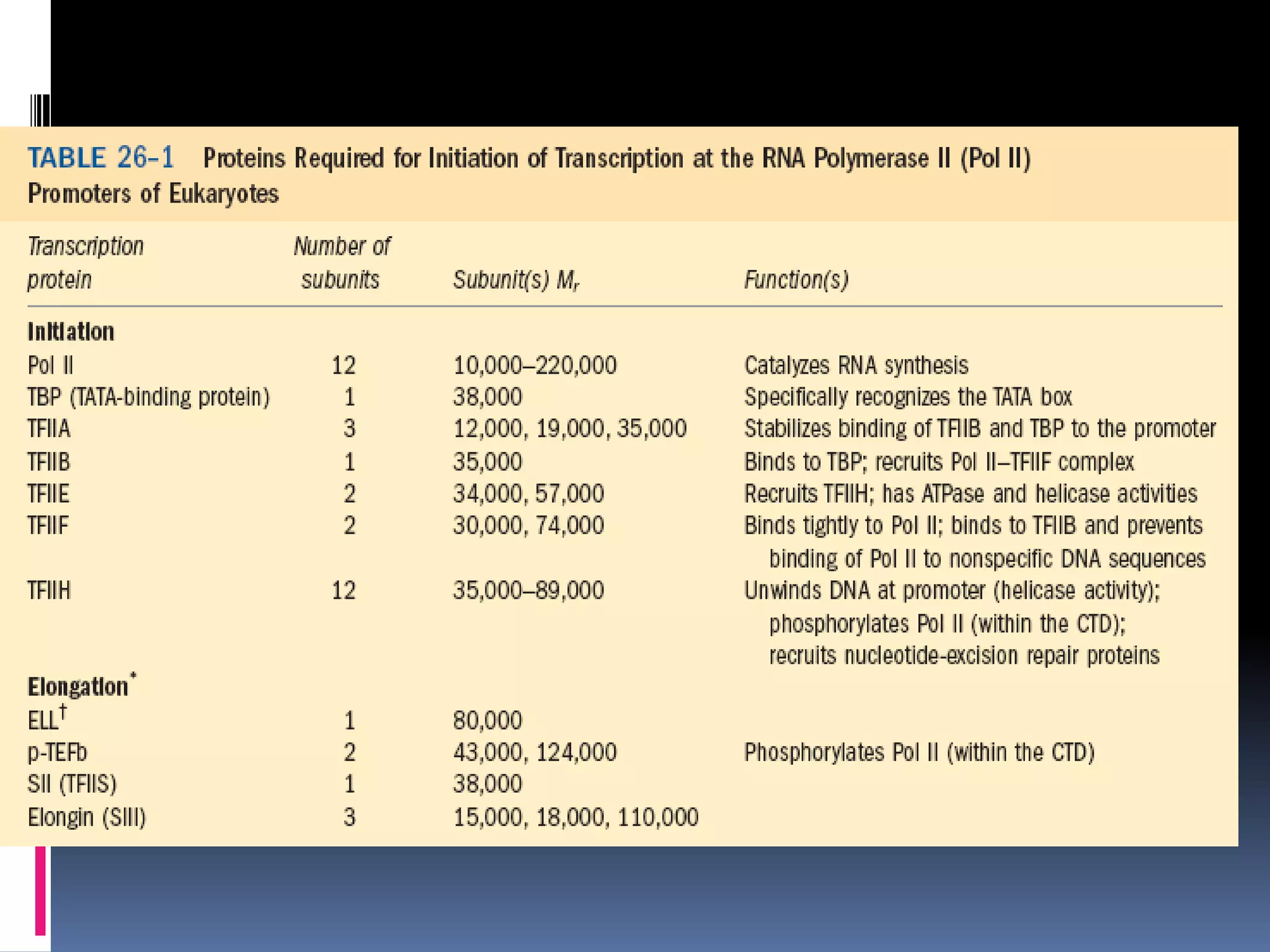
RNA polymerase II must be phosphorylated
before it can start synthesizing RNA
Sequences of Eukaryotic promoter
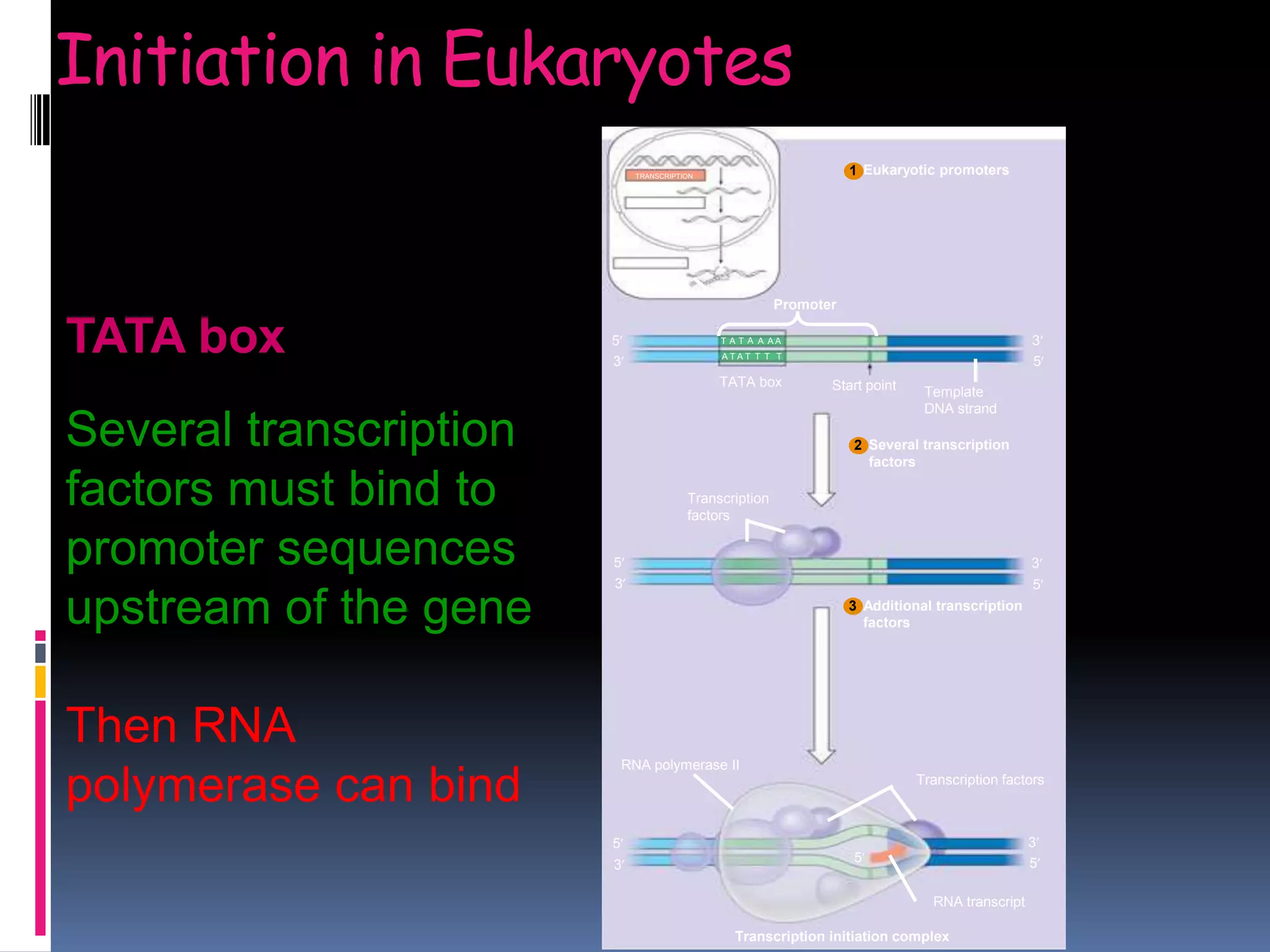
Initiation in Eukaryotes
TRANSCRIPTION
RNA PROCESSING
TRANSLATION
DNA
Pre-mRNA
mRNA
Ribosome
Polypeptide
Eukaryotic promoters
T A T A AA A
A T A T T T T
TATA box Start point Template
DNA strand
5
3
3
5
Several transcription
factors
Additional transcription
factors
Transcription
factors
5
3
3
5
1
2
3
Promoter
5
3
3
55
RNA polymerase II
Transcription factors
RNA transcript
Transcription initiation complex
Several transcription
factors must bind to
promoter sequences
upstream of the gene
Then RNA
polymerase can bind
TATA box
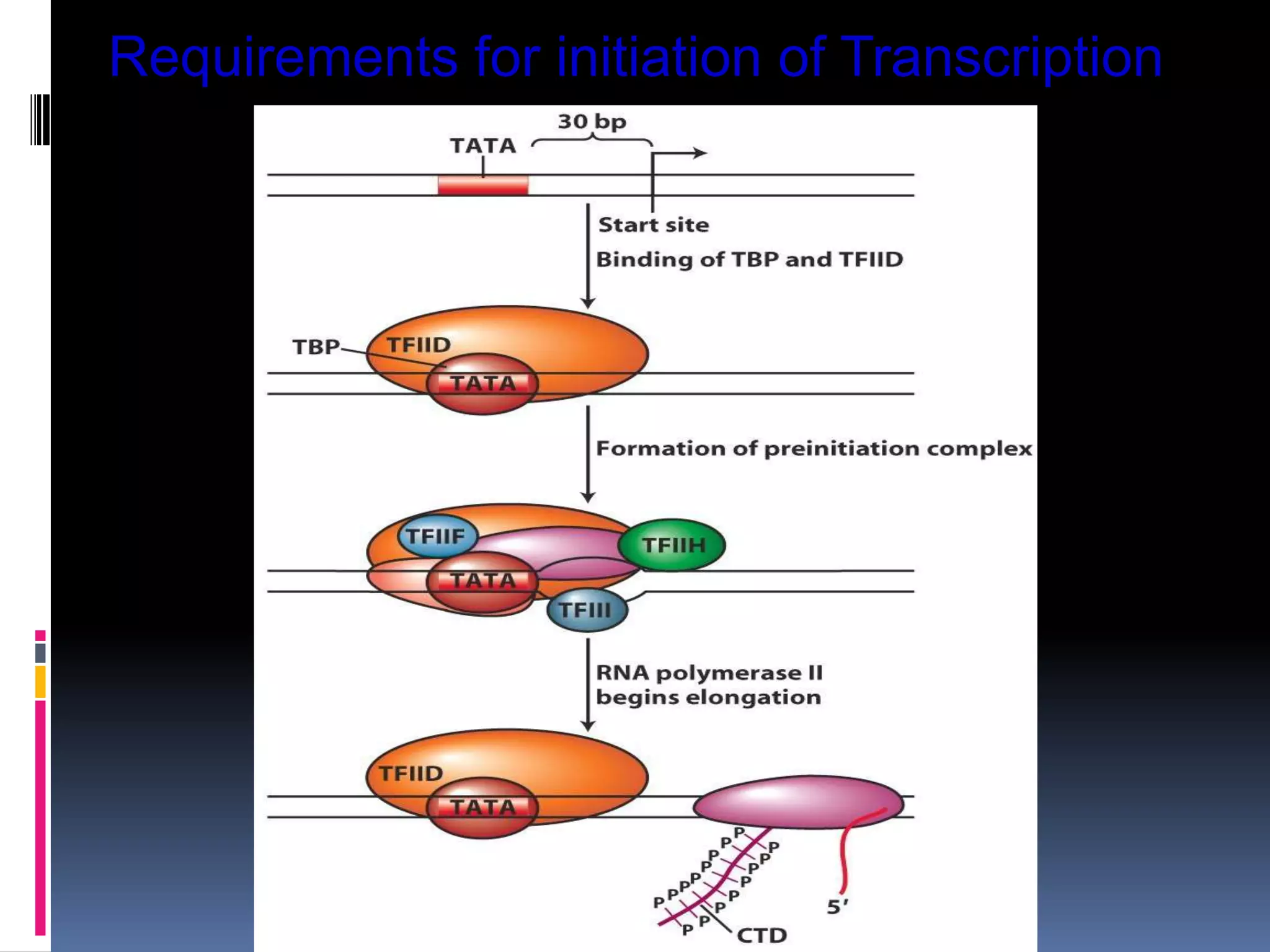
Requirements for initiation of Transcription
Binding order of Transcription
Factors
General
transcription
factors
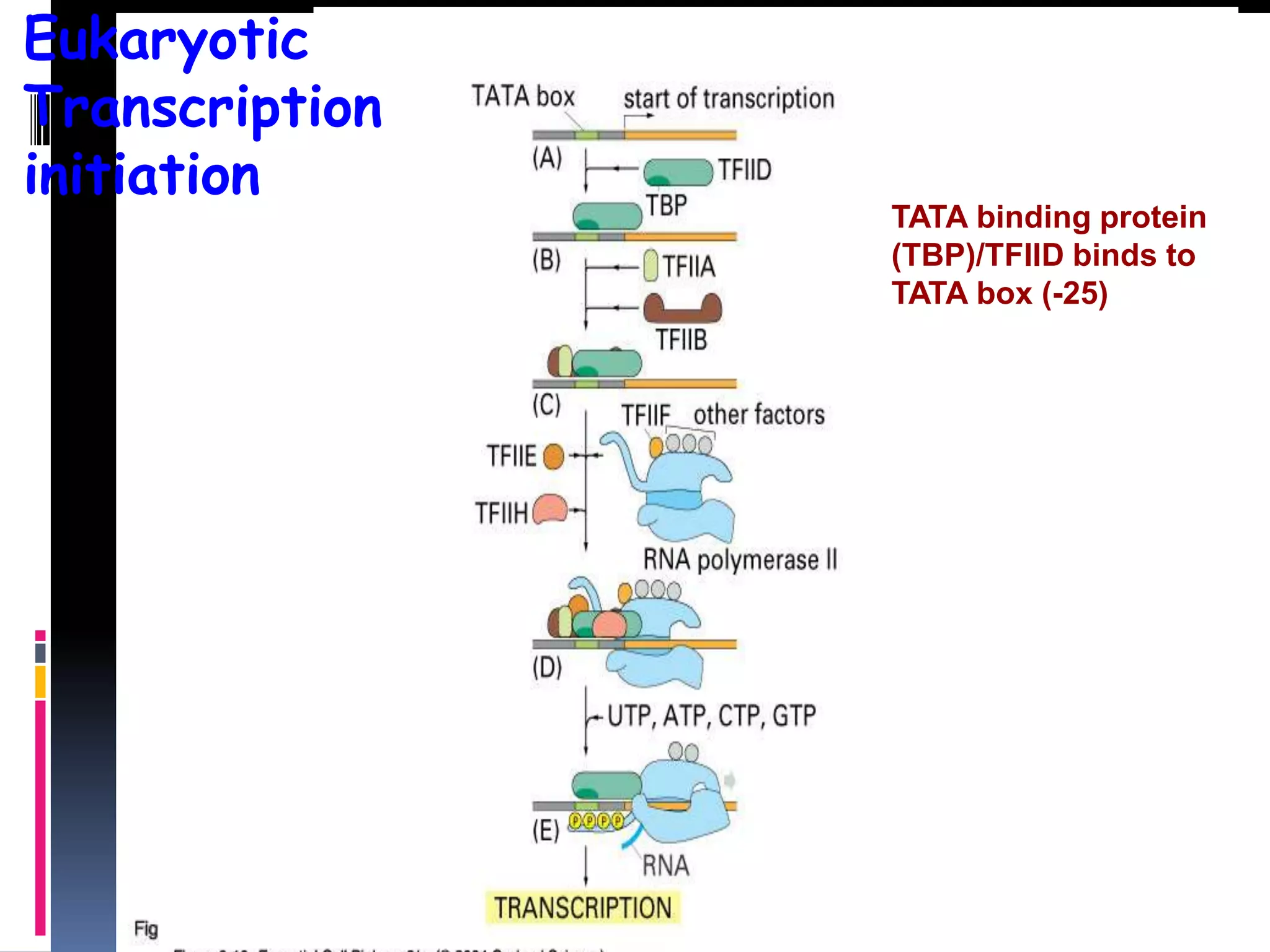
Eukaryotic
Transcription
initiation
TATA binding protein
(TBP)/TFIID binds to
TATA box (-25)
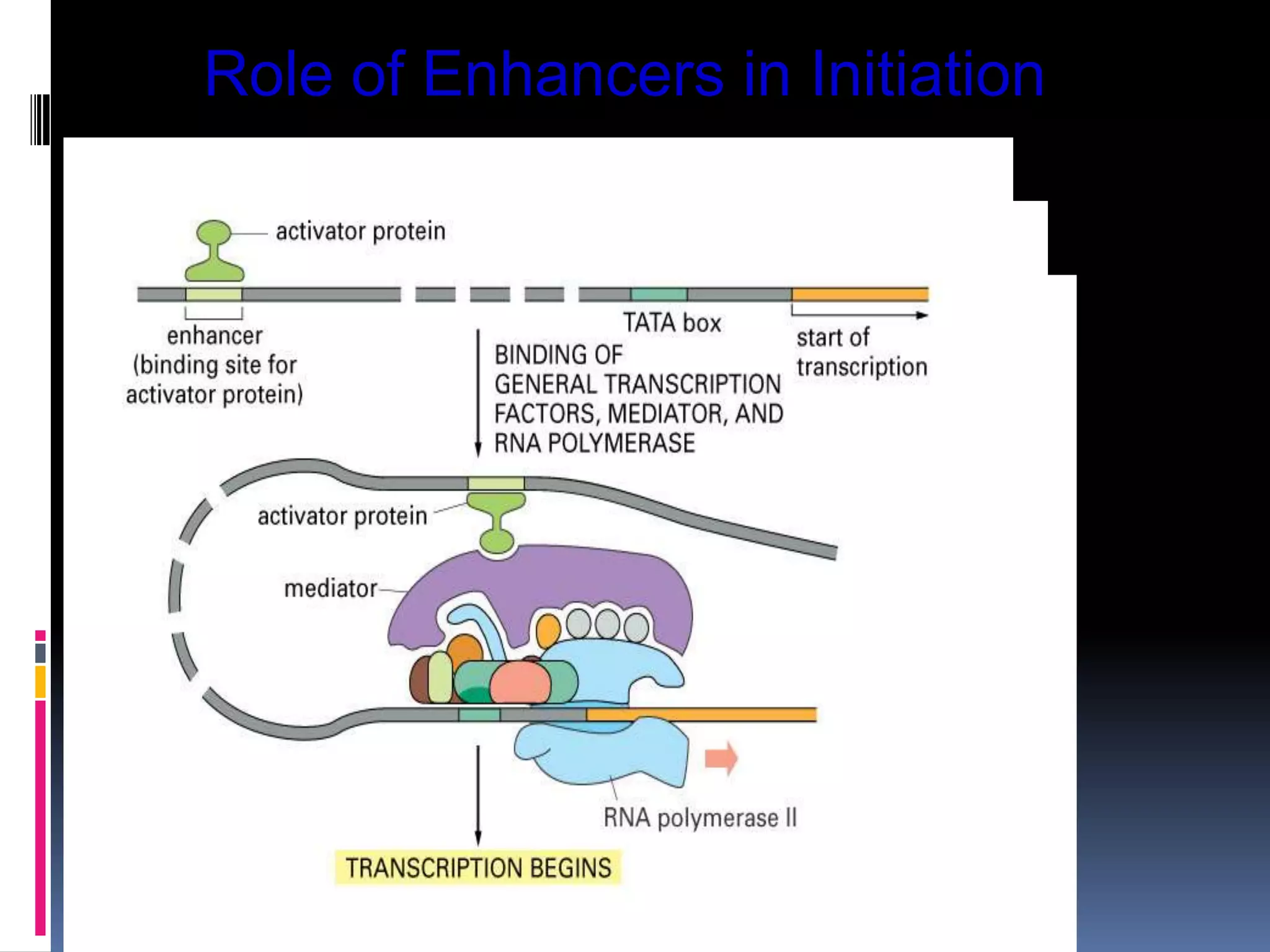
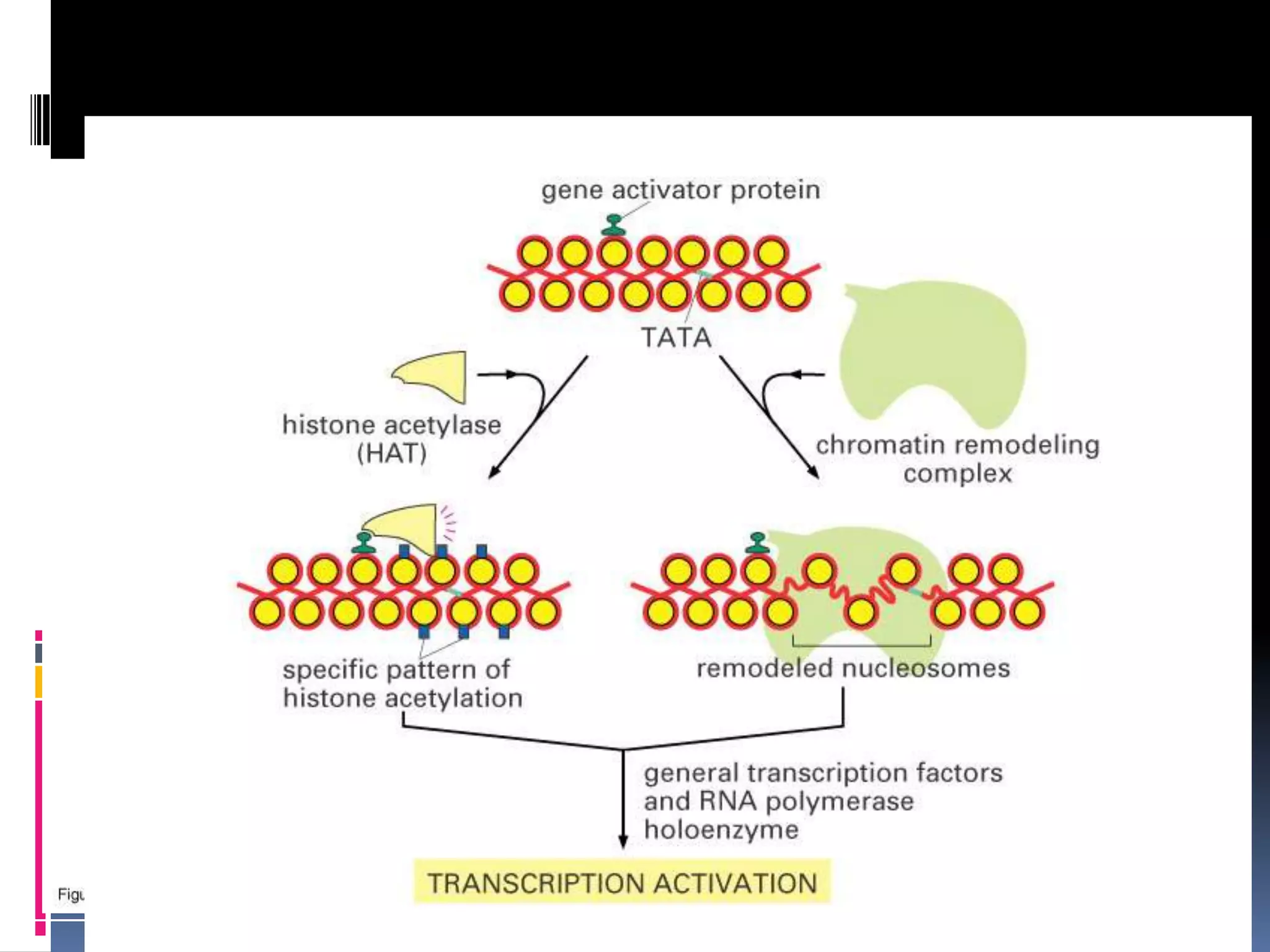
Role of Enhancers in Initiation
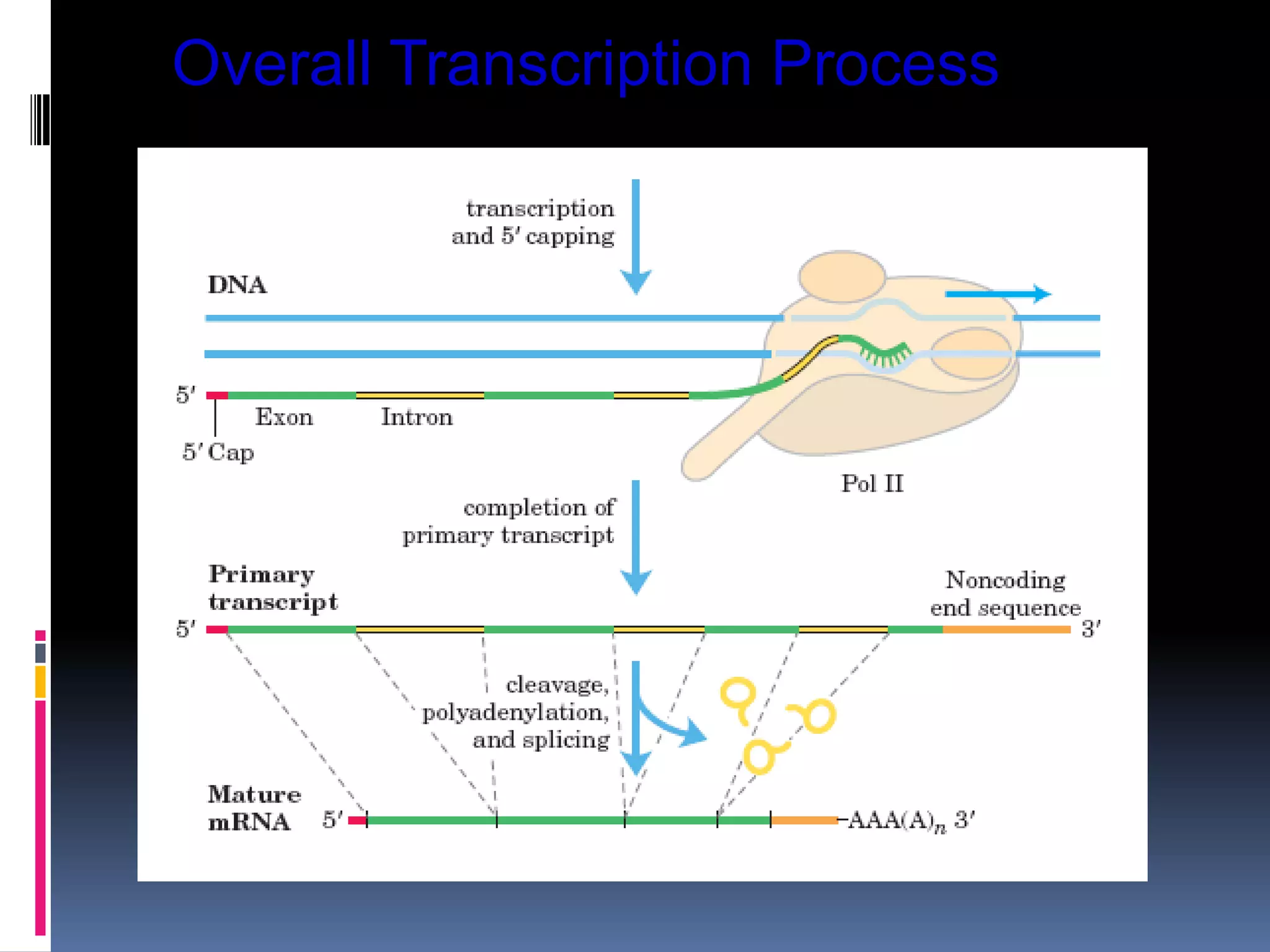
Overall Transcription Process

Gene Expression in Eukaryotes

  • 1.
    Gene Expression in Eukaryotes M.PrasadNaidu MSc Medical Biochemistry, Ph.D,.
  • 2.
    Outline  Central dogmain Eukaryotes  Nature of Genes in Eukaryotes  Initiation and Elongation of Transcription  RNA Processing
  • 3.
    Coding and Non-codingSequences In bacteria, the RNA made is translated to a protein In eukaryotic cells, the primary transcript is made of coding sequences called exons and non-coding sequences called introns It is the exons that make up the mRNA that gets translated to a protein
  • 4.
    Eukaryotic Transcription Transcription occursin the nucleus in eukaryotes, nucleoid in bacteria Translation occurs on ribosomes in the cytoplasm mRNA is transported out of nucleus through the nuclear pores
  • 5.
    In Eukaryotes (cellswhere the DNA is sequestered in a separate nucleus) the exons must be spliced (many eukaryotes genes contain no introns! Particularly true in ´lower´ organisms). mRNA (messenger RNA) contains the assembled copy of the gene. The mRNA acts as a messenger to carry the information stored in the DNA in the nucleus to the cytoplasm where the ribosomes can make it into protein. Eukaryotic Central Dogma
  • 6.
    ~6 to 12%of human DNA encodes proteins (higher fraction in nematode) ~90% of human DNA is non-coding ~10% of human DNA codes for UTR Eukaryotic Genome - Facts
  • 7.
    Untranslated regions (UTRs) •Introns (can be genes within introns of another gene!) •Intergenic regions: - Repetitive elements - Pseudogenes (dead genes that may (or may not) have been retroposed back in the genome as a single-exon “gene” Non-Coding Eukaryotic DNA
  • 8.
    Eukaryotic Nuclear Genes Genestranscribed by RNA Pol II •Upstream Enhancer elements. •Upstream Promoter elements. •GC box (-90nt) (20bp), CAAT box (-75 nt) (22bp) •TATA promoter (-30 nt - 70%, 15 nt consensus (Bucher et al., 1990) •Transcription initiation. •Transcript region, interrupted by introns. Translation Initiation (Kozak signal - 12 bp consensus - 6 bp prior to initiation codon) •polyA signal (AATAAA, 99%)
  • 10.
    •Transcript region isinterrupted by introns Each intron (on DNA):  starts with a donor site consensus (G100T100A62A68G84T63..) – GU on RNA  has a branch site near 3’ end of intron (one not very conserved consensus UACUAAC)  ends with an acceptor site consensus. (12Py..NC65A100G100) Introns ……AG GUAAGU ………A ……(Py) …..NCAG GU Donor 5’ splice site Acceptor 3’ splice site
  • 11.
    The exons ofthe transcript region are composed of:  5’ UTR with a mean length of 769 bp  AUG (or other start codon)  Remainder of coding region  Stop Codon  3’ UTR with a mean length of 457 bp Exons
  • 12.
    RNA polymerase I-makes precursors for ribosomal RNAs (except for smallest subunit) RNA polymerase II- mRNA and snRNAs (involved in RNA processing) RNA polymerase III- variety of RNAs: smallest rRNA subunit, tRNA precursors Each uses a different promoter (DNA sequences that direct polymerase to begin tran- scribing there) Promoters are “upstream” from coding sequence Eukaryotic RNA polymerases
  • 13.
    Polymerases also usetranscription factors Bind in a specified order, either to promoter or each other RNA polymerase II must be phosphorylated before it can start synthesizing RNA Sequences of Eukaryotic promoter
  • 15.
    Initiation in Eukaryotes TRANSCRIPTION RNAPROCESSING TRANSLATION DNA Pre-mRNA mRNA Ribosome Polypeptide Eukaryotic promoters T A T A AA A A T A T T T T TATA box Start point Template DNA strand 5 3 3 5 Several transcription factors Additional transcription factors Transcription factors 5 3 3 5 1 2 3 Promoter 5 3 3 55 RNA polymerase II Transcription factors RNA transcript Transcription initiation complex Several transcription factors must bind to promoter sequences upstream of the gene Then RNA polymerase can bind TATA box
  • 16.
  • 17.
    Binding order ofTranscription Factors
  • 19.
  • 20.
    Role of Enhancersin Initiation
  • 23.