
Downloaded 22 times
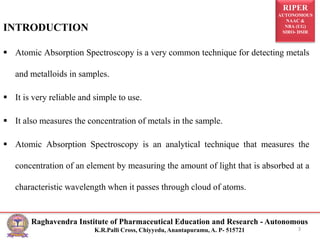
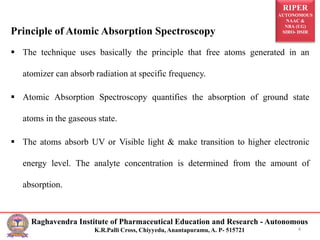
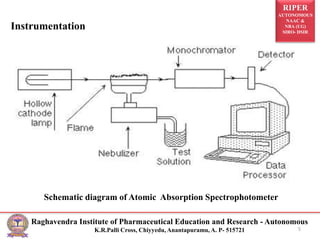
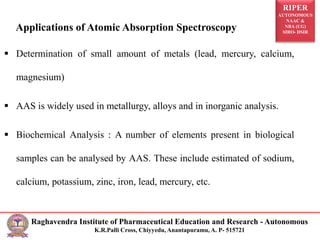
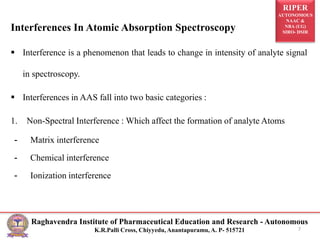
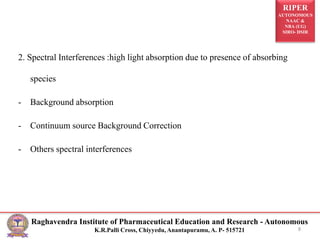
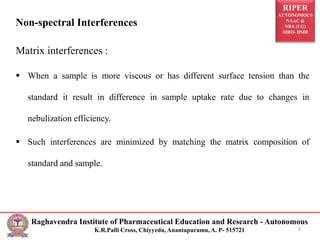
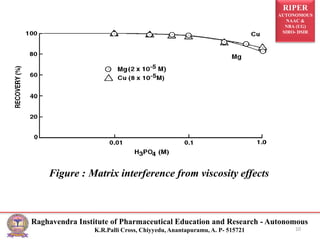
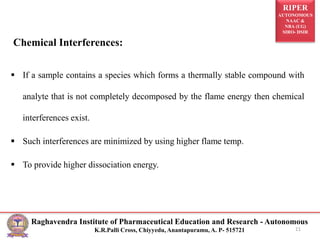
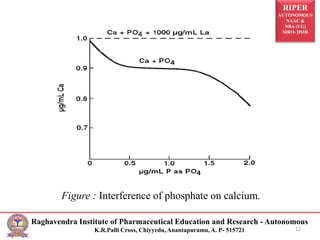
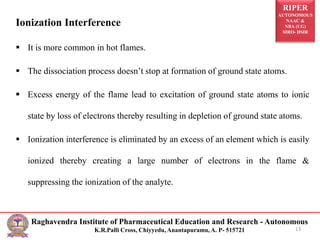
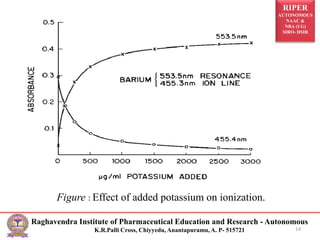
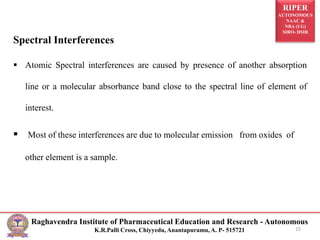
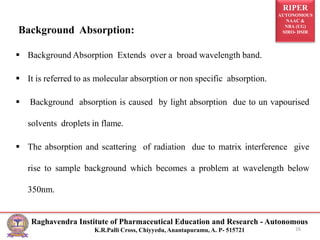
The document discusses atomic absorption spectroscopy. It begins with an introduction describing how atomic absorption spectroscopy measures the concentration of an element by measuring the amount of light absorbed at a characteristic wavelength when it passes through atoms of that element. It then describes the principle, instrumentation, applications, and sources of interference in atomic absorption spectroscopy. The key sources of interference discussed are non-spectral interferences such as matrix, chemical, and ionization interferences and spectral interferences such as background absorption.


![谷歌留痕技术 [ 𝙩𝙤𝙥 𝟮𝟯𝟯. 𝙘 𝙤𝙢 ]](https://cdn.slidesharecdn.com/ss_thumbnails/top233-260130174328-3833018c-thumbnail.jpg?width=640&height=640&fit=bounds)


