By 
Dr. Najia Asrar Zaidi
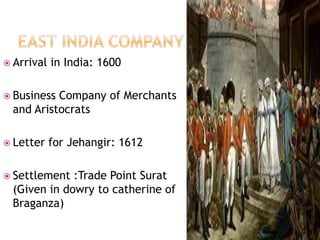
 Arrival in India: 1600 
 Business Company of Merchants 
and Aristocrats 
 Letter for Jehangir: 1612 
 Settlement :Trade Point Surat 
(Given in dowry to catherine of 
Braganza)
Suddenly the wind has changed, 
my soul 
Is restless constantly. 
How shall I tell the tale of woe, 
My heart is rent with agony. 
Delhi was once a paradise, 
Such peace had abided here. 
But they have ravished its name 
and pride, 
Remain now only ruins and care 
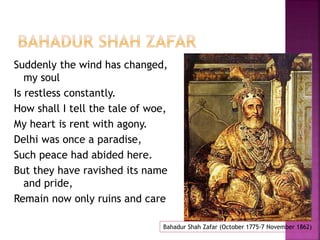
Bahadur Shah Zafar (October 1775-7 November 1862)
 To eliminate the separate Identity of 
Muslims 
 Replacement of Persian and Arabic with Urdu 
 Bringing down of muskim peearage from 
55%to 5%. 
 Vital blow to Muslim culture, society and 
economics
 Muslims not recruited in Army and Civilian 
employment 
 Loss of culture, identity and selfhood 
 Poverty, misery and breakdown of society 
 Low morale and helplessness
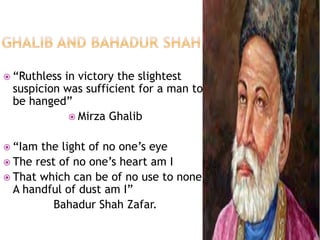
 “Ruthless in victory the slightest 
suspicion was sufficient for a man to 
be hanged” 
 Mirza Ghalib 
 “Iam the light of no one’s eye 
 The rest of no one’s heart am I 
 That which can be of no use to none 
A handful of dust am I” 
Bahadur Shah Zafar.
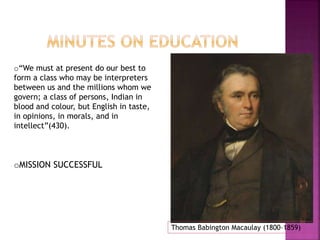
Thomas Babington Macaulay (1800–1859) 
o“We must at present do our best to 
form a class who may be interpreters 
between us and the millions whom we 
govern; a class of persons, Indian in 
blood and colour, but English in taste, 
in opinions, in morals, and in 
intellect”(430). 
oMISSION SUCCESSFUL
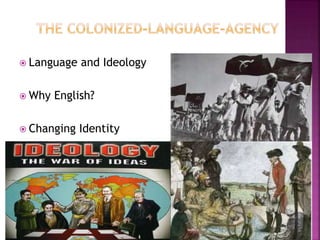
 Language and Ideology 
 Why English? 
 Changing Identity
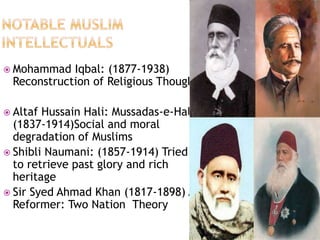
 Mohammad Iqbal: (1877-1938) 
Reconstruction of Religious Thought 
 Altaf Hussain Hali: Mussadas-e-Hali 
(1837-1914)Social and moral 
degradation of Muslims 
 Shibli Naumani: (1857-1914) Tried 
to retrieve past glory and rich 
heritage 
 Sir Syed Ahmad Khan (1817-1898) A 
Reformer: Two Nation Theory
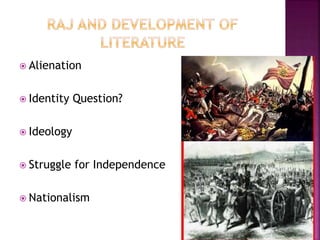
 Alienation 
 Identity Question? 
 Ideology 
 Struggle for Independence 
 Nationalism
 Feroze Khan Noon: “Scented Dust” 1941 
 Ahmed Ali: Twilight in Delhi 1941.(Short Stories) 
 Mrs. Zaib-un-Nissa Hamidullah: Short Stories 
1956 
 Zahir H. Farooqi: Love in Ruins 1950’s 
 Zulfiquar Ghose: Murder of Aziz Khan (1967) 
 Attia Hossain: “Sunlight in a Broken Cloumn” 
(1961) 
 Quratulain Hyder: “River of Fire”(1958) 
 Bapsi Sidhwa:”Crow Eaters”(1978)
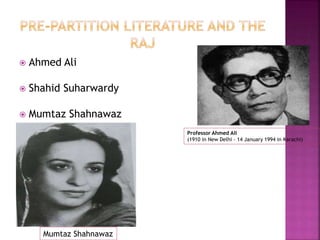
 Ahmed Ali 
 Shahid Suharwardy 
 Mumtaz Shahnawaz 
Professor Ahmed Ali 
(1910 in New Delhi – 14 January 1994 in Karachi) 
Mumtaz Shahnawaz
 Taufiq Rahat:1927-1998 
 Daud Kamal1935-1987 
 Zulfiqar Ghose 1935 
 Ahmed Ali 1940’s 
 Sardar Asif 1947 
 Alamgir Hashmi (contemporary) 
 Soofia Ishaque 
 Shadab Hashmi 
 Shabnam Riaz 
 Ilona Yousaf
 Colonial Past 
 Muslim Glory 
 Cultural Synthesis 
 Nostalgia 
 Cultural Insight 
 Religious Imagery 
 Politics 
 Mysticism
 Strong middle class 
 Struggle to preserve identity and religion 
 Contest authoritarianism 
 Religious puritanism 
Political Controversy
 Change in Class structure 
 Dress and Language 
 Philosophy 
 Modernity replacing old order
 Social Problems 
 Subdued Status of Women 
 Nationalism 
 Communal riots
 Mohsin Hamid:The Reluctant Fundamentalist 
Nadeem Aslam:“Maps for Lost Lovers 
Uzam Aslam Khan:”Story of the noble Rot” 
Kamila Shamsie “Burnt Shadows” 
Mohammad Hanif: “A case of Exploding 
Mangoes” 
H.M. Naqvi: “Home Boy”
 From Purdah to Parliament (1963) 
 Shaista Ikramullah 
 Father and Daughter (1971) 
 Jahanara Shahnawa 
 Daughter of the East (1988) 
 Meatless Days (1989) 
 Memoirs of a Rebel Princes (2004) 
 My Feudal Lord (1989) 
 Tehmina Durrani
Deterritorialization of Literature 
Family-nation and national culture 
Religion and the political framework 
War on terror 
Fear and vioence in the wake of 9/11
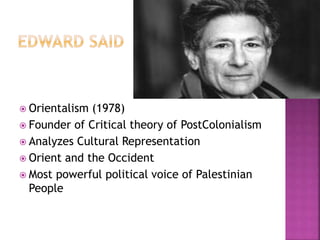
 Orientalism (1978) 
 Founder of Critical theory of PostColonialism 
 Analyzes Cultural Representation 
 Orient and the Occident 
 Most powerful political voice of Palestinian 
People
 A History of Pakistani Literature in English 
 By Tariq Rahman Vanguard.1990 
 Post Independence Voices in South Asian 
Writings. By Lal, Hashmi and Ramraj.2001

Historical background to pakistani literature

  • 1.
    By Dr. NajiaAsrar Zaidi
  • 2.
     Arrival inIndia: 1600  Business Company of Merchants and Aristocrats  Letter for Jehangir: 1612  Settlement :Trade Point Surat (Given in dowry to catherine of Braganza)
  • 3.
    Suddenly the windhas changed, my soul Is restless constantly. How shall I tell the tale of woe, My heart is rent with agony. Delhi was once a paradise, Such peace had abided here. But they have ravished its name and pride, Remain now only ruins and care Bahadur Shah Zafar (October 1775-7 November 1862)
  • 4.
     To eliminatethe separate Identity of Muslims  Replacement of Persian and Arabic with Urdu  Bringing down of muskim peearage from 55%to 5%.  Vital blow to Muslim culture, society and economics
  • 5.
     Muslims notrecruited in Army and Civilian employment  Loss of culture, identity and selfhood  Poverty, misery and breakdown of society  Low morale and helplessness
  • 6.
     “Ruthless invictory the slightest suspicion was sufficient for a man to be hanged”  Mirza Ghalib  “Iam the light of no one’s eye  The rest of no one’s heart am I  That which can be of no use to none A handful of dust am I” Bahadur Shah Zafar.
  • 7.
    Thomas Babington Macaulay(1800–1859) o“We must at present do our best to form a class who may be interpreters between us and the millions whom we govern; a class of persons, Indian in blood and colour, but English in taste, in opinions, in morals, and in intellect”(430). oMISSION SUCCESSFUL
  • 8.
     Language andIdeology  Why English?  Changing Identity
  • 9.
     Mohammad Iqbal:(1877-1938) Reconstruction of Religious Thought  Altaf Hussain Hali: Mussadas-e-Hali (1837-1914)Social and moral degradation of Muslims  Shibli Naumani: (1857-1914) Tried to retrieve past glory and rich heritage  Sir Syed Ahmad Khan (1817-1898) A Reformer: Two Nation Theory
  • 10.
     Alienation Identity Question?  Ideology  Struggle for Independence  Nationalism
  • 11.
     Feroze KhanNoon: “Scented Dust” 1941  Ahmed Ali: Twilight in Delhi 1941.(Short Stories)  Mrs. Zaib-un-Nissa Hamidullah: Short Stories 1956  Zahir H. Farooqi: Love in Ruins 1950’s  Zulfiquar Ghose: Murder of Aziz Khan (1967)  Attia Hossain: “Sunlight in a Broken Cloumn” (1961)  Quratulain Hyder: “River of Fire”(1958)  Bapsi Sidhwa:”Crow Eaters”(1978)
  • 12.
     Ahmed Ali  Shahid Suharwardy  Mumtaz Shahnawaz Professor Ahmed Ali (1910 in New Delhi – 14 January 1994 in Karachi) Mumtaz Shahnawaz
  • 13.
     Taufiq Rahat:1927-1998  Daud Kamal1935-1987  Zulfiqar Ghose 1935  Ahmed Ali 1940’s  Sardar Asif 1947  Alamgir Hashmi (contemporary)  Soofia Ishaque  Shadab Hashmi  Shabnam Riaz  Ilona Yousaf
  • 14.
     Colonial Past  Muslim Glory  Cultural Synthesis  Nostalgia  Cultural Insight  Religious Imagery  Politics  Mysticism
  • 15.
     Strong middleclass  Struggle to preserve identity and religion  Contest authoritarianism  Religious puritanism Political Controversy
  • 16.
     Change inClass structure  Dress and Language  Philosophy  Modernity replacing old order
  • 17.
     Social Problems  Subdued Status of Women  Nationalism  Communal riots
  • 18.
     Mohsin Hamid:TheReluctant Fundamentalist Nadeem Aslam:“Maps for Lost Lovers Uzam Aslam Khan:”Story of the noble Rot” Kamila Shamsie “Burnt Shadows” Mohammad Hanif: “A case of Exploding Mangoes” H.M. Naqvi: “Home Boy”
  • 19.
     From Purdahto Parliament (1963)  Shaista Ikramullah  Father and Daughter (1971)  Jahanara Shahnawa  Daughter of the East (1988)  Meatless Days (1989)  Memoirs of a Rebel Princes (2004)  My Feudal Lord (1989)  Tehmina Durrani
  • 20.
    Deterritorialization of Literature Family-nation and national culture Religion and the political framework War on terror Fear and vioence in the wake of 9/11
  • 21.
     Orientalism (1978)  Founder of Critical theory of PostColonialism  Analyzes Cultural Representation  Orient and the Occident  Most powerful political voice of Palestinian People
  • 22.
     A Historyof Pakistani Literature in English  By Tariq Rahman Vanguard.1990  Post Independence Voices in South Asian Writings. By Lal, Hashmi and Ramraj.2001