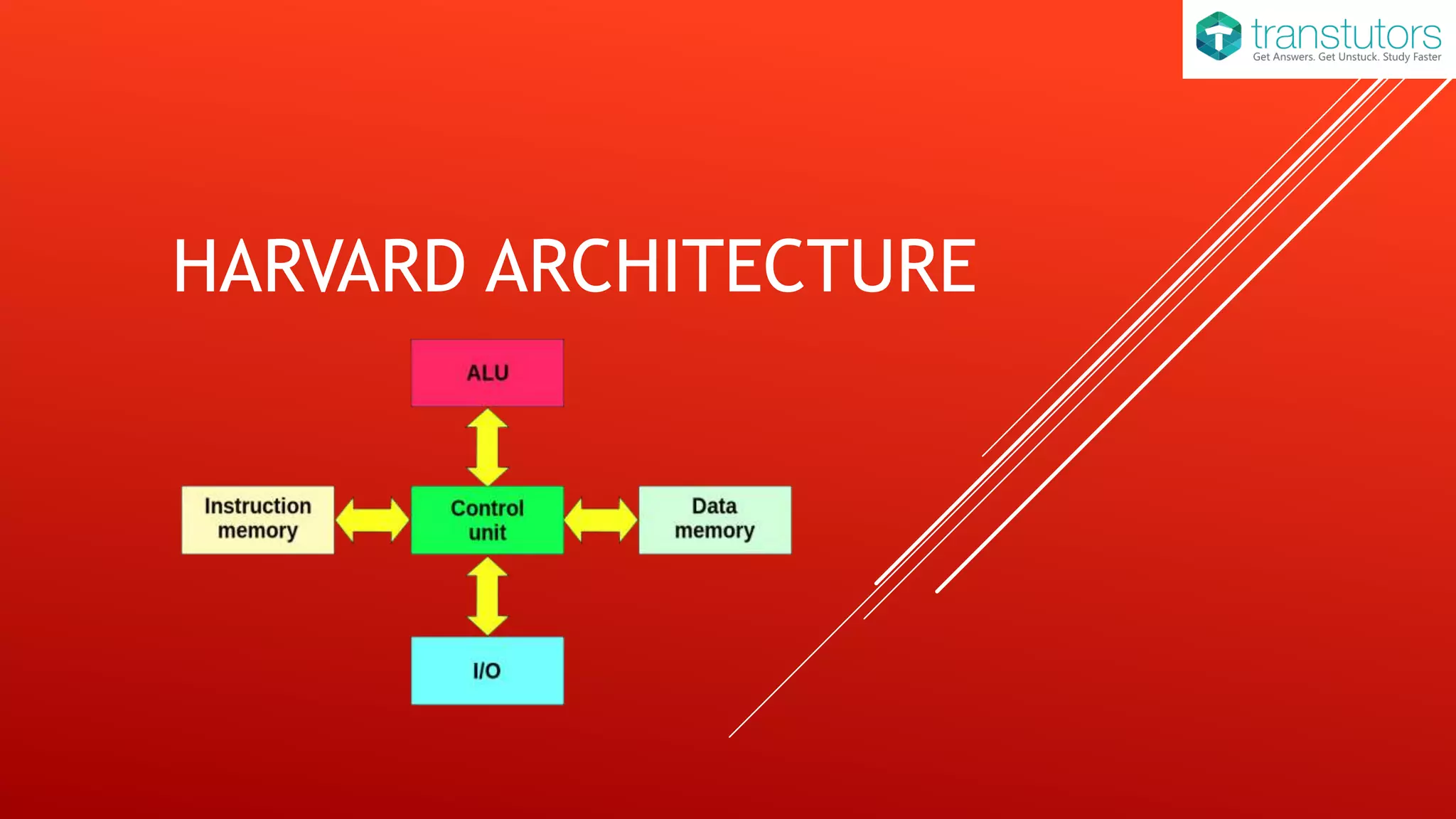

HARVARD ARCHITECTURE
DEFINITION OF HARVARD ARCHITECTURE
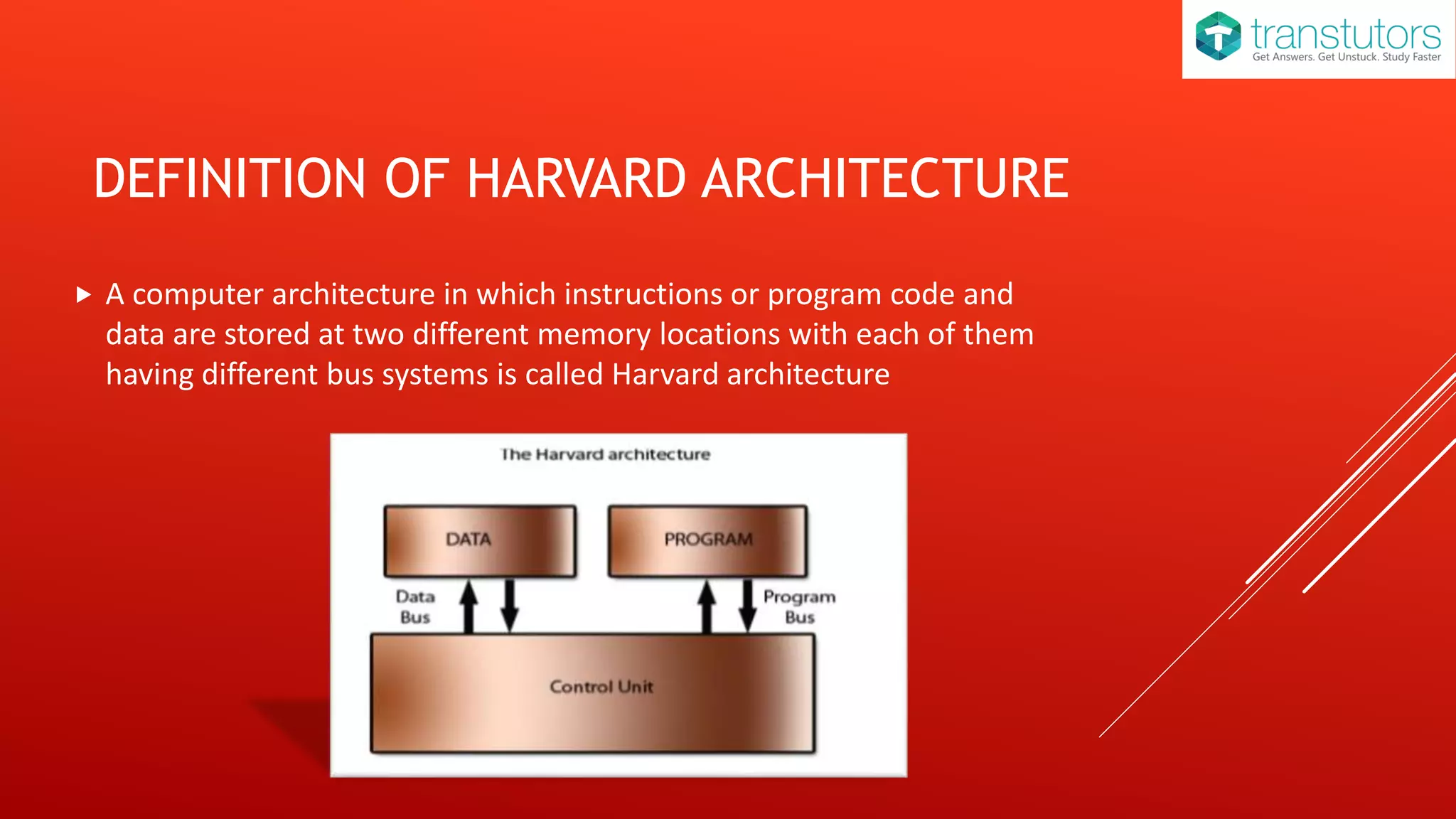
 A computer architecture in which instructions or program code and
data are stored at two different memory locations with each of them
having different bus systems is called Harvard architecture
HOW IS IT DIFFERENT FORM VON-
NEUMANN ARCHITECTURE?
 Harvard architecture is a computer architecture with two separate
memory locations for program and data but program code is not
accessible to be read as if it is data
 Von-Neumann architecture has only one bus through which both
program and data has to be passed and are required to be scheduled
when they should pass through that bus system and there is only one
memory location for both of them.
HARVARD MARK I
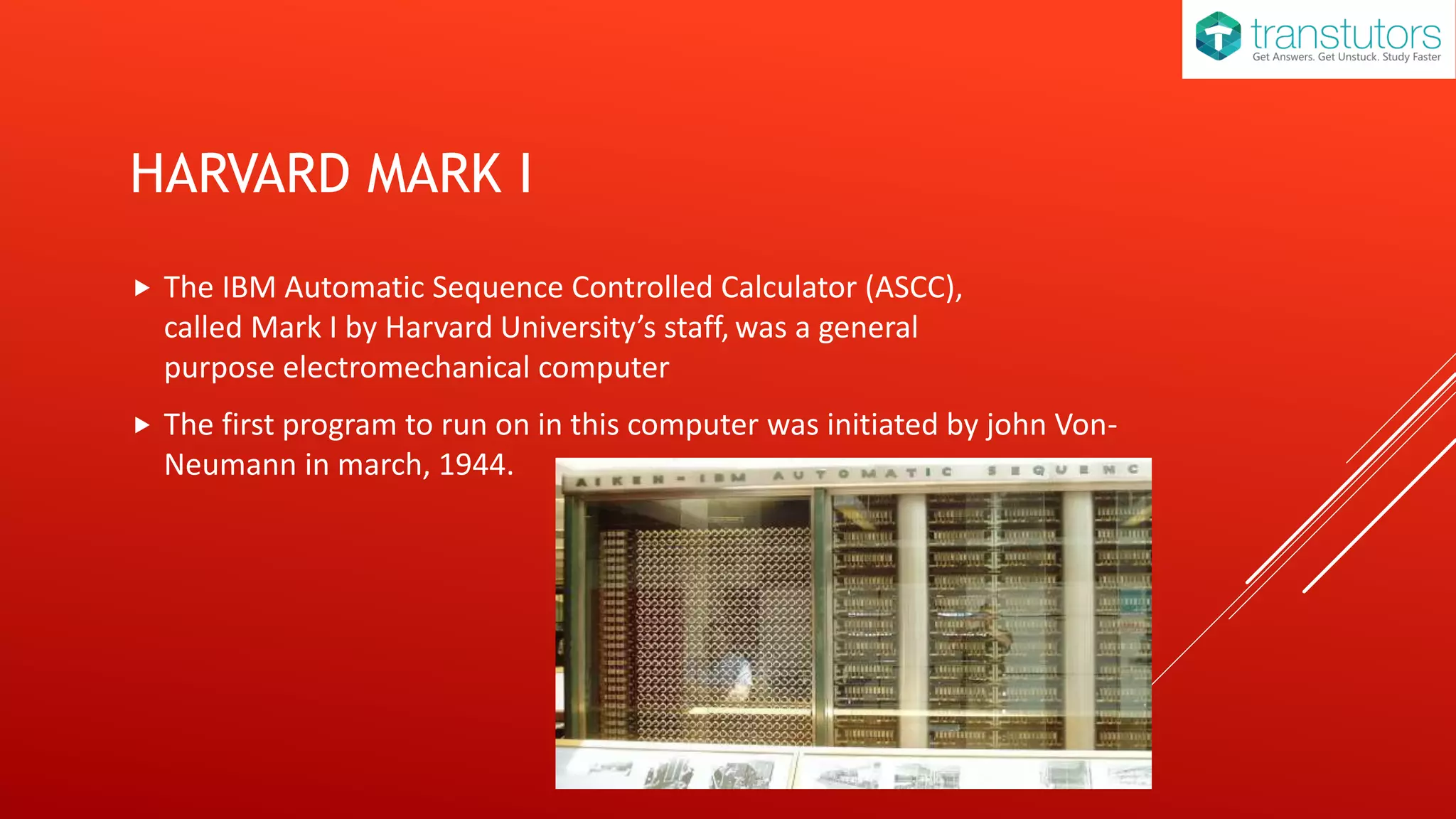
 The IBM Automatic Sequence Controlled Calculator (ASCC),
called Mark I by Harvard University’s staff, was a general
purpose electromechanical computer
 The first program to run on in this computer was initiated by john Von-
Neumann in march, 1944.
ADVANTAGES AND DISADVANTAGES
 Advantages:
 Since there are two different buses, there is no need of scheduling the
instructions and data like in Von-Neumann architecture
 Harvard architecture allows a simultaneous access to both the code as
well as data
 Disadvantages:
 This architecture is not widely used but modified (variation of Harvard
architecture) Harvard architecture is
 Complexity in architecture
SUMMARY
 What Harvard architecture is
 How it is different from Von-Neumann architecture
 Harvard Mark I
 Advantages and disadvantages of Harvard architecture
HEY FRIEND,
This was just a summary on Harvard Architecture. For more detailed
information on this topic, please type the link given below or copy it from the
description of this PPT and open it in a new browser window.
www.transtutors.com/homework-help/computer-science/harvard-architecture.aspx

Harvard Architecture | Computer Science

  • 1.
  • 2.
    DEFINITION OF HARVARDARCHITECTURE  A computer architecture in which instructions or program code and data are stored at two different memory locations with each of them having different bus systems is called Harvard architecture
  • 3.
    HOW IS ITDIFFERENT FORM VON- NEUMANN ARCHITECTURE?  Harvard architecture is a computer architecture with two separate memory locations for program and data but program code is not accessible to be read as if it is data  Von-Neumann architecture has only one bus through which both program and data has to be passed and are required to be scheduled when they should pass through that bus system and there is only one memory location for both of them.
  • 4.
    HARVARD MARK I The IBM Automatic Sequence Controlled Calculator (ASCC), called Mark I by Harvard University’s staff, was a general purpose electromechanical computer  The first program to run on in this computer was initiated by john Von- Neumann in march, 1944.
  • 5.
    ADVANTAGES AND DISADVANTAGES Advantages:  Since there are two different buses, there is no need of scheduling the instructions and data like in Von-Neumann architecture  Harvard architecture allows a simultaneous access to both the code as well as data  Disadvantages:  This architecture is not widely used but modified (variation of Harvard architecture) Harvard architecture is  Complexity in architecture
  • 6.
    SUMMARY  What Harvardarchitecture is  How it is different from Von-Neumann architecture  Harvard Mark I  Advantages and disadvantages of Harvard architecture
  • 7.
    HEY FRIEND, This wasjust a summary on Harvard Architecture. For more detailed information on this topic, please type the link given below or copy it from the description of this PPT and open it in a new browser window. www.transtutors.com/homework-help/computer-science/harvard-architecture.aspx