VON NEUMANN
ARCHITECTURE
PRESENTATION BY
MUHAMMAD ALI
What is an architecture?
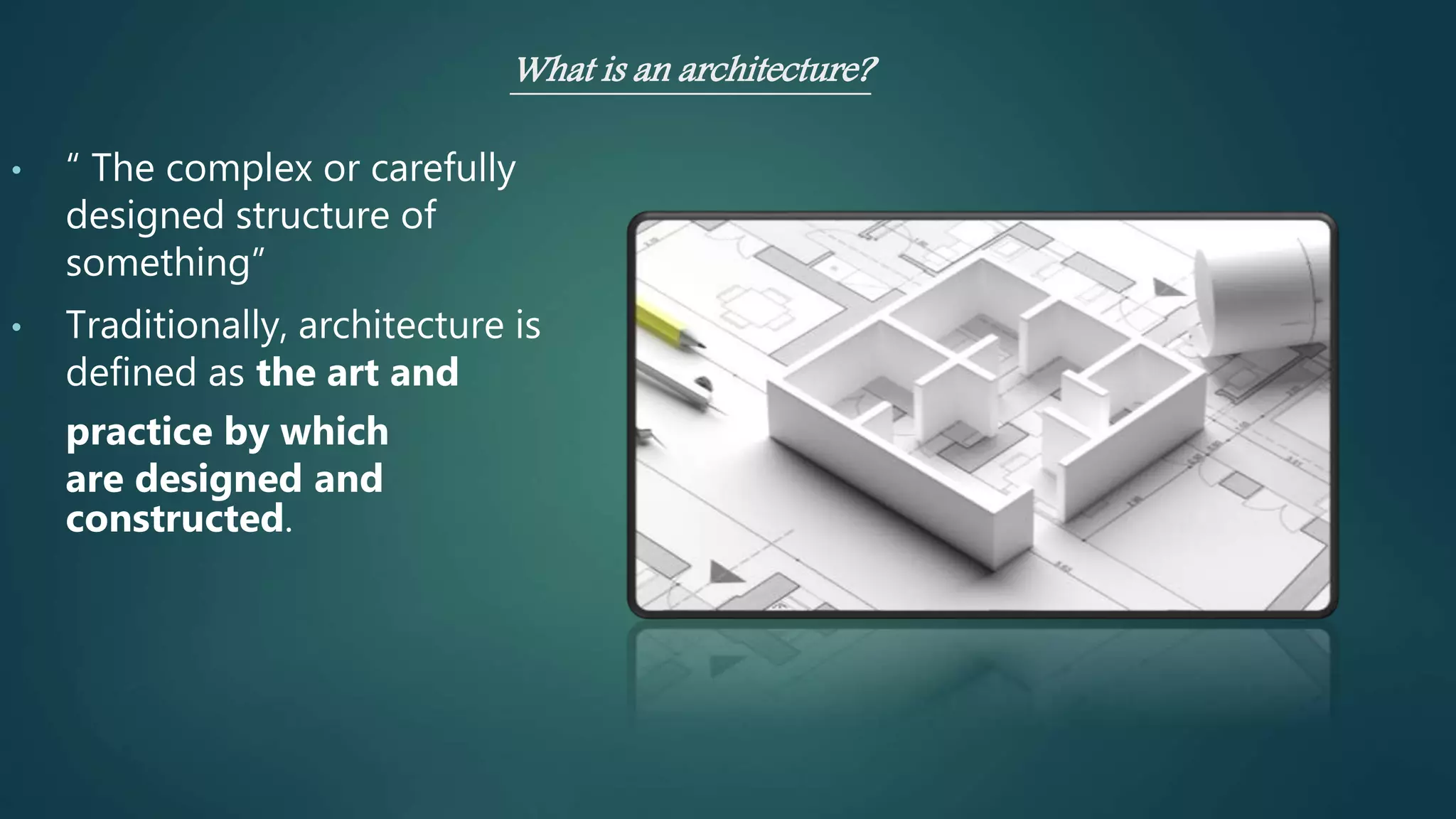
• “ The complex or carefully
designed structure of
something”
• Traditionally, architecture is
defined as the art and
practice by which
are designed and
constructed.
JOHN VON NEUMANN
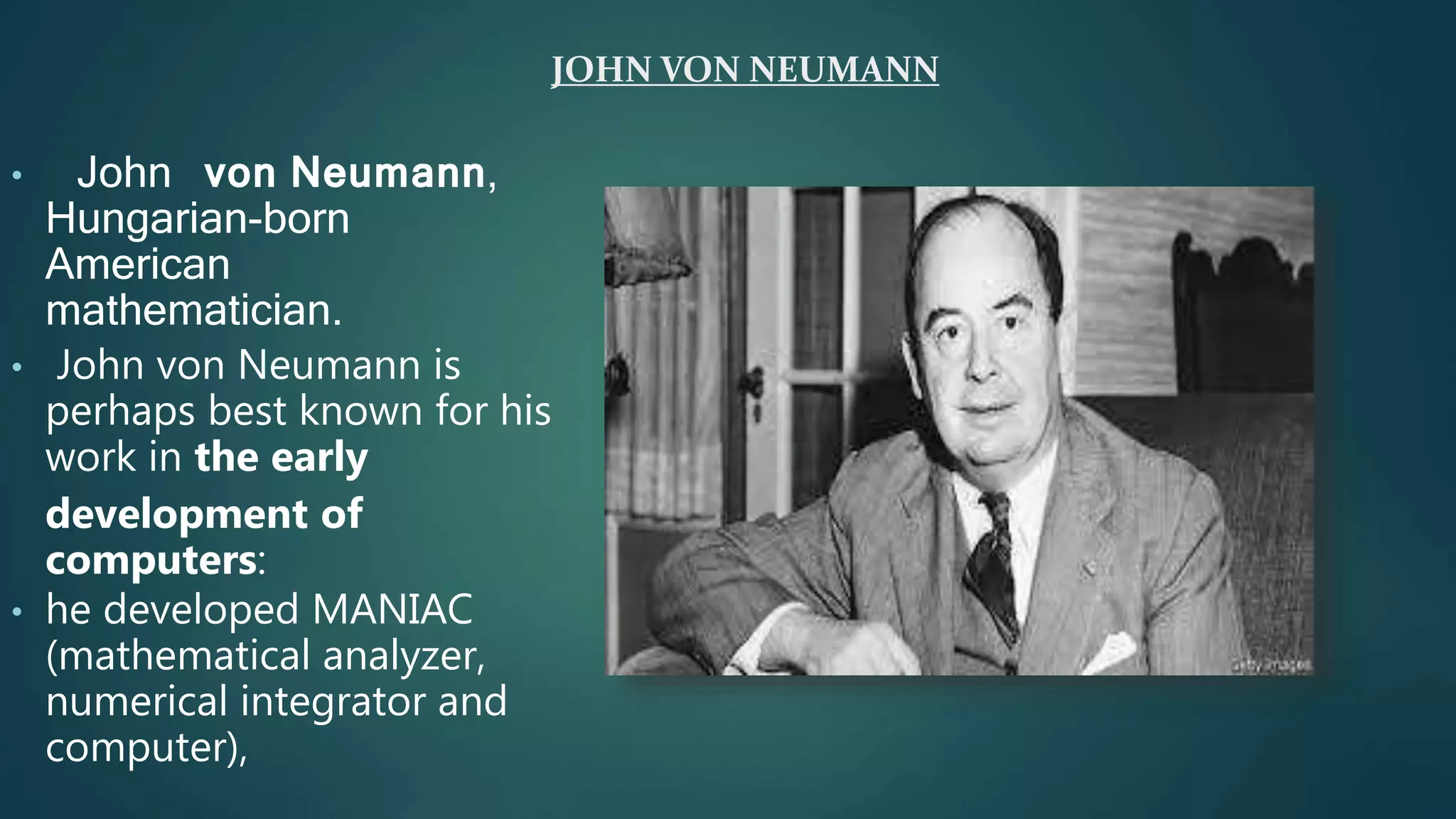
• John von Neumann,
Hungarian-born
American
mathematician.
• John von Neumann is
perhaps best known for his
work in the early
development of
computers:
• he developed MANIAC
(mathematical analyzer,
numerical integrator and
computer),
STORED MEMORY
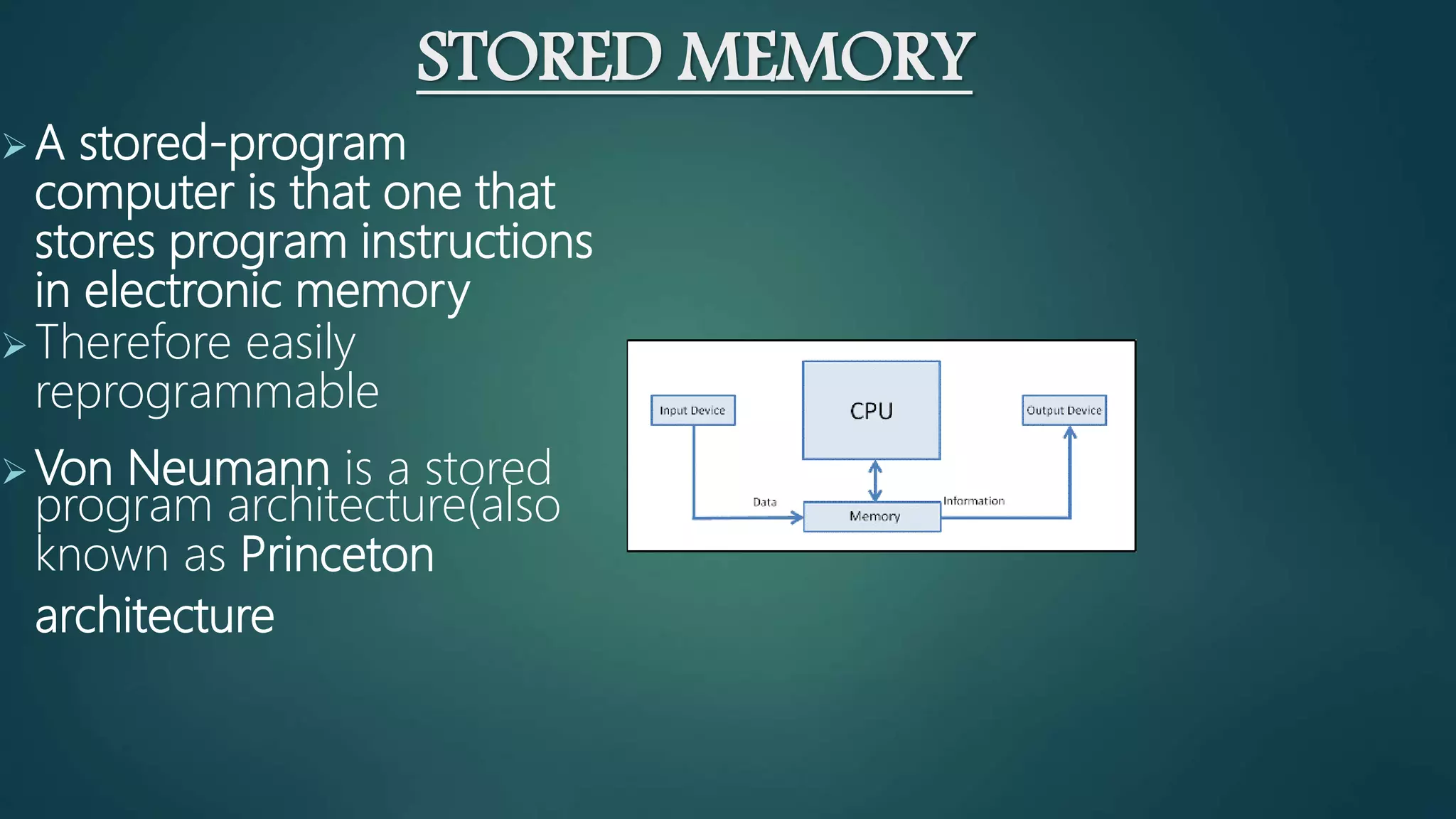
A stored-program
computer is that one that
stores program instructions
in electronic memory
Therefore easily
reprogrammable
Von Neumann is a stored
program architecture(also
known as Princeton
architecture
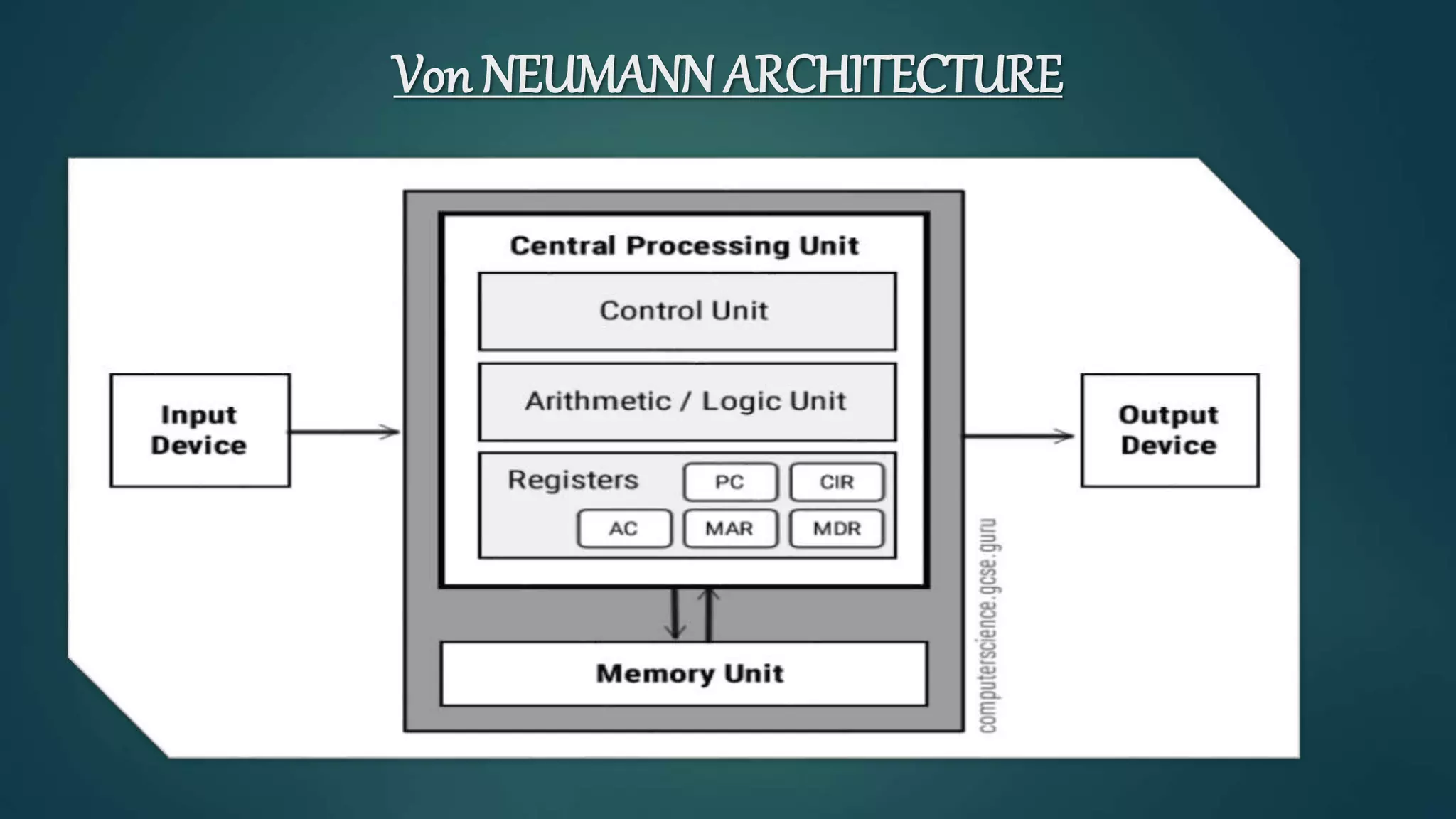
Von NEUMANN ARCHITECTURE
CONCEPTS OF
ARCHITECTURE
The basic concept behind the Von Neumann architecture is the
anility to store program instructions in memory along with the data
on which those instructions operate.
The Von Neumann architecture describes a general framework, or
structure, that a computer’s hardware, programming, and data
should follow
Even all the most modern computers and mobile devices are
designed based on the fundamental concepts.
It had 3 basic components:
1. I/O Interfaces
2. CPU
3. Memory
• Buses (denoted by the arrows) carries the data around
I/O Interfaces
• The I/O interfaces allows the computer’s
memory to receive information and send data
to output devices.
• Allow the computer to communicate to the user
CENTRAL PROCESSING UNIT
• CPU can be considered the heart of the computing
system
• Includes three main components:
1. Control Unit (CU)
2. Arithmetic logic unit (ALU)
3. Registers
CPU: Control Unit
• Responsible for decoding the instructions and
controlling how data moves around the
computer system
• The execution of each instructions determined
by a sequence of control signals produced by
the Control unit.
CPU: Arithmetic logic
unit
• carries out the calculations and logical
decisions required by the program
instructions
• The inputs to an ALU are the data to
be operated on, called operands, and
a code indicating the operation to be
performed; the ALU`s output is the
result of the performed operations.
CPU: Registers
Registers are memory locations with specific purpose
• Accumulator(AC)- Stores the results of calculations made by the
ALU(temporary)
• Program Counter(PC)-Keeps track of the location for the next
instruction to be dealt with. The program counter then passes this
next address to the memory address register(MAR)
• Memory Address Register(MAR)- Stores memory location for data or
instructions that needs to be fetched from memory or stored into
memory
• Current Instruction Register(CIR)- Stores the most recently fetched
instruction while it is waiting to be decoded and executed.
MEMORY
• The computer’s memory is used to store program
instructions and data.
• Consist of many memory cells(storage units) of a fixed size.
Each cells has an address associated with it.
• Two of the commonly used type of memories are RAM
(random access memory) and Secondary memory.
Advantages of
von Neumann Architecture
• Control unit gets data and instruction in same way
from one memory. It simplifies design and
development of the control unit.
• Data from memory and from devices are accessed
in the same way.
• Memory organization is in the hands of
programmers.
Disadvantages of
von Neumann Architecture
• Serial instruction processing does not allow parallel
execution of program. Parallel executions are
simulated later by the operating system.
• One bus is bottleneck. Only one information can be
accessed at the same time.
• Instruction stored in the same memory as he data
can be accidently rewritten by an error in a program
Alternative Architectures
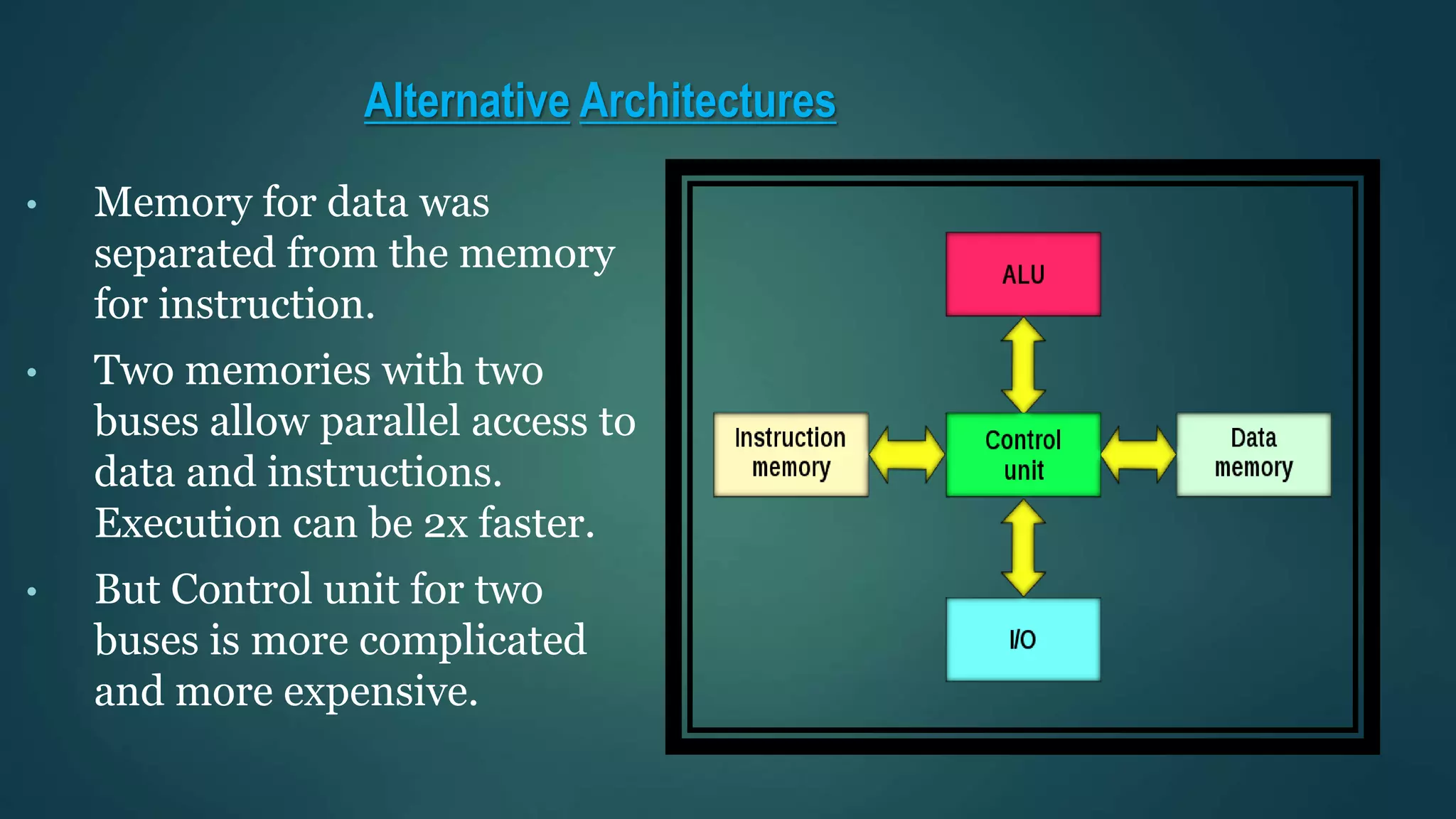
• Memory for data was
separated from the memory
for instruction.
• Two memories with two
buses allow parallel access to
data and instructions.
Execution can be 2x faster.
• But Control unit for two
buses is more complicated
and more expensive.
SUMMARY
• Von Neumann Architecture is based on stored
program concept.
• Has 3 main components.
• All modern computers still use this 70 years old
fundamental concept
• Has it’s own advantages and disadvantages
• Availability of alternative Architectures
Von neumann architecture

Von neumann architecture

  • 1.
  • 2.
    What is anarchitecture? • “ The complex or carefully designed structure of something” • Traditionally, architecture is defined as the art and practice by which are designed and constructed.
  • 3.
    JOHN VON NEUMANN •John von Neumann, Hungarian-born American mathematician. • John von Neumann is perhaps best known for his work in the early development of computers: • he developed MANIAC (mathematical analyzer, numerical integrator and computer),
  • 4.
    STORED MEMORY A stored-program computeris that one that stores program instructions in electronic memory Therefore easily reprogrammable Von Neumann is a stored program architecture(also known as Princeton architecture
  • 5.
  • 6.
    CONCEPTS OF ARCHITECTURE The basicconcept behind the Von Neumann architecture is the anility to store program instructions in memory along with the data on which those instructions operate. The Von Neumann architecture describes a general framework, or structure, that a computer’s hardware, programming, and data should follow Even all the most modern computers and mobile devices are designed based on the fundamental concepts. It had 3 basic components: 1. I/O Interfaces 2. CPU 3. Memory • Buses (denoted by the arrows) carries the data around
  • 7.
    I/O Interfaces • TheI/O interfaces allows the computer’s memory to receive information and send data to output devices. • Allow the computer to communicate to the user
  • 8.
    CENTRAL PROCESSING UNIT •CPU can be considered the heart of the computing system • Includes three main components: 1. Control Unit (CU) 2. Arithmetic logic unit (ALU) 3. Registers
  • 9.
    CPU: Control Unit •Responsible for decoding the instructions and controlling how data moves around the computer system • The execution of each instructions determined by a sequence of control signals produced by the Control unit.
  • 10.
    CPU: Arithmetic logic unit •carries out the calculations and logical decisions required by the program instructions • The inputs to an ALU are the data to be operated on, called operands, and a code indicating the operation to be performed; the ALU`s output is the result of the performed operations.
  • 11.
    CPU: Registers Registers arememory locations with specific purpose • Accumulator(AC)- Stores the results of calculations made by the ALU(temporary) • Program Counter(PC)-Keeps track of the location for the next instruction to be dealt with. The program counter then passes this next address to the memory address register(MAR) • Memory Address Register(MAR)- Stores memory location for data or instructions that needs to be fetched from memory or stored into memory • Current Instruction Register(CIR)- Stores the most recently fetched instruction while it is waiting to be decoded and executed.
  • 12.
    MEMORY • The computer’smemory is used to store program instructions and data. • Consist of many memory cells(storage units) of a fixed size. Each cells has an address associated with it. • Two of the commonly used type of memories are RAM (random access memory) and Secondary memory.
  • 13.
    Advantages of von NeumannArchitecture • Control unit gets data and instruction in same way from one memory. It simplifies design and development of the control unit. • Data from memory and from devices are accessed in the same way. • Memory organization is in the hands of programmers.
  • 14.
    Disadvantages of von NeumannArchitecture • Serial instruction processing does not allow parallel execution of program. Parallel executions are simulated later by the operating system. • One bus is bottleneck. Only one information can be accessed at the same time. • Instruction stored in the same memory as he data can be accidently rewritten by an error in a program
  • 15.
    Alternative Architectures • Memoryfor data was separated from the memory for instruction. • Two memories with two buses allow parallel access to data and instructions. Execution can be 2x faster. • But Control unit for two buses is more complicated and more expensive.
  • 16.
    SUMMARY • Von NeumannArchitecture is based on stored program concept. • Has 3 main components. • All modern computers still use this 70 years old fundamental concept • Has it’s own advantages and disadvantages • Availability of alternative Architectures