Isabel Romano
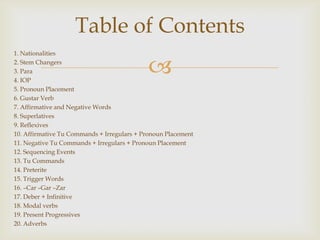
Table of Contents
1. Nationalities
2. Stem Changers
3. Para
4. IOP
                                            
5. Pronoun Placement
6. Gustar Verb
7. Affirmative and Negative Words
8. Superlatives
9. Reflexives
10. Affirmative Tu Commands + Irregulars + Pronoun Placement
11. Negative Tu Commands + Irregulars + Pronoun Placement
12. Sequencing Events
13. Tu Commands
14. Preterite
15. Trigger Words
16. –Car –Gar –Zar
17. Deber + Infinitive
18. Modal verbs
19. Present Progressives
20. Adverbs
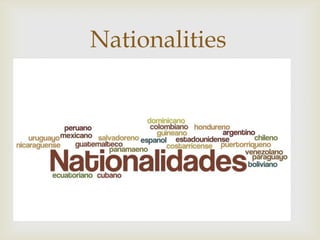
Nationalities
     
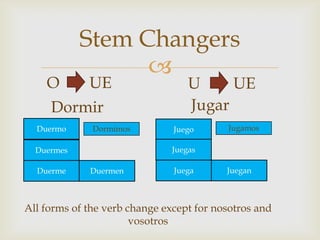
Stem Changers
                  
    O        UE                    U     UE
     Dormir                        Jugar
  Duermo      Dormimos         Juego      Jugamos

  Duermes                      Juegas

  Duerme     Duermen           Juega      Juegan


All forms of the verb change except for nosotros and
                       vosotros
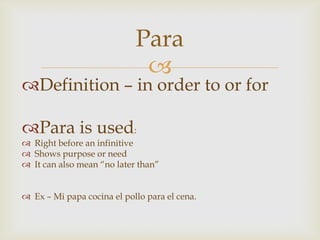
Para
                             
Definition – in order to or for

Para is used:
 Right before an infinitive
 Shows purpose or need
 It can also mean “no later than”


 Ex – Mi papa cocina el pollo para el cena.
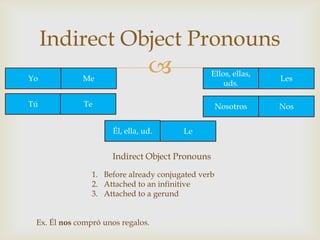
Indirect Object Pronouns
Yo           Me
                                               Ellos, ellas,
                                                                Les
                                                    uds.

Tú           Te                                     Nosotros    Nos


                     Él, ella, ud.      Le


                     Indirect Object Pronouns

                1. Before already conjugated verb
                2. Attached to an infinitive
                3. Attached to a gerund


 Ex. Él nos compró unos regalos.
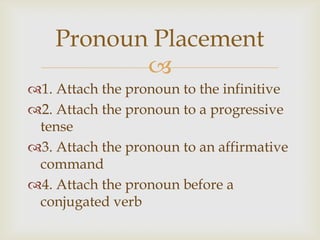
Pronoun Placement
           
1. Attach the pronoun to the infinitive
2. Attach the pronoun to a progressive
 tense
3. Attach the pronoun to an affirmative
 command
4. Attach the pronoun before a
 conjugated verb
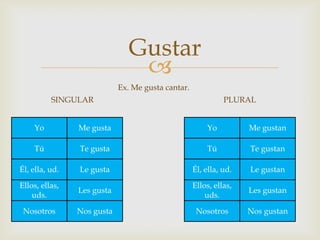
Gustar
                                
                            Ex. Me gusta cantar.
          SINGULAR                                           PLURAL


    Yo          Me gusta                               Yo          Me gustan

    Tú          Te gusta                               Tú          Te gustan

Él, ella, ud.   Le gusta                           Él, ella, ud.   Le gustan

Ellos, ellas,                                      Ellos, ellas,
                Les gusta                                          Les gustan
    uds.                                               uds.

 Nosotros       Nos gusta                           Nosotros       Nos gustan
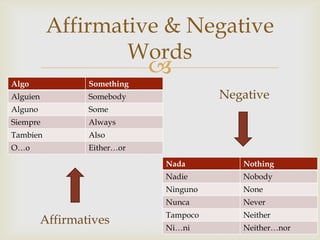
Affirmative & Negative
                   Words
                              
Algo              Something
Alguien           Somebody              Negative
Alguno            Some
Siempre           Always
Tambien           Also
O…o               Either…or

                              Nada         Nothing
                              Nadie        Nobody
                              Ninguno      None
                              Nunca        Never
                              Tampoco      Neither
          Affirmatives
                              Ni…ni        Neither…nor
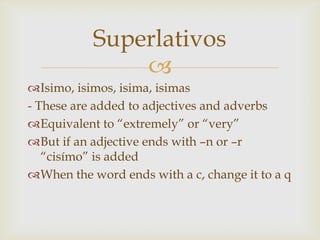
Superlativos
               
Isimo, isimos, isima, isimas
- These are added to adjectives and adverbs
Equivalent to “extremely” or “very”
But if an adjective ends with –n or –r
   “cisímo” is added
When the word ends with a c, change it to a q
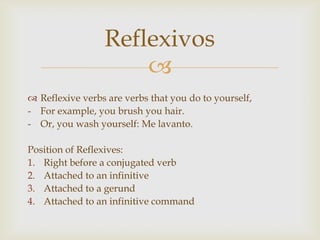
Reflexivos
                     
 Reflexive verbs are verbs that you do to yourself,
- For example, you brush you hair.
- Or, you wash yourself: Me lavanto.

Position of Reflexives:
1. Right before a conjugated verb
2. Attached to an infinitive
3. Attached to a gerund
4. Attached to an infinitive command
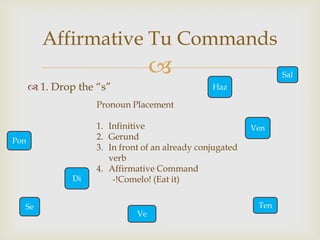
Affirmative Tu Commands
                                                                 Sal
       1. Drop the “s”                          Haz

                    Pronoun Placement

                    1. Infinitive                          Ven
Pon                 2. Gerund
                    3. In front of an already conjugated
                       verb
                    4. Affirmative Command
               Di       -!Comelo! (Eat it)


  Se                                                        Ten
                              Ve
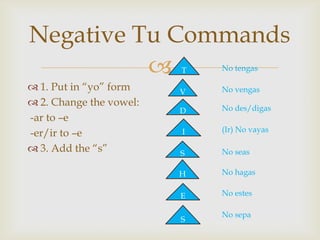
Negative Tu Commands
                        T   No tengas

 1. Put in “yo” form    V   No vengas
 2. Change the vowel:       No des/digas
                         D
-ar to –e
                             (Ir) No vayas
-er/ir to –e             I

 3. Add the “s”         S   No seas

                         H   No hagas

                         E   No estes

                             No sepa
                         S
Tu Commands
                   
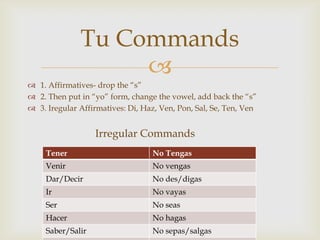
 1. Affirmatives- drop the “s”
 2. Then put in “yo” form, change the vowel, add back the “s”
 3. Iregular Affirmatives: Di, Haz, Ven, Pon, Sal, Se, Ten, Ven


                   Irregular Commands
     Tener                        No Tengas
     Venir                        No vengas
     Dar/Decir                    No des/digas
     Ir                           No vayas
     Ser                          No seas
     Hacer                        No hagas
     Saber/Salir                  No sepas/salgas
Sequencing Events
             
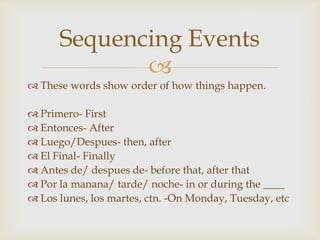
 These words show order of how things happen.

 Primero- First
 Entonces- After
 Luego/Despues- then, after
 El Final- Finally
 Antes de/ despues de- before that, after that
 Por la manana/ tarde/ noche- in or during the ____
 Los lunes, los martes, ctn. -On Monday, Tuesday, etc
Preterite
                         
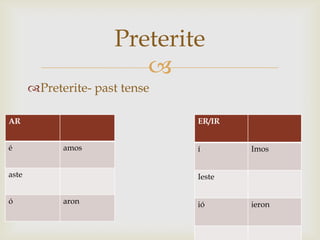
       Preterite- past tense

AR                              ER/IR


é            amos               í       Imos


aste                            Ieste


ó            aron               ió      ieron
Trigger Words
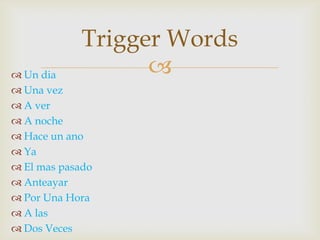
 Un dia           
 Una vez
 A ver
 A noche
 Hace un ano
 Ya
 El mas pasado
 Anteayar
 Por Una Hora
 A las
 Dos Veces
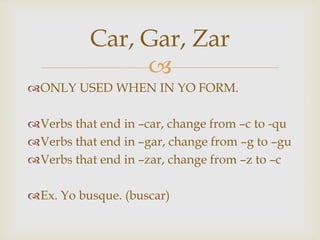
Car, Gar, Zar
               
ONLY USED WHEN IN YO FORM.

Verbs that end in –car, change from –c to -qu
Verbs that end in –gar, change from –g to –gu
Verbs that end in –zar, change from –z to –c

Ex. Yo busque. (buscar)
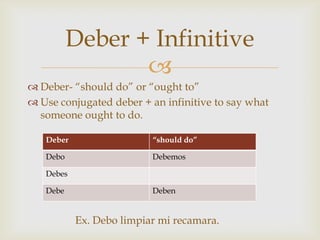
Deber + Infinitive
                 
 Deber- “should do” or “ought to”
 Use conjugated deber + an infinitive to say what
  someone ought to do.

   Deber                  “should do”

   Debo                   Debemos

   Debes

   Debe                   Deben


           Ex. Debo limpiar mi recamara.
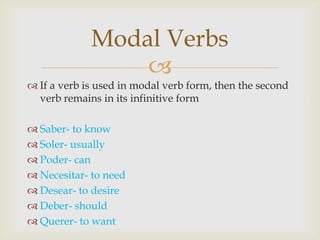
Modal Verbs
                 
 If a verb is used in modal verb form, then the second
  verb remains in its infinitive form

 Saber- to know
 Soler- usually
 Poder- can
 Necesitar- to need
 Desear- to desire
 Deber- should
 Querer- to want
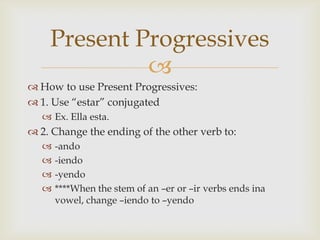
Present Progressives
             
 How to use Present Progressives:
 1. Use “estar” conjugated
    Ex. Ella esta.
 2. Change the ending of the other verb to:
      -ando
      -iendo
      -yendo
      ****When the stem of an –er or –ir verbs ends ina
       vowel, change –iendo to –yendo
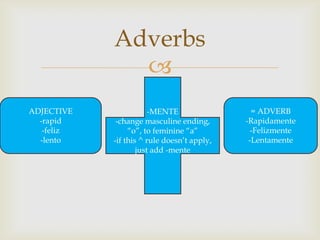
Adverbs
              
ADJECTIVE               -MENTE                 = ADVERB
  -rapid     -change masculine ending,       -Rapidamente
   -feliz        “o”, to feminine “a”          -Felizmente
  -lento    -if this ^ rule doesn’t apply,    -Lentamente
                    just add -mente

Isabel's grammar book

  • 1.
  • 2.
    Table of Contents 1.Nationalities 2. Stem Changers 3. Para 4. IOP  5. Pronoun Placement 6. Gustar Verb 7. Affirmative and Negative Words 8. Superlatives 9. Reflexives 10. Affirmative Tu Commands + Irregulars + Pronoun Placement 11. Negative Tu Commands + Irregulars + Pronoun Placement 12. Sequencing Events 13. Tu Commands 14. Preterite 15. Trigger Words 16. –Car –Gar –Zar 17. Deber + Infinitive 18. Modal verbs 19. Present Progressives 20. Adverbs
  • 3.
  • 4.
    Stem Changers  O UE U UE Dormir Jugar Duermo Dormimos Juego Jugamos Duermes Juegas Duerme Duermen Juega Juegan All forms of the verb change except for nosotros and vosotros
  • 5.
    Para  Definition – in order to or for Para is used:  Right before an infinitive  Shows purpose or need  It can also mean “no later than”  Ex – Mi papa cocina el pollo para el cena.
  • 6.
    Indirect Object Pronouns Yo Me  Ellos, ellas, Les uds. Tú Te Nosotros Nos Él, ella, ud. Le Indirect Object Pronouns 1. Before already conjugated verb 2. Attached to an infinitive 3. Attached to a gerund Ex. Él nos compró unos regalos.
  • 7.
    Pronoun Placement  1. Attach the pronoun to the infinitive 2. Attach the pronoun to a progressive tense 3. Attach the pronoun to an affirmative command 4. Attach the pronoun before a conjugated verb
  • 8.
    Gustar  Ex. Me gusta cantar. SINGULAR PLURAL Yo Me gusta Yo Me gustan Tú Te gusta Tú Te gustan Él, ella, ud. Le gusta Él, ella, ud. Le gustan Ellos, ellas, Ellos, ellas, Les gusta Les gustan uds. uds. Nosotros Nos gusta Nosotros Nos gustan
  • 9.
    Affirmative & Negative Words  Algo Something Alguien Somebody Negative Alguno Some Siempre Always Tambien Also O…o Either…or Nada Nothing Nadie Nobody Ninguno None Nunca Never Tampoco Neither Affirmatives Ni…ni Neither…nor
  • 10.
    Superlativos  Isimo, isimos, isima, isimas - These are added to adjectives and adverbs Equivalent to “extremely” or “very” But if an adjective ends with –n or –r “cisímo” is added When the word ends with a c, change it to a q
  • 11.
    Reflexivos   Reflexive verbs are verbs that you do to yourself, - For example, you brush you hair. - Or, you wash yourself: Me lavanto. Position of Reflexives: 1. Right before a conjugated verb 2. Attached to an infinitive 3. Attached to a gerund 4. Attached to an infinitive command
  • 12.
    Affirmative Tu Commands  Sal  1. Drop the “s” Haz Pronoun Placement 1. Infinitive Ven Pon 2. Gerund 3. In front of an already conjugated verb 4. Affirmative Command Di -!Comelo! (Eat it) Se Ten Ve
  • 13.
    Negative Tu Commands  T No tengas  1. Put in “yo” form V No vengas  2. Change the vowel: No des/digas D -ar to –e (Ir) No vayas -er/ir to –e I  3. Add the “s” S No seas H No hagas E No estes No sepa S
  • 14.
    Tu Commands   1. Affirmatives- drop the “s”  2. Then put in “yo” form, change the vowel, add back the “s”  3. Iregular Affirmatives: Di, Haz, Ven, Pon, Sal, Se, Ten, Ven Irregular Commands Tener No Tengas Venir No vengas Dar/Decir No des/digas Ir No vayas Ser No seas Hacer No hagas Saber/Salir No sepas/salgas
  • 15.
    Sequencing Events   These words show order of how things happen.  Primero- First  Entonces- After  Luego/Despues- then, after  El Final- Finally  Antes de/ despues de- before that, after that  Por la manana/ tarde/ noche- in or during the ____  Los lunes, los martes, ctn. -On Monday, Tuesday, etc
  • 16.
    Preterite  Preterite- past tense AR ER/IR é amos í Imos aste Ieste ó aron ió ieron
  • 17.
    Trigger Words  Undia   Una vez  A ver  A noche  Hace un ano  Ya  El mas pasado  Anteayar  Por Una Hora  A las  Dos Veces
  • 18.
    Car, Gar, Zar  ONLY USED WHEN IN YO FORM. Verbs that end in –car, change from –c to -qu Verbs that end in –gar, change from –g to –gu Verbs that end in –zar, change from –z to –c Ex. Yo busque. (buscar)
  • 19.
    Deber + Infinitive   Deber- “should do” or “ought to”  Use conjugated deber + an infinitive to say what someone ought to do. Deber “should do” Debo Debemos Debes Debe Deben Ex. Debo limpiar mi recamara.
  • 20.
    Modal Verbs   If a verb is used in modal verb form, then the second verb remains in its infinitive form  Saber- to know  Soler- usually  Poder- can  Necesitar- to need  Desear- to desire  Deber- should  Querer- to want
  • 21.
    Present Progressives   How to use Present Progressives:  1. Use “estar” conjugated  Ex. Ella esta.  2. Change the ending of the other verb to:  -ando  -iendo  -yendo  ****When the stem of an –er or –ir verbs ends ina vowel, change –iendo to –yendo
  • 22.
    Adverbs  ADJECTIVE -MENTE = ADVERB -rapid -change masculine ending, -Rapidamente -feliz “o”, to feminine “a” -Felizmente -lento -if this ^ rule doesn’t apply, -Lentamente just add -mente