OSCILLATORIA
Presented to Madam Rabia Saba
Presented by Iqra Naz
BS-BOT-F17-R12.
Contents
• Systematic position.
• Occurrence.
• Plant body.
• Cell structure.
• Reproduction.
• Economic importance.
• References.
Systematic Position
• Class : Cyanophyceae
• Order : Oscillatoriales
• Family : Oscillatoriaceae
• Genus : Oscillatoria
Occurrence
• Found in moist places.
• Found in places rich in decaying organic
matter.
• It forms thin blue green coating on the surface
or edges of flowing water.
Common species
• Oscillatoria formosa
• O.princeps
Plant body –thallus
• Plant body consist of single row of cells
forming unbranched trichomes with a very
thin gelatinous sheath.
• Cells are broader than longer but cylindericalt.
• All cells are similar in trichome with the
exception of apical cells.(convex at the top)
• trichomes are usually naked and have a thin
poorly developed sheath.
Cell Structure
• The cell is prokaryotic in nature.
• A cell in the trichome is differentiated into two
parts
1. Cell wall:
• well developed.
2.Protoplasm:
• Have peripheral and central cytoplasm.
• Pigments.
Cholophll a,carotenes,xanthophylls and
phycobillins.
• Reserve food materials.
starch,lipids and cyanophycian(protein).
Reproduction
• SEXUAL REPRODUCTION.
No sexual reproduction present in
oscillatoria.
• VEGETATIVE REPRODUCTION.
Reproduction occur through vegetative parts.
Two methods
1. By harmogonia.
2. By fragmentation.
By Harmogonia.
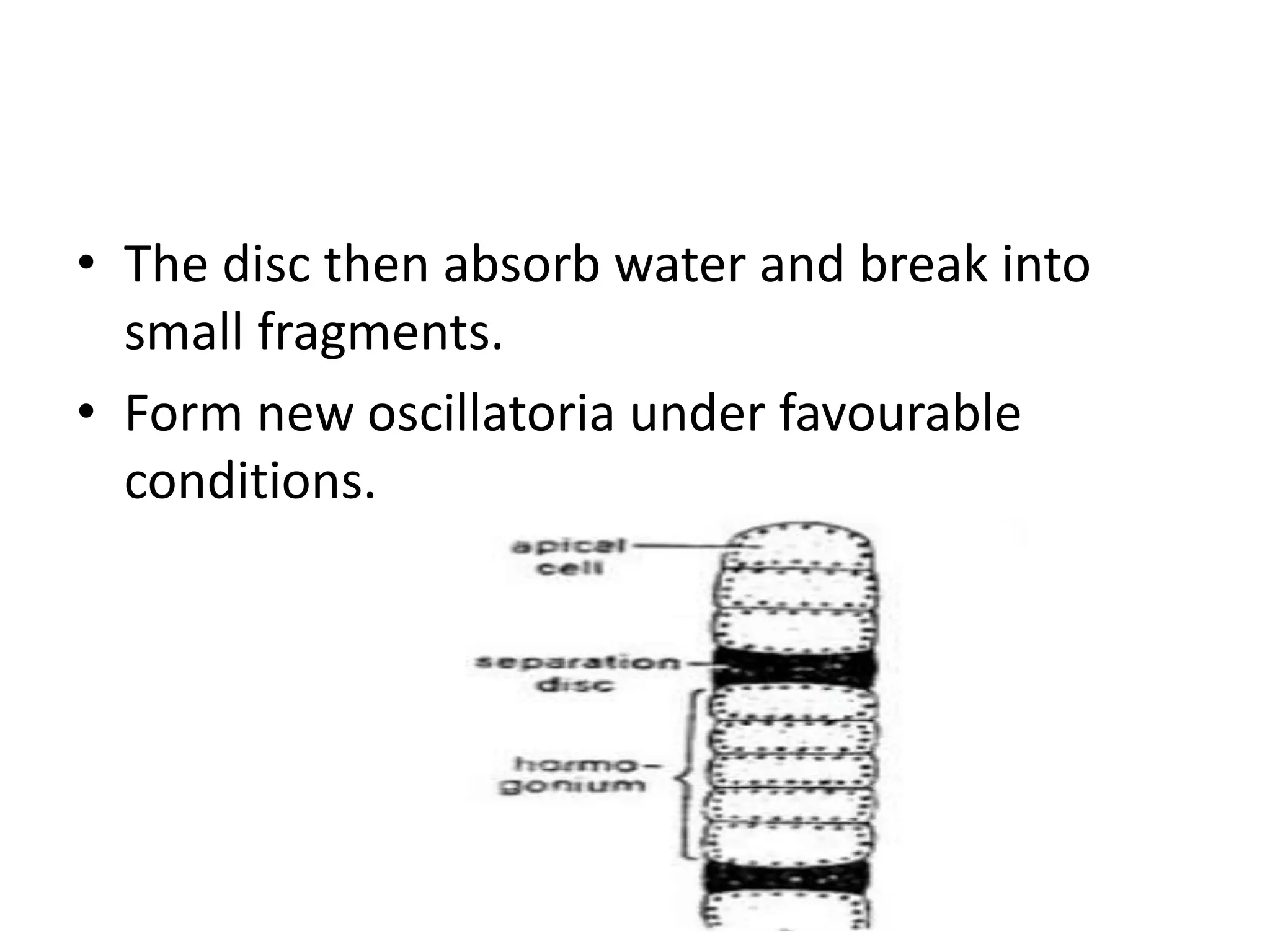
• Harmogonia are the short segment of trichome
which consist of few cells.
Formation.
• Form by the formation of separation disc.
• Which are also called as necridia.
• The disc are formed by the death of one or more
cells of filament.
• These disc are mucilaginous,pad-like and
biconcave.
• The disc then absorb water and break into
small fragments.
• Form new oscillatoria under favourable
conditions.
By Fragmentation
• Accidental breakage of trichome cause
formation of small fragments.
• Which can develop into new oscillatoria.
Economic importance
• Help in reclamation of alkaline soil.
• Use as pollution indicator.
• Produce the greater amount of oxygen.
• Form symbiotic association with
protozoa,plant and fungi.
• Source of protein.(60% protein obtain from it)
• Help in nitrogen fixation.
References
• Textbook of botany
paper A for B.Sc.
The End

Oscillatoria

  • 2.
    OSCILLATORIA Presented to MadamRabia Saba Presented by Iqra Naz BS-BOT-F17-R12.
  • 3.
    Contents • Systematic position. •Occurrence. • Plant body. • Cell structure. • Reproduction. • Economic importance. • References.
  • 4.
    Systematic Position • Class: Cyanophyceae • Order : Oscillatoriales • Family : Oscillatoriaceae • Genus : Oscillatoria
  • 5.
    Occurrence • Found inmoist places. • Found in places rich in decaying organic matter. • It forms thin blue green coating on the surface or edges of flowing water. Common species • Oscillatoria formosa • O.princeps
  • 6.
    Plant body –thallus •Plant body consist of single row of cells forming unbranched trichomes with a very thin gelatinous sheath. • Cells are broader than longer but cylindericalt. • All cells are similar in trichome with the exception of apical cells.(convex at the top) • trichomes are usually naked and have a thin poorly developed sheath.
  • 7.
    Cell Structure • Thecell is prokaryotic in nature. • A cell in the trichome is differentiated into two parts 1. Cell wall: • well developed. 2.Protoplasm: • Have peripheral and central cytoplasm.
  • 8.
    • Pigments. Cholophll a,carotenes,xanthophyllsand phycobillins. • Reserve food materials. starch,lipids and cyanophycian(protein).
  • 9.
    Reproduction • SEXUAL REPRODUCTION. Nosexual reproduction present in oscillatoria. • VEGETATIVE REPRODUCTION. Reproduction occur through vegetative parts. Two methods 1. By harmogonia. 2. By fragmentation.
  • 10.
    By Harmogonia. • Harmogoniaare the short segment of trichome which consist of few cells. Formation. • Form by the formation of separation disc. • Which are also called as necridia. • The disc are formed by the death of one or more cells of filament. • These disc are mucilaginous,pad-like and biconcave.
  • 11.
    • The discthen absorb water and break into small fragments. • Form new oscillatoria under favourable conditions.
  • 12.
    By Fragmentation • Accidentalbreakage of trichome cause formation of small fragments. • Which can develop into new oscillatoria.
  • 13.
    Economic importance • Helpin reclamation of alkaline soil. • Use as pollution indicator. • Produce the greater amount of oxygen. • Form symbiotic association with protozoa,plant and fungi. • Source of protein.(60% protein obtain from it) • Help in nitrogen fixation.
  • 14.
    References • Textbook ofbotany paper A for B.Sc.
  • 15.