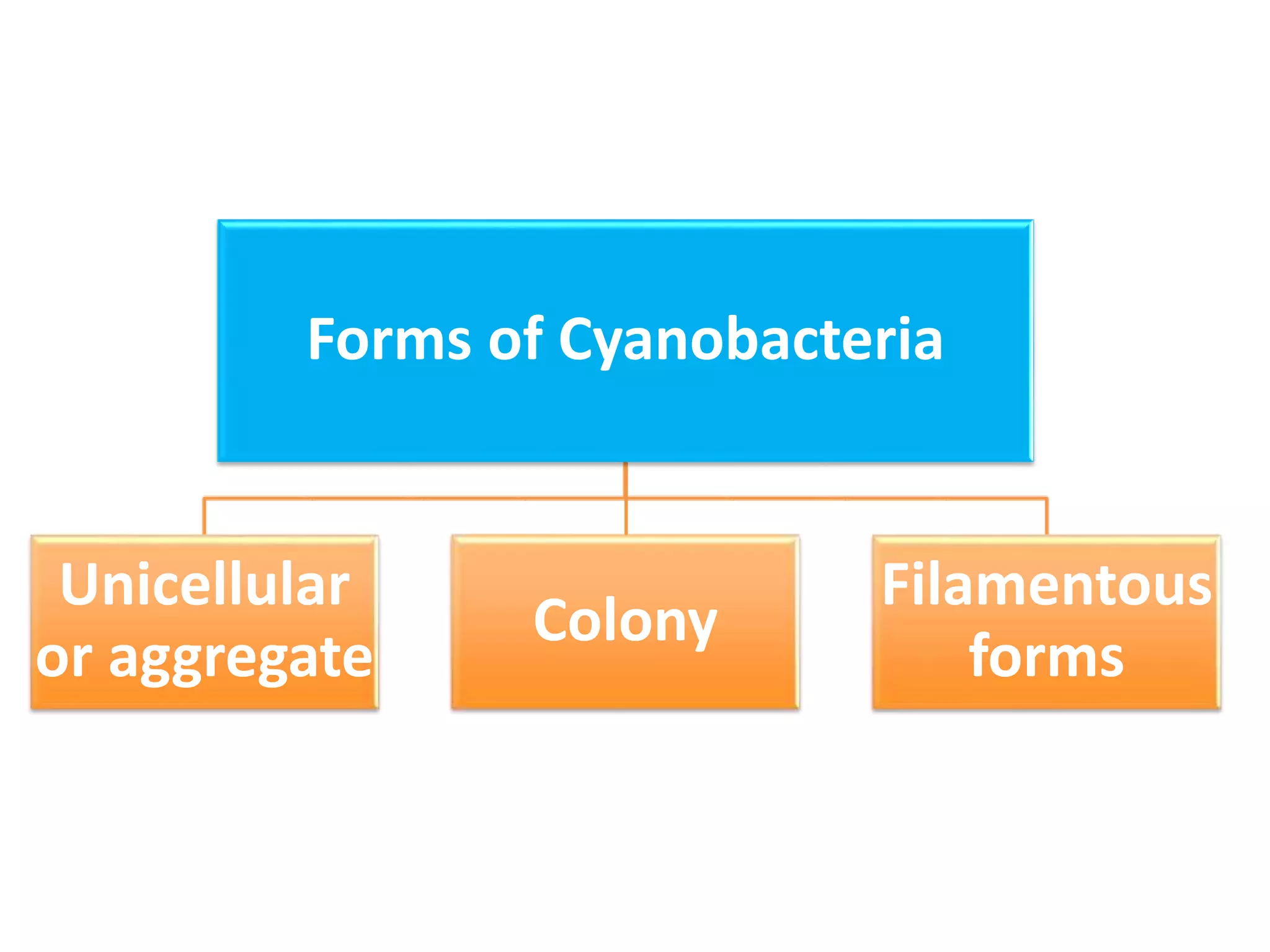
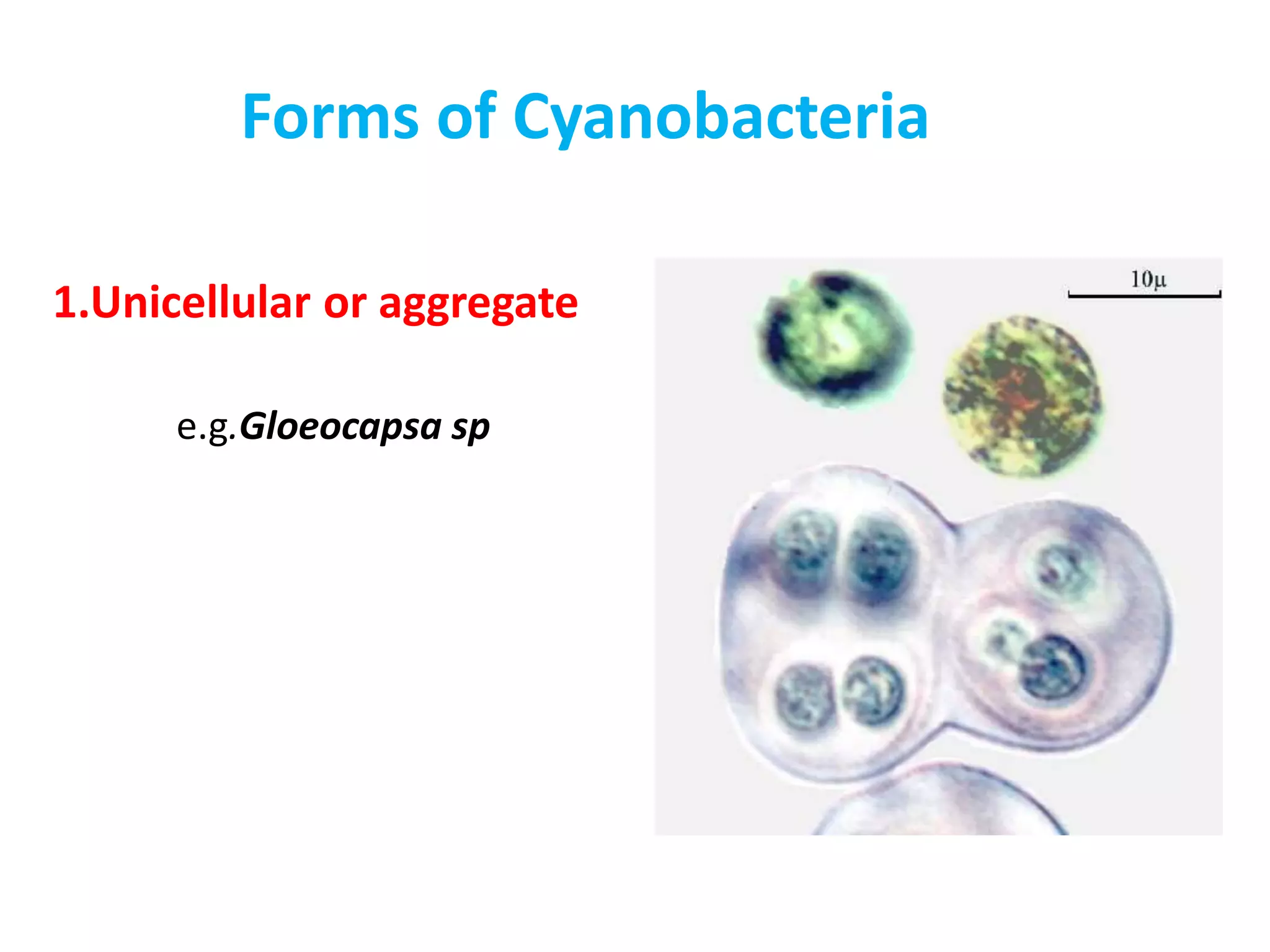
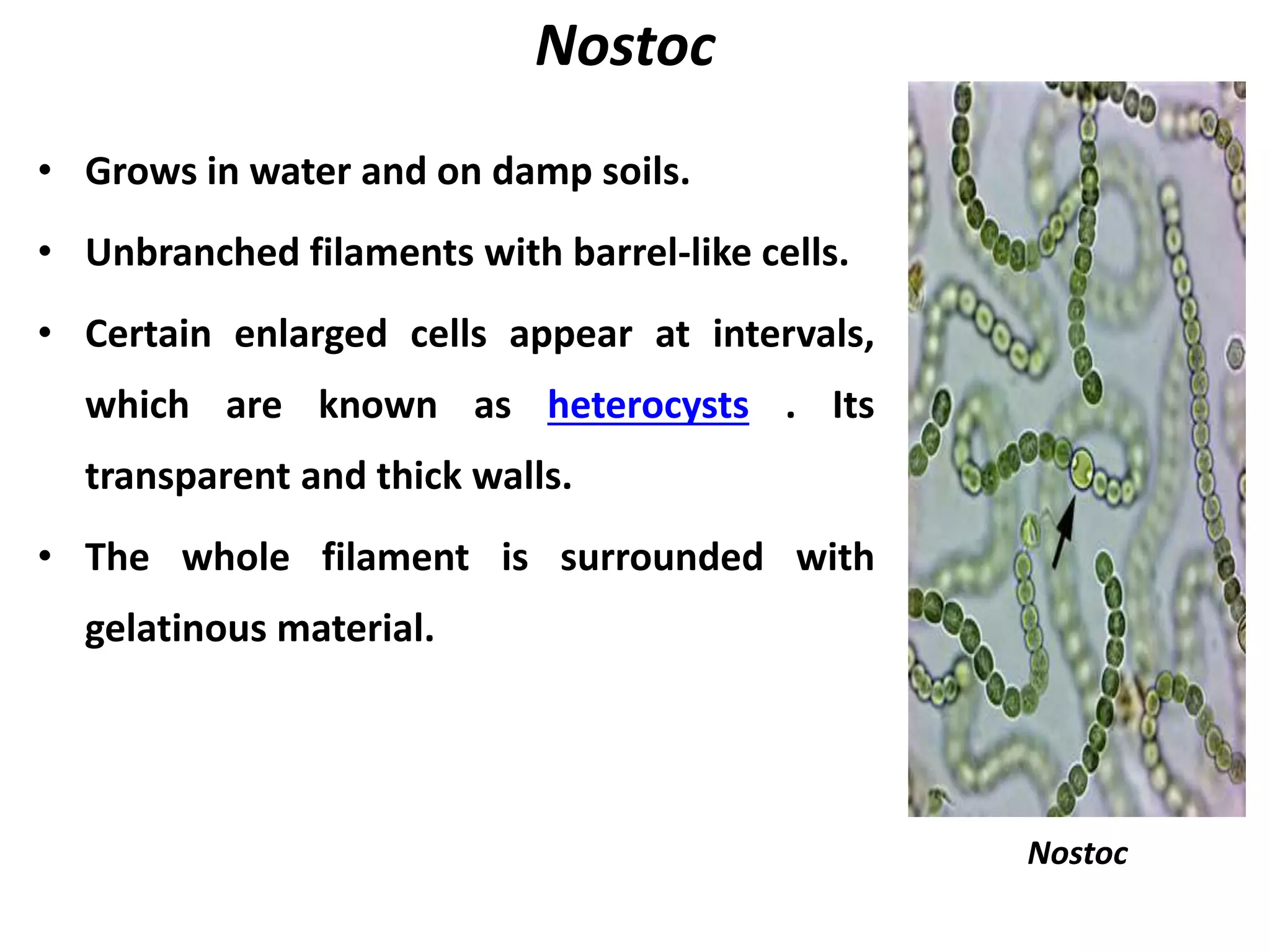
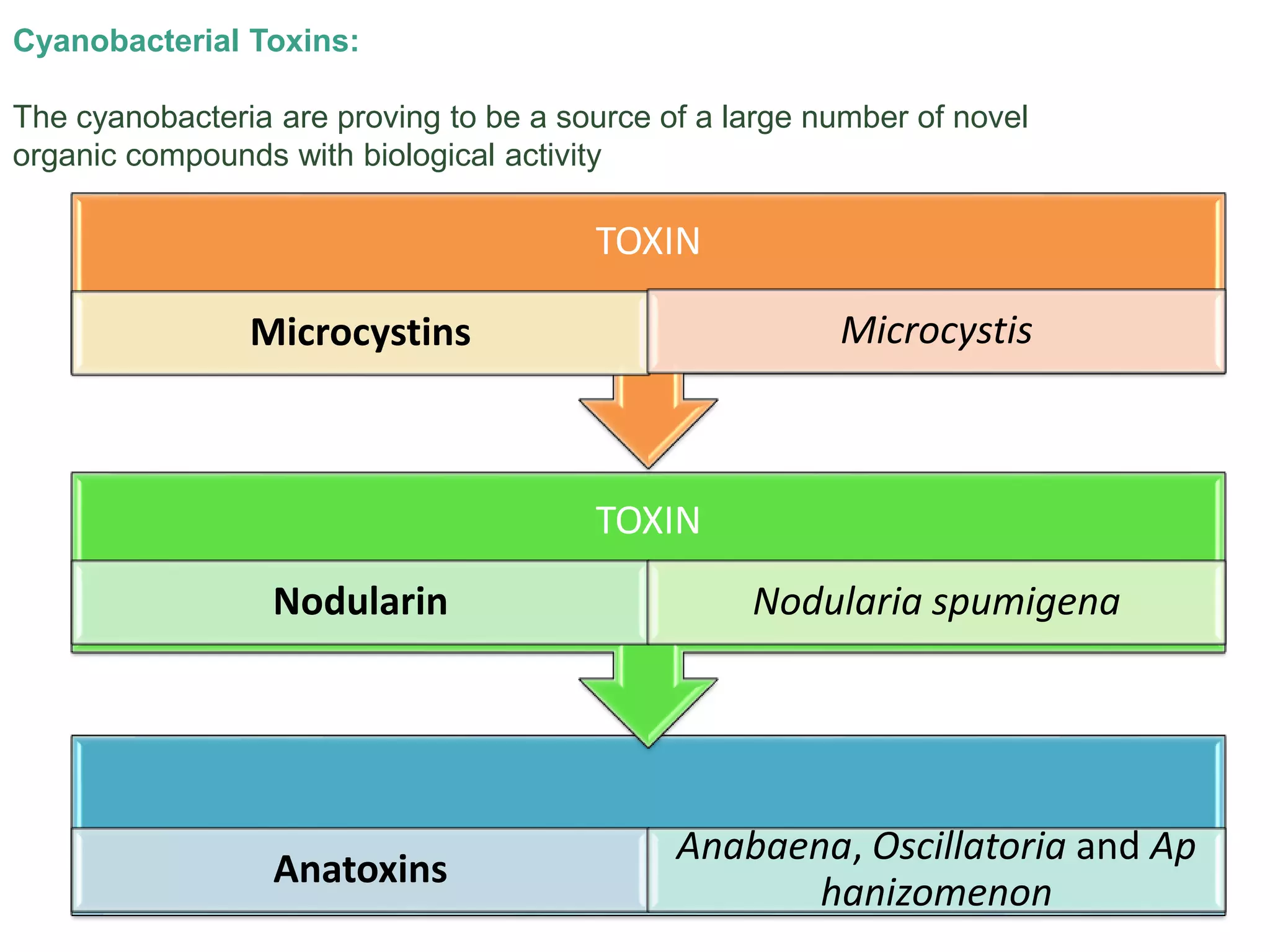
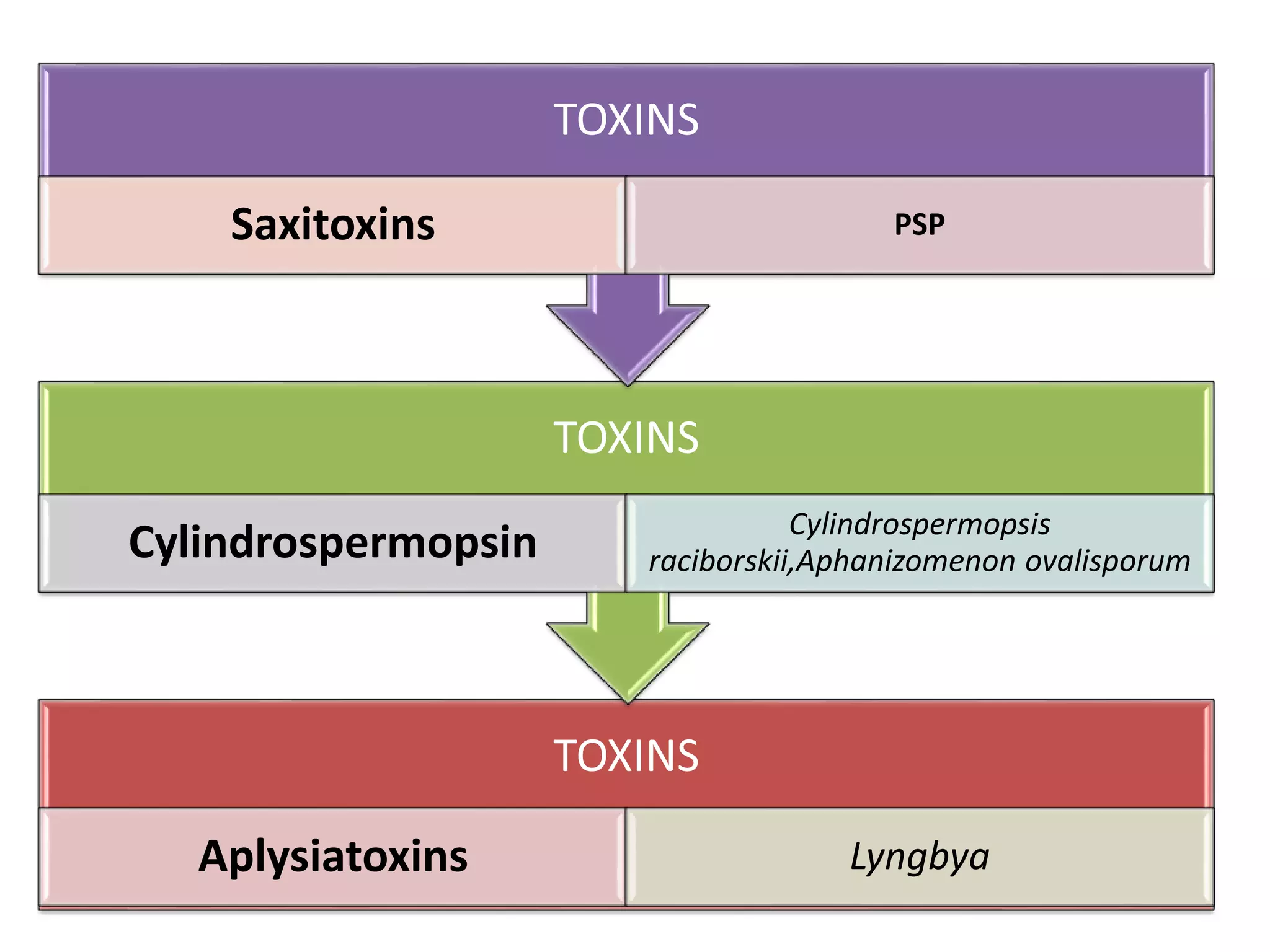
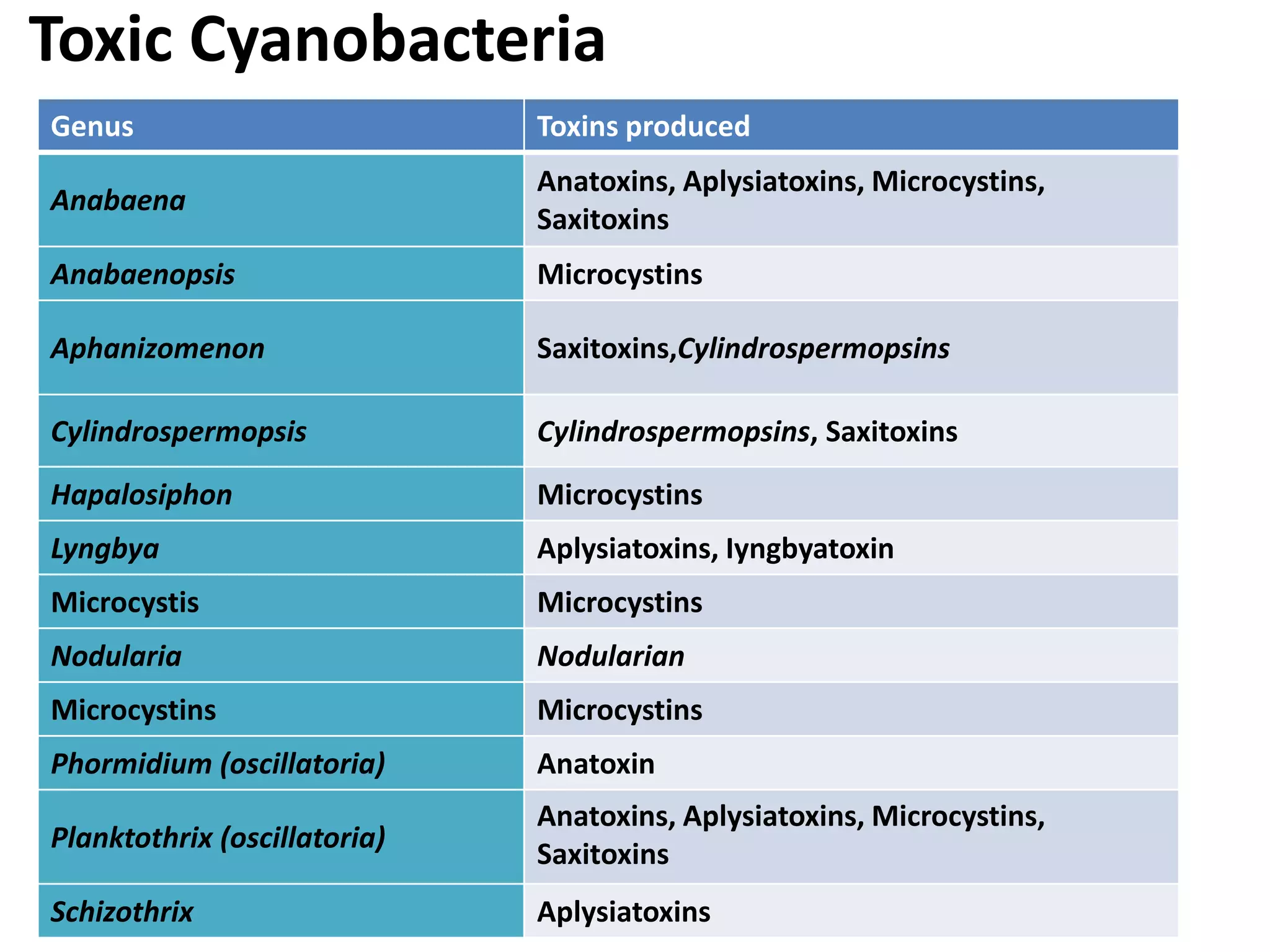
Cyanobacteria, also known as blue-green algae, are photosynthetic prokaryotes that can be found in aquatic and moist environments. They contain chlorophyll a and other pigments that give them blue or red colors. Cyanobacteria exist as single cells, colonies, or filaments. Some filamentous forms can move through their environment. Cyanobacteria reproduce through cell division or the formation of resistant spores called akinetes. They can fix atmospheric nitrogen through specialized cells called heterocysts and engage in symbiotic relationships with plants and algae. Cyanobacterial blooms are increasing due to nutrient pollution from human activities and climate change, and some species can produce toxins that are harmful to animals and