Downloaded 1,822 times


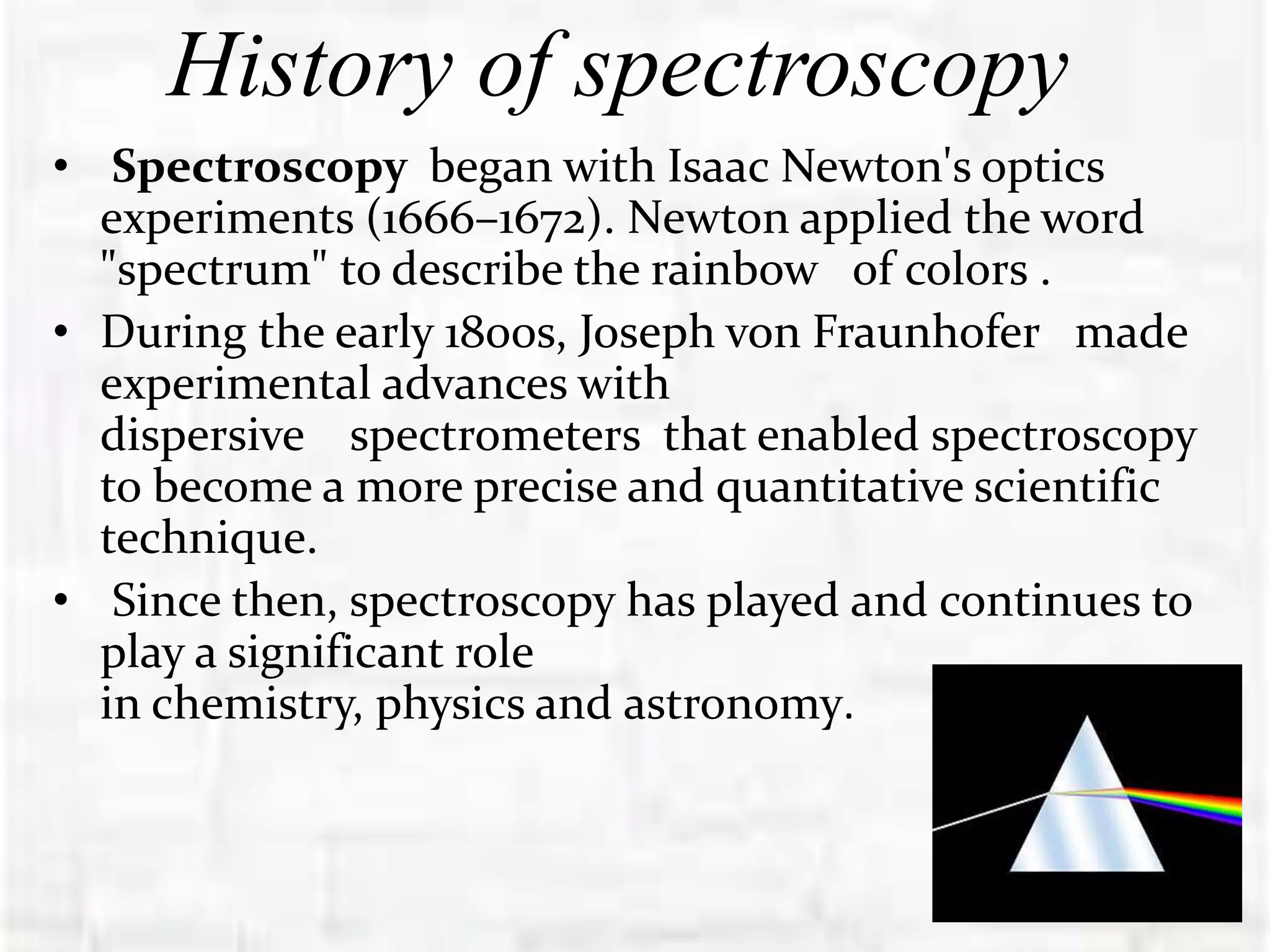




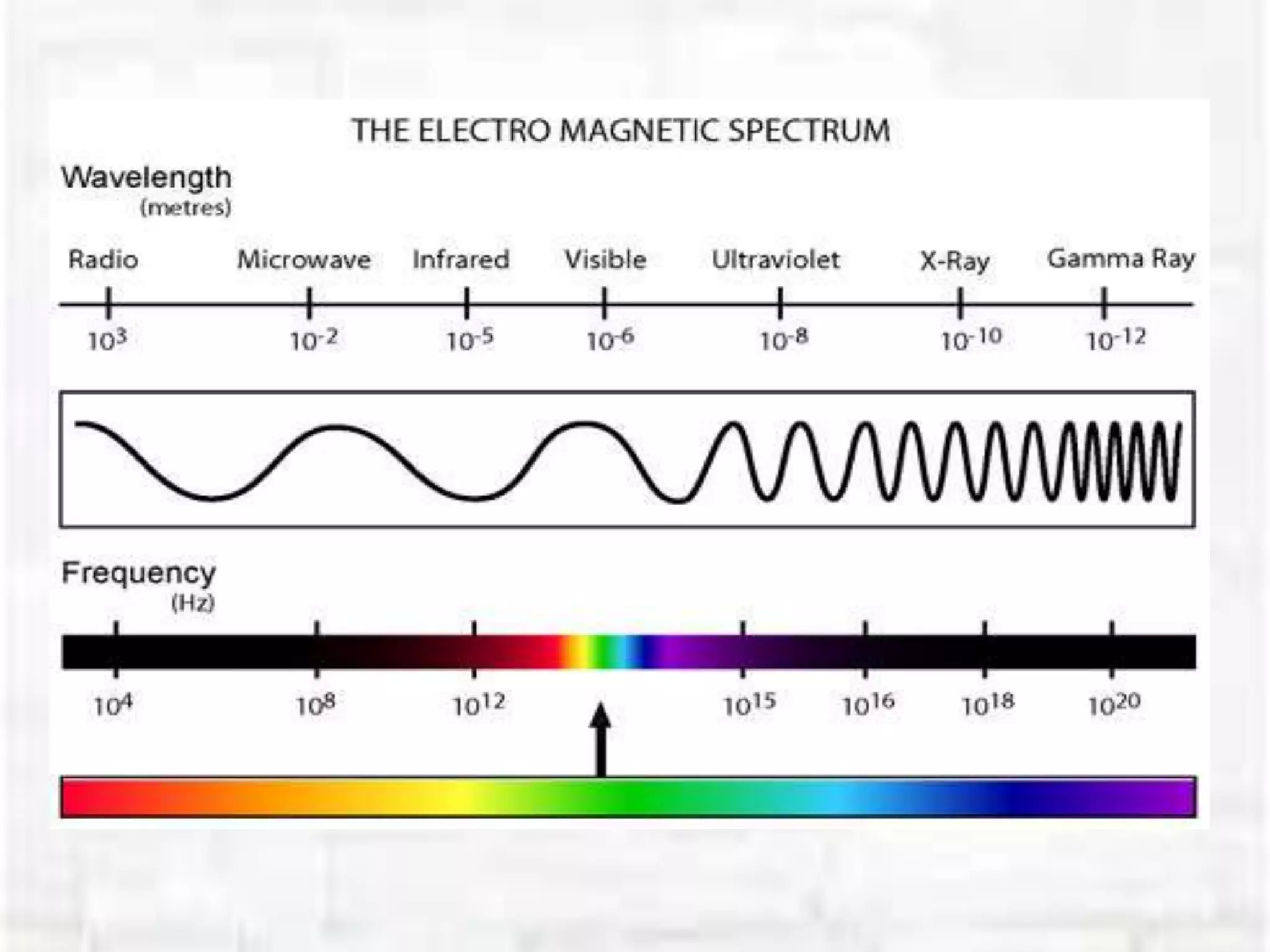


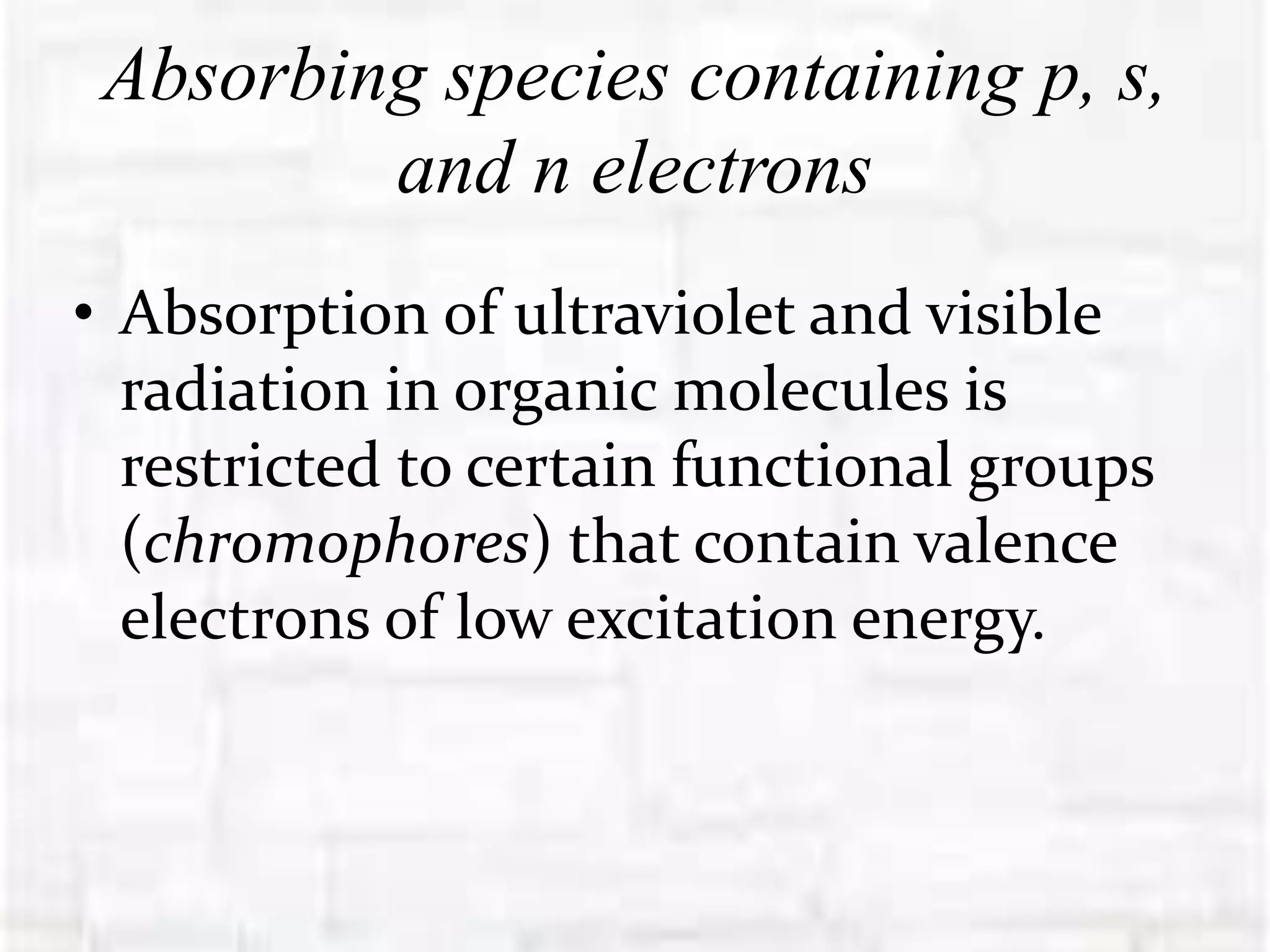

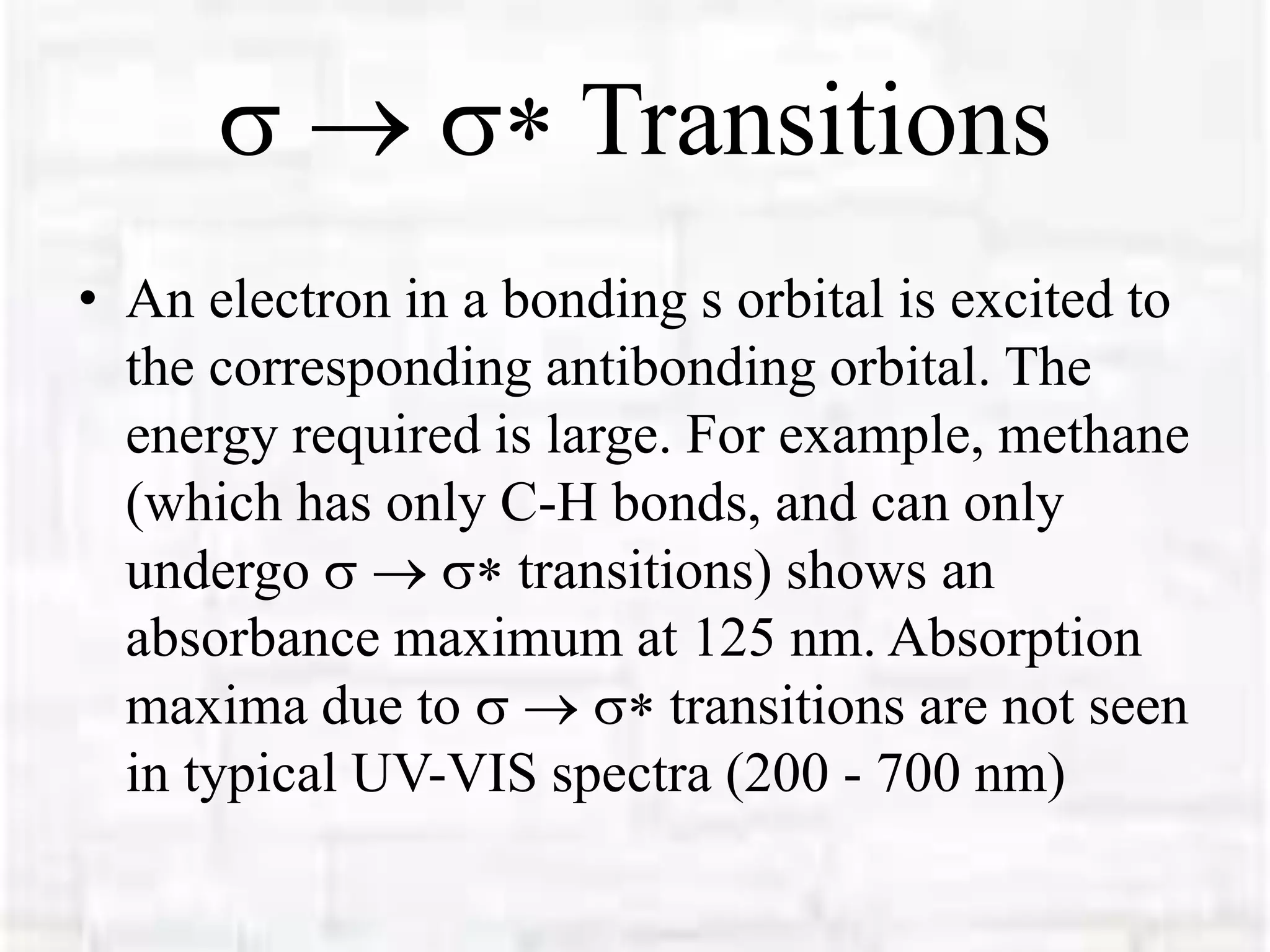


UV-visible spectroscopy is a technique that uses light in the visible and adjacent ranges. It works by measuring how much light is absorbed by a sample at each wavelength. The document discusses the basic principles of spectroscopy, including how electromagnetic radiation interacts with matter. It describes the laws of absorption, specifically Beer's law, which states that absorbance is proportional to concentration. The key aspects of instrumentation are outlined, including light sources, wavelength selectors like monochromators, sample holders, and detection devices. Single beam and double beam spectrophotometers are explained as the main types of instruments used in UV-visible spectroscopy.


