 Discuss the difference between
adaptation to environmental mutations
and heritable changes due to mutations
 List several different types of mutations
and discuss how mutations arise in cells
 The genetic material can be changed
through mutations, which are changes in
the nucleotide sequences of genes
 Changes that are not repaired are called
mutations
 Early in this century, some geneticists
supported the theory that environmental
conditions could cause all heritable
changes in the genetic material
(adaptations)
 A mutation is a change in a DNA base-
pair or region of chromosome, of which
there are many causes
 A somatic mutation affects the individual
in which it happens and is not passed on
to the succeeding generation
 Germ-line mutations may be transmitted
by the gametes to the next generation,
producing an individual with mutations in
both the somatic and germ-line cells
 Germ-line mutations are heritable
 A chromosomal mutation or aberration is
a change in the structure or number of
chromosomes
 A gene mutation is a change in the DNA
sequence of a particular gene
 Mutations can occur spontaneously or be
induced by a mutagen, which is a
chemical or physical agent that increases
the frequency of mutational events
 Spontaneous mutations occur naturally
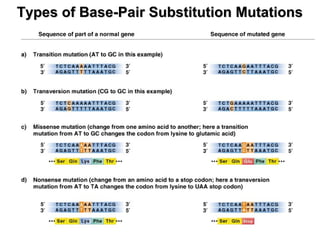
 A point-mutation is a base-pair substitution
mutation, in which one base pair is
replaced by another base pair (AT to GC)
 Point mutations include:
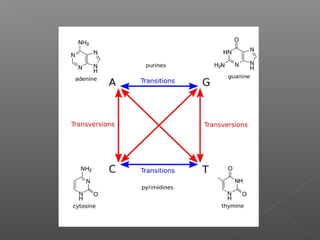
 Transition mutations, in which the change is
from one purine-pyrimidine base pair to
the other purine-pyrimidine base pair (AT
to GC, GC to AT, TA to CG, and CG to TA)
 Transitions can be caused by
oxidative deamination.
 Transversion mutations involve a change
from a purine-pyrimidine base pair to a
pyrimidine-purine base pair (AT to TA,
GC to CG, AT to CG, and GC to TA)
 the consequences of this change tend
to be more severe than those of
transitions.
 Transversions can be caused by
ionizing radiation.
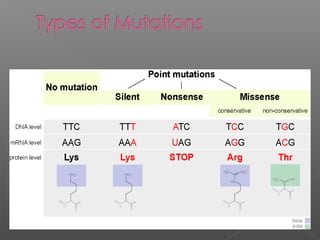
 Mutations can be defined according to
their effects on amino acid sequences in
proteins and include:
 Missense mutations, a gene mutation in
which a change in the DNA causes a
change in an mRNA codon so that a
different amino acid is inserted into a
polypeptide during biosynthesis
 In sickle-cell anemia: a single nucleotide
base-pair change in codon 6 of the β-
hemoglobin gene leads to an amino acid
substitution in the β-hemoglobin chain
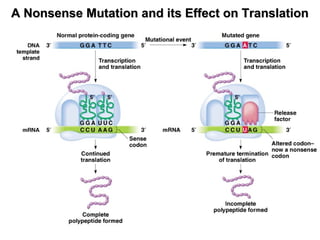
 Nonsense mutations, in which an mRNA
codon is changed from an amino acid into
a stop codon (UAG, UAA, or UGA)
A Nonsense Mutation and its Effect on TranslationA Nonsense Mutation and its Effect on Translation
Types of Base-Pair Substitution MutationsTypes of Base-Pair Substitution Mutations
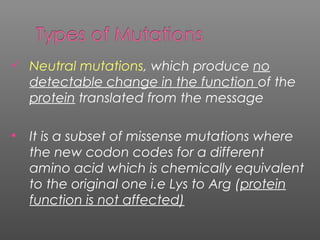
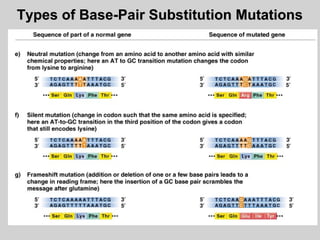
 Neutral mutations, which produce no
detectable change in the function of the
protein translated from the message
 It is a subset of missense mutations where
the new codon codes for a different
amino acid which is chemically equivalent
to the original one i.e Lys to Arg (protein
function is not affected)
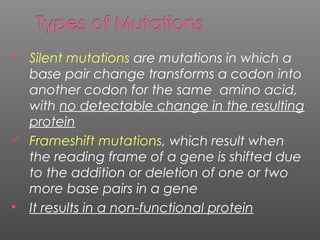
 Silent mutations are mutations in which a
base pair change transforms a codon into
another codon for the same amino acid,
with no detectable change in the resulting
protein
 Frameshift mutations, which result when
the reading frame of a gene is shifted due
to the addition or deletion of one or two
more base pairs in a gene
 It results in a non-functional protein
Types of Base-Pair Substitution MutationsTypes of Base-Pair Substitution Mutations
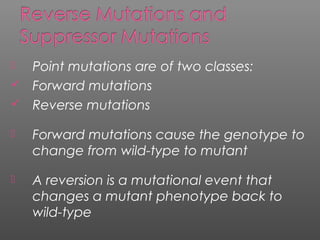
 Point mutations are of two classes:
 Forward mutations
 Reverse mutations
 Forward mutations cause the genotype to
change from wild-type to mutant
 A reversion is a mutational event that
changes a mutant phenotype back to
wild-type
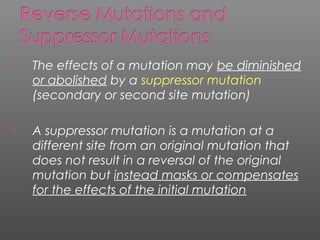
 The effects of a mutation may be diminished
or abolished by a suppressor mutation
(secondary or second site mutation)
 A suppressor mutation is a mutation at a
different site from an original mutation that
does not result in a reversal of the original
mutation but instead masks or compensates
for the effects of the initial mutation
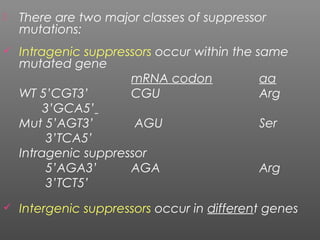
 There are two major classes of suppressor
mutations:
 Intragenic suppressors occur within the same
mutated gene
mRNA codon aa
WT 5’CGT3’ CGU Arg
3’GCA5’
Mut 5’AGT3’ AGU Ser
3’TCA5’
Intragenic suppressor
5’AGA3’ AGA Arg
3’TCT5’
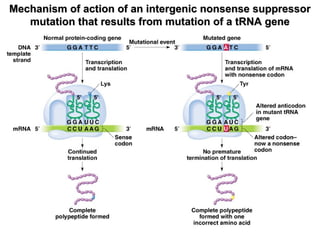
 Intergenic suppressors occur in different genes
Mechanism of action of an intergenic nonsense suppressorMechanism of action of an intergenic nonsense suppressor
mutation that results from mutation of a tRNA genemutation that results from mutation of a tRNA gene
 Mutation rates and mutation frequencies are
terms describing the quantitative measure of
the occurrence of mutations
 Mutation rate presents the probability of a
particular kind of mutation as a function of
time
 i.e. number per nucleotide pair per
generation or per gene per generation ex:
spontaneous mutation rate in Eukaryote is
10-4
to 10-6
per gene/generation
 Mutation frequency is the number of
occurrences of a particular kind of
mutation expressed as the proportion of
cells or individuals in a population i.e. the
number per 100,000 organisms or number
per 1 million gametes
 Mutations arise in DNA spontaneously as a
result of natural cellular processes
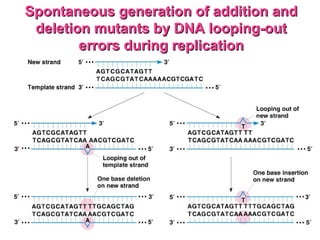
 Looping-out during the DNA replication
can lead to deletion of bases on the
newly synthesized strand or on the
template strand.
 This will lead to shifted frame on the DNA.
 Most spontanous errors are corrected by
cellular repair systems
Spontaneous generation of addition andSpontaneous generation of addition and
deletion mutants by DNA looping-outdeletion mutants by DNA looping-out
errors during replicationerrors during replication
 Mutagenic chemicals or radiation can
create induced mutations in DNA
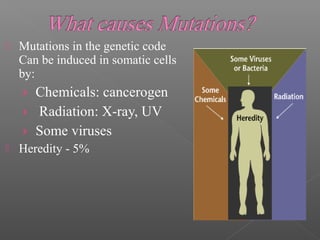
 Mutations in the genetic code
Can be induced in somatic cells
by:
› Chemicals: cancerogen
› Radiation: X-ray, UV
› Some viruses
 Heredity - 5%
 gene mutation

gene mutation

  • 1.
     Discuss thedifference between adaptation to environmental mutations and heritable changes due to mutations  List several different types of mutations and discuss how mutations arise in cells
  • 2.
     The geneticmaterial can be changed through mutations, which are changes in the nucleotide sequences of genes  Changes that are not repaired are called mutations  Early in this century, some geneticists supported the theory that environmental conditions could cause all heritable changes in the genetic material (adaptations)
  • 3.
     A mutationis a change in a DNA base- pair or region of chromosome, of which there are many causes  A somatic mutation affects the individual in which it happens and is not passed on to the succeeding generation  Germ-line mutations may be transmitted by the gametes to the next generation, producing an individual with mutations in both the somatic and germ-line cells  Germ-line mutations are heritable
  • 4.
     A chromosomalmutation or aberration is a change in the structure or number of chromosomes  A gene mutation is a change in the DNA sequence of a particular gene  Mutations can occur spontaneously or be induced by a mutagen, which is a chemical or physical agent that increases the frequency of mutational events
  • 5.
     Spontaneous mutationsoccur naturally  A point-mutation is a base-pair substitution mutation, in which one base pair is replaced by another base pair (AT to GC)
  • 6.
     Point mutationsinclude:  Transition mutations, in which the change is from one purine-pyrimidine base pair to the other purine-pyrimidine base pair (AT to GC, GC to AT, TA to CG, and CG to TA)  Transitions can be caused by oxidative deamination.
  • 7.
     Transversion mutationsinvolve a change from a purine-pyrimidine base pair to a pyrimidine-purine base pair (AT to TA, GC to CG, AT to CG, and GC to TA)  the consequences of this change tend to be more severe than those of transitions.  Transversions can be caused by ionizing radiation.
  • 9.
     Mutations canbe defined according to their effects on amino acid sequences in proteins and include:  Missense mutations, a gene mutation in which a change in the DNA causes a change in an mRNA codon so that a different amino acid is inserted into a polypeptide during biosynthesis
  • 10.
     In sickle-cellanemia: a single nucleotide base-pair change in codon 6 of the β- hemoglobin gene leads to an amino acid substitution in the β-hemoglobin chain  Nonsense mutations, in which an mRNA codon is changed from an amino acid into a stop codon (UAG, UAA, or UGA)
  • 11.
    A Nonsense Mutationand its Effect on TranslationA Nonsense Mutation and its Effect on Translation
  • 12.
    Types of Base-PairSubstitution MutationsTypes of Base-Pair Substitution Mutations
  • 13.
     Neutral mutations,which produce no detectable change in the function of the protein translated from the message  It is a subset of missense mutations where the new codon codes for a different amino acid which is chemically equivalent to the original one i.e Lys to Arg (protein function is not affected)
  • 14.
     Silent mutationsare mutations in which a base pair change transforms a codon into another codon for the same amino acid, with no detectable change in the resulting protein  Frameshift mutations, which result when the reading frame of a gene is shifted due to the addition or deletion of one or two more base pairs in a gene  It results in a non-functional protein
  • 15.
    Types of Base-PairSubstitution MutationsTypes of Base-Pair Substitution Mutations
  • 17.
     Point mutationsare of two classes:  Forward mutations  Reverse mutations  Forward mutations cause the genotype to change from wild-type to mutant  A reversion is a mutational event that changes a mutant phenotype back to wild-type
  • 18.
     The effectsof a mutation may be diminished or abolished by a suppressor mutation (secondary or second site mutation)  A suppressor mutation is a mutation at a different site from an original mutation that does not result in a reversal of the original mutation but instead masks or compensates for the effects of the initial mutation
  • 19.
     There aretwo major classes of suppressor mutations:  Intragenic suppressors occur within the same mutated gene mRNA codon aa WT 5’CGT3’ CGU Arg 3’GCA5’ Mut 5’AGT3’ AGU Ser 3’TCA5’ Intragenic suppressor 5’AGA3’ AGA Arg 3’TCT5’  Intergenic suppressors occur in different genes
  • 20.
    Mechanism of actionof an intergenic nonsense suppressorMechanism of action of an intergenic nonsense suppressor mutation that results from mutation of a tRNA genemutation that results from mutation of a tRNA gene
  • 21.
     Mutation ratesand mutation frequencies are terms describing the quantitative measure of the occurrence of mutations  Mutation rate presents the probability of a particular kind of mutation as a function of time  i.e. number per nucleotide pair per generation or per gene per generation ex: spontaneous mutation rate in Eukaryote is 10-4 to 10-6 per gene/generation
  • 22.
     Mutation frequencyis the number of occurrences of a particular kind of mutation expressed as the proportion of cells or individuals in a population i.e. the number per 100,000 organisms or number per 1 million gametes
  • 23.
     Mutations arisein DNA spontaneously as a result of natural cellular processes  Looping-out during the DNA replication can lead to deletion of bases on the newly synthesized strand or on the template strand.  This will lead to shifted frame on the DNA.  Most spontanous errors are corrected by cellular repair systems
  • 24.
    Spontaneous generation ofaddition andSpontaneous generation of addition and deletion mutants by DNA looping-outdeletion mutants by DNA looping-out errors during replicationerrors during replication
  • 25.
     Mutagenic chemicalsor radiation can create induced mutations in DNA
  • 26.
     Mutations inthe genetic code Can be induced in somatic cells by: › Chemicals: cancerogen › Radiation: X-ray, UV › Some viruses  Heredity - 5%