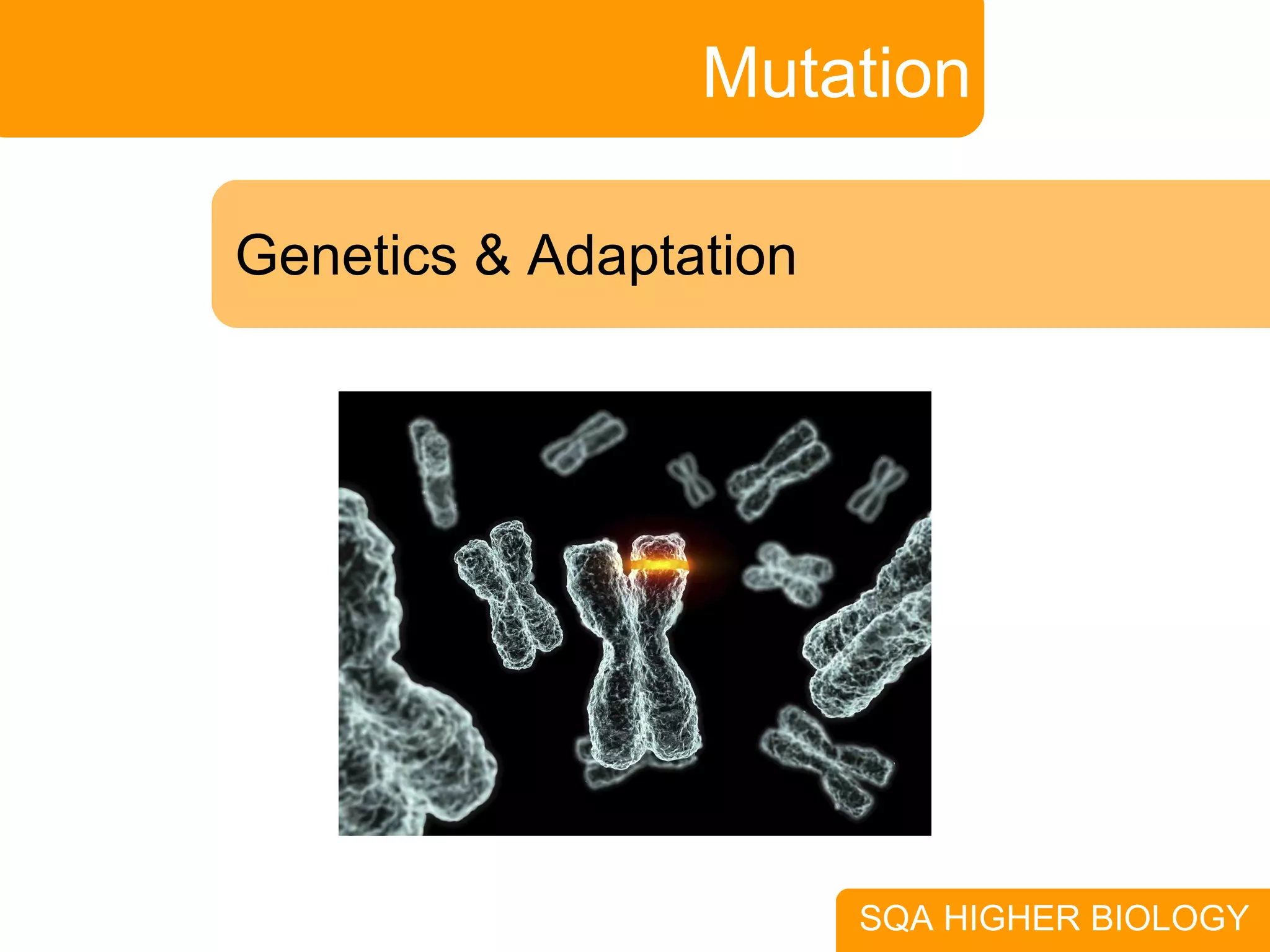
Mutation Genetics & Adaptation SQA HIGHER BIOLOGY
Learning Content Characteristics of mutant alleles, to include random occurrence and low frequency. Mutagenic agents. Changes in the number of chromosomes through non-disjunction. Polyploidy: advantages in crop production. Change in the structure of one chromosome duplication, translocation, deletion, inversion Alteration of base type or sequence  substitution, insertion, deletion, inversion
Mutation What is a mutation? What effect can a mutation have on an organism? There are three types of mutation: Chromosome mutation Change in number of chromosomes Chromosome mutation Change in the structure of one chromosome Gene mutation
Chromosome Mutation Change in number of chromosomes: What is non-disjunction? What affect does non-disjunction have on gametes? Describe the following syndromes: Down’s Turner’s Klinefelter’s What is complete non-disjunction & polyploidy? Outline the economic significance of polyploidy in plants; include an example.
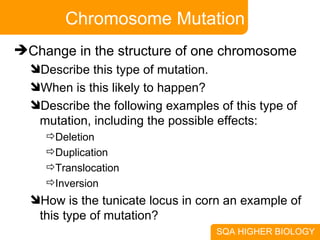
Chromosome Mutation Change in the structure of one chromosome Describe this type of mutation. When is this likely to happen? Describe the following examples of this type of mutation, including the possible effects: Deletion Duplication Translocation Inversion How is the tunicate locus in corn an example of this type of mutation?
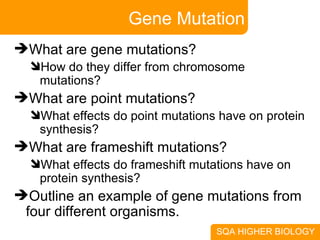
Gene Mutation What are gene mutations? How do they differ from chromosome mutations? What are point mutations? What effects do point mutations have on protein synthesis? What are frameshift mutations? What effects do frameshift mutations have on protein synthesis? Outline an example of gene mutations from four different organisms.
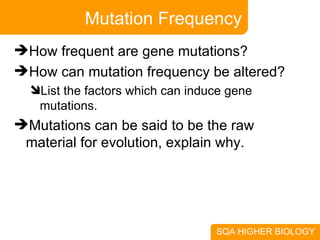
Mutation Frequency How frequent are gene mutations? How can mutation frequency be altered? List the factors which can induce gene mutations. Mutations can be said to be the raw material for evolution, explain why.

2. Mutation

  • 1.
    Mutation Genetics &Adaptation SQA HIGHER BIOLOGY
  • 2.
    Learning Content Characteristicsof mutant alleles, to include random occurrence and low frequency. Mutagenic agents. Changes in the number of chromosomes through non-disjunction. Polyploidy: advantages in crop production. Change in the structure of one chromosome duplication, translocation, deletion, inversion Alteration of base type or sequence substitution, insertion, deletion, inversion
  • 3.
    Mutation What isa mutation? What effect can a mutation have on an organism? There are three types of mutation: Chromosome mutation Change in number of chromosomes Chromosome mutation Change in the structure of one chromosome Gene mutation
  • 4.
    Chromosome Mutation Changein number of chromosomes: What is non-disjunction? What affect does non-disjunction have on gametes? Describe the following syndromes: Down’s Turner’s Klinefelter’s What is complete non-disjunction & polyploidy? Outline the economic significance of polyploidy in plants; include an example.
  • 5.
    Chromosome Mutation Changein the structure of one chromosome Describe this type of mutation. When is this likely to happen? Describe the following examples of this type of mutation, including the possible effects: Deletion Duplication Translocation Inversion How is the tunicate locus in corn an example of this type of mutation?
  • 6.
    Gene Mutation Whatare gene mutations? How do they differ from chromosome mutations? What are point mutations? What effects do point mutations have on protein synthesis? What are frameshift mutations? What effects do frameshift mutations have on protein synthesis? Outline an example of gene mutations from four different organisms.
  • 7.
    Mutation Frequency Howfrequent are gene mutations? How can mutation frequency be altered? List the factors which can induce gene mutations. Mutations can be said to be the raw material for evolution, explain why.