SUBMITTED BY:
ANSHUL AHUJA
MM-662-2K15
 In1770s, discovered by Joseph Priestly.
 Developed in the mid 1970s
 In the mid 1980s, the EDM techniques were
transferred to a machine tool
 Today, it is a viable technique that helped
shape In the metal working industry
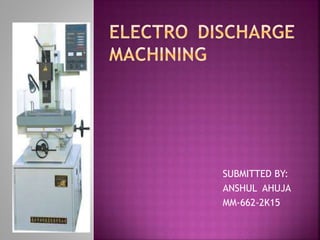
 Electrical Discharge Machining (EDM) is a
controlled metal-removal process that is
used to remove metal by means of electric
spark erosion. In this process an electric
spark is used as the cutting tool to cut
(erode) the work piece to produce the
finished part to the desired shape.
 The process can be used to machine any
work material if it is electrically conductive
 Material removal depends on mainly thermal
properties of the work material rather than
its strength, hardness etc.
 However rapid heating and cooling and local
high temperature leads to surface hardening
which may be desirable in some applications
 Though there is a possibility of taper cut and
overcut in EDM, they can be controlled and
compensated.
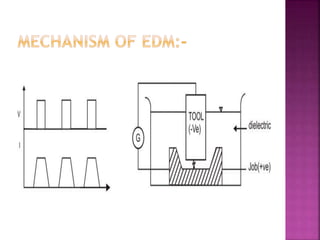
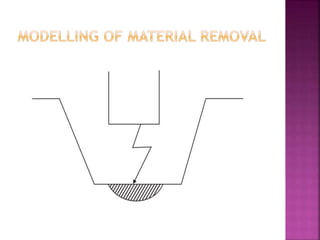
 potential difference is applied between the
tool and work piece
 Both the tool and the work material are to
be conductors of electricity
 A gap is maintained between the tool and the
work piece
 As the electric field is established between
the tool and the job, the free electrons on
the tool are subjected to electrostatic forces
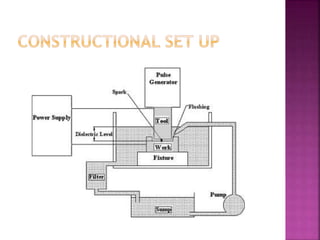
 Dielectric reservoir, pump and circulation
system
 Power generator and control unit
 Working tank with work holding device
 X-y table accommodating the working table
 The tool holder
 The servo system to feed the tool
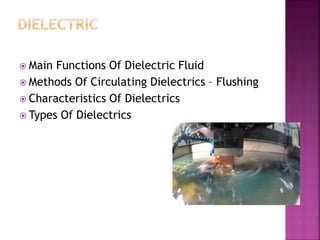
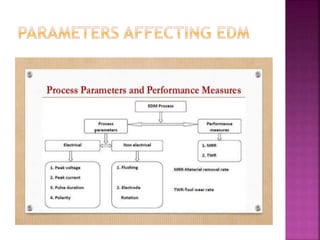
 Main Functions Of Dielectric Fluid
 Methods Of Circulating Dielectrics – Flushing
 Characteristics Of Dielectrics
 Types Of Dielectrics
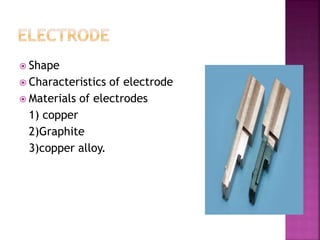
 Shape
 Characteristics of electrode
 Materials of electrodes
1) copper
2)Graphite
3)copper alloy.
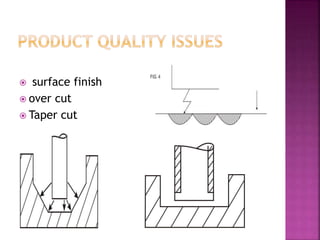
 surface finish
 over cut
 Taper cut
 BASIC PROPERTY OF POWER SUPPLY
 TYPES OF POWER SUPPLY
1)Resistance-capacitance type (RC type)
Relaxation generator
2)Rotary impulse type generator
3)Electronic pulse generator
4)Hybrid EDM generator
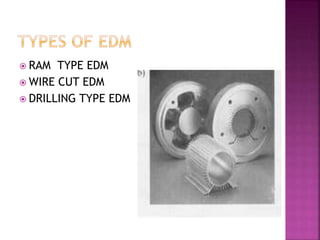
 RAM TYPE EDM
 WIRE CUT EDM
 DRILLING TYPE EDM
 Complex shapes that would otherwise be difficult to
produce with conventional cutting tools.
 Extremely hard material to very close tolerances.
 Very small work pieces where conventional cutting
tools may damage the part from excess cutting tool
pressure.
 There is no direct contact between tool and work
piece. Therefore delicate sections and weak
materials can be machined without perceivable
distortion.
 A good surface finish can be obtained; a very good
surface may be obtained by redundant finishing
paths.
 Very fine holes can be attained.
 Tapered holes may be produced.
 The slow rate of material removal.
 Potential fire hazard associated with use of
combustible oil based dielectrics.
 The additional time and cost used for
creating electrodes for ram/sinker EDM.
 Reproducing sharp corners on the work piece
is difficult due to electrode wear.
 Specific power consumption is very high.
 Power consumption is high. "Overcut" is
formed.
 Excessive tool wear occurs
 Metal-removal rates are low
 Material to be machined must be electrically
conductive
 Cavities produced are slightly tapered but can be
controlled for most applications to as little as
.0001 in. in every .250 in.
 Rapid electrode wear can be come costly in
some types of EDM equipment
 Electrodes smaller than .003 in. in diameter are
impractical
 Work surface is damaged to depth of .0002 in.
but is easily removed
Electro discharge machining

Electro discharge machining

  • 1.
  • 2.
     In1770s, discoveredby Joseph Priestly.  Developed in the mid 1970s  In the mid 1980s, the EDM techniques were transferred to a machine tool  Today, it is a viable technique that helped shape In the metal working industry
  • 3.
     Electrical DischargeMachining (EDM) is a controlled metal-removal process that is used to remove metal by means of electric spark erosion. In this process an electric spark is used as the cutting tool to cut (erode) the work piece to produce the finished part to the desired shape.
  • 4.
     The processcan be used to machine any work material if it is electrically conductive  Material removal depends on mainly thermal properties of the work material rather than its strength, hardness etc.  However rapid heating and cooling and local high temperature leads to surface hardening which may be desirable in some applications  Though there is a possibility of taper cut and overcut in EDM, they can be controlled and compensated.
  • 5.
     potential differenceis applied between the tool and work piece  Both the tool and the work material are to be conductors of electricity  A gap is maintained between the tool and the work piece  As the electric field is established between the tool and the job, the free electrons on the tool are subjected to electrostatic forces
  • 7.
     Dielectric reservoir,pump and circulation system  Power generator and control unit  Working tank with work holding device  X-y table accommodating the working table  The tool holder  The servo system to feed the tool
  • 9.
     Main FunctionsOf Dielectric Fluid  Methods Of Circulating Dielectrics – Flushing  Characteristics Of Dielectrics  Types Of Dielectrics
  • 10.
     Shape  Characteristicsof electrode  Materials of electrodes 1) copper 2)Graphite 3)copper alloy.
  • 12.
     surface finish over cut  Taper cut
  • 14.
     BASIC PROPERTYOF POWER SUPPLY  TYPES OF POWER SUPPLY 1)Resistance-capacitance type (RC type) Relaxation generator 2)Rotary impulse type generator 3)Electronic pulse generator 4)Hybrid EDM generator
  • 15.
     RAM TYPEEDM  WIRE CUT EDM  DRILLING TYPE EDM
  • 16.
     Complex shapesthat would otherwise be difficult to produce with conventional cutting tools.  Extremely hard material to very close tolerances.  Very small work pieces where conventional cutting tools may damage the part from excess cutting tool pressure.  There is no direct contact between tool and work piece. Therefore delicate sections and weak materials can be machined without perceivable distortion.  A good surface finish can be obtained; a very good surface may be obtained by redundant finishing paths.  Very fine holes can be attained.  Tapered holes may be produced.
  • 17.
     The slowrate of material removal.  Potential fire hazard associated with use of combustible oil based dielectrics.  The additional time and cost used for creating electrodes for ram/sinker EDM.  Reproducing sharp corners on the work piece is difficult due to electrode wear.  Specific power consumption is very high.  Power consumption is high. "Overcut" is formed.  Excessive tool wear occurs
  • 18.
     Metal-removal ratesare low  Material to be machined must be electrically conductive  Cavities produced are slightly tapered but can be controlled for most applications to as little as .0001 in. in every .250 in.  Rapid electrode wear can be come costly in some types of EDM equipment  Electrodes smaller than .003 in. in diameter are impractical  Work surface is damaged to depth of .0002 in. but is easily removed