Renewable Energy
ENERGY LITERACY AND ELECTRICAL SAFETY EDUCATION
SE Electrical
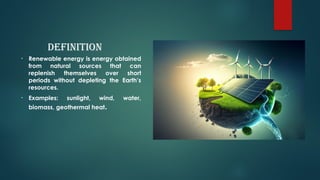
Definition
• Renewable energy is energy obtained
from natural sources that can
replenish themselves over short
periods without depleting the Earth’s
resources.
• Examples: sunlight, wind, water,
biomass, geothermal heat.
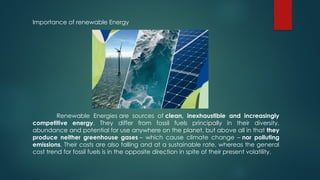
Importance of renewable Energy
Renewable Energies are sources of clean, inexhaustible and increasingly
competitive energy. They differ from fossil fuels principally in their diversity,
abundance and potential for use anywhere on the planet, but above all in that they
produce neither greenhouse gases – which cause climate change – nor polluting
emissions. Their costs are also falling and at a sustainable rate, whereas the general
cost trend for fossil fuels is in the opposite direction in spite of their present volatility.
Types of Renewable Energy
 1. Solar Energy – Sunlight to electricity/heat
 2. Wind Energy – Wind turbines generate electricity
 3. Hydropower – Flowing water spins turbines
 4. Biomass Energy – Organic materials for energy
 5. Geothermal Energy – Earth's heat for power or heating
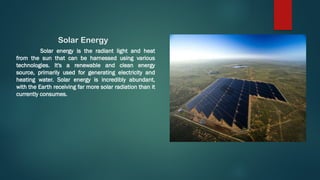
Solar Energy
Solar energy is the radiant light and heat
from the sun that can be harnessed using various
technologies. It's a renewable and clean energy
source, primarily used for generating electricity and
heating water. Solar energy is incredibly abundant,
with the Earth receiving far more solar radiation than it
currently consumes.
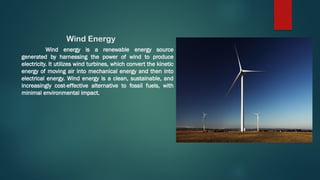
Wind Energy
Wind energy is a renewable energy source
generated by harnessing the power of wind to produce
electricity. It utilizes wind turbines, which convert the kinetic
energy of moving air into mechanical energy and then into
electrical energy. Wind energy is a clean, sustainable, and
increasingly cost-effective alternative to fossil fuels, with
minimal environmental impact.
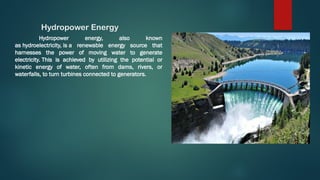
Hydropower energy, also known
as hydroelectricity, is a renewable energy source that
harnesses the power of moving water to generate
electricity. This is achieved by utilizing the potential or
kinetic energy of water, often from dams, rivers, or
waterfalls, to turn turbines connected to generators.
Hydropower Energy
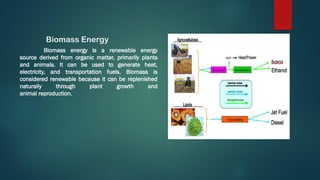
Biomass Energy
Biomass energy is a renewable energy
source derived from organic matter, primarily plants
and animals. It can be used to generate heat,
electricity, and transportation fuels. Biomass is
considered renewable because it can be replenished
naturally through plant growth and
animal reproduction.
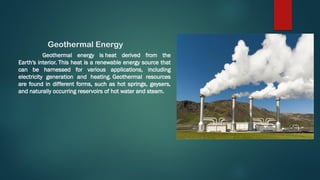
Geothermal Energy
Geothermal energy is heat derived from the
Earth's interior. This heat is a renewable energy source that
can be harnessed for various applications, including
electricity generation and heating. Geothermal resources
are found in different forms, such as hot springs, geysers,
and naturally occurring reservoirs of hot water and steam.
Advantages and Challenges
 • Sustainable and never-ending
 • Reduces greenhouse gas emissions
 • Low operating costs after installation
 • Promotes energy independence
 • High initial setup cost
 • Weather/location dependent
 • Energy storage issues
Applications
1.Electricity Generation:
 Solar Power: Solar panels convert sunlight into electricity, which can be used to
power homes, businesses, and even large-scale solar farms that feed into the
electrical grid.
• Wind Power: Wind turbines capture the kinetic energy of the wind and convert it
into electricity. This can be done on a small scale with individual turbines or on a
large scale with wind farms.
• Hydroelectric Power: Dams and other hydroelectric facilities harness the power
of flowing water to generate electricity.
• Geothermal Energy: Geothermal power plants tap into the Earth's internal heat
to generate electricity or provide direct heating.
• Biomass Energy: Organic matter like wood, crops, and even landfill gas can be
burned to produce heat, which can then be used to generate electricity.
• Wave and Tidal Power: The movement of ocean waves and tides can be
harnessed to generate electricity, though these technologies are still relatively
nascent.
2.Heating and Cooling:
• Solar Thermal: Solar thermal systems use sunlight to heat water or air, which can then be
used for heating buildings, providing hot water, or even for industrial processes.
• Geothermal Heat Pumps: These systems use the stable temperature of the Earth to heat or
cool buildings.
• Biomass Heating: Biomass can be burned to provide heat for residential and commercial
buildings.
3. Transportation:
• Electric Vehicles (EVs):Renewable energy can power electric vehicles, either directly
through charging from a renewable energy grid or indirectly through the production of
electricity to power charging stations.
• Biofuels: Renewable energy can be used to produce sustainable biofuels, such as biodiesel
and ethanol, which can be used in existing vehicles or in specialized vehicles.
4.Agriculture:
• Solar-powered Irrigation: Solar panels can be used to power irrigation pumps, reducing
reliance on fossil fuels and lowering operating costs.
• Biomass Energy for Crop Drying and Heating: Biomass can be used to dry crops and heat
greenhouses, reducing reliance on fossil fuels.
Uses of Renewable Energy
 • Electricity generation for homes & industries
 • Water pumping in rural areas
 • Street lighting (solar street lamps)
 • Heating and cooling systems
Future Importance
 Essential for combating climate change
 Can gradually replace fossil fuels
 Supports economic growth through green jobs
 Sustainable and Endless
 Energy Independence and Security
 Economic Growth and Job Creation
 Environmental Protection
Current Scenario of Renewable Energy
 The global renewable energy sector is experiencing robust growth,
with solar and wind power driving expansion and contributing
significantly to overall electricity generation.
 India, in particular, has achieved milestones like exceeding 200 GW
of renewable capacity and ranks highly globally for its solar and
wind energy installations.
 Key trends include decreasing costs, supportive government
policies, expanding use in transport and heat, and a global push
toward net-zero emissions by 2050, which requires substantial
increases in renewable energy deployment.
 Challenges remain, including local opposition to projects, fossil fuel
subsidies, and the environmental impact of mineral extraction
for technologies.
Conclusion
 Renewable energy is crucial for a sustainable future, offering a
pathway to reduce carbon emissions, enhance energy security,
and create economic opportunities.
 Ultimately, transitioning to renewable energy sources is essential for
mitigating climate change and fostering a healthier, more
prosperous world.
 Renewable energy refers to energy derived from natural sources
that are replenished at a higher rate than they are consumed.
 These sources, like solar, wind, and hydro, are considered
sustainable and offer a cleaner alternative to fossil fuels.
 They are crucial for mitigating climate change and reducing
reliance on finite resources.
Thank you

Awareness about Renewable Energy sources

  • 1.
    Renewable Energy ENERGY LITERACYAND ELECTRICAL SAFETY EDUCATION SE Electrical
  • 2.
    Definition • Renewable energyis energy obtained from natural sources that can replenish themselves over short periods without depleting the Earth’s resources. • Examples: sunlight, wind, water, biomass, geothermal heat.
  • 3.
    Importance of renewableEnergy Renewable Energies are sources of clean, inexhaustible and increasingly competitive energy. They differ from fossil fuels principally in their diversity, abundance and potential for use anywhere on the planet, but above all in that they produce neither greenhouse gases – which cause climate change – nor polluting emissions. Their costs are also falling and at a sustainable rate, whereas the general cost trend for fossil fuels is in the opposite direction in spite of their present volatility.
  • 4.
    Types of RenewableEnergy  1. Solar Energy – Sunlight to electricity/heat  2. Wind Energy – Wind turbines generate electricity  3. Hydropower – Flowing water spins turbines  4. Biomass Energy – Organic materials for energy  5. Geothermal Energy – Earth's heat for power or heating
  • 5.
    Solar Energy Solar energyis the radiant light and heat from the sun that can be harnessed using various technologies. It's a renewable and clean energy source, primarily used for generating electricity and heating water. Solar energy is incredibly abundant, with the Earth receiving far more solar radiation than it currently consumes.
  • 6.
    Wind Energy Wind energyis a renewable energy source generated by harnessing the power of wind to produce electricity. It utilizes wind turbines, which convert the kinetic energy of moving air into mechanical energy and then into electrical energy. Wind energy is a clean, sustainable, and increasingly cost-effective alternative to fossil fuels, with minimal environmental impact.
  • 7.
    Hydropower energy, alsoknown as hydroelectricity, is a renewable energy source that harnesses the power of moving water to generate electricity. This is achieved by utilizing the potential or kinetic energy of water, often from dams, rivers, or waterfalls, to turn turbines connected to generators. Hydropower Energy
  • 8.
    Biomass Energy Biomass energyis a renewable energy source derived from organic matter, primarily plants and animals. It can be used to generate heat, electricity, and transportation fuels. Biomass is considered renewable because it can be replenished naturally through plant growth and animal reproduction.
  • 9.
    Geothermal Energy Geothermal energyis heat derived from the Earth's interior. This heat is a renewable energy source that can be harnessed for various applications, including electricity generation and heating. Geothermal resources are found in different forms, such as hot springs, geysers, and naturally occurring reservoirs of hot water and steam.
  • 10.
    Advantages and Challenges • Sustainable and never-ending  • Reduces greenhouse gas emissions  • Low operating costs after installation  • Promotes energy independence  • High initial setup cost  • Weather/location dependent  • Energy storage issues
  • 11.
    Applications 1.Electricity Generation:  SolarPower: Solar panels convert sunlight into electricity, which can be used to power homes, businesses, and even large-scale solar farms that feed into the electrical grid. • Wind Power: Wind turbines capture the kinetic energy of the wind and convert it into electricity. This can be done on a small scale with individual turbines or on a large scale with wind farms. • Hydroelectric Power: Dams and other hydroelectric facilities harness the power of flowing water to generate electricity. • Geothermal Energy: Geothermal power plants tap into the Earth's internal heat to generate electricity or provide direct heating. • Biomass Energy: Organic matter like wood, crops, and even landfill gas can be burned to produce heat, which can then be used to generate electricity. • Wave and Tidal Power: The movement of ocean waves and tides can be harnessed to generate electricity, though these technologies are still relatively nascent.
  • 12.
    2.Heating and Cooling: •Solar Thermal: Solar thermal systems use sunlight to heat water or air, which can then be used for heating buildings, providing hot water, or even for industrial processes. • Geothermal Heat Pumps: These systems use the stable temperature of the Earth to heat or cool buildings. • Biomass Heating: Biomass can be burned to provide heat for residential and commercial buildings. 3. Transportation: • Electric Vehicles (EVs):Renewable energy can power electric vehicles, either directly through charging from a renewable energy grid or indirectly through the production of electricity to power charging stations. • Biofuels: Renewable energy can be used to produce sustainable biofuels, such as biodiesel and ethanol, which can be used in existing vehicles or in specialized vehicles. 4.Agriculture: • Solar-powered Irrigation: Solar panels can be used to power irrigation pumps, reducing reliance on fossil fuels and lowering operating costs. • Biomass Energy for Crop Drying and Heating: Biomass can be used to dry crops and heat greenhouses, reducing reliance on fossil fuels.
  • 13.
    Uses of RenewableEnergy  • Electricity generation for homes & industries  • Water pumping in rural areas  • Street lighting (solar street lamps)  • Heating and cooling systems
  • 14.
    Future Importance  Essentialfor combating climate change  Can gradually replace fossil fuels  Supports economic growth through green jobs  Sustainable and Endless  Energy Independence and Security  Economic Growth and Job Creation  Environmental Protection
  • 15.
    Current Scenario ofRenewable Energy  The global renewable energy sector is experiencing robust growth, with solar and wind power driving expansion and contributing significantly to overall electricity generation.  India, in particular, has achieved milestones like exceeding 200 GW of renewable capacity and ranks highly globally for its solar and wind energy installations.  Key trends include decreasing costs, supportive government policies, expanding use in transport and heat, and a global push toward net-zero emissions by 2050, which requires substantial increases in renewable energy deployment.  Challenges remain, including local opposition to projects, fossil fuel subsidies, and the environmental impact of mineral extraction for technologies.
  • 16.
    Conclusion  Renewable energyis crucial for a sustainable future, offering a pathway to reduce carbon emissions, enhance energy security, and create economic opportunities.  Ultimately, transitioning to renewable energy sources is essential for mitigating climate change and fostering a healthier, more prosperous world.  Renewable energy refers to energy derived from natural sources that are replenished at a higher rate than they are consumed.  These sources, like solar, wind, and hydro, are considered sustainable and offer a cleaner alternative to fossil fuels.  They are crucial for mitigating climate change and reducing reliance on finite resources.

  • 17.