Electro Stream Drilling(ESD)
(Electrochemical Machining Process)
Shwetank Sahu (R160215095) Suvarna Raghava (R160215101)
Siddharth Thakur (R160215098) Tejveer Singh (R160215104)
Electro Stream Drilling Diagram
ECD V/S ESD
 In conventional Electrochemical Drilling hollow metal tube is used as cathode.
 Electrolyte flows at high velocity and cathode penetrates the hole.
 Hole Diameter > Cathode Outside Diameter.
 To drill a hole of small diameter ESD can be used.
 High velocity negatively charged acidic electrolyte stream is used in this
process.
 In general ECM process metal hydroxides precipitate as they don’t react with
electrolyte but in ESD they dissolve in electrolyte.
Process Principles and Specifications
 This process differs from conventional Electrochemical Drilling.
 High velocity negatively charged electrolyte is used.
 Debris of Metal hydroxides generated in this process is dissolved by acidic
electrolyte.
 Due to dissolving the debris doesn’t clog between inter-electrode gap.
 Therefore, you can generate any type of hole.
 Holes of size 0.127-0.89 mm can be generated.
 Voltage of 150-850 V is applied.
 Nozzle is made of glass.
Process Principles and Specifications
 Electro stream of electrolyte with high velocity is flowing through the nozzle.
 Nozzle diameter is made as small as possible.
 Nozzle is given a feed towards the work piece.
 Acidic Electrolyte after impinging on the surface will dissolve it and material
removal will occur
 Exhaust Fan is used to vent out the gas bubbles created during process.
 Electrolyte temperature maintained through the use of heater.
 Filter is used to filter out metallic hydroxide particles from electrolyte.
Types of ESD
 Dwell Drilling
 1. Zero feed rate provided
 2. For shallow and less accurate holes
 3. Depth of hole and accuracy limited
 4. Maximum Depth of 5 mm can be achieved
 Penetration Drilling
 1.Deep & accurate drilling
 2. Constant gap maintained using finite feed rate
 3. Constant gap maintained through gap sensing device (Proximity Sensor)
 4. Maximum Depth 19 mm.
 5. Machining rate 1.5mm/min.
Types of ESD - Figures
Drilling of right angled holes
Drilling hole in cavity:-
Tool with right angle bend
at tip
Length of small diameter
part of tube > depth of
hole
Outside diameter of nozzle
tip:-
Should fit within hole being
drilled, allow room for
repeatable escape of used
electrolyte
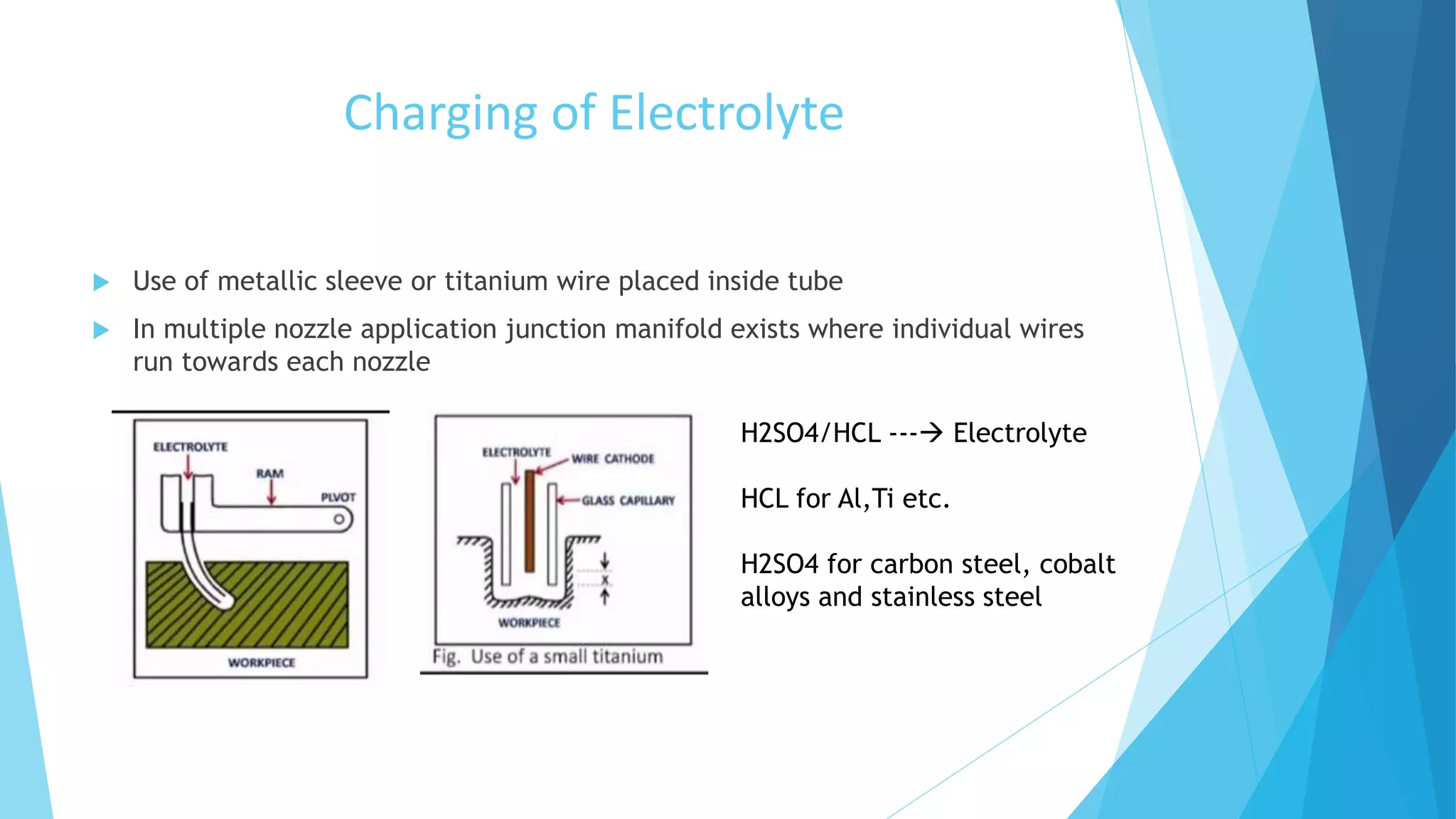
Charging of Electrolyte
 Use of metallic sleeve or titanium wire placed inside tube
 In multiple nozzle application junction manifold exists where individual wires
run towards each nozzle
H2SO4/HCL --- Electrolyte
HCL for Al,Ti etc.
H2SO4 for carbon steel, cobalt
alloys and stainless steel
Process Parameters
 Nozzle Stand off Distance
 Flow of Electrolyte through nozzle
 Type of metal of work piece
 Type of Electrolyte being used
 Temperature and other physical factors of electrolyte
Advantages
 Used for drilling high aspect ratio holes (dwell drilling 10:1, penetration drilling 40:1)
 Machining rate 1.5 mm/min
 Special Cases: - 96 holes have been simultaneously drilled in a turbine blade in 15 minutes
 Shallow holes of angle up till 750 from normal to work surface
 Tolerance of up to +/- 5% of hole diameter (but not less than 0.025 mm)
 Surface finish 0.25 – 1.67 micrometre
 Taper can be controlled 0.03 mm/cm
 No Burr generation
 No residual stresses induced
 Insignificant HAZ
 No tool wear
Disadvantages
 High initial set up cost
 Can’t be used for drilling large holes
 Electrically conductive materials are necessary as work piece
 Low MRR
THANK YOU !

Electro stream drilling(ESD)

  • 1.
    Electro Stream Drilling(ESD) (ElectrochemicalMachining Process) Shwetank Sahu (R160215095) Suvarna Raghava (R160215101) Siddharth Thakur (R160215098) Tejveer Singh (R160215104)
  • 2.
  • 3.
    ECD V/S ESD In conventional Electrochemical Drilling hollow metal tube is used as cathode.  Electrolyte flows at high velocity and cathode penetrates the hole.  Hole Diameter > Cathode Outside Diameter.  To drill a hole of small diameter ESD can be used.  High velocity negatively charged acidic electrolyte stream is used in this process.  In general ECM process metal hydroxides precipitate as they don’t react with electrolyte but in ESD they dissolve in electrolyte.
  • 4.
    Process Principles andSpecifications  This process differs from conventional Electrochemical Drilling.  High velocity negatively charged electrolyte is used.  Debris of Metal hydroxides generated in this process is dissolved by acidic electrolyte.  Due to dissolving the debris doesn’t clog between inter-electrode gap.  Therefore, you can generate any type of hole.  Holes of size 0.127-0.89 mm can be generated.  Voltage of 150-850 V is applied.  Nozzle is made of glass.
  • 5.
    Process Principles andSpecifications  Electro stream of electrolyte with high velocity is flowing through the nozzle.  Nozzle diameter is made as small as possible.  Nozzle is given a feed towards the work piece.  Acidic Electrolyte after impinging on the surface will dissolve it and material removal will occur  Exhaust Fan is used to vent out the gas bubbles created during process.  Electrolyte temperature maintained through the use of heater.  Filter is used to filter out metallic hydroxide particles from electrolyte.
  • 6.
    Types of ESD Dwell Drilling  1. Zero feed rate provided  2. For shallow and less accurate holes  3. Depth of hole and accuracy limited  4. Maximum Depth of 5 mm can be achieved  Penetration Drilling  1.Deep & accurate drilling  2. Constant gap maintained using finite feed rate  3. Constant gap maintained through gap sensing device (Proximity Sensor)  4. Maximum Depth 19 mm.  5. Machining rate 1.5mm/min.
  • 7.
    Types of ESD- Figures
  • 8.
    Drilling of rightangled holes Drilling hole in cavity:- Tool with right angle bend at tip Length of small diameter part of tube > depth of hole Outside diameter of nozzle tip:- Should fit within hole being drilled, allow room for repeatable escape of used electrolyte
  • 9.
    Charging of Electrolyte Use of metallic sleeve or titanium wire placed inside tube  In multiple nozzle application junction manifold exists where individual wires run towards each nozzle H2SO4/HCL --- Electrolyte HCL for Al,Ti etc. H2SO4 for carbon steel, cobalt alloys and stainless steel
  • 10.
    Process Parameters  NozzleStand off Distance  Flow of Electrolyte through nozzle  Type of metal of work piece  Type of Electrolyte being used  Temperature and other physical factors of electrolyte
  • 11.
    Advantages  Used fordrilling high aspect ratio holes (dwell drilling 10:1, penetration drilling 40:1)  Machining rate 1.5 mm/min  Special Cases: - 96 holes have been simultaneously drilled in a turbine blade in 15 minutes  Shallow holes of angle up till 750 from normal to work surface  Tolerance of up to +/- 5% of hole diameter (but not less than 0.025 mm)  Surface finish 0.25 – 1.67 micrometre  Taper can be controlled 0.03 mm/cm  No Burr generation  No residual stresses induced  Insignificant HAZ  No tool wear
  • 12.
    Disadvantages  High initialset up cost  Can’t be used for drilling large holes  Electrically conductive materials are necessary as work piece  Low MRR
  • 13.