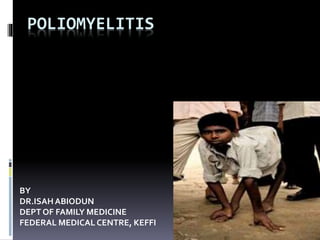
POLIOMYELITIS
BY
DR.ISAHABIODUN
DEPT OF FAMILY MEDICINE
FEDERAL MEDICAL CENTRE, KEFFI
INTRODUCTION
 An acute viral infectious disease with a propensity for the central
nervous system which can lead to partial or full paralysis.
 Dates back to prehistoric times.
 Jakob Heine – 1840, Karl landsteiner -1908
 Epidemics >> “Great Race”
 Targeted For eradication
 Polio case numbers have decreased by 99%
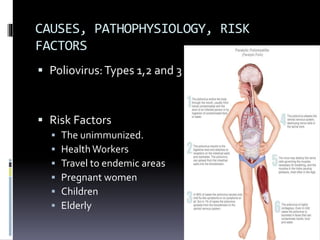
CAUSES, PATHOPHYSIOLOGY, RISK
FACTORS
 Poliovirus:Types 1,2 and 3
 Risk Factors
 The unimmunized.
 HealthWorkers
 Travel to endemic areas
 Pregnant women
 Children
 Elderly
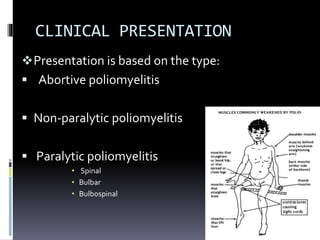
CLINICAL PRESENTATION
Presentation is based on the type:
 Abortive poliomyelitis
 Non-paralytic poliomyelitis
 Paralytic poliomyelitis
• Spinal
• Bulbar
• Bulbospinal
INVESTIGATIONS, TREATMENT
 Recovery of virus
 Serology : IgG
Anti Ig M
 Polymerase chain reaction (PCR) :Wild type
Vaccine type
 CSF Analysis
 Imaging:MRI
 Treatment is supportive
Analgesic
Antibiotics
Physiotherapy
Orhopedic surgery
COMPLICATION
 Skeletal deformities
 Tightening of the joints
 Movement disability
 Scoliosis
 Ostesporosis
 Increased likelihood of
bone fracture
 Compression
neuropathy
 Pulmonary oedema
 Aspiration pneumonia
 Urinary tract infections
 Kidney stone
 Paralytic ileus
 Myocarditis
 Corpulmonale
DIFFERENTIAL DIAGNOSIS
 Guillian – Barre syndrome
 Viral Encephalitis
 Meningitis
 BrainTumours
 Bacillary dysentry
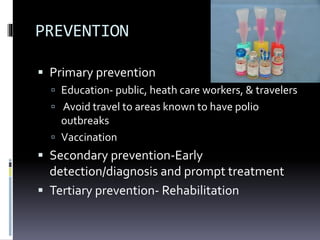
PREVENTION
 Primary prevention
 Education- public, heath care workers, & travelers
 Avoid travel to areas known to have polio
outbreaks
 Vaccination
 Secondary prevention-Early
detection/diagnosis and prompt treatment
 Tertiary prevention- Rehabilitation
PROGNOSIS
 Paralysis lasting > 12months tends to be
permanent.
 50% of people with paralytic polio recover
completely
 25 -50% of paralytic polio survivors develop
Post-polio syndrome
REFERENCES
 Modlin JF. Poliovirus:Principles and practice
of infectious diseases.&th ed. Elsevier
churchill Livinstone; 2009:chap 171
 RacanielloVR. One hundred years of
poliovirus pathogenesis.Virology. Jan 5
2006;344(1):9-16
 Adams RD,Victor M, RopperAH.Viral
infection. In: Poliomyelitis . Principle of
neurology. 6th ed. 1997 136-7

Poliomyelitis

  • 1.
    POLIOMYELITIS BY DR.ISAHABIODUN DEPT OF FAMILYMEDICINE FEDERAL MEDICAL CENTRE, KEFFI
  • 2.
    INTRODUCTION  An acuteviral infectious disease with a propensity for the central nervous system which can lead to partial or full paralysis.  Dates back to prehistoric times.  Jakob Heine – 1840, Karl landsteiner -1908  Epidemics >> “Great Race”  Targeted For eradication  Polio case numbers have decreased by 99%
  • 3.
    CAUSES, PATHOPHYSIOLOGY, RISK FACTORS Poliovirus:Types 1,2 and 3  Risk Factors  The unimmunized.  HealthWorkers  Travel to endemic areas  Pregnant women  Children  Elderly
  • 4.
    CLINICAL PRESENTATION Presentation isbased on the type:  Abortive poliomyelitis  Non-paralytic poliomyelitis  Paralytic poliomyelitis • Spinal • Bulbar • Bulbospinal
  • 5.
    INVESTIGATIONS, TREATMENT  Recoveryof virus  Serology : IgG Anti Ig M  Polymerase chain reaction (PCR) :Wild type Vaccine type  CSF Analysis  Imaging:MRI  Treatment is supportive Analgesic Antibiotics Physiotherapy Orhopedic surgery
  • 6.
    COMPLICATION  Skeletal deformities Tightening of the joints  Movement disability  Scoliosis  Ostesporosis  Increased likelihood of bone fracture  Compression neuropathy  Pulmonary oedema  Aspiration pneumonia  Urinary tract infections  Kidney stone  Paralytic ileus  Myocarditis  Corpulmonale
  • 7.
    DIFFERENTIAL DIAGNOSIS  Guillian– Barre syndrome  Viral Encephalitis  Meningitis  BrainTumours  Bacillary dysentry
  • 8.
    PREVENTION  Primary prevention Education- public, heath care workers, & travelers  Avoid travel to areas known to have polio outbreaks  Vaccination  Secondary prevention-Early detection/diagnosis and prompt treatment  Tertiary prevention- Rehabilitation
  • 9.
    PROGNOSIS  Paralysis lasting> 12months tends to be permanent.  50% of people with paralytic polio recover completely  25 -50% of paralytic polio survivors develop Post-polio syndrome
  • 10.
    REFERENCES  Modlin JF.Poliovirus:Principles and practice of infectious diseases.&th ed. Elsevier churchill Livinstone; 2009:chap 171  RacanielloVR. One hundred years of poliovirus pathogenesis.Virology. Jan 5 2006;344(1):9-16  Adams RD,Victor M, RopperAH.Viral infection. In: Poliomyelitis . Principle of neurology. 6th ed. 1997 136-7