AN OVERVIEW OF
STROKE REHABILITATION
Dr Joe Antony
MBBS, M.D (PMR)
CONTENTS
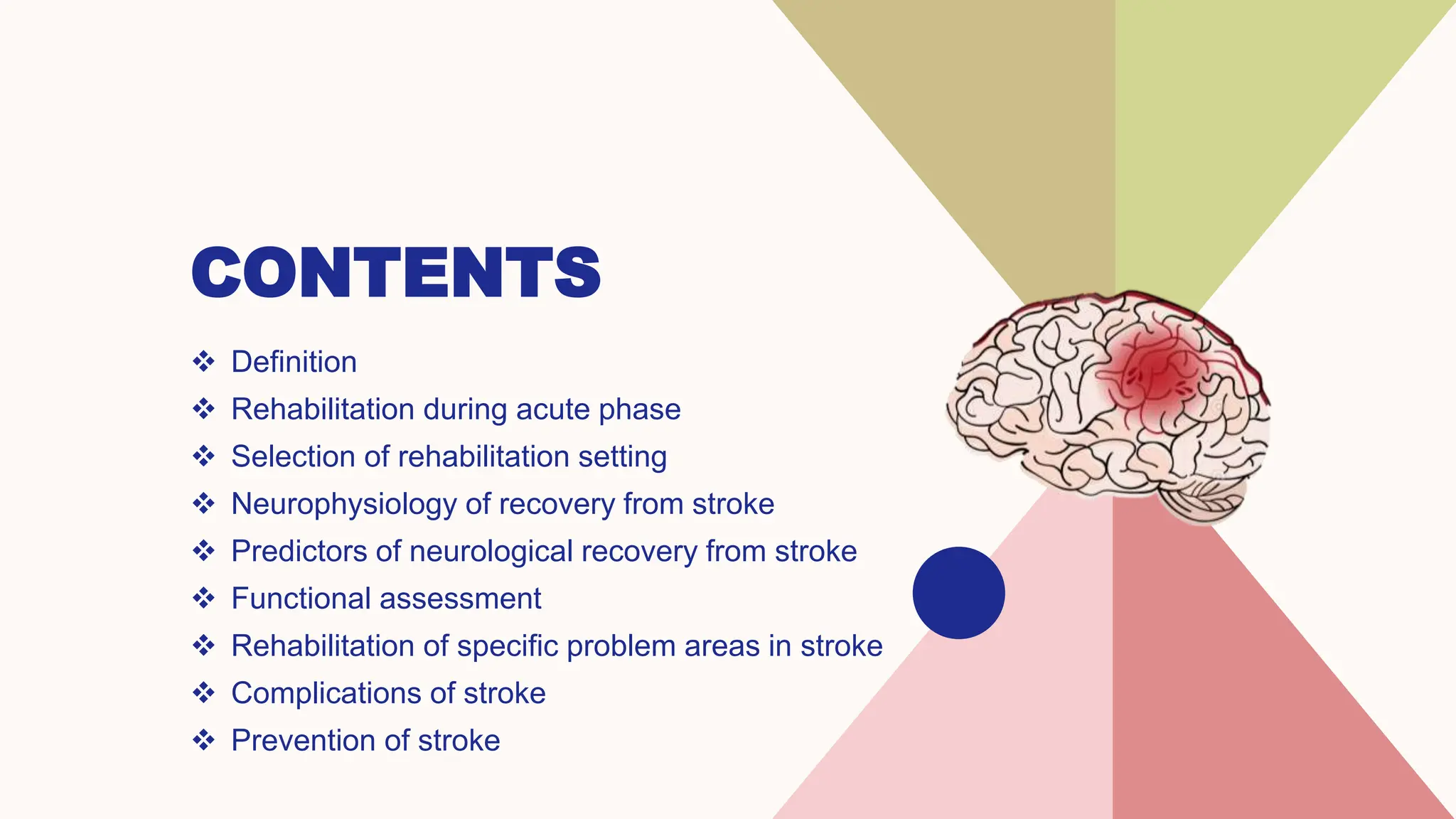
 Definition
 Rehabilitation during acute phase
 Selection of rehabilitation setting
 Neurophysiology of recovery from stroke
 Predictors of neurological recovery from stroke
 Functional assessment
 Rehabilitation of specific problem areas in stroke
 Complications of stroke
 Prevention of stroke
DEFINITION
Delisa physical medicine and rehabilitation 6th edition
3
• A stroke is sudden occurrence of permanent
damage to an area of brain caused by a blocked
blood vessel or bleeding within the brain with
symptoms lasting more than 24 hours or leading to
death.
• Other causes of focal brain damage, such as
traumatic injury to the brain, demyelinating lesions,
brain tumors, brain abscesses, and others, can
produce stroke like symptoms and have similar
rehabilitation needs but are not formally included in
this definition.
REHABILITATION
DURING ACUTE
PHASE
Rehabilitation not to be considered a separate phase of
care, that only begins after acute medical intervention.
Rather, it is an integral part of medical management and
continues longitudinally through acute care, post-acute
care, and community reintegration.
4
ACUTE PHASE REHABILITATION MEASURES
ARE MOSTLY PREVENTIVE IN NATURE
5
• Pressure injury prevention- hemiplegic, lethargic, and incontinent are at high
risk.
• Prevent skin breakdowns, including protection of skin from excessive
moisture.
• Use of heel-protecting splints.
• Maintenance of proper position with frequent turning.
• Daily inspection and routine skin cleansing
• Water/Air mattress
• Prevention of aspiration and pneumonia – 40 % of stroke
patients suffer silent aspiration
• Avoid oral feeding if patient is not alert
• In Alert patients do bed side swallowing assessment – sips of clear water-
no change in quality of voice or coughing/ Guss tool
• In case of doubt, swallowing video fluoroscopy or flexible endoscopic
evaluation
• Head should be elevated (flat position promotes aspiration)
• Initially N-G or O-G tube might be necessary ( early initiation of feeds
promote bringing metabolic demands to optimum)
6
Delisa physical medicine and rehabilitation,6th edition
7
• Bladder management - may initially cause a hypotonic bladder with overflow
incontinence.
• If an indwelling catheter is used, it should be removed as soon as possible, with
careful monitoring to ensure that appropriate voiding resumes.
• In case of persistent urinary retention after stroke, regular intermittent
catheterization is preferable to an indwelling catheter.
• Prevention of contractures- High risk for development of contractures due to
immobility.
• Spasticity, if present at this early stage, may contribute to the development of
contractures through sustained posturing of the limbs.
• Prevention by regular passive stretching and moving the joints through a full range
of motion, preferably at least twice daily.
• While the use of resting hand splints remains widespread, studies have failed to
demonstrate their utility.
8
• DVT prevention- Every patient should have some form of deep vein
thrombosis (DVT) prophylaxis
• Low molecular weight heparin
• Subcutaneous heparin
• External pneumatic compression boots.
• Early mobilization - beneficial by reducing the risks of DVT, deconditioning,
gastroesophageal regurgitation and aspiration pneumonia, contracture
formation, skin breakdown, orthostatic intolerance and positive psychological
benefits.
• Specific tasks - turning from side to side in bed and changing position,
sitting up in bed, transferring to a wheelchair, standing, and walking.
• Self-care activities such as self-feeding, grooming, and dressing.
• The timing and progression in these activities depend on the patient’s
condition.
AVERT trial has found that very early aggressive mobilization (within 24 hours
SELECTION OF REHABILITATION
SETTING
9
• Evaluation of longer-term rehabilitation
needs should occur within the first few
days after stroke.
• Many stroke survivors will benefit from
admission to an acute rehabilitation
unit.
• Some individuals may be more
appropriate for a subacute
rehabilitation program (based on a
skilled nursing facility, or SNF),
which provides a less intense
rehabilitation program with a lesser
degree of medical supervision over a
longer period of time.
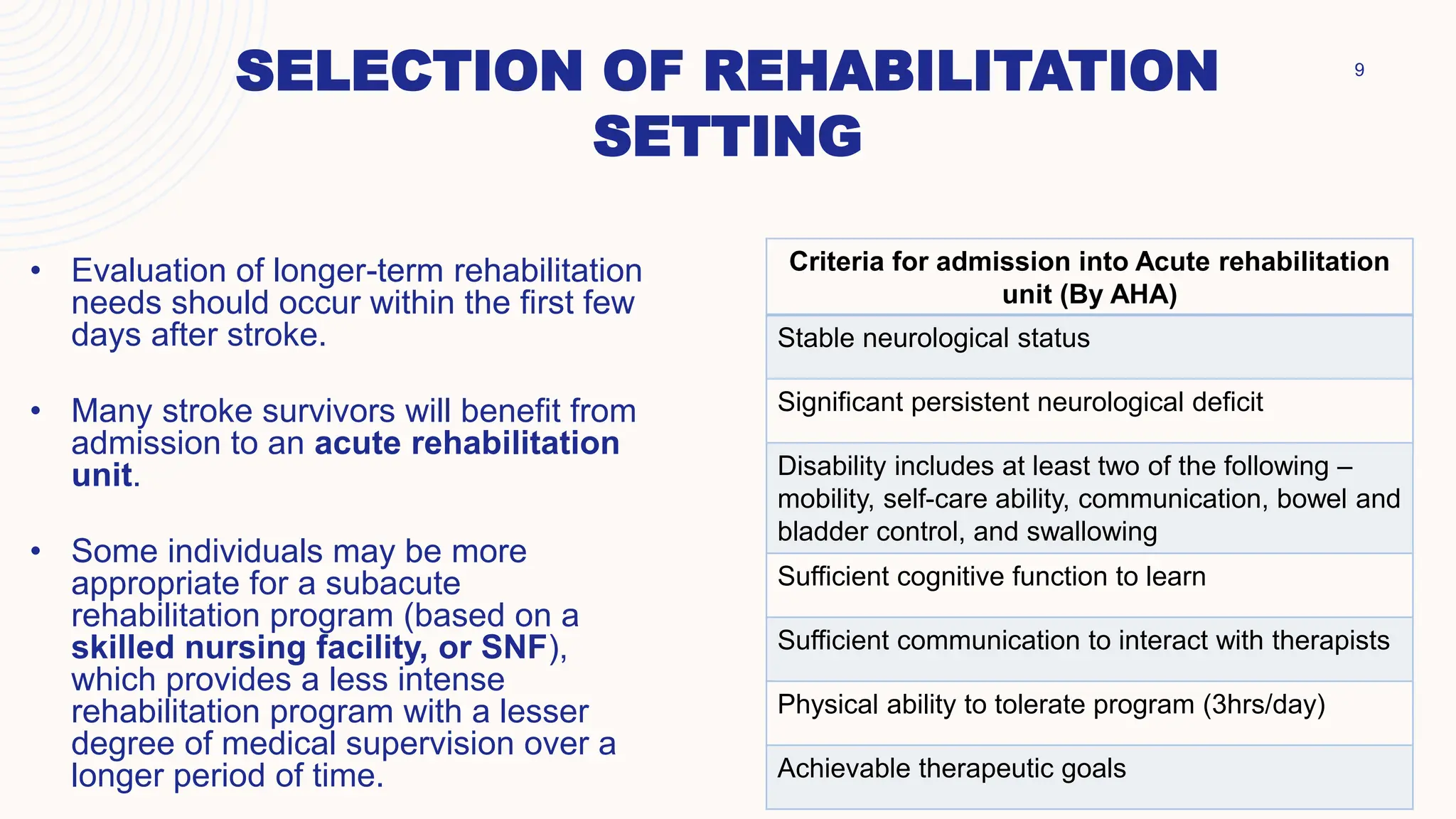
Criteria for admission into Acute rehabilitation
unit (By AHA)
Stable neurological status
Significant persistent neurological deficit
Disability includes at least two of the following –
mobility, self-care ability, communication, bowel and
bladder control, and swallowing
Sufficient cognitive function to learn
Sufficient communication to interact with therapists
Physical ability to tolerate program (3hrs/day)
Achievable therapeutic goals
NEUROPHYSIOLOGY OF
RECOVERY FROM STROKE
Stroke recovery and rehabilitation,2nd edition, Joel Stein
10
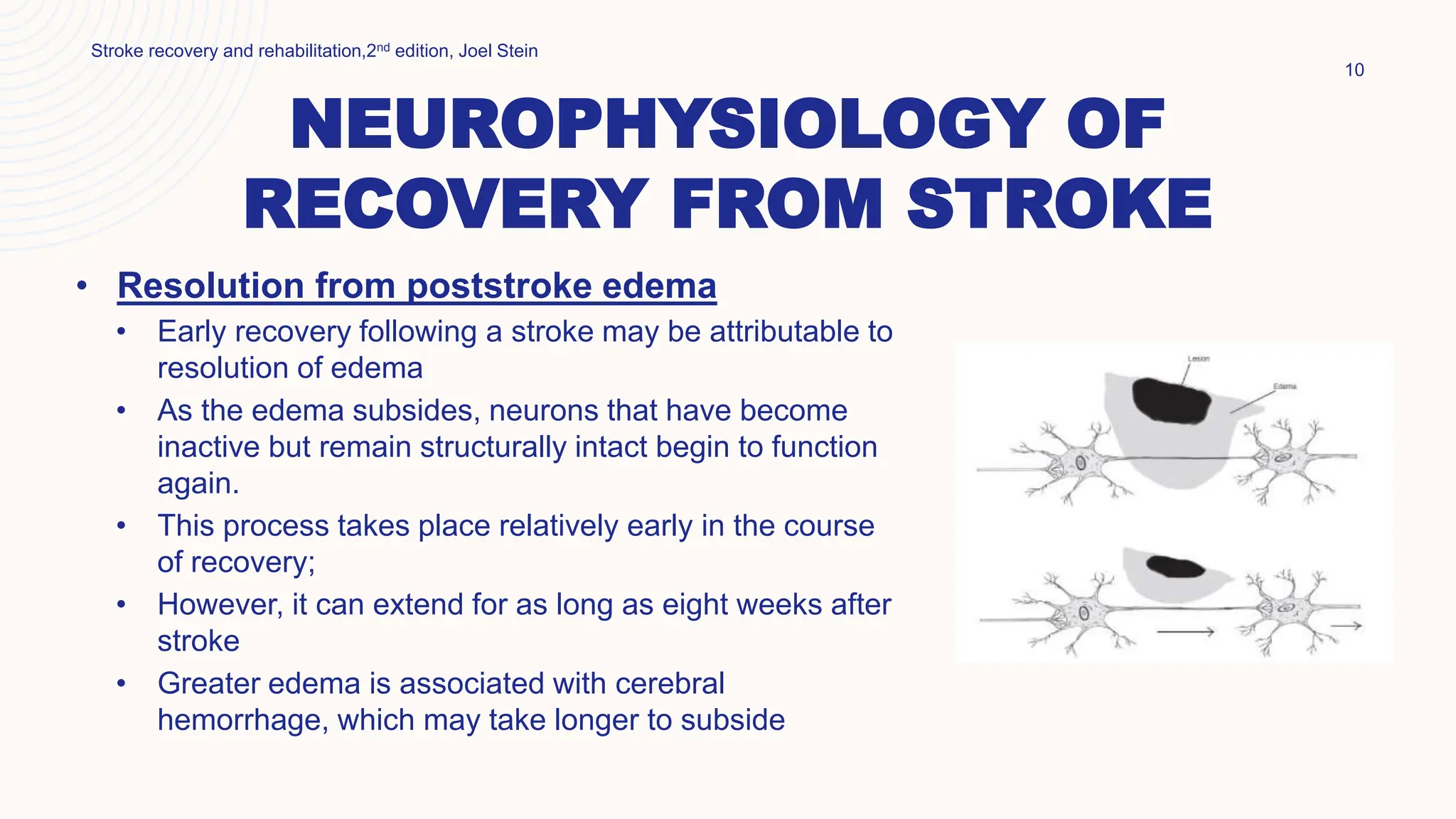
• Resolution from poststroke edema
• Early recovery following a stroke may be attributable to
resolution of edema
• As the edema subsides, neurons that have become
inactive but remain structurally intact begin to function
again.
• This process takes place relatively early in the course
of recovery;
• However, it can extend for as long as eight weeks after
stroke
• Greater edema is associated with cerebral
hemorrhage, which may take longer to subside
Stroke recovery and rehabilitation,2nd edition,
Joel Stein 11
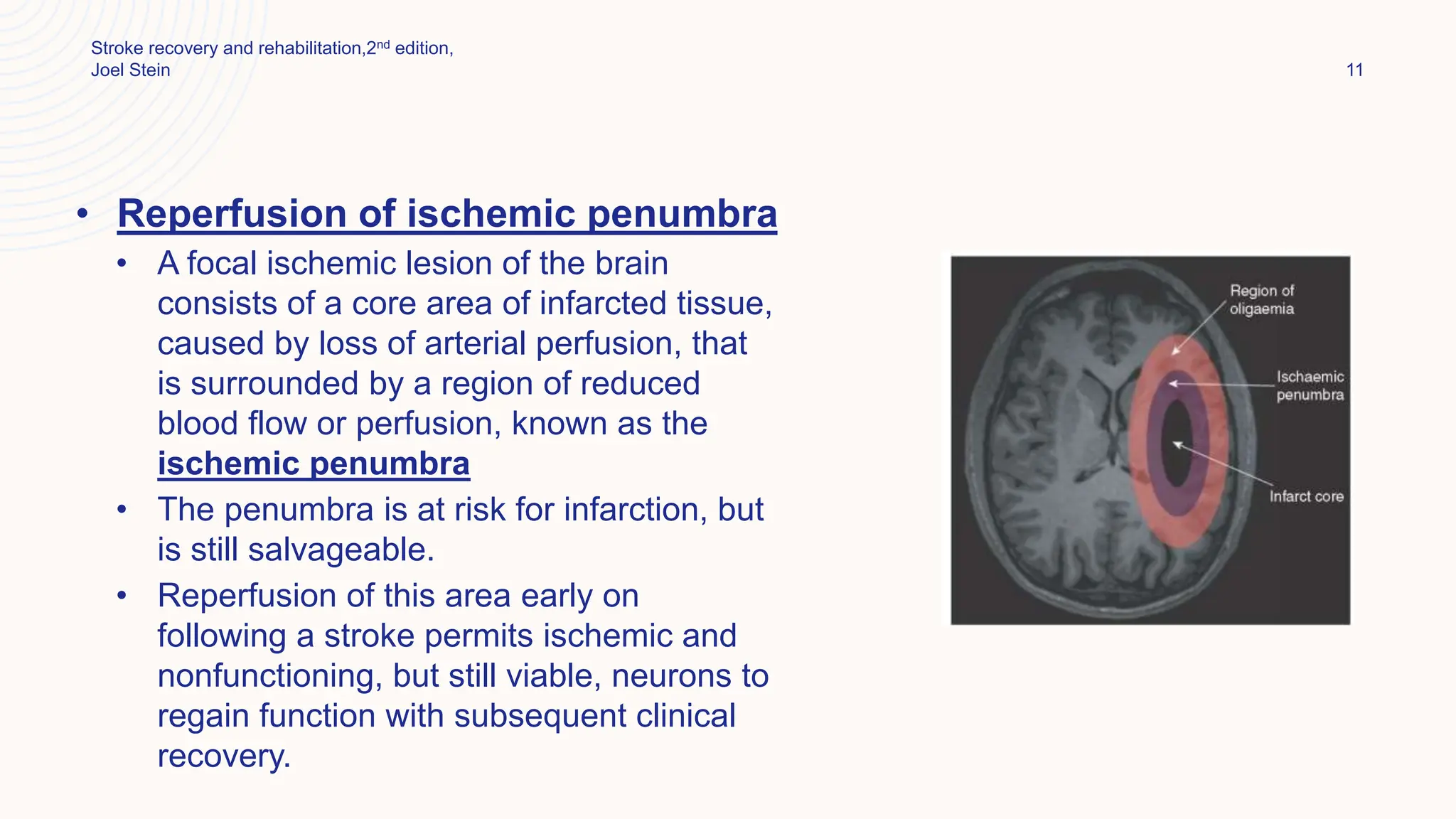
• Reperfusion of ischemic penumbra
• A focal ischemic lesion of the brain
consists of a core area of infarcted tissue,
caused by loss of arterial perfusion, that
is surrounded by a region of reduced
blood flow or perfusion, known as the
ischemic penumbra
• The penumbra is at risk for infarction, but
is still salvageable.
• Reperfusion of this area early on
following a stroke permits ischemic and
nonfunctioning, but still viable, neurons to
regain function with subsequent clinical
recovery.
Stroke recovery and rehabilitation,2nd edition,
Joel Stein 12
• Resolution of diaschiasis
• Diaschisis is a reversible state of low reactivity or depressed function as a
consequence of a sudden interruption or loss of excitation in regions of the
brain remote from, but connected to, the site of cerebral damage.
• Diaschisis occurs early after injury and is an inhibition or suppression of the
surrounding cortex or distant areas of cortex with a connection to the
damaged area
• Neuronal function may return following the resolution of diaschisis,
particularly as the affected area of the brain demonstrates recovery and
connections are restored.
CORTICAL REORGANISATION /
NEUROPLASTICITY
Stroke recovery and rehabilitation,2nd edition,
Joel Stein 13
• Cortical reorganization, an important contributor to the recovery process and
one that is influenced by rehabilitation.
• Based on 3 main concepts,
1. In normal (nonstroke) brains, acquisition of skilled movements is associated with
predictable functional changes within the motor cortex.
2. Injury to the motor cortex from stroke results in functional changes in the remaining cortical
tissue.
3. After a cortical stroke, these two observations interact so that reacquisition of motor skills is
associated with functional neurologic reorganization occurring in the undamaged cortex
MECHANISMS OF PLASTICITY
14
1. Neuronal regeneration/neuronal (collateral) sprouting
• Intact axons establish synaptic connections through dendritic and axonal
sprouting in areas where damage has occurred.
• May enhance recovery of function, may contribute to unwanted symptoms,
or may be neutral (with no increase or decrease of function). Thought to
occur weeks to months post-injury.
2. Functional reorganization/unmasking neural reorganization
• Healthy neural structures not formerly used for a given purpose are
developed (or reassigned) to do functions formerly subserved by the
lesioned area.
ENDOGENOUS AND
EXOGENOUS FACTORS OF
PLASTICITY
Stroke- Pathophysiology, Diagnosis, and Management, James
C
15
• Phosphodiesterase-5
inhibitors (sildenafil)
• Statins
• EPO
• Granulocyte-colony
stimulating factor (G-CSF)
• Niacin extended-release
tablets (Niaspan)
• Nitric oxide (NO)
• Minocycline
SYNERGY
16
• Process of recovery from stroke-induced hemiplegia usually follows a
relatively predictable, stereotyped series of events. This sequence of
events has been systematically described as synergy.
• In the UE, a flexor synergy pattern develops (with shoulder, elbow,
wrist, and finger flexion) followed by development of an extensor
synergy pattern.
• Voluntary movement in the lower limb also begins with flexor synergy
(also proximal-hip) followed by extensor synergy pattern.
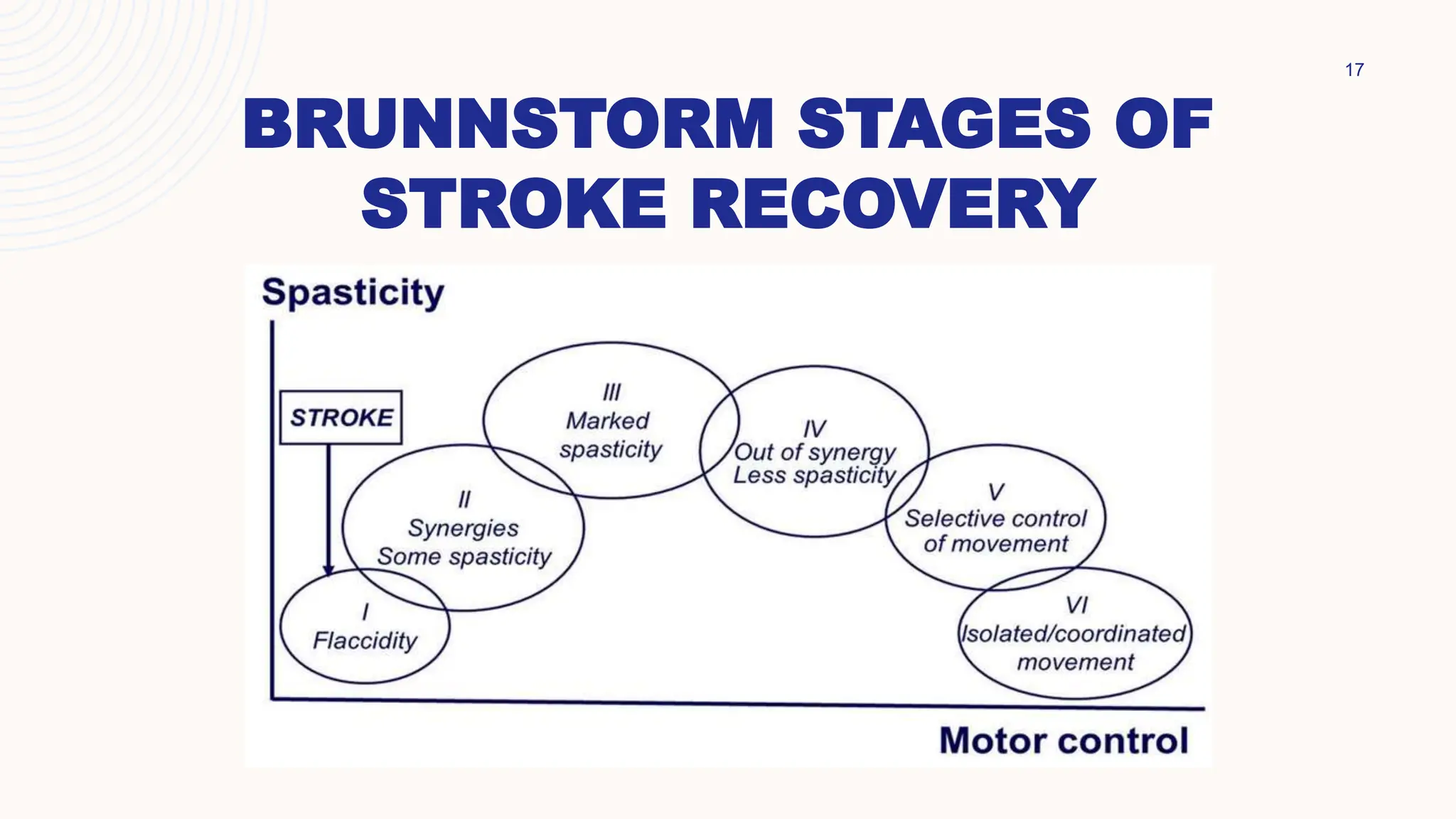
BRUNNSTORM STAGES OF
STROKE RECOVERY
17
Stroke recovery and rehabilitation,2nd edition, Joel Stein
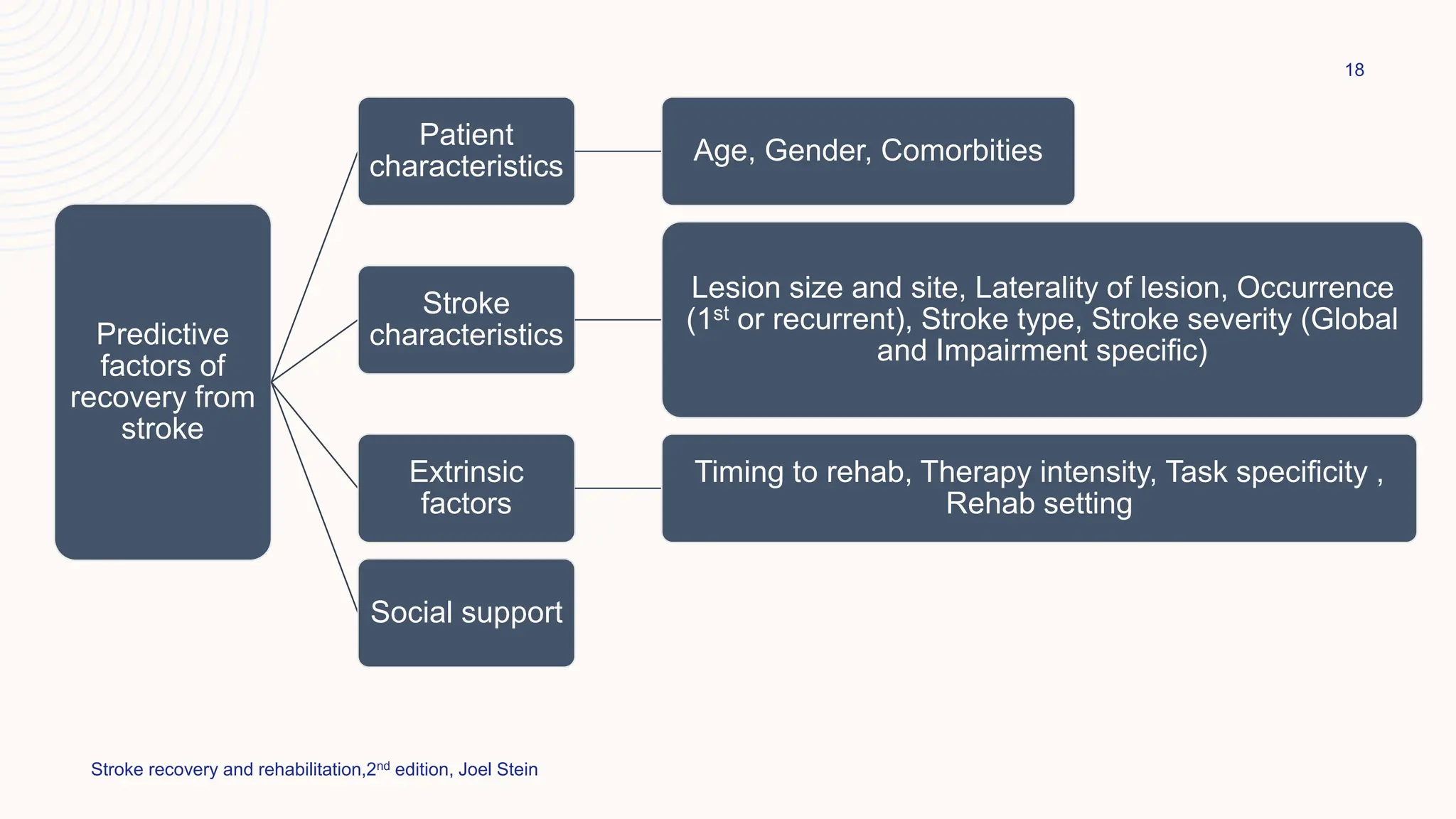
18
Predictive
factors of
recovery from
stroke
Patient
characteristics
Age, Gender, Comorbities
Stroke
characteristics
Lesion size and site, Laterality of lesion, Occurrence
(1st or recurrent), Stroke type, Stroke severity (Global
and Impairment specific)
Extrinsic
factors
Timing to rehab, Therapy intensity, Task specificity ,
Rehab setting
Social support
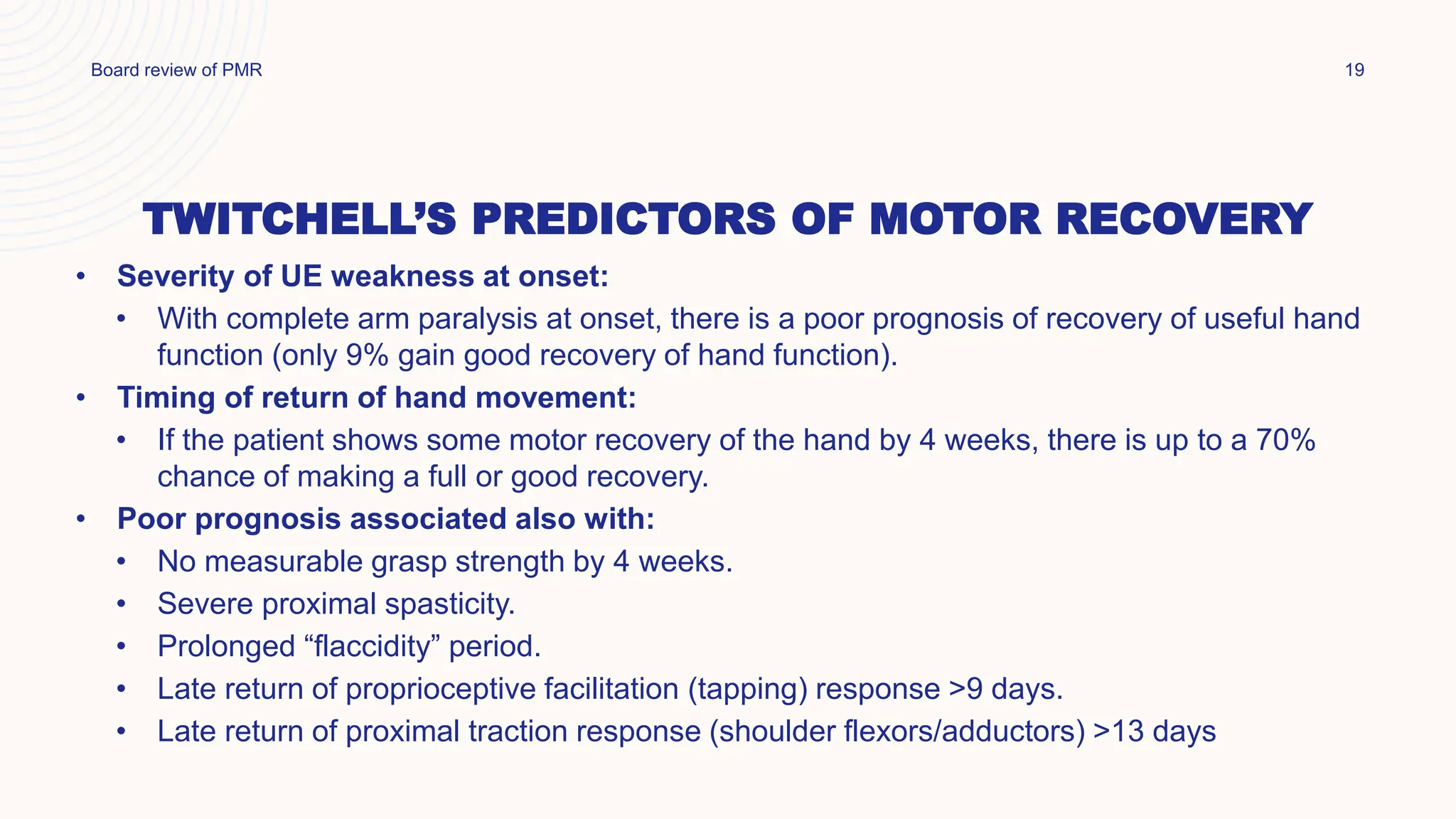
TWITCHELL’S PREDICTORS OF MOTOR RECOVERY
Board review of PMR 19
• Severity of UE weakness at onset:
• With complete arm paralysis at onset, there is a poor prognosis of recovery of useful hand
function (only 9% gain good recovery of hand function).
• Timing of return of hand movement:
• If the patient shows some motor recovery of the hand by 4 weeks, there is up to a 70%
chance of making a full or good recovery.
• Poor prognosis associated also with:
• No measurable grasp strength by 4 weeks.
• Severe proximal spasticity.
• Prolonged “flaccidity” period.
• Late return of proprioceptive facilitation (tapping) response >9 days.
• Late return of proximal traction response (shoulder flexors/adductors) >13 days
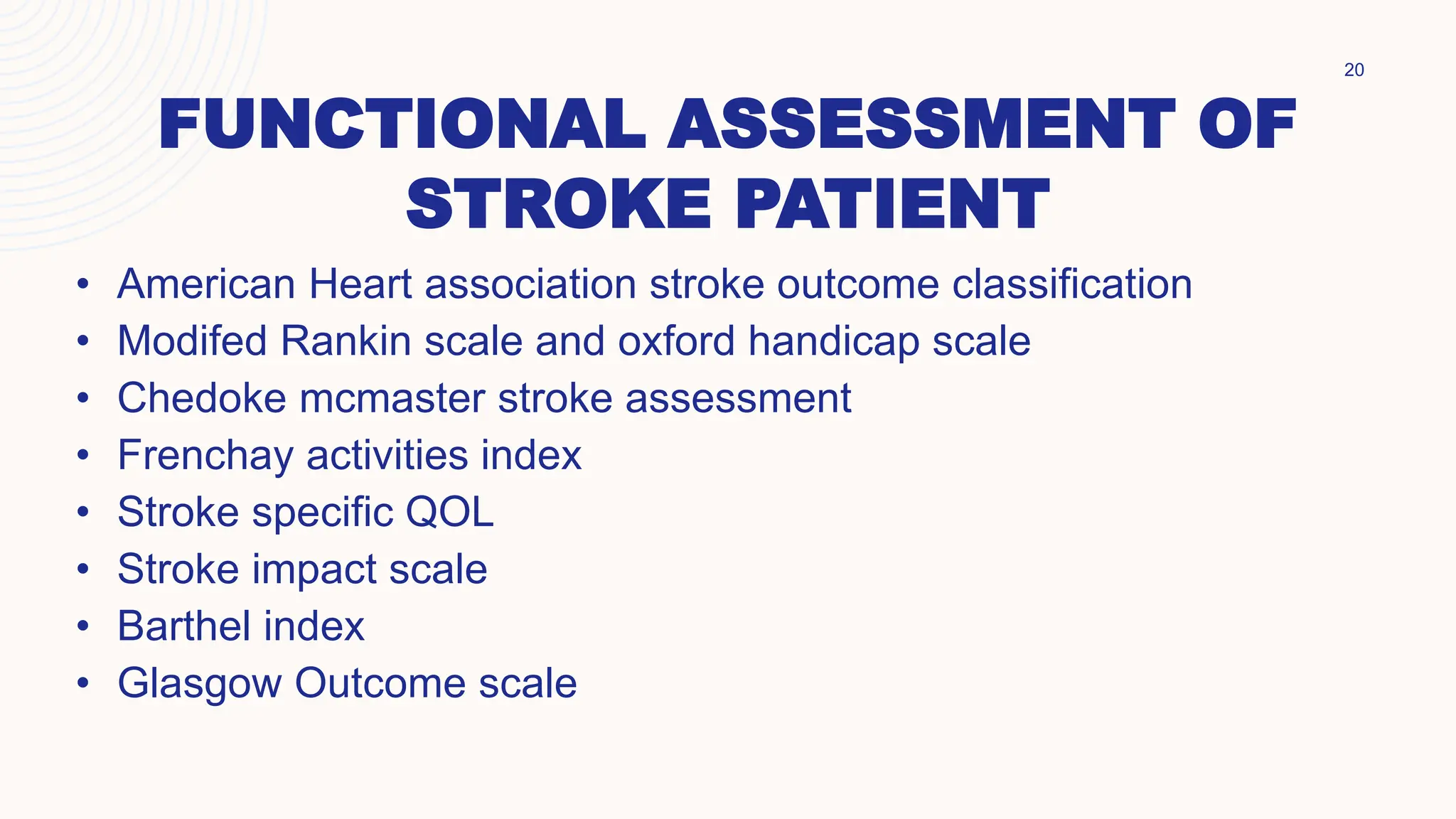
FUNCTIONAL ASSESSMENT OF
STROKE PATIENT
20
• American Heart association stroke outcome classification
• Modifed Rankin scale and oxford handicap scale
• Chedoke mcmaster stroke assessment
• Frenchay activities index
• Stroke specific QOL
• Stroke impact scale
• Barthel index
• Glasgow Outcome scale
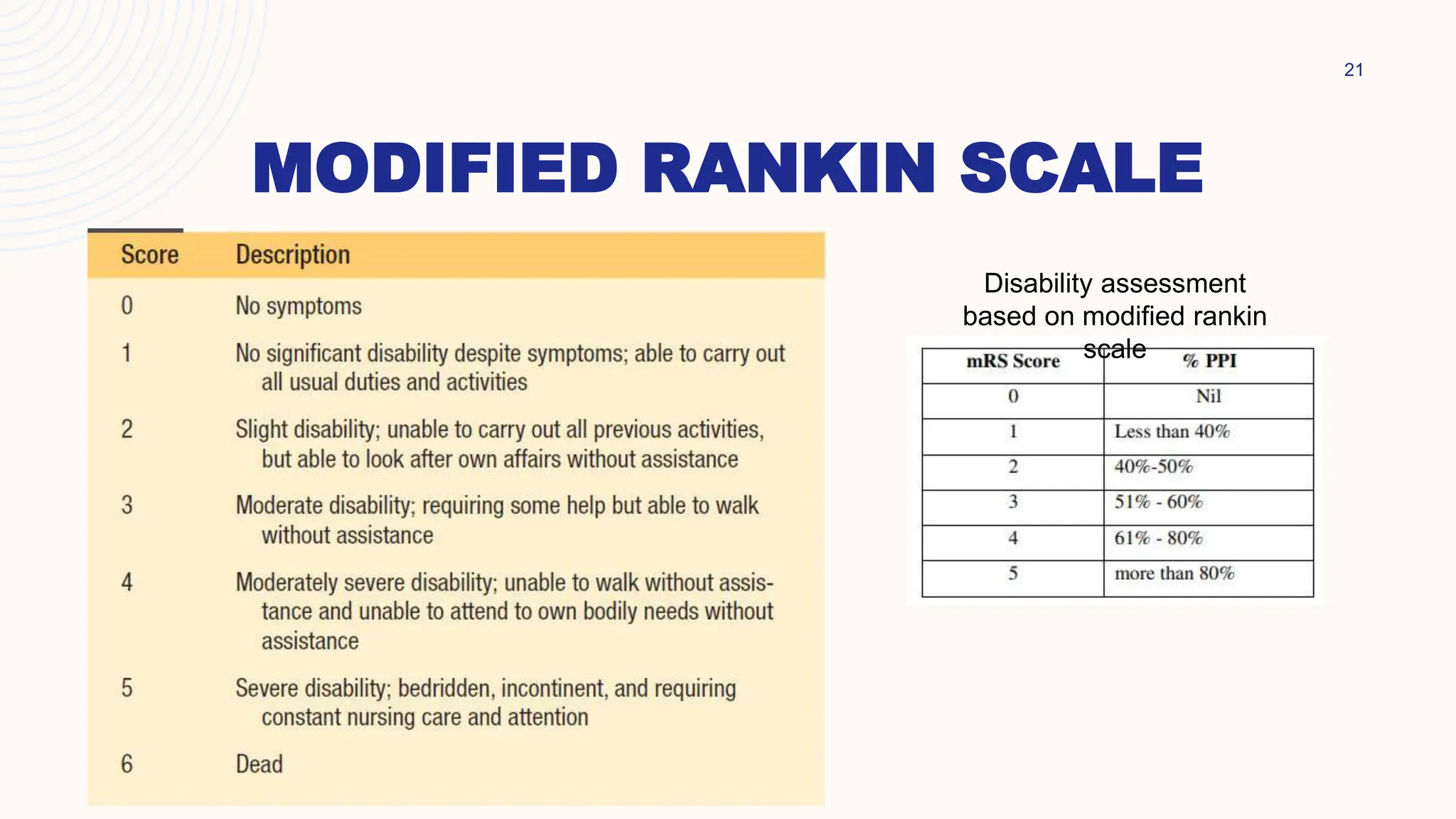
MODIFIED RANKIN SCALE
21
Disability assessment
based on modified rankin
scale
BARTHEL INDEX
22
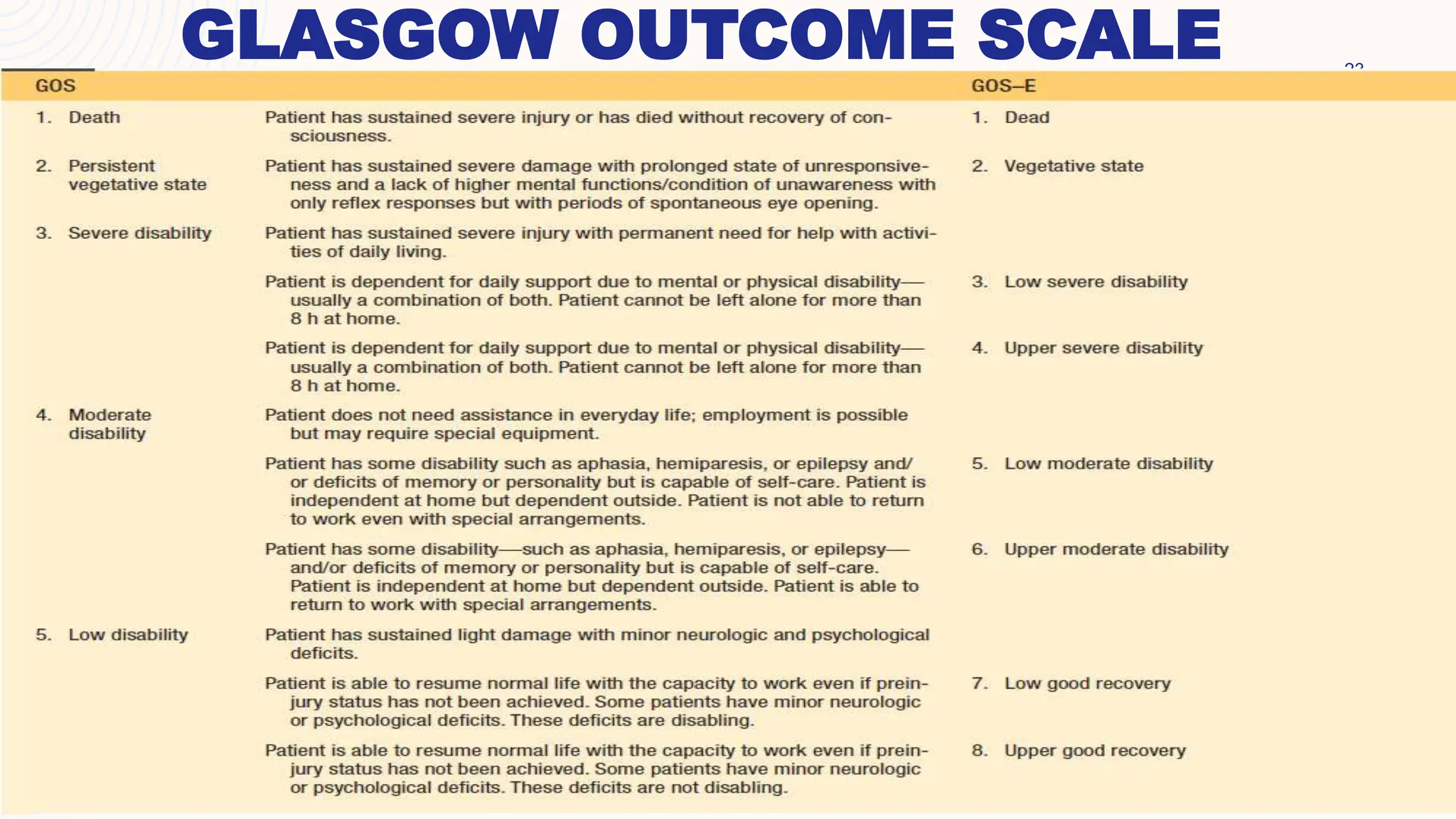
GLASGOW OUTCOME SCALE 23
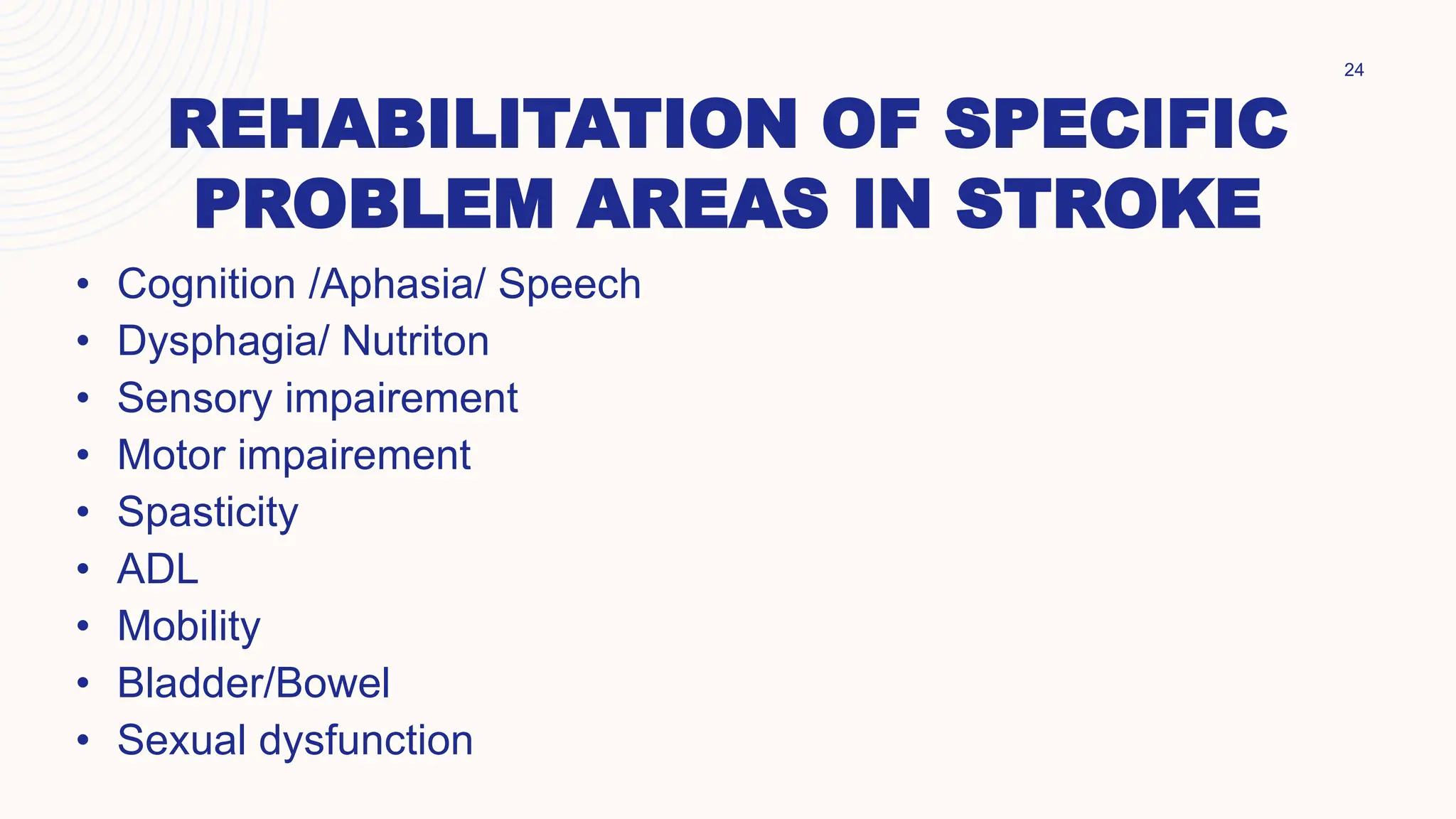
REHABILITATION OF SPECIFIC
PROBLEM AREAS IN STROKE
24
• Cognition /Aphasia/ Speech
• Dysphagia/ Nutriton
• Sensory impairement
• Motor impairement
• Spasticity
• ADL
• Mobility
• Bladder/Bowel
• Sexual dysfunction
COGNITION
Braddoms textboof PMR 25
Level of evidence Intervention
IA Use of enriched enviroments including use of technology (V.R,Music) to improve
patient engagement in therapy
IIaB Cognitive rehabilitation, including aspects of practice, compensation, and adaptive
techniques to improve attention, memory, neglect, and executive function.
IIaA Use of both compensatory strategies and external aids for memory.
IIbB Use of errorless learning and music therapy for memory impairments.
IIbC Exercise may be helpful in improving cognition and memory
SPEECH AND APHASIA
Braddoms textbook of PMR
26
Level of
evidence
Intervention
IA Speech or language therapy
IB Partner training
IIaA Intensive therapy is recommended, there is no agreement on the best parameters for treatment
(including amount, timing, intensity, distribution, and duration)
IIaB Care may also be supplemented with computerized treatment
IIbB Group therapy may be helpful
IC Techniques and strategies that target both physiologic support for speech (respiration, phonation,
articulation, and resonance) and global aspects of speech (loudness, rate, and prosody)
IIaC Augmentative and alternative communication devices and telerehabilitation
IIbC Listener education and other environmental modifications can help to promote successful
communication
] 27
PHARMACOTHERAPY IN
COGNITIVE REHABILITATION
Braddoms textbook of PMR 28
Level of
evidence
Intervention
IIbB Donepezil and rivastigmine have shown promise in this regard, but their use is still not
well established
IIbB Antidepressant medication was shown in one study to potentially have a beneficial effect
on the prevention of long-term deficits in executive function; however, an immediate effect
was not noted
IIbC Atomoxetine, methylphenidate, and modafinil are used in the community, although
published data are limited
DYSPHAGIA
Braddoms textbook of PMR
29
• Incidence of dysphagia after stroke differed as follows: cursory screening techniques identified an
incidence of 37% to 45%; skilled screening identified a rate of 51% to 55%; and instrumental testing,
often via videofluoroscopy, identified an incidence of 64% to 78%.
Level of
evidence
Intervention
IIaB Principles of neuroplasticity and behavioural techniques
IIIA Pharmacotherapy , NMES, transcranial direct current
stimulation (tDCS), and transcranial magnetic stimulation is
not recommended in the most recent guidelines
NUTRITIONAL SUPPORT
Braddoms textbook of PMR
30
Level of
evidenc
e
Intervention
IA In the hospitalized patient with poor oral intake, feeding via nasogastric tube should be started
within 7 days
IB This should be advanced to a percutaneous G-tube in those unable to advance from tube
feeding within 2 to 3 weeks following stroke
IIaB Supplements may be necessary in some to prevent or treat malnutrition
IA Assessment for calcium and vitamin D supplementation should be encouraged in those in long-
term care facilities
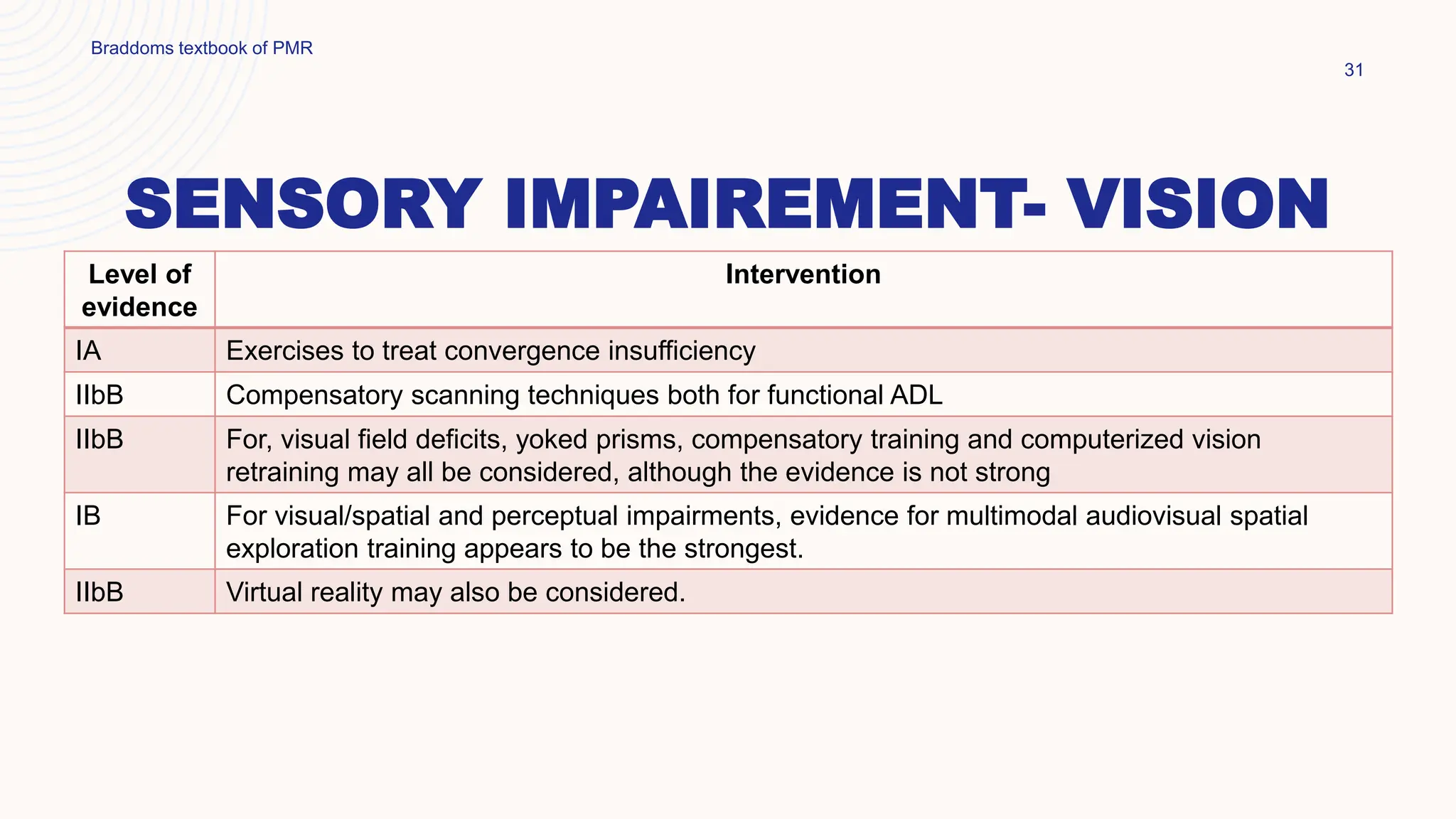
SENSORY IMPAIREMENT- VISION
Braddoms textbook of PMR
31
Level of
evidence
Intervention
IA Exercises to treat convergence insufficiency
IIbB Compensatory scanning techniques both for functional ADL
IIbB For, visual field deficits, yoked prisms, compensatory training and computerized vision
retraining may all be considered, although the evidence is not strong
IB For visual/spatial and perceptual impairments, evidence for multimodal audiovisual spatial
exploration training appears to be the strongest.
IIbB Virtual reality may also be considered.
SENSORY IMPAIRMENT-
HEMINEGLECT
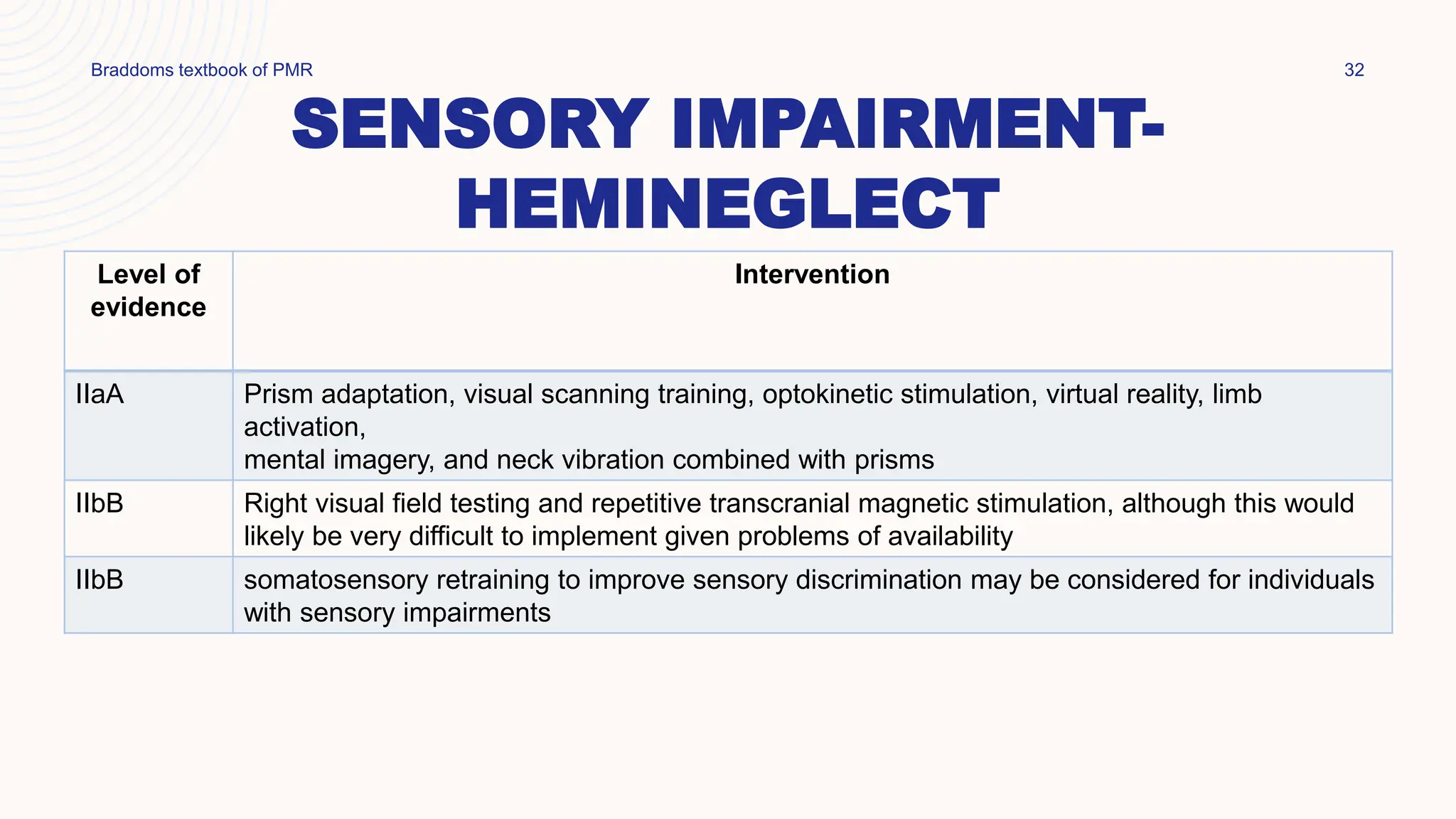
Braddoms textbook of PMR 32
Level of
evidence
Intervention
IIaA Prism adaptation, visual scanning training, optokinetic stimulation, virtual reality, limb
activation,
mental imagery, and neck vibration combined with prisms
IIbB Right visual field testing and repetitive transcranial magnetic stimulation, although this would
likely be very difficult to implement given problems of availability
IIbB somatosensory retraining to improve sensory discrimination may be considered for individuals
with sensory impairments
SENSORY IMPAIRMENT- HEARING
Braddoms textbook of PMR 33
• Referral to an audiologist for testing,
• Use of amplification systems,
• Use of communication strategies
• Environmental changes aimed at minimization of background noise
MOTOR DEFICIT
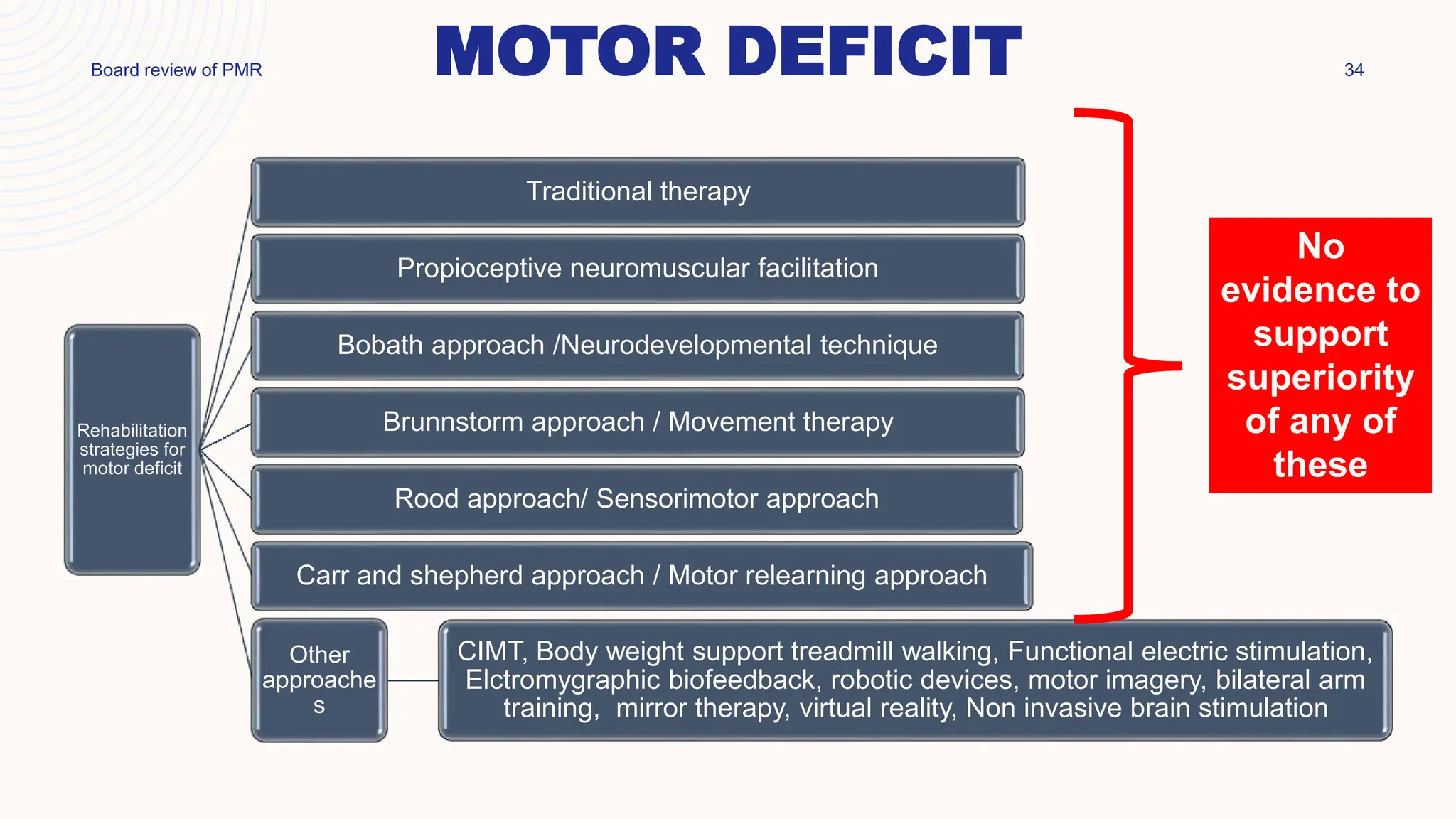
Board review of PMR 34
Rehabilitation
strategies for
motor deficit
Traditional therapy
Propioceptive neuromuscular facilitation
Bobath approach /Neurodevelopmental technique
Brunnstorm approach / Movement therapy
Rood approach/ Sensorimotor approach
Carr and shepherd approach / Motor relearning approach
Other
approache
s
CIMT, Body weight support treadmill walking, Functional electric stimulation,
Elctromygraphic biofeedback, robotic devices, motor imagery, bilateral arm
training, mirror therapy, virtual reality, Non invasive brain stimulation
No
evidence to
support
superiority
of any of
these
approache
s
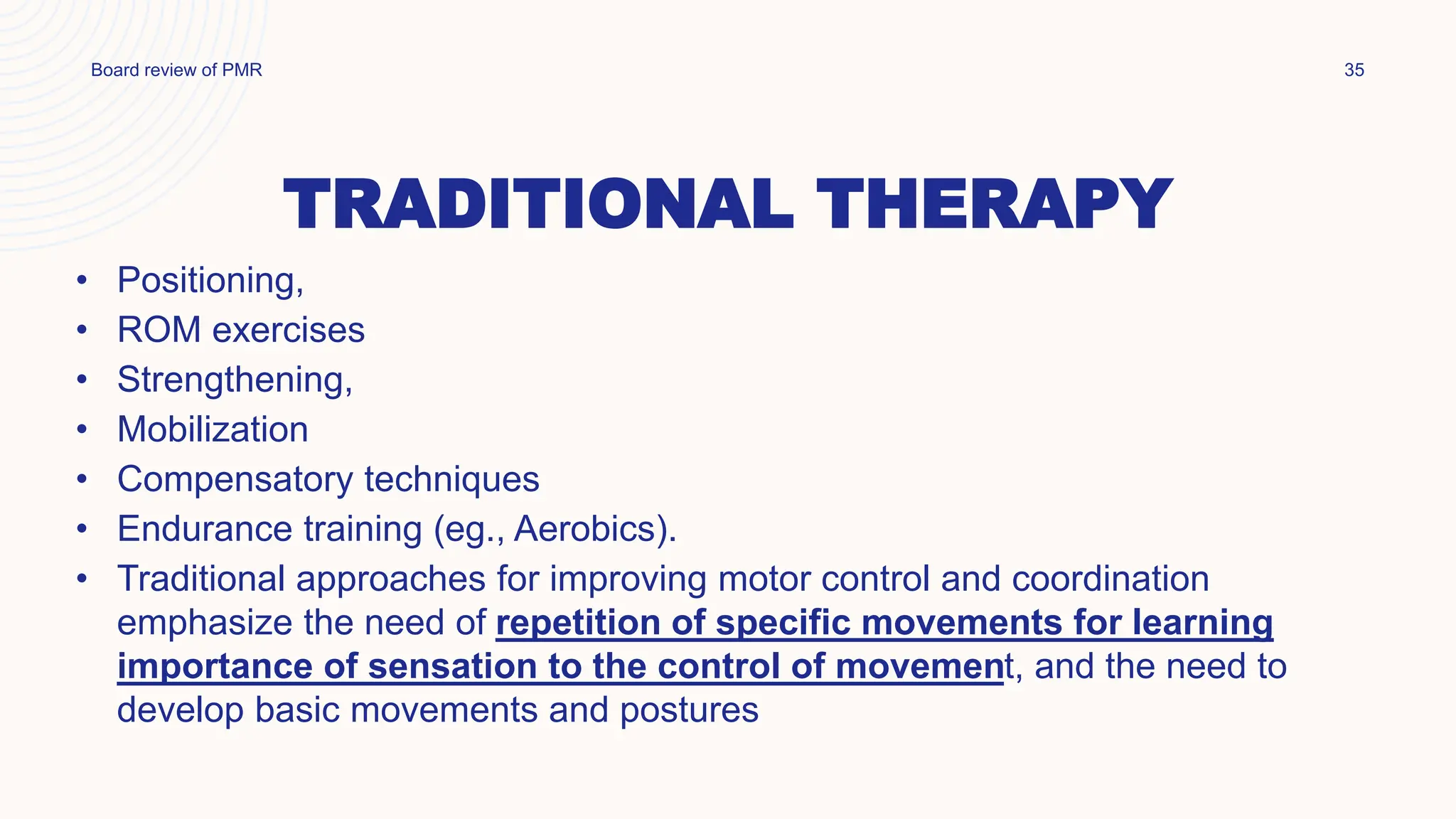
TRADITIONAL THERAPY
Board review of PMR 35
• Positioning,
• ROM exercises
• Strengthening,
• Mobilization
• Compensatory techniques
• Endurance training (eg., Aerobics).
• Traditional approaches for improving motor control and coordination
emphasize the need of repetition of specific movements for learning
importance of sensation to the control of movement, and the need to
develop basic movements and postures
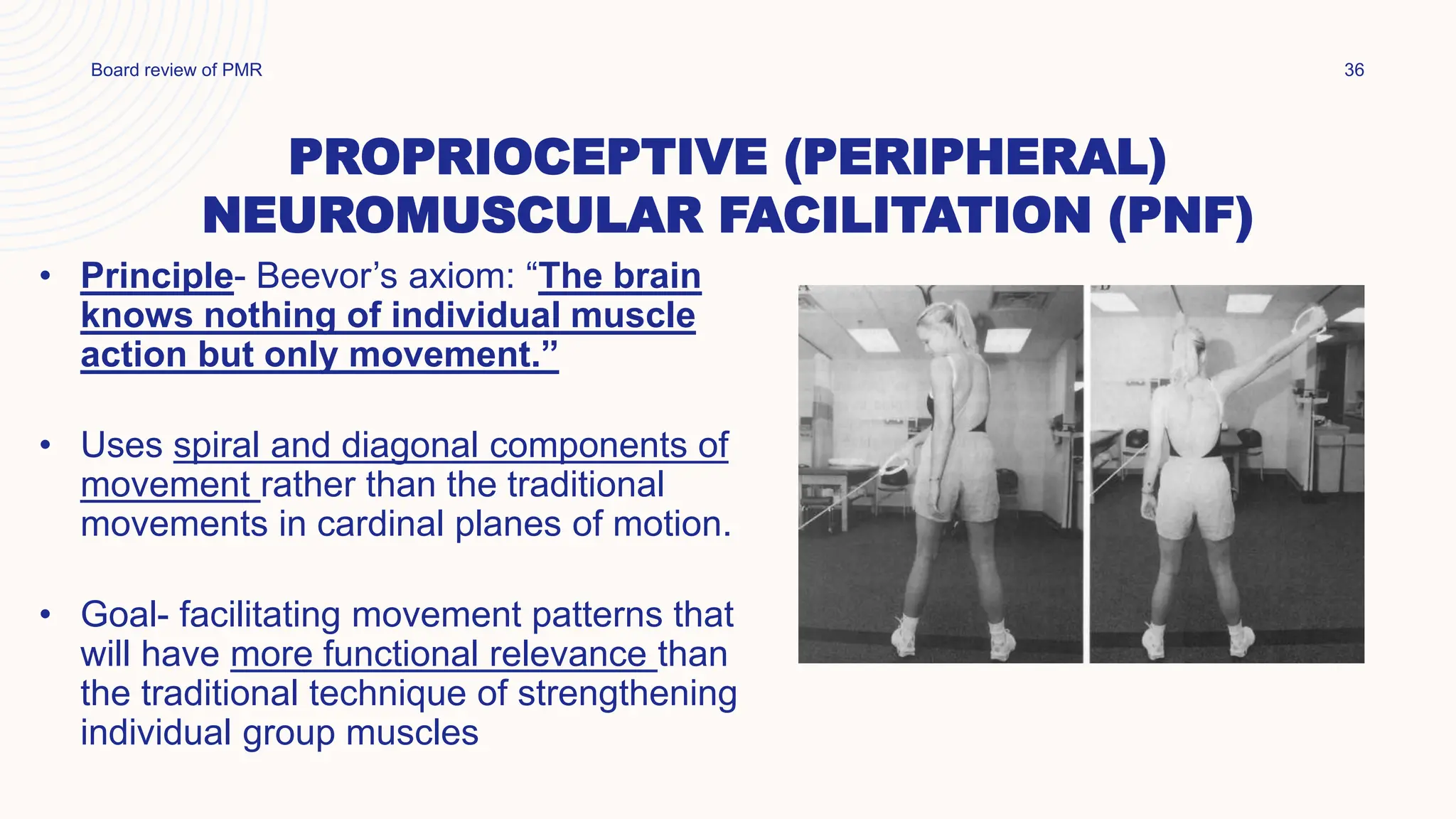
PROPRIOCEPTIVE (PERIPHERAL)
NEUROMUSCULAR FACILITATION (PNF)
Board review of PMR 36
• Principle- Beevor’s axiom: “The brain
knows nothing of individual muscle
action but only movement.”
• Uses spiral and diagonal components of
movement rather than the traditional
movements in cardinal planes of motion.
• Goal- facilitating movement patterns that
will have more functional relevance than
the traditional technique of strengthening
individual group muscles
BOBATH APPROACH /
NEURODEVELOPMENTAL TECHNIQUE (NDT)
Board review of PMR 37
• Goal - Normalize tone, to inhibit primitive patterns of movement, and to
facilitate automatic, voluntary reactions as well as subsequent normal
movement patterns.
• Probably the most commonly used approach.
• Concept - Pathologic movement patterns (limb synergies and primitive
reflexes) must not be used for training, because continuous use of the
pathologic pathways may make it too readily available to use at the expense of
the normal pathways.
• Suppress abnormal muscle patterns before normal patterns are introduced.
• Mass synergies are avoided, although they may strengthen weak,
unresponsive muscles, because these reinforce abnormally increased tonic
reflexes and spasticity.
• Abnormal patterns are modified at proximal key points of control (e.g., shoulder
and pelvic girdle).
BRUNNSTORM APPROACH/
MOVEMENT THERAPY
Board review of PMR 38
• Uses primitive synergistic patterns in training in an attempt to improve motor
control through central facilitation.
• concept - damaged CNS regressed to phylogenetically older patterns of
movements (limb synergies and primitive reflexes).
• Thus, synergies, primitive reflexes, and other abnormal movements are
considered normal processes of recovery before normal patterns of movements
are attained.
• Patients are taught to use and voluntarily control the motor patterns available to
them at a particular point during their recovery process (e.g., limb synergies).
• Enhances specific synergies through use of cutaneous/proprioceptive stimuli,
central facilitation using Twitchell’s recovery.
SENSORY MOTOR APPROACH/
ROOD APPROACH
Board review of PMR 39
• Modification of muscle tone and voluntary motor activity
using cutaneous sensorimotor stimulation.
• Facilitatory or inhibitory inputs through the use of
sensorimotor stimuli, including quick stretch, icing, fast
brushing, slow stroking, tendon tapping, vibration, and joint
compression to promote contraction of proximal muscles.
Braddoms textbook of PMR 40
MOTOR RELEARNING PROGRAM /
CARR AND SHEPHERD APPROACH
Board review of PMR 41
• Based on cognitive motor relearning theory and influenced by the
Bobath approach.
• Goal is for the patient to relearn how to move functionally and how
to problem solve during attempts at new tasks.
• Instead of emphasizing repetitive performance of a specific
movement for improving skill, it teaches general strategies for
solving motor problems.
• Emphasizes functional training of specific tasks, such as standing
and walking, and carryover of those tasks.
OTHER APPROACHES
Board review of PMR 42
• CIMT,
• Body weight support treadmill walking,
• Functional electric stimulation,
• Elctromygraphic biofeedback,
• Robotic devices,
• Motor imagery,
• Bilateral arm training,
• Mirror therapy,
• Virtual reality,
• Non invasive brain stimulation
SPASTICITY
Braddoms textbook of PMR 43
Level of
evidence
Intervention
IA Guidelines strongly recommend the use of botulinum toxin in both the upper and lower
extremities in appropriate cases.
IIbA Oral medications such as baclofen, dantrolene, and tizanidine
and physical modalities such as NMES and vibration
are also recommended
IIbA In severe cases, intrathecal baclofen
may be helpful.
IIIB Current guidelines do not support the use of splints and taping for wrist and finger spasticity after
stroke
ADL
44
• Patients should receive therapy that is functional and appropriately
challenging and that allows for repeated practice.
• Additionally, both activities of daily living (ADLs) and instrumental adl (IADL)
training should be tailored to the patient’s needs and discharge situation.
• Constraint-induced movement therapy (CIMT) is recommended for those with
adequate activation .
• Robotic therapy and NMES are recommended for those with more moderate
to severe upper limb paresis and minimal volitional movement within the first
few months .
• Mental practice , strengthening exercises, and virtual reality augmentation
should also be considered as adjuncts to functional therapy.
BLADDER 45
• Bladder incontinence is one of the most important predictors of poorer
functional outcomes, institutionalization, and mortality.
• Detrusor hyperreflexia is the most common subtype of incontinence after
cortical and internal capsule ischemic stroke
• Detrusor areflexia is common in patients with cerebellar infarction and
hemorrhagic stroke.
• During acute hospitalization, all patients with stroke should provide a urologic
history and be assessed for any concern regarding urinary retention through
bladder scanning or intermittent catheterizations after attempted voiding
• Foleys catheter should be removed within 24 hours of admission
• Prompted voiding, through a timed voiding schedule, may be helpful in the
hospital or at home, and pelvic floor muscle training may be helpful after
discharge to home
BOWEL
46
• Usual bowel care will involve following the frequency and
consistency of bowel movements using the Bristol Stool
Scale and adjusting stool softeners and laxative
medications as necessary to maintain regular bowel
movements.
SEXUAL DYSFUNCTION
47
• Offer patients an opportunity to discuss sexual issues and concerns in the
hospital and outpatient setting
• Topics may include
• Safety concerns
• Changes in libido
• Physical and emotional consequences of stroke.
• Pharmacologic treatment for erectile dysfunction with a phosphodiesterase- 5
(PDE5) inhibitor may be considered more than 6 months poststroke assuming
there are no other contraindications or drug-drug interactions relative to the
use of a PDE5 inhibitor
TRANSITION TO HOME AND
COMMUNITY
48
• Individually tailored discharge plan with the potential to utilize multiple
methods of communication and support .
• Caregiver involvement is thought to be important, addressing education,
training, counseling, assessment, the development of support structures, and
financial assistance and guidance.
• Early involvement of caregivers is also supported.
• In terms of resources in the community, a treating facility should provide
information based on an up-to-date database on community resources,
consider patient and caregiver preferences in making referrals, and follow up
with patients to ensure that they are receiving appropriate and necessary
services
49
• All patients should be considered for community or homebased rehabilitation ;
when recommended, a formal plan should be developed with a case manager
or other clinical staff as a point person to ensure appropriate implementation .
• Additionally, caregivers should be trained in supporting and implementing the
program.
50
Complications of stroke
Neurologic
complications
Hemorrhagic
Conversion
Repeat stroke
Seizures
Hydrocephalus
Cerebral
vasospasm
Venous
Thromboemboli
sm
Pulmonary
complications
Aspiration
pneumonia
Cardiovascular
complications
Hypertension,
Atrial
Fibirilation
Urinary tract
infection
Gastrointestinal
bleeding
Pain
Central Pain
Shoulder Pain
Others
Contractures
Skin ulcers
Falls
Depression /
psychiatric
issues
CENTRAL PAIN
51
• Déjèrine-Roussy syndrome related to thalamic stroke, neuropathic pain may occur after a stroke in a
variety of locations.
• Appropriate care includes a thorough assessment of etiology, and other causes of pain should be
excluded .
• Medication management should be tailored to the individual, taking side effects and comorbidities into
consideration .
• Amytriptyline and lamotrigine are first-line agents .
• Consideration may be given to the use of nortriptyline or other TCAs that have fewer anticholinergic side
effects than amitriptyline.
• Pregabalin, gabapentin, carbamazepine, and phenytoin may be considered as second-line agents .
• As is frequently the case in chronic pain, an interprofessional approach should be attempted with
utilization of behavioral interventions as well as medications and modalities through various team
members.
• Transcutaneous electrical nerve stimulation (TENS) and deep brain stimulation have not been
established as effective treatment
• But there is some evidence to support the possible use of motor cortex stimulation, if accessible, in
patients who are poorly responsive to other interventions
SHOULDER PAIN
52
• Detailed evaluation for post stroke shoulder pain has to be done
• Usually post stroke shoulder pain is multifactorial
• CRPS type1
• Shoulder subluxation
• Bicipital tendinitis
• Rotator cuff tear
• Shoulder impingement syndrome
• Adhesive capsulitis
• Heterotopic ossification
• Brachial plexus injury
Presentation title 53
PREVENTION OF STROKE
54
Modify the modifiable
• Hypertension
• H/o Stroke and TIA
• Heart disease- CHF,Valvular heart disease, CAD
• Atrial fibirilation
• Diabetes
• Smoking
• Sedentary life
• Carotid stenosis
• OCPs
THANK YOU
55
References
• Stroke recovery and rehabilitation,2nd
edition, Joel Stein
• Stroke- Pathophysiology, Diagnosis,
and Management, James C
• Braddoms Physical medicine and
rehabilitation, 6th edition
• Board review of PMR
• Delsia physical medicine and
rehabilitation ,6th edition
Acknowledgements
• Dr Sandeep Kumar Gupt
• Dr Anjana G

Stroke rehabilitation

  • 1.
    AN OVERVIEW OF STROKEREHABILITATION Dr Joe Antony MBBS, M.D (PMR)
  • 2.
    CONTENTS  Definition  Rehabilitationduring acute phase  Selection of rehabilitation setting  Neurophysiology of recovery from stroke  Predictors of neurological recovery from stroke  Functional assessment  Rehabilitation of specific problem areas in stroke  Complications of stroke  Prevention of stroke
  • 3.
    DEFINITION Delisa physical medicineand rehabilitation 6th edition 3 • A stroke is sudden occurrence of permanent damage to an area of brain caused by a blocked blood vessel or bleeding within the brain with symptoms lasting more than 24 hours or leading to death. • Other causes of focal brain damage, such as traumatic injury to the brain, demyelinating lesions, brain tumors, brain abscesses, and others, can produce stroke like symptoms and have similar rehabilitation needs but are not formally included in this definition.
  • 4.
    REHABILITATION DURING ACUTE PHASE Rehabilitation notto be considered a separate phase of care, that only begins after acute medical intervention. Rather, it is an integral part of medical management and continues longitudinally through acute care, post-acute care, and community reintegration. 4
  • 5.
    ACUTE PHASE REHABILITATIONMEASURES ARE MOSTLY PREVENTIVE IN NATURE 5 • Pressure injury prevention- hemiplegic, lethargic, and incontinent are at high risk. • Prevent skin breakdowns, including protection of skin from excessive moisture. • Use of heel-protecting splints. • Maintenance of proper position with frequent turning. • Daily inspection and routine skin cleansing • Water/Air mattress • Prevention of aspiration and pneumonia – 40 % of stroke patients suffer silent aspiration • Avoid oral feeding if patient is not alert • In Alert patients do bed side swallowing assessment – sips of clear water- no change in quality of voice or coughing/ Guss tool • In case of doubt, swallowing video fluoroscopy or flexible endoscopic evaluation • Head should be elevated (flat position promotes aspiration) • Initially N-G or O-G tube might be necessary ( early initiation of feeds promote bringing metabolic demands to optimum)
  • 6.
  • 7.
    Delisa physical medicineand rehabilitation,6th edition 7 • Bladder management - may initially cause a hypotonic bladder with overflow incontinence. • If an indwelling catheter is used, it should be removed as soon as possible, with careful monitoring to ensure that appropriate voiding resumes. • In case of persistent urinary retention after stroke, regular intermittent catheterization is preferable to an indwelling catheter. • Prevention of contractures- High risk for development of contractures due to immobility. • Spasticity, if present at this early stage, may contribute to the development of contractures through sustained posturing of the limbs. • Prevention by regular passive stretching and moving the joints through a full range of motion, preferably at least twice daily. • While the use of resting hand splints remains widespread, studies have failed to demonstrate their utility.
  • 8.
    8 • DVT prevention-Every patient should have some form of deep vein thrombosis (DVT) prophylaxis • Low molecular weight heparin • Subcutaneous heparin • External pneumatic compression boots. • Early mobilization - beneficial by reducing the risks of DVT, deconditioning, gastroesophageal regurgitation and aspiration pneumonia, contracture formation, skin breakdown, orthostatic intolerance and positive psychological benefits. • Specific tasks - turning from side to side in bed and changing position, sitting up in bed, transferring to a wheelchair, standing, and walking. • Self-care activities such as self-feeding, grooming, and dressing. • The timing and progression in these activities depend on the patient’s condition. AVERT trial has found that very early aggressive mobilization (within 24 hours
  • 9.
    SELECTION OF REHABILITATION SETTING 9 •Evaluation of longer-term rehabilitation needs should occur within the first few days after stroke. • Many stroke survivors will benefit from admission to an acute rehabilitation unit. • Some individuals may be more appropriate for a subacute rehabilitation program (based on a skilled nursing facility, or SNF), which provides a less intense rehabilitation program with a lesser degree of medical supervision over a longer period of time. Criteria for admission into Acute rehabilitation unit (By AHA) Stable neurological status Significant persistent neurological deficit Disability includes at least two of the following – mobility, self-care ability, communication, bowel and bladder control, and swallowing Sufficient cognitive function to learn Sufficient communication to interact with therapists Physical ability to tolerate program (3hrs/day) Achievable therapeutic goals
  • 10.
    NEUROPHYSIOLOGY OF RECOVERY FROMSTROKE Stroke recovery and rehabilitation,2nd edition, Joel Stein 10 • Resolution from poststroke edema • Early recovery following a stroke may be attributable to resolution of edema • As the edema subsides, neurons that have become inactive but remain structurally intact begin to function again. • This process takes place relatively early in the course of recovery; • However, it can extend for as long as eight weeks after stroke • Greater edema is associated with cerebral hemorrhage, which may take longer to subside
  • 11.
    Stroke recovery andrehabilitation,2nd edition, Joel Stein 11 • Reperfusion of ischemic penumbra • A focal ischemic lesion of the brain consists of a core area of infarcted tissue, caused by loss of arterial perfusion, that is surrounded by a region of reduced blood flow or perfusion, known as the ischemic penumbra • The penumbra is at risk for infarction, but is still salvageable. • Reperfusion of this area early on following a stroke permits ischemic and nonfunctioning, but still viable, neurons to regain function with subsequent clinical recovery.
  • 12.
    Stroke recovery andrehabilitation,2nd edition, Joel Stein 12 • Resolution of diaschiasis • Diaschisis is a reversible state of low reactivity or depressed function as a consequence of a sudden interruption or loss of excitation in regions of the brain remote from, but connected to, the site of cerebral damage. • Diaschisis occurs early after injury and is an inhibition or suppression of the surrounding cortex or distant areas of cortex with a connection to the damaged area • Neuronal function may return following the resolution of diaschisis, particularly as the affected area of the brain demonstrates recovery and connections are restored.
  • 13.
    CORTICAL REORGANISATION / NEUROPLASTICITY Strokerecovery and rehabilitation,2nd edition, Joel Stein 13 • Cortical reorganization, an important contributor to the recovery process and one that is influenced by rehabilitation. • Based on 3 main concepts, 1. In normal (nonstroke) brains, acquisition of skilled movements is associated with predictable functional changes within the motor cortex. 2. Injury to the motor cortex from stroke results in functional changes in the remaining cortical tissue. 3. After a cortical stroke, these two observations interact so that reacquisition of motor skills is associated with functional neurologic reorganization occurring in the undamaged cortex
  • 14.
    MECHANISMS OF PLASTICITY 14 1.Neuronal regeneration/neuronal (collateral) sprouting • Intact axons establish synaptic connections through dendritic and axonal sprouting in areas where damage has occurred. • May enhance recovery of function, may contribute to unwanted symptoms, or may be neutral (with no increase or decrease of function). Thought to occur weeks to months post-injury. 2. Functional reorganization/unmasking neural reorganization • Healthy neural structures not formerly used for a given purpose are developed (or reassigned) to do functions formerly subserved by the lesioned area.
  • 15.
    ENDOGENOUS AND EXOGENOUS FACTORSOF PLASTICITY Stroke- Pathophysiology, Diagnosis, and Management, James C 15 • Phosphodiesterase-5 inhibitors (sildenafil) • Statins • EPO • Granulocyte-colony stimulating factor (G-CSF) • Niacin extended-release tablets (Niaspan) • Nitric oxide (NO) • Minocycline
  • 16.
    SYNERGY 16 • Process ofrecovery from stroke-induced hemiplegia usually follows a relatively predictable, stereotyped series of events. This sequence of events has been systematically described as synergy. • In the UE, a flexor synergy pattern develops (with shoulder, elbow, wrist, and finger flexion) followed by development of an extensor synergy pattern. • Voluntary movement in the lower limb also begins with flexor synergy (also proximal-hip) followed by extensor synergy pattern.
  • 17.
  • 18.
    Stroke recovery andrehabilitation,2nd edition, Joel Stein 18 Predictive factors of recovery from stroke Patient characteristics Age, Gender, Comorbities Stroke characteristics Lesion size and site, Laterality of lesion, Occurrence (1st or recurrent), Stroke type, Stroke severity (Global and Impairment specific) Extrinsic factors Timing to rehab, Therapy intensity, Task specificity , Rehab setting Social support
  • 19.
    TWITCHELL’S PREDICTORS OFMOTOR RECOVERY Board review of PMR 19 • Severity of UE weakness at onset: • With complete arm paralysis at onset, there is a poor prognosis of recovery of useful hand function (only 9% gain good recovery of hand function). • Timing of return of hand movement: • If the patient shows some motor recovery of the hand by 4 weeks, there is up to a 70% chance of making a full or good recovery. • Poor prognosis associated also with: • No measurable grasp strength by 4 weeks. • Severe proximal spasticity. • Prolonged “flaccidity” period. • Late return of proprioceptive facilitation (tapping) response >9 days. • Late return of proximal traction response (shoulder flexors/adductors) >13 days
  • 20.
    FUNCTIONAL ASSESSMENT OF STROKEPATIENT 20 • American Heart association stroke outcome classification • Modifed Rankin scale and oxford handicap scale • Chedoke mcmaster stroke assessment • Frenchay activities index • Stroke specific QOL • Stroke impact scale • Barthel index • Glasgow Outcome scale
  • 21.
    MODIFIED RANKIN SCALE 21 Disabilityassessment based on modified rankin scale
  • 22.
  • 23.
  • 24.
    REHABILITATION OF SPECIFIC PROBLEMAREAS IN STROKE 24 • Cognition /Aphasia/ Speech • Dysphagia/ Nutriton • Sensory impairement • Motor impairement • Spasticity • ADL • Mobility • Bladder/Bowel • Sexual dysfunction
  • 25.
    COGNITION Braddoms textboof PMR25 Level of evidence Intervention IA Use of enriched enviroments including use of technology (V.R,Music) to improve patient engagement in therapy IIaB Cognitive rehabilitation, including aspects of practice, compensation, and adaptive techniques to improve attention, memory, neglect, and executive function. IIaA Use of both compensatory strategies and external aids for memory. IIbB Use of errorless learning and music therapy for memory impairments. IIbC Exercise may be helpful in improving cognition and memory
  • 26.
    SPEECH AND APHASIA Braddomstextbook of PMR 26 Level of evidence Intervention IA Speech or language therapy IB Partner training IIaA Intensive therapy is recommended, there is no agreement on the best parameters for treatment (including amount, timing, intensity, distribution, and duration) IIaB Care may also be supplemented with computerized treatment IIbB Group therapy may be helpful IC Techniques and strategies that target both physiologic support for speech (respiration, phonation, articulation, and resonance) and global aspects of speech (loudness, rate, and prosody) IIaC Augmentative and alternative communication devices and telerehabilitation IIbC Listener education and other environmental modifications can help to promote successful communication
  • 27.
  • 28.
    PHARMACOTHERAPY IN COGNITIVE REHABILITATION Braddomstextbook of PMR 28 Level of evidence Intervention IIbB Donepezil and rivastigmine have shown promise in this regard, but their use is still not well established IIbB Antidepressant medication was shown in one study to potentially have a beneficial effect on the prevention of long-term deficits in executive function; however, an immediate effect was not noted IIbC Atomoxetine, methylphenidate, and modafinil are used in the community, although published data are limited
  • 29.
    DYSPHAGIA Braddoms textbook ofPMR 29 • Incidence of dysphagia after stroke differed as follows: cursory screening techniques identified an incidence of 37% to 45%; skilled screening identified a rate of 51% to 55%; and instrumental testing, often via videofluoroscopy, identified an incidence of 64% to 78%. Level of evidence Intervention IIaB Principles of neuroplasticity and behavioural techniques IIIA Pharmacotherapy , NMES, transcranial direct current stimulation (tDCS), and transcranial magnetic stimulation is not recommended in the most recent guidelines
  • 30.
    NUTRITIONAL SUPPORT Braddoms textbookof PMR 30 Level of evidenc e Intervention IA In the hospitalized patient with poor oral intake, feeding via nasogastric tube should be started within 7 days IB This should be advanced to a percutaneous G-tube in those unable to advance from tube feeding within 2 to 3 weeks following stroke IIaB Supplements may be necessary in some to prevent or treat malnutrition IA Assessment for calcium and vitamin D supplementation should be encouraged in those in long- term care facilities
  • 31.
    SENSORY IMPAIREMENT- VISION Braddomstextbook of PMR 31 Level of evidence Intervention IA Exercises to treat convergence insufficiency IIbB Compensatory scanning techniques both for functional ADL IIbB For, visual field deficits, yoked prisms, compensatory training and computerized vision retraining may all be considered, although the evidence is not strong IB For visual/spatial and perceptual impairments, evidence for multimodal audiovisual spatial exploration training appears to be the strongest. IIbB Virtual reality may also be considered.
  • 32.
    SENSORY IMPAIRMENT- HEMINEGLECT Braddoms textbookof PMR 32 Level of evidence Intervention IIaA Prism adaptation, visual scanning training, optokinetic stimulation, virtual reality, limb activation, mental imagery, and neck vibration combined with prisms IIbB Right visual field testing and repetitive transcranial magnetic stimulation, although this would likely be very difficult to implement given problems of availability IIbB somatosensory retraining to improve sensory discrimination may be considered for individuals with sensory impairments
  • 33.
    SENSORY IMPAIRMENT- HEARING Braddomstextbook of PMR 33 • Referral to an audiologist for testing, • Use of amplification systems, • Use of communication strategies • Environmental changes aimed at minimization of background noise
  • 34.
    MOTOR DEFICIT Board reviewof PMR 34 Rehabilitation strategies for motor deficit Traditional therapy Propioceptive neuromuscular facilitation Bobath approach /Neurodevelopmental technique Brunnstorm approach / Movement therapy Rood approach/ Sensorimotor approach Carr and shepherd approach / Motor relearning approach Other approache s CIMT, Body weight support treadmill walking, Functional electric stimulation, Elctromygraphic biofeedback, robotic devices, motor imagery, bilateral arm training, mirror therapy, virtual reality, Non invasive brain stimulation No evidence to support superiority of any of these approache s
  • 35.
    TRADITIONAL THERAPY Board reviewof PMR 35 • Positioning, • ROM exercises • Strengthening, • Mobilization • Compensatory techniques • Endurance training (eg., Aerobics). • Traditional approaches for improving motor control and coordination emphasize the need of repetition of specific movements for learning importance of sensation to the control of movement, and the need to develop basic movements and postures
  • 36.
    PROPRIOCEPTIVE (PERIPHERAL) NEUROMUSCULAR FACILITATION(PNF) Board review of PMR 36 • Principle- Beevor’s axiom: “The brain knows nothing of individual muscle action but only movement.” • Uses spiral and diagonal components of movement rather than the traditional movements in cardinal planes of motion. • Goal- facilitating movement patterns that will have more functional relevance than the traditional technique of strengthening individual group muscles
  • 37.
    BOBATH APPROACH / NEURODEVELOPMENTALTECHNIQUE (NDT) Board review of PMR 37 • Goal - Normalize tone, to inhibit primitive patterns of movement, and to facilitate automatic, voluntary reactions as well as subsequent normal movement patterns. • Probably the most commonly used approach. • Concept - Pathologic movement patterns (limb synergies and primitive reflexes) must not be used for training, because continuous use of the pathologic pathways may make it too readily available to use at the expense of the normal pathways. • Suppress abnormal muscle patterns before normal patterns are introduced. • Mass synergies are avoided, although they may strengthen weak, unresponsive muscles, because these reinforce abnormally increased tonic reflexes and spasticity. • Abnormal patterns are modified at proximal key points of control (e.g., shoulder and pelvic girdle).
  • 38.
    BRUNNSTORM APPROACH/ MOVEMENT THERAPY Boardreview of PMR 38 • Uses primitive synergistic patterns in training in an attempt to improve motor control through central facilitation. • concept - damaged CNS regressed to phylogenetically older patterns of movements (limb synergies and primitive reflexes). • Thus, synergies, primitive reflexes, and other abnormal movements are considered normal processes of recovery before normal patterns of movements are attained. • Patients are taught to use and voluntarily control the motor patterns available to them at a particular point during their recovery process (e.g., limb synergies). • Enhances specific synergies through use of cutaneous/proprioceptive stimuli, central facilitation using Twitchell’s recovery.
  • 39.
    SENSORY MOTOR APPROACH/ ROODAPPROACH Board review of PMR 39 • Modification of muscle tone and voluntary motor activity using cutaneous sensorimotor stimulation. • Facilitatory or inhibitory inputs through the use of sensorimotor stimuli, including quick stretch, icing, fast brushing, slow stroking, tendon tapping, vibration, and joint compression to promote contraction of proximal muscles.
  • 40.
  • 41.
    MOTOR RELEARNING PROGRAM/ CARR AND SHEPHERD APPROACH Board review of PMR 41 • Based on cognitive motor relearning theory and influenced by the Bobath approach. • Goal is for the patient to relearn how to move functionally and how to problem solve during attempts at new tasks. • Instead of emphasizing repetitive performance of a specific movement for improving skill, it teaches general strategies for solving motor problems. • Emphasizes functional training of specific tasks, such as standing and walking, and carryover of those tasks.
  • 42.
    OTHER APPROACHES Board reviewof PMR 42 • CIMT, • Body weight support treadmill walking, • Functional electric stimulation, • Elctromygraphic biofeedback, • Robotic devices, • Motor imagery, • Bilateral arm training, • Mirror therapy, • Virtual reality, • Non invasive brain stimulation
  • 43.
    SPASTICITY Braddoms textbook ofPMR 43 Level of evidence Intervention IA Guidelines strongly recommend the use of botulinum toxin in both the upper and lower extremities in appropriate cases. IIbA Oral medications such as baclofen, dantrolene, and tizanidine and physical modalities such as NMES and vibration are also recommended IIbA In severe cases, intrathecal baclofen may be helpful. IIIB Current guidelines do not support the use of splints and taping for wrist and finger spasticity after stroke
  • 44.
    ADL 44 • Patients shouldreceive therapy that is functional and appropriately challenging and that allows for repeated practice. • Additionally, both activities of daily living (ADLs) and instrumental adl (IADL) training should be tailored to the patient’s needs and discharge situation. • Constraint-induced movement therapy (CIMT) is recommended for those with adequate activation . • Robotic therapy and NMES are recommended for those with more moderate to severe upper limb paresis and minimal volitional movement within the first few months . • Mental practice , strengthening exercises, and virtual reality augmentation should also be considered as adjuncts to functional therapy.
  • 45.
    BLADDER 45 • Bladderincontinence is one of the most important predictors of poorer functional outcomes, institutionalization, and mortality. • Detrusor hyperreflexia is the most common subtype of incontinence after cortical and internal capsule ischemic stroke • Detrusor areflexia is common in patients with cerebellar infarction and hemorrhagic stroke. • During acute hospitalization, all patients with stroke should provide a urologic history and be assessed for any concern regarding urinary retention through bladder scanning or intermittent catheterizations after attempted voiding • Foleys catheter should be removed within 24 hours of admission • Prompted voiding, through a timed voiding schedule, may be helpful in the hospital or at home, and pelvic floor muscle training may be helpful after discharge to home
  • 46.
    BOWEL 46 • Usual bowelcare will involve following the frequency and consistency of bowel movements using the Bristol Stool Scale and adjusting stool softeners and laxative medications as necessary to maintain regular bowel movements.
  • 47.
    SEXUAL DYSFUNCTION 47 • Offerpatients an opportunity to discuss sexual issues and concerns in the hospital and outpatient setting • Topics may include • Safety concerns • Changes in libido • Physical and emotional consequences of stroke. • Pharmacologic treatment for erectile dysfunction with a phosphodiesterase- 5 (PDE5) inhibitor may be considered more than 6 months poststroke assuming there are no other contraindications or drug-drug interactions relative to the use of a PDE5 inhibitor
  • 48.
    TRANSITION TO HOMEAND COMMUNITY 48 • Individually tailored discharge plan with the potential to utilize multiple methods of communication and support . • Caregiver involvement is thought to be important, addressing education, training, counseling, assessment, the development of support structures, and financial assistance and guidance. • Early involvement of caregivers is also supported. • In terms of resources in the community, a treating facility should provide information based on an up-to-date database on community resources, consider patient and caregiver preferences in making referrals, and follow up with patients to ensure that they are receiving appropriate and necessary services
  • 49.
    49 • All patientsshould be considered for community or homebased rehabilitation ; when recommended, a formal plan should be developed with a case manager or other clinical staff as a point person to ensure appropriate implementation . • Additionally, caregivers should be trained in supporting and implementing the program.
  • 50.
    50 Complications of stroke Neurologic complications Hemorrhagic Conversion Repeatstroke Seizures Hydrocephalus Cerebral vasospasm Venous Thromboemboli sm Pulmonary complications Aspiration pneumonia Cardiovascular complications Hypertension, Atrial Fibirilation Urinary tract infection Gastrointestinal bleeding Pain Central Pain Shoulder Pain Others Contractures Skin ulcers Falls Depression / psychiatric issues
  • 51.
    CENTRAL PAIN 51 • Déjèrine-Roussysyndrome related to thalamic stroke, neuropathic pain may occur after a stroke in a variety of locations. • Appropriate care includes a thorough assessment of etiology, and other causes of pain should be excluded . • Medication management should be tailored to the individual, taking side effects and comorbidities into consideration . • Amytriptyline and lamotrigine are first-line agents . • Consideration may be given to the use of nortriptyline or other TCAs that have fewer anticholinergic side effects than amitriptyline. • Pregabalin, gabapentin, carbamazepine, and phenytoin may be considered as second-line agents . • As is frequently the case in chronic pain, an interprofessional approach should be attempted with utilization of behavioral interventions as well as medications and modalities through various team members. • Transcutaneous electrical nerve stimulation (TENS) and deep brain stimulation have not been established as effective treatment • But there is some evidence to support the possible use of motor cortex stimulation, if accessible, in patients who are poorly responsive to other interventions
  • 52.
    SHOULDER PAIN 52 • Detailedevaluation for post stroke shoulder pain has to be done • Usually post stroke shoulder pain is multifactorial • CRPS type1 • Shoulder subluxation • Bicipital tendinitis • Rotator cuff tear • Shoulder impingement syndrome • Adhesive capsulitis • Heterotopic ossification • Brachial plexus injury
  • 53.
  • 54.
    PREVENTION OF STROKE 54 Modifythe modifiable • Hypertension • H/o Stroke and TIA • Heart disease- CHF,Valvular heart disease, CAD • Atrial fibirilation • Diabetes • Smoking • Sedentary life • Carotid stenosis • OCPs
  • 55.
    THANK YOU 55 References • Strokerecovery and rehabilitation,2nd edition, Joel Stein • Stroke- Pathophysiology, Diagnosis, and Management, James C • Braddoms Physical medicine and rehabilitation, 6th edition • Board review of PMR • Delsia physical medicine and rehabilitation ,6th edition Acknowledgements • Dr Sandeep Kumar Gupt • Dr Anjana G