Designing Online Learning, Web 2.0 & Online Learning Resources National Workshop on Development of Self Learning Materials for Distance and Online Learning 2009 Sanjaya Mishra
What is Online Learning?
What is Online Learning? Computer-based Learning Web-based Learning Virtual Learning eLearning Network Learning
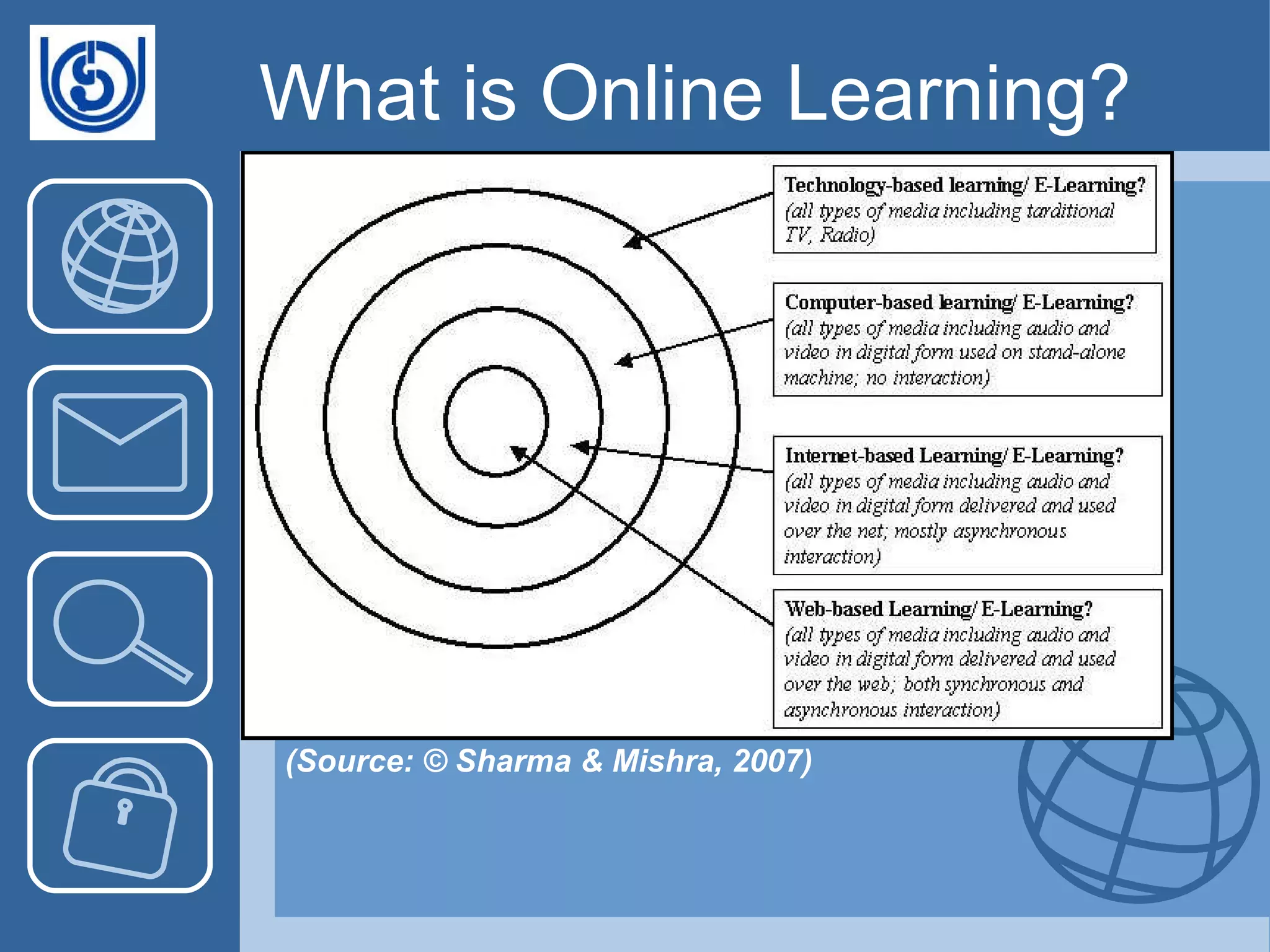
What is Online Learning? (Source: © Sharma & Mishra, 2007)‏
What is Online Learning? Online learning can be defined as the new age Open and Distance Learning that uses network technologies to deliver teaching and learning and interaction for sense-making and development of understanding and knowledge. (Source: Mishra, 2001)‏
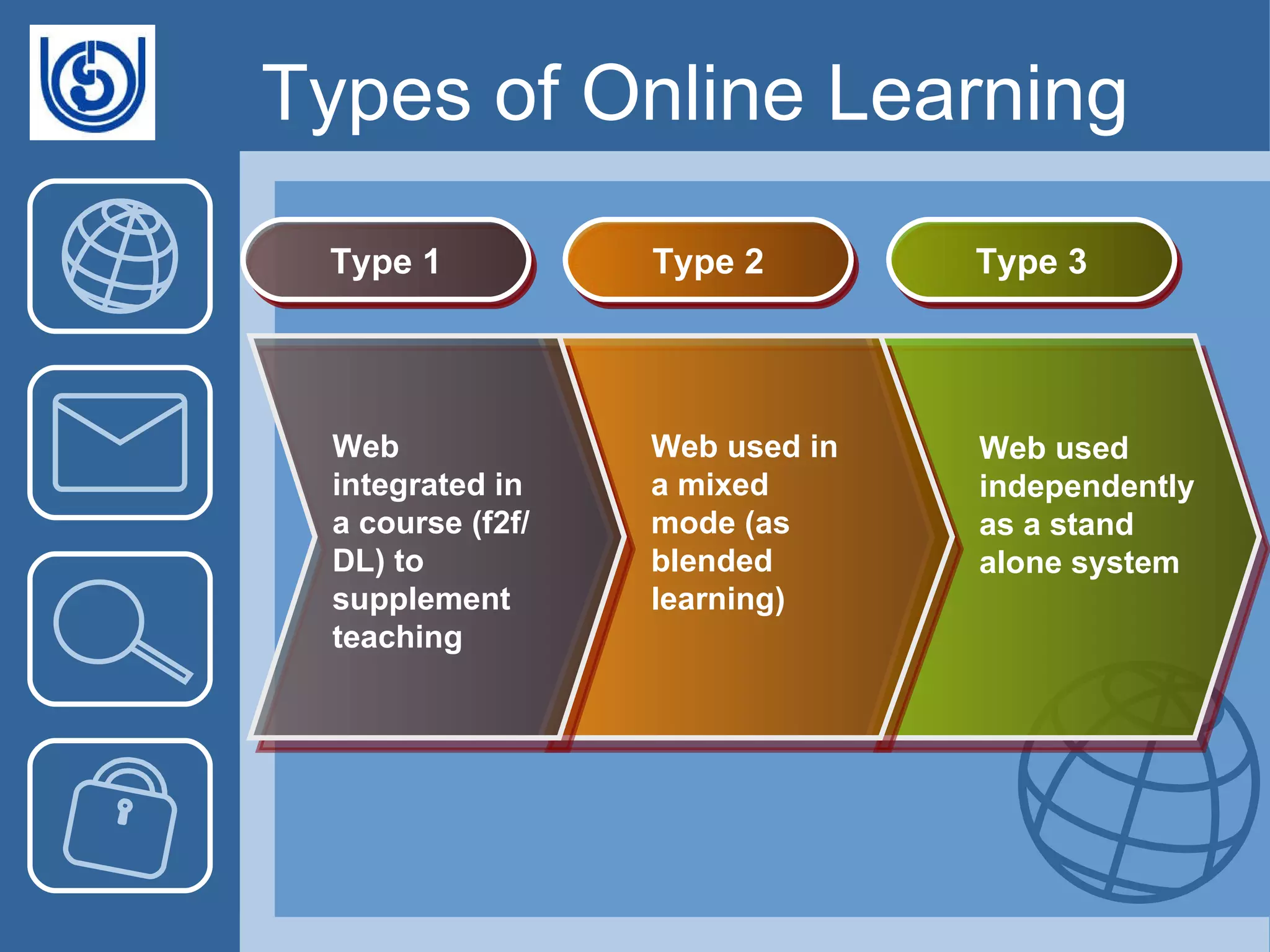
Types of Online Learning Type 1 Type 2 Type 3 Web integrated in a course (f2f/DL) to supplement teaching Web used in a mixed mode (as blended learning)‏ Web used independently as a stand alone system
Characteristics of Online Learning?
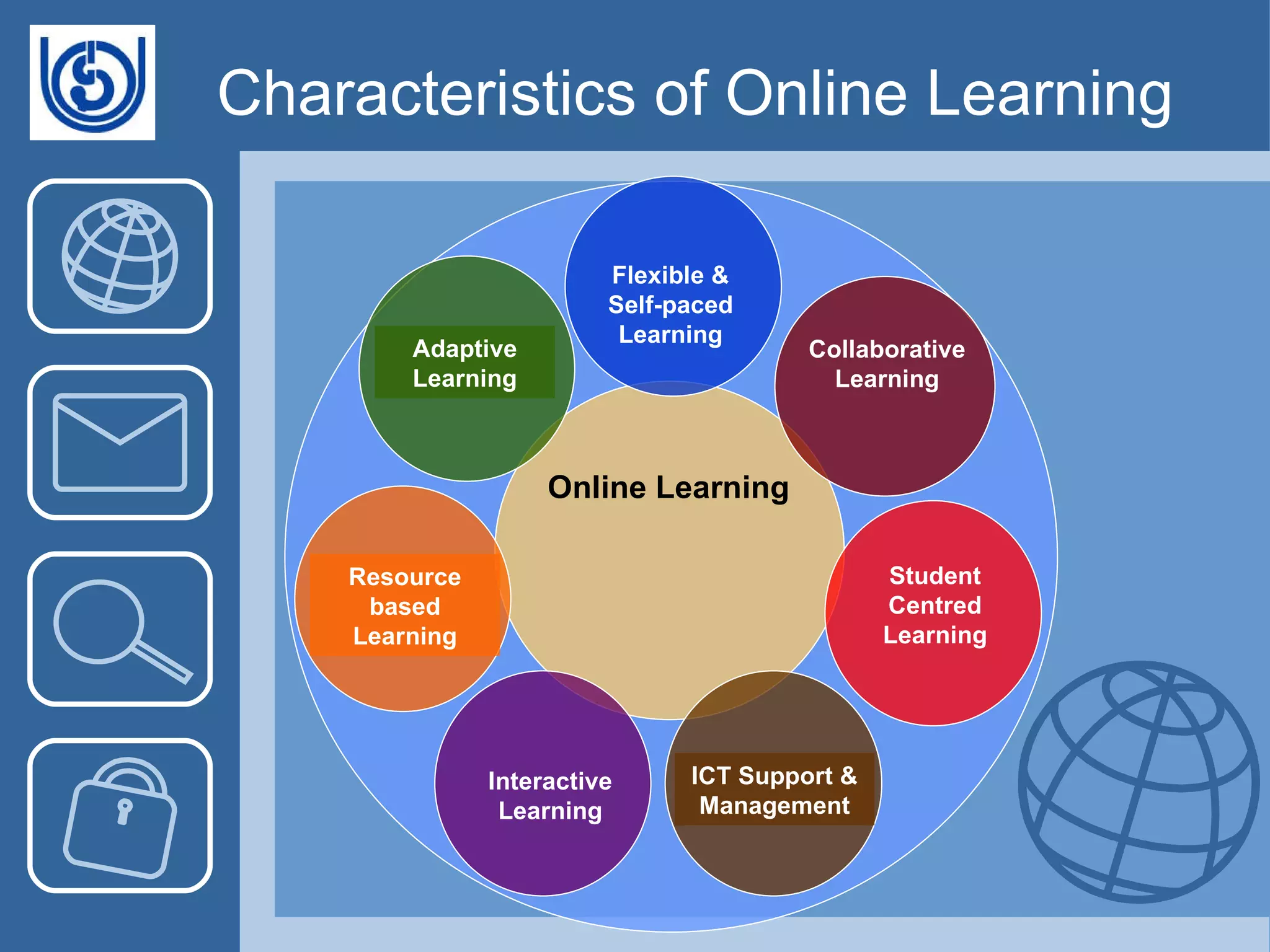
Characteristics of Online Learning Online Learning Interactive Learning ICT Support & Management Student Centred Learning Flexible & Self-paced Learning Adaptive Learning Resource based Learning Collaborative Learning
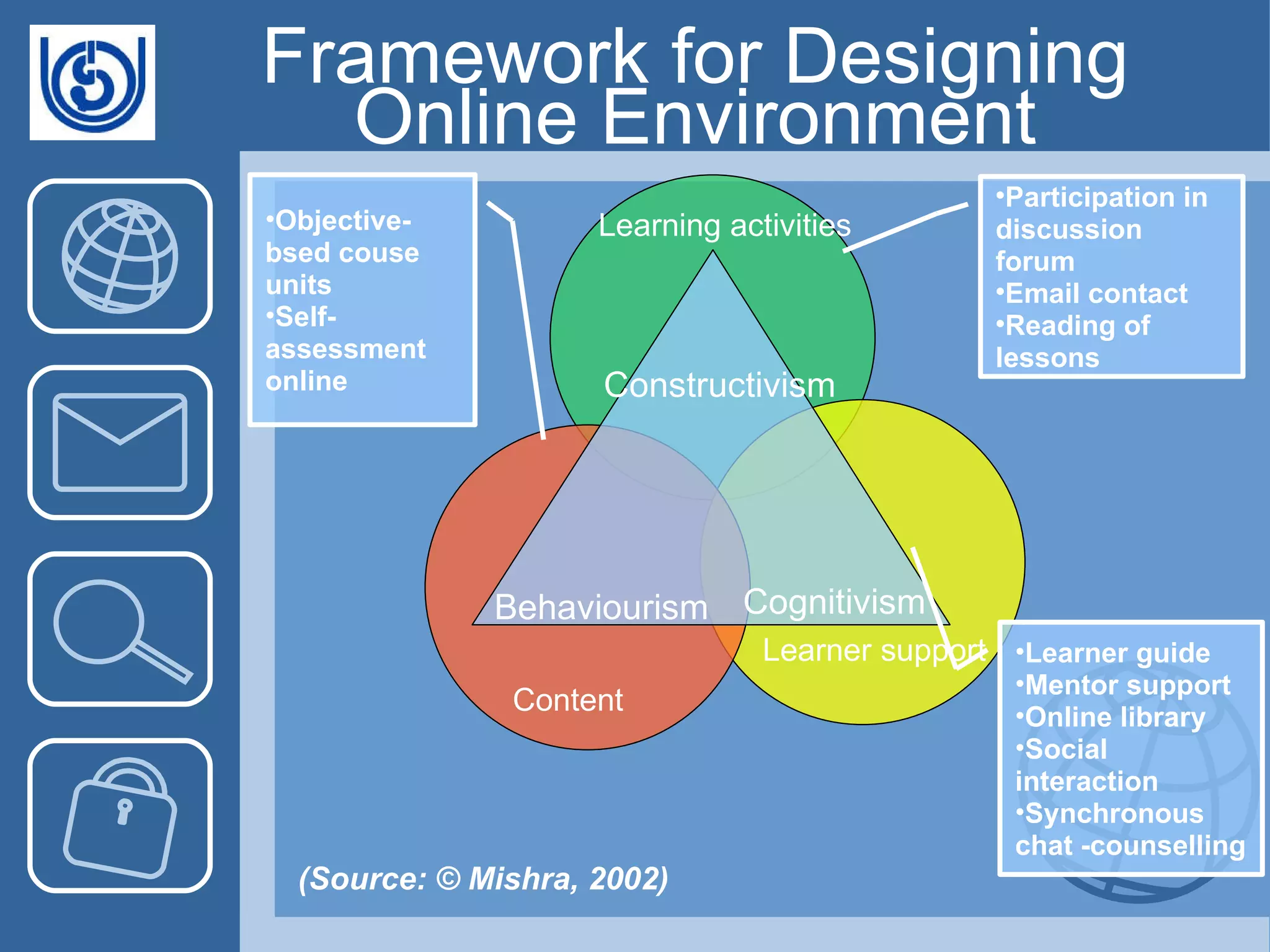
Framework for Designing Online Environment Constructivism Learning activities Learner support Content Behaviourism Cognitivism Participation in discussion forum Email contact Reading of lessons Learner guide Mentor support Online library Social interaction Synchronous chat -counselling Objective-based couse units Self-assessment online (Source: © Mishra, 2002) ‏
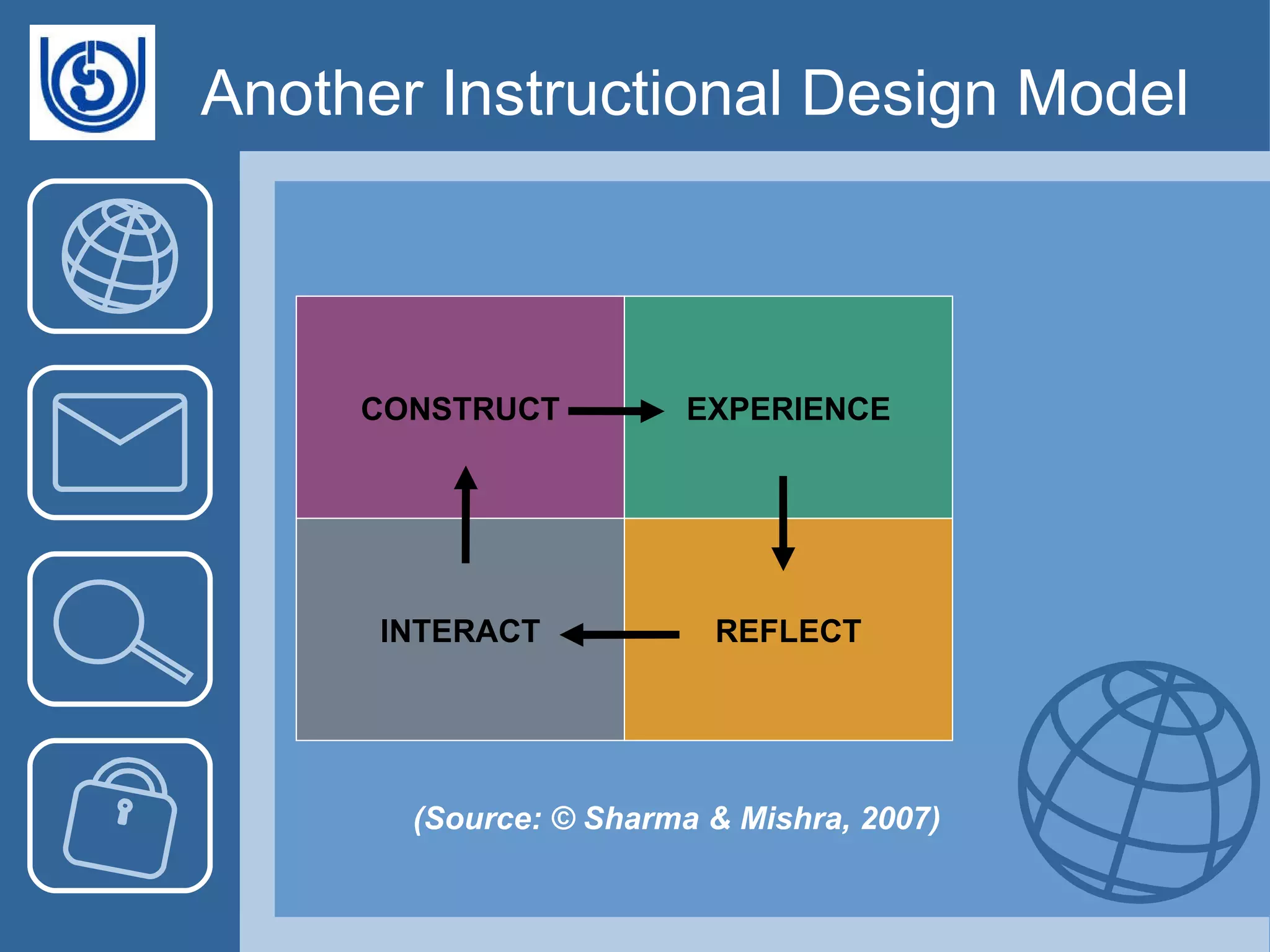
Another Instructional Design Model (Source: © Sharma & Mishra, 2007)‏ CONSTRUCT REFLECT INTERACT EXPERIENCE
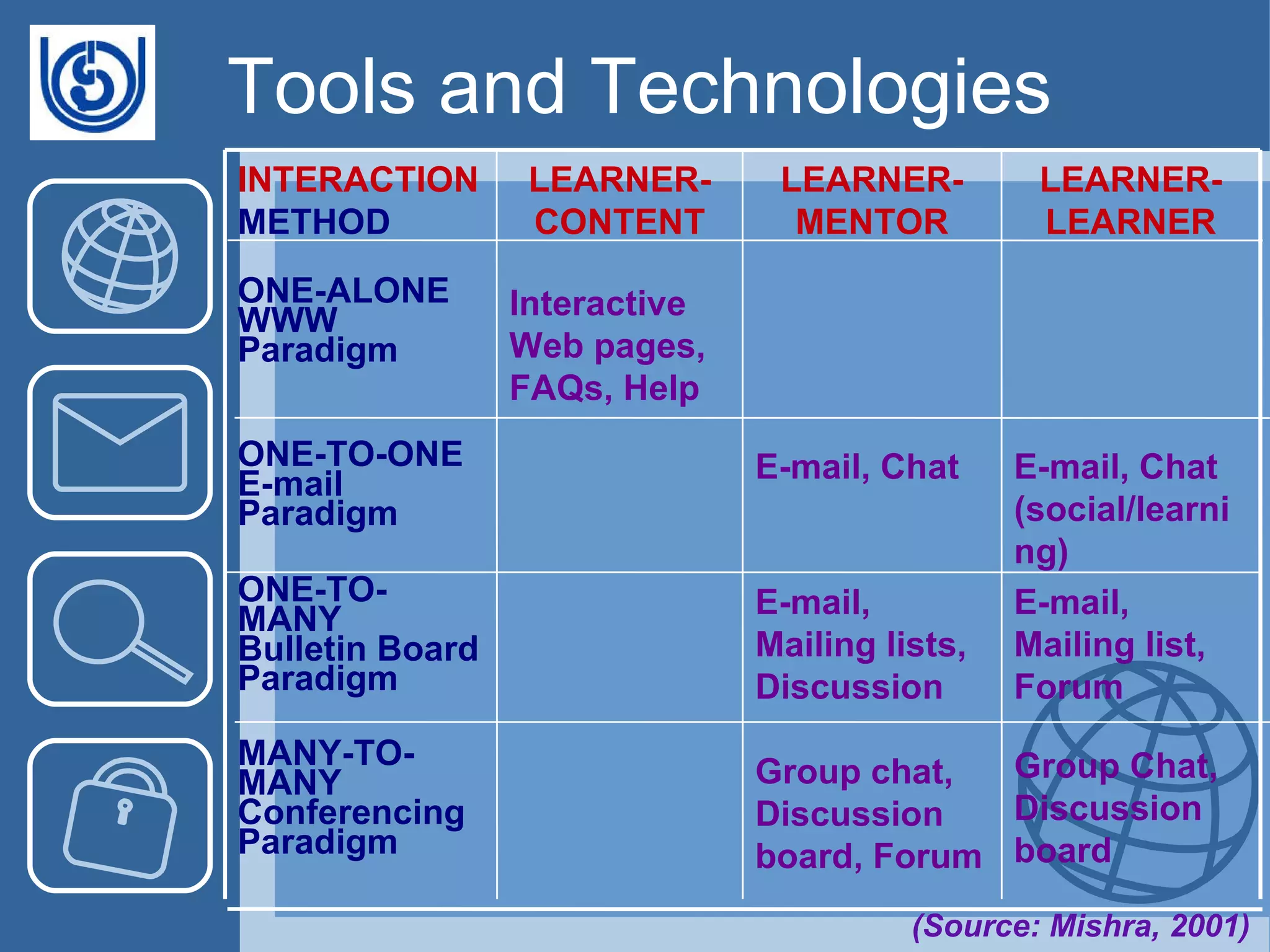
Tools and Technologies Group Chat, Discussion board MANY-TO-MANY Conferencing Paradigm E-mail, Mailing list, Forum E-mail, Mailing lists, Discussion  Group chat, Discussion board, Forum ONE-TO-MANY Bulletin Board Paradigm E-mail, Chat (social/learning)‏ E-mail, Chat ONE-TO-ONE E-mail Paradigm Interactive Web pages, FAQs, Help ONE-ALONE WWW Paradigm LEARNER-LEARNER LEARNER-MENTOR LEARNER-CONTENT INTERACTION METHOD (Source: Mishra, 2001)‏
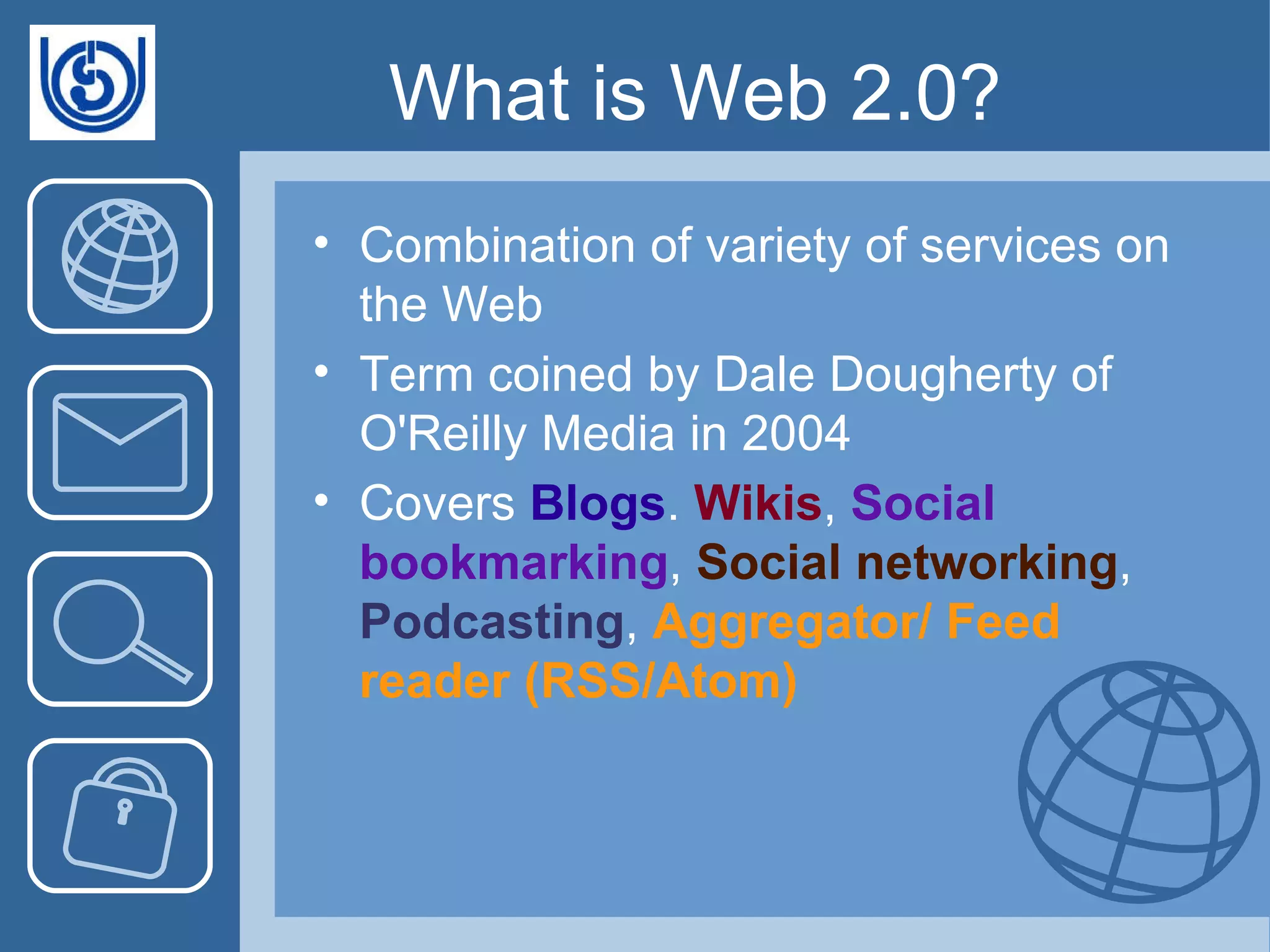
What is Web 2.0? Combination of variety of services on the Web Term coined by Dale Dougherty of O'Reilly Media in 2004 Covers  Blogs .  Wikis ,  Social bookmarking ,  Social networking ,  Podcasting ,  Aggregator/ Feed reader (RSS/Atom)
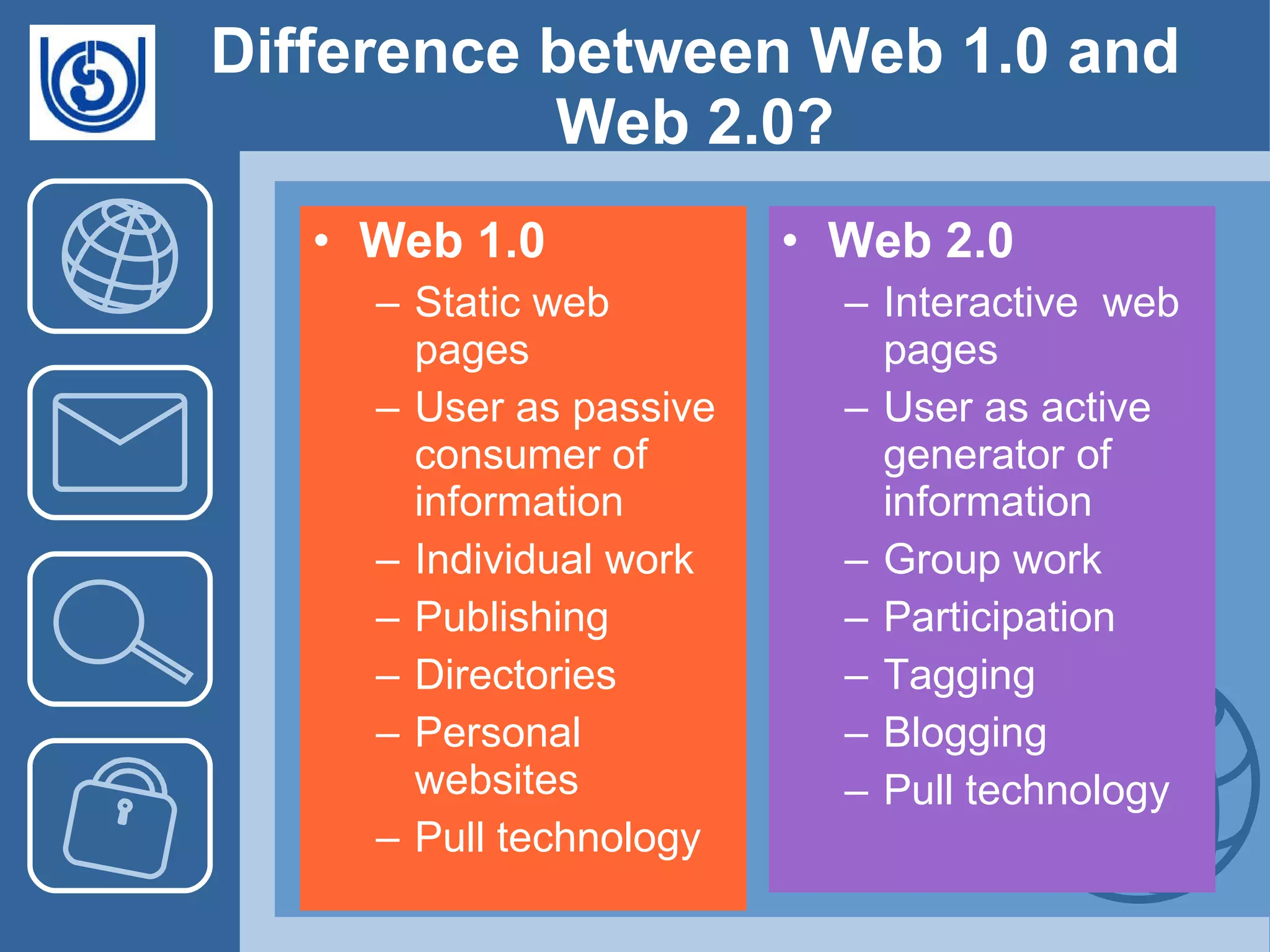
Difference between Web 1.0 and Web 2.0? Web 1.0 Static web pages User as passive consumer of information Individual work Publishing Directories Personal websites Pull technology Web 2.0 Interactive  web pages User as active generator of information Group work Participation Tagging Blogging Push technology
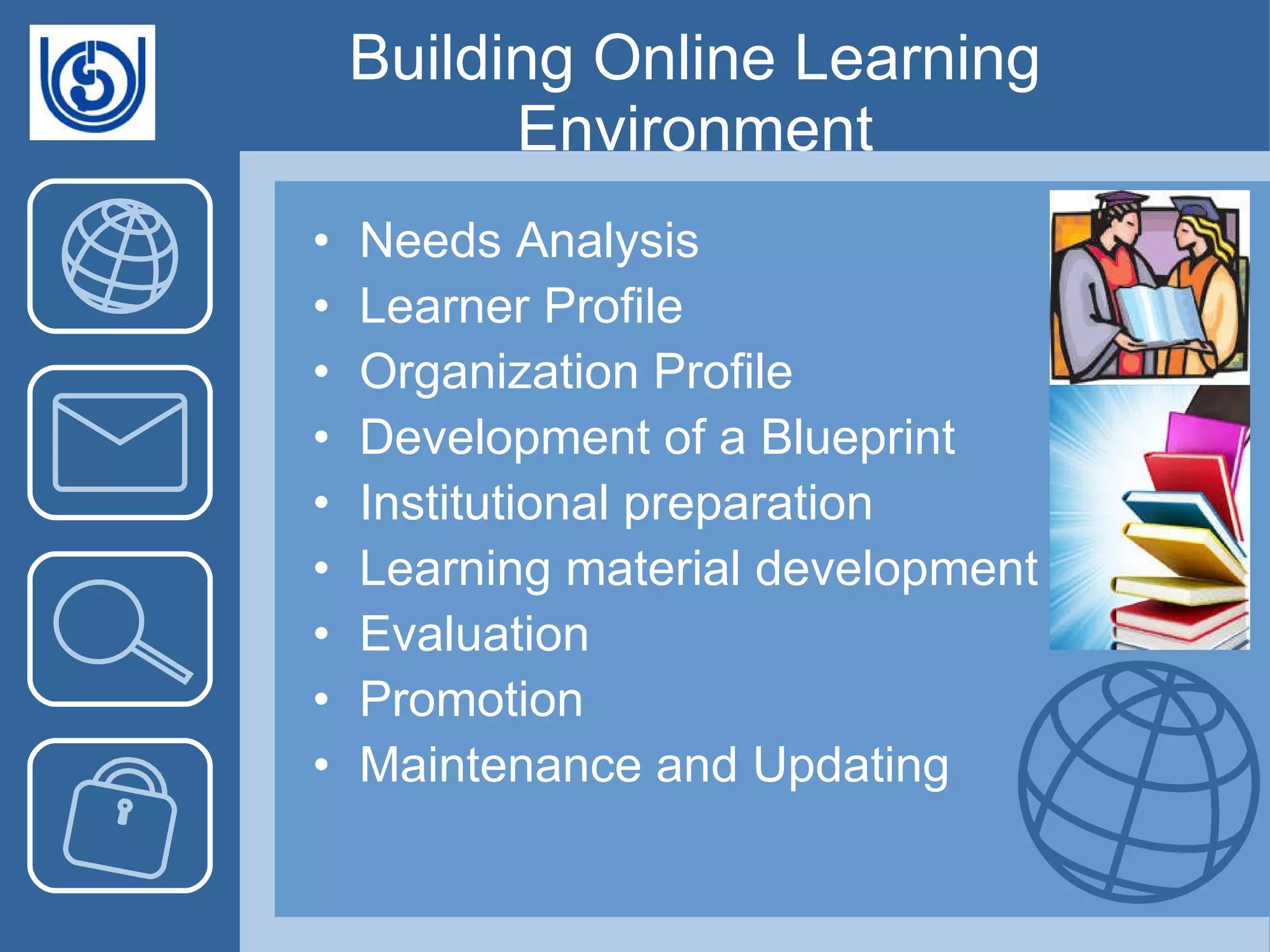
Building Online Learning Environment Needs Analysis Learner Profile Organization Profile Development of a Blueprint Institutional preparation Learning material development Evaluation Promotion Maintenance and Updating
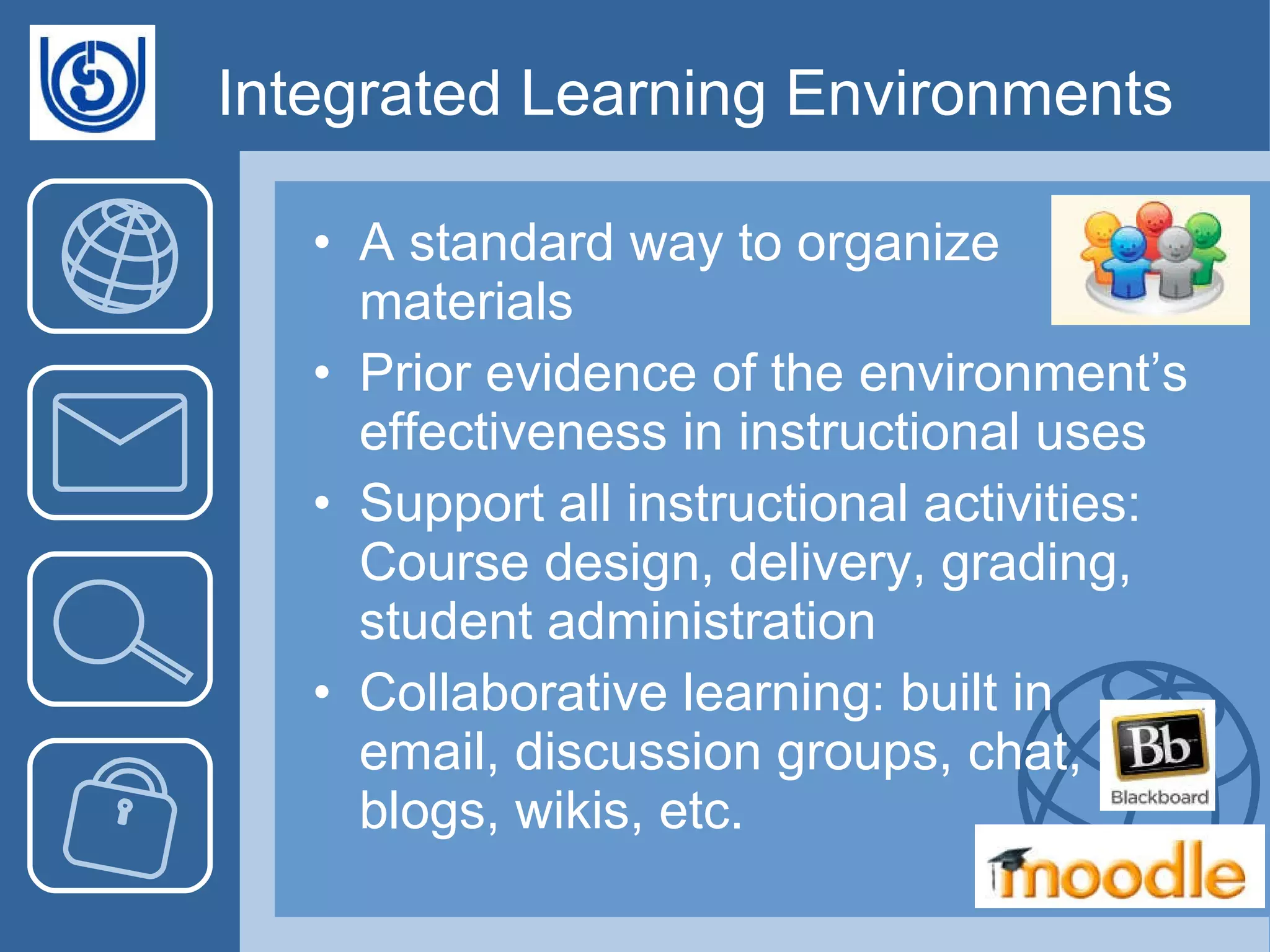
Integrated Learning Environments A standard way to organize materials Prior evidence of the environment’s effectiveness in instructional uses Support all instructional activities: Course design, delivery, grading, student administration Collaborative learning: built in email, discussion groups, chat, blogs, wikis, etc.
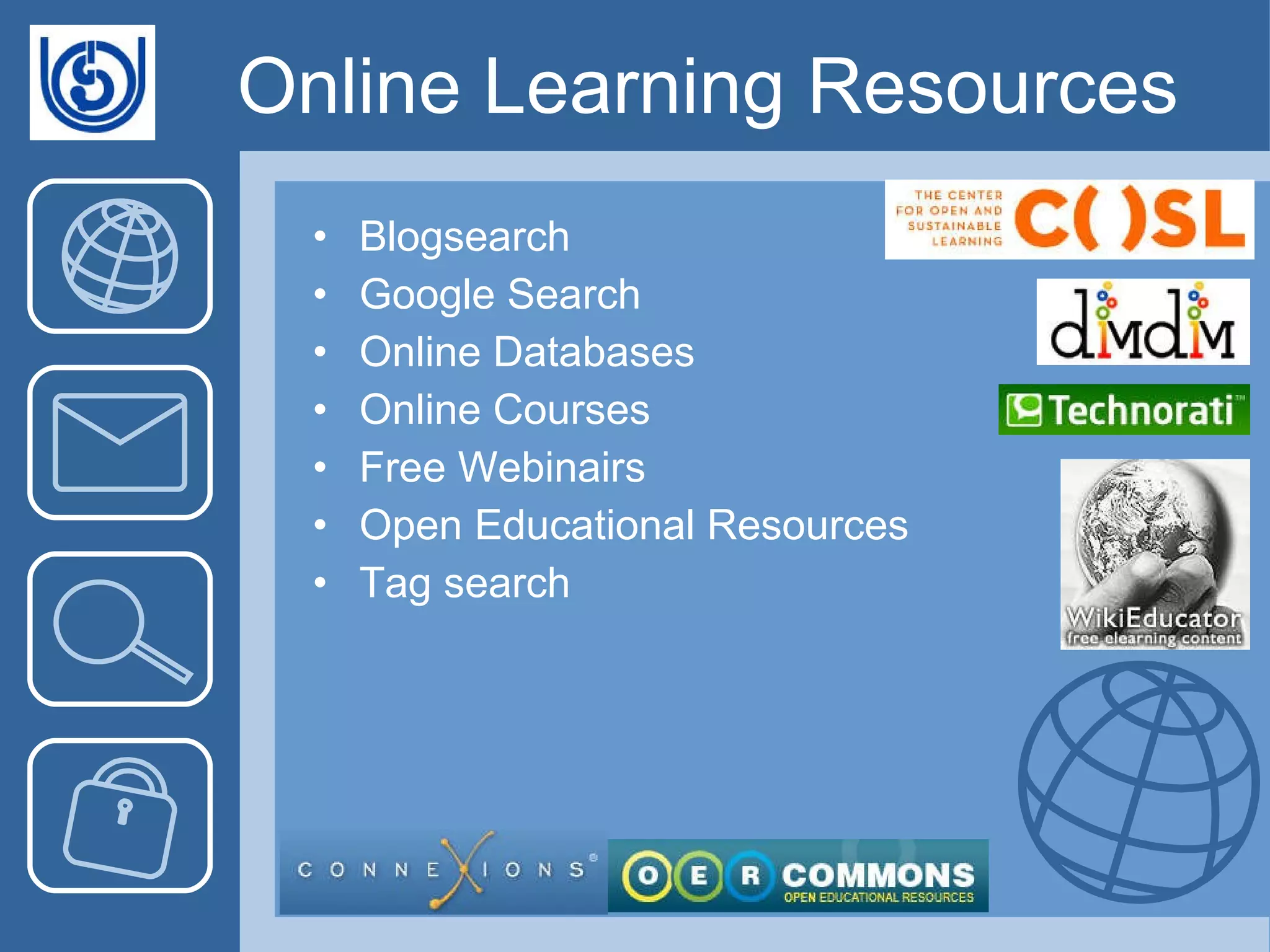
Online Learning Resources Blogsearch Google Search Online Databases Online Courses Free Webinairs Open Educational Resources Tag search
Tasks in the Session Create Your  Wikispace Create Your  Blog Create Your  Social  Bookmark Create Your  Social Network Create Your  Discussion  Group Create Your  Podcast Create Your  Vodcast Create Your  Slideshare
Thank You... Your questions, comments are welcome Visit  http:// www.slideshare.net/missan  to view this presentation You can find me in:

Designing Online Learning, Web 2.0 and Online Learning Resources

  • 1.
    Designing Online Learning,Web 2.0 & Online Learning Resources National Workshop on Development of Self Learning Materials for Distance and Online Learning 2009 Sanjaya Mishra
  • 2.
    What is OnlineLearning?
  • 3.
    What is OnlineLearning? Computer-based Learning Web-based Learning Virtual Learning eLearning Network Learning
  • 4.
    What is OnlineLearning? (Source: © Sharma & Mishra, 2007)‏
  • 5.
    What is OnlineLearning? Online learning can be defined as the new age Open and Distance Learning that uses network technologies to deliver teaching and learning and interaction for sense-making and development of understanding and knowledge. (Source: Mishra, 2001)‏
  • 6.
    Types of OnlineLearning Type 1 Type 2 Type 3 Web integrated in a course (f2f/DL) to supplement teaching Web used in a mixed mode (as blended learning)‏ Web used independently as a stand alone system
  • 7.
  • 8.
    Characteristics of OnlineLearning Online Learning Interactive Learning ICT Support & Management Student Centred Learning Flexible & Self-paced Learning Adaptive Learning Resource based Learning Collaborative Learning
  • 9.
    Framework for DesigningOnline Environment Constructivism Learning activities Learner support Content Behaviourism Cognitivism Participation in discussion forum Email contact Reading of lessons Learner guide Mentor support Online library Social interaction Synchronous chat -counselling Objective-based couse units Self-assessment online (Source: © Mishra, 2002) ‏
  • 10.
    Another Instructional DesignModel (Source: © Sharma & Mishra, 2007)‏ CONSTRUCT REFLECT INTERACT EXPERIENCE
  • 11.
    Tools and TechnologiesGroup Chat, Discussion board MANY-TO-MANY Conferencing Paradigm E-mail, Mailing list, Forum E-mail, Mailing lists, Discussion Group chat, Discussion board, Forum ONE-TO-MANY Bulletin Board Paradigm E-mail, Chat (social/learning)‏ E-mail, Chat ONE-TO-ONE E-mail Paradigm Interactive Web pages, FAQs, Help ONE-ALONE WWW Paradigm LEARNER-LEARNER LEARNER-MENTOR LEARNER-CONTENT INTERACTION METHOD (Source: Mishra, 2001)‏
  • 12.
    What is Web2.0? Combination of variety of services on the Web Term coined by Dale Dougherty of O'Reilly Media in 2004 Covers Blogs . Wikis , Social bookmarking , Social networking , Podcasting , Aggregator/ Feed reader (RSS/Atom)
  • 13.
    Difference between Web1.0 and Web 2.0? Web 1.0 Static web pages User as passive consumer of information Individual work Publishing Directories Personal websites Pull technology Web 2.0 Interactive web pages User as active generator of information Group work Participation Tagging Blogging Push technology
  • 14.
    Building Online LearningEnvironment Needs Analysis Learner Profile Organization Profile Development of a Blueprint Institutional preparation Learning material development Evaluation Promotion Maintenance and Updating
  • 15.
    Integrated Learning EnvironmentsA standard way to organize materials Prior evidence of the environment’s effectiveness in instructional uses Support all instructional activities: Course design, delivery, grading, student administration Collaborative learning: built in email, discussion groups, chat, blogs, wikis, etc.
  • 16.
    Online Learning ResourcesBlogsearch Google Search Online Databases Online Courses Free Webinairs Open Educational Resources Tag search
  • 17.
    Tasks in theSession Create Your Wikispace Create Your Blog Create Your Social Bookmark Create Your Social Network Create Your Discussion Group Create Your Podcast Create Your Vodcast Create Your Slideshare
  • 18.
    Thank You... Yourquestions, comments are welcome Visit http:// www.slideshare.net/missan to view this presentation You can find me in: