Importance of E-Learning
Atif Chauhdary
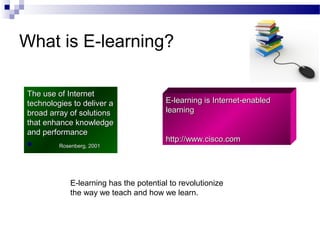
What is E-learning?
The use of Internet
technologies to deliver a
broad array of solutions
that enhance knowledge
and performance


Rosenberg, 2001

E-learning is Internet-enabled
learning
http://www.cisco.com

E-learning has the potential to revolutionize
the way we teach and how we learn.
What is E-learning?
A number of acronyms are used widely in connection with e-learning, most
notably IT, ICT and ILT.
 
IT Information Technology - the computer infrastructure, hardware and
software used to process data and deliver information
 
ICT Information and Communication Technologies - the combination of
computing and communication technologies (including computer
networks and telephone systems)
 
ILT Information and Learning Technologies - this is used to refer to the
use of information and communication technologies to support the
core activities of educational organizations
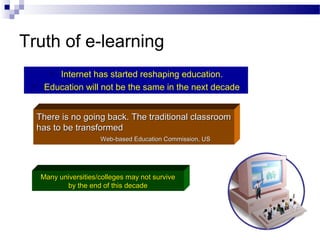
Truth of e-learning
Internet has started reshaping education.
Education will not be the same in the next decade




There is no going back. The traditional classroom
has to be transformed
Web-based Education Commission, US

Many universities/colleges may not survive
by the end of this decade
Why is it important?
E-learning will contribute a wide range of the objectives contained such as
achieving higher levels of skills for the labor market targeting relevant learning
for lower skilled adults, improving integration of existing forms of outreach and
motivating adults to develop new skills.

E-learning is particularly important because people are finding that it can make
a significant difference in so many areas, e.g. to how quickly they master a skill;
how easy it is to study; and, of course, how much they enjoy learning. It has the
capacity to contribute for learning: to raising standards; improving quality;
removing barriers to learning and participation in learning; preparing for
employment; up skilling in the workplace; and ultimately, ensuring that every
learner achieves their full potential.
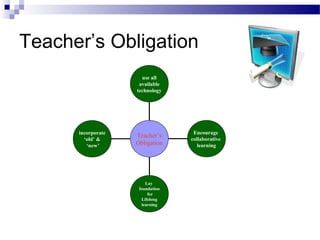
Teacher’s Obligation
use all
available
technology

incorporate
‘old’ &
‘new’

Teacher’s
Obligation

Lay
foundation
for
Lifelong
learning

Encourage
collaborative
learning
E-learning tools: E-mail
Every teacher should have an e-mail account
Communicate with students
Students can submit assignment
Can have attachments
Create a paperless environment
Simple but effective
Efficient and cost effective
E-learning tools: Online communication
Synchronous communication tool
Communicate with students
Communicate with parents
More students participate
Collaborative learning
E-learning tools: Online Groups
Online discussion forum
Teacher can create discussion groups
Teacher could post a question and request
students to comment
Students can post their comments
Can encourage community participation
Collaborative learning can be fostered
Feedback from diverse culture
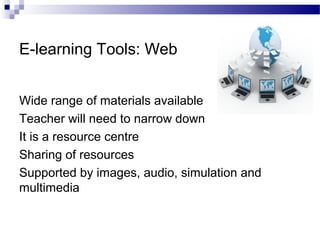
E-learning Tools: Web
Wide range of materials available
Teacher will need to narrow down
It is a resource centre
Sharing of resources
Supported by images, audio, simulation and
multimedia
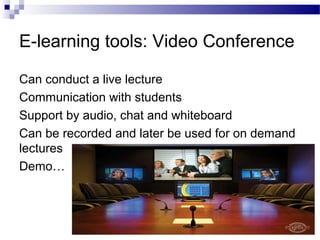
E-learning tools: Video Conference
Can conduct a live lecture
Communication with students
Support by audio, chat and whiteboard
Can be recorded and later be used for on demand
lectures
Demo…
Tools: Learning Management System
(LMS)
Management of content
Uploading assignment, quizzes, lessons, handouts
Tracking students
Administrative features
Integration with various tools such as chat, forum,
e-mail, etc.
Reporting
Conclusion
E-learning offers opportunity to raise educational
standards in schools
Large range of tools are available for teaching and
learning
Closes the gap of “Digital Divide”
Involvement of teachers and student is important

Importance of e learning

  • 1.
  • 2.
    What is E-learning? Theuse of Internet technologies to deliver a broad array of solutions that enhance knowledge and performance  Rosenberg, 2001 E-learning is Internet-enabled learning http://www.cisco.com E-learning has the potential to revolutionize the way we teach and how we learn.
  • 3.
    What is E-learning? Anumber of acronyms are used widely in connection with e-learning, most notably IT, ICT and ILT.   IT Information Technology - the computer infrastructure, hardware and software used to process data and deliver information   ICT Information and Communication Technologies - the combination of computing and communication technologies (including computer networks and telephone systems)   ILT Information and Learning Technologies - this is used to refer to the use of information and communication technologies to support the core activities of educational organizations
  • 4.
    Truth of e-learning Internethas started reshaping education. Education will not be the same in the next decade   There is no going back. The traditional classroom has to be transformed Web-based Education Commission, US Many universities/colleges may not survive by the end of this decade
  • 5.
    Why is itimportant? E-learning will contribute a wide range of the objectives contained such as achieving higher levels of skills for the labor market targeting relevant learning for lower skilled adults, improving integration of existing forms of outreach and motivating adults to develop new skills. E-learning is particularly important because people are finding that it can make a significant difference in so many areas, e.g. to how quickly they master a skill; how easy it is to study; and, of course, how much they enjoy learning. It has the capacity to contribute for learning: to raising standards; improving quality; removing barriers to learning and participation in learning; preparing for employment; up skilling in the workplace; and ultimately, ensuring that every learner achieves their full potential.
  • 6.
    Teacher’s Obligation use all available technology incorporate ‘old’& ‘new’ Teacher’s Obligation Lay foundation for Lifelong learning Encourage collaborative learning
  • 7.
    E-learning tools: E-mail Everyteacher should have an e-mail account Communicate with students Students can submit assignment Can have attachments Create a paperless environment Simple but effective Efficient and cost effective
  • 8.
    E-learning tools: Onlinecommunication Synchronous communication tool Communicate with students Communicate with parents More students participate Collaborative learning
  • 9.
    E-learning tools: OnlineGroups Online discussion forum Teacher can create discussion groups Teacher could post a question and request students to comment Students can post their comments Can encourage community participation Collaborative learning can be fostered Feedback from diverse culture
  • 10.
    E-learning Tools: Web Widerange of materials available Teacher will need to narrow down It is a resource centre Sharing of resources Supported by images, audio, simulation and multimedia
  • 11.
    E-learning tools: VideoConference Can conduct a live lecture Communication with students Support by audio, chat and whiteboard Can be recorded and later be used for on demand lectures Demo…
  • 12.
    Tools: Learning ManagementSystem (LMS) Management of content Uploading assignment, quizzes, lessons, handouts Tracking students Administrative features Integration with various tools such as chat, forum, e-mail, etc. Reporting
  • 13.
    Conclusion E-learning offers opportunityto raise educational standards in schools Large range of tools are available for teaching and learning Closes the gap of “Digital Divide” Involvement of teachers and student is important