Management & Evaluation of Training
What happens without training? Difficulty in meeting organizational objectives Change management is problematic De-motivated staff Underdeveloped staff, not able to perform within and outside
Training Policy Institutional commitment to training A vision of training for development Training needs identified and prioritized Responsibilities related to training clearly defined Training resources and administration in place
In-house Training Planning Budgeting Marketing Preparing Implementing Evaluating
Planing in-house Training Training Needs Analysis done Training design prepared Prepare a course document or programme brief
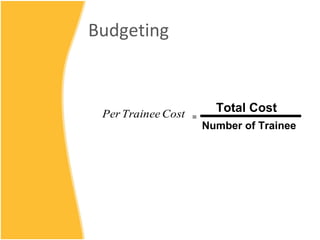
Budgeting = Total Cost Number of Trainee
Marketing Is it necessary? How to do it? Who are the target audience?
Preparing Identifying Resource Persons Preparing the Venue/Training site Training kit and resources Accommodation Food and beverages Logistics, vehicles, etc.
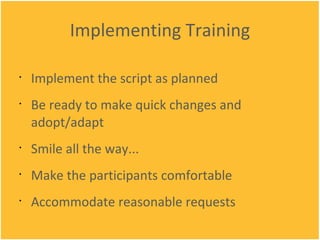
Implementing Training Implement the script as planned Be ready to make quick changes and adopt/adapt Smile all the way... Make the participants comfortable Accommodate reasonable requests
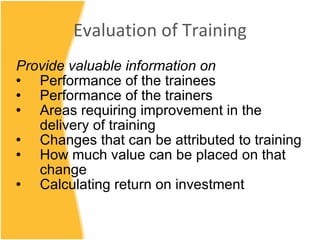
Evaluation of Training Provide valuable information on Performance of the trainees Performance of the trainers Areas requiring improvement in the delivery of training Changes that can be attributed to training How much value can be placed on that change Calculating return on investment
Principle of Training Evaluation Clarity of purpose Objectivity Integrated Tailor-made not 'one size fits all'
Levels of Evaluation Level 1: Reaction Level 2: Learning Level 3: Performance Level 4: Results
Transfer of Training Characteristics of the trainee Training design Work Environment
Return on Investment Cost-Benefit Ratio = Benefits of Training Total Cost of Training ROI % = Benefit of Training – Cost of Training Cost of Training X 100

Training Evaluation

  • 1.
  • 2.
    What happens withouttraining? Difficulty in meeting organizational objectives Change management is problematic De-motivated staff Underdeveloped staff, not able to perform within and outside
  • 3.
    Training Policy Institutionalcommitment to training A vision of training for development Training needs identified and prioritized Responsibilities related to training clearly defined Training resources and administration in place
  • 4.
    In-house Training PlanningBudgeting Marketing Preparing Implementing Evaluating
  • 5.
    Planing in-house TrainingTraining Needs Analysis done Training design prepared Prepare a course document or programme brief
  • 6.
    Budgeting = TotalCost Number of Trainee
  • 7.
    Marketing Is itnecessary? How to do it? Who are the target audience?
  • 8.
    Preparing Identifying ResourcePersons Preparing the Venue/Training site Training kit and resources Accommodation Food and beverages Logistics, vehicles, etc.
  • 9.
    Implementing Training Implementthe script as planned Be ready to make quick changes and adopt/adapt Smile all the way... Make the participants comfortable Accommodate reasonable requests
  • 10.
    Evaluation of TrainingProvide valuable information on Performance of the trainees Performance of the trainers Areas requiring improvement in the delivery of training Changes that can be attributed to training How much value can be placed on that change Calculating return on investment
  • 11.
    Principle of TrainingEvaluation Clarity of purpose Objectivity Integrated Tailor-made not 'one size fits all'
  • 12.
    Levels of EvaluationLevel 1: Reaction Level 2: Learning Level 3: Performance Level 4: Results
  • 13.
    Transfer of TrainingCharacteristics of the trainee Training design Work Environment
  • 14.
    Return on InvestmentCost-Benefit Ratio = Benefits of Training Total Cost of Training ROI % = Benefit of Training – Cost of Training Cost of Training X 100