Developing ELearning Forums for Global Distance Learning Presented by POWERi Technologies Inc. March 17, 2009 CREATING COMMUNITIES OF KNOWLEDGE: THE POWER OF SOCIAL LEARNING
The internet is changing the way we interact, communicate, and more importantly how we learn…….. Web 2.0:   First coined in 2005, Web 2.0 describes the evolution of the Internet from static web sites to a ubiquitous platform for new types of publishing & collaboration: Social Media / User-generated Content  (blogging, video sharing, podcasts, etc) Social Networking  (Facebook, Myspace, LinkedIn, etc.) Communication & Collaboration  (twitter, wikis, forums, IM, etc.) Mobile Computing  ( Iphone Apps, SMS, etc)
eLearning 2.0   - is built around  an assumption that  knowledge is socially constructed . Learning takes place through conversations about content and grounded interaction about problems & actions.   eLearning 2.0 creates a whole new way of gaining knowledge
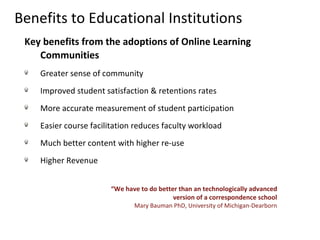
Benefits to Educational Institutions Key benefits from the adoptions of Online Learning Communities Greater sense of community  Improved student satisfaction & retentions rates More accurate measurement of student participation Easier course facilitation reduces faculty workload Much better content with higher re-use Higher Revenue “ We have to do better than an technologically advanced version of a correspondence school Mary Bauman PhD, University of Michigan-Dearborn
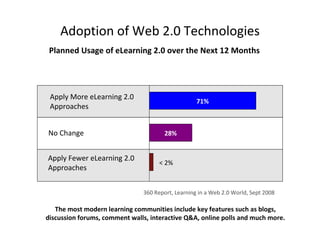
Adoption of Web 2.0 Technologies Apply More eLearning 2.0  Approaches 71% Planned Usage of eLearning 2.0 over the Next 12 Months No Change 28% Apply Fewer eLearning 2.0  Approaches < 2% 360 Report, Learning in a Web 2.0 World, Sept 2008 The most modern learning communities include key features such as blogs, discussion forums, comment walls, interactive Q&A, online polls and much more.
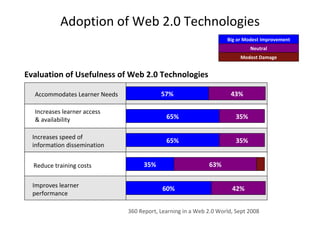
Adoption of Web 2.0 Technologies Accommodates Learner Needs Increases learner access  & availability Increases speed of  information dissemination Reduce training costs Improves learner  performance 57% 65% Evaluation of Usefulness of Web 2.0 Technologies 360 Report, Learning in a Web 2.0 World, Sept 2008 43% 35% 65% 35% 63% 35% 60% 42% Big or Modest Improvement Neutral Modest Damage
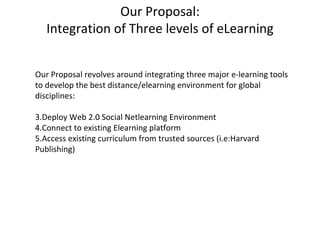
Our Proposal: Integration of Three levels of eLearning Our Proposal revolves around integrating three major e-learning tools to develop the best distance/elearning environment for global disciplines: Deploy Web 2.0 Social Netlearning Environment Connect to existing Elearning platform Access existing curriculum from trusted sources (i.e:Harvard Publishing)
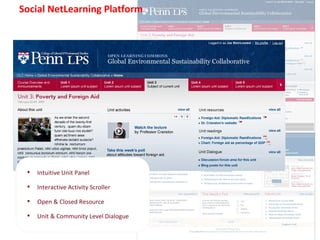
A modular framework for building communities that can be easily incorporated into existing pedagogies, and can be optionally integrated with existing eLearning content & systems Social NetLearning Platform Intuitive Unit Panel Interactive Activity Scroller Open & Closed Resource Unit & Community Level Dialogue
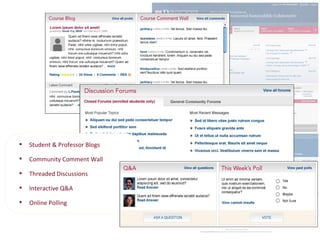
Threaded Discussions Student & Professor Blogs Community Comment Wall Interactive Q&A Online Polling
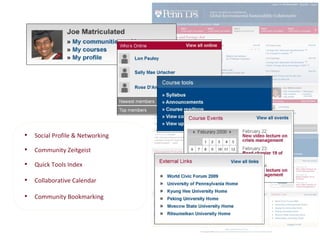
Collaborative Calendar Community Bookmarking Social Profile & Networking Community Zeitgeist  Quick Tools Index
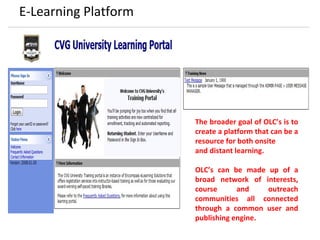
E-Learning Platform The broader goal of OLC’s is to create a platform that can be a resource for both onsite and distant learning.  OLC’s can be made up of a broad network of interests, course and outreach communities all connected through a common user and publishing engine.
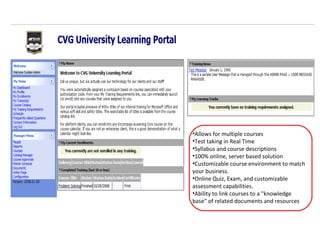
Allows for multiple courses Test taking in Real Time Syllabus and course descriptions 100% online, server based solution Customizable course environment to match your business. Online Quiz, Exam, and customizable assessment capabilities. Ability to link courses to a &quot;knowledge base&quot; of related documents and resources
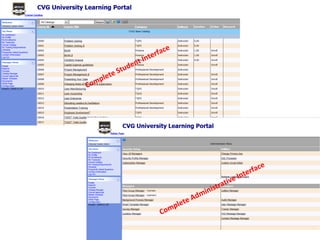
Complete Student Interface Complete Administrative Interface
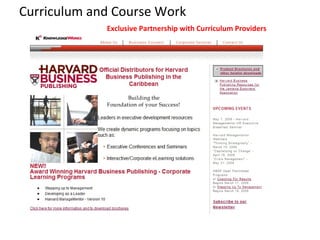
Curriculum and Course Work Exclusive Partnership with Curriculum Providers
Target  End-Users Universities Business Managers Corporations Secondary Schools Individual users
Business Model Establish E-Commerce feature for  Individual users seeking specific courses. Sell individual or complete modules to universities, corporations and/or businesses with ongoing maintenance support Establish revenue sharing options with end-users with large numbers. Provide distance learning modules to companies through government grants and/or foundations.
For more information please contact: Marvin Dejean SVP of Media Strategies POWERi Technologies 8551 West Sunrise Boulevard Suite 302 Plantation, FL 33322 (954) 382-3900 (Office) [email_address]

Developing E Learning Forums For Global Distance Learning

  • 1.
    Developing ELearning Forumsfor Global Distance Learning Presented by POWERi Technologies Inc. March 17, 2009 CREATING COMMUNITIES OF KNOWLEDGE: THE POWER OF SOCIAL LEARNING
  • 2.
    The internet ischanging the way we interact, communicate, and more importantly how we learn…….. Web 2.0: First coined in 2005, Web 2.0 describes the evolution of the Internet from static web sites to a ubiquitous platform for new types of publishing & collaboration: Social Media / User-generated Content (blogging, video sharing, podcasts, etc) Social Networking (Facebook, Myspace, LinkedIn, etc.) Communication & Collaboration (twitter, wikis, forums, IM, etc.) Mobile Computing ( Iphone Apps, SMS, etc)
  • 3.
    eLearning 2.0 - is built around an assumption that knowledge is socially constructed . Learning takes place through conversations about content and grounded interaction about problems & actions. eLearning 2.0 creates a whole new way of gaining knowledge
  • 4.
    Benefits to EducationalInstitutions Key benefits from the adoptions of Online Learning Communities Greater sense of community Improved student satisfaction & retentions rates More accurate measurement of student participation Easier course facilitation reduces faculty workload Much better content with higher re-use Higher Revenue “ We have to do better than an technologically advanced version of a correspondence school Mary Bauman PhD, University of Michigan-Dearborn
  • 5.
    Adoption of Web2.0 Technologies Apply More eLearning 2.0 Approaches 71% Planned Usage of eLearning 2.0 over the Next 12 Months No Change 28% Apply Fewer eLearning 2.0 Approaches < 2% 360 Report, Learning in a Web 2.0 World, Sept 2008 The most modern learning communities include key features such as blogs, discussion forums, comment walls, interactive Q&A, online polls and much more.
  • 6.
    Adoption of Web2.0 Technologies Accommodates Learner Needs Increases learner access & availability Increases speed of information dissemination Reduce training costs Improves learner performance 57% 65% Evaluation of Usefulness of Web 2.0 Technologies 360 Report, Learning in a Web 2.0 World, Sept 2008 43% 35% 65% 35% 63% 35% 60% 42% Big or Modest Improvement Neutral Modest Damage
  • 7.
    Our Proposal: Integrationof Three levels of eLearning Our Proposal revolves around integrating three major e-learning tools to develop the best distance/elearning environment for global disciplines: Deploy Web 2.0 Social Netlearning Environment Connect to existing Elearning platform Access existing curriculum from trusted sources (i.e:Harvard Publishing)
  • 8.
    A modular frameworkfor building communities that can be easily incorporated into existing pedagogies, and can be optionally integrated with existing eLearning content & systems Social NetLearning Platform Intuitive Unit Panel Interactive Activity Scroller Open & Closed Resource Unit & Community Level Dialogue
  • 9.
    Threaded Discussions Student& Professor Blogs Community Comment Wall Interactive Q&A Online Polling
  • 10.
    Collaborative Calendar CommunityBookmarking Social Profile & Networking Community Zeitgeist Quick Tools Index
  • 11.
    E-Learning Platform Thebroader goal of OLC’s is to create a platform that can be a resource for both onsite and distant learning. OLC’s can be made up of a broad network of interests, course and outreach communities all connected through a common user and publishing engine.
  • 12.
    Allows for multiplecourses Test taking in Real Time Syllabus and course descriptions 100% online, server based solution Customizable course environment to match your business. Online Quiz, Exam, and customizable assessment capabilities. Ability to link courses to a &quot;knowledge base&quot; of related documents and resources
  • 13.
    Complete Student InterfaceComplete Administrative Interface
  • 14.
    Curriculum and CourseWork Exclusive Partnership with Curriculum Providers
  • 15.
    Target End-UsersUniversities Business Managers Corporations Secondary Schools Individual users
  • 16.
    Business Model EstablishE-Commerce feature for Individual users seeking specific courses. Sell individual or complete modules to universities, corporations and/or businesses with ongoing maintenance support Establish revenue sharing options with end-users with large numbers. Provide distance learning modules to companies through government grants and/or foundations.
  • 17.
    For more informationplease contact: Marvin Dejean SVP of Media Strategies POWERi Technologies 8551 West Sunrise Boulevard Suite 302 Plantation, FL 33322 (954) 382-3900 (Office) [email_address]