Determining IP Routes
Introducing Distance Vector Routing
Outline
• Overview
• Distance Vector Route Selection
• Routing Information Maintenance
• Routing Inconsistencies with Distance Vector Routing
Protocols
• Count to Infinity Prevention
• Techniques to Eliminate Routing Loops
• Implementation of Techniques to Eliminate Routing Loops
• Summary
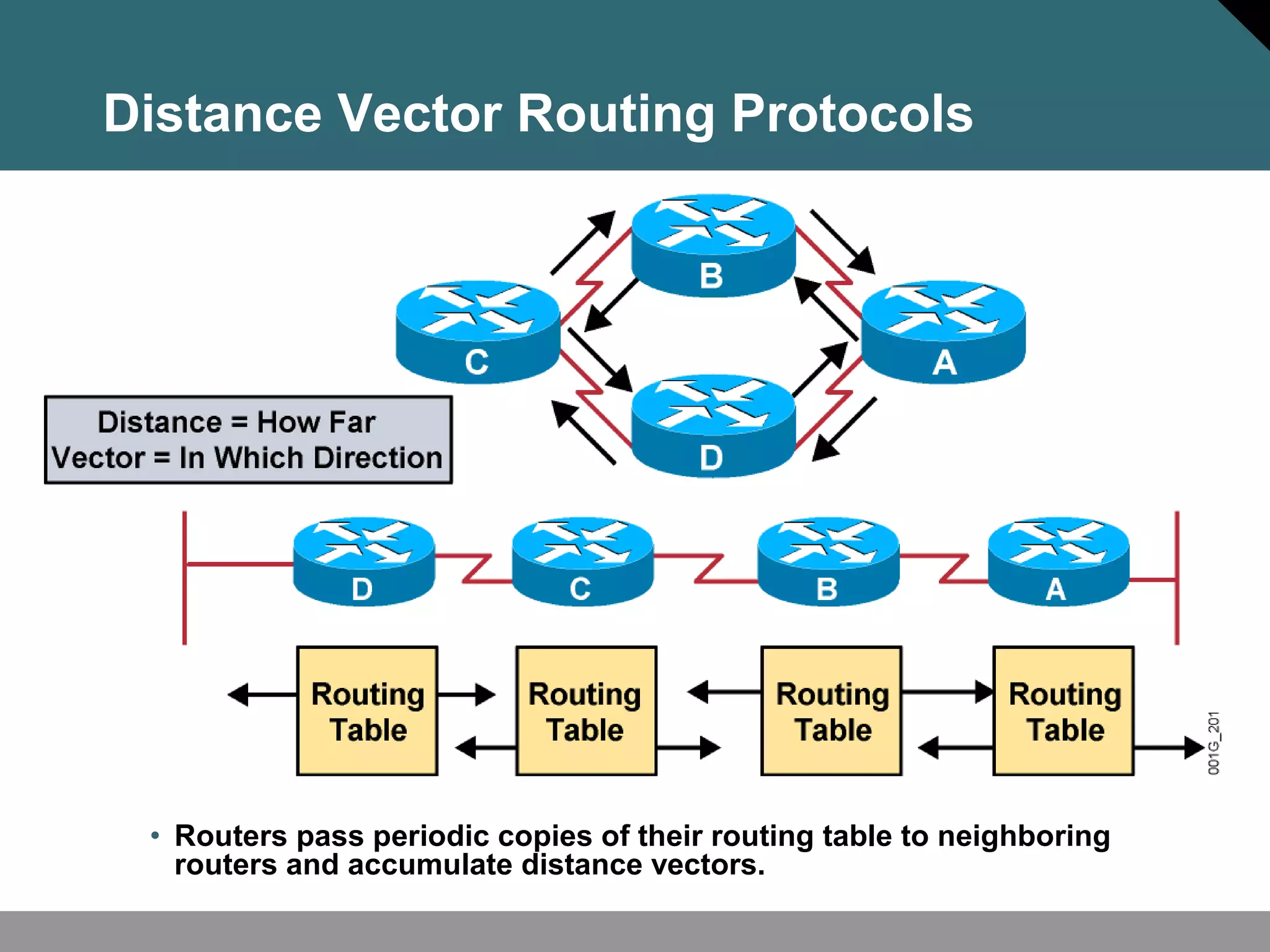
• Routers pass periodic copies of their routing table to neighboring
routers and accumulate distance vectors.
Distance Vector Routing Protocols
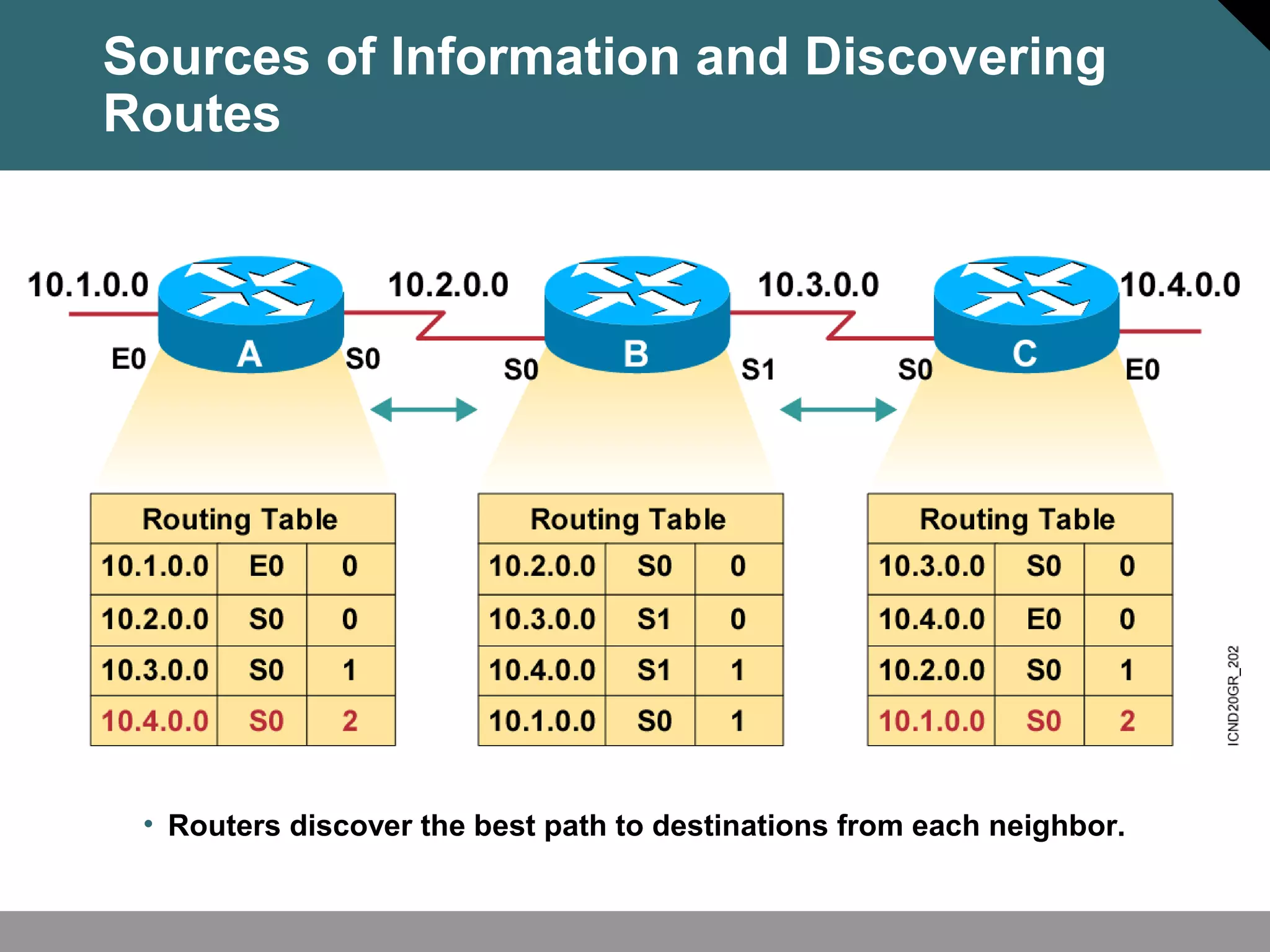
• Routers discover the best path to destinations from each neighbor.
Sources of Information and Discovering
Routes
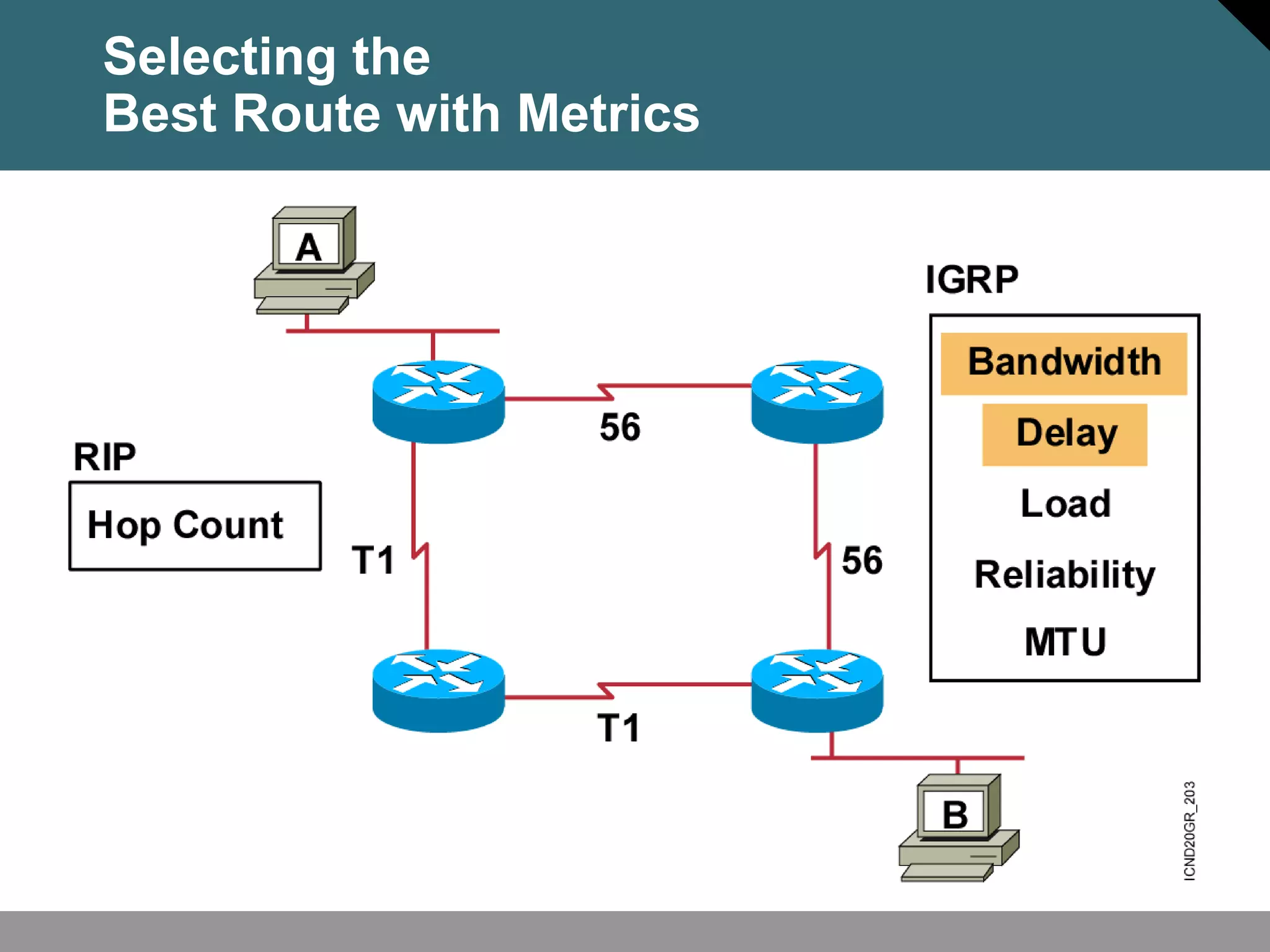
Selecting the
Best Route with Metrics
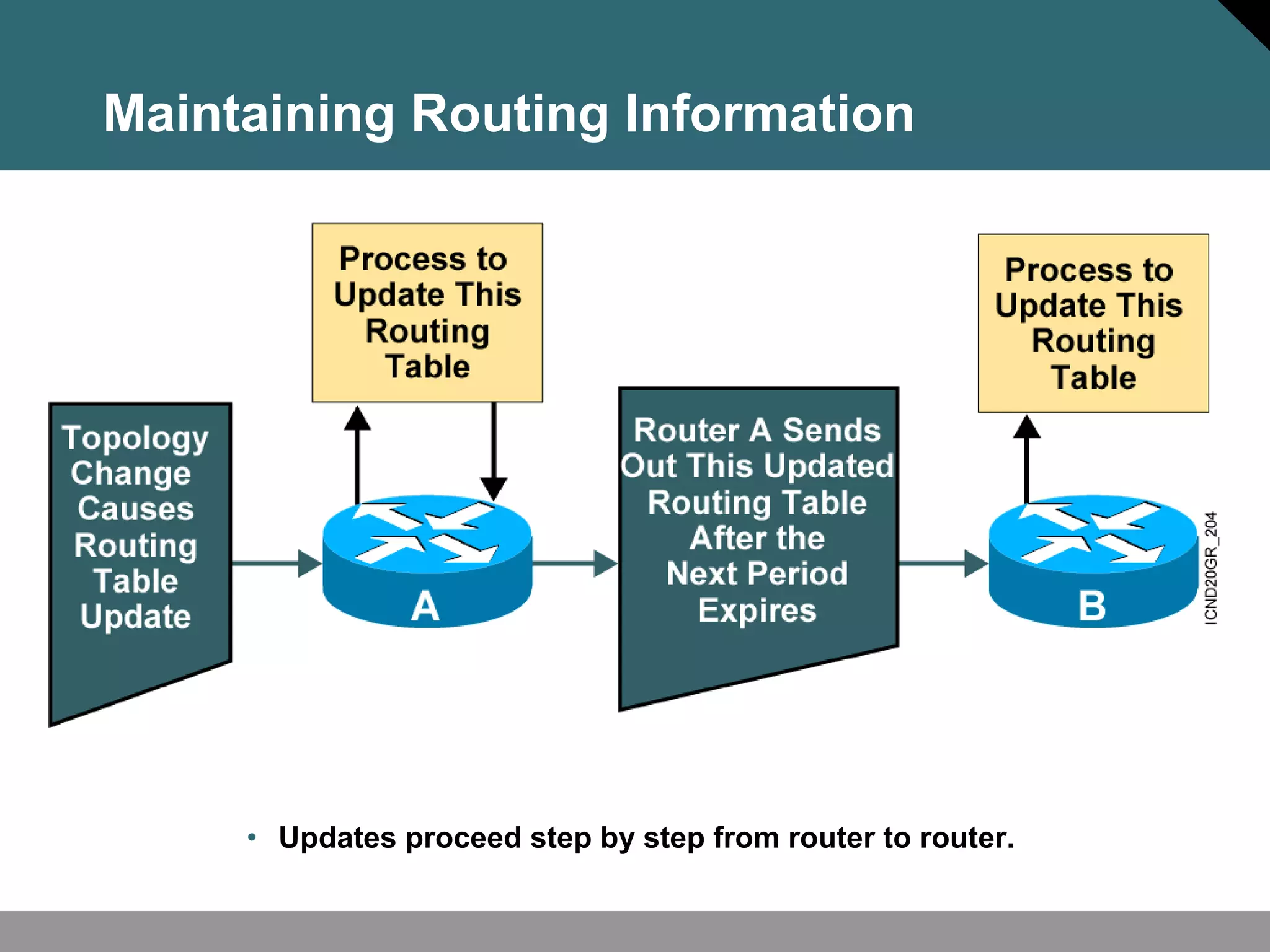
• Updates proceed step by step from router to router.
Maintaining Routing Information
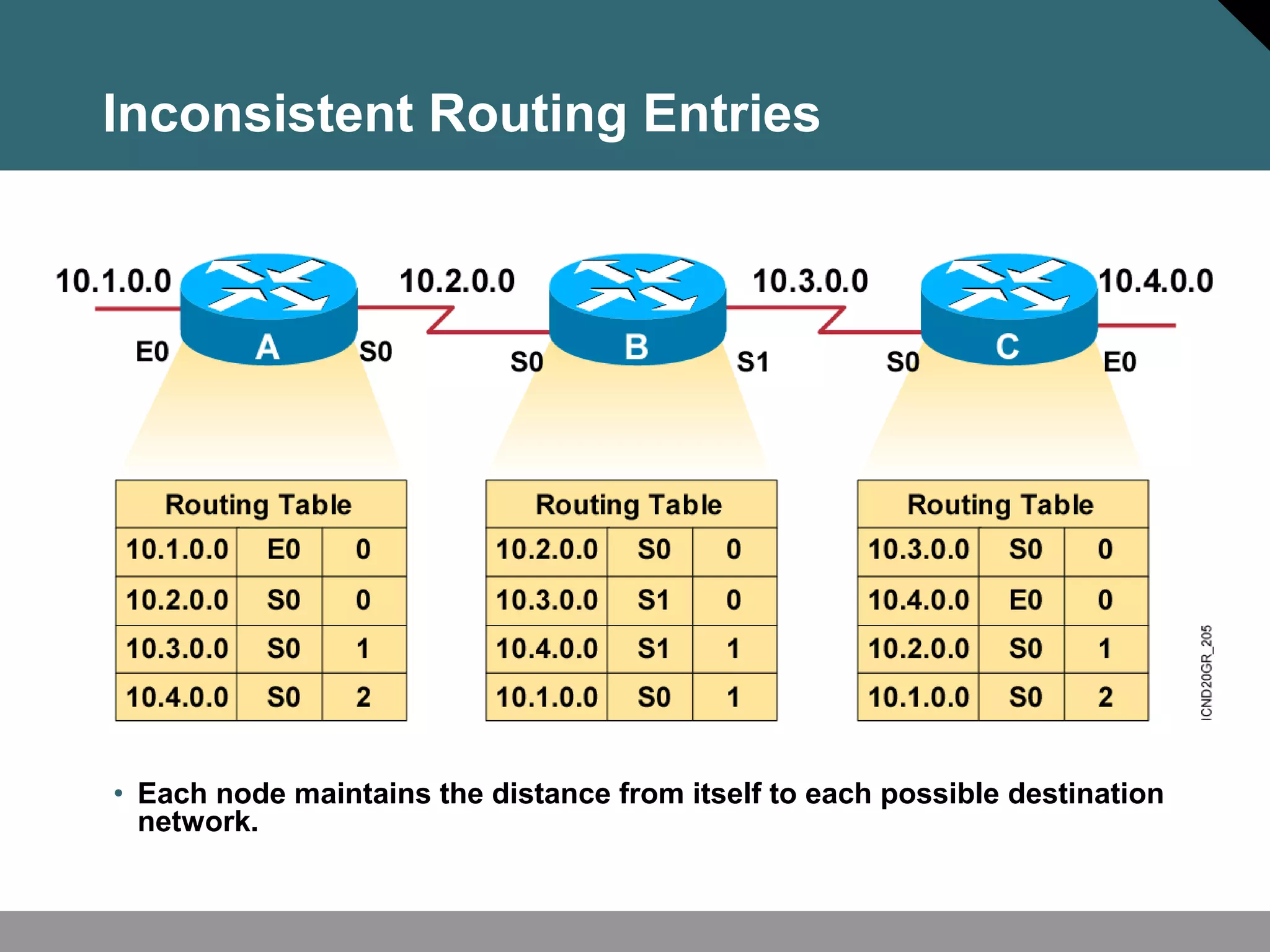
• Each node maintains the distance from itself to each possible destination
network.
Inconsistent Routing Entries
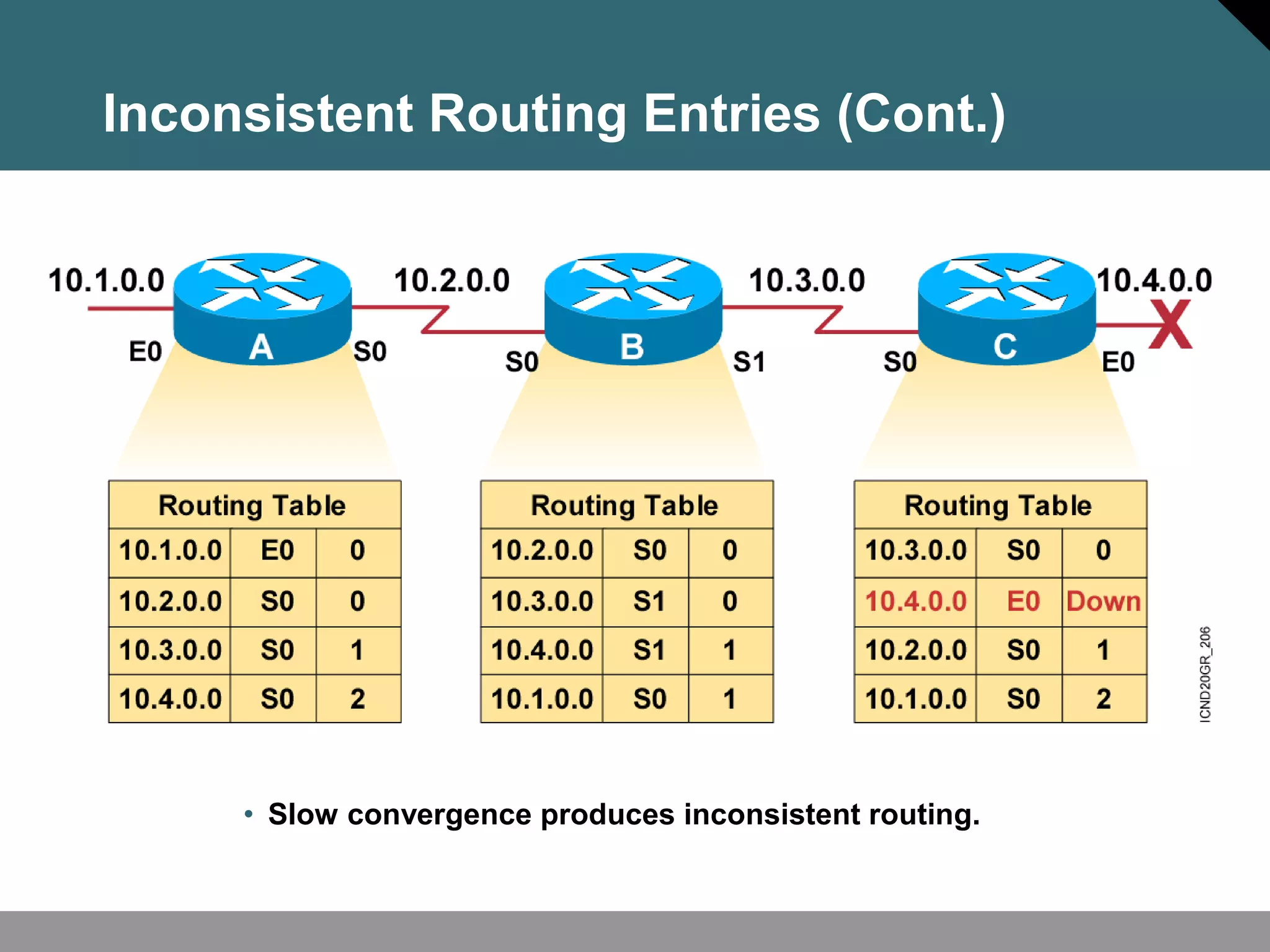
• Slow convergence produces inconsistent routing.
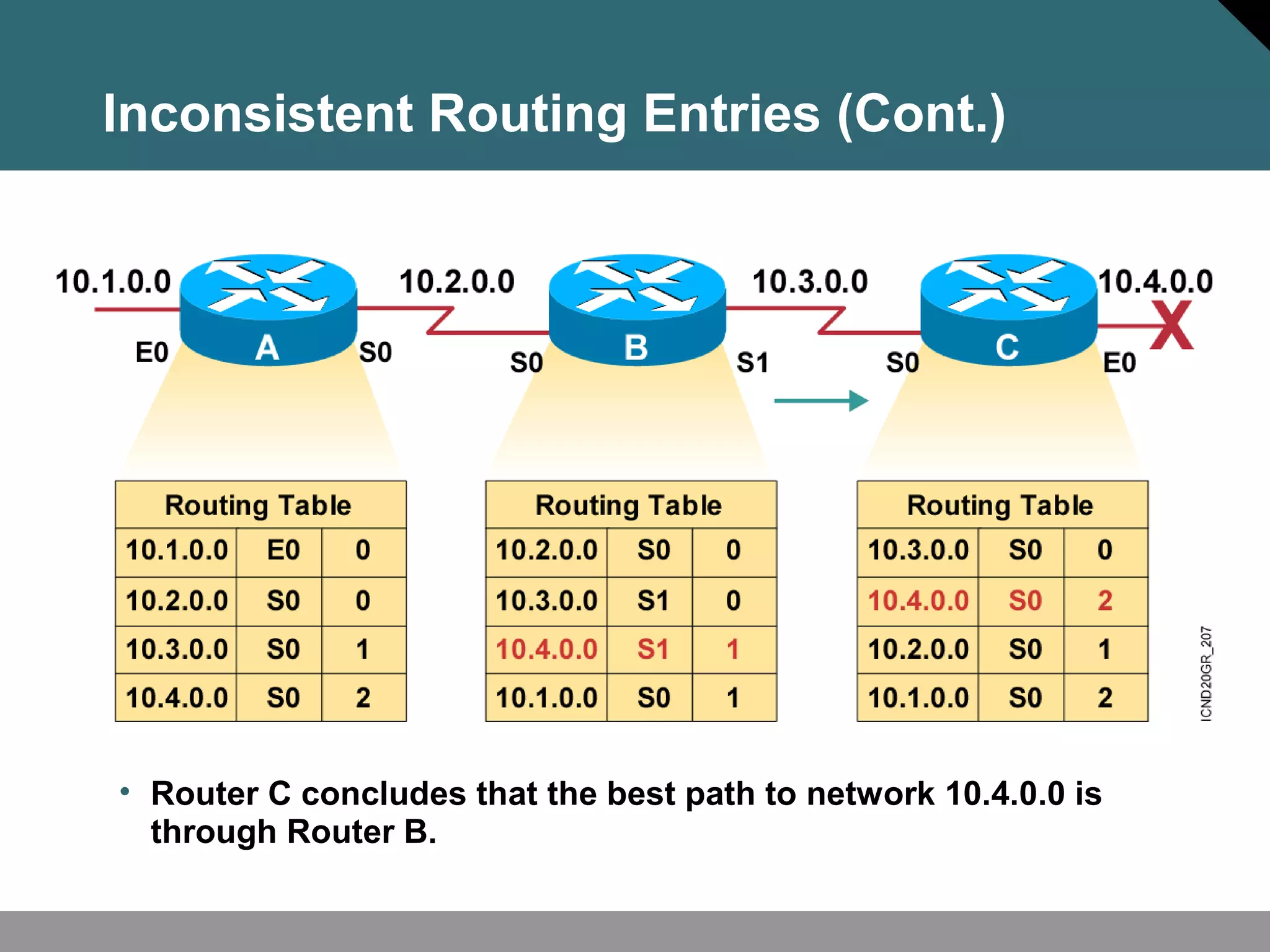
Inconsistent Routing Entries (Cont.)
• Router C concludes that the best path to network 10.4.0.0 is
through Router B.
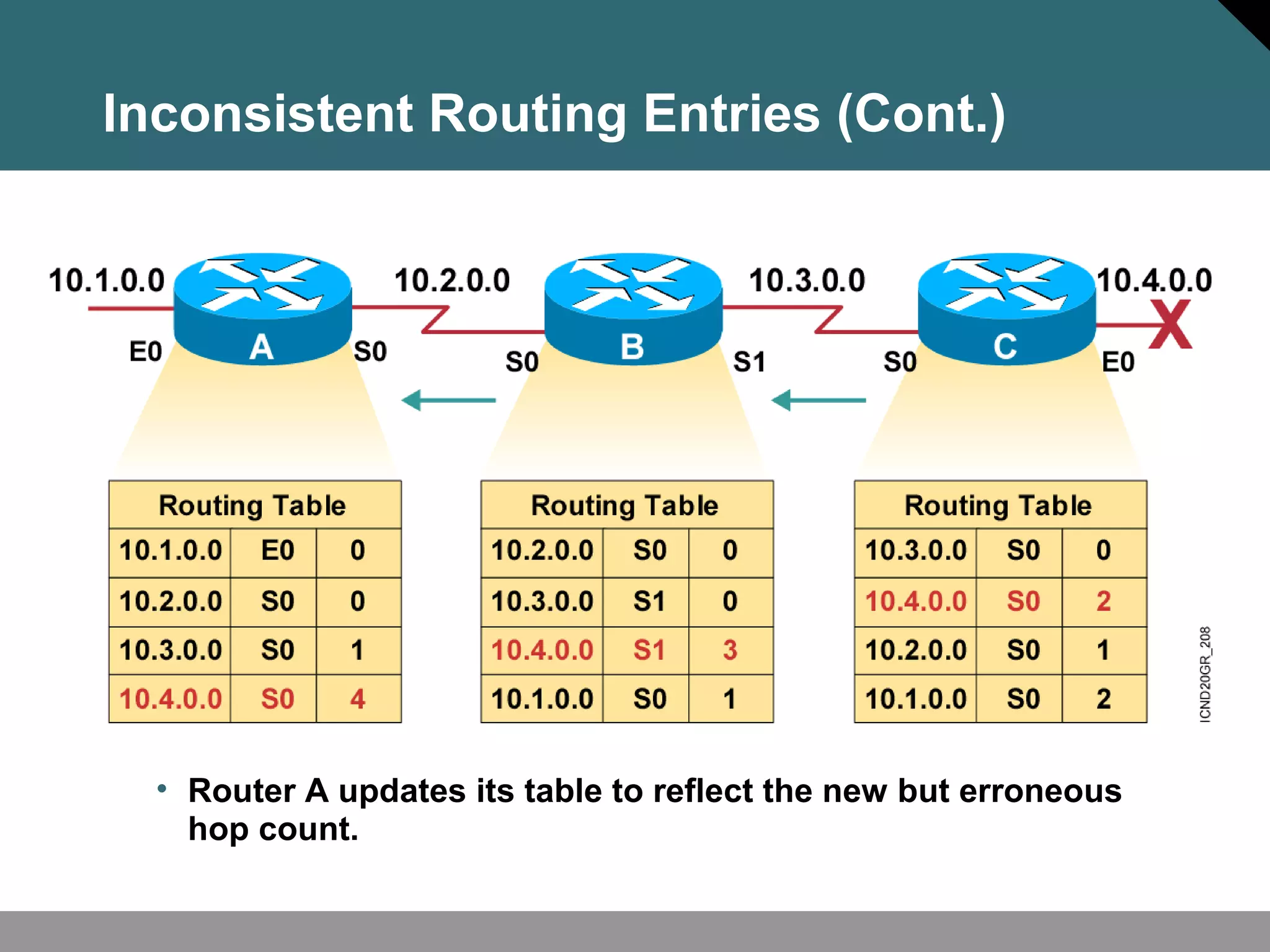
Inconsistent Routing Entries (Cont.)
• Router A updates its table to reflect the new but erroneous
hop count.
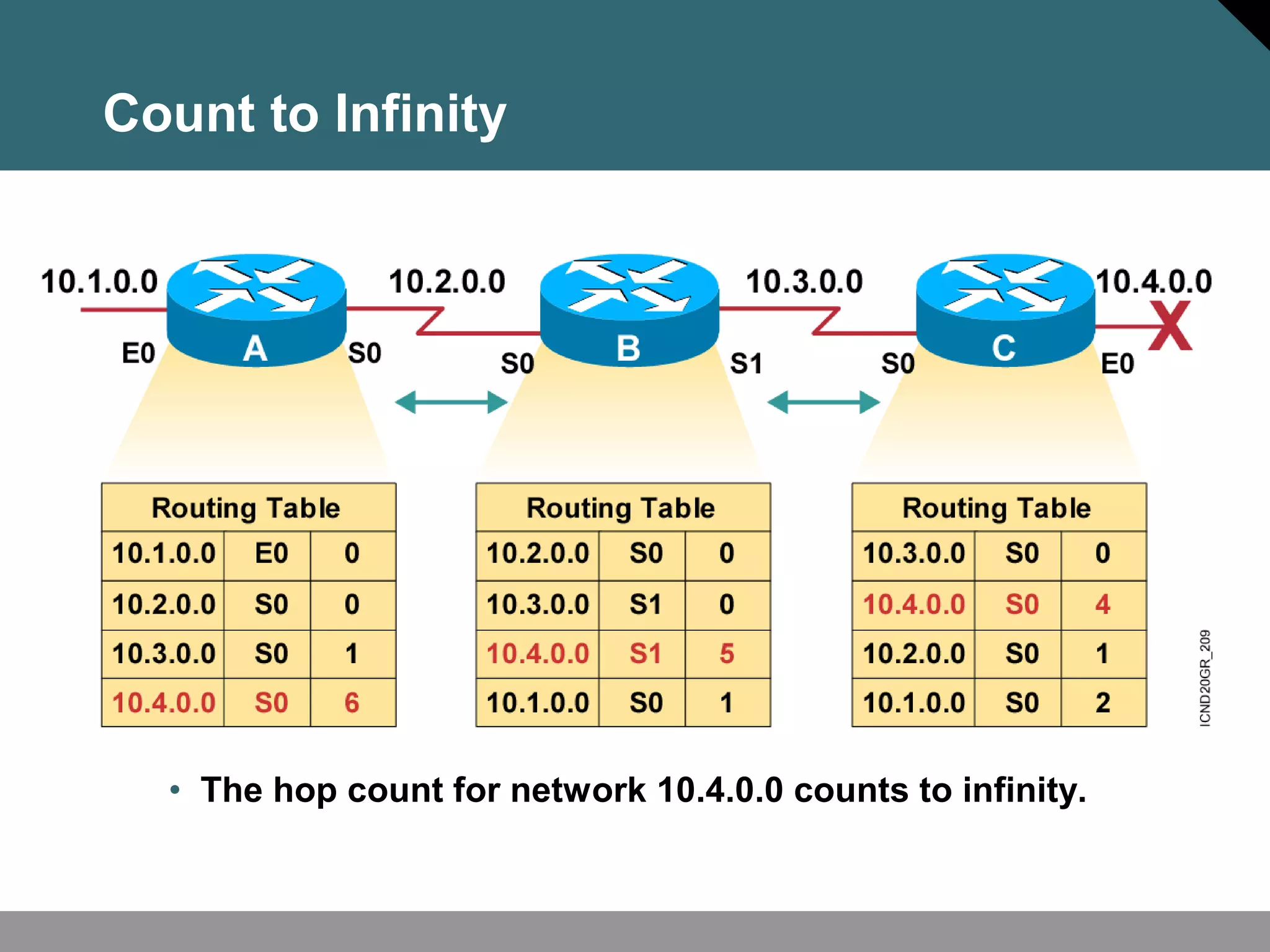
Inconsistent Routing Entries (Cont.)
• The hop count for network 10.4.0.0 counts to infinity.
Count to Infinity
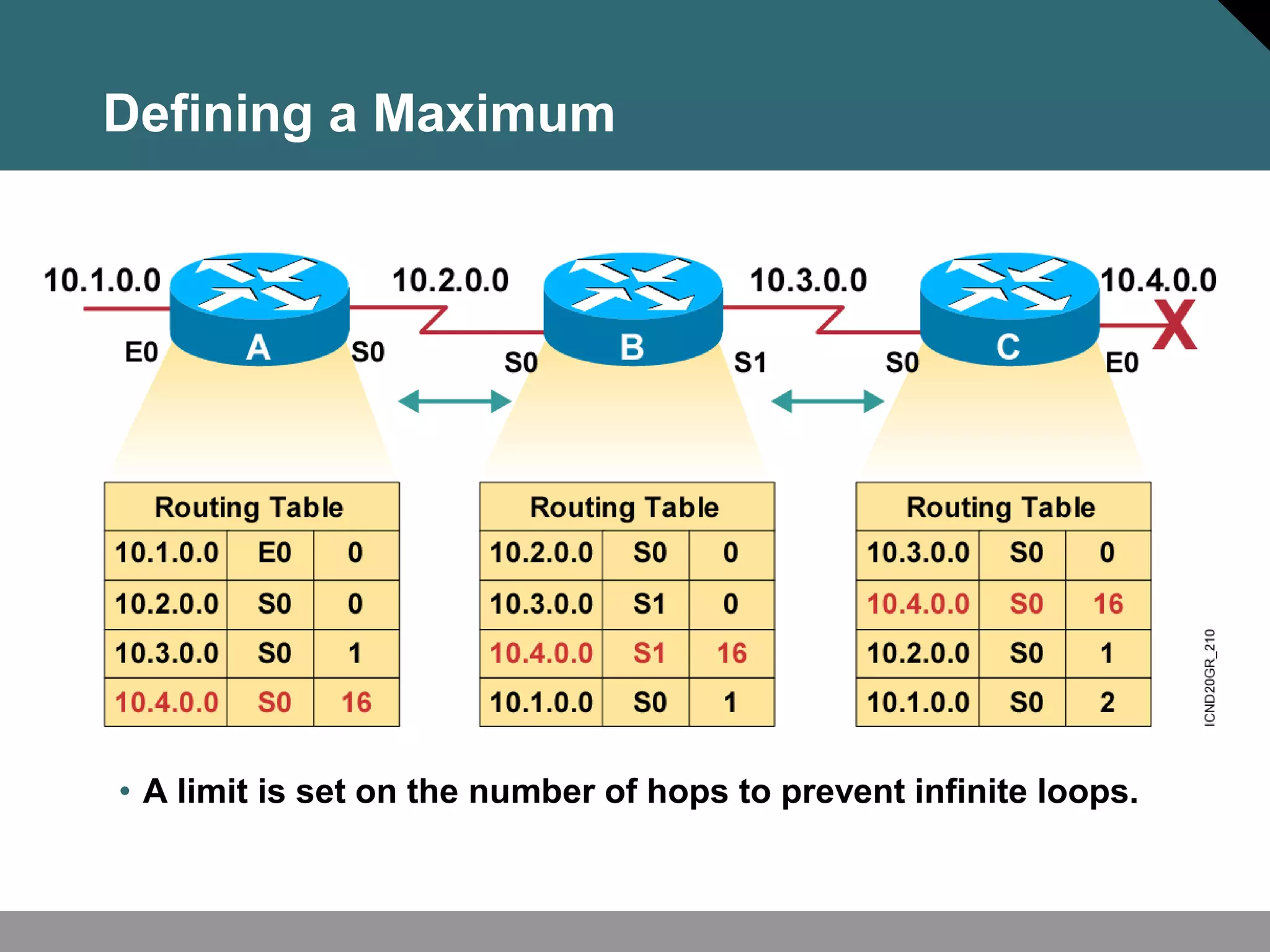
• A limit is set on the number of hops to prevent infinite loops.
Defining a Maximum
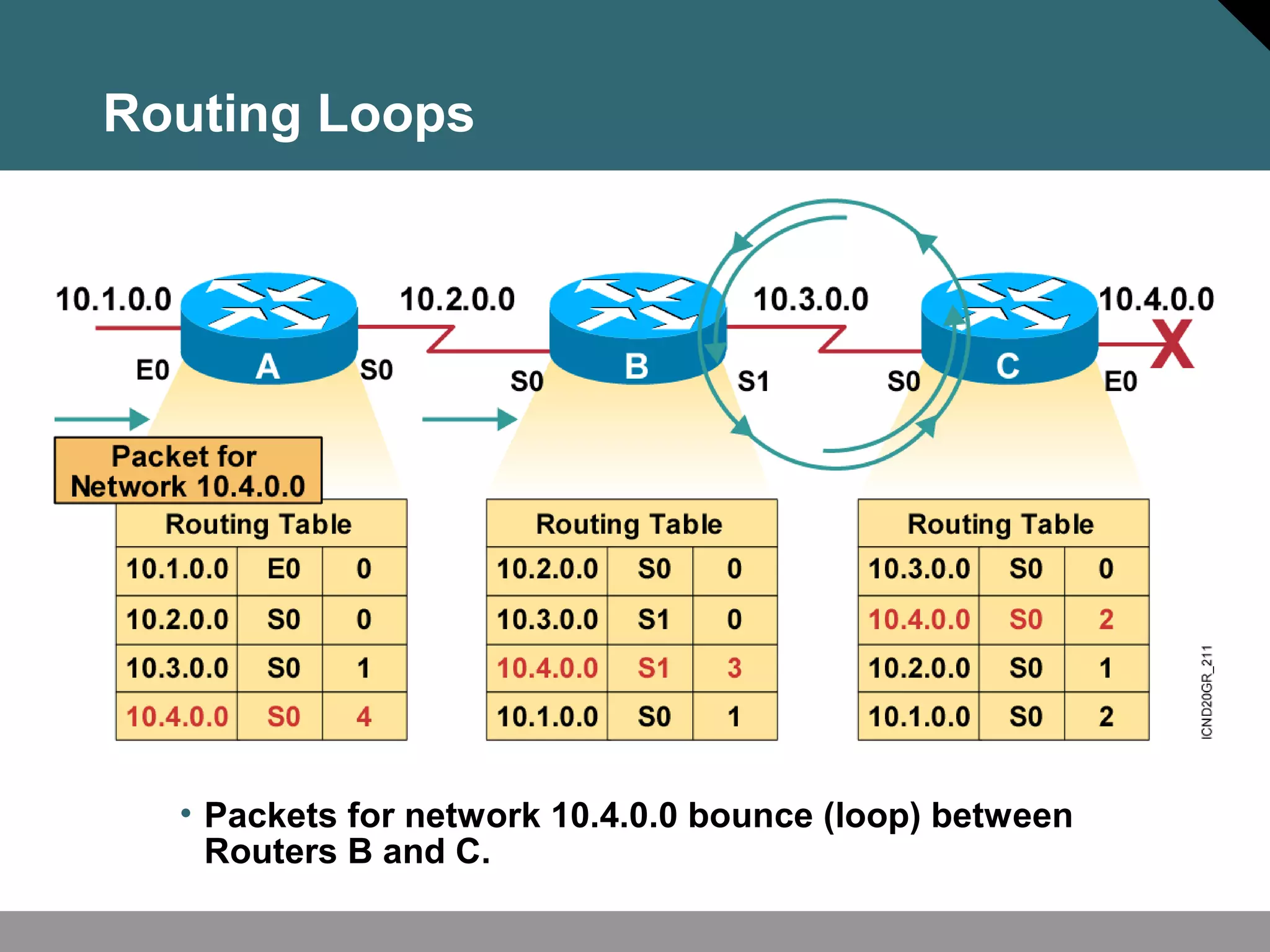
• Packets for network 10.4.0.0 bounce (loop) between
Routers B and C.
Routing Loops
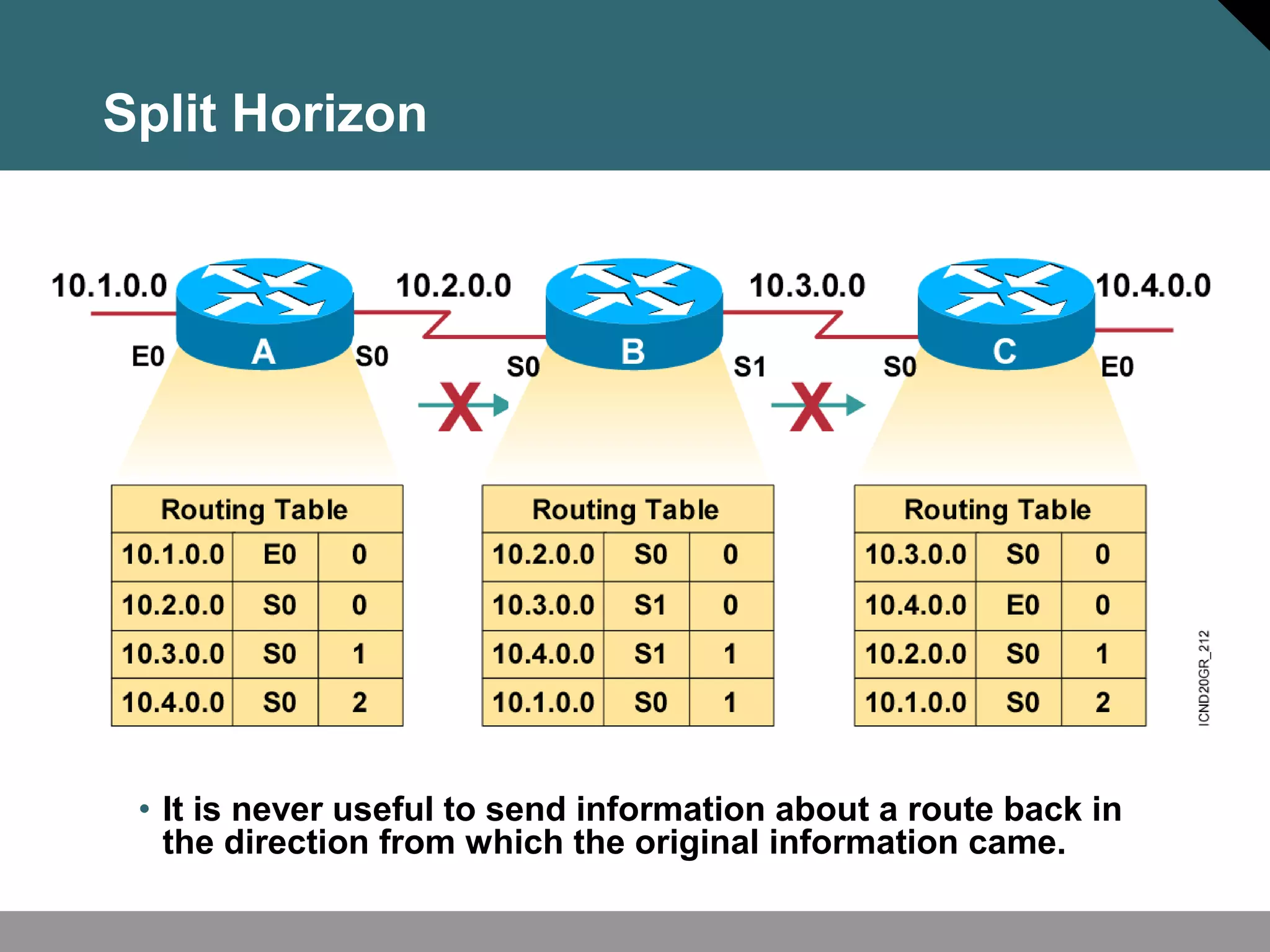
• It is never useful to send information about a route back in
the direction from which the original information came.
Split Horizon
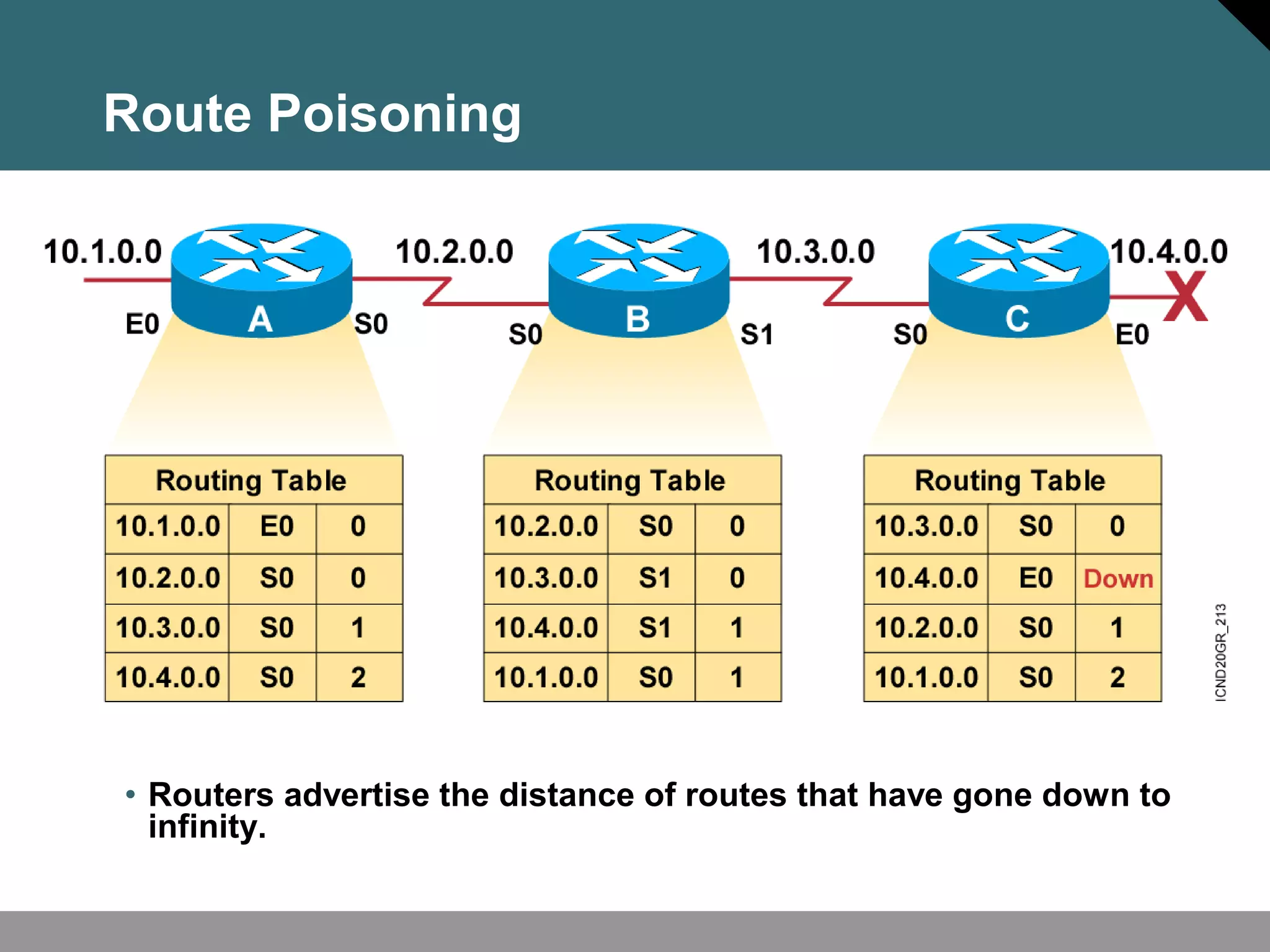
• Routers advertise the distance of routes that have gone down to
infinity.
Route Poisoning
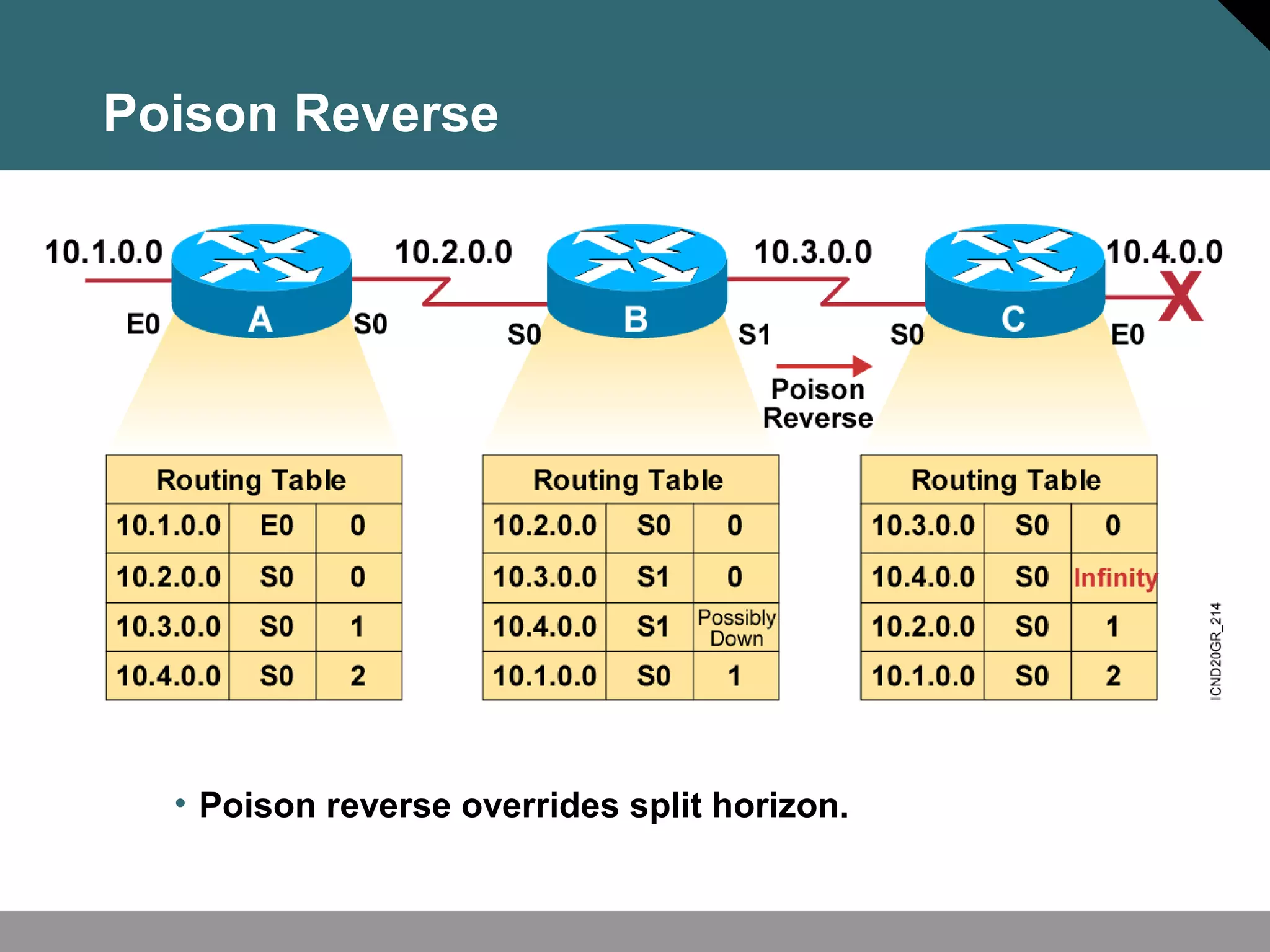
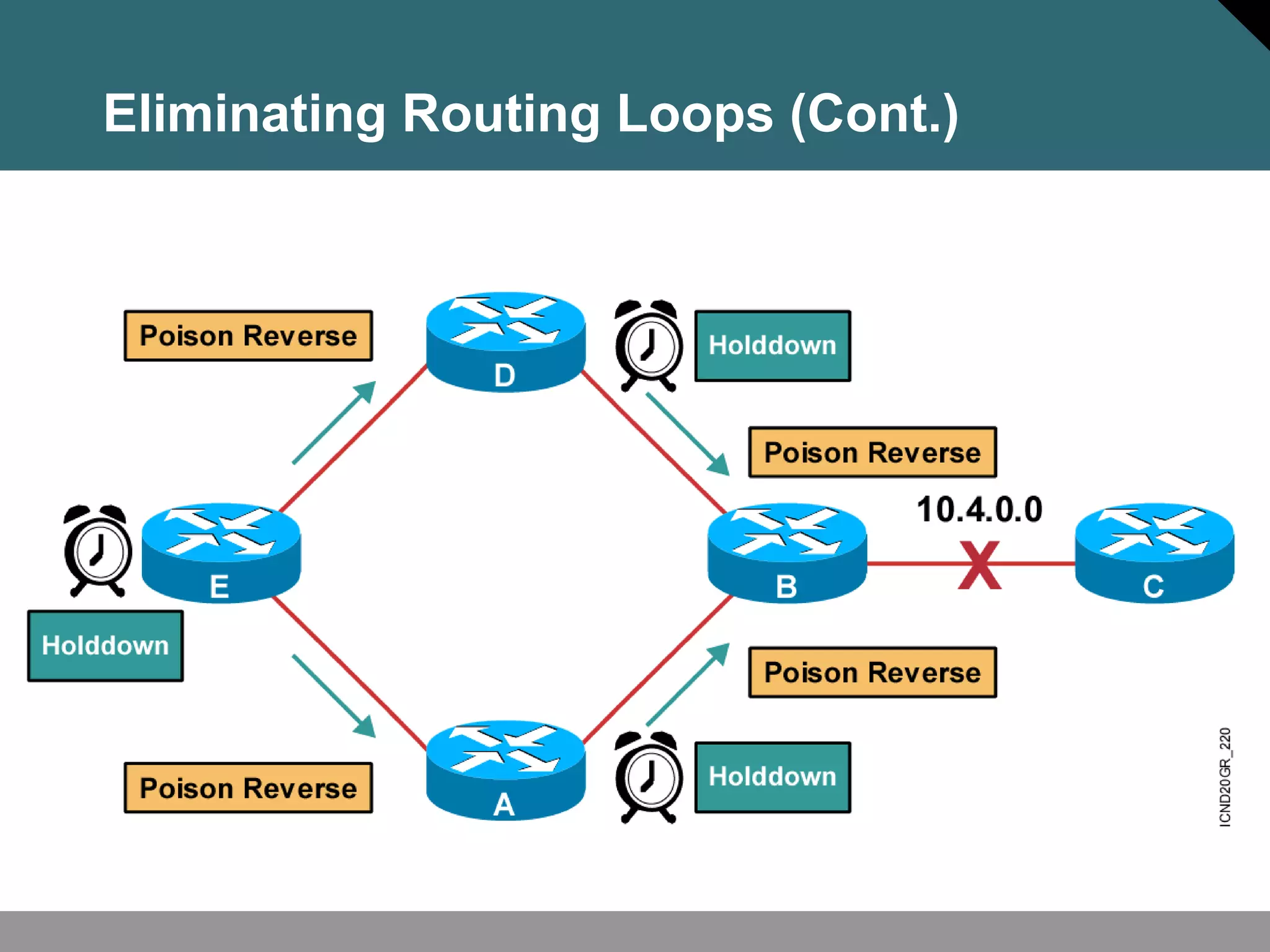
• Poison reverse overrides split horizon.
Poison Reverse
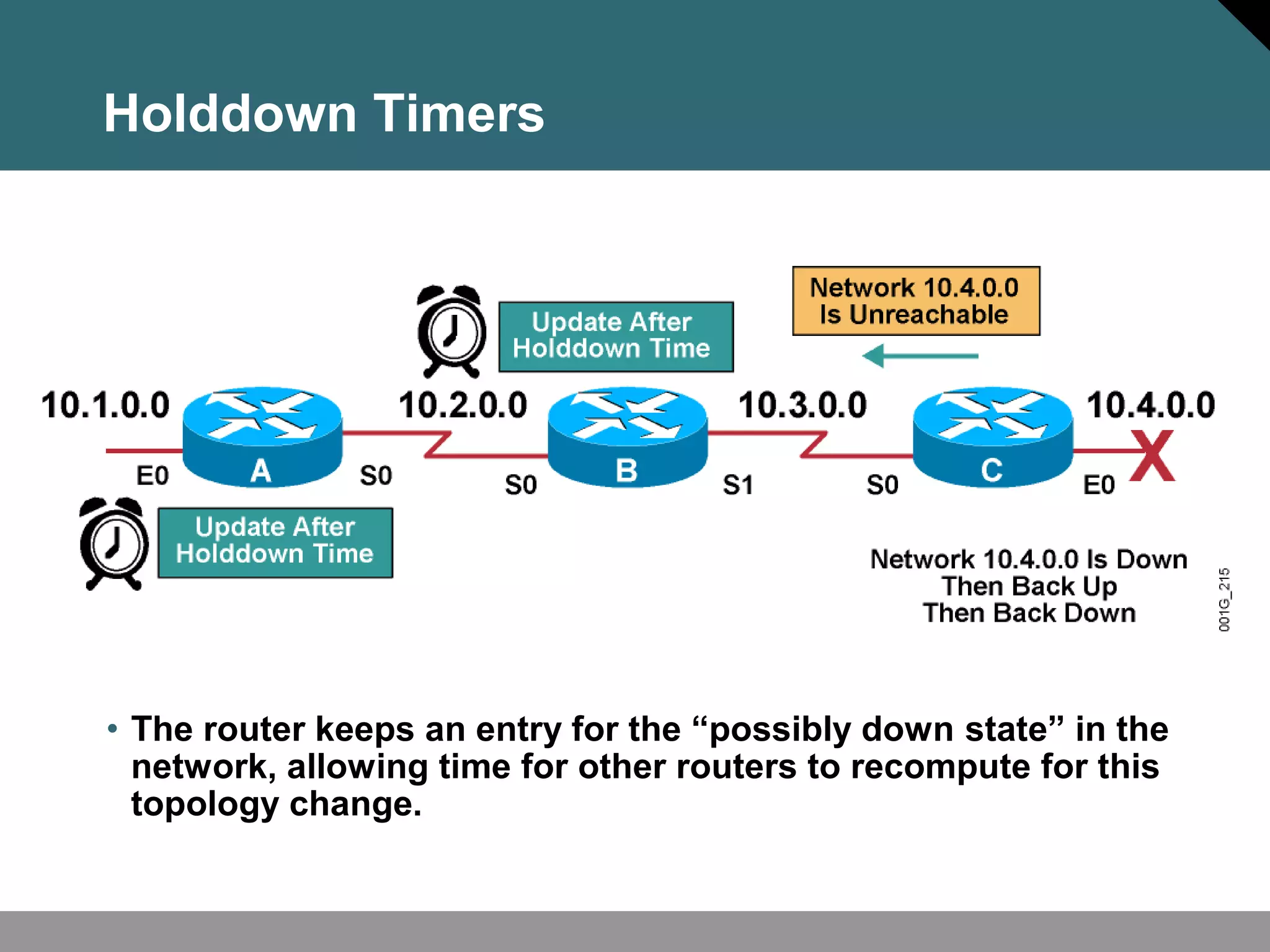
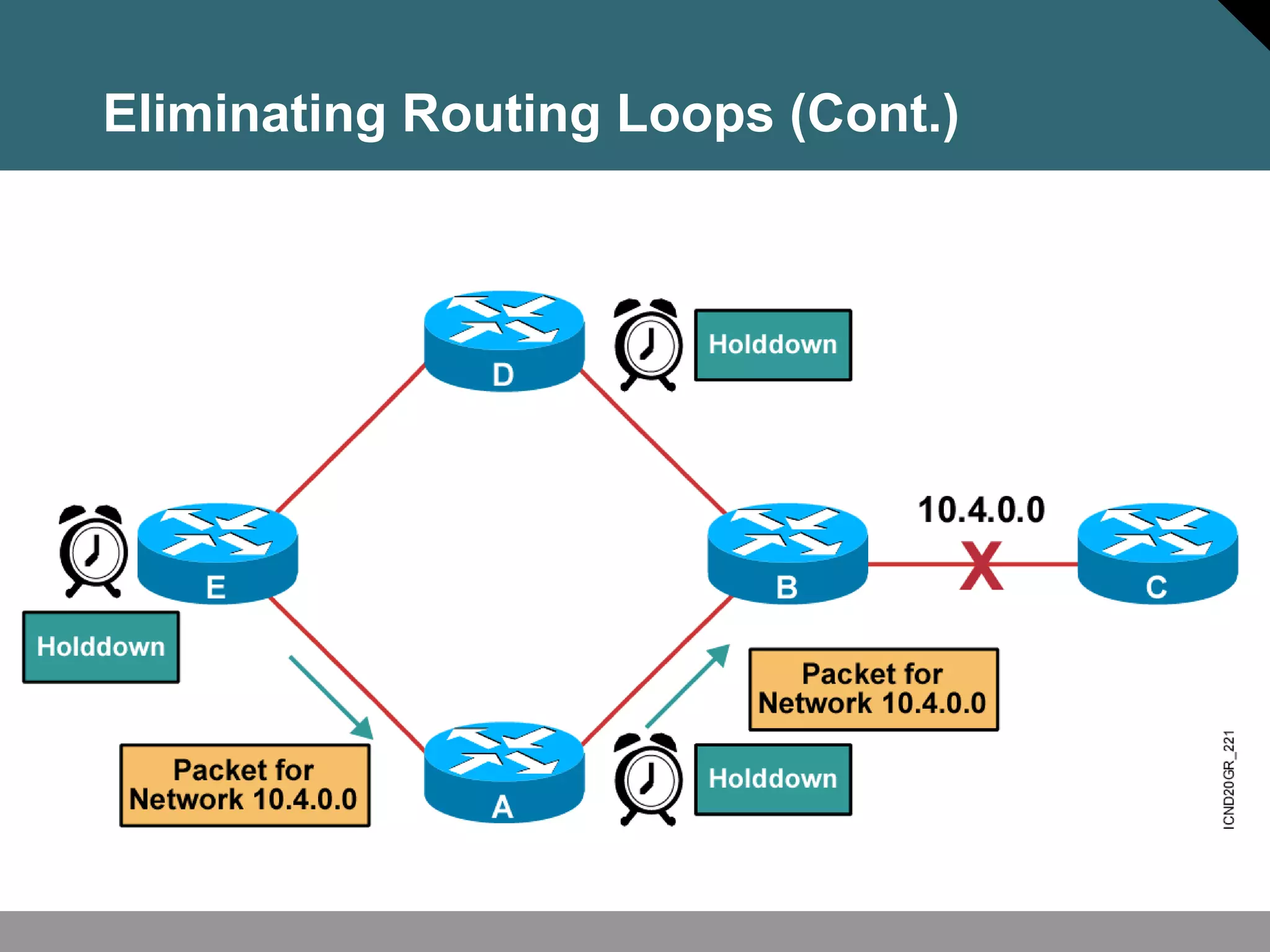
• The router keeps an entry for the “possibly down state” in the
network, allowing time for other routers to recompute for this
topology change.
Holddown Timers
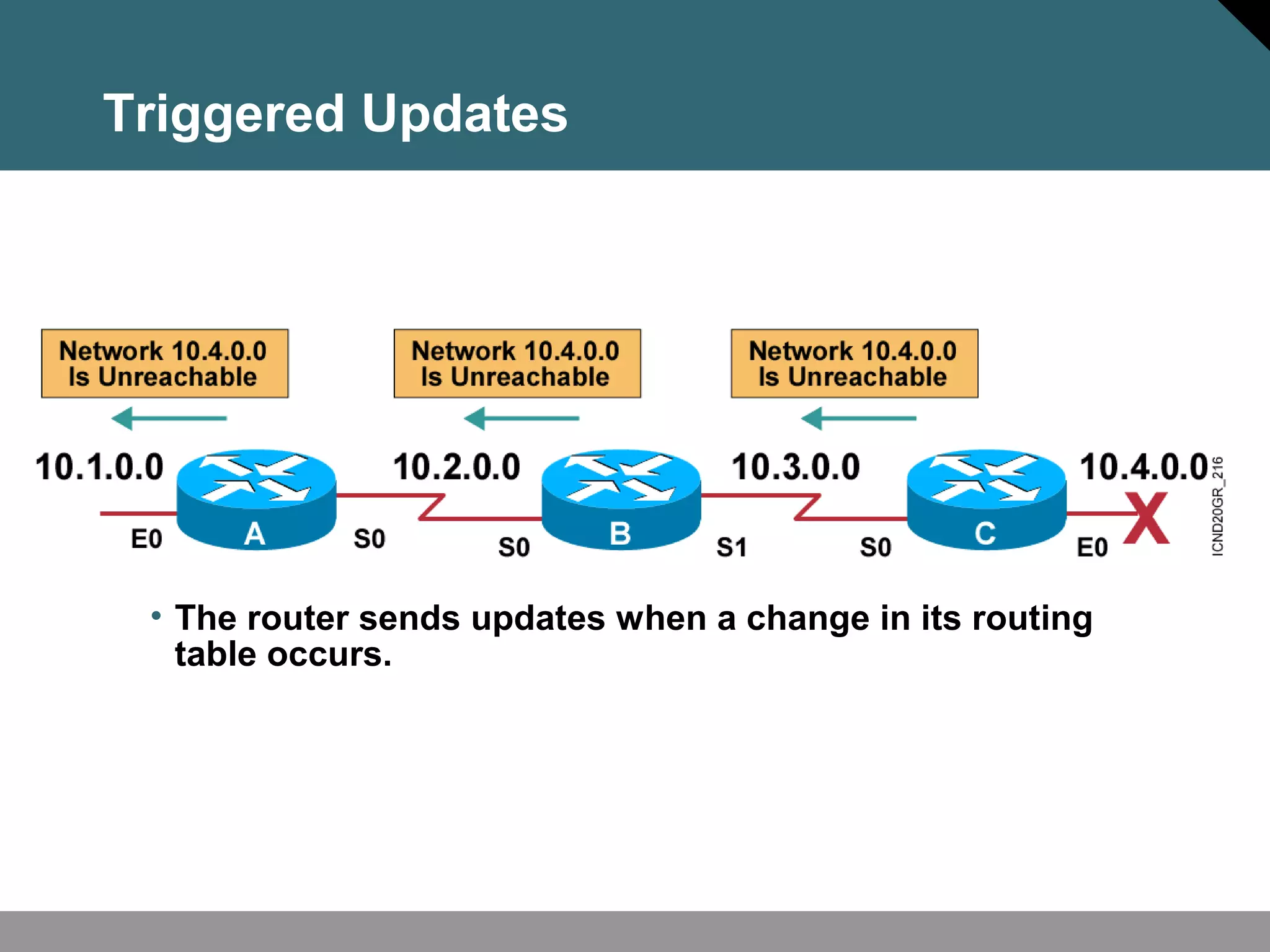
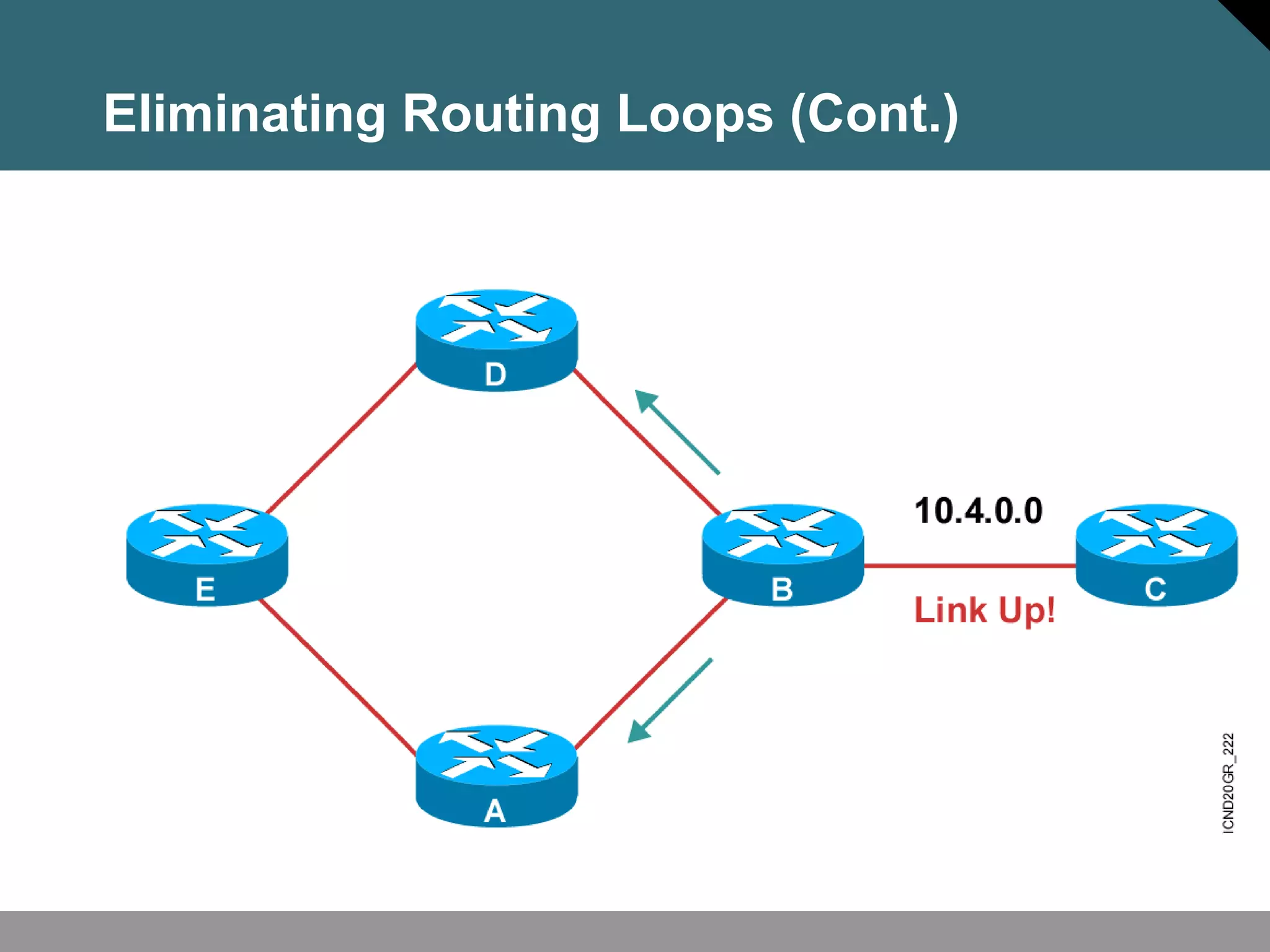
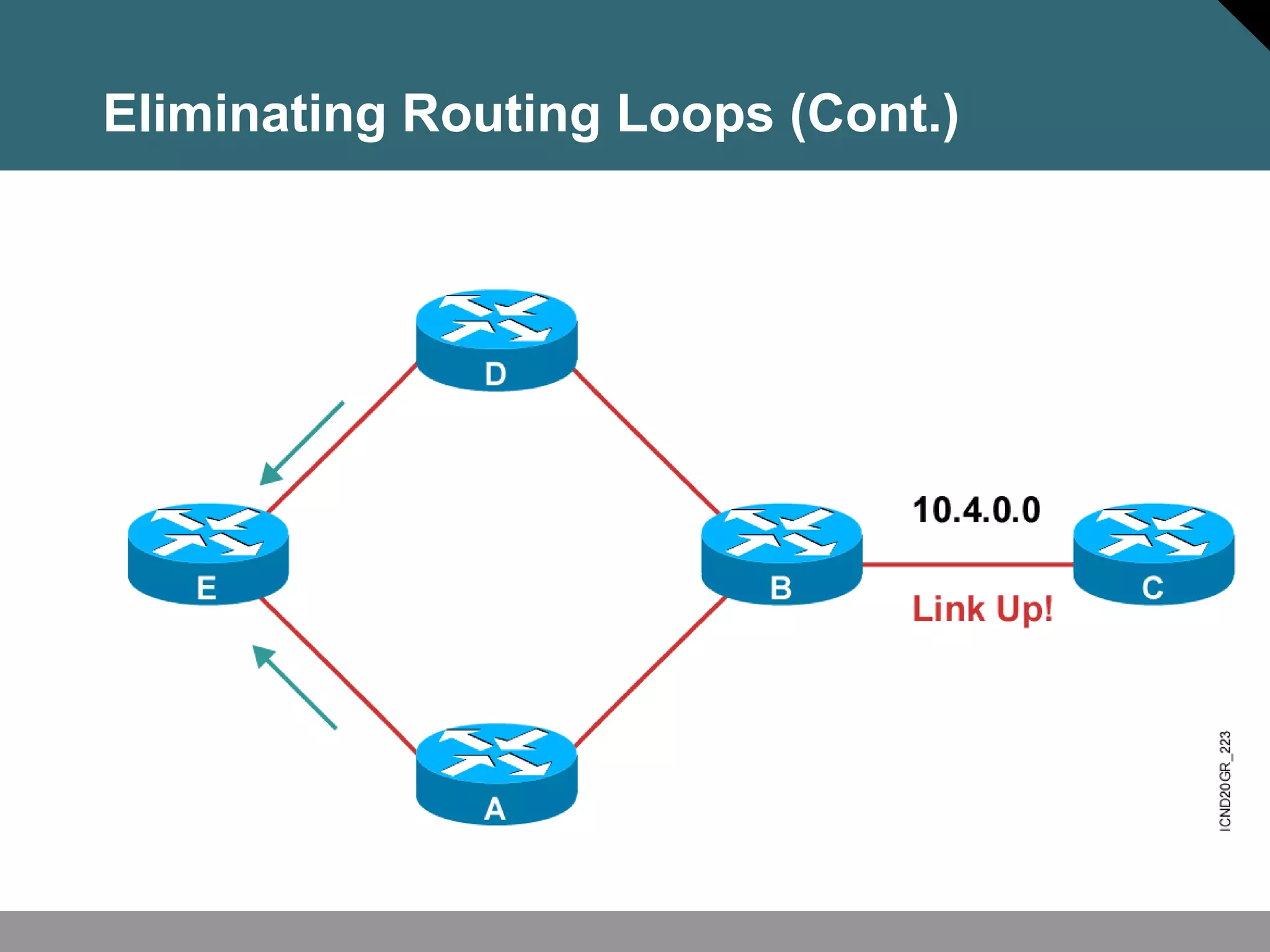
• The router sends updates when a change in its routing
table occurs.
Triggered Updates
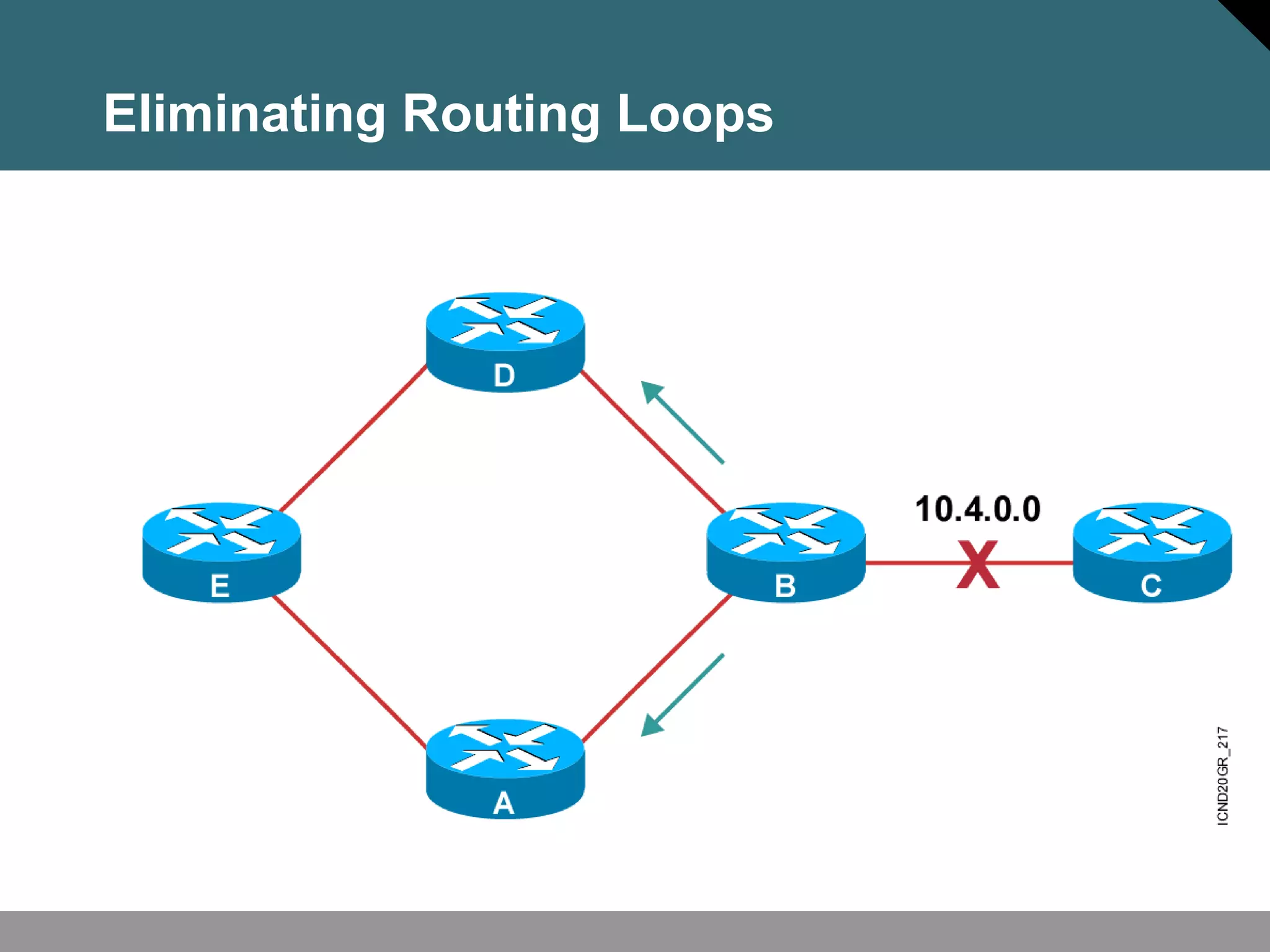
Eliminating Routing Loops
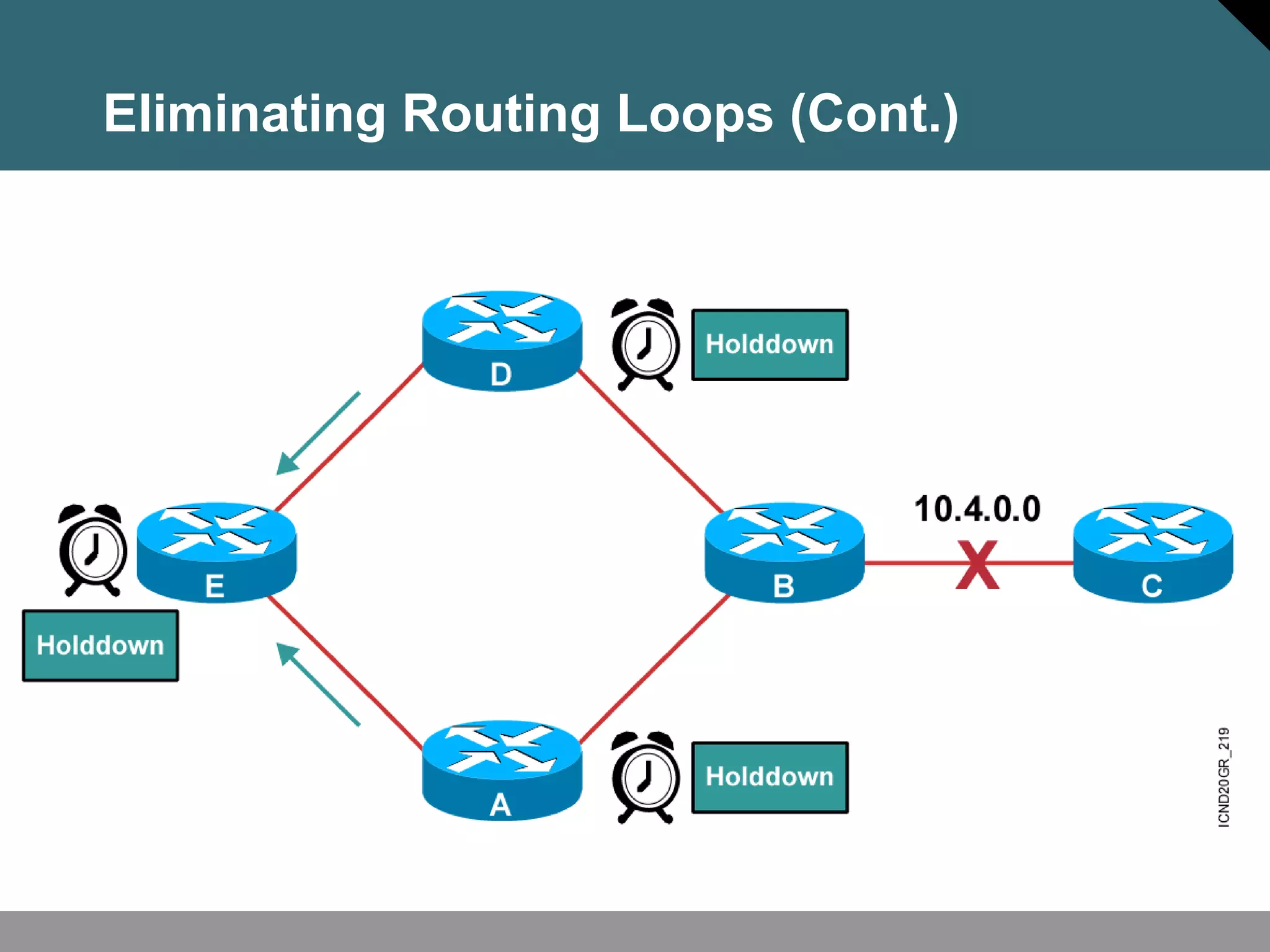
Eliminating Routing Loops (Cont.)
Summary
• Distance vector routing protocols generate periodic routing
updates addressed to directly connected routing devices.
Routers running a distance vector routing protocol send
periodic updates even if there are no changes in the network.
• When a router receives an update from a neighbor’s router, the
router compares the update with its own routing table. The
router adds the cost of reaching the neighbor’s router to the
path cost reported by the neighbor to establish a new metric.
• Routing inconsistencies occur if slow internetwork
convergence or a new configuration causes incorrect routing
entries.
Summary (Cont.)
• Distance vector protocols define infinity as some maximum
number. The routing protocol then permits the routing table
update loop until the metric exceeds its maximum allowed
value.
• There are five techniques for eliminating routing loops on
distance vector routing networks: split horizon, route
poisoning, poison reverse, holddown timers, and triggered
updates.
• All five techniques can be used together to eliminate routing
loops in area networks.

Day 8 2 distance vector routing

  • 1.
    Determining IP Routes IntroducingDistance Vector Routing
  • 2.
    Outline • Overview • DistanceVector Route Selection • Routing Information Maintenance • Routing Inconsistencies with Distance Vector Routing Protocols • Count to Infinity Prevention • Techniques to Eliminate Routing Loops • Implementation of Techniques to Eliminate Routing Loops • Summary
  • 3.
    • Routers passperiodic copies of their routing table to neighboring routers and accumulate distance vectors. Distance Vector Routing Protocols
  • 4.
    • Routers discoverthe best path to destinations from each neighbor. Sources of Information and Discovering Routes
  • 5.
  • 6.
    • Updates proceedstep by step from router to router. Maintaining Routing Information
  • 7.
    • Each nodemaintains the distance from itself to each possible destination network. Inconsistent Routing Entries
  • 8.
    • Slow convergenceproduces inconsistent routing. Inconsistent Routing Entries (Cont.)
  • 9.
    • Router Cconcludes that the best path to network 10.4.0.0 is through Router B. Inconsistent Routing Entries (Cont.)
  • 10.
    • Router Aupdates its table to reflect the new but erroneous hop count. Inconsistent Routing Entries (Cont.)
  • 11.
    • The hopcount for network 10.4.0.0 counts to infinity. Count to Infinity
  • 12.
    • A limitis set on the number of hops to prevent infinite loops. Defining a Maximum
  • 13.
    • Packets fornetwork 10.4.0.0 bounce (loop) between Routers B and C. Routing Loops
  • 14.
    • It isnever useful to send information about a route back in the direction from which the original information came. Split Horizon
  • 15.
    • Routers advertisethe distance of routes that have gone down to infinity. Route Poisoning
  • 16.
    • Poison reverseoverrides split horizon. Poison Reverse
  • 17.
    • The routerkeeps an entry for the “possibly down state” in the network, allowing time for other routers to recompute for this topology change. Holddown Timers
  • 18.
    • The routersends updates when a change in its routing table occurs. Triggered Updates
  • 19.
  • 20.
  • 21.
  • 22.
  • 23.
  • 24.
  • 25.
    Summary • Distance vectorrouting protocols generate periodic routing updates addressed to directly connected routing devices. Routers running a distance vector routing protocol send periodic updates even if there are no changes in the network. • When a router receives an update from a neighbor’s router, the router compares the update with its own routing table. The router adds the cost of reaching the neighbor’s router to the path cost reported by the neighbor to establish a new metric. • Routing inconsistencies occur if slow internetwork convergence or a new configuration causes incorrect routing entries.
  • 26.
    Summary (Cont.) • Distancevector protocols define infinity as some maximum number. The routing protocol then permits the routing table update loop until the metric exceeds its maximum allowed value. • There are five techniques for eliminating routing loops on distance vector routing networks: split horizon, route poisoning, poison reverse, holddown timers, and triggered updates. • All five techniques can be used together to eliminate routing loops in area networks.