HYDROCELE 
J INU JANET VARGHESE 
GROUP: IV 
YEAR: V 
TBILISI STATE MEDICAL UNIVERSITY
INTRODUCTION 
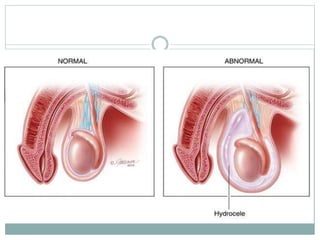
Hydrocele is an abnormal fluid collection in the 
scrotum between the visceral and parietal areas of 
the tunica vaginalis. 
in infants is usually the result of incomplete closure 
of the processus vaginalis. It may or may not be 
associated with inguinal hernia. In older boys and 
men it may be idiopathic but more likely to be 
secondary to another pathologic process in the 
scrotum or adjacent structures
CAUSES 
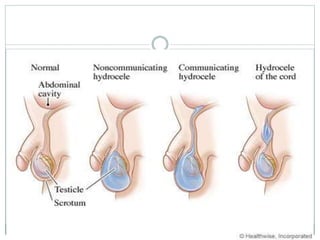
For baby boys, a hydrocele can develop in the womb. Normally, the testicles 
descend from the developing baby's abdominal cavity into the scrotum. A 
sac (processus vaginalis) accompanies each testicle, allowing fluid to 
surround the testicles. 
In most cases, each sac closes and the fluid is absorbed. However, if the 
fluid remains after the sac closes, the condition is known as a 
NONCOMMUNICATING HYDROCELE. Because the sac is closed, fluid 
can't flow back into the abdomen. Usually the fluid gets absorbed within a 
year. 
In some cases, however, the sac remains open. With this condition, known 
as COMMUNICATING HYDROCELE, the sac can change size or, if the 
scrotal sac is compressed, fluid can flow back into the abdomen. 
In older males, a hydrocele can develop as a result of inflammation or 
injury within the scrotum. Inflammation may be the result of infection of 
the small coiled tube at the back of each testicle (epididymitis) or of the 
testicle.
Risk factors 
Most hydroceles are present at birth (congenital), 
and babies who are born prematurely have a higher 
risk of having a hydrocele. 
Risk factors for developing a hydrocele later in life 
include: 
Scrotal injury 
Infection, including sexually transmitted infections
EPIDEMIOLOGY 
Sex 
Hernias are 6 times more common in boys than in girls. 
Bowel incarceration is more common in females than in 
males. 
In females, an ovary or fallopian tube incarcerates more 
frequently than bowel. Therefore, the overall incidence of 
bowel strangulation is lower in females than in males. 
Age 
The incidence of PPV decreases with age. In newborns, 
80%-94% have a PPV. Hernias are 20 times more 
common in premature infants who weigh less than 1500 
g than in babies born at term.
SIGNS & SYMPTOMS 
A bulge in the groin or scrotal enlargement is the classic 
presentation of hernia or communicating hydrocele. 
Pain is generally not a prominent feature but may occur 
if a hydrocele expands quickly; tension in the wall may 
cause milder pain. Severe pain raises concern about a 
strangulated hernia. Very rarely, a hydrocele may 
become infected and cause pain. 
Frequently, parents report an intermittent bulge. The 
bulge may reduce at night in the supine position. A 
history of vomiting, colicky abdominal pain, or 
constipation suggests bowel obstruction, which may 
occur with an incarcerated or strangulated hernia.
PHYSICAL ASSESSMENT 
The exam may reveal an enlarged scrotum that isn't tender 
to the touch. Pressure to the abdomen or scrotum may 
enlarge or shrink the fluid-filled sac, which may indicate an 
associated inguinal hernia. 
Because the fluid in a hydrocele usually is clear, your doctor 
may shine a light through the scrotum (transillumination). 
With a hydrocele, the light will outline the testicle, 
indicating that clear fluid surrounds it.
If the hydrocele is caused by inflammation, blood 
and urine tests may help determine whether there is 
an infection, such as epididymitis. 
The fluid surrounding the testicle may keep the 
testicle from being felt. In that case, ultrasound 
imaging test is done. This test can rule out a hernia, 
testicular tumor or other cause of scrotal swelling.
Laboratory Studies 
Laboratory evaluation is generally not essential to 
the evaluation of hydroceles and hernias. 
Leukocytosis may be a sign of a strangulated hernia. 
Leukocytosis with a higher percentage of neutrophils 
suggests an infectious and/or inflammatory process 
(eg, epididymo-orchitis).
Imaging Studies 
Simple hydroceles do not require radiographic 
studies. Findings from radiographic or 
ultrasonographic studies can help evaluate for an 
underlying process, such as a tumor or torsion. 
As with ultrasonography, duplex studies are not 
warranted in simple hydroceles. However, duplex 
studies may provide substantial information 
regarding testicular blood flow when a hydrocele 
may be associated with chronic torsion.
TREATMENT 
Hydroceles usually improve without any treatment within the 
first year of life. An operation is usually only advised if the 
hydrocele persists after 12-18 months of age. 
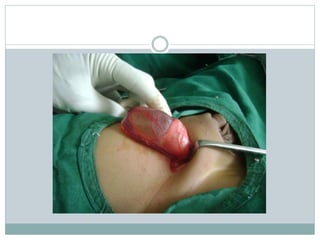
The operation for a hydrocele involves making a very small cut 
in the lower tummy (abdomen) or the scrotum. The fluid is 
then drained from around the testicle (testis). The passage 
between the abdomen and the scrotum will also be sealed off 
so the fluid cannot reform in the future. This is a minor 
operation and is performed as a day case, so does not usually 
involve an overnight stay in the hospital. 
There are no long-term effects of having a hydrocele. Having a 
hydrocele does not affect the testicles (testes) or a boy's 
fertility in the future.
Potential Complications from Surgery 
Complications from surgery are very rare, but are 
more likely if the child has previous groin surgery. 
Possible risks include infection, bleeding recurrence, 
pulling up of the testicle, and injury to the testicle or 
its ducts.

Hydrocele

  • 1.
    HYDROCELE J INUJANET VARGHESE GROUP: IV YEAR: V TBILISI STATE MEDICAL UNIVERSITY
  • 2.
    INTRODUCTION Hydrocele isan abnormal fluid collection in the scrotum between the visceral and parietal areas of the tunica vaginalis. in infants is usually the result of incomplete closure of the processus vaginalis. It may or may not be associated with inguinal hernia. In older boys and men it may be idiopathic but more likely to be secondary to another pathologic process in the scrotum or adjacent structures
  • 5.
    CAUSES For babyboys, a hydrocele can develop in the womb. Normally, the testicles descend from the developing baby's abdominal cavity into the scrotum. A sac (processus vaginalis) accompanies each testicle, allowing fluid to surround the testicles. In most cases, each sac closes and the fluid is absorbed. However, if the fluid remains after the sac closes, the condition is known as a NONCOMMUNICATING HYDROCELE. Because the sac is closed, fluid can't flow back into the abdomen. Usually the fluid gets absorbed within a year. In some cases, however, the sac remains open. With this condition, known as COMMUNICATING HYDROCELE, the sac can change size or, if the scrotal sac is compressed, fluid can flow back into the abdomen. In older males, a hydrocele can develop as a result of inflammation or injury within the scrotum. Inflammation may be the result of infection of the small coiled tube at the back of each testicle (epididymitis) or of the testicle.
  • 7.
    Risk factors Mosthydroceles are present at birth (congenital), and babies who are born prematurely have a higher risk of having a hydrocele. Risk factors for developing a hydrocele later in life include: Scrotal injury Infection, including sexually transmitted infections
  • 8.
    EPIDEMIOLOGY Sex Herniasare 6 times more common in boys than in girls. Bowel incarceration is more common in females than in males. In females, an ovary or fallopian tube incarcerates more frequently than bowel. Therefore, the overall incidence of bowel strangulation is lower in females than in males. Age The incidence of PPV decreases with age. In newborns, 80%-94% have a PPV. Hernias are 20 times more common in premature infants who weigh less than 1500 g than in babies born at term.
  • 9.
    SIGNS & SYMPTOMS A bulge in the groin or scrotal enlargement is the classic presentation of hernia or communicating hydrocele. Pain is generally not a prominent feature but may occur if a hydrocele expands quickly; tension in the wall may cause milder pain. Severe pain raises concern about a strangulated hernia. Very rarely, a hydrocele may become infected and cause pain. Frequently, parents report an intermittent bulge. The bulge may reduce at night in the supine position. A history of vomiting, colicky abdominal pain, or constipation suggests bowel obstruction, which may occur with an incarcerated or strangulated hernia.
  • 10.
    PHYSICAL ASSESSMENT Theexam may reveal an enlarged scrotum that isn't tender to the touch. Pressure to the abdomen or scrotum may enlarge or shrink the fluid-filled sac, which may indicate an associated inguinal hernia. Because the fluid in a hydrocele usually is clear, your doctor may shine a light through the scrotum (transillumination). With a hydrocele, the light will outline the testicle, indicating that clear fluid surrounds it.
  • 11.
    If the hydroceleis caused by inflammation, blood and urine tests may help determine whether there is an infection, such as epididymitis. The fluid surrounding the testicle may keep the testicle from being felt. In that case, ultrasound imaging test is done. This test can rule out a hernia, testicular tumor or other cause of scrotal swelling.
  • 12.
    Laboratory Studies Laboratoryevaluation is generally not essential to the evaluation of hydroceles and hernias. Leukocytosis may be a sign of a strangulated hernia. Leukocytosis with a higher percentage of neutrophils suggests an infectious and/or inflammatory process (eg, epididymo-orchitis).
  • 13.
    Imaging Studies Simplehydroceles do not require radiographic studies. Findings from radiographic or ultrasonographic studies can help evaluate for an underlying process, such as a tumor or torsion. As with ultrasonography, duplex studies are not warranted in simple hydroceles. However, duplex studies may provide substantial information regarding testicular blood flow when a hydrocele may be associated with chronic torsion.
  • 14.
    TREATMENT Hydroceles usuallyimprove without any treatment within the first year of life. An operation is usually only advised if the hydrocele persists after 12-18 months of age. The operation for a hydrocele involves making a very small cut in the lower tummy (abdomen) or the scrotum. The fluid is then drained from around the testicle (testis). The passage between the abdomen and the scrotum will also be sealed off so the fluid cannot reform in the future. This is a minor operation and is performed as a day case, so does not usually involve an overnight stay in the hospital. There are no long-term effects of having a hydrocele. Having a hydrocele does not affect the testicles (testes) or a boy's fertility in the future.
  • 15.
    Potential Complications fromSurgery Complications from surgery are very rare, but are more likely if the child has previous groin surgery. Possible risks include infection, bleeding recurrence, pulling up of the testicle, and injury to the testicle or its ducts.