OPERATIVE STEPS IN
OPEN APPENDICECTOMY
DR.KAUSHIK KUMAR.E
Department of General Surgery
Stanley Medical College
Hospital,Chennai
SURGICAL ANATOMY
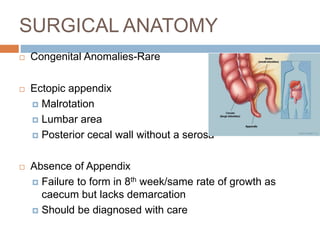
 Congenital Anomalies-Rare
 Ectopic appendix
 Malrotation
 Lumbar area
 Posterior cecal wall without a serosa
 Absence of Appendix
 Failure to form in 8th week/same rate of growth as
caecum but lacks demarcation
 Should be diagnosed with care
 Left sided appendix
 Situs inversus
 Non-rotation
 “Wandering cecum”
 Excessively long appendix
If appendix & cecum are not visualized in the
RIF,search must be made in the right
paravertebral gutter and subhepatic space
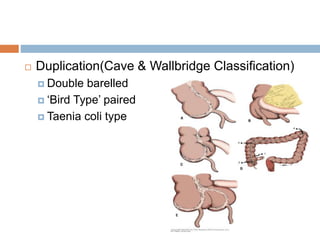
 Duplication(Cave & Wallbridge Classification)
 Double barelled
 ‘Bird Type’ paired
 Taenia coli type
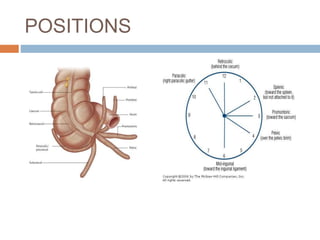
POSITIONS
 Retrocecal/retrocolic
 Pelvic
 Subcecal(Down and right)
 Ileocecal(Upward & left anterior to ileum)
 Ileocecal(Upward & left posterior to ileum)
POSITIONS
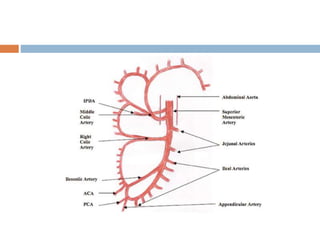
VASCULAR SUPPLY
 Appendicular artery contained in the mesentry
which is an extension of the peritoneal fold
from the terminal ileum
 Ileo-colic artery ileal branch appendicular
artery
 Variations occur in the origin
 Veins follow the arteries
INDICATIONS
 Acute Appendicitis
 Perforated Appendicitis
 Appendicular mass(selective cases)
 Appendicular abscess
 Chronic appendicitis
PRE-OPERATIVE
PREPARATION
 Restoration of fluid balance
 Well hydrated manifested by adequate urine
output
 Antipyeretics if GA contemplated
 Antibiotics
 Nasogastric tube
 Anaesthesia
 GA
 RA
 LA
 Position
 Supine
 Skin preparation
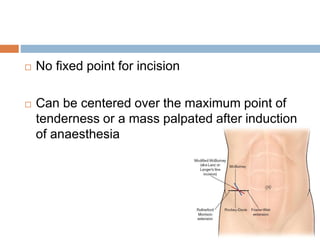
INCISIONS
 McBurney’s
 Right angle to a line joining ASIS and Umbilicus at 2/3rd the
distance from the umbilicus,1/3rd above and 2/3rd below the
line
 Avoid too medial/too lateral
 Lanz
 Transverse skin crease 2cm below umbilicus centered over
the mid-clavicular,mid-inguinal line
 Midline
 Rockey-Davis
 Rutherford Morrison extension
 Fowler-Weir extension
 No fixed point for incision
 Can be centered over the maximum point of
tenderness or a mass palpated after induction
of anaesthesia
Steps
 Skin incision is deepened upto External oblique
Aponeurosis after opening the subcutaneous tissue and
Fascia Camper & Scarpa
 EOA split along the line of its fibres by sharp dissection
or cautery from lateral border of rectus to the flanks
 EOA held aside with retractors and Internal oblique and
Transversus abdominis split along its line of fibres
 Transversalis fascia divided and peritoneum picked up
by the surgeon first between hemostats followed by the
assistant
 Operators drops the original bite and picks up close to
the assistant and compresses the peritoneum to free the
underlying intestine
 An important maneuver to safeguard the underlying
bowel and must be always done before opening the
peritoneum
 Peritoneum clamped to moist sponges surrounding the
wound
 Retractors inserted into the peritoneum and other
instruments taken off
 Identification of cecum by seeing the taenia coli
 Cecum is held in a moist gauze and delivered into the
wound
 Appendix base is identified by the convergence of all 3
taenia
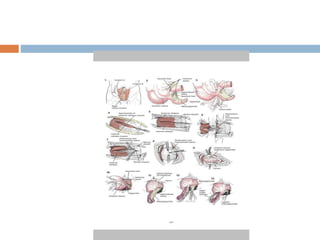
 Filmy adhesions over the appendix can be seperated by
blunt dissection whereas thicker adhesions require
division under vision
 Babcock clamps are applied over the base and the tip
just to encircle the appendix but not crushing the lumen
 Appendix is removed in ante-grade fashion from tip to
the base
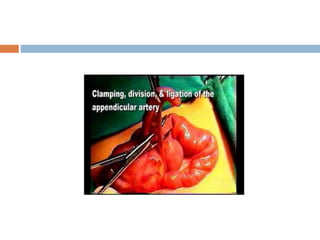
 The mesentery of the appendix is divided between
clamps and the vessels are ligated/transfixed/cauterized
and appendix skeletonised upto the base
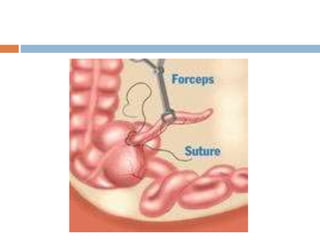
 Appendix is crushed using right angled artery
forceps/hemostats near the base
 The forceps is moved 1cm towards the tip of the
appendix
 Appendix is ligated (doubly/singly)proximal to the first
crush with heavy absorbable suture which is held in a
clamp and removed close to the second clamp or using
a stapler
 Stump must not be more than 3mm
 Exposed mucosa may be cauterized to minimize
theoritical risk of mucocoele
 Stump inversion by purse string suture-not advised
nowadays
 Hemostasis to be checked and area irrigated with warm
 After appendicectomy,a patch of omentum can be kept
over the site
 Drainage may be advised in cases of localised
abscess,perforation near base,secure closure of cecum
is in doubt or hemostasis is poor.
 Soft and smooth silastic sump one to be preferred
 If appendix is not obviously involved in inflammation,
thorough exploration for other causes to be looked for
 If the tip is not visualised or adherent,retrogade
appendicectomy can be done by releasing the base first
 If the inflammation extends to the base and cecum or
ileum,a ileocecectomy may be contemplated with
primary anastamosis
CLOSURE
 Peritoneum and the transversalis fascia are closed with
continuous absorbable sutures
 Internal oblique muscle closed with
interrupted/continuous absorbable sutures
 External oblique closed with continuous absorbable
sutures
 Scarpa’s fascia is closed with interrupted sutures
 Skin closed with interrupted/subcuticular sutures
 Sterile dressings are applied
References
 Skandalakis Surgical Anatomy
 Maingot’s Abdominal Operations
 Bailey & Love’s Short Practice of Surgery
 Zollinger’s Atlas of Surgical Operations
 Fischer’s Mastery of Surgery
Thank you

Operative steps in open appendicectomy

  • 1.
    OPERATIVE STEPS IN OPENAPPENDICECTOMY DR.KAUSHIK KUMAR.E Department of General Surgery Stanley Medical College Hospital,Chennai
  • 2.
    SURGICAL ANATOMY  CongenitalAnomalies-Rare  Ectopic appendix  Malrotation  Lumbar area  Posterior cecal wall without a serosa  Absence of Appendix  Failure to form in 8th week/same rate of growth as caecum but lacks demarcation  Should be diagnosed with care
  • 3.
     Left sidedappendix  Situs inversus  Non-rotation  “Wandering cecum”  Excessively long appendix If appendix & cecum are not visualized in the RIF,search must be made in the right paravertebral gutter and subhepatic space
  • 4.
     Duplication(Cave &Wallbridge Classification)  Double barelled  ‘Bird Type’ paired  Taenia coli type
  • 5.
    POSITIONS  Retrocecal/retrocolic  Pelvic Subcecal(Down and right)  Ileocecal(Upward & left anterior to ileum)  Ileocecal(Upward & left posterior to ileum)
  • 6.
  • 7.
    VASCULAR SUPPLY  Appendicularartery contained in the mesentry which is an extension of the peritoneal fold from the terminal ileum  Ileo-colic artery ileal branch appendicular artery  Variations occur in the origin  Veins follow the arteries
  • 9.
    INDICATIONS  Acute Appendicitis Perforated Appendicitis  Appendicular mass(selective cases)  Appendicular abscess  Chronic appendicitis
  • 10.
    PRE-OPERATIVE PREPARATION  Restoration offluid balance  Well hydrated manifested by adequate urine output  Antipyeretics if GA contemplated  Antibiotics  Nasogastric tube
  • 11.
     Anaesthesia  GA RA  LA  Position  Supine  Skin preparation
  • 12.
    INCISIONS  McBurney’s  Rightangle to a line joining ASIS and Umbilicus at 2/3rd the distance from the umbilicus,1/3rd above and 2/3rd below the line  Avoid too medial/too lateral  Lanz  Transverse skin crease 2cm below umbilicus centered over the mid-clavicular,mid-inguinal line  Midline  Rockey-Davis  Rutherford Morrison extension  Fowler-Weir extension
  • 13.
     No fixedpoint for incision  Can be centered over the maximum point of tenderness or a mass palpated after induction of anaesthesia
  • 14.
    Steps  Skin incisionis deepened upto External oblique Aponeurosis after opening the subcutaneous tissue and Fascia Camper & Scarpa  EOA split along the line of its fibres by sharp dissection or cautery from lateral border of rectus to the flanks  EOA held aside with retractors and Internal oblique and Transversus abdominis split along its line of fibres  Transversalis fascia divided and peritoneum picked up by the surgeon first between hemostats followed by the assistant  Operators drops the original bite and picks up close to the assistant and compresses the peritoneum to free the underlying intestine
  • 15.
     An importantmaneuver to safeguard the underlying bowel and must be always done before opening the peritoneum  Peritoneum clamped to moist sponges surrounding the wound  Retractors inserted into the peritoneum and other instruments taken off  Identification of cecum by seeing the taenia coli  Cecum is held in a moist gauze and delivered into the wound  Appendix base is identified by the convergence of all 3 taenia
  • 16.
     Filmy adhesionsover the appendix can be seperated by blunt dissection whereas thicker adhesions require division under vision  Babcock clamps are applied over the base and the tip just to encircle the appendix but not crushing the lumen  Appendix is removed in ante-grade fashion from tip to the base  The mesentery of the appendix is divided between clamps and the vessels are ligated/transfixed/cauterized and appendix skeletonised upto the base
  • 18.
     Appendix iscrushed using right angled artery forceps/hemostats near the base  The forceps is moved 1cm towards the tip of the appendix  Appendix is ligated (doubly/singly)proximal to the first crush with heavy absorbable suture which is held in a clamp and removed close to the second clamp or using a stapler  Stump must not be more than 3mm  Exposed mucosa may be cauterized to minimize theoritical risk of mucocoele  Stump inversion by purse string suture-not advised nowadays  Hemostasis to be checked and area irrigated with warm
  • 22.
     After appendicectomy,apatch of omentum can be kept over the site  Drainage may be advised in cases of localised abscess,perforation near base,secure closure of cecum is in doubt or hemostasis is poor.  Soft and smooth silastic sump one to be preferred  If appendix is not obviously involved in inflammation, thorough exploration for other causes to be looked for  If the tip is not visualised or adherent,retrogade appendicectomy can be done by releasing the base first
  • 23.
     If theinflammation extends to the base and cecum or ileum,a ileocecectomy may be contemplated with primary anastamosis
  • 24.
    CLOSURE  Peritoneum andthe transversalis fascia are closed with continuous absorbable sutures  Internal oblique muscle closed with interrupted/continuous absorbable sutures  External oblique closed with continuous absorbable sutures  Scarpa’s fascia is closed with interrupted sutures  Skin closed with interrupted/subcuticular sutures  Sterile dressings are applied
  • 25.
    References  Skandalakis SurgicalAnatomy  Maingot’s Abdominal Operations  Bailey & Love’s Short Practice of Surgery  Zollinger’s Atlas of Surgical Operations  Fischer’s Mastery of Surgery
  • 26.