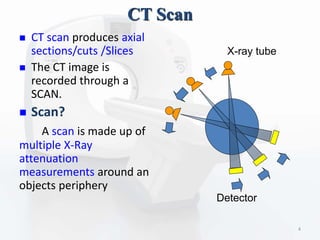
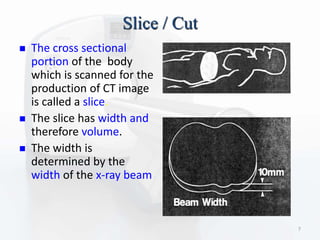
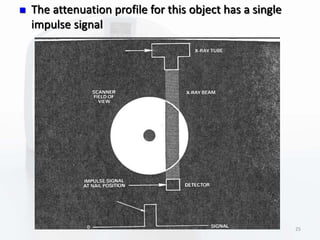
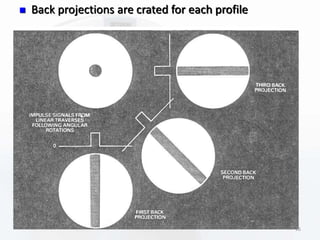
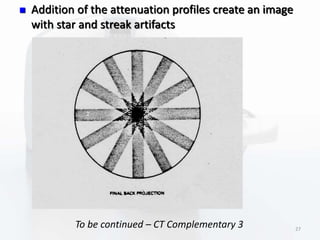
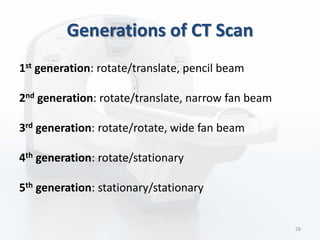
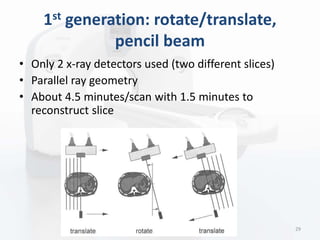
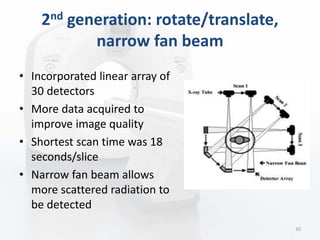
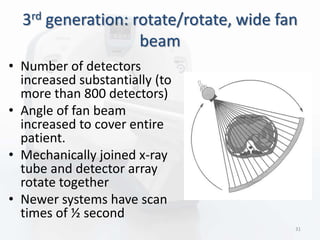
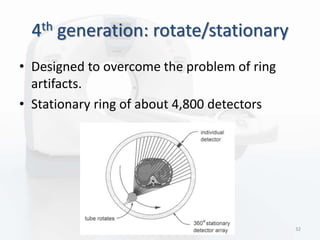
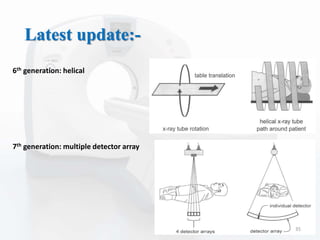
Computed Tomography (CT) is a medical imaging method that uses tomography to generate 3D images of the inside of an object from a series of 2D X-ray images taken around a single axis of rotation. Sir Godfrey Hounsfield invented the first commercially viable CT scanner in the 1970s, and shared the 1979 Nobel Prize in Medicine with Allan Cormack for their independent inventions. Modern CT scanners use X-ray tubes and multiple detector arrays that rotate around the patient to produce cross-sectional images or "slices" with very fine detail and have largely replaced older generation scanners. CT scanning is a quick and painless procedure but does expose patients to ionizing radiation.