
![Regulation of HMP shunt
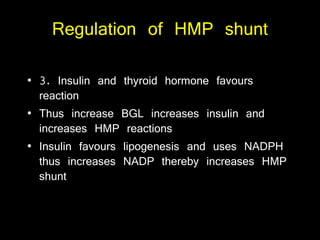
• Occurs in 3 ways:
• 1. Ratio of [NADP]/[NADPH] ,
• G6PDH is rate limiting enzyme , it require
NADP hence increase level of NADPH
decreases reaction Insulin activates G6PDH
enzyme
• 2. High carbohydrate increases availability of
glucose and hence increases HMP shunt
and help lipogenesis
• Fasting decreases this pathway](https://image.slidesharecdn.com/class6hmppathway-150423001551-conversion-gate02/85/Class-6-hmp-pathway-19-320.jpg)
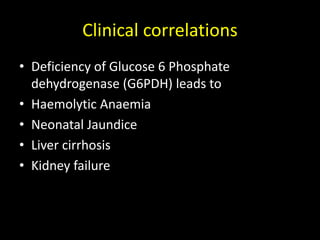
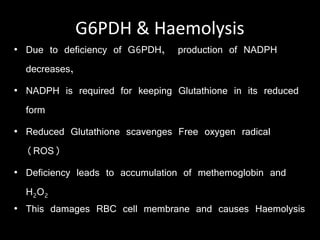
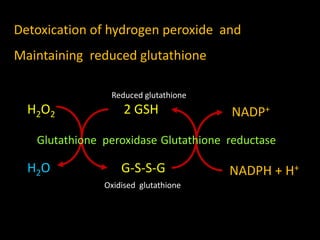
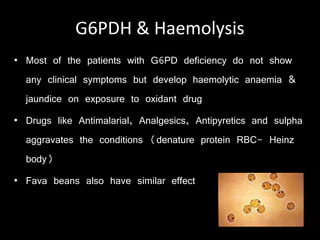
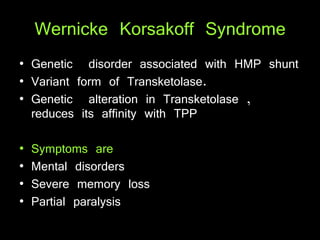
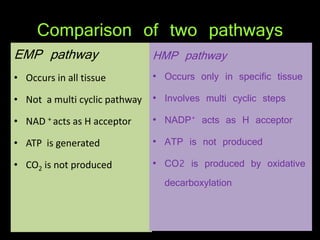

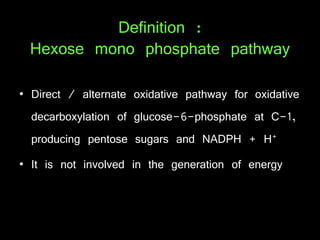
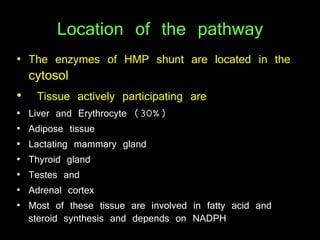
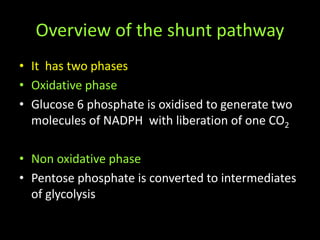
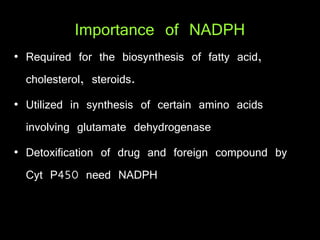
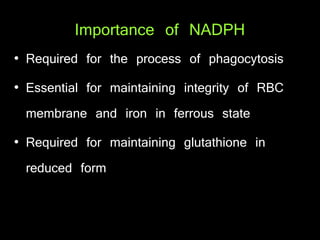
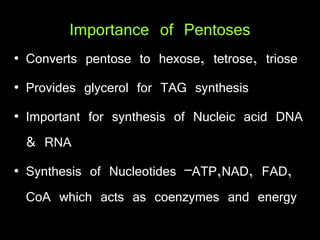
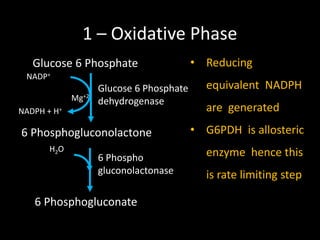
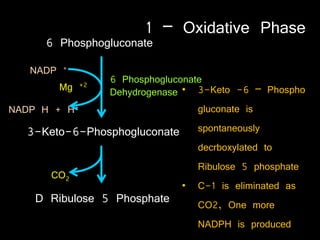
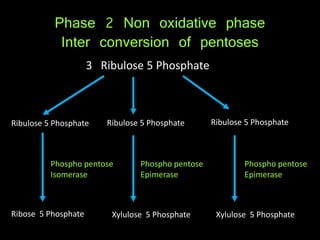
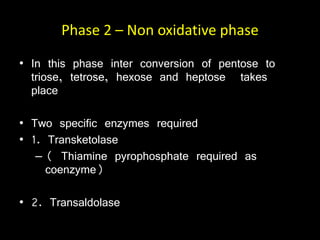
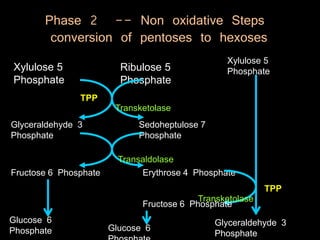
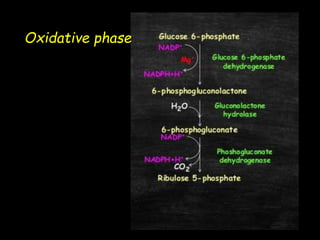
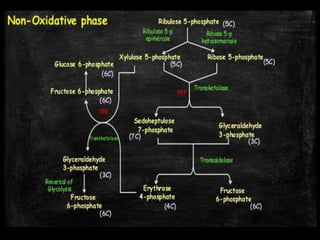
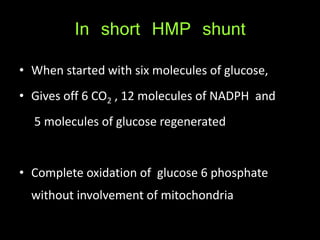
The pentose phosphate pathway, also known as the hexose monophosphate shunt, generates NADPH and pentoses through oxidative and non-oxidative phases. It occurs mainly in the liver, erythrocytes, and adipose tissue. The oxidative phase produces NADPH and pentoses, while the non-oxidative phase interconverts the pentoses. The pathway provides reducing power for biosynthesis and maintains glutathione levels, protecting red blood cells from oxidative damage. Deficiencies in this pathway can cause hemolytic anemia and other conditions.


![PERI-PROSTHETIC FRACTURE NAIL-PLATE CONSTRUCT [NPC].pptx](https://cdn.slidesharecdn.com/ss_thumbnails/drarunkumardrmohamedashrafperiprostheticfrasturenail-plateconstructnpc-260209164459-7e9d15a1-thumbnail.jpg?width=640&height=640&fit=bounds)


![ONFH[AVN HIP] -TRIPLE REGIME -A NOVAL SURGICAL CONCEPT .pptx](https://cdn.slidesharecdn.com/ss_thumbnails/onfhavnhip2026koaconcalicutdrgokuldevdrmashraf-260210064517-213ec005-thumbnail.jpg?width=640&height=640&fit=bounds)

