Gluconeogenesis
Dr. Waheeda Nargis
Associate Professor
Dept. of Biochemistry, UAMCH
Gluconeogenesis
The process of synthesis of glucose or
glycogen from non-carbohydrate sources is
called Gluconeogenesis.
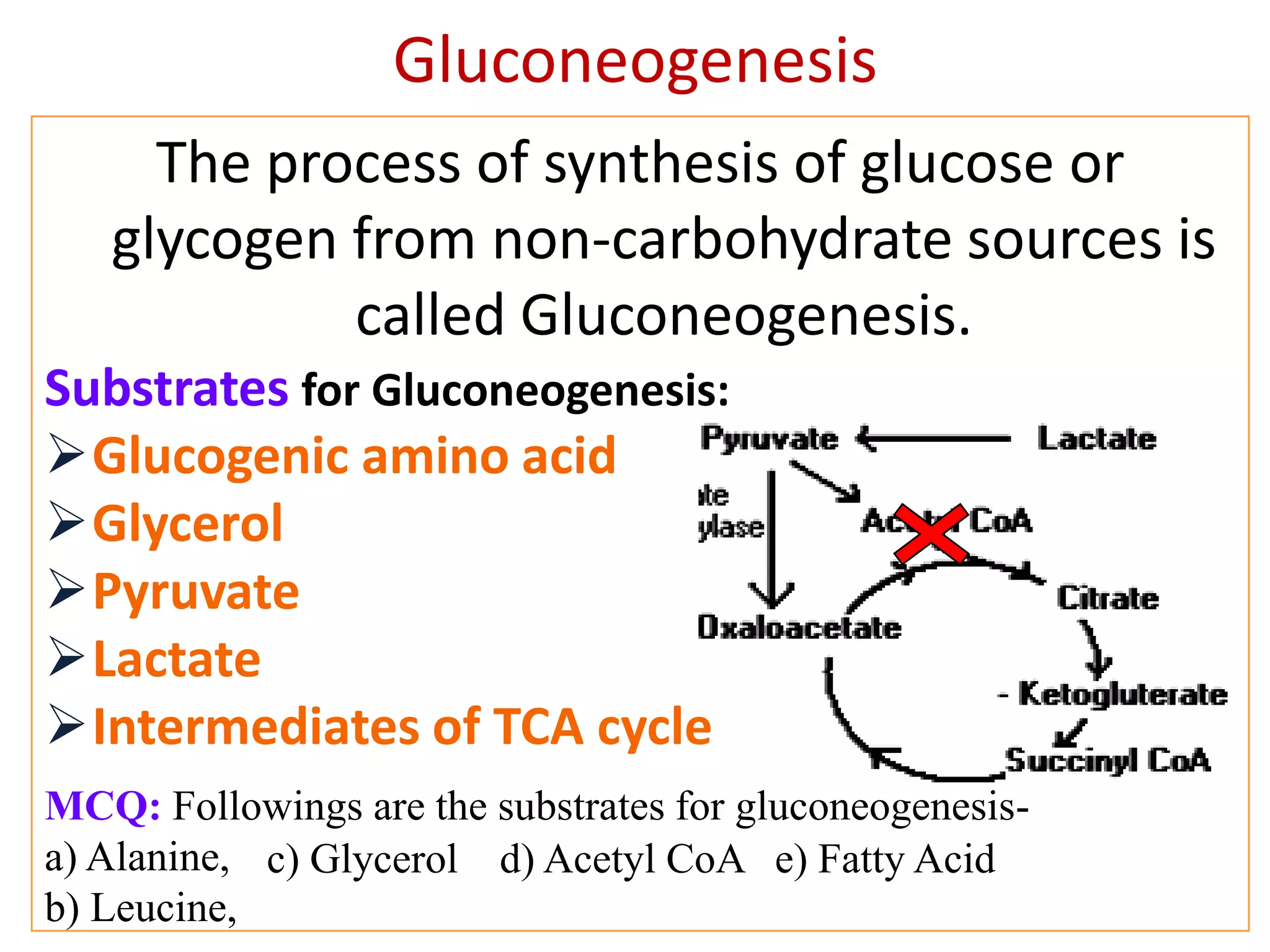
Substrates for Gluconeogenesis:
Glucogenic amino acid
Glycerol
Pyruvate
Lactate
Intermediates of TCA cycle
MCQ: Followings are the substrates for gluconeogenesis-
a) Alanine,
b) Leucine,
c) Glycerol d) Acetyl CoA e) Fatty Acid
Features of Gluconeogenesis
Site: Liver (90%) , Kidney(10%),Intestinal epithelial cells (negligible)
On overnight fasting  90% site is Liver
& the rest in Kidney.
On prolonged fasting  60% site is Kidney
& the rest in liver
Compartment: Cytoplasm (mitochondria also participates)
Nature: Anabolic; 6 ATP needed for synthesis of one glucose from
2 pyruvate or lactate.
Pathways involved in gluconeogenesis
 Reverse glycolysis,
 TCA cycle,
 Some special reactions like:
 Cori cycle,
 Glucose alanine cycle.
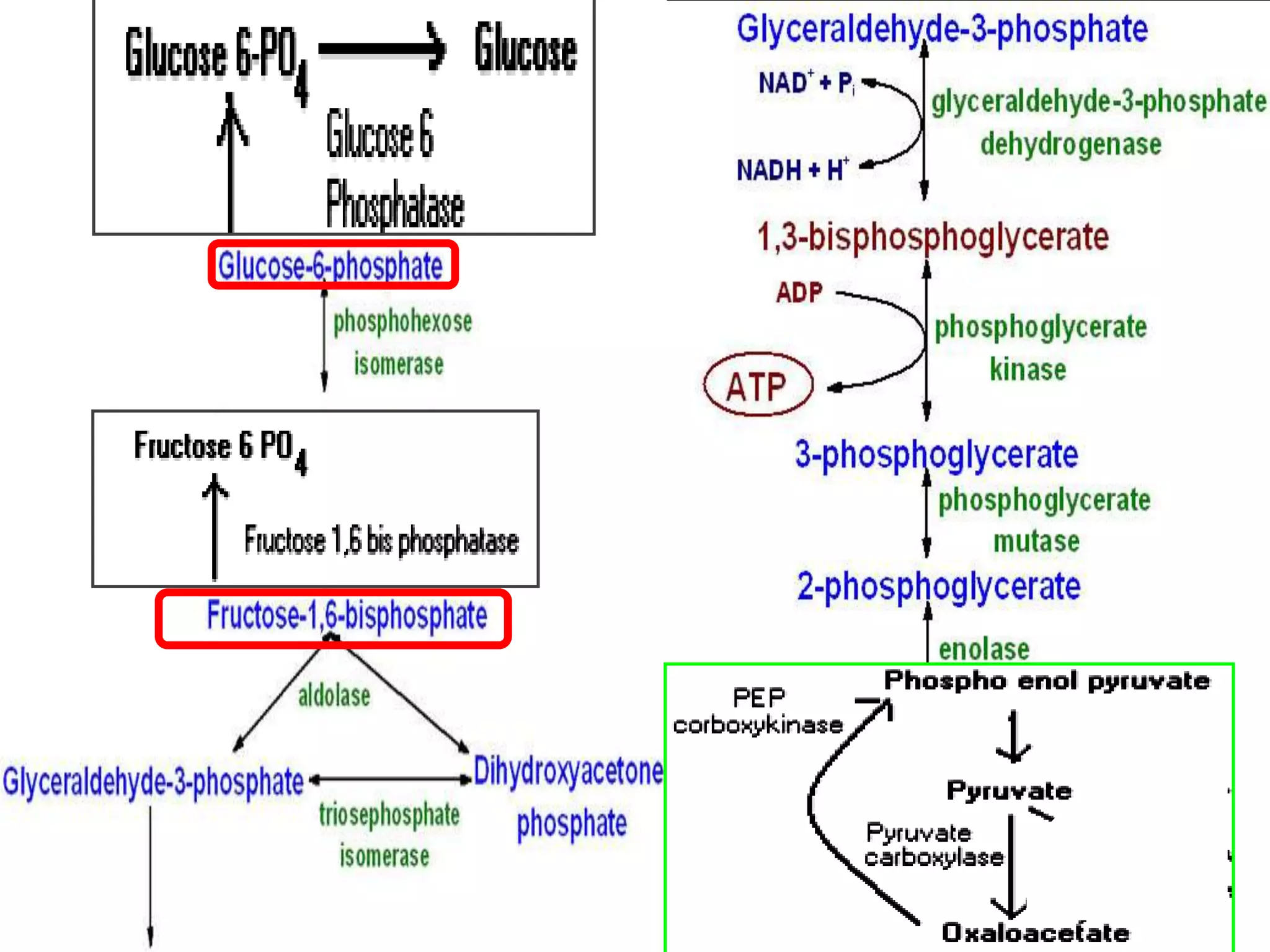
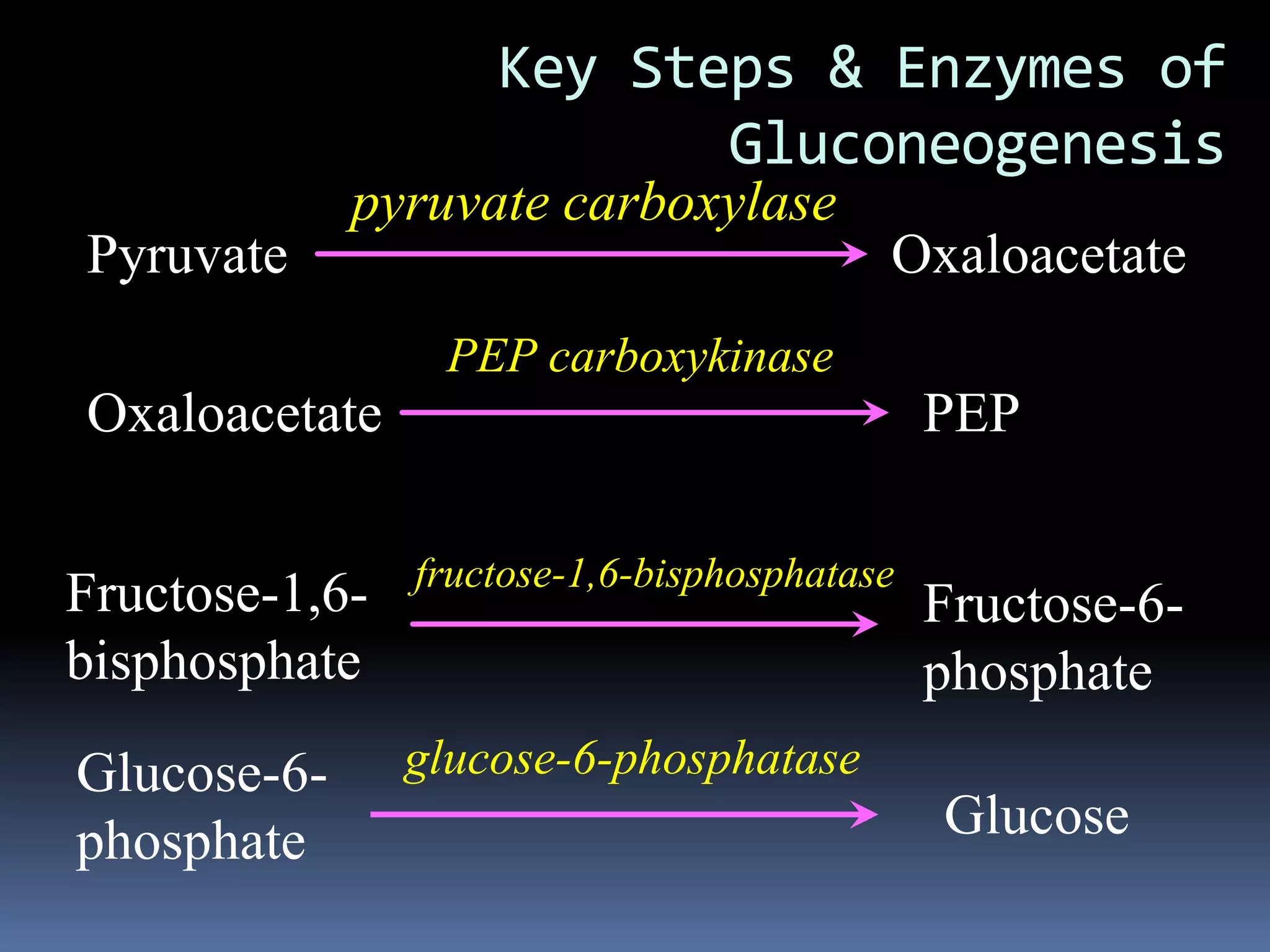
Key Steps & Enzymes of
Gluconeogenesis
Fructose-1,6-
bisphosphate
Fructose-6-
phosphate
Glucose
Glucose-6-
phosphate
Pyruvate Oxaloacetate
PEPOxaloacetate
pyruvate carboxylase
PEP carboxykinase
fructose-1,6-bisphosphatase
glucose-6-phosphatase
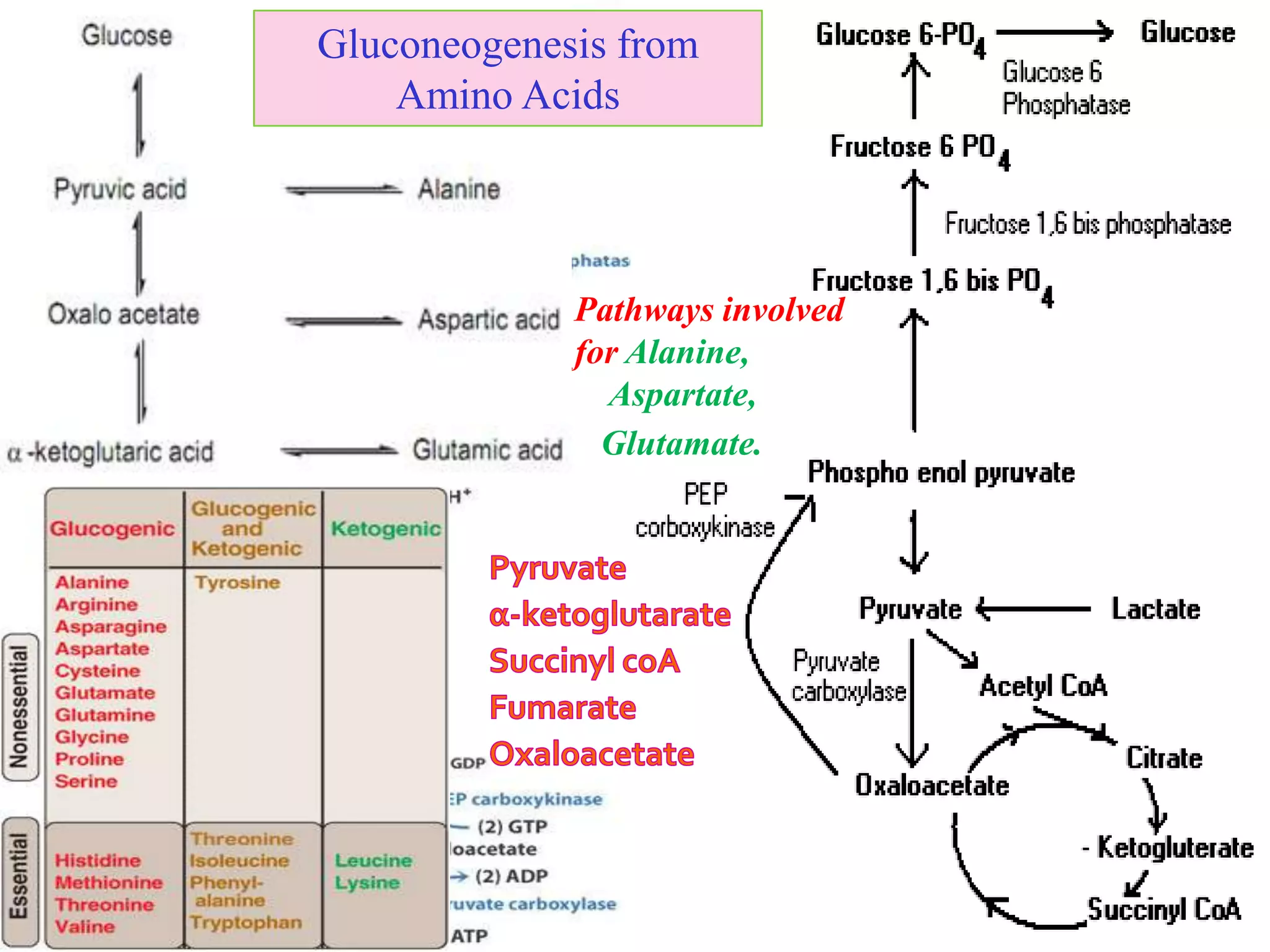
Pathways involved
for Alanine,
Aspartate,
Glutamate.
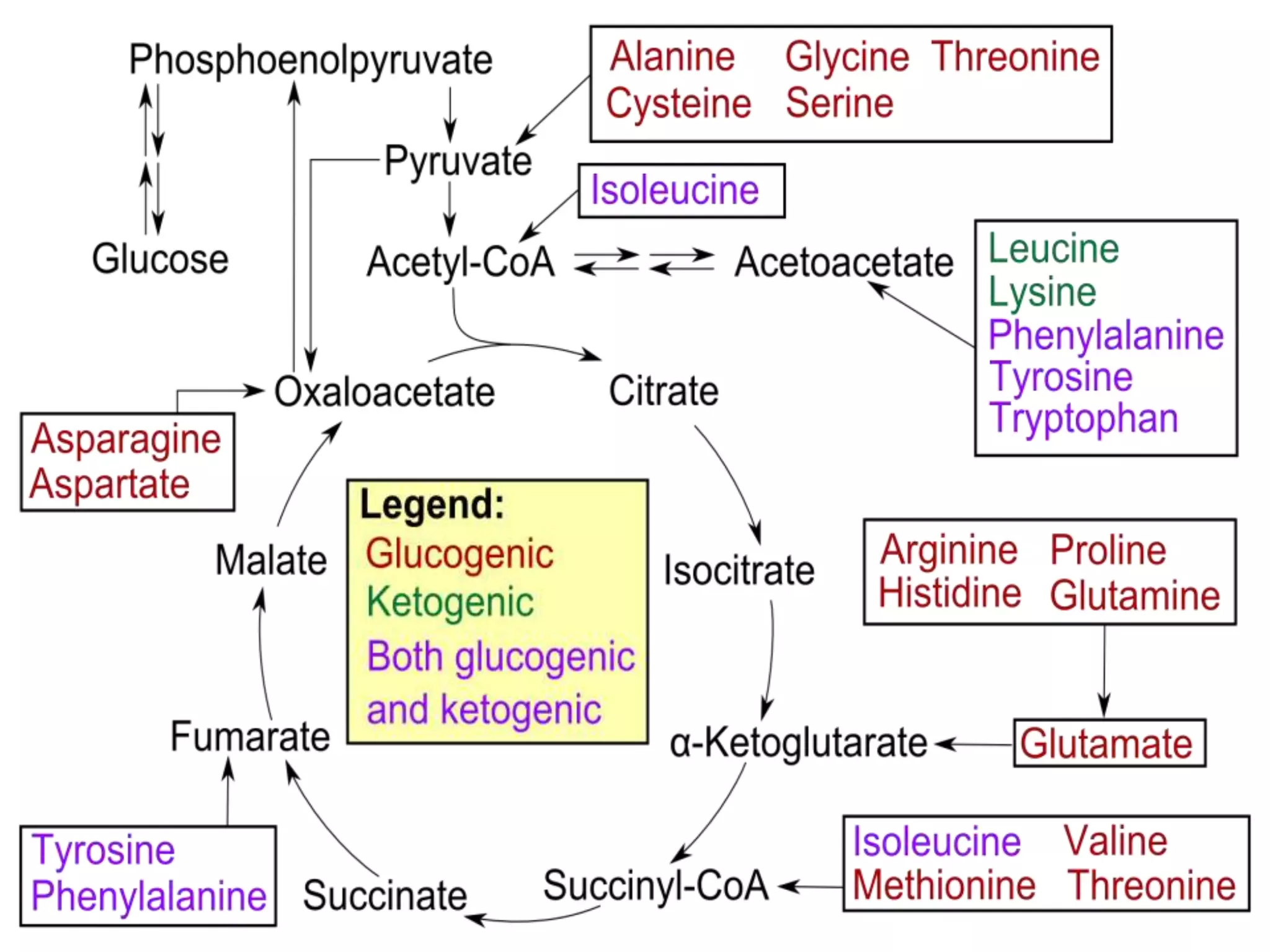
Gluconeogenesis from
Amino Acids
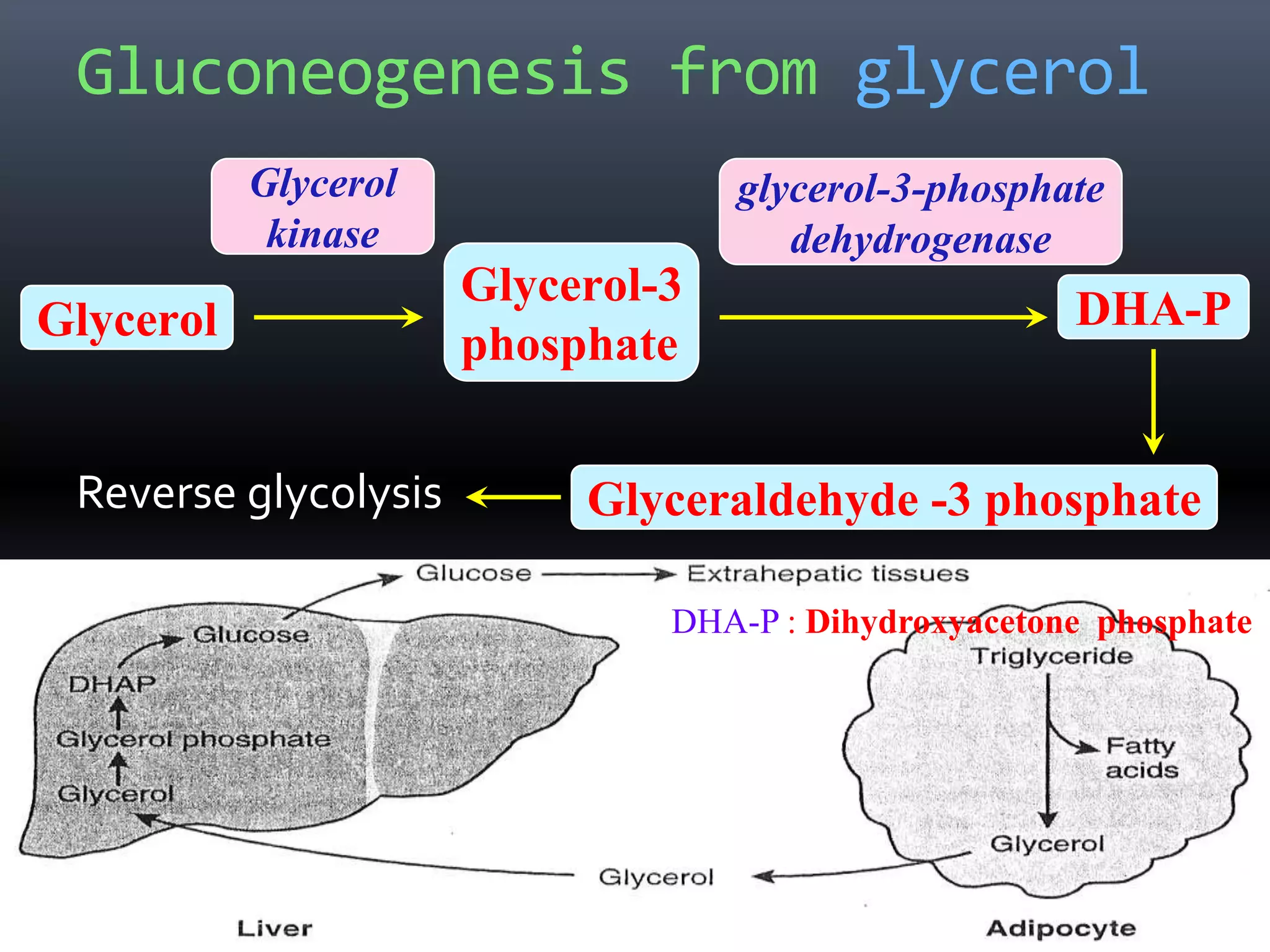
Gluconeogenesis from glycerol
Glycerol
Glycerol
kinase
Glycerol-3
phosphate
DHA-P
glycerol-3-phosphate
dehydrogenase
The initial phosphorylation of glycerol takes place at
liver rather than adipocytes since they lack the enzyme
glycerol kinase. (The shortest pathway)
Glyceraldehyde -3 phosphateReverse glycolysis
DHA-P : Dihydroxyacetone phosphate
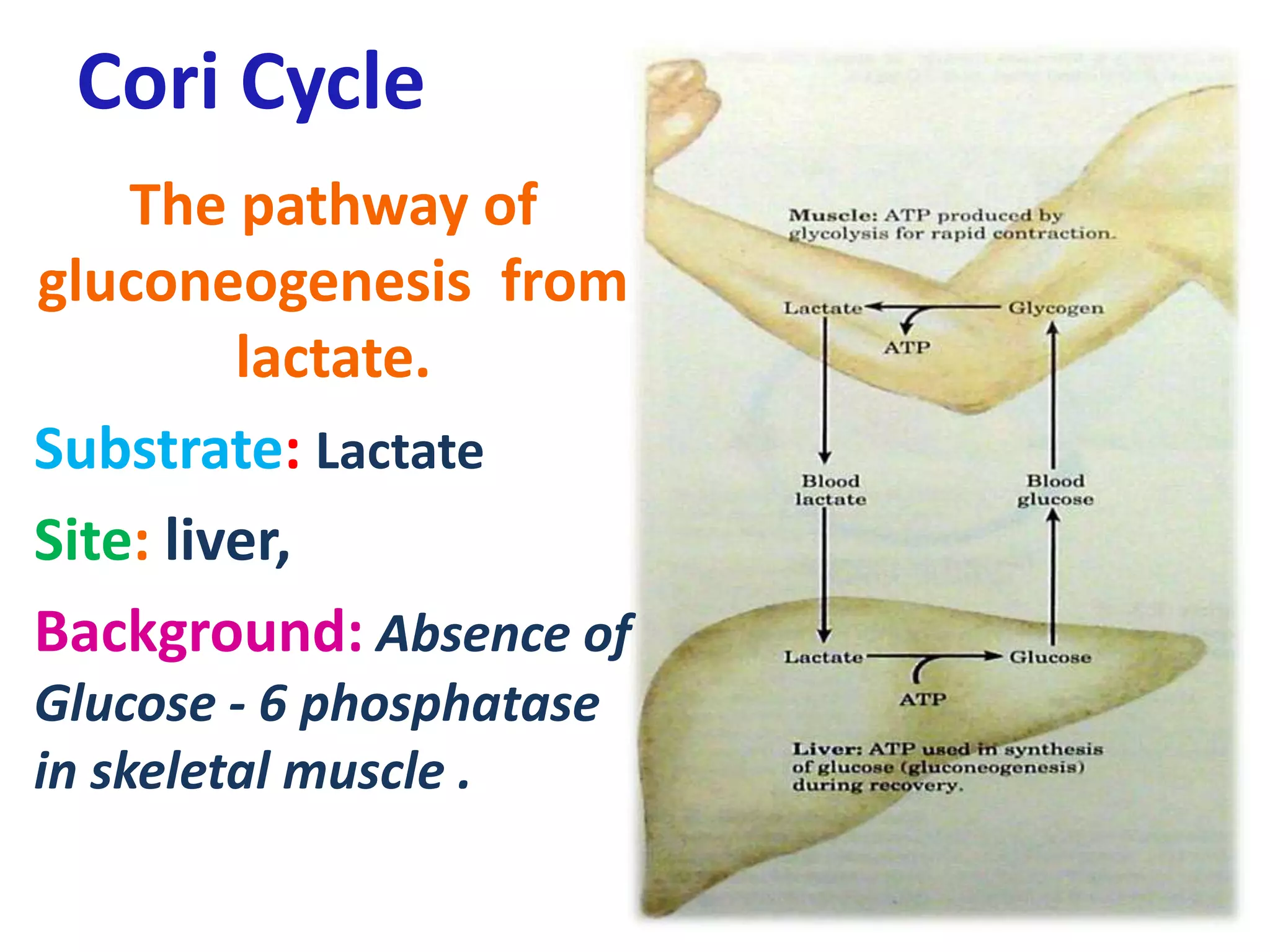
Cori Cycle
The pathway of
gluconeogenesis from
lactate.
Substrate: Lactate
Site: liver,
Background: Absence of
Glucose - 6 phosphatase
in skeletal muscle .
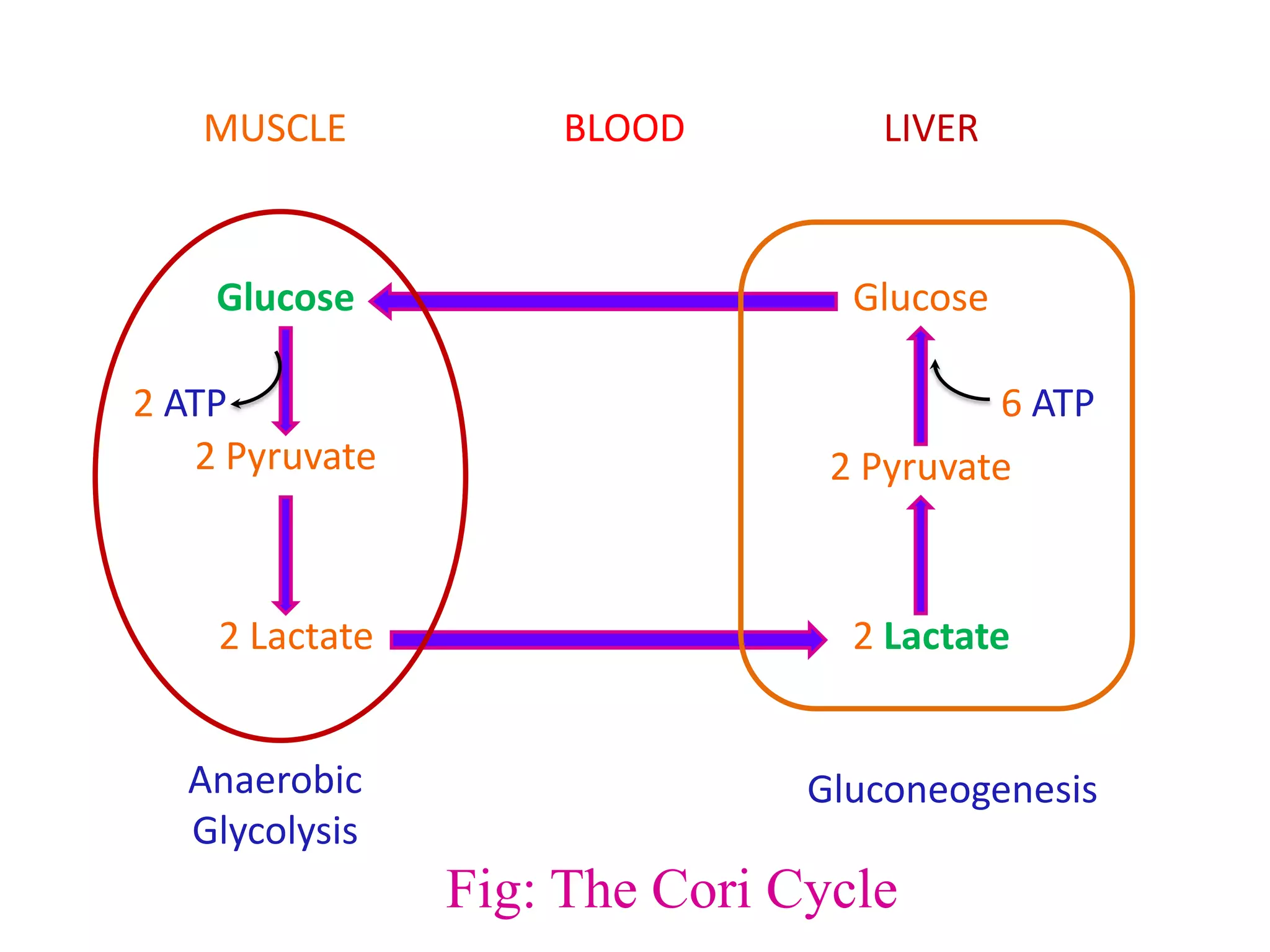
Glucose Glucose
2 Pyruvate 2 Pyruvate
2 Lactate 2 Lactate
MUSCLE LIVERBLOOD
2 ATP 6 ATP
Anaerobic
Glycolysis
Gluconeogenesis
Fig: The Cori Cycle
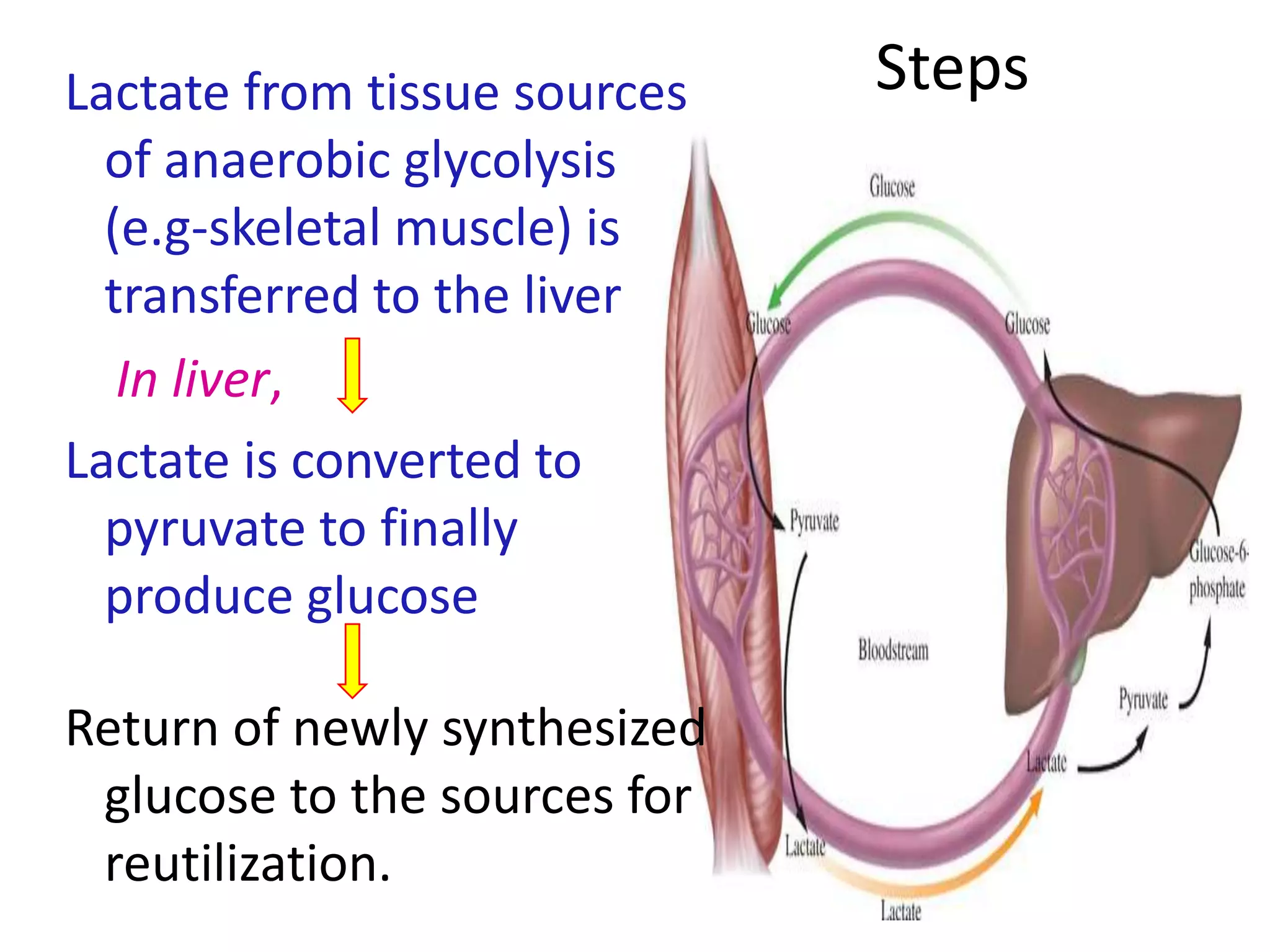
Lactate from tissue sources
of anaerobic glycolysis
(e.g-skeletal muscle) is
transferred to the liver
In liver,
Lactate is converted to
pyruvate to finally
produce glucose
Return of newly synthesized
glucose to the sources for
reutilization.
Steps
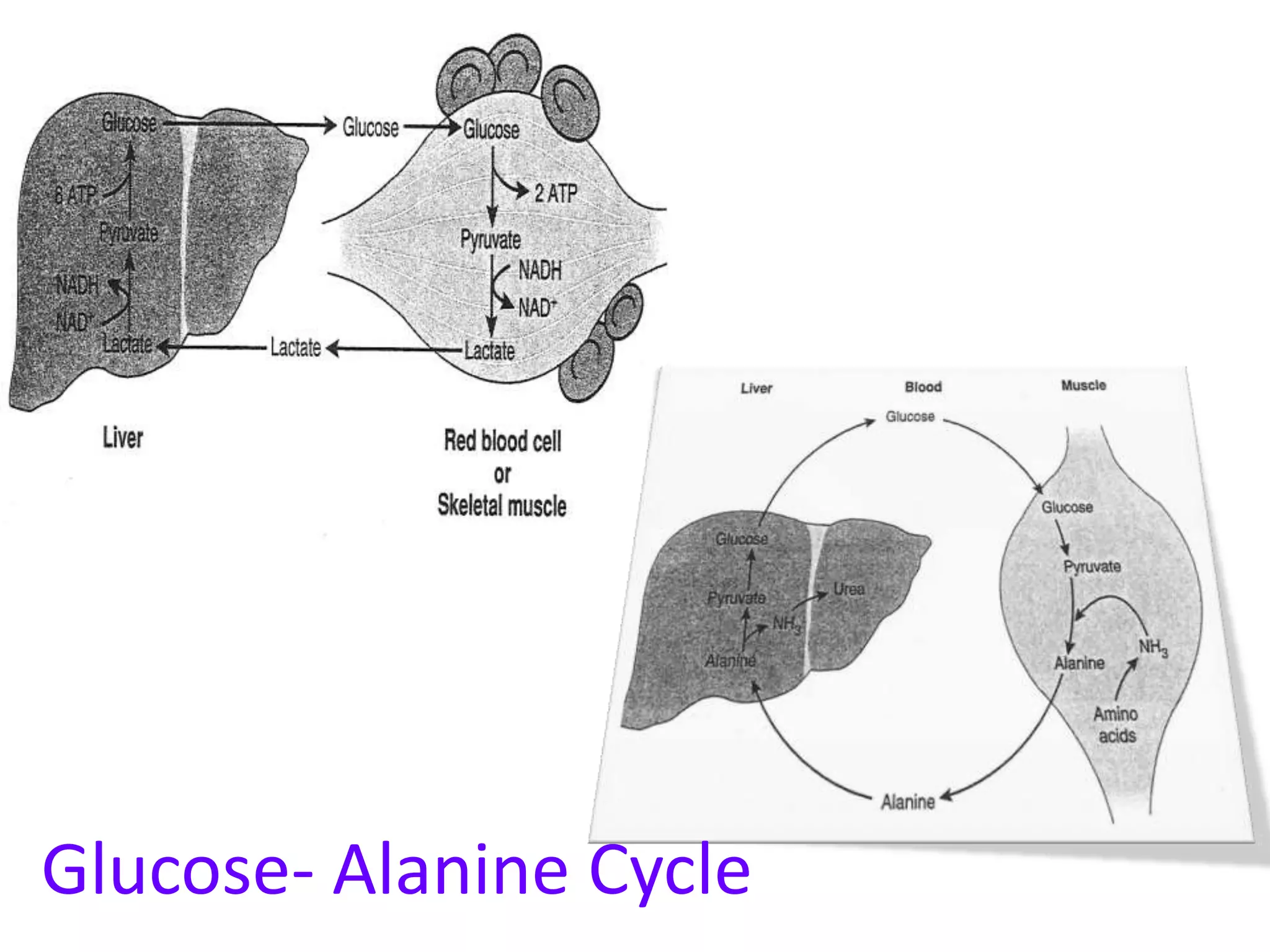
Glucose- Alanine Cycle
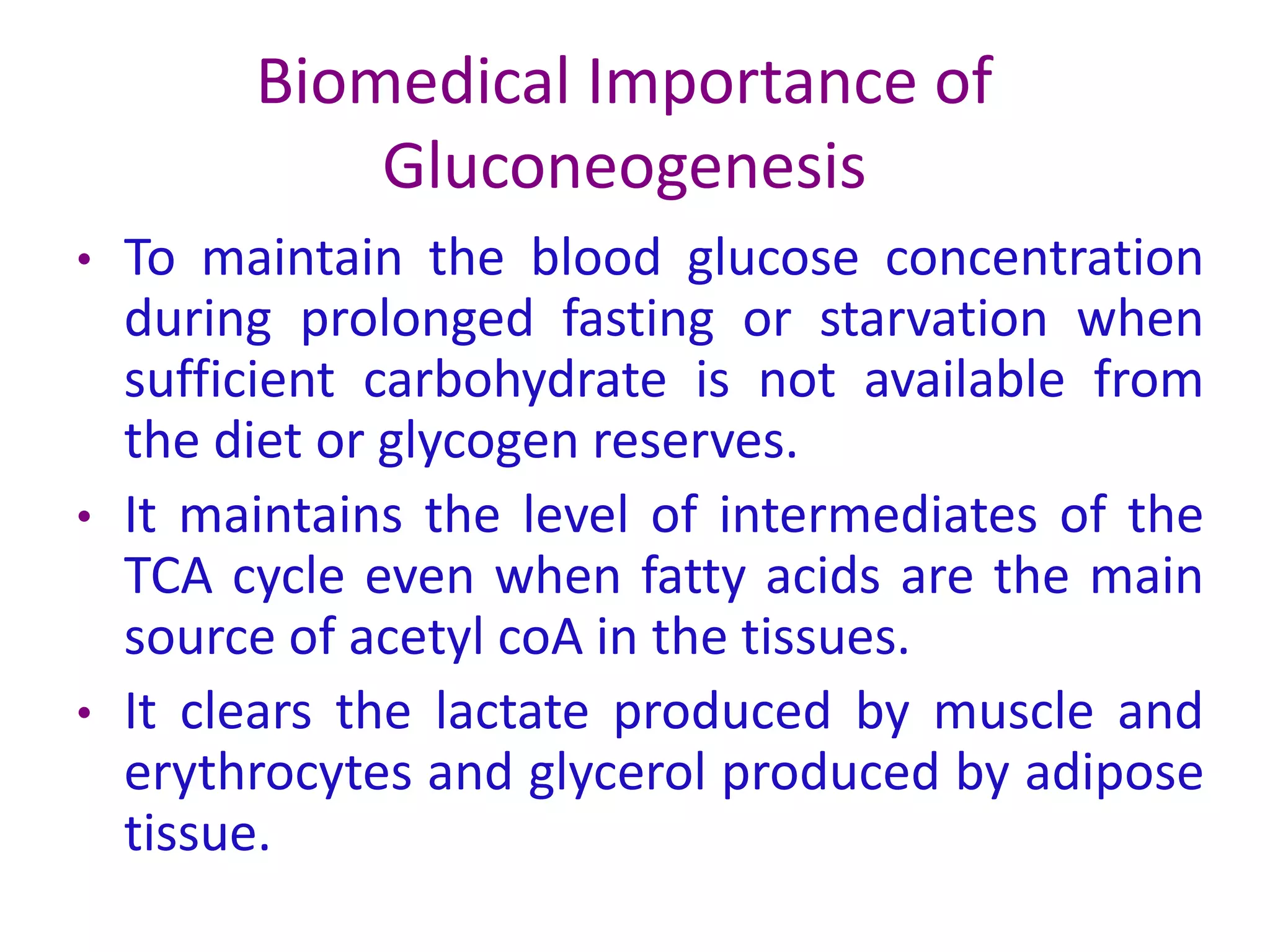
Biomedical Importance of
Gluconeogenesis
• To maintain the blood glucose concentration
during prolonged fasting or starvation when
sufficient carbohydrate is not available from
the diet or glycogen reserves.
• It maintains the level of intermediates of the
TCA cycle even when fatty acids are the main
source of acetyl coA in the tissues.
• It clears the lactate produced by muscle and
erythrocytes and glycerol produced by adipose
tissue.
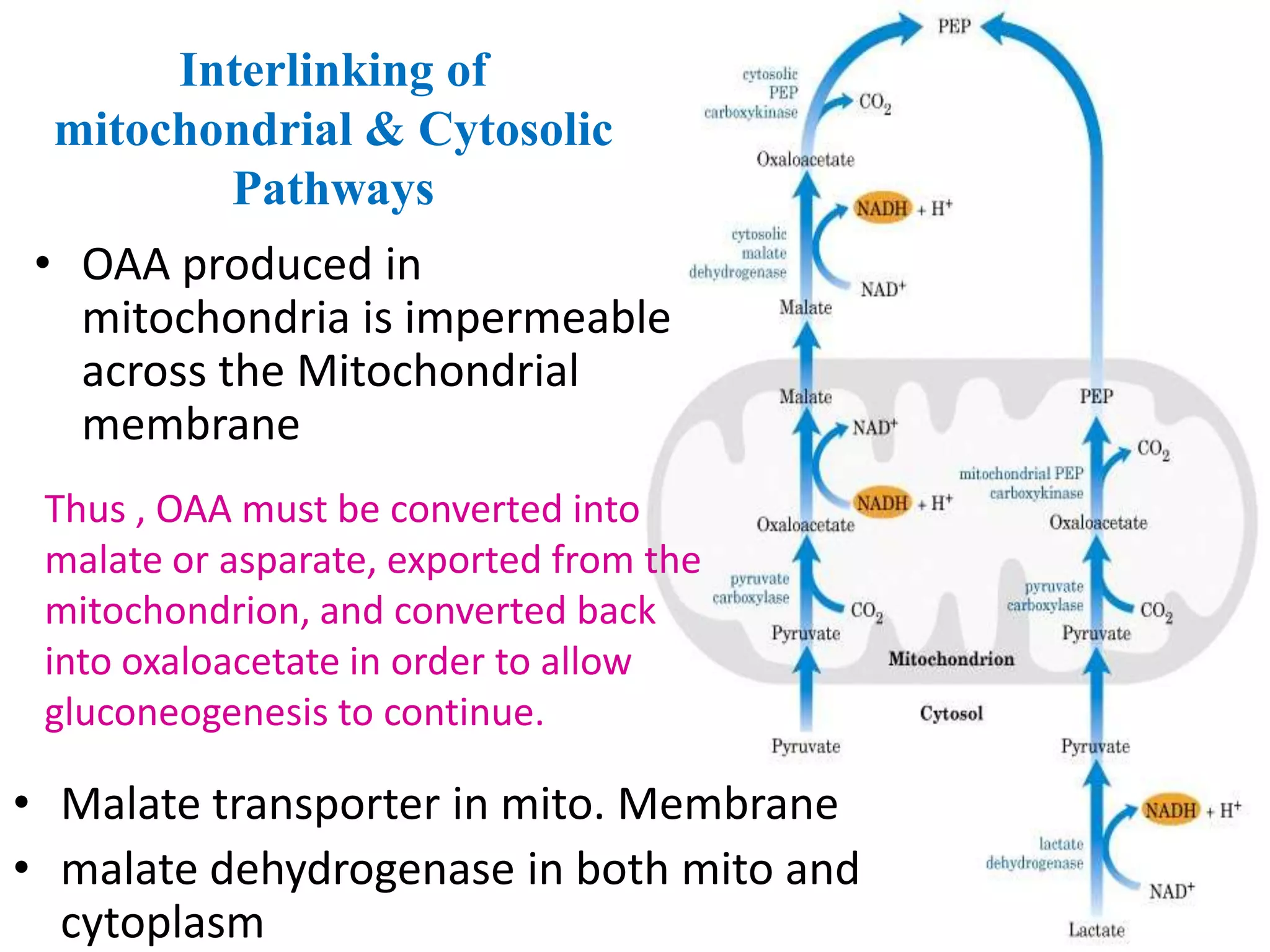
Malate Shuttle
• Malate transporter in mito. Membrane
• malate dehydrogenase in both mito and
cytoplasm
Interlinking of
mitochondrial & Cytosolic
Pathways
• OAA produced in
mitochondria is impermeable
across the Mitochondrial
membrane
Thus , OAA must be converted into
malate or asparate, exported from the
mitochondrion, and converted back
into oxaloacetate in order to allow
gluconeogenesis to continue.
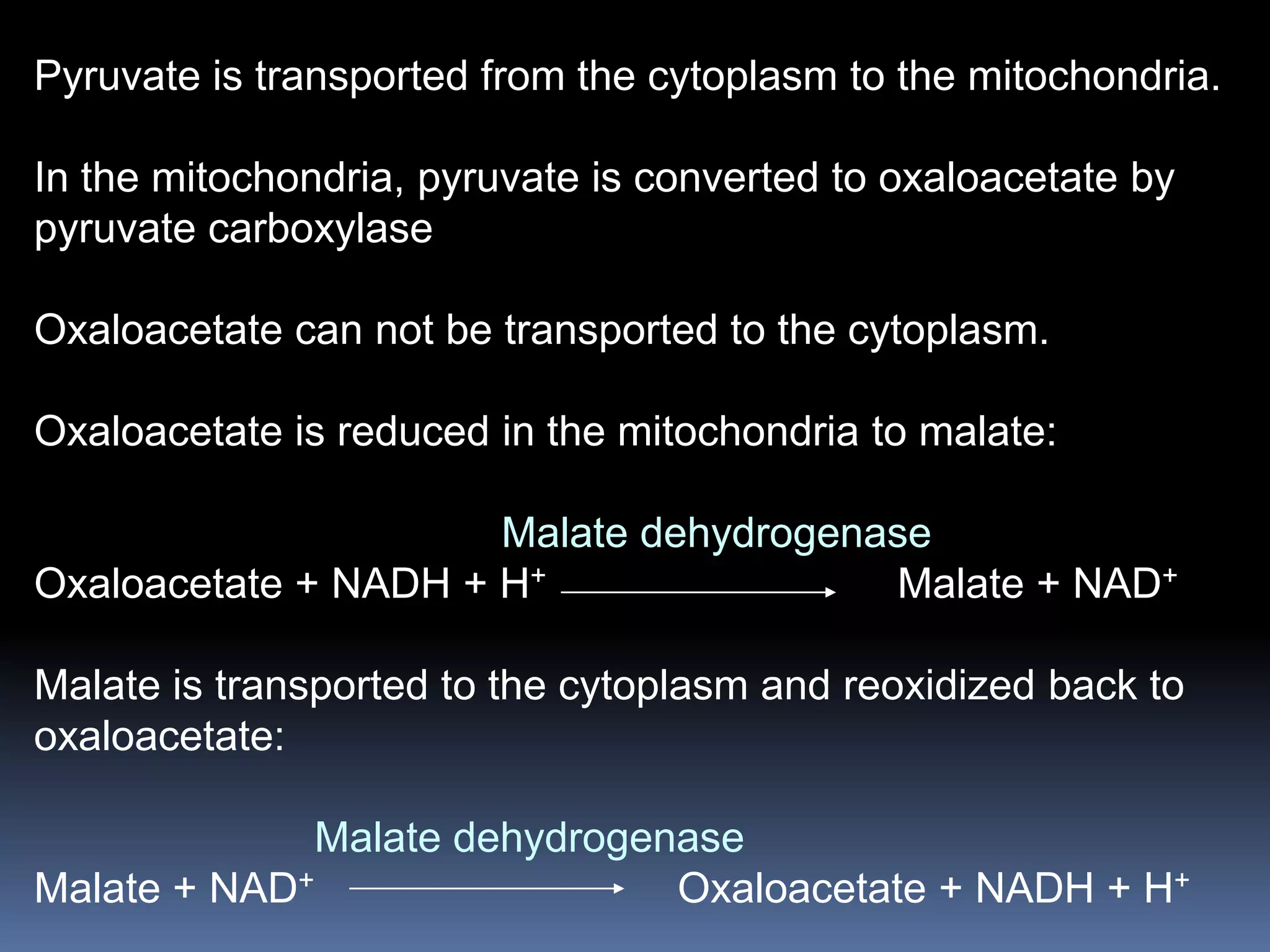
Pyruvate is transported from the cytoplasm to the mitochondria.
In the mitochondria, pyruvate is converted to oxaloacetate by
pyruvate carboxylase
Oxaloacetate can not be transported to the cytoplasm.
Oxaloacetate is reduced in the mitochondria to malate:
Malate dehydrogenase
Oxaloacetate + NADH + H+ Malate + NAD+
Malate is transported to the cytoplasm and reoxidized back to
oxaloacetate:
Malate dehydrogenase
Malate + NAD+ Oxaloacetate + NADH + H+
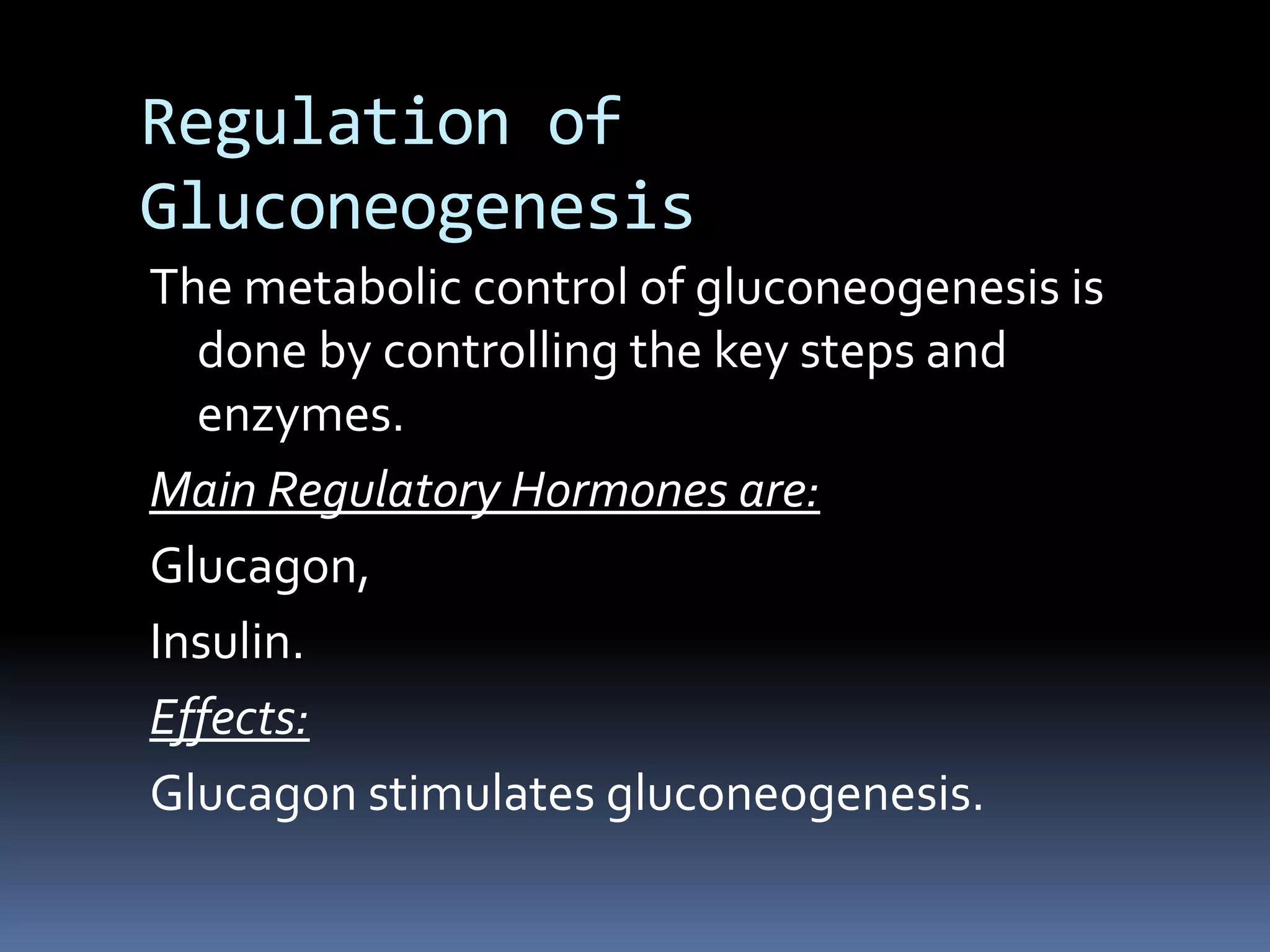
Regulation of
Gluconeogenesis
The metabolic control of gluconeogenesis is
done by controlling the key steps and
enzymes.
Main Regulatory Hormones are:
Glucagon,
Insulin.
Effects:
Glucagon stimulates gluconeogenesis.

Gluconeogenesis

  • 1.
    Gluconeogenesis Dr. Waheeda Nargis AssociateProfessor Dept. of Biochemistry, UAMCH
  • 2.
    Gluconeogenesis The process ofsynthesis of glucose or glycogen from non-carbohydrate sources is called Gluconeogenesis. Substrates for Gluconeogenesis: Glucogenic amino acid Glycerol Pyruvate Lactate Intermediates of TCA cycle MCQ: Followings are the substrates for gluconeogenesis- a) Alanine, b) Leucine, c) Glycerol d) Acetyl CoA e) Fatty Acid
  • 3.
    Features of Gluconeogenesis Site:Liver (90%) , Kidney(10%),Intestinal epithelial cells (negligible) On overnight fasting  90% site is Liver & the rest in Kidney. On prolonged fasting  60% site is Kidney & the rest in liver Compartment: Cytoplasm (mitochondria also participates) Nature: Anabolic; 6 ATP needed for synthesis of one glucose from 2 pyruvate or lactate. Pathways involved in gluconeogenesis  Reverse glycolysis,  TCA cycle,  Some special reactions like:  Cori cycle,  Glucose alanine cycle.
  • 5.
    Key Steps &Enzymes of Gluconeogenesis Fructose-1,6- bisphosphate Fructose-6- phosphate Glucose Glucose-6- phosphate Pyruvate Oxaloacetate PEPOxaloacetate pyruvate carboxylase PEP carboxykinase fructose-1,6-bisphosphatase glucose-6-phosphatase
  • 6.
  • 8.
    Gluconeogenesis from glycerol Glycerol Glycerol kinase Glycerol-3 phosphate DHA-P glycerol-3-phosphate dehydrogenase Theinitial phosphorylation of glycerol takes place at liver rather than adipocytes since they lack the enzyme glycerol kinase. (The shortest pathway) Glyceraldehyde -3 phosphateReverse glycolysis DHA-P : Dihydroxyacetone phosphate
  • 9.
    Cori Cycle The pathwayof gluconeogenesis from lactate. Substrate: Lactate Site: liver, Background: Absence of Glucose - 6 phosphatase in skeletal muscle .
  • 10.
    Glucose Glucose 2 Pyruvate2 Pyruvate 2 Lactate 2 Lactate MUSCLE LIVERBLOOD 2 ATP 6 ATP Anaerobic Glycolysis Gluconeogenesis Fig: The Cori Cycle
  • 11.
    Lactate from tissuesources of anaerobic glycolysis (e.g-skeletal muscle) is transferred to the liver In liver, Lactate is converted to pyruvate to finally produce glucose Return of newly synthesized glucose to the sources for reutilization. Steps
  • 12.
  • 13.
    Biomedical Importance of Gluconeogenesis •To maintain the blood glucose concentration during prolonged fasting or starvation when sufficient carbohydrate is not available from the diet or glycogen reserves. • It maintains the level of intermediates of the TCA cycle even when fatty acids are the main source of acetyl coA in the tissues. • It clears the lactate produced by muscle and erythrocytes and glycerol produced by adipose tissue.
  • 14.
    Malate Shuttle • Malatetransporter in mito. Membrane • malate dehydrogenase in both mito and cytoplasm Interlinking of mitochondrial & Cytosolic Pathways • OAA produced in mitochondria is impermeable across the Mitochondrial membrane Thus , OAA must be converted into malate or asparate, exported from the mitochondrion, and converted back into oxaloacetate in order to allow gluconeogenesis to continue.
  • 15.
    Pyruvate is transportedfrom the cytoplasm to the mitochondria. In the mitochondria, pyruvate is converted to oxaloacetate by pyruvate carboxylase Oxaloacetate can not be transported to the cytoplasm. Oxaloacetate is reduced in the mitochondria to malate: Malate dehydrogenase Oxaloacetate + NADH + H+ Malate + NAD+ Malate is transported to the cytoplasm and reoxidized back to oxaloacetate: Malate dehydrogenase Malate + NAD+ Oxaloacetate + NADH + H+
  • 16.
    Regulation of Gluconeogenesis The metaboliccontrol of gluconeogenesis is done by controlling the key steps and enzymes. Main Regulatory Hormones are: Glucagon, Insulin. Effects: Glucagon stimulates gluconeogenesis.